From Surf Wiki (app.surf) — the open knowledge base
Topsail
Sail set above another sail

Sail set above another sail
A topsail ("tops'l") is a sail set above another sail. On square-rigged vessels further sails may be set above topsails.
Square rig

On a square rigged vessel, a topsail is a typically trapezoidal shaped sail rigged above the course sail and below the topgallant sail where carried, on any mast (i.e., a fully rigged ship would have a foremast topsail, a mainmast topsail, and a mizzen topsail). A full rigged ship will have either single or double (i.e., "split" upper and lower) topsails on all masts, the single or lower topsail being the second sail above the deck and the upper topsail where so rigged being the third.
Although described as a "square" sail, a topsail on a full rigged ship refers not to the sail's shape but to it and its yard being rigged square (i.e., at a right angle) to the vessel's keel rather than in line with it (in which case it would be called a fore-and-aft rig or a fore-and-aft rigged sail) ; a square rigged topsail is nearly always trapezoidal in shape, with the lengths of the upper yards being progressively smaller the higher they are on the mast. The bottom edge of the topsail, like that of other square rigged sails, is slightly concave which allows the rigging to connect to the mast. The principal exception to this trapezoidal rule is the raffee sail, which is a square rigged topsail that is triangular (such as is seen on the foremast of the ship Denis Sullivan, a topsail schooner). A topsail which is fore-and-aft rigged is usually also triangular, but has its longest edge oriented vertically rather than horizontally as seen in the raffee sail.
Although the early Romans used a sort of fore-and-aft rigged topsail on some vessels, this sail came into prominent use in Europe some time in the 15th century. Initially small and carried only on main and fore masts, they gradually increased in size and importance until by the middle of the 17th century and were the principal and largest sails of the ship, the first sails to be set and the last to be taken in. It was quite common for a ship to sail with topsails and jibs alone; the position of the topsails well above the sea ensured that they received a steady breeze even if the seas were rough.
Because of their ability to drive a ship in lighter winds than the course sail below or any sail above, the topsail quickly became enormous and was soon difficult and dangerous to handle in strong winds. Sometime in the 1680s, reef-bands were introduced to tie up part of the sail, with topsails eventually getting four of these. In the mid 19th century topsails of merchant vessels were split into separate upper and lower topsails that could be managed independently and far more easily by significantly smaller crews (see Cutty Sark for a prominent example). Such sails were still often referred to as a single "topsail", however.
Competing versions of this double topsail were invented by Robert Bennet Forbes and Captain Frederic Howes. Although Forbes strove to defend his rig, the Howe rig dominated. | access-date = March 23, 2016}} | access-date = March 23, 2016}} In the Forbes rig, both topsail yards are fixed vertically.{{cite book | access-date = March 23, 2016
Gaff rig

Gaff topsails, like gaff rigs in general, may still be seen at tall ships gatherings. The gaff rig has been largely superseded by the Bermuda rig, which has no topsails. On a gaff-rigged sailing boat, topsails may take a few different forms:
-
A jib-headed topsail is generally a triangular sail set between the gaff and the top of the mast or topmast. A gaff-rigged vessel might have a gaff topsail above any or all of its gaff sails.{{cite book
-
A yard topsail is similar, but set on a yard. Early 19th-century topsail yards were set almost horizontally, but gradually increased in angle until they became almost vertical extension of the topmast.{{cite book
-
A jack-yard topsail (or club topsail) instead has its lower edge (or foot) extended out beyond the end of the gaff with a short yard, called a "jack-yard". A jack-yard topsail may also have the aforementioned vertical yard, although this makes for a very large topsail.{{cite book
-
A cornish topsail is a triangular sail having its luff extended well above the masthead by being laced to a yard hoisted by a halyard that is rove through a sheave fitted diagonally in the mast. The heel of the yard fits immediately about the gaff and is kept in place by a tackline called a timminoggy.{{cite book
-
A square topsail is a square-rigged sail carried above the foresail only on gaff schooners. (A brigantine is an example of a two-masted vessel with a forward course.) Schooners carrying square tops are referred to as "topsail schooners"; gaff topsails are taken for granted on gaff-rigged vessels and pass without comment in a vessel description.
Other fore-and-aft topsails
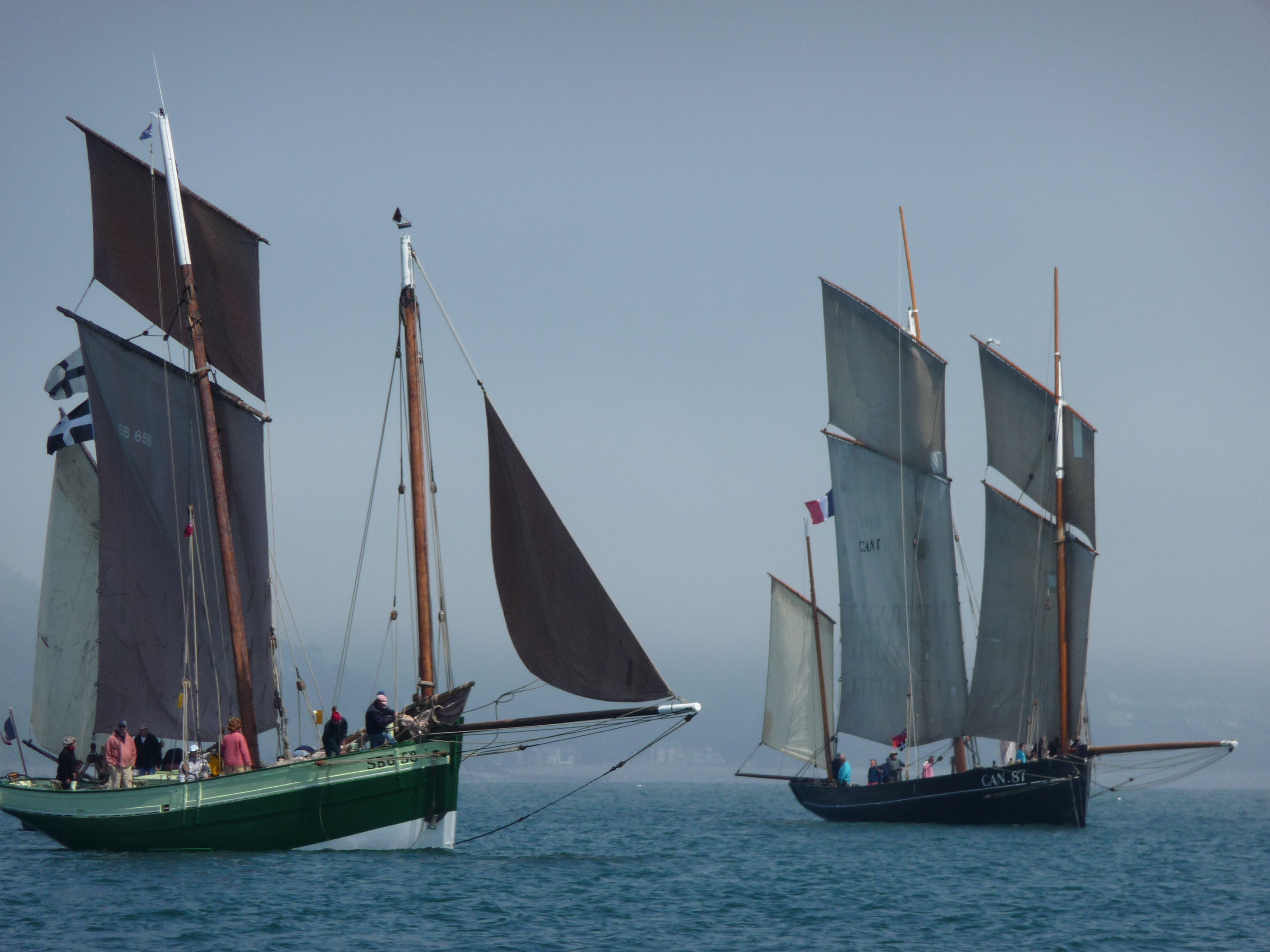
Topsails are also found on other fore-and-aft rigs: the spritsail and lug rig. The lug topsail is, in simple terms, a smaller version of the sail set beneath it. This arrangement was particularly common on French luggers; a British example is the Walmer lugger in the middle of the nineteenth century.
Other uses
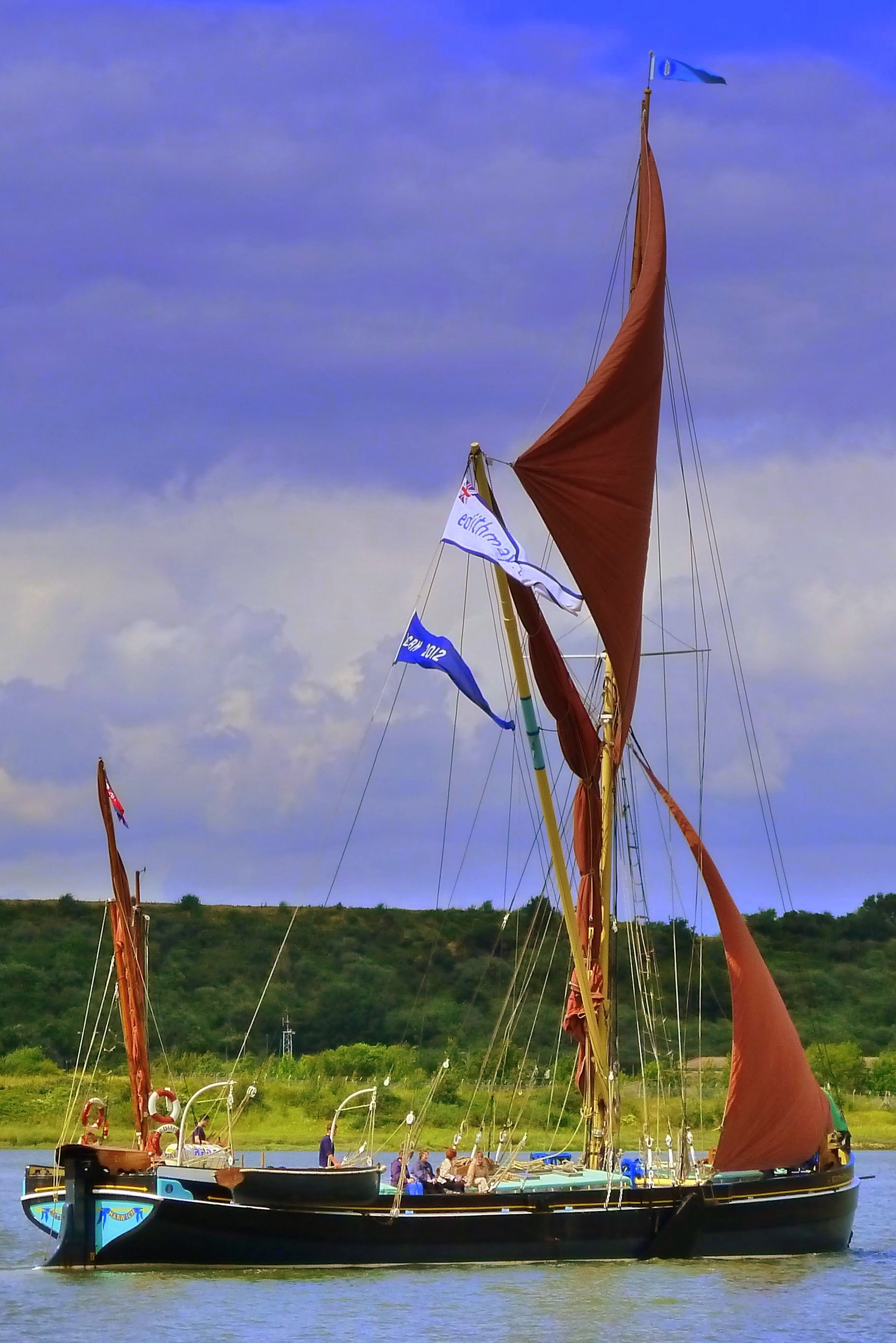
On rigs having multiple jibs or staysails of which at least one is set high, such as many late 19th and 20th Century racing cutters, the uppermost of these, set flying or on a topmast stay, is often called the jib topsail.
References
;Bibliography
- John Harland & Mark Myers, Seamanship in the Age of Sail; Lees "Masting & Rigging"; "The Young Sea-Officer's Sheet Anchor"
References
- Cunliffe, Tom. (1992). "Hand, Reef and Steer". Sheridan House.
- (1979). "Spritsails and Lugsails". International Marine Publishing Company.
- (1951). "Sailing Barges". Conway Maritime Press.
- [[Lionel Casson. Casson, Lionel]] (1995): "Ships and Seamanship in the Ancient World", Johns Hopkins University Press, {{ISBN. 978-0-8018-5130-8, pp. 240–241
This article was imported from Wikipedia and is available under the Creative Commons Attribution-ShareAlike 4.0 License. Content has been adapted to SurfDoc format. Original contributors can be found on the article history page.
Ask Mako anything about Topsail — get instant answers, deeper analysis, and related topics.
Research with MakoFree with your Surf account
Create a free account to save articles, ask Mako questions, and organize your research.
Sign up freeThis content may have been generated or modified by AI. CloudSurf Software LLC is not responsible for the accuracy, completeness, or reliability of AI-generated content. Always verify important information from primary sources.
Report