From Surf Wiki (app.surf) — the open knowledge base
Tony Gwynn
American baseball player (1960–2014)
American baseball player (1960–2014)
| Field | Value |
|---|---|
| name | Tony Gwynn |
| image | File:Tony Gwynn 83.jpg |
| image_size | 200 |
| caption | Gwynn with the San Diego Padres in 1983 |
| position | Right fielder |
| bats | Left |
| throws | Left |
| birth_date | |
| death_date | |
| birth_place | Los Angeles, California, U.S. |
| death_place | Poway, California, U.S. |
| debutleague | MLB |
| debutdate | July 19 |
| debutyear | 1982 |
| debutteam | San Diego Padres |
| finalleague | MLB |
| finaldate | October 7 |
| finalyear | 2001 |
| finalteam | San Diego Padres |
| statleague | MLB |
| stat1label | Batting average |
| stat1value | .338 |
| stat2label | Hits |
| stat2value | 3,141 |
| stat3label | Home runs |
| stat3value | 135 |
| stat4label | Runs batted in |
| stat4value | 1,138 |
| hoflink | National Baseball Hall of Fame and Museum |
| hoftype | National |
| hofdate | 2007 |
| hofvote | 97.6% (first ballot) |
- San Diego Padres (–)
- 15× All-Star (1984–1987, 1989–1999)
- 5× Gold Glove Award (1986–1987, 1989–1991)
- 7× Silver Slugger Award (1984, 1986–1987, 1989, 1994–1995, 1997)
- Roberto Clemente Award (1999)
- 8× NL batting champion (1984, 1987–1989, 1994–1997)
- Commissioner's Historic Achievement Award
- San Diego Padres No. 19 retired
- San Diego Padres Hall of Fame Anthony Keith Gwynn Sr. (May 9, 1960 – June 16, 2014), nicknamed "Mr. Padre", was an American professional baseball right fielder who played 20 seasons (1982–2001) in Major League Baseball (MLB) for the San Diego Padres. The left-handed hitting Gwynn won eight batting titles in his career, which is tied for the most in National League (NL) history. He was a 15-time All-Star and won seven Silver Slugger Awards and five Gold Glove Awards. Gwynn stayed with the Padres his entire career and played in the only two World Series appearances in San Diego franchise history. Having hit over .300 for 19 straight seasons, Gwynn retired with a .338 career batting average, the highest mark since Ted Williams retired in 1960; Gwynn also holds the highest adjusted batting average of all time at .342. He was inducted into the Baseball Hall of Fame in 2007 in his first year of eligibility, and is widely considered the best pure hitter of his generation.
Gwynn attended San Diego State University (SDSU), where he played both college baseball and basketball for the Aztecs. He was an all-conference player in both sports in the Western Athletic Conference (WAC), and was also honored as an All-American in baseball. Gwynn was selected by the Padres in the third round of the 1981 MLB draft as the 58th overall pick. He made his major-league debut the next year and won his first batting title in 1984, when San Diego advanced to its first-ever World Series. Gwynn was a poor fielder in college and the minor leagues, but improved over time and received his first Gold Glove in 1986. The next year, he won the first of three consecutive batting titles. From 1990 to 1994, Gwynn endured four injury-shortened seasons, then had four straight batting titles starting in 1994, when he batted a career-high .394 in a strike-shortened season. Gwynn played in his second World Series in 1998 and reached the 3,000-hit milestone the following year. He played two more seasons, hampered by injuries in both, and retired after the 2001 season with 3,141 career hits.
A contact hitter, Gwynn frequently hit the ball to the opposite field. After first meeting Hall of Famer Ted Williams in 1992, Gwynn modified his hitting approach and became more adept at pulling the ball and using the entire field, as well as hitting for more power. In his early career years, he was also a threat to steal bases. In an era before MLB teams used video for scouting, Gwynn pioneered the practice of recording and studying video to improve his hitting, for which he received the nickname "Captain Video". Widely considered the greatest player in Padres history, Gwynn regularly accepted less money to remain with the small-market team; he became a civic icon for the city of San Diego.
During his later playing years and throughout retirement, Gwynn was an outspoken critic of performance-enhancing drugs in baseball. After he retired from playing, the Padres retired his No. 19 in 2004. Gwynn became the head baseball coach at his alma mater university and also spent time as a baseball analyst. Gwynn developed a decades-long addiction to smokeless tobacco as a young adult, and was diagnosed with salivary gland cancer in 2010; Gwynn died of the cancer in 2014 at the age of 54. His death increased awareness regarding tobacco usage in MLB, leading to the 2016 league-wide ban on the substance for new players.
Early life and family
Family background
Gwynn was born in Los Angeles, California, to Charles and Vendella Gwynn, who originated from Gallatin, Tennessee. Charles excelled at sports, preferring football and baseball which he played in high school, and was also very passionate about history and politics; he spent the majority of his young adulthood in the 1950s serving for the U.S. Army. Vendella grew up in a large family and house upon several acres of land that functioned as a small farm; she was also athletically inclined, particularly in basketball and volleyball. The pair met and married in the mid-1950s. In 1958, Gwynn's older brother Charles Jr. was born and sometime thereafter, Charles was discharged from the Army. In 1959, Charles decided to move the family west from Tennessee under the belief that doing so would provide additional economic opportunity for a young black family.
Childhood
The family's first residence in California was a two-bedroom apartment and they had one car, a Chrysler 300. Gwynn's favorite meals were Friday dinner because he'd get to eat fish, and any meals on Saturday and Sunday because that's when the whole family was together. Shortly after younger brother Chris was born in late 1964, the family moved to a larger apartment, a second-floor duplex that included a small grass backyard unlike the previous apartment. In the yard, Gwynn and Charles Jr. frequently played basketball games such as "Twenty-one" and "H-O-R-S-E" using a trash can against the building's back wall as the basket. Gwynn's "big thrill" was regularly going to the store to get RC Cola for his father using the latter's borrowed money. On one of these occasions when Gwynn returned from the store with the cola, he was also chewing a wad of gum; his father noticed this and asked Gwynn where the gum came from, and he confessed to shoplifting the gum. His father responded by taking Gwynn downstairs to a bush out in front of the apartment building, and pulling a switch from it to punish him with.
Gwynn's favorite time of year was the annual summer family vacation to go visit his grandparents in Tennessee for six days, traveling in the family car. He personally liked his paternal grandparents more, but preferred to stay with his maternal grandparents because their residence (where his mother grew up) had acres of open land and a farm, which Gwynn said was "like a paradise". He gathered eggs from the chicken coop every morning and cooked breakfast with them, and also played baseball using black walnuts that had fallen. Through these visits, Gwynn grew an affinity for his grandmother Callie's Southern cooking.
At age nine, Gwynn received a Sting-Ray bike with a banana seat from his parents coupled with the expectation that he was to use it to fetch groceries from the store. Gwynn refused to have a bicycle basket installed, insisting that it was only for "sissies", so he hauled groceries home using his arms. He was also allowed to use the bike for play; one time while doing so near the family's parked car, he crashed the bike into Chris who appeared out of nowhere. Chris bled from his face from hitting the cement, and had to get hospitalized with five stitches. Gwynn's parents initially threatened to whip Gwynn upon learning about the incident, but later changed their minds after discussing it with Chris, believing it was impossible for the boys to see each other before the crash.
A few weeks after the bike crash, his parents decided they would move from their apartment and buy a house in nearby Long Beach, a location they chose because of its schools, parks, and youth sports options throughout the year. Gwynn joined a Little League team in Long Beach at the age of nine. When the coach asked him which position he wished to play, Gwynn indicated that he wanted to be the first baseman since he was left-handed, but the coach said that spot was occupied by a returning left-handed player, and instead offered the center fielder position to Gwynn. Gwynn's parents were civil servants and tag-team parents. Gwynn's father worked at a warehouse from 7:30a.m. to 5:00p.m., and he also coached Pop Warner football and Little League Baseball; his mother worked at the post office from 5:30p.m. to 3:00a.m. His mother and father instilled in him the value of being prepared. He played mostly basketball, then his favorite sport. Gwynn seldom played tennis, but readily defeated his older brother Charles Jr. (who regularly practiced the sport) when challenged.
Gwynn's father encouraged his sons to play ball in the makeshift baseball field that he assembled in their backyard. Once the brothers' supply of wiffle balls was out, they resorted to using a sock rolled in rubber bands, a wad of tape, or a hardened fig from a neighbor's tree. Gwynn could pull the ball in his backyard, but he would naturally hit it the other way during regular games. Growing up, he attended Los Angeles Dodgers games and watched his hero, Willie Davis; the Dodgers outfielder had twice as many stolen bases as home runs (398 SB, 182 HR) in his career. Gwynn admired Davis for being black, left-handed, and "aggressive but under control"; he respected Davis' work habits as well. Unlike other kids who tracked home run hitters, Gwynn checked the box scores in the newspaper every morning to follow high-average hitters like Pete Rose, George Brett, and Rod Carew. By age thirteen, Gwynn had joined an adult baseball league.
High school years
Gwynn attended Long Beach Polytechnic High School, a high-profile sports school. Gwynn worked during the summers. One year, he got a job as a softball coach at Silverado Park after his name was chosen in a lottery drawing for the position; some of his responsibilities included managing the field, painting the foul lines, and picking up trash from the field. Another year, he was on a crew that painted athletic facilities in Long Beach public schools. Gwynn also played summer baseball for the Long Beach Jets (coached by 1964 Olympic high jumper John Rambo) in the Joe DiMaggio Summer League at Blair Field. Gwynn was the center fielder and his younger brother Chris was on the team. One year, Gwynn and the Jets won the local league and advanced to the state tournament in San Rafael of Northern California; they were defeated in the championship game.
He was a two-sport star in basketball and baseball. In his final two years, his Jackrabbits baseball team was a combined 3–25–2 in the league, while his basketball team went a combined 53–6 and twice reached the California Interscholastic Federation (CIF)'s Southern Section 4A championship game. Gwynn had considered quitting baseball as a senior to concentrate on basketball, but his mother talked him out of it. "She said it might be something down the road and that I might be sorry later if I didn't play," recalled Gwynn.
As a junior, he was the starting point guard on Poly's basketball team, which went 30–1 and won the Southern Section 4A title that year. The final was played for more than 10,000 fans at the Long Beach Arena, where Gwynn scored 10 points in the 69–50 victory over Buena of Ventura. In Gwynn's senior year, Poly was 23–7, and again advanced to the championship round, despite finishing third in the Moore League. Their bid for a second straight title ended with a 57–50 loss to Pasadena. After the season, he switched to baseball, which was already well underway for the year. Despite his shortened season, he earned first-team All-Southern Section honors after batting .563. Poly's baseball team's struggles taught him to remain focused, continue executing, and stay productive.
Gwynn received scholarship offers to play college basketball but none for college baseball. He also went unselected in the 1977 MLB draft, which Gwynn attributed to his limited playing time.
College career

Gwynn was a two-sport star with San Diego State, playing three seasons of baseball and four of basketball.
By the following season in 1979, Gwynn still had not heard from Aztecs baseball coach Jim Dietz about joining the team after the basketball season. However, an opportunity arose after two outfielders riding bicycles were struck by an automobile and injured, leaving Dietz in need of replacements. Freshman shortstop Bobby Meacham, who played against Gwynn in high school, convinced the coach to give Gwynn a chance. Were it not for the accident, Gwynn doubted he would have ever played baseball with SDSU. "Knowing what I now do about Coach Dietz ... [h]e's too loyal to his athletes to have allowed me to walk over after basketball season and join the team," remarked Gwynn.
In baseball, Gwynn was primarily a left fielder and designated hitter (DH) at San Diego State. He hit .301 in his first season but said he "stunk defensively." In 1980, Gwynn hit .423 with six home runs and 29 runs batted in (RBI), and was named third-team All-American by Baseball News. The following season, he was a first-team All-American after batting .416 with 11 home runs and 62 RBI. He also was named a first-team All-WAC outfielder. In his three years, he had a career average of .398, and the team went 146–61–4.
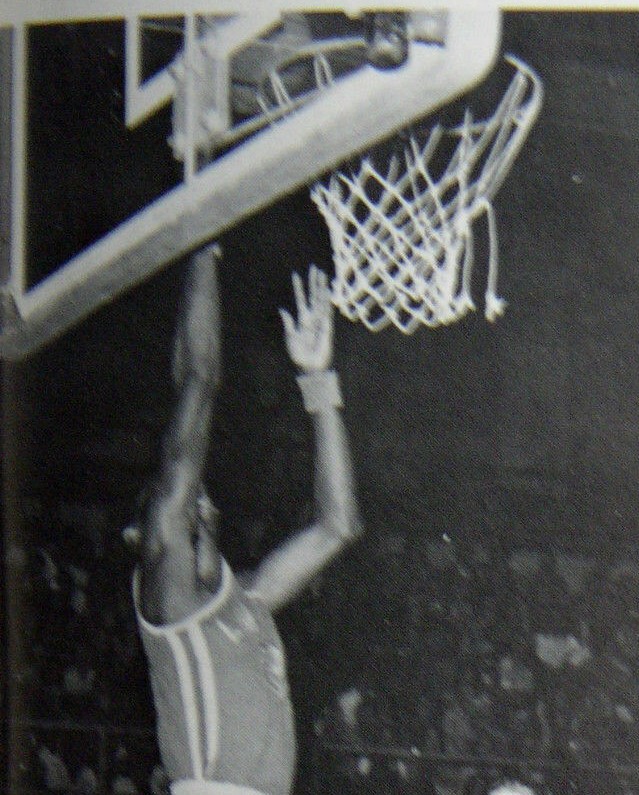
Playing basketball, Gwynn set Aztecs basketball records for assists in a game (18), season (221), and career (590). He was twice named to the All-WAC Second Team, and he averaged 8.8 points per game his senior year. He could dunk a basketball, He had a quick first step in either sport and was able to run 60 yards in 6.7 seconds.
Gwynn indirectly received exposure from scouts who were interested in Meacham, who would become a first-round pick in 1981. Gwynn had started the baseball season late in 1981, as the basketball team was still competing, and some scouts had already seen enough of Meacham and stopped following SDSU. Also on the Aztecs baseball team was Casey McKeon, son of Jack McKeon, who was the San Diego Padres general manager at the time. Given his son's involvement, McKeon often went to Aztec games. Gwynn had re-joined the baseball team five days earlier.
Professional career
Draft and minor leagues (1981–1982)
The Padres selected Gwynn in the third round of the 1981 MLB draft with the 58th pick. The Houston Astros had also scouted Gwynn and wanted to select him, but since the team had no picks in the first two rounds, their first possible chance was in the third round after the Padres' third round pick when Gwynn was taken. He had attended Padres games while he was at San Diego State and thought they had the "ugliest uniforms I've ever seen in my life." Those uniforms again came to his mind after he was drafted. McKeon had wanted to take Gwynn with the Padres' first pick, but they chose two other players in the first round and another in the second. McKeon threatened to walk out of the draft room had San Diego not selected him in the third. Later that day, Gwynn was also selected by the San Diego Clippers in the 10th round of the NBA draft. According to then-Clippers general manager Ted Podleski, Gwynn might have gone as high as the sixth round if he was not a baseball player. Gwynn chose to play baseball with the Padres in what he termed a "practical" decision, citing his physical battles pushing and fighting against larger players, such as Charles Bradley, while playing WAC basketball.
Coming out of college, Gwynn was initially worried about the transition from using an aluminum bat to a wooden one, but his concerns were allayed once he found a bat comparable to the size he had used with the Aztecs. He led the Northwest League with a .331 batting average, and added 12 homers and 17 stolen bases in just 42 games for the Walla Walla Padres, San Diego's Class A minor league affiliate, earning him the league's most valuable player (MVP) award in 1981. In the summer of 1981, Gwynn was promoted to the Padres' Reno affiliate but was unable to travel there due to the ongoing air traffic controller strike, so he got sent to Amarillo instead. He finished the season in Class AA with the Amarillo Gold Sox for 23 games, while batting .462.
San Diego Padres (1982–2001)
1982–1983
Gwynn participated at spring training with San Diego in 1982 and hit .375. However, the Padres were set in the outfield with veterans Gene Richards, Ruppert Jones, and Sixto Lezcano, and Gwynn began the season with the Hawaii Islanders of Triple-A. He was batting .328 in 93 games with the Islanders when he was promoted and debuted for the Padres on July 19, 1982. He started in center field against the Philadelphia Phillies in place of a slumping Jones. In his fourth at-bat, Gwynn got his first major league hit—a double—against reliever Sid Monge. Pete Rose, the Phillies' first baseman who later became the major-league all-time hit leader, told Gwynn, "Congratulations. Don't catch me in one night." Five weeks later against Pittsburgh, Gwynn injured his left wrist after diving for a ball and hitting the hard artificial turf at Three Rivers Stadium, and missed three weeks while on the disabled list (DL). He finished his rookie season batting .289 in 54 games, the only season he hit below .300. His 15-game hitting streak was the longest on the team that season.
Gwynn reinjured his wrist playing winter ball in Puerto Rico and started 1983 on the DL. He asked his wife to record the games before a road trip, and he began using video recording to review his at-bats. After looking at the tapes and correcting his swing during batting practice, Gwynn became a believer in using video. He heated up to a .309 average for his shortened season, and his 25-game hitting streak set a Padres record. For the second straight season, San Diego finished with a .500 record.
1984–1986

In his first full season in 1984, San Diego won their first NL West title. He had 213 hits, breaking the Padres record of 194 set by Gene Richards in 1980. Wiggins' speed also disrupted the defense and opened up holes that Gwynn was able to exploit for hits. He hit above .400 when Wiggins was on base ahead of him. "Anybody can hit a fastball", said Gwynn. The duo was one of the biggest reasons behind San Diego's success. They could score fast with Wiggins getting on first, stealing second, and Gwynn singling him home. Gwynn batted .410 with runners in scoring position, and manager Dick Williams said his records indicated that Gwynn had the best "RBI percentage" on the team.
In the playoffs, the Padres won the first NL pennant in its team history, defeating the Cubs in the National League Championship Series (NLCS) before losing the World Series to the Detroit Tigers. and flied out to Tigers left fielder Larry Herndon for the final out of the fall classic. During the offseason, Gwynn took less money to stay in San Diego by signing a six-year, $4.6 million contract with the Padres. Still, his new salary of more than $500,000 salary for 1985 represented a sizable raise over the $180,000 he would have received, or the $100,000 he had received in 1984.
Wiggins entered drug rehab in 1985 and was traded later in the season to the Baltimore Orioles, resulting in Gwynn seeing fewer fastballs and more breaking balls. Gwynn said it took him a month to realize the opponents' strategy change and a while to adjust. His average was under .300 into June when he got hot but then sprained his wrist on June 27 in a collision with Dodgers catcher Mike Scioscia. Still, Gwynn was named with seven other Padres to the 1985 All-Star Game. San Diego then led the NL West but finished the season in third place. After Gwynn's wrist healed, he hit .339 after the start of August and finished the season with the fourth-highest average in the NL (.317). Without an adequate replacement for Wiggins batting leadoff, his RBIs fell to 46.
Gwynn played a career-high 160 games in 1986, when he led NL position players in Wins Above Replacement (WAR). He scored 100 runs for the first time and tied for the NL lead (107). He set then-career highs for doubles (33), homers (14), and steals (37). He finished third in hitting (.329) after leading for most of the season. He hit only .296 in September, and he regretted paying too much attention to Tim Raines and Steve Sax, who were previously trailing him. Gwynn won his first Gold Glove after leading the league in total chances and putouts (337). His 19 outfield assists that year—one short of the league-high—were highlighted by the three Mets he threw out in one game.
1987–1989
Despite his financial problems and bankruptcy in 1987, Gwynn remained unfazed on the field. In June, he had 44 hits in 93 at-bats for a .473 average, the best month in his career. He finished fifth among NL outfielders voting for the All-Star Game, which Padres manager Larry Bowa called "a joke". However, Gwynn was unperturbed: "People put a premium on the home-run hitters. I know what I am. I'm a contact hitter and not a home-run hitter ... I'm not going to try to be something I'm not."
That year, Gwynn had two five-hit games, the first of eight in his career.|group=lower-alpha}} He led the league in WAR, His average, hits, runs, and triples were all Padre records. Fox Sports baseball writer Rob Neyer believes that Gwynn may have been MLB's best player during his 1987 season,
During the last three months of the 1987 season, a finger on Gwynn's left hand would lock when he gripped a bat. It would open barely enough for the bat to slip out of his grip. He had surgery on the hand during spring training the following season. Early in 1988, Gwynn was on the DL for 21 days after spraining his thumb after tripping rounding first base in Pittsburgh. He hit .246 as late as July 2, 1988, but won the batting title with a .313 average. while his .313 average was the lowest to win a title in NL history. For the 25 years ending in 1988, batting leaders averaged .343. Gwynn hit 119 points higher with runners on base (.382) than with the bases empty (.263), the largest differential in the NL that season.Baseball-Reference.com lists his average in scoring position as .371, not .382 as in Men at Work. .382 was his average with runners on base. During the season, McKeon replaced Bowa as Padres manager and moved Gwynn from right to center field. Gwynn also reached 1,000 career hits on April 22 with a single off Nolan Ryan of the Astros.
In the 1989 season, he was hurting in September while in the race for another batting title. His right toe made it hard for him to put a shoe on, and his left Achilles tendon was sore, preventing him from pushing off properly when swinging. His batting average dropped, but he insisted on playing until his manager forced him to sit out for two games. "I lost to the best", Clark said. Gwynn became the first NL player to win three consecutive batting titles since Musial (1950–1952). In December 1989, Gwynn fell to being the seventh-highest-paid Padre at $1 million a year and questioned the team's salary structure. Gwynn's request for a contract renegotiation was denied.
1990–1992
Gwynn in 1990 was accused by some teammates of being selfish and caring more about his batting average than winning. First baseman Jack Clark, most notably, stated that Gwynn should be swinging with runners in scoring position instead of bunting and protecting his batting average. Gwynn said he resorted to bunting to advance the runners because he was not a good pull hitter. "No one bothers Tony Gwynn because he wins batting titles, but the Padres finish fourth or fifth every year", said Clark, who also stirred controversy on his prior teams. Teammates Mike Pagliarulo and Garry Templeton sided with Clark,
Stung by the criticism, Gwynn was miserable the rest of the season and became withdrawn and distrustful among his teammates. Conscious of being perceived as selfish, he altered his hitting style by attempting to pull the ball to move runners in situations where he would normally hit to the opposite field. Rumors that he might be traded affected his play. The Padres said a groundskeeper was responsible, but Gwynn believed it was a cover-up. Clark denied any involvement. He was further upset that neither management nor other teammates came to his defense at the time. He later regretted saying he wanted to avoid his teammates in general instead of being more specific which ones he was referring to. Gwynn countered, "I've been doing the same things my whole career, playing the same way. Now, why is it an issue? Because Jack Clark says it is." Gwynn finished the season batting .309, ranking sixth in the league but the lowest average of any full season in his career;{{efn|name=full_season|Limited to seasons where Gwynn played 100 games or more.
Gwynn and Clark said they could continue to play together, but Clark signed with the Boston Red Sox as a free agent in the offseason. Gwynn felt appreciated after he was signed to a three-year contract extension for $12.25 million, including a $1 million signing bonus. In 1992, Gwynn sympathized with Clark, who filed for bankruptcy after bad loans by his agent. "I really appreciated the things Tony said about my situation", Clark said.
Gwynn, in 1991, passed Gene Richards as the Padres' all-time leader in steals and triples. His left knee began causing him problems before the All-Star break, and he had been suffering from shin splints as well. He injured his left knee on August 5 at Houston while sliding into second base. He played through the injury, missing just one game over the next weeks. He had fluid drained from his knee on August 31 and played just once in the week that followed while surgery was discussed. He attempted to finish the season but lasted just five more games. He underwent arthroscopic surgery to clean out the knee and smooth the articular cartilage, missing the final 21 games of the year. After the All-Star Game, he hit just .243.
In 1992, Gwynn ended the season on the DL for the third straight year. On September 8, in a 16-inning game in San Francisco, he had the third five-hit game of his career and his first since 1987. In the same game, he sprained the medial collateral ligament in his left knee and played just four more innings the rest of the season. He required arthroscopic surgery on the knee. At the time, Gwynn considered himself to be an accomplished hitter, content to hit singles and doubles. Williams called Gwynn "a big guy" and challenged him to hit for more power. He chided Gwynn for using a "toothpick" for a bat.
1993–1997
Gwynn entered the 1993 season anticipating that he would be better after his past two surgeries, and he had also incorporated Williams' advice into his swing. The Padres lost 101 games that year for the team's worst record during his career. San Diego that season had traded most of its star players—including Fred McGriff, Gary Sheffield, and Tony Fernández—in fire sales. which angered his manager when he found out after the game. On August 4 against the Giants, Gwynn had the only six-hit game of his career. He might have gone 7–for–7 if not for an excellent play at first base by Will Clark. Gwynn recorded his 2,000th hit with a single off Colorado lefthander Bruce Ruffin on August 6. His last game was September 5 before undergoing arthroscopic surgery to clear "loose bodies" from his knee. It was the fourth consecutive year his season ended early, and the third straight season it was due to left knee surgery.

After the season, Gwynn's father, Charles, died of heart problems at the age of 57. He contemplated leaving baseball after his father's death; however, he recalled his father always telling him to "never be a quitter, work hard".
For years during Gwynn's career, media preseason predictions declared that "this season" he would become the first player to hit .400 since Williams in 1941. Relatively healthy in 1994, Gwynn batted .394, his career-high and the highest in the National League since Bill Terry hit .401 in 1930. At the 1994 All-Star Game in front of the national television audience, Gwynn scored the game-winning walk-off run for the NL during the bottom of the 10th inning to seal the 8–7 victory, sliding into home plate from first base to barely beat the throw and tag following a Moises Alou double. He hit .423 over 28 games in the second half, and heated up to .475 through 10 games in August, when the season ended prematurely on August 11 due to the baseball strike. He was 6-for-9 in the last two games and 3-for-5 in the eventual finale, falling short of batting .400 by three hits. Fans were awaiting an end to the strike and for Gwynn to resume his quest for .400, but hopes of the season restarting were dashed when the World Series was canceled. That year, Gwynn pulled the ball with greater regularity. His 12 homers in 419 at-bats was a higher rate than in 1986, when he hit a then-career high 14 homers in 642 at-bats. He won another batting title (.368) in 1995. For the second straight year, he did not go longer than two games without a hit. He led the NL in batting with runners in scoring position (.394), and he had a then-career high 90 RBI. Gwynn hit in 15 straight games in July, his longest hitting streak since his 18-game run in 1988. He hit 28-for-65 (.431) with 15 RBI during the streak.
In 1996, the Padres won the division with 91 wins and returned to the playoffs for the first time in 12 years. Gwynn called it the worst injury season of his career. His hurt heel in April was diagnosed as an inflamed bursa sac. He tried multiple shoes to alleviate the pain, and was on the DL for a month at midseason. He played the rest of the year in pain, and surgery after the season revealed a 40 percent tear (or fraying) at the top of his right Achilles' tendon. Although he was four plate appearances (PAs) short of the minimum to qualify for the title, MLB Rule 10.22(a)—which also came to be known as the Tony Gwynn rule—allowed hitless at-bats to be added to his record to qualify. Gwynn, who batted .353 in 498 PAs, would have dropped to .349 with the extra at-bats, still five points better than second-place Ellis Burks' .344. In the postseason, the Padres were swept by the St. Louis Cardinals in the opening round.

In April 1997, Gwynn signed a three-year contract extension for $12.6 million. Recovered from his Achilles problem the year before, he was able to plant his front foot to pull inside pitches. In his 16th season, he became the oldest major leaguer at age 37 to reach 100 RBIs for the first time. His RBI total was the second-highest in club history. However, his average tailed off as he suffered from kidney stones later in the month,
1998–2001
In 1998, Gwynn batted .321 and helped the Padres win a franchise-record 98 games and their second pennant. and continued his trend of hitting for more power with 16 homers for the season.
Calf injuries forced Gwynn to miss 44 games in the first half of 1999. In the next game in San Diego, Padres fans gave Gwynn a standing ovation after he was removed for a pinch runner following his 2,994th hit. He approached 3,000 hits on the road, first playing in a series against the Cardinals. On August 4, he collected three hits, including a grand slam, to reach 2,998 hits, receiving a standing ovation from the St. Louis crowd after each hit. The following day, Gwynn collected hit number 2,999 in the same game that the Cardinals' Mark McGwire hit his 500th home run. Gwynn got his 3,000th hit on August 6 with a single in the first inning off Montreal Expos pitcher Dan Smith. He had four hits in the game. His 2,000th hit was also on August 6, which is also the birthday of Gwynn's mother. He was the 11th player to collect all 3,000 hits with one team. George Brett of the Kansas City Royals and Robin Yount of the Milwaukee Brewers had been last to achieve the milestone with a single team in 1992. Gwynn's chase was prolonged by a left calf injury that season which sent him to the DL twice, forcing him to miss 44 games. He reached 3,000 in 2,284 games, the third-fewest games among the 22 players to reach the mark behind Ty Cobb (2,135) and Nap Lajoie (2,224). No player born after 1900 got there in fewer games or at-bats (8,874) than Gwynn.

Gwynn, who turned 40 in 2000, had a left knee injury that required his knee to be drained seven times before he underwent season-ending surgery. He was limited to playing just 36 of the Padres' first 71 games, and he started only 26 games in right field. He batted .408 from May 19 to June 23 to raise his average from .196 and finish the season at .323. Gwynn had microfracture surgery performed on his knee, which involved tiny holes being created to promote cartilage growth.
The Padres bought out their $6 million option on Gwynn for 2001, paying him $2 million instead, and he became a free agent for the first time. Gwynn received offers from a few different teams, and he was pressured by his son Tony Jr. to sign with a team that had a strong chance of winning a World Series championship, which included the Cleveland Indians. After weeks of negotiation that were at times bitter, Gwynn re-signed with the Padres for 2001, agreeing to a one-year, $2 million contract with a chance to earn another $3.7 million in performance incentives. However, he was hampered that season by problems to his right leg, which had been his "good leg", and was limited to just 17 games on the field. Gwynn formally announced on June 28 that he would retire at the end of the season, and subsequently received an ovation at each stadium the Padres visited. On October 6, 2001, at Qualcomm Stadium, Gwynn had a pinch-hit RBI double off Gabe White of Colorado for the final hit of his career. He considered starting the next day in the final game of the season, but he was not confident he could handle a fly ball. In his final appearance, he pinch hit in the ninth inning, grounding out to shortstop; earlier in the same game, teammate Rickey Henderson joined Gwynn in the 3,000 hit club. Although he was limited to only 112 plate appearances, Gwynn finished the season with a .324 average, his 19th consecutive season batting at least .300.
Player profile
Batting style
Gwynn was an aggressive hitter who was able to expand his hitting zone and frequently hit bad balls that were out of the strike zone. His philosophy was to "see the ball and react". He was less concerned with getting a hit in a particular at-bat and was more focused with being comfortable at the plate, having a fluid swing, and making solid contact. Over the course of the season, he figured it would result in success. Gwynn particularly enjoyed hitting with a runner on first base because it meant the second baseman or shortstop had to play closer to second base to prepare for a double play or stolen base attempt, thereby opening a larger gap between infielders that Gwynn was more easily able to exploit. Gwynn's eye and pitch recognition also contributed to a low amount of times being hit by a pitch in his career (24) because he was usually able to dodge incoming pitches quickly enough.

Among Gwynn's primary strengths was his patience in allowing the ball to reach the strike zone before starting his swing. Gwynn started with a 34 in, 32 oz aluminum bat in college. As a junior, he had to replace it after it got dented, and came across a 32 in, 31 oz model that was more to his liking. At his first minor league stop at Walla Walla, the shortest bat they had was 34 in. To Gwynn's surprise, he uncharacteristically started hitting home runs. On their first road trip to Eugene, Oregon, he acquired a couple of 32 in bats that he could better handle.|group=lower-alpha}} Gwynn's preferred bat material was wide-grain ash wood. He wanted his wooden bats light like his aluminum ones in college. Instead of having the barrel of his bats shaved, as many batters do, he had them "cupped", with the end of the barrel hollowed out like the bottom of a wine bottle. His small hands required that he use thin-handled bats. although some former teammates complained he would swing for a hit even when a player was trying to steal, depriving his teammate of a stolen base.
Gwynn was able to hit the ball to all fields, but liked to hit balls the opposite way to the left, between third base and shortstop. He dubbed it the "5.5 hole", since baseball scorekeeping designates third base using a 5 and shortstop with a 6. Gwynn preferred an outside pitch, waiting as long as possible and using his strong wrists to quickly hit the ball. He was not considered a home run hitter, reaching double-figures just five times, but he was a gap hitter with power to drive hits between outfielders. Opposing outfielders typically played him deep. Gwynn became a complete hitter after following Ted Willams' advice to drive inside pitches instead of finessing them, Forty-three of his 135 career home runs were in his final three full seasons (1997–1999). He and Williams became friends, and they often talked for hours about hitting.
Physique
Gwynn's physical appearance belied his athleticism. He stood 5 ft, thick around the middle and thighs. and 185 lb when he was in the minor leagues in 1981. Even at his athletic prime when he could really run, he weighed around 200 lb and was considered pudgy. His roly-poly frame was a self-described "body by Betty Crocker", a reference to the food product brand. Towards the end of his breakout season in 1984, he conceded that his "extra weight hasn't helped me. My bat's slower than it has been all year." At the time, he attributed his weight gain to soft drinks: "It's killing me. It's always been a weakness. I've gotta cut down on the soda pop."
Gwynn was sensitive about his weight, His knee injuries over his career prompted the Padres organization, media, and fans to question his weight, conditioning, and eating habits. However, he rejected the notion that his weight led to his injuries. He also believed that the criticism stemmed mainly from his not fitting people's profile of what an athlete should look like. He said he had "a football player's body", with his father, grandfather and brothers also being big. Citing discussions with people in the sports medical community, San Diego sportswriter Tom Krasovic believed that the health problems on Gwynn's legs caused by the heavy bodyweight load were an obstacle to greater success; Krasovic posited that if Gwynn had sustained his lower early career weight, he would've challenged Pete Rose's career hits record. Limited by injuries, he played over 135 games just once in his final 11 seasons. Gwynn used to run a great deal to keep in shape, but his last five years were mostly limited to working out in the gym.
Base stealing and fielding
Gwynn was a leading base stealer in the first half of his career. As he became slower in later years while his body grew and his injuries mounted, Gwynn would anticipate pitchers' moves and would sometimes steal bases by breaking for second base before the pitcher started delivering the ball to the hitter. Defensively, he improved considerably and was among the best right fielders at quickly going to the line, cutting the ball off, and throwing to second base. He worked on his defense, constantly checking right field walls in ballparks to study how balls bounced off them. His running ability also helped him on defense. For a long time, he worked on his defense harder than he did his hitting. Pitching coach Tom House taught Gwynn the proper grip and throwing motion, and Rob Picciolo hit several ground balls and fly balls to Gwynn. While with the Padres, Gwynn returned to SDSU in the fall every offseason to work on his fielding with an emphasis on foot positioning; he had the assistant coaches hit fly balls to him in the outfield, and he also fielded from the outfield during the team's live batting practice. He was most proud of his five Gold Gloves,
Work ethic
Gwynn was hard-working and known for his work ethic and devotion to extra batting practice; on the day of a night game, Gwynn would commence batting practice at the ballpark in the early afternoon between twelve and two o'clock, and also do batting practice in the batting cage after the game. On the road, he stayed in his hotel room, studying video of his at-bats or playing video games. In an era before laptops and tablets, Gwynn bought his own video equipment and lugged it from town to town along with tapes of his games. His wife traveled with a Betamax video cassette recorder that was the size of a suitcase to tape his at-bats. Few hitters were as meticulous as Gwynn with his detailed notebooks and videotape, which he spent hours studying. Gwynn also used video to scout umpires, studying the size and shape of each individual umpire's strike zone. "Tony taught me more about hitting than I ever taught him", said Merv Rettenmund, his hitting coach for nine years with the Padres. similarly, after Gwynn's former teammate John Kruk was traded to the Philadelphia Phillies, when the Padres and Phillies faced each other and Gwynn reached base with the opportunity to chat with Kruk (who was the first baseman), Gwynn offered Kruk verbal scouting reports for new pitchers on Kruk's NL East divisional opponents. Gwynn was also involved in the Padres' front office affairs as a player; general manager Kevin Towers usually consulted Gwynn for input on potential trades, particularly regarding whether the incoming players' character would be a good fit for the team. In this capacity, Gwynn researched and interviewed people as necessary.
Personality
Gwynn was friendly and accessible to both the media and fans. Gwynn possessed a cheerful personality, being friendly towards others while being critical of himself. Gwynn disliked arrogant people, and was uncomfortable with receiving praise and flattery. Gwynn was unimpressed by other people's social standing, wealth, or fame; he received offers to appear on Jay Leno's talk show on several occasions and declined all of them. Another time, he was invited to a White House dinner with the President and personally didn't care to attend, only obliging at his wife Alicia's insistence because she really wanted to go. After his father died in 1993, Gwynn followed his advice and became more outspoken and more of a team leader.
Views on performance-enhancing drugs
In 1989, Gwynn first expressed his concerns regarding the increasing usage of performance-enhancing drugs (PEDs) in baseball with Bob Nightengale, the Padres reporter for the Los Angeles Times. In 1995 when very few in the baseball world were outspoken about the matter, Gwynn went public with his opposition to PEDs, and consequently received pushback for doing so from veteran players, including his own teammates. In 2003, Gwynn stated that half of position players in the league used amphetamines; this influenced MLB and the players' union to add "greenies" (a type of amphetamine) to their list of banned substances in 2005. In 2013, Gwynn also advocated harsher penalties for players caught using PEDs, saying that first-time offenders should have their contracts fully voided instead of merely receiving a 50-game suspension; he believed that such punishments would act as a deterrent to curb PED use around the league. Gwynn however, supported Mark McGwire's inclusion into the Hall of Fame, defending his stance with the rationale that the league had "no rules" regarding the use of PEDs throughout the late 1980s and early 1990s; he also said that McGwire "dominated an era" from an on-field standpoint.
Legacy
Gwynn was a 15-time All-Star, voted 11 times by fans to be a starter, the most by an NL outfielder, and tied with Reggie Jackson for the most among MLB outfielders. Gwynn accumulated 3,141 hits and a career batting average of .338, and hit .371 in two World Series. Jason Quick recalled that in an interview with Gwynn about hitting, the latter was "describing art in the most passionate and beautiful way possible…It was like hearing Picasso talk about art...And Maya Angelou about poetry." Tim Kurkjian referred to Gwynn as an artist and said "his bats were his magic brushes". David Jones stated Gwynn had "unmatched hitting prowess,” comparing it to the artistry of Wolfgang Amadeus Mozart and Claude Monet; Troy Renck said that when he encountered Gwynn practicing, "it was as if I had stumbled into the recording studio to find Mozart."
Gwynn has the highest adjusted batting average of all-time with .342. Barry Bonds, MLB's all-time home run leader, called Gwynn "the best hitter of my generation"; similar sentiments were echoed by Jayson Stark, The Oklahoman sportswriter Berry Tramel, The Holland Sentinel sportswriter Dan D'Addona, and Esquire news editor Ben Collins. The Associated Press called him "arguably the best pure hitter of his generation". Hall of Fame pitcher Greg Maddux, against whom Gwynn had more hits than any other pitcher, called him "the best pure hitter...Easily". A 1997 Sports Illustrated cover declared Gwynn as "The Best Hitter Since Ted Williams".
Gwynn won eight NL batting titles, tying him with Honus Wagner for the league record— second to all-time major league leader Ty Cobb, who won 12 AL titles. Gwynn finished in the top 10 in batting for 15 consecutive seasons. He recorded five of the 14 highest season averages since Ted Williams hit .406 in 1941. He was the fourth player in MLB history to hit above .350 for five consecutive years. During that span (1993–1997), which was preceded by his first meeting with Williams, Gwynn averaged .368 while leading the league each season except 1993, when he hit .358 to finish second. Gwynn is the only major leaguer to win four batting titles each in two separate decades,
Gwynn placed in the top 10 in voting for the National League MVP seven times in his career, including his only top-five finish in 1984, when he ended up third. In 2005, Sporting News ranked Gwynn No. 57 on the list of their 100 Greatest Baseball Players, and he was nominated as a finalist for the Major League Baseball All-Century Team. Using a methodology that combined "career WAR, Hall of Fame status, peak performance, and overall contributions to the game", ESPN ranked Gwynn No. 44 on its list of "Top 100 MLB players of all time" in 2022. Gwynn's significance is muted by the non-traditional measurements in sabermetrics, which tends to favor power and the ability to get on base over batting average. As of 2014, his career 65.0 WAR ranked 34th among outfielders, and a few above him had not yet been voted into the Hall of Fame. While he had an on-base percentage of .388, he was one of only four players to hit .335 or more who did not have career .400 OBP. He exceeded 90 RBIs in a season just once, when he had 119 in 1997, but he batted .349 in his career with runners in scoring position. "He was devastating with runners in scoring position. Impossible", former player Eric Davis said.
Gwynn's .338 career average ranks 17th all-time. and the highest since Williams retired in 1960 with a .344 career average.}} and the highest of anyone who was born after 1900. Playing in an era when around 75 batters struck out 100 times in a season, Gwynn never struck out more than 40 times a year. Since 1975, Gwynn is one of only two players that batted .300 in a season while striking out at most once every 25 at-bats.{{efn|Bill Buckner did it four times, while Gwynn had eight. Gwynn is one of five players with more than 500 doubles and fewer than 500 strikeouts in their career and the only Hall of Famer since 1965 to finish his career with more doubles than strikeouts.{{refn|Others include Paul Waner, Charlie Gehringer, Tris Speaker and Nap Lajoie. Though he was not considered a power hitter, opposing managers chose to intentionally walk him nonetheless. He drew 203 intentional passes during his career, which was 50 percent more than his career home run total.
On defense, Gwynn won five Gold Gloves in a six-year span. Only four players in MLB history had 300 steals and a career batting average of at least .338; Gwynn was the only one of the four to have played since 1928.The others are Cobb, Lajoie, and Tris Speaker. An NL player could not be a DH until 1997, when it was allowed for the few interleague games that were played in AL parks. Just six of Gwynn's first 3,000 hits came as a designated hitter. "If you want to do it in the National League, you have to play a position", he said. "It's been 20 years since anybody has been able to do it. That tells you how tough it is to do it in this league."

Gwynn played his entire career for San Diego, a rarity for his generation in an era of free agency, "In this era it doesn't happen. It takes a little bit of loyalty and luck. It also takes the organization wanting a player to stay with the club", said Gwynn. He eschewed the added fame that might have come from playing elsewhere, Gwynn became a civic icon. "It's rare, and becoming rarer, that one man is so identified with a franchise and a city as Tony is with San Diego and the Padres", said political columnist and baseball writer George Will. Grantland called him "quite simply, one of the most beloved figures in the history of the city of San Diego."
Gwynn's career paralleled that of Wade Boggs, who also debuted in the major leagues in 1982. Gwynn and Boggs were the premier contact hitters in an era dominated by home runs. They both won multiple batting titles—Gwynn's eight to Boggs' five—and each won four straight to join Cobb, Hornsby, and Carew as the only players to do so. Gwynn and Boggs each hit over .350 in four straight seasons, the only players to do so since 1931. They joined Brock and Carew as the only players whose careers ended after World War II who finished with 3,000 hits and fewer than 160 home runs.
Nicknamed "Captain Video", likewise, Padres manager and general manager Jack McKeon called Gwynn the "father of the video in baseball". Gwynn prospered during the steroid era of baseball. While other players were transforming their physiques over a single offseason, his body grew pudgier and rounder. Though no longer the base stealer or defensive player he was early in his career, he continued to excel as a hitter. From 1995 through 2001, Gwynn hit a major league leading .350 while power hitters were recording the six highest single-season home run totals in MLB history.
Gwynn was known for his dignity and modesty.
National Baseball Hall of Fame
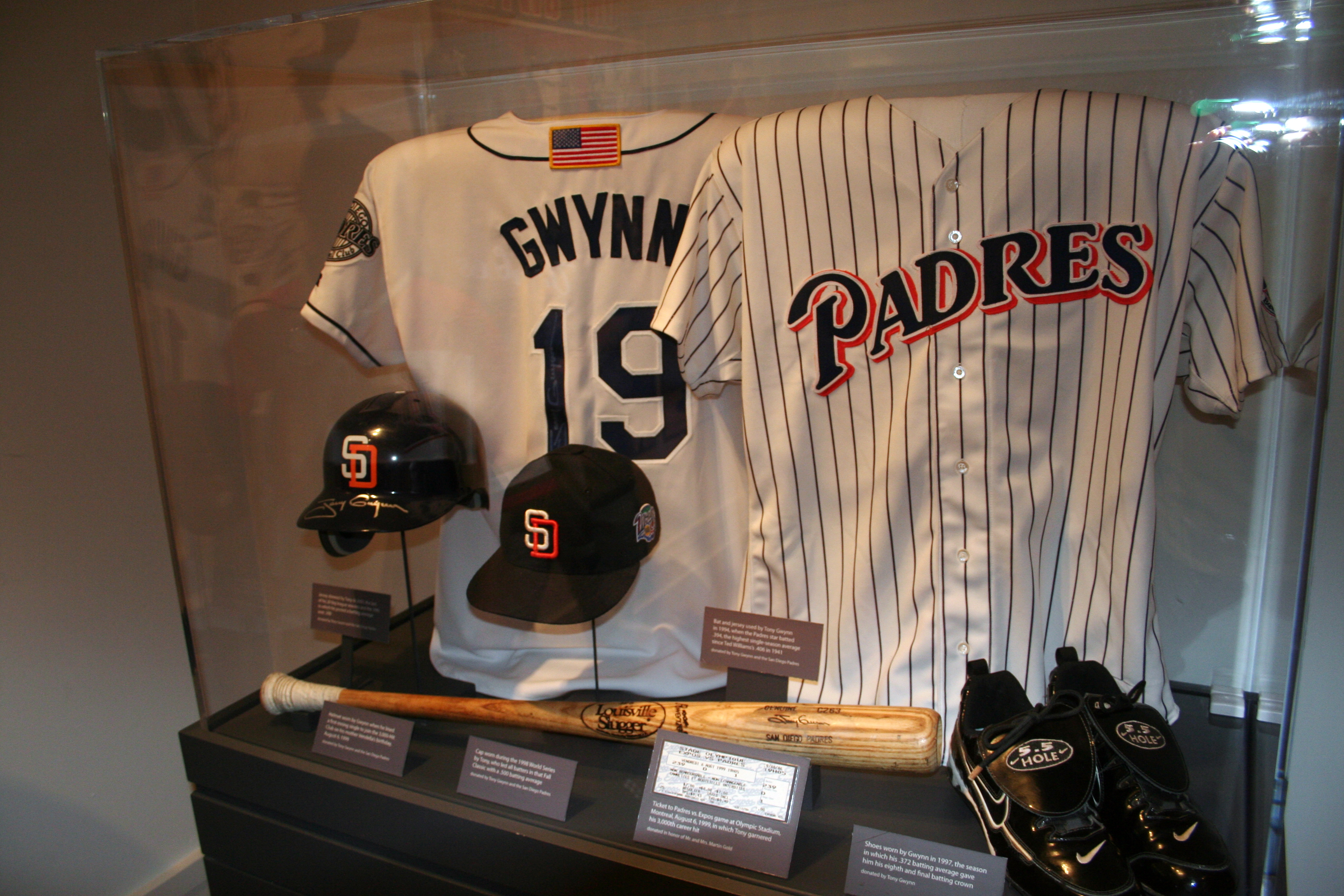
On January 9, 2007, Gwynn was elected to the Baseball Hall of Fame, being selected on 532 out of 545 ballots (97.61%), the seventh highest percentage in Hall of Fame voting history. Upon receiving the news of being elected, Gwynn broke down into tears; his wife Alicia said this was the first time she ever saw him cry. He was relieved that he did not exceed Tom Seaver's record of 98.8 percent. Gwynn considered his selection to be validation for the value of contact hitters, who are not as celebrated as power hitters. He was inducted alongside Cal Ripken Jr. on July 29, 2007. Ripken and Gwynn are two of the 46 players in the Hall of Fame who played their entire major league career for only one team. Both were elected almost unanimously in their first year of eligibility.
The Gwynn-Ripken induction weekend set a number of attendance records, which were announced during the ceremony. About 14,000 people visited the Hall of Fame Museum on July 28, a record number for a single-day. Baseball attendance for all games played on July 28 also set a single-day record. The induction ceremony also had the greatest collection of Hall of Famers present, 53 of the 61 living members. A record crowd estimated at 75,000 attended the induction ceremony,
Other honors and tributes

In 1989, Gwynn was inducted into the San Diego State Aztecs Hall of Fame. In 1997, SDSU's baseball facility, Smith Stadium, was extensively renovated with $4 million from Padres owner John Moores. At Moores' request, the stadium was renamed Tony Gwynn Stadium.
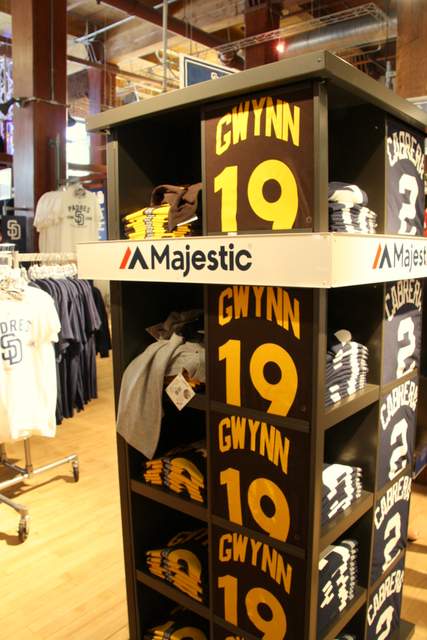
Gwynn was inducted into the Padres Hall of Fame in 2002, and the team retired his No. 19 in 2004. In 2002, Gwynn was also inducted into the Breitbard Hall of Fame, which honors athletes in San Diego. He was posthumously inducted into the California Hall of Fame in 2016.
In 2007, a 9½-foot (9.5 ft), 1200 lb bronze statue of Gwynn was unveiled in the park just beyond Petco Park's outfield in an area named Tony Gwynn Plaza. The address of Petco Park is 19 Tony Gwynn Drive.
In 2014, the Mountain West Conference posthumously renamed its baseball Player of the Year Award to the Tony Gwynn Award. In 2015, a segment of Interstate 15 in San Diego County was designated with road signage as "Tony Gwynn Memorial Freeway". At the 2016 All-Star Game in San Diego, MLB announced that the annual winner of the NL batting title would be known henceforth as the "Tony Gwynn National League Batting Champion". On May 9, 2017, a memorial statue in his honor was unveiled at Lake Poway.
Post-playing career
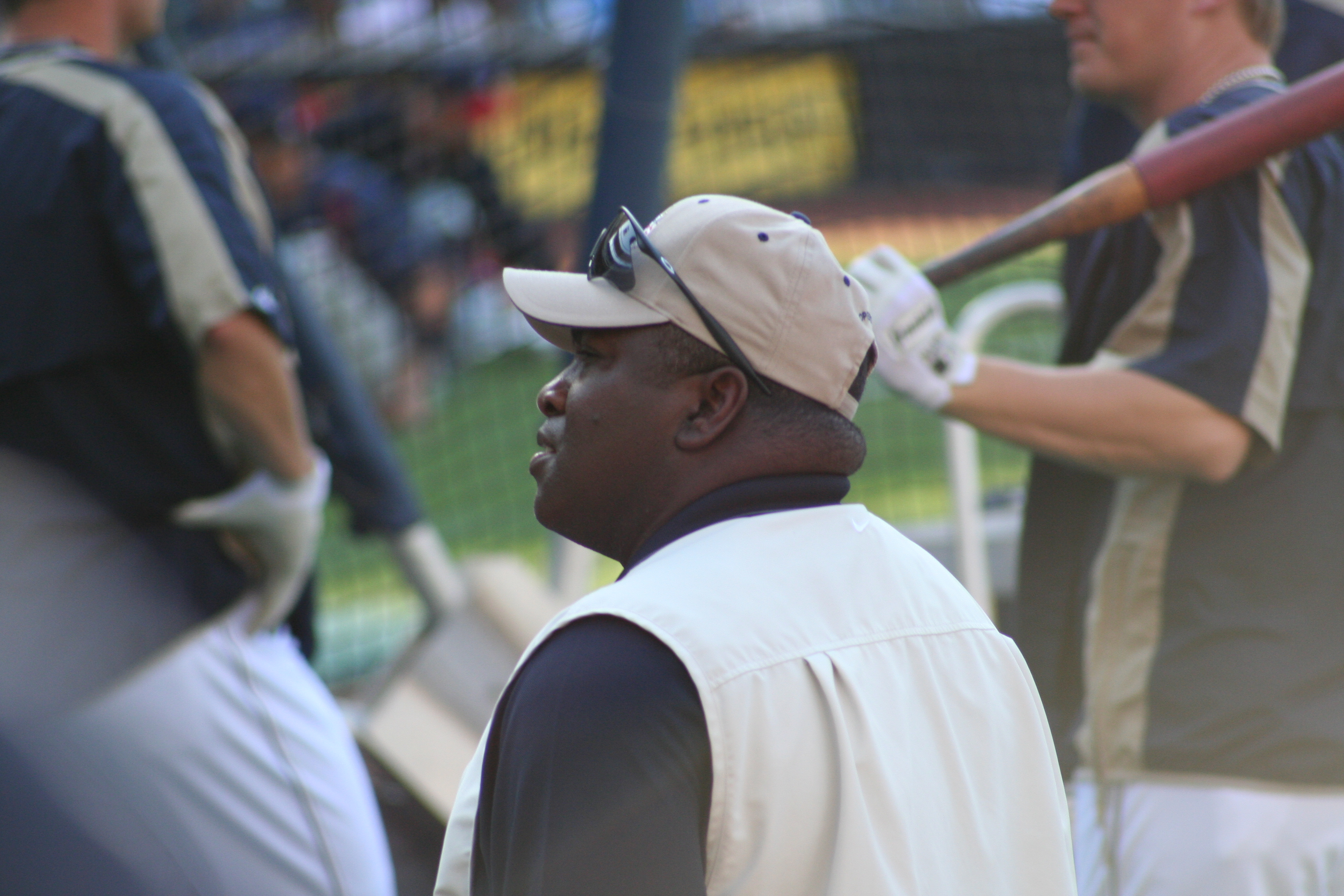
Following his playing career, Gwynn was the baseball head coach at SDSU for 12 seasons, compiling a 363–363 record including three Mountain West Conference championships and three NCAA tournament appearances. During his last season playing for the Padres in 2001, he lobbied for the coaching position after Jim Dietz announced he would step down after the 2002 season. In September 2001, Gwynn signed a three-year contract with his alma mater to be an unpaid volunteer coach for 2002 with a base salary of $100,000 starting in 2003. Gwynn successfully lobbied for the SDSU Aztecs to play the first baseball game at Petco Park after the ballpark opened in 2004. The opponent was the Houston Cougars as a homage to the alma mater of Padres owner John Moores. The game drew a crowd of over 40,000 which set a record for the most attendees at a college baseball game; the Aztecs won.
In the five-year period 2007–2011, the baseball team was penalized with a reduction in scholarships for failing to meet the NCAA's Academic Progress Rate. However, Gwynn's teams improved their academic performance for the five years ending in 2012. The Aztecs finished .500 or better in five of Gwynn's final seven seasons, and they qualified for the NCAA tournament three times in his final six seasons. During his coaching tenure, Gwynn attracted uncharacteristically large crowds to games and other events, with most people coming mainly to see Gwynn (rather than the team and players) and possibly seek out his autograph; for this, San Diego Union-Tribune sportswriter Kirk Kenney said that Gwynn had "rock star status".
Gwynn's bout with cancer caused him to miss time intermittently. He missed the start of the 2012 season after undergoing surgery, and missed games in 2013 while involved with a clinical trial. Days before his death in June 2014, he was given a one-year contract extension although he had been on a leave of absence since March while recovering from cancer treatment.
Gwynn was also a broadcaster, working as a game and studio analyst for ESPN.
.jpg)
In May 2012, Gwynn joined a group led by movie producer Thomas Tull to bid on purchasing the Padres from Moores. Gwynn had no financial stake in the group, and Tull withdrew his bid in June.
Head coaching record
Source:
Personal life

Despite being born and raised in Southern California, Gwynn's family was from Tennessee, and his voice was characterized as having a "country accent", "Southern-esque drawl", and "Arkansas accent". Gwynn (along with his father) was fond of jazz music; he regularly listened to the genre prior to his baseball games, as well as during his 2010 radiation treatments to soothe his fear, anxiety, and unease. Kirk Whalum and Boney James were among the specific musicians he listened to. Gwynn had vanity plates printed with "TGwynn" and "Padre19". Gwynn had a fear of flying.
Gwynn married Alicia Cureton on June 6, 1981, at a small Baptist church in Long Beach. Alicia grew up in Southern California after having been born in Beaufort, South Carolina. When Gwynn played for the Padres, she frequently cooked her homemade family fried chicken recipe which the team ate in the clubhouse. When he coached at SDSU, she also cooked some for the fans, among whom it was popular. She later launched a food truck brand called "Gwynn Foods" centered around that recipe. Gwynn was the father of R&B singer Anisha Nicole and major league outfielder Tony Gwynn Jr., whose major league debut (with the Milwaukee Brewers) and first major league hit on July 19, 2006, came 24 years to the day after his father's first major league hit—each Gwynn hit a double. Gwynn's brother, Chris, was also a major league outfielder. Both Chris and Tony Jr. played with the Padres during their careers.
Gwynn and his wife moved to Poway, California, in the mid-1980s. In 1991, they moved to a home in northern Poway, where he lived until his death. In 1993, they bought a home in Fishers, Indiana, a suburb in Indianapolis where they lived during the baseball offseason for over a decade. Gwynn enjoyed the relative obscurity he had in Indiana where he could live an ordinary life while virtually nobody in public knew or recognized him. He was a fan of the Indiana Pacers professional basketball team, often attending their games; he first got season tickets for them in the mid-1990s, two rows behind the Pacers bench. On August 13, 1999, days after he collected his 3,000th career hit, Gwynn became the 3,000th season ticket holder of the Indiana Fever, a new women's basketball franchise.
In 1997, Gwynn noticed forgeries of his signature on Padres memorabilia in an official team store in Encinitas, California. After alerting MLB management, he assisted the FBI in verifying his signature and identifying fake autographs during their nationwide Operation Bullpen, which hunted down rings of memorabilia forgers.
Tobacco usage and health problems
While he was a member of the SDSU Aztecs baseball team, Gwynn started using smokeless tobacco (particularly dipping tobacco) on a regular basis, marking the beginning of his long-term addiction. The Gwynn family's legal case asserted that Gwynn was "deluged" with free samples from tobacco company campus sales representatives throughout his college baseball tenure. Over the next three decades, he consumed approximately two tins of the substance per day; the National Institutes of Health stated that Gwynn's tobacco usage was equivalent to smoking roughly four or five cigarette packs per day.
Gwynn had three procedures to remove noncancerous growths from his parotid gland beginning in 1997. In 2010, he was diagnosed with cancer of a salivary gland and had lymph nodes and tumors from the gland removed; the cancerous location was the spot where Gwynn had placed his dipping tobacco daily for the prior three decades. The operation left his face partially paralyzed on the right side, leaving him unable to smile. A few doctors stated that studies had not linked parotid cancer with use of chewing tobacco.
After his playing career ended, Gwynn's weight peaked at 330 lb, and he underwent adjustable gastric banding surgery in 2009, in an attempt to lose weight. He did not closely adhere to the diet, and his weight loss began to stall. In 2010, his weight problem led to a slipped disc in his back that affected a nerve down his leg. He needed a walker before he had the damaged disc removed to cure the pain while walking. Later, he experienced a loss of taste for food during radiation therapy for his cancer. During that time, he was limited to a liquid diet and lost 80 lb, all of which he regained after he resumed eating solid foods.
Death
During another round of cancer treatments in April 2014, a mishap occurred in which Gwynn lost oxygen and was barely able to move. He was sent to rehabilitation to learn how to walk again. On June 16, 2014, Gwynn died at Pomerado Hospital in Poway of complications from his cancer. He was 54 years old. The night before, on Father's Day, he had gone into cardiac arrest, and he was rushed from his home to the hospital.
A public memorial service was held for Gwynn at Petco Park on June 26, 2014. The service was attended by 23,229 fans, who heard tributes to Gwynn from baseball and civic leaders, and from Gwynn's family. He was interred at Dearborn Memorial Park in Poway.
In 2018, Gwynn's family reached a confidential settlement with the U.S. Smokeless Tobacco Company after filing a wrongful death lawsuit against the company in 2016, charging that Gwynn had become "hopelessly addicted" to its products.
Impact on tobacco usage in MLB
Gwynn was referred to as the "poster player for banning smokeless tobacco." Weeks before he died, Gwynn authored and endorsed a video message addressed to major and minor league players that warned of the health dangers of smokeless tobacco and urged them to quit or refrain from using the substance; Gwynn wanted to speak the part, but was physically unable to use his voice due to his cancer condition, so someone else spoke the message on his behalf. Gwynn's death brought the previously obscure issue of ubiquitous tobacco usage in MLB to the forefront of public awareness, prompting calls for a league-wide ban on the substance. A total of nine major anti-tobacco health organizations co-wrote a letter to MLB commissioner Bud Selig and the Major League Baseball Players Association (MLBPA) executive director Tony Clark; the letter included the following statements: This ultimately led to a prohibition on smokeless tobacco for incoming players being written into the 2016 labor agreement, with existing players receiving a grandfather exemption. Of the change, Gwynn's widow Alicia said, "I think it's a victory, and a positive step in the right direction." Additionally, veteran players Addison Reed and Stephen Strasburg (who were both coached by Gwynn at SDSU), and Chris Sale all chose to quit using tobacco upon learning about Gwynn's death.
Baseball achievements
Awards and honors
| Award/Honor | # of times | Dates | Refs |
|---|---|---|---|
| NL batting champion | 8 | 1984, 1987, 1988, 1989, 1994, 1995, 1996, 1997 | |
| NL All-Star | 15 | 1984, 1985, 1986, 1987, 1989, 1990, 1991, 1992, 1993, 1994, 1995, 1996, 1997, 1998, 1999 | |
| NL Silver Slugger | 7 | 1984, 1986, 1987, 1989, 1994, 1995, 1997 | |
| NL Gold Glove | 5 | 1986, 1987, 1989, 1990, 1991 | |
| Commissioner's Historic Achievement Award | 1 | 2001 | |
| Roberto Clemente Award | 1 | 1999 | |
| Lou Gehrig Memorial Award | 1 | 1998 | |
| Branch Rickey Award | 1 | 1995 |
Records
| Accomplishment | Record | Refs |
|---|---|---|
| Most 5-hit games in a season | 4 (1993) |
| Accomplishment | Record | Refs |
|---|---|---|
| Most batting titles | 8Tied with Honus Wagner | Naiman, Porter 2010]], p. 178. |
| Most seasons leading league in hits | 7Tied with Pete Rose | |
| Most consecutive seasons batting .300 or better | 19 | |
| Most seasons leading league in singles | 7 |

| Accomplishment | Record | Refs | |||
|---|---|---|---|---|---|
| Highest batting average, career | .338 | title=San Diego Padres Top 10 Batting Leaders | work=Baseball-Reference.com | url=https://www.baseball-reference.com/teams/SDP/leaders_bat.shtml | access-date=March 1, 2014}} |
| Highest batting average, season | .394 (1994) | ||||
| Highest on-base percentage, season | .454 (1994) | ||||
| Most games played, career | 2,440 | ||||
| Most at bats, career | 9,288 | ||||
| Most plate appearances, career | 10,232 | ||||
| Most runs scored, career | 1,383 | ||||
| Most hits, career | 3,141 | ||||
| Most hits, season | 220 (1997) | ||||
| Most total bases, career | 4,259 | ||||
| Most doubles, career | 543 | ||||
| Most doubles, season | 49 (1997) | ||||
| Most triples, career | 85 | ||||
| Most triples, season | Dave Roberts]] (1987) | ||||
| Most runs batted in, career | 1,138 | ||||
| Most walks, career | 790 | ||||
| Most stolen bases, career | 319 |
Career statistics
- Bold indicates Padres all-time leader
| AVG | G | AB | R | H | 2B | 3B | HR | RBI | BB | SO | SB | CS | OBP | SLG | FLD |
|---|---|---|---|---|---|---|---|---|---|---|---|---|---|---|---|
| .338 | 2,440 | 9,288 | 1,383 | 3,141 | 543 | 85 | 135 | 1,138 | 790 | 434 | 319 | 125 | .388 | .459 | .987 |
Source:
Publications
Filmography
Notes
References
Sources
Citations
References
- Schell, Michael J.. "Tony Gwynn: Meeting Baseball's Best Hitter". Society for American Baseball Research.
- Rhoden, William C.. (October 1, 1996). "A Tale From The Brothers Gwynn". The New York Times.
- [[#staples2007. Staples, Herschlag 2007]], p. 367.
- (September 1, 2023). "SDM's Guide to San Diego Food + Drink: Gwynn Foods".
- [[#staples2007. Staples, Herschlag 2007]], p. 367–368.
- [[#staples2007. Staples, Herschlag 2007]], p. 368.
- [[#staples2007. Staples, Herschlag 2007]], p. 369.
- [[#staples2007. Staples, Herschlag 2007]], p. 369–370.
- Organ, Mike. (June 21, 2014). "Tony Gwynn had Midstate ties". [[The Tennessean]].
- [[#staples2007. Staples, Herschlag 2007]], p. 372–373.
- [[#staples2007. Staples, Herschlag 2007]], p. 367–373.
- Eisenberg, Jeff. (June 17, 2014). "Visiting Tony Gwynn's hometown reveals some secrets to his success". Yahoo! Sports.
- [[#wolfe2014. Wolfe 2014]], p. 99. (Pete Brown)
- Keisser, Bob. (July 26, 2007). "Path to Hall began in L.B.". Los Angeles Daily News.
- Goldstein, Richard. (June 16, 2014). "Tony Gwynn, Hall of Fame Batting Champion, Dies at 54 of Cancer". The New York Times.
- [[#will1990. Will 1990]], p. 164–165.
- Benson, Lee. (October 12, 1984). "Gwynn has no 2nd thoughts about 2nd love". The Deseret News.
- [[#kingdon2023. Kingdon 2023]], p. 7.
- Staples, Herschlag 2007]], pp. 373–374.
- (July 28, 1997). "Talking hitting with Stan Musial and Tony Gwynn". Sporting News.
- [[#will1990. Will 1990]], p. 228.
- Keisser, Bob. (July 26, 2007). "The Hitman Tony Gwynn Enters the Baseball Hall of Fame This Weekend As One of the Most Prolific Hitters To Ever Play The Game". Daily News.
- Gilbert, Bill. (February 2004). "The Seasons: Ten Memorable Years in Baseball, and in America". [[Citadel Press]].
- Staples, Herschlag 2007]], pg. 377.
- [[#staples2007. Staples, Herschlag 2007]], pg. 377–378.
- [[#wolfe2014. Wolfe 2014]], p. 39. ([[Bobby Meacham]])
- [[#wolfe2014. Wolfe 2014]], p. 30–32. (Nick Harsh)
- Tennis, Mark. (June 17, 2014). "Tony Gwynn nearly quit baseball". CalHiSports.com.
- [[#staples2007. Staples, Herschlag 2007]], p. 381.
- Maffei, John. (November 24, 2007). "Gwynn's legend grew at SDSU". North County Times.
- Canepa, Nick. (September 13, 1984). "Tony's average isn't only thing that's fat". Evening Tribune.
- Cushman, Tom. (October 7, 2001). "Dietz's Gwynn connection happened by accident". The San Diego Union-Tribune.
- Cushman, Tom. (December 2006). "Hitting the Hall". San Diego Magazine.
- Canepa, Nick. (January 10, 2007). "The masterstroke". The San Diego Union-Tribune.
- [[#wolfe2014. Wolfe 2014]], p. 50. ([[Jim Dietz (baseball). Jim Dietz]])
- "19 Tony Gwynn". goaztecs.cstv.com.
- Maffei, John. (July 18, 2012). "COMMENTARY: Gwynn began road to Hall of Fame 30 years ago this week". North County Times.
- Kreidler, Mark. (April 9, 1985). "Gwynn hits the jackpot in 1984". The San Diego Union.
- Kurkjian, Time. (December 28, 2006). "Since Williams, no greater hitter than Gwynn". ESPN.com.
- [[#kuenster2006. Kuenster 2006]], p. 406.
- Haudricourt, Tom. (May 4, 1998). "Hit man: Gwynn's still the toughest out around". Milwaukee Journal Sentinel.
- The Padres scout credited for discovering Gwynn was Cliff Ditto from the Los Angeles area; his scouting report was the only one the Padres had for Gwynn.[[#wolfe2014. Wolfe 2014]], p. 142. ([[Jack McKeon]])
- [[#wolfe2014. Wolfe 2014]], p. 147. ([[Bob Cluck]])
- Sullivan, Paul. (June 16, 2014). "Tony Gwynn did it his way – as a Padre". Chicago Tribune.
- (June 30, 2007). "Tony in his own words". U-T San Diego.
- Verducci, Tom. (June 25, 2007). "Talking a Good Game".
- [[#chandler_swank2012. Chandler, Swank 2012]], p. 327.
- [[#wolfe2014. Wolfe 2014]], p. 95. (Jim Buchan)
- Jenkins, Chris. (June 12, 2015). "Tony Gwynn: 19 memories of No. 19". The San Diego Union-Tribune.
- Collier, Phil. (June 22, 2014). "Gwynn's mind boggled by his rapid ascent to Major Leagues". The San Diego Union-Tribune.
- Verducci, Tom. (August 9, 1999). "Single Minded".
- Staples, Herschlag 2007]], p. 385.
- "Tony Gwynn 1983 Batting Gamelog". [[Baseball-Reference.com]].
- Vecsey, George. (October 14, 1984). "Sports of The Times; Tony Gwynn: Just Arriving". The New York Times.
- (November 17, 1984). "Gwynn gets hefty raise". Star-Phoenix.
- Will, George F.. (2010). "Men at Work: The Craft of Baseball". HarperCollins.
- Distel, Dave. (March 25, 1985). "Padres' Gwynn Is a Big Hit : National League Batting Champion Was Busy in Winter". Los Angeles Times.
- Hewitt, Brian. (March 31, 1989). "PADRES 1989: 84' REVISITED? : MEMORIES : World Series Was a Disaster, but It Was Fun Getting There". Los Angeles Times.
- (July 27, 1984). "Wiggins clears table for Padres". The Montreal Gazette.
- Bloom, Barry. (March 16, 1985). "Lineup experiment doesn't faze Gwynn". Evening Tribune.
- Chass, Murray. (August 25, 1985). "BASEBALL; PADRES' OFFENSE IS WEAKENED BY THE DEPARTURE OF WIGGINS". The New York Times.
- Noble, Marty. (February 17, 2015). "Mets hopeful October fantasies become reality". MLB.com.
- Mowery, Matthew M.. (June 16, 2014). "Tigers Brad Ausmus, Torii Hunter have fond memories of Hall of Famer Tony Gwynn". The Morning Sun.
- Lockwood, Wayne. (April 18, 1998). "Gwynn wrote the book on artful hitting". The San Diego Union-Tribune.
- Krasovic, Tom. (October 7, 2001). "Scaling heights of pay not Gwynn's only way". The San Diego Union-Tribune.
- Christensen, Joe. (March 30, 2007). "Twins: What can Mauer do for an encore?". Star Tribune.
- Anderson, Bruce. (April 14, 1986). "12 San Diego Padres".
- Center, Bill. (October 7, 2001). "The Greatest Padre: career timeline". The San Diego Union-Tribune.
- Jenkins, Chris. (June 29, 2007). "The hit parade". The San Diego Union-Tribune.
- Friend, Tom. "Padres Go Down in History, Then Down in Defeat". Los Angeles Times.
- Verducci, Tom. (June 16, 2014). "Tony Gwynn was a joy to watch at the plate, and in life". SI.com.
- [[#will1990. Will 1990]], pp. 166–167.
- and sportswriter [[Joe Posnanski]] called Gwynn's 1987 season "otherworldly" while opining that "he probably should have won the MVP award".[[#posnanski2021. Posnanski 2021]], p. 43.
- [[#will1990. Will 1990]], p. 211.
- Larry Doyle]]'s .320 in 1915.[[#chandler_swank2012. Chandler, Swank 2012]], p. 331.
- [[#will1990. Will 1990]], p. 212.
- [[#will1990. Will 1990]], pp. 211–212.
- The Padres were battling the [[San Francisco Giants]] for the division title in September, but they were eliminated from contention the game before hosting a season-ending three-game series with the Giants. Although the race for the division was over, Gwynn was still trailing San Francisco's [[Will Clark]] for the batting title, .333 to .332. Gwynn went 3-for-4 in the last two games, finishing at .336 to claim his third title.[[#chandler_swank2012. Chandler, Swank 2012]], pp. 215–217.
- [[#will1990. Will 1990]], pp. 165–166.
- [[#will1990. Will 1990]], p. 168.
- Stevenson, Samantha. (October 11, 1990). "Despite Feud, Gwynn Says He'll Play With Clark". The New York Times.
- (September 30, 1990). "Gwynn Abandoned Padre Teammates, Jack Clark Says". The Seattle Times.
- Kurkjian, Tim. (March 11, 1991). ["Beginning Again"](http://cnnsi.printthis.clickability.com/pt/cpt?expire=&title=After+a+nightmarish+1990%2C+the+Padres%27+Tony+Gwynn+seeks+a+-+03.11.91+-+SI+Vault&urlID=423162107&action=cpt&partnerID=289881&fb=Y&url=http%3A%2F%2Fsportsillustrated.cnn.com%2Fvault%2Farticle%2Fmagazine%2FMAG1118956%2F3%2Findex.htm}}{{Dead link).
- [[#naiman_porter2003. Naiman, Porter 2003]], p. 126.
- Fainaru, Steve. (April 11, 1991). "Clark is ready to make a powerful statement". The Boston Globe.
- Nightengale, Bob. (March 23, 1990). "Gwynn: Criticism 'Tough to Swallow' : Padres: His reaction to published comments by teammate Mike Pagliarulo overshadows another loss, 6–1 in Montreal". Los Angeles Times.
- Shaughnessy, Dan. (April 14, 1991). "Wait till this year For Jack Clark, there are only a few baseball Octobers left. Is this the man who can take the Red Sox all the way?". The Boston Globe.
- Smith, Claire. (March 3, 1991). "His Uniform Changes But Clark Doesn't". The New York Times.
- Nightengale, Bob. (March 5, 1991). "Gwynn Rips Clark, Cites 'Jealousy'". Sun Sentinel.
- (October 12, 1990). "Around the majors". The Washington Post.
- (September 30, 1990). "Clark blasts Gwynn". Chicago Sun-Times.
- (October 11, 1990). "Gwynn says he'll play with Padres, Clark". Chicago Sun-Times.
- Center, Bill. (October 7, 2001). "Through the years: '90 – '91". The San Diego Union-Tribune.
- Cafardo, Nick. (August 30, 1992). "Friend in need Despite feud, Gwynn sympathetic to Clark". The Boston Globe.
- (May 26, 1991). "Frey unwilling to wait: Time to win is now". Chicago Sun-Times.
- Posner, Jay. (September 17, 1991). "Gwynn out with injury – Surgery likely to end year, hopes for fifth batting title". Evening Tribune.
- Center, Bill. (October 1, 1995). "Tony's won six, could have won 9 hitting titles". The San Diego Union-Tribune.
- Jenkins, Chris. (October 1, 2001). "When Ted talked, Tony listened". The San Diego Union-Tribune.
- Rhoden, William C.. (July 30, 2007). "Baseball: A weekend for the good guys". The New York Times.
- They finished last in the division, behind even the [[Colorado Rockies]], who were an [[1993 Major League Baseball expansion. expansion team]] in their inaugural season.[[#staples2007. Staples, Herschlag 2007]], p. 388.
- Sullivan, Tim. (June 16, 2014). "Tony Gwynn was a pure hitter, a pure joy". The Courier-Journal.
- [[#chandler_swank2012. Chandler, Swank 2012]], p. 335.
- Center, Bill. (October 7, 2001). "THE GREATEST PADRE: career timeline: '93". The San Diego Union-Tribune.
- (1999). "Total Baseball: The Official Encyclopedia of Major League Baseball". Total Sports.
- Olney, Buster. (June 16, 2014). "A superhero in the batter's box". ESPN.com.
- Center, Bill. (October 7, 2001). "THE GREATEST PADRE: career timeline '94". The San Diego Union-Tribune.
- [[#kingdon2023. Kingdon 2023]], p. 99–100
- Corcoran, Cliff. (June 16, 2014). "The 10 best seasons of Tony Gwynn's Hall of Fame career".
- Krasovic, Tom. (August 1995). "Ted Williams' Batting Tips Absorbed by Tony Gwynn". Baseball Digest.
- Oz, Mike. (June 16, 2014). "19 incredible stats about Tony Gwynn's Hall of Fame career". Yahoo! Sports.
- Kovacevic, Dejan. (August 16, 2012). "Kovacevic: Can't crown cheating Cabrera". Pittsburgh Tribune-Review.
- Chass, Murray. (June 29, 2001). "ON BASEBALL; Hits to Stop Coming Once Gwynn Is Gone". The New York Times.
- [[1997 San Diego Padres season. Naiman, Porter 2010]], p. 251.
- Maske, Mark. (August 24, 1997). "Baseball Notebook". The Washington Post.
- "Tony Gwynn 1997 Batting Logs". Baseball-Reference.com.
- Canepa, Nick. (September 1, 2002). "Last to hit .400? Gwynn woulda". The San Diego Union-Tribune.
- Jenkins, Chris. (June 29, 2007). "The hit parade (part 2)". The San Diego Union-Tribune.
- (November 17, 2010). "Hall of Famers Rod Carew and Tony Gwynn featured on Studio 42 with Bob Costas on Friday, November 19". MLB.com.
- (August 2, 1999). "Upset Gwynn nears 3,000 hit". The Hour.
- Diaz, George. (August 5, 1999). "Mcgwire, Gwynn Swing For History". Orlando Sentinel.
- Rogers, Phil. (August 6, 1999). "Milestone For Mcgwire". Chicago Tribune.
- Chass, Murray. (August 7, 1999). "BASEBALL; Another Day, Another Milestone". The New York Times.
- Center, Bill. "THE GREATEST PADRE: career timeline '00". The San Diego Union-Tribune.
- Krasovic, Tom. (June 24, 2000). "Gwynn faces knee operation – Worst case: Outfielder could be out for season". The San Diego Union Tribune.
- "Tony Gwynn 2000 Batting Gamelogs".
- Krasovic, Tom. (October 28, 2000). "Padres opt to let Gwynn be free agent". The San Diego Union-Tribune.
- Hoornstra, J.P.. (August 28, 2017). "Dodgers notebook: Gwynn proud to see name around Petco". [[Los Angeles Daily News]].
- McDonald, Jeff. (December 8, 2000). "'TONY GWYNN IS THE PADRES' – Fans rejoice as veteran star seals deal to remain with local team". The San Diego Union-Tribune.
- (December 8, 2000). "Gwynn, Padres come to terms as arbitration deadline passes". The Spokesman-Review.
- "Tony Gwynn 2001 Batting Gamelog". Baseball-Reference.com.
- (January 10, 2007). "Tony Gwynn: The Greatest Padre". The San Diego Union-Tribune.
- [[#chandler_swank2012. Chandler, Swank 2012]], pp. 337–340.
- Cassavell, AJ. (October 7, 2021). "20 years ago, Tony and Rickey made history". Major League Baseball.
- Glanville, Doug. (June 25, 2014). "Tony Gwynn was a pure contact hitter". ESPN.com.
- Kurkjian, Tim. (May 3, 2002). "Bad-ball wonders: Vlad, Ichiro hit everything". ESPN The Magazine.
- [[#will1990. Will 1990]], p. 191.
- Neyer, Rob. (January 3, 2015). "IS THERE ROOM IN TODAY'S BASEBALL FOR ANOTHER TONY GWYNN SR.?". FoxSports.com.
- [[#will1990. Will 1990]], p. 210.
- Will 1990]], p. 181.
- [[#posnanski2021. Posnanski 2021]], p. 41–42.
- [[#kurkjian2016. Kurkjian 2016]], p. 46.
- slider]].[[#kurkjian2016. Kurkjian 2016]], p. 155.
- (2014). "Don Mattingly's Hitting Is Simple: The ABC's of Batting .300". St. Martin's Griffin.
- [[#wolfe2014. Wolfe 2014]], p. 237. (Chuck Schupp)
- [[#will1990. Will 1990]], p196.
- O'Neill, Shaun. (October 8, 2001). "Gwynn is truly unique". The San Diego Union-Tribune.
- Hoffer, Richard. (March 4, 1998). ["Enough About Me. What Do You Think Of My Stats?"](http://cnnsi.printthis.clickability.com/pt/cpt?expire=&title=There%27s+no+%26quot%3Bi%26quot%3B+in+baseball%2C+though+there+sure+-+05.04.98+-+SI+Vault&urlID=519461152&action=cpt&partnerID=289881&fb=Y&url=http%3A%2F%2Fsportsillustrated.cnn.com%2Fvault%2Farticle%2Fmagazine%2FMAG1012759%2F2%2Findex.htm}}{{Dead link).
- Boswell, Thomas. (January 7, 2014). "Greg Maddux: A Hall of Fame approach that carried an average arm to Cooperstown". [[The Washington Post]].
- Elderkin, Phil. (July 8, 1997). "This Ball Player Comes Out Swinging". Christian Science Monitor.
- Bodley, Hal. (July 27, 2007). "Tony Gwynn singled his way into Cooperstown". USA Today.
- Wilson, Bernie. (January 5, 2007). "Gwynn's long-ago choice will be validated by a call from the Hall". San Diego Union-Tribune.
- [[#will1990. Will 1990]], p. 204.
- [[#will1990. Will 1990]], pp. 172, 176.
- [[#will1990. Will 1990]], p. 205.
- Silva, Steve. (June 16, 2014). "Padres Great Tony Gwynn Dies at 54". Boston Globe.
- Bodley, Hal. (July 30, 2007). "Padres' Gwynn turned hitting into a science". USA Today.
- Kennedy, Kirk. (June 22, 2014). "WORK ETHIC DROVE GWYNN TO HIS STANDING AS LEGEND". The San Diego Union-Tribune.
-
- lb. Wolfe, 2014]], p. 29.
- [[#wolfe2014. Wolfe 2014]], p. 98. (Pete Brown)
- (October 21, 1998). "Gwynn, San Diego fit each other". Lubbock Avalanche-Journal.
- sometimes getting angry when a reporter discussed or asked about it.[[#wolfe2014. Wolfe 2014]], p. 121. (Tom Krasovic)
- [[#wolfe2014. Wolfe 2014]], p. 118–119. (Tom Krasovic)
- Granillo, Larry. (January 24, 2012). "Wezen-Ball". BaseballProspectus.com.
- O'Neill, Shaun. (April 18, 2001). "Gwynn chases cycle". The San Diego Union-Tribune.
- [[#kuenster2006. Kuenster 2006]], p. 407
- Early on in Gwynn's major league tenure, [[Clyde McCullough]] coached Gwynn on fielding every night to strengthen his arm; McCullough repeatedly had Gwynn practice picking up the ball in right field and throwing it to second base.[[#wolfe2014. Wolfe 2014]], p. 143. ([[Jack McKeon]])
- [[#wolfe2014. Wolfe 2014]], p. 208. ([[Dick Williams]])
- [[#wolfe2014. Wolfe 2014]], p. 52–53. ([[Jim Dietz (baseball). Jim Dietz]])
- [[#wolfe2014. Wolfe 2014]], p. 57. (John Maffei)
- [[#wolfe2014. Wolfe 2014]], p. 145. ([[Jack McKeon]])
- [[#wolfe2014. Wolfe 2014]], p. 230. (John Boggs)
- [[#wolfe2014. Wolfe 2014]], p. 244–245. (Charlotte Jones)
- Canepa, Nick. (June 22, 2014). "DEATH OF GWYNN HITS LIKE A SHARP PUNCH TO THE GUT". The San Diego Union-Tribune.
- Nightengale, Bob. (June 16, 2014). "Nightengale: Tony Gwynn was truly the greatest". USA Today.
- Kepner, Tyler. (June 16, 2014). "In a .338 Lifetime Average, Every Day Counted". The New York Times.
- Nightengale, Bob. (June 16, 2014). "Nightengale: Tony Gwynn left a lasting impression". USA Today.
- Crasnick, Jerry. (June 16, 2014). "Memorable encounter with Mr. Padre". ESPN.com.
- [[#will1990. Will 1990]], pp. 221–224.
- Kennedy, Paul. (June 15, 2017). "Veteran umpire West remembers Gwynn's dedication, work ethic". [[Fox Sports]].
- [[#wolfe2014. Wolfe 2014]], p. 93. ([[John Kruk]])
- [[#wolfe2014. Wolfe 2014]], p. 152, 206–207. ([[Kevin Towers]])
- [[#wolfe2014. Wolfe 2014]], p. 71. (Kirk Kenney)
- [[Chris Berman]] of [[ESPN]] called Gwynn's laugh the "best sound I've ever heard in my life".[[#wolfe2014. Wolfe 2014]], p. 250. (David Johnson)
- Kuenster 2006]], pp. 409–410.
- [[#wolfe2014. Wolfe 2014]], p. 75. (Ken Davis)
- [[#wolfe2014. Wolfe 2014]], p. 76–77. (Ken Davis)
- Cushman, Tom. (December 2006). "Hitting the Hall".
- Pessah, Jon. (May 5, 2015). "The Game: Inside the Secret World of Major League Baseball's Power Brokers". [[Little, Brown and Company]].
- Olney, Buster. (June 17, 2014). "When Tony Gwynn spoke up". [[ESPN]].
- Shea, John. (March 3, 2013). "Tony Gwynn checks in on Giants, steroids". [[SFGate]].
- Teitelbaum, Stanley H.. (2010). "Athletes Who Indulge Their Dark Side: Sex, Drugs, and Cover-Ups". [[ABC-Clio]].
- (January 10, 2007). "Gwynn Says McGwire Belongs in Baseball Hall of Fame; Ripken Says All Stories Haven't Been Told". [[Fox News]] from the [[Associated Press]].
- . (March 4, 2020). ["Celebrating Tony Gwynn's sweet-swinging ways"](https://www.foxsports.com/stories/other/celebrating-tony-gwynns-sweet-swinging-ways). *[[Fox Sports]]*.
- Bostrom, Don. (December 25, 2006). "Two for the Hall". The Morning Call.
- O'Neill, Shaun. (July 7, 1999). "For starters, Gwynn to skip Game". North County Times.
- "Tony Gwynn #19".
- Quick, Jason. (June 16, 2014). "Tony Gwynn, a look back: A young reporter finds a baseball legend can still be a good person". [[The Oregonian]].
- [[#kurkjian2016. Kurkjian 2016]], p. 154.
- Jones, David. (June 18, 2014). "Tony Gwynn's art of hitting beat pitching science". [[The Patriot-News]].
- Renck, Troy. (April 27, 2016). "Renck: Tony Gwynn was as great in interviews as he was at the plate". [[The Denver Post]].
- Gallian, Joseph. (2006). "The Edge of the Universe: Celebrating Ten Years of Math Horizons". [[Mathematical Association of America]].
- Rodriguez, Tristi. (July 12, 2023). "What Gwynn told Bonds that made slugger change hitting mindset". [[NBC Sports Bay Area]].
- Stark, Jayson. (June 28, 2024). "Stark: Gwynn is the best of our generation (We'll be telling our grandkids about the great Gwynn)". [[ESPN]].
- Tramel, Berry. (June 17, 2014). "Tony Gwynn: Missing the batsman". [[The Oklahoman]].
- D'Addona, Dan. (June 21, 2014). "Dan D'Addona: Tony Gwynn's impact spans generations". [[The Holland Sentinel]].
- Collins, Ben. (June 16, 2014). "Tony Gwynn, The Best Hitter of a Generation, Is Dead". [[Esquire (magazine).
- (June 28, 2001). "NATIONAL LEAGUE: ROUNDUP; Gwynn Expected To Announce His Retirement". The New York Times.
- Smith, Ron. (1998). "The Sporting News Selects Baseball's 100 Greatest Players". The Sporting News Publishing Co..
- Schmehl, James. (June 16, 2014). "Detroit Tigers saddened by passing of Tony Gwynn: 'We lost a great man, a great baseball player'". mlive.com.
- Posnanski, Joe. (December 23, 2019). "The Baseball 100: No. 95, Tony Gwynn". The Athletic.
- (February 1, 2022). "Top 100 MLB players of all time". [[ESPN]].
- Schoenfield, David. (June 16, 2014). "Tony Gwynn: The man could hit". ESPN.com.
- Swydan, Paul. (June 16, 2014). "Tony Gwynn Was Always in Control". Fangraphs.
- Will, George F.. (1999). "Bunts". Simon and Schuster.
- O'Neill, Shaun. (February 20, 2001). "Gwynn could be sliding down the order". The San Diego Union-Tribune.
- "Tony Gwynn Career Batting Splits". Baseball-Reference.com.
- Ever since MLB began tracking the statistic in the early 1990s, Gwynn holds the highest two-strike batting average at .302, which is 40 points above second-place [[Wade Boggs]] with .262.[[#kingdon2023. Kingdon 2023]], p. 170.
- Marchman, Tim. (June 16, 2014). "How Tony Gwynn Cracked Baseball's Code And Became A Legend". Deadspin.
- Keri, Jonah. (June 16, 2014). "Tony Gwynn: 1960–2014". grantland.com.
- Krasovic, Tom. (June 22, 2014). "GWYNN'S 3,000TH LAUNCHES 4-FOR-5 NIGHT". The San Diego Union-Tribune.
- Curry, Jack. (January 9, 2007). "Two Elected to Hall of Fame; McGwire Misses". The New York Times.
- (June 26, 2014). "Padres host Tony Gwynn memorial". [[ESPN]].
- London, Christina. (June 26, 2014). "Fans, Baseball Greats Pay Tribute to Tony Gwynn". [[KNSD]] (NBC 7 San Diego).
- Kenney, Kirk. (December 29, 2014). "The 52: Tony Gwynn is No. 1 in our book". The San Diego Union-Tribune.
- Miller, Randy. (June 16, 2014). "Tony Gwynn, dead at 54, was 'basically indefensible' as hitter, says Doug Glanville". NJ.com.
- Perry, Tony. (June 16, 2014). "Flags to fly at half-staff in San Diego after death of Tony Gwynn". Los Angeles Times.
- Kepner, Tyler. (January 8, 2008). "After Hall of Fame Snub, Tim Raines' Numbers Bear a Closer Look". The New York Times.
- [[#wolfe2014. Wolfe 2014]], p. 144. ([[Jack McKeon]])
- Brown, Tim. (July 26, 2007). "Power the other way". Yahoo! Inc.
- White, Paul. (June 16, 2014). "Tony Gwynn was the purest hitter of an impure era". USA Today.
- [[#wolfe2014. Wolfe 2014]], p. 102–103 ([[Bill Plaschke]])
- Spencer, Lyle. (January 9, 2007). "Gwynn-win situation in Hall voting". MLB.com.
- [[#chandler_swank2012. Chandler, Swank 2012]], p. 11.
- Huhn, Bob. (July 29, 2007). "Ripken, Gwynn inducted into Hall of Fame".
- Jennewein, Chris. (July 17, 2014). "Giant Tony Gwynn Jersey Going to Hall of Champions". [[Times of San Diego]].
- Phy, Melissa. (June 19, 2014). "Towering Tribute to Tony Gwynn Returns to County Building". San Diego County News Center.
- (June 4, 2019). "From 1969 to 2019: A Timeline of the Padres in the MLB".
- (September 29, 1989). "San Diego Sports et Cetera: Hall of Fame". [[Los Angeles Times]].
- (September 4, 2004). "Padres retire Gwynn's No. 19". San Diego Union-Tribune.
- "Tony Gwynn". San Diego Hall of Champions.
- Lin, Dennis. (November 30, 2016). "Tony Gwynn to be inducted into California Hall of Fame". The San Diego Union-Tribune.
- (September 17, 2014). "Mountain West Baseball MVP Award Named 'Tony Gwynn Award'". KPBS.org.
- Lancaster, Marc. (July 10, 2015). "Stretch of I-15 near San Diego to be renamed Tony Gwynn Memorial Freeway". [[The Sporting News]].
- (October 18, 2015). "I-15 Sign Honors 'Mr. Padre' Tony Gwynn". [[KNSD]] (NBC 7 San Diego).
- (July 12, 2016). "Midsummer Classic pregame festivities honor pair of Hall of Famers, including legendary "Mr. Padre" of host San Diego". Major League Baseball.
- "Tony Gwynn Memorial".
- Kenney, Kirk. (June 11, 2014). "Gwynn, Martinez receive extensions". U-T San Diego.
- (June 18, 2014). "Gwynn arguably the best hitter of his era". Wilkes Journal-Patriot.
- (September 21, 2001). "PLUS: COLLEGE BASEBALL; Gwynn to Coach San Diego State". The New York Times.
- [[#wolfe2014. Wolfe 2014]], p. 68–69. (Kirk Kenney)
- Schrotenboer, Brent. (June 20, 2012). "Aztecs improve academic scores". U-T San Diego.
- Acee, Kevin. (May 25, 2012). "Aztecs, Gwynn still going for now". U-T San Diego.
- McGee, Ryan. (June 16, 2014). "Reflections of Tony Gwynn the coach". [[ESPN]].
- [[#wolfe2014. Wolfe 2014]], p. 67. (Kirk Kenney)
- Kenney, Kirk. (April 22, 2014). "Gwynn: 'I'm doing good'". U-T San Diego.
- "Broadcasters". MLB.com.
- "Tony Gwynn joins group in bid to purchase Pads". ESPN.com.
- Schrotenboer, Brent. (June 8, 2012). "Gwynn has tax liens going into Padres bid". U-T San Diego.
- Acee, Kevin. (June 12, 2012). "Tull withdraws bid to buy team". U-T San Diego.
- "San Diego State Baseball 2019 Media Guide". San Diego State Aztecs.
- Jenkins, Lee. (June 23, 2014). "Tony Gwynn, through the shortstop hole…: Remembering Tony Gwynn, the San Diego Padres great, whose generosity affected a generation of baseball fans.".
- Lynott, Beau. (June 16, 2014). "5 Ways Tony Gwynn Left a Mark on Baseball and San Diego". [[Voice of San Diego]].
- Clements, Ron. (July 23, 2019). "Home Run on Wheels: Chronicling the Baseball Trip of a Lifetime While Raising Awareness of the Needs of Children in the Foster System". [[Dorrance Publishing Company]].
- Padilla, Doug. (June 17, 2014). "Gwynn's death shocks, saddens Sox". [[ESPN]].
- Friend, Tom. (April 4, 1986). "Players Got What They Wanted, but Is Boros the Answer? (A Better Bench)". [[Los Angeles Times]].
- Brock, Corey. (August 3, 2021). "'It was a magical time': Tony Gwynn's Hall of Fame career started 40 years ago this summer". [[The Athletic]].
- Nightengale, Bob. (July 10, 2016). "Mr. Padre's All-Star Game: Tony Gwynn's impact resonates in San Diego". [[WHAS11]].
- Kenney, Kirk. (May 9, 2020). "Tony Gwynn: 60 things to know on what would have been his 60th birthday". [[San Diego Union Tribune]].
- [[#wolfe2014. Wolfe 2014]], p. 35. (Nick Harsh)
- McCauley, Jane. (July 19, 2006). "Giants 7, Brewers 6". San Francisco Chronicle.
- "Chris Gwynn Statistics and History".
- Jones, J. Harry. (June 2, 2018). "Tony Gwynn's home in Poway foreclosed upon". The San Diego Union-Tribune.
- Hetrick, Bruce. (June 18, 2014). "Tony Gwynn's Second Base: Indianapolis". indianapolismonthly.com.
- Nye, Charlie. (December 28, 2014). "Hoosiers we lost in 2014". The Indianapolis Star.
- Woods, David. (June 17, 2014). "Hall of Famer dies of cancer at 54". Palladium-Item.
- [[#wolfe2014. Wolfe 2014]], p. 156–159. (Dale Ratermann)
- Perry, Tony. (April 13, 2000). "Baseball Signed by Mother Teresa Too Good to Be True". Los Angeles Times.
- Baccellieri, Emma. (September 6, 2021). "Is This 'Game-Used' Jersey (or Ball or Urinal) Legit? Consult the Little Silver Sticker".
- Epstein, Timothy Liam. (July 5, 2016). "Tony Gwynn's cancer battle gives family a strong case". [[Chicago Daily Law Bulletin]].
- (October 9, 2010). "Hall of Famer Tony Gwynn has cancer". Deseret News.
- Hamilton, Lee "Hacksaw". (October 9, 2010). "1-MAN'S OPINION: Tony Gwynn Fighting Cancer". SanDiego.com.
- Sullivan Brennan, Deborah. (June 16, 2014). "Tony Gwynn battled rare cancer". U-T San Diego.
- Fischer, Josef. (May 2018). "Fischer's Master of Surgery". [[Wolters Kluwer Health]].
- Bloom, Barry M.. (April 4, 2011). "Gwynn taking fight with cancer a day at a time". MLB.com.
- Friend, Tom. (June 17, 2014). "Tony Gwynn used fear as motivation". ESPN.com.
- ESPN.com News Service. (June 16, 2014). "Hall of Famer Tony Gwynn Dies". ESPN.
- Bloom, Barry M.. (June 16, 2014). "Hall of Famer Gwynn passes away at 54". MLB.com.
- Jenkins, Chris. (June 27, 2014). "'Live Like Tony' 20,000-Plus Bid Farewell to Mr. Padre". U-T San Diego.
- Himchak, Elizabeth Marie. (March 24, 2022). "Dearborn Memorial Park's renovated main entrance is open". The San Diego Union-Tribune.
- Schrotenboer, Brent. (September 7, 2018). "Tony Gwynn family reaches settlement with tobacco company over his death". USA Today.
- Brennan, Deborah. (June 16, 2014). "Tony Gwynn battled rare cancer".
- Kepner, Tyler. (May 23, 2016). "Tony Gwynn's Family Sues Tobacco Industry, Seeking Recourse Over Fatal Habit". The New York Times.
- Skelton, George. (March 1, 2015). "Capitol Journal: Chewing over a proposal to ban ballpark chaw". [[Los Angeles Times]].
- Perry, Tony. (June 29, 2014). "Video on tobacco dangers has warning from Tony Gwynn". [[Los Angeles Times]].
- Corzine, Nathan Michael. (January 30, 2016). "Team Chemistry: The History of Drugs and Alcohol in Major League Baseball". [[University of Illinois Press]].
- Branson, Douglas M.. (October 5, 2021). "Major League Turbulence: Baseball in the Era of Drug Use, Labor Strife and Black Power, 1968-1988". [[McFarland & Company]].
- Caple, Jim. (June 17, 2014). "A call to action: tobacco and MLB". [[ESPN]].
- Snyder, Deron. (June 18, 2014). "Snyder: Tony Gwynn's death reinforces need for baseball tobacco ban". [[The Washington Times]].
- (June 19, 2014). "Tony Gwynn's death should convince baseball to ban tobacco". [[The Boston Globe]].
- (June 17, 2014). "Gwynn's chewing tobacco death renews baseball ban call". [[The State-Journal Register]].
- Ponting, Bob. (June 25, 2014). "Gwynn's death prompts call for MLB to ban tobacco". [[KSWB-TV]] from [[CNN]].
- (October 7, 2015). "A Tribute to Tony Gwynn: 1960-2014". Mario A. Vilardi.
- (July 24, 2014). "Viewpoint: The time to change this spitting image is now". [[The Republican (Springfield, Massachusetts).
- Blumap, Ronald. (December 5, 2016). "Gwynn's death helped change MLB culture on smokeless tobacco". [[Associated Press]].
- (December 1, 2016). "Tony Gwynn's wife reacts to MLB's banning of chewing tobacco". [[KGTV]] via [[YouTube]].
- Berg, Ted. (June 23, 2014). "Diamondbacks reliever quits tobacco use after Tony Gwynn's death". [[The Arizona Republic]].
- McGuire, Justin. (June 24, 2014). "Stephen Strasburg quits smokeless tobacco following Tony Gwynn's death". [[Sporting News]].
- Sanderson, Catherine A.. (March 2018). "Health Psychology: Understanding the Mind–Body Connection". [[Sage Publications]].
- Chass, Murray. (September 26, 2004). "League's Best Relievers Lift Rangers Back Into Pennant Race". The New York Times.
- [[#naiman_porter2003. Naiman, Porter 2010]], p. 249.
- [[#naiman_porter2003. Naiman, Porter 2010]], p. 178.
- "San Diego Padres Top 10 Batting Leaders". Baseball-Reference.com.
- Kenney, Kirk. (February 22, 2024). "College baseball weekend: Tony Gwynn Legacy event a reminder of Hall of Famer's legendary life". San Diego Union-Tribune.
This article was imported from Wikipedia and is available under the Creative Commons Attribution-ShareAlike 4.0 License. Content has been adapted to SurfDoc format. Original contributors can be found on the article history page.
Ask Mako anything about Tony Gwynn — get instant answers, deeper analysis, and related topics.
Research with MakoFree with your Surf account
Create a free account to save articles, ask Mako questions, and organize your research.
Sign up freeThis content may have been generated or modified by AI. CloudSurf Software LLC is not responsible for the accuracy, completeness, or reliability of AI-generated content. Always verify important information from primary sources.
Report