From Surf Wiki (app.surf) — the open knowledge base
Tom Foley
American politician (1929–2013)
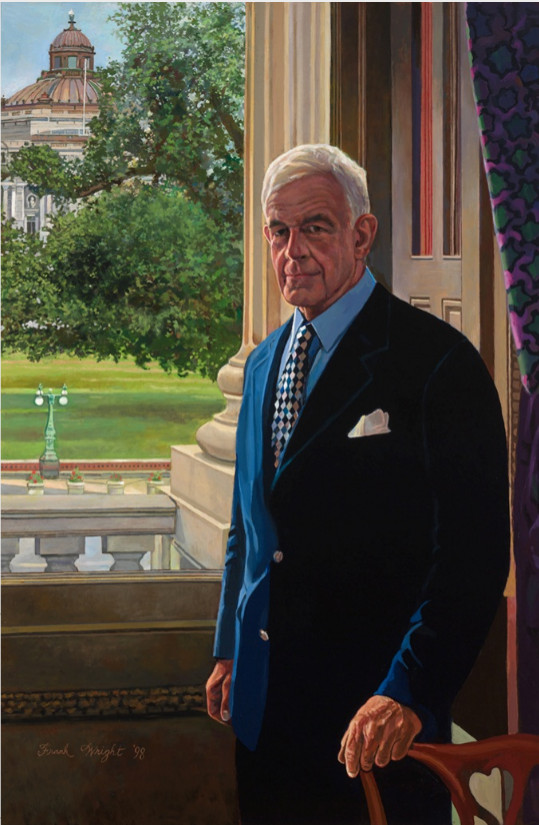
American politician (1929–2013)
| Field | Value | ||
|---|---|---|---|
| name | Tom Foley | ||
| image | Tom foley (cropped)(b).jpg | ||
| office | 25th United States Ambassador to Japan | ||
| president | Bill Clinton | ||
| George W. Bush | |||
| term_start | November 19, 1997 | ||
| term_end | April 1, 2001 | ||
| predecessor | Walter Mondale | ||
| successor | Howard Baker | ||
| office1 | Chair of the President's Intelligence Advisory Board | ||
| president1 | Bill Clinton | ||
| term_start1 | January 16, 1996 | ||
| term_end1 | November 19, 1997 | ||
| predecessor1 | Warren Rudman (acting) | ||
| successor1 | Warren Rudman | ||
| office2 | 49th Speaker of the United States House of Representatives | ||
| term_start2 | June 6, 1989 | ||
| term_end2 | January 3, 1995 | ||
| predecessor2 | Jim Wright | ||
| successor2 | Newt Gingrich | ||
| {{Collapsed infobox section begin | House positions | titlestyle | border: 1px dashed lightgrey;}} |
| {{Infobox officeholder | embed | yes | |
| office3 | Leader of the House Democratic Caucus | ||
| term_start3 | June 6, 1989 | ||
| term_end3 | January 3, 1995 | ||
| predecessor3 | Jim Wright | ||
| successor3 | Dick Gephardt | ||
| office4 | House Majority Leader | ||
| leader4 | Jim Wright | ||
| term_start4 | January 3, 1987 | ||
| term_end4 | June 6, 1989 | ||
| predecessor4 | Jim Wright | ||
| successor4 | Dick Gephardt | ||
| office5 | House Majority Whip | ||
| leader5 | Tip O'Neill | ||
| term_start5 | January 3, 1981 | ||
| term_end5 | January 3, 1987 | ||
| predecessor5 | John Brademas | ||
| successor5 | Tony Coelho | ||
| office6 | Chair of the House Democratic Caucus | ||
| leader6 | Tip O'Neill | ||
| term_start6 | January 3, 1977 | ||
| term_end6 | January 3, 1981 | ||
| predecessor6 | Phillip Burton | ||
| successor6 | Gillis Long | ||
| office7 | Chair of the House Agriculture Committee | ||
| term_start7 | January 3, 1975 | ||
| term_end7 | January 3, 1981 | ||
| predecessor7 | William Poage | ||
| successor7 | Kika de la Garza | ||
| state8 | Washington | ||
| district8 | |||
| term_start8 | January 3, 1965 | ||
| term_end8 | January 3, 1995 | ||
| predecessor8 | Walt Horan | ||
| successor8 | George Nethercutt | ||
| birth_name | Thomas Stephen Foley | ||
| birth_date | |||
| birth_place | Spokane, Washington, U.S. | ||
| death_date | |||
| death_place | Washington, D.C., U.S. | ||
| party | Democratic | ||
| spouse | |||
| education | Gonzaga University | ||
| University of Washington (BA, JD) | |||
| module |
George W. Bush University of Washington (BA, JD)
Thomas Stephen Foley (March 6, 1929 – October 18, 2013) was an American lawyer, diplomat and politician who served as the 49th speaker of the United States House of Representatives from 1989 to 1995. A member of the Democratic Party, Foley represented Washington's 5th congressional district for 30 years (1965–1995). He was the first Speaker of the House in over a century since Galusha Grow in 1862 to be defeated in a re-election campaign.
Born in Spokane, Washington, Foley attended Gonzaga University and pursued a legal career, after graduating from the University of Washington School of Law in Seattle. He joined the staff of Senator Henry M. Jackson, after working as a prosecutor and an assistant attorney general. With Jackson's support, Foley won election to the House of Representatives, defeating incumbent Republican Congressman Walt Horan. He served as Majority Whip from 1981 to 1987, and as Majority Leader from 1987 to 1989. After the resignation of Jim Wright, Foley became Speaker of the House.
Foley's district had become increasingly conservative during his tenure, but he won re-election throughout the 1980s and early 1990s. In the 1994 election, Foley faced attorney George Nethercutt. Nethercutt mobilized popular anger over Foley's opposition to term limits, leading to his defeat. After leaving the House, Foley served as the United States Ambassador to Japan from 1997 to 2001 under President Bill Clinton.
Early life, education, and legal career
Born and raised in Spokane, Washington, Foley was the son of Helen Marie (née Higgins) (1902–1990), a school teacher, and Ralph E. Foley (1900–1985), a Superior Court judge for 34 years. He was of Irish Catholic descent on both sides of his family; his grandfather Cornelius Foley was a maintenance foreman for the Great Northern railroad in Spokane.
Foley graduated from the Jesuit-run Gonzaga Preparatory School in Spokane in 1946 and attended Gonzaga University for three years; he completed his bachelor's degree at the University of Washington in Seattle, then attended its School of Law and was awarded a Juris Doctor degree in 1957.
Following law school, Foley entered private practice. In 1958, he began working in the Spokane County prosecutor's office as a deputy prosecuting attorney, and later taught at Gonzaga's School of Law (in Spokane) from 1958 to 1959. He joined the state attorney general's office in 1961 as an assistant attorney general.
In 1961, Foley moved to Washington, D.C., and joined the staff of Senator Henry M. Jackson. He left Jackson's office in 1964 to run for Congress.
Congressional service

In 1964, Foley was unopposed for the Democratic nomination for Washington's 5th congressional seat, which included Spokane. He faced 11-term Republican incumbent Walt Horan in the general election and won by seven points, one of many swept into office in the 1964 Democratic landslide. He was re-elected without significant difficulty until 1978, when in a 3-person race, he won only 48% of the vote. Two years later, he narrowly defeated Republican candidate John Sonneland (52% to 48%). Though the fifth district became increasingly conservative, Foley didn't face serious opposition again until his defeat in 1994. Foley voted in favor of the Voting Rights Act of 1965, the Civil Rights Act of 1968, the bill establishing Martin Luther King Jr. Day as a federal holiday, and the Civil Rights Restoration Act of 1987 (as well as to override President Reagan's veto).
During his first term in the House, Foley was appointed to the Agriculture Committee and the Interior and Insular Affairs Committee. He served on the latter committee through 1975, when he became chairman of the Agriculture Committee. In 1981, when Foley was appointed Majority Whip, he left the Agriculture Committee to serve on the House Administration Committee. Six years later, January 1987, he was elected House Majority Leader.
Speaker of the House
In June 1989, Jim Wright of Texas resigned as Speaker of the House of Representatives (only the fourth speaker ever to resign) and from Congress amid a House Ethics Committee investigation into his personal business dealings. In the June 6 election to succeed Wright, Foley was the victor, receiving 251 votes; his Republican opponent, Minority Leader Robert H. Michel, received 164 votes.
During the 101st Congress, Foley presided over the House as it passed a landmark update to the 1963 Clean Air Act, measures protecting persons with disabilities, the Americans with Disabilities Act and the Individuals with Disabilities Education Act, as well as the Budget Enforcement Act of 1990. The budget act, a part of the massive Omnibus Budget Reconciliation Act of 1990, established the "pay-as-you-go" process for discretionary spending and taxes, and was signed into law by President George H. W. Bush on November 5, 1990, contrary to his 1988 campaign promise not to raise taxes. This became a significant issue during the 1992 presidential campaign.
In 1993, the 103rd Congress passed an omnibus budget bill through which the government was able to raise additional revenue and balance the federal budget. Signed into law by President Bill Clinton on August 10, 1993, the measure stirred controversy because of the tax increases it imposed. Under Foley's leadership Congress also passed the Family and Medical Leave Act of 1993, the North American Free Trade Agreement Implementation Act, as well as the Brady Handgun Violence Prevention Act plus legislation that laid the groundwork for the "Don't ask, don't tell" military service policy in 1993 which was then instituted by the Clinton Administration in 1994.
Term limits
During his time in the House, Foley repeatedly opposed efforts to impose term limits on Washington state's elected officials, winning the support of the state's voters to reject term limits in a 1991 referendum; however, in 1992, a term limit ballot initiative was approved by the state's voters.
Foley brought suit, challenging the constitutionality of a state law setting eligibility requirements on federal offices. Foley won his suit, with a United States District Court declaring that states did not have the authority under the United States Constitution to limit the terms of federal officeholders.
However, in Foley's bid for a 16th term in the House, his Republican opponent, George Nethercutt, used the issue against him, citing the caption of the federal case brought by Foley, "Foley against the People of the State of Washington". Nethercutt vowed that if elected, he would not serve more than three terms in the House, though he ultimately served for five. Foley lost in a narrow race. While Foley had usually relied on large margins in Spokane to carry him to victory, in 1994 he won Spokane by only 9,000 votes, while Nethercutt did well enough in the rest of the district to win overall by just under 4,000 votes. Since Foley left office, no Democrat has garnered more than 45 percent of the district's vote.
Foley became the first incumbent Speaker of the House to lose his bid for re-election since Galusha A. Grow in 1862. He is sometimes viewed as a political casualty of the term limits controversy of the early 1990s. President Clinton attributed Foley's defeat to his support for the Federal Assault Weapons Ban of 1994. Foley lost his seat in the Republican Revolution.
Later career
From 1995 to 1998, Foley was head of the Federal City Council, a group of business, civic, education, and other leaders interested in economic development in Washington, D.C.
In 1997, Foley was appointed as the 25th U.S. Ambassador to Japan by President Bill Clinton, and was part of the US government response to the deaths of Japanese schoolchildren caused by a US submarine. He served as ambassador until 2001.
Foley was a Washington delegate to the 2004 and 2012 Democratic National Conventions. On July 9, 2003, Governor Gary Locke awarded the Washington Medal of Merit, the state's highest honor, to Foley. He was North American Chairman of the Trilateral Commission.
Death
Foley died at his home in Washington, D.C. on October 18, 2013, following months of hospice care after suffering a series of strokes and a bout with pneumonia. He was 84 and was survived by his wife, Heather. Services were held at St. Aloysius Church at Gonzaga University, as well as in Washington, D.C. Speaker John Boehner, and Nancy Pelosi, who had also served as Speaker, issued statements honoring Foley. In a White House statement, President Barack Obama called Foley a "legend of the United States Congress" who "represented the people of Washington's 5th district with skill, dedication, and a deep commitment to improving the lives of those he was elected to serve.", going on to praise Foley for his bipartisanship and subsequent ambassadorial service under former president Clinton. Vice President Joe Biden also released an official statement, saying "Tom was a good friend and a dedicated public servant.", citing his work in Congress with Foley in the 1980s on budgetary issues. Washington governor Jay Inslee also released a statement, acknowledging Foley's efforts to reach consensus and emphasize mutual common ground, and his work in the legal system and in Congress. Former president George H. W. Bush stated that Foley "represented the very best in public service--and our political system" and "never got personal or burned bridges."
Honors
- Honorary Knight Commander of the Order of the British Empire (UK).
- Order of Merit (Germany).
- Légion d'honneur (France).
- Order of the Rising Sun with Paulownia Flowers, Grand Cordon (Japan), 1995.
- Thomas S. Foley Institute for Public Policy and Public Service at Washington State University. Established in 1995.
- Thomas S. Foley Memorial Highway (U.S. Route 395), dedicated in 2018.
Electoral history
Congressional elections
- November 3, 1964:
- November 8, 1966:
- November 5, 1968:
- November 3, 1970:
- November 7, 1972:
- November 5, 1974:
- November 2, 1976:
- November 7, 1978:
- November 4, 1980:
- November 2, 1982:
- November 6, 1984:
- November 4, 1986:
- November 8, 1988:
- November 6, 1990:
- November 3, 1992:
- November 8, 1994:
Speaker elections
- June 6, 1989: :{| class=wikitable |- ! colspan=5 style="background:#f5f5f5" | 1989 intra-term Speaker of the House election101st Congress |- ! colspan=2 | Party ! Candidate ! Votes ! Percent |- |- | Republican | Robert H. Michel (Illinois) |- |- ! colspan=3 style="text-align:right" | Total votes: ! style="text-align:right" | 417 ! style="text-align:right" | 100% |}
- January 3, 1991: :{|class="wikitable" |- ! colspan=5 style="background:#f5f5f5" | 1991 Speaker of the House election102nd Congress |- ! colspan=2 | Party ! Candidate ! Votes ! Percent |- |- | Republican | Robert H. Michel (Illinois) |- |- ! colspan=3 style="text-align:right" | Total votes: ! style="text-align:right" | 429 ! style="text-align:right" | 100% |}
- January 5, 1993: :{|class="wikitable" |- ! colspan=5 style="background:#f5f5f5" | 1993 Speaker of the House election103rd Congress |- ! colspan=2 | Party ! Candidate ! Votes ! Percent |- |- | Republican | Robert H. Michel (Illinois) |- |- ! colspan=3 style="text-align:right" | Total votes: ! style="text-align:right" | 431 ! style="text-align:right" | 100% |}
References
References
- Langer, Emily. (2013-10-18). "Thomas S. Foley, former House speaker, dies at 84". [[The Washington Post]].
- Post, The Washington Post {{!}} The Washington. (2013-10-18). "Thomas Foley, reluctant but powerful leader, dies at 84".
- (2013-10-18). "Thomas Foley, reluctant but powerful leader, dies at 84". [[Washington Post]].
- "Tom Foley - Oct. 18, 2013 {{!}} The Spokesman-Review".
- (2024-09-01). "Review: "Tom Foley: The Man in the Middle" tells life of Democratic politician elected to a heavily Republican district".
- (January 5, 1990). "House speaker's mother dies at 88". Spokane Chronicle.
- (April 17, 1985). "Retired Judge Ralph Foley dead at 84". Spokesman-Review.
- "Foley, Thomas S. (1929-2013)". HistoryLink.org.
- (January 29, 2015). "Tom Foley". The Gonzaga Bulletin.
- Song, Kyung M.. (October 19, 2013). "Ex-House Speaker Tom Foley reigned in friendlier political era". [[Seattle Times]].
- (September 16, 1964). "Horan, Foley express appreciation to voters". Spokane Daily Chronicle.
- "House – July 9, 1965". [[United States Government Publishing Office.
- "House – August 3, 1965". [[United States Government Publishing Office.
- "House – August 16, 1967". [[United States Government Publishing Office.
- "House – April 10, 1968". [[United States Government Publishing Office.
- "TO SUSPEND THE RULES AND PASS H.R. 3706, A BILL AMENDING TITLE 5, UNITED STATES CODE TO MAKE THE BIRTHDAY OF MARTIN LUTHER KING, JR., A LEGAL PUBLIC HOLIDAY. (MOTION PASSED;2/3 REQUIRED).".
- "TO PASS S 557, CIVIL RIGHTS RESTORATION ACT, A BILL TO RESTORE THE BROAD COVERAGE AND CLARIFY FOUR CIVIL RIGHTS LAWS BY PROVIDING THAT IF ONE PART OF AN INSTITUTION IS FEDERALLY- FUNDED, THEN THE ENTIRE INSTITUTION MUST NOT DISCRIMINATE.".
- "TO PASS, OVER PRESIDENT REAGAN'S VETO, S 557, CIVIL RIGHTS RESTORATION ACT, A BILL TO RESTORE BROAD COVERAGE OF FOUR CIVIL RIGHTS LAWS BY DECLARING THAT IF ONE PART OF AN INSTITUTION RECEIVES FEDERAL FUNDS, THEN THE ENTIRE INSTITUTION MUST NOT DISCRIMINATE. VETO OVERRIDDEN; TWO-THIRDS OF THOSE PRESENT VOTING IN FAVOR.".
- Smith, Timothy R.. (May 6, 2015). "Jim Wright, House speaker who resigned amid an ethics investigation, dies at 92". The Washington Post.
- (2013). "Fighting for the Speakership: The House and the Rise of Party Government". Princeton University Press.
- Langer, Emily. (October 18, 2013). "Thomas S. Foley, former House speaker, dies at 84". The Washington Post.
- Egan, Timothy. (February 11, 1994). "Federal Judge Strikes Down Law Limiting the Terms of Lawmakers".
- "My Life". Vintage.
- Rasanen, Colton. (2023-11-08). "Tom Foley was the first Washingtonian to become House speaker — what can we learn from him today?".
- King, Colbert I.. (September 8, 2007). "Fred, Did We Really Know You?". Washington Business Journal.
- [https://archive.today/20130119032955/http://www.businessweek.com/archives/1997/b3526076.arc.htm Commentary: "Is Tom Foley the Wrong Man to Send to Tokyo?"] ''BusinessWeek.'' May 12, 1997; Wudunn, Sheryl. [https://query.nytimes.com/gst/fullpage.html?res=9C02EFDA1F3AF93BA35757C0A96E958260&scp=1&sq=order+of+paulownia+flowers&st=nyt "New U.S. Diplomat Tries to Speak Japan's Language,"] ''New York Times.'' April 8, 1998.
- (October 17, 2013). "Former Speaker of the House Tom Foley dies at 84". The Associated Press.
- [[Trilateral Commission]]: [http://www.trilateral.org/membship/bios/tf.htm Foley, bio notes] {{Webarchive. link. (February 24, 2012)
- Clymer, Adam. (October 18, 2013). "Thomas Foley, House Speaker, Dies at 84; Democrat Urged Parties to Collaborate". The New York Times.
- "Tom Foley, former speaker of the US House, dies at age 84". The Washington Post.
- (October 18, 2013). "Former Speaker of the House Tom Foley dies at 84 - Spokesman.com - Oct. 18, 2013". Spokesman.com.
- Tom Kludt. (October 18, 2013). "Boehner, Pelosi Pay Tribute To Former Speaker Foley". Talkingpointsmemo.com.
- (October 18, 2013). "Statement by the President on the Passing of Tom Foley". [[whitehouse.gov]].
- (October 18, 2013). "Statement by the Vice President on the Passing of Tom Foley". [[whitehouse.gov]].
- (October 18, 2013). "Former House Speaker Tom Foley dead at 84". CNN.
- [http://bioguide.congress.gov/scripts/biodisplay.pl?index=F000239 Biographical Directory of the United States Congress: FOLEY, Thomas Stephen, (1929 - 2013)]; Retrieved October 19, 2013
- [https://books.google.com/books?id=XLmtL54gmCkC&q=tom+foley&pg=PA116 Tom Hayden, ''Irish on the Inside: In Search of the Soul of Irish America'', p. 116]; Retrieved October 19, 2013
- Deshais, Nicholas. (August 27, 2018). "Say Hello to the new Foley Highway". The Spokesman-Review.
- "WA District 5 (1964)".
- "WA District 5 (1966)".
- "WA District 5 (1968)".
- "WA District 5 (1970)".
- "WA District 5 (1972)".
- "WA District 5 (1974)".
- "WA District 5 (1976)".
- "WA District 5 (1978)".
- "WA District 5 (1980)".
- "WA District 5 (1982)".
- "WA District 5 (1984)".
- "WA District 5 (1986)".
- "WA District 5 (1988)".
- "WA District 5 (1990)".
- "WA District 5 (1992)".
- "WA District 5 (1994)".
- "Election of the Speaker (House of Representatives – June 06, 1989)". Library of Congress.
- "Election of the Speaker (House of Representatives – January 03, 1991)". Library of Congress.
This article was imported from Wikipedia and is available under the Creative Commons Attribution-ShareAlike 4.0 License. Content has been adapted to SurfDoc format. Original contributors can be found on the article history page.
Ask Mako anything about Tom Foley — get instant answers, deeper analysis, and related topics.
Research with MakoFree with your Surf account
Create a free account to save articles, ask Mako questions, and organize your research.
Sign up freeThis content may have been generated or modified by AI. CloudSurf Software LLC is not responsible for the accuracy, completeness, or reliability of AI-generated content. Always verify important information from primary sources.
Report