From Surf Wiki (app.surf) — the open knowledge base
Tokyo Station
Major railway and metro station in Japan

Major railway and metro station in Japan
| Field | Value | ||
|---|---|---|---|
| name | Tokyo Station | ||
| native_name | 東京駅 | ||
| native_name_lang | ja | ||
| image | Tokyo-STA Marunouchi-Entrance 2023.jpg | ||
| caption | Tokyo Station's Marunouchi side in June 2023 | ||
| other_name | Tokyo Central Station | ||
| address | Chiyoda, Tokyo | ||
| country | Japan | ||
| operator | |||
| * {{ric | JR East | name | y}} |
| * {{ric | JR Central | name | y}} |
| * {{ric | Tokyo Metro | name | y}} |
| connections | |||
| opened | |||
| (JGR) | |||
| (Tokyo Metro) | |||
| mapframe | no | ||
| map_type | Japan Tokyo Yamanote loop#Japan Tokyo wards#Japan Kanto#Japan | ||
| map_dot_label | Tokyo Station |
- Bus terminal (JGR)
(Tokyo Metro) Tokyo Station is a major railway station in Chiyoda, Tokyo, Japan. The original station is located in Chiyoda's Marunouchi business district near the Imperial Palace grounds. The newer Eastern extension is not far from the Ginza commercial district. Due to the large area covered by the station, it is divided into the Marunouchi (west) and Yaesu (east) sides in its directional signage.
The station opened in 1914 as an integrated terminus for the present-day Tōkaidō Line, Tōhoku Line, and later the Chūō Line, which previously had separate termini in Tokyo. Since then, it has served as the main terminus for inter-city trains departing Tokyo westwards. The station was badly damaged during the Bombing of Tokyo on 25 May 1945 but soon resumed service. The Tōkaidō Shinkansen, the world’s first dedicated high-speed rail system, opened between the station and Osaka in 1964. With the extension of northbound Shinkansen lines from Ueno in 1991, the station also became a gateway to northeast Japan.
Served by the high-speed rail lines of the Shinkansen network, Tokyo Station is the main inter-city rail terminal in Tokyo. It is the busiest station in Japan in terms of scheduled trains, with more than 4,000 trains arriving and departing daily. and also ranks sixth busiest in Japan and ninth in the world in terms of passenger throughput; on average, more than 500,000 people use Tokyo Station every day. The station is also served by many regional commuter lines of Japan Railways, as well as the Tokyo Metro network.
Overview
Tokyo Station serves as the interchange station for both conventional and Shinkansen lines. The station is served by many railway lines operated by JR East. For conventional lines, the station is the terminus of the Tōkaidō Main Line, the Chūō Main Line, Keiyō Line, and the Sōbu Main Line. The station is also served by the Ueno–Tokyo Line, Keihin–Tōhoku Line, Yamanote Line, rapid services of Sōbu Line and Yokosuka Line.
The station is also directly connected to two Shinkansen lines: the Tōhoku Shinkansen, operated by JR East and the Tokaido Shinkansen, operated by JR Central. Shinkansen trains from other lines also service the station via these two lines. The services from Yamagata Shinkansen, Akita Shinkansen, which are Mini-Shinkansen lines, connect to Tokyo Station via the Tōhoku Shinkansen. Jōetsu Shinkansen and Hokuriku Shinkansen services also operate from Tokyo Station. Hokkaido Shinkansen services operated by JR Hokkaido also run on Tohoku Shinkansen tracks to service Tokyo Station. Tokyo Metro's Marunouchi Line serves the station as well.
The station is linked by underground passageways to the Ōtemachi underground (subway) station complex served by the Tōzai, Chiyoda, Hanzōmon, and Mita subway lines.
It is also possible to walk to the Nijūbashimae, Hibiya, Yūrakuchō, Ginza, and Higashi-ginza Stations completely underground (the last a distance of over 2 km), but these stations can usually be reached more quickly by train.
Tokyo Station is also a major intercity bus terminal, with regular midday service to several cities in the Kantō region and overnight service to the Kansai and Tōhoku regions. The furthest overnight bus service goes to Izumo-Taisha, over 800 km away.
History
Planning and construction, 1872–1914
In 1889, a Tokyo municipal committee drew up plans for an elevated railway line connecting the Tōkaidō Main Line terminal at Shinbashi to the Nippon Railway (now Tōhoku Main Line) terminal at Ueno. The Imperial Diet resolved in 1896 to construct a new station on this line called Central Station, located directly in front of the gardens of the Imperial Palace.
Construction was delayed by the outbreak of the First Sino-Japanese War and Russo-Japanese War, but finally commenced in 1908. The three-story station building was designed by architect Tatsuno Kingo (who also designed Manseibashi Station and the nearby Bank of Japan building) as a restrained celebration of Japan's costly victory in the Russo-Japanese War. The building is often mentioned in guidebooks to be fashioned after Amsterdam Centraal station in the Netherlands. This is in dispute, as it has a similarity to a family of other railway station buildings built at the beginning of the twentieth century. Terunobu Fujimori, a scholar of Western architecture, also refutes the rumor, having studied Tatsuno's styles as well as the building itself.
Early days, 1914–1941
.webp)
Tokyo Station opened on December 20, 1914 with four platforms; two serving electric trains (current Yamanote/Keihin–Tōhoku Line platforms) and two serving non-electric trains (current Tōkaidō Line platforms). With the opening of Tokyo Station, the old Shinbashi Station, which had served as the Tokyo-side terminus of the Tōkaidō Line since 1872, was closed as a passenger station. After the final train departed from the old Shinbashi Station at 12:23 AM on the opening day, a special train transported staff and equipment to Tokyo Station. Using the transferred staff and equipment, the first train departed from Tokyo Station at 5:23 AM. The opening ceremony was attended by the Prime Minister, the Mayor of Tokyo, the Minister of Railways, and the war hero Mitsuomi Kamio, 1st Baron, who had defeated the Germans in the Siege of Tsingtao a month earlier. Kamio arrived at the station from Osaka by train.[[File:Tokyo elevated railway 1931.jpg|thumb|Yamanote Line trains running between Tokyo and Yūrakuchō in 1931]] The Tokyo Station Hotel opened in the Marunouchi-side building on November 2, 1915. The Chūō Main Line extension to the station was completed in 1919 and originally stopped at the platform now used by northbound Yamanote/Keihin–Tōhoku trains. During this early era, the station only had gates on the Marunouchi side, with the north side serving as an exit and the south side serving as an entrance. The central gate was exclusively for members of the Imperial Family. On November 4, 1921, Prime Minister Hara Takashi was stabbed to death by a 18-year-old right-wing railway switchman in front of the south wing as he arrived to board a train for Kyoto.
The Great Kantō Earthquake struck Tokyo on September 1, 1923, causing immense damage to the city. However, the station sustained little damage. By September 3, 7,925 evacuees had taken shelter at the station. The Yaesu side of the station opened in 1929. In October 1930, the superexpress Tsubame began service, connecting Tokyo Station and Kobe Station. The nickname superexpress was given because it reduced travel time between the two stations by over two hours. Although the Tōkaidō Line was electrified between Tokyo and Kōzu, Class C51 steam locomotives were used for the entire route to avoid engine changes. On November 14, 1930, Osachi Hamaguchi was shot by a member of the Aikokusha ultra-nationalist secret society. He survived the attack but died of his wounds in August the following year. By 1935, it became clear that passenger demand had exceeded the station's capacity. For instance, the Yamanote and Keihin Tohoku line services operated at intervals of just one minute and forty seconds. As a result, it was decided to relocate the railway yard to Shinagawa, while the freight terminus there would be moved to Shintsurumi to make room. Two new platforms were then built on the former railway yard site.
War damage and reconstruction, 1942–1950
Much of the station was destroyed in a B-29 firebombing raid on May 25, 1945. The bombing destroyed the rooftop domes, as well as most of the third floor of the building and much of the interior. The brick walls and concrete floors mostly survived. The state of the structure was evaluated by Tokyo University professor Kiyoshi Muto, and after consulting with the Ministry of Transport, it was decided to demolish much of the top floor to reduce the weight on the structure. Reconstruction of the building finished by 1947, but the restored building had only two stories instead of three, and simple angular roofs were built in place of the original domes. Those involved in the reconstruction work stated that the added structures were intended to be makeshift, so they did not mind covering all the ornaments on the platform-side walls of the building with a thick layer of mortar. These postwar alterations were blamed for creating the mistaken impression that the building was based on the Centraal station in Amsterdam. Plans in the 1980s to demolish the building and replace it with a larger structure were derailed by a preservation movement.
Postwar, 1950–2011

On 15 September 1949, the Heiwa express train began operations between Tokyo and Osaka as the first post-war limited express service. Renamed Tsubame on 1 January 1950, it was later joined by the Hato. To eliminate locomotive, the 80 series EMUs were introduced between Tokyo and Numazu from 1 March 1950. Meanwhile, the Yankee Limited, a north-bound train for Allied forces, started in 1946 and transitioned to public use post-1952, later renamed Towada in 1954. The Yamanote and Keihin-Tohoku lines were separated as a solution to overcrowding, when additional tracks between Tokyo and Tamachi completed on 19 November 1956. The station's Yaesu exit, rebuilt after a 1949 fire, saw the construction of a modern station building completed in 1954 with Daimaru department store as the main tenant.
Electrification of the Tokaido Line was completed in 1956, and through trains to Osaka such as the Tsubame and Hato began to be hauled by EF58 electric locomotives for the entire length of the route. Night services to Kyushu, including the Asakaze, resumed, followed by the debut of the Kodama electric train service by 151 series EMUs in 1958. Steam locomotives ceased operations to Tokyo Station in 1961, when the Joban Line's electrification reached Katsuta. The Marunouchi Line reached Tokyo Station in 1956 and was extended to Ginza in 1957.
.jpg)
The Tokaido Shinkansen's construction began in 1959. There were concerns about increased congestion at Tokyo Station, but due to its central location in Tokyo and connectivity, Tokyo Station was selected as the line's Tokyo-side terminus. On 1 October 1964, the Tokaido Shinkansen opened, with Platforms 17–19 built for its operation. Later, one more platform was added when the Shinkansen extension to Hakata was completed in 1975.
The Sobu Line was connected to the newly built underground platforms at Tokyo Station in July 1972. Then, the Yokosuka Line was separated from the Tokaido Line and switched to an underground route that also leads to the underground platforms of the station in 1975. Since then, these lines have operated as one.
From July 1987, the station hosted a series of regular free public concerts referred to as "Tokyo Eki Kon" (Tokyo Station Concerts). These were first held as a celebration of the launch of Japan Railways Group as the privatized successor to the state-owned Japanese National Railways. Altogether 246 concerts were performed, but the event was discontinued when its popularity waned and the last concert took place in November 2000. The event returned in 2004 as the "Aka Renga (Red Brick) Concerts" but it was again suspended, after 19 concerts, when redevelopment of the station started in earnest. In 2012, as the reconstruction was nearing completion, there were calls for the concerts to resume.
In March 1990, the Keiyo Line was extended to Tokyo Station. To accommodate this new line, underground platforms were built under the Tokyo International Forum, which is 350 metres south of the station's main building. In June 1991, the northbound Shinkansen lines, which had initially terminated at Ōmiya in 1982 and extended to Ueno in 1985, reached Tokyo Station. That extension made Tokyo Station the Tokyo-side terminus for Tōhoku and Jōetsu Shinkansen services.
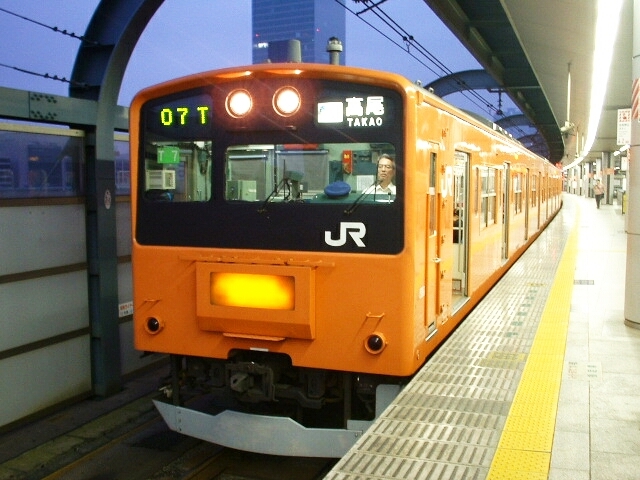
When the first phase of the Hokuriku Shinkansen (then known as the Nagano Shinkansen) to Nagano was planned, it was decided to build additional Shinkansen platforms at Tokyo Station. To create space, all conventional train lines at Tokyo Station were shifted closer to the Marunouchi building by two tracks. New Chūō Line platforms were built above the tracks for the Yamanote and Keihin-Tohoku Lines in 1995. The Hokuriku Shinkansen section to Nagano opened on 1 October 1997, in time for the 1998 Winter Olympics held in Nagano.
The station facilities of the Marunouchi Line were inherited by Tokyo Metro after the privatization of the Teito Rapid Transit Authority (TRTA) in 2004.
Recent history, 2012–present

Station numbering was introduced to the JR East commuter platforms in 2016 with Tokyo being assigned station numbers JT01 for the Tokaido Line, JU01 for the Utsunomiya/Takasaki lines, JK26 for the Keihin-Tōhoku line, JY01 for the Yamanote line, JC01 for the Chūō line rapid service, JO19 for both the Sōbu line rapid service as well as the adjoining Yokosuka line, and JE01 for the Keiyō line. At the same time, JR East assigned a three-letter code to their major interchange station; Tokyo was assigned the three-letter code "TYO".
Station layout
The main station facade on the Marunouchi side is made primarily of bricks, and partly dates back to the station's opening in 1914. The main station consists of ten island platforms serving twenty tracks, raised above street level and running in a north–south direction. The main concourse runs east–west below the platforms.
The Shinkansen lines are on the Yaesu side of the station, along with a multi-storey Daimaru department store. The entrances nearest to the Shinkansen lines are named Yaesu, and those at the extreme east of the station are named Nihonbashi.
On the far west side is the Marunouchi entrances, which are closest to the two underground Sōbu/Yokosuka line platforms serving four tracks (five stories below ground level). The Narita Express to Narita International Airport uses these platforms.
The two Keiyō Line platforms serving four tracks are four stories below ground some hundreds of meters to the south of the main station with moving walkways to serve connecting passengers.
The whole complex is linked by an extensive system of underground passageways that merge with surrounding commercial buildings and shopping centers.
東京駅全景(2021年3月).jpg|Tokyo station seen from the sky in 2021 Tokyo-Station-Night.jpg|Tokyo Station night view in 2020 Tokyo Station-5.jpg|Tokyo Station Marunouchi Station Square in 2019 JR-East-Tokyo-STA Marunouchi-north-Gate.jpg|Marunouchi North Exit ticket gate in 2021 JR-East-Tokyo-STA Yaesu-south-Gate.jpg|Yaesu South Exit ticket gate in 2021 JR-East-Tokyo-STA Concourse.jpg|Concourse of JR East in 2021
JR
Tokyo Station
- /Takasaki Line
- Sōbu Line/Yokosuka Line
- (Tōhoku Shinkansen and conventional lines)
- (Tōkaidō Shinkansen)
- JR East
- JR Central
(limited service)|note-right27= (rush periods) (limited service)
- Elevated (Shinkansen and some conventional lines)
- At grade (some conventional lines)
- Underground (Sōbu and Keiyo lines) JC01 (Chūō Line) JO19 (Yokosuka Line/Sōbu Line (Rapid)) JE01 (Keiyo Line) JY01 (Yamanote Line) JU01 (Utsunomiya Line and Takasaki Line) JK26 (Keihin–Tōhoku Line)
- 693,316 daily (JR East)
- 182,987 daily (JR Central)}}
Originally, what are now platforms 3–10 were numbered platforms 1–8, with additional platforms added sequentially from west to east through the opening of the Tōkaidō Shinkansen in 1964. Platforms 9–13 were used by the Tōkaidō Main Line and Yokosuka Line but were removed in 1988. From 1991 to 1997, platforms 12 and 13 were used for the Tōhoku Shinkansen. The current Chūō Main Line platforms opened in 1995 as platforms 1 and 2, prompting a renumbering of the remaining platforms and leaving platforms 10 and 11 unused.
The present platform numbering scheme took effect in 1997, when one former Tōkaidō Main Line platform was repurposed for the Jōetsu Shinkansen as platforms 20 and 21, and the existing Tōhoku Shinkansen platforms were renumbered as 22 and 23. As a result, the platforms are now numbered from west to east as platforms 1–10, 20–23, and 14–19.
The upper-level platforms at Tokyo Station are shared by JR East conventional line services, JR East Shinkansen lines, and JR Central Shinkansen lines; however, these operations are fully segregated, with separate tracks and platforms and independent fare gate areas.
Main level (2F) platforms
(listed in order from west to east)
JR East conventional lines
JR East Shinkansen
JR Central Shinkansen
Lower level platforms
Keiyo Line (B4F)
Yokosuka/Sōbu Line (B5F)
JRE-Tokyo-STA Home1-2.jpg|Chūō Main Line platform in 2021 JR-East-Tokyo-STA Home3-4.jpg|Yamanote and Keihin-Tōhoku Line platform in 2021 JRE-Tokyo-STA Home7-8.jpg|Tōkaidō Main Line platform in 2021 JR-East-Tokyo-STA Home20-21.jpg|Tōhoku Shinkansen platform in 2021 JRE-Tokyo-STA Home-Under1-2.jpg|Yokosuka and Sōbu Main Line platform in 2021 JRE-Tokyo-STA Keiyo-home 3-4.jpg|Keiyō Line platform in 2021 JR-Central-Tokyo-STA Yaesu-central-north-Gate.jpg|Yaesu North Exit ticket gate in 2021 JR-Central-Tokyo-STA Nihonbashi-Gate.jpg|Nihombashi Exit ticket gate in 2021 JR-Central-East-Tokyo-STA Shinkansen-transfer-Gate.jpg|JR East Shinkansen transfer ticket gate in 2021 JR-Central-Tokyo-STA Central-transfer-Gate.jpg|JR East Conventional line transfer ticket gate in 2021 JR-Central-Tokyo-STA Home16-17.jpg|Tōkaidō Shinkansen platform in 2021 JR-Central-Tokyo-STA Shinkansen-concourse Digital-Signage.jpg|Departure information board in 2021
Tokyo Metro
Tokyo Station
- Bus terminal
Tokyo-Metro Tokyo-STA Gate.jpg|Marunouchi Line ticket gate in 2022
Proposed developments
There was a proposal to build a spur to Tokyo Station from the nearby Toei Asakusa Line, which would provide another connection to the subway network, and also possibly provide faster connections from the station to Tokyo's airports, Haneda and Narita. The plan has yet to be formally adopted as authorities were re-considering a similar plan as part of the infrastructure improvements for the 2020 Summer Olympics; the proposed line would cut travel time to Haneda from 30 minutes to 18 minutes, and to Narita from 55 minutes to 36 minutes, at a total cost of around 400 billion yen.
The Haneda Airport Access Line, which is scheduled to open in 2031, will enable trains running on the Tokaido Line via Tokyo Station to also run to Haneda Airport.
There are also plans to extend the Tsukuba Express from Akihabara to Tokyo. In September 2013, a number of municipalities along the Tsukuba Express line in Ibaraki Prefecture submitted a proposal to complete the extension at the same time as the new airport-to-airport line.
Tokyo Metro is also planning Tokyo as the terminus for their future line that could connect Odaiba.
Passenger statistics
In fiscal 2018, the JR East station was used by an average of 467,165 passengers daily (boarding passengers only), making it the third busiest station on the JR East network. Over the same fiscal year, the Tokyo Metro station was used by an average of 218,275 passengers daily (both exiting and entering passengers), making it the ninth-busiest Tokyo Metro station. The passenger figures (boarding passengers only) for the JR East (formerly JNR) station in previous years are as shown below.
| Fiscal year | Annual total |
|---|---|
| 1914 | 553,105 |
| 1919 | 4,879,042 |
| 1924 | 15,953,910 |
| 1929 | 24,926,502 |
| 1934 | 24,119,757 |
| Fiscal year | Daily average | ||||||
|---|---|---|---|---|---|---|---|
| 1960 | title = 日本国有鉄道停車場一覧 | trans-title=JNR Station Directory | publisher = Japanese National Railways | year = 1985 | location = Japan | page = 480 | isbn = 4-533-00503-9}} |
| 1971 | 352,109 | ||||||
| 1984 | 338,203 | ||||||
| 2000 | url= http://www.jreast.co.jp/passenger/2000.html | script-title=ja:各駅の乗車人員 (2000年度) | trans-title=Station passenger figures (Fiscal 2000) | publisher= East Japan Railway Company | location= Japan | language= ja | access-date= 2 July 2013}} |
| 2005 | url= http://www.jreast.co.jp/passenger/2005.html | script-title=ja:各駅の乗車人員 (2005年度) | trans-title=Station passenger figures (Fiscal 2005) | publisher= East Japan Railway Company | location= Japan | language= ja | access-date= 2 July 2013}} |
| 2010 | url= http://www.jreast.co.jp/passenger/2010.html | script-title=ja:各駅の乗車人員 (2010年度) | trans-title=Station passenger figures (Fiscal 2010) | publisher= East Japan Railway Company | location= Japan | language= ja | access-date= 2 July 2013}} |
| 2011 | url= http://www.jreast.co.jp/passenger/2011.html | script-title=ja:各駅の乗車人員 (2011年度) | trans-title=Station passenger figures (Fiscal 2011) | publisher= East Japan Railway Company | location= Japan | language= ja | access-date= 2 July 2013}} |
| 2012 | url= http://www.jreast.co.jp/passenger/2012.html | script-title=ja:各駅の乗車人員 (2012年度) | trans-title=Station passenger figures (Fiscal 2012) | publisher= East Japan Railway Company | location= Japan | language= ja | access-date= 31 August 2014}} |
| 2013 | url= http://www.jreast.co.jp/passenger/2013.html | script-title=ja:各駅の乗車人員 (2013年度) | trans-title=Station passenger boarding figures (Fiscal 2013) | publisher= East Japan Railway Company | location= Japan | language= ja | access-date= 31 August 2014}} |
| 2014 | url= http://www.jreast.co.jp/passenger/2014.html | script-title=ja:各駅の乗車人員 (2014年度) | trans-title=Station passenger boarding figures (Fiscal 2014) | publisher= East Japan Railway Company | location= Japan | language= ja | access-date= 17 Mar 2020}} |
| 2015 | url= http://www.jreast.co.jp/passenger/2015.html | script-title=ja:各駅の乗車人員 (2015年度) | trans-title=Station passenger boarding figures (Fiscal 2015) | publisher= East Japan Railway Company | location= Japan | language= ja | access-date= 17 Mar 2020}} |
| 2016 | url= http://www.jreast.co.jp/passenger/2016.html | script-title=ja:各駅の乗車人員 (2016年度) | trans-title=Station passenger boarding figures (Fiscal 2016) | publisher= East Japan Railway Company | location= Japan | language= ja | access-date= 17 Mar 2020}} |
| 2017 | url= http://www.jreast.co.jp/passenger/2017.html | script-title=ja:各駅の乗車人員 (2017年度) | trans-title=Station passenger boarding figures (Fiscal 2017) | publisher= East Japan Railway Company | location= Japan | language= ja | access-date= 17 Mar 2020}} |
| 2018 | 467,165 | ||||||
| 2019 | 462,589 | ||||||
| 2020 | 271,108 | ||||||
| 2021 | 282,638 | ||||||
| 2022 | 346,658 | ||||||
| 2023 | 403,831 |
Surrounding area
Districts
- Marunouchi
- Yaesu
- Ginza
Buildings
- Tokyo Midtown Yaesu Yaesu Central Tower
- Marunouchi Building
- Shin-Marunouchi Building
- JP Tower
- Tokyo International Forum
- Tokyo Imperial Palace
- Mitsubishi Ichigokan Museum, Tokyo
Hotels
- Shangri-La Hotel, Tokyo
Stations
Other stations within walking distance of Tokyo station include the following.
- Ōtemachi Station (Tokyo Metro Marunouchi Line, Tokyo Metro Chiyoda Line, Tokyo Metro Tōzai Line, Tokyo Metro Hanzōmon Line, Toei Mita Line)
- Hatchōbori Station (Keiyō Line, Tokyo Metro Hibiya Line)
- Nihombashi Station (Tokyo Metro Ginza Line, Tokyo Metro Tōzai Line, Toei Asakusa Line)
- Mitsukoshimae Station (Tokyo Metro Hanzōmon Line, Tokyo Metro Ginza Line)
- Shin-Nihombashi Station (Sōbu Line Rapid)
- Nijūbashimae Station ([[File:Logo of Tokyo Metro Chiyoda Line.svg|18px]] Tokyo Metro Chiyoda Line)
- Hibiya Station (Tokyo Metro Hibiya Line, Tokyo Metro Chiyoda Line, Toei Mita Line)
- Yūrakuchō Station (Yamanote Line, Keihin-Tōhoku Line, Tokyo Metro Yūrakuchō Line)
- Ginza-itchōme Station (Tokyo Metro Yūrakuchō Line)
- Kyōbashi Station (Tokyo Metro Ginza Line)
- Takarachō Station (Toei Asakusa Line)
Bus terminal
- Yaesu South Exit Highway Bus Terminal
| Nickname | Destination | Major stops | Operation |
|---|---|---|---|
| La Foret | Aomori Station | Direct | JR Bus Tōhoku |
| Tsugaru | Aomori Station | Aomori Kenko Land | Kōnan Bus Company |
| Sirius | Shichinohe-Towada Station | Hachinohe Station, Towadashi Station | Kokusai Kogyo |
| Dream Akita/Yokohama | Akita University | Akita Station | JR Bus Tohoku |
| Dream Chokai | Ugo-Honjō Station | Kisakata Station, Konoura Station, Nikaho Station | JR Bus Tohoku |
| Dream Morioka"Rakuchin" | Morioka Bus Center | Morioka Station | JR Bus Tohoku |
| Dream Sasanishiki | Furukawa Station | Sendai Station, Izumi-Chūō Station, Taiwa | JR Bus Tohoku |
| Dream Fukushima/Yokohama | Fukushima Station | Kōriyama Station | JR Bus Tohoku |
| Yume Kaidou Aizu | Aizu-Wakamatsu Station | Inawashiro Station | JR Bus Kanto |
| Iwaki | Iwaki Station | Kitaibaraki, Nakoso, Yumoto, Iwaki Chuo | JR Busu Kanto |
| Tokyo Yumeguri | Kusatsu Onsen | Direct | JR Bus Kanto |
| Marronnier Tokyo | Sano Shintoshi Bus Terminal | Sano Premium Outret | JR Bus Kanto |
| Hitachi | Takahagi Station | Hitachi-Taga Station, Hitachi Station | JR Bus Kanto |
| Hitachi-Ota Line | Hitachi-Ōta | Naka IC, Naka City Office, Nukata-Minamigou | JR BUs Kanto |
| Hitachi-Daigo Line | Hitachi-Daigo | Naka IC, Hitachiōmiya, Fukuroda Falls | Ibaraki Kotsu |
| Katsuta/Tokai | Japan Atomic Energy Agency | Hitachinaka, Katsuta Station, Tōkai Station | Ibaraki Kotsu |
| Mito | Mito Station | Ishioka, Akatsuka Station, Ibaraki University | JR Bus Kanto |
| Ibaraki Airport Line | Ibaraki Airport | Direct | Kanto Railway |
| Tsukuba | University of Tsukuba | Namiki 2, Namiki 1, Tsukuba Center | JR Bus Kanto |
| Joso Route | Iwai | Shin-Moriya Station, Mitsukaidō Station | Kanto Railway |
| Kashima | Kashima Shrine | Suigo-Itako, Kashimajingū Station, Kashima Soccer Stadium | JR Bus Kanto |
| Hasaki | Hasaki | Suigo-Itako, Kamisu | JR Bus Kanto |
| The Access Narita | Narita International Airport | Direct | JR Bus Kanto |
| Yokaichiba Route | Sōsa City Office | Tomisato, Tako, Yōkaichiba Station | JR Bus Kanto |
| Boso Nanohana | Tateyama Station | Kazusa-Minato, Chikura, Awa-Shirahama | JR Bus Kanto |
| Yoshikawa Matsubushi Line | Matsubushi | Misato, Yoshikawa Station | JR Bus Kanto |
| Skytree Shuttle | Tokyo Skytree | Edo-Tokyo Museum, Tobu Hotel Levant Tokyo | JR Bus Kanto |
| Midnight Arrow Kasukabe | Kasukabe Station | Sōka, Shin-Koshigaya, Koshigaya, Sengendai | Tobu Bus Central |
| Midnight Express | Kabe Station | Haijima, Kumagawa, Fussa, Hamura, Ozaku | Nishi Tokyo Bus |
| Midnight Express | Takao Station | Nishi-Hachiōji Station | Nishi Tokyo Bus |
| Midnight Arrow | Ōfuna Station | Yokohama Station, Higashi-Totsuka Station | Kanagawa Chuo kotsu |
| Midnight Arrow | Hiratsuka Station | Totsuka Station, Kōnandai Station, Fujisawa Station | Kanagawa Chuo kotsu |
| Midnight Arrow | Hon-Atsugi Station | Machida Station, Sagami-Ōno Station, Ebina Station | Kanagawa Chuo kotsu |
| Tokyo Hakone Line | Hakone-Tōgendai | Gotemba Station, Sengokuhara | JR Bus Kanto |
| Tokyo Kawaguchiko Line | Kawaguchiko Station | Gotemba Station, Lake Yamanaka, Fuji-Q Highland | JR Bus Kanto |
| Willer Express | Nagano Station | Nagano, Nagano-Ojimada | Willer Express Hokushinetsu |
| Hakuba Snow Magic | Hakuba Cortina | Hakuba Goryu, Hakuba Happo | Alpico Kōtsū |
| Sansan Numazu Tokyo | Numazu Garrage | Numazu Station | Fujikyu City Bus |
| Kaguyahime Express | Takaoka Garrage | Shin-Fuji Station, Fuji Station | Fujikyu Shizuoka Bus |
| Yakisoba Express | Fujinomiya Garrage | Fujinomiya City Office, Fujinomiya Station | Fujikyu Shizuoka Bus |
| Shimizu Liner | Miho no Matsubara | Shimizu Station, Shin-Shimizu Station | JR Bus Kanto |
| Tomei Highway Bus | Nagoya Station | Shizuoka Station, Hamamatsu Station | JR Bus Kanto |
| Dream Shizuoka/Hamamatsu | Hamamatsu Station | Shizuoka Station, Kakegawa Station | JR Tokai Bus |
| Chita Seagull | Chita Handa Station | Chiryū Station, Kariya Station | JR Bus Kanto |
| Dream Nagoya | Nagoya Station | Nisshin Station, Chikusa, Sakae Station, Gifu Station | JR Bus Kanto |
| Dream Kanazawa | Kanazawa Institute of Technology | Toyama Station, Kanazawa Station | JR Bus Kanto |
| Dream Fukui | Fukui Station | Tsuruga, Takefu, Sabae | JR Bus Kanto |
| Dream / Hirutokkyu | Ōsaka Station | Kyōto Station, Sannomiya Station, Nara Station | JR Bus Kanto |
| Dream Nanba/Sakai | Sakaishi Station | Kyōtanabe, Osaka City Air Terminal, Namba Station | Nankai Bus |
| Dream Tokushima | Anan Station | Naruto, Matsushige, Tokushima Station, Komatsushima | JR Bus Kanto |
| Dream Takamatsu | Kannonji Station | Takamatsu Station, Sakaide | |
| Dream Kochi | Harimayabashi Station | Kōchi Station | |
| Dream Matsuyama | Matsuyama Station | Mishima-Kawanoe, Kawauchi, Matsuyama IC, Okaido | |
| Keihin Kibi Dream | Kurashiki Station | Sanyo IC, Okayama Station | Chugoku JR Bus |
| New Breeze | Hiroshima Bus Center | Hiroshima Station, Kure Station | Chugoku JR Bus |
| Dream Okayama/Hiroshima | Hiroshima Bus Center | Okayama Station, Hiroshima Station | Chugoku JR Bus |
| Tokubetsu Bin | Ube-Shinkawa Station | Hiroshima, Shin-Yamaguchi | Chugoku JR Bus |
| Susanoo | Izumo-taisha | Tamatsukuri, Shinji, Hishikawa IC, Izumoshi Station | Ichibata Bus |
| Hagi Express | Hagi Bus Center | Iwakuni Station, Tokuyama Station, Hōfu | Bocho Kotsu |
Sister stations
Tokyo Station has "sister station" agreements with Amsterdam Centraal station in the Netherlands, Grand Central Terminal in New York, USA, Beijing railway station in China, Hsinchu Station in Taiwan, and Frankfurt (Main) Hauptbahnhof in Germany.
References
References
- Ito, Masami. (December 13, 2014). "Tokyo Station at 100: all change". [[The Japan Times]].
- link. East Japan Railway Company
- Fodor's Japan. United States: Fodor's Modern Guides, 1996.
- Oxenaar, Aart – 'Amsterdam Central and Tokyo Central-different members of the same family', in Yoshikawa Seichi and Mizuno Shintar® (eds) Tolvo eki to Tatsuno Kingo. Ekisha no naritachi to Tolero cki no dekirs made, Tokyo: East Japan Railway Company, 1990, pp. 22–29.
- Coaldrake, William Howard. Architecture and Authority in Japan. United Kingdom: Routledge, 1996.
- ''Kenchiku Tantei Uten Kekkō'' (建築探偵 雨天決行; "Architecture Detective, Rain or Shine"), [[Terunobu Fujimori]], {{ISBN. 978-4-02-261179-6
- Fujio, Mishima. (1 October 1984). "Railway and City, Tokyo Sation Special". Taisho Publishing.
- "東京駅開業祝賀会|ゆかりの地(索引地図)|渋沢栄一ゆかりの地|渋沢栄一|公益財団法人渋沢栄一記念財団".
- "Living Heritage 使い続ける文化遺産 ~重要文化財の中にあるホテル~|インフォメーション|東京駅舎で結婚式は東京ステーションホテルウエディング【公式】".
- Nakata, Hiroko. (2012-10-23). "Tokyo Station's Marunouchi side restored to 1914 glory". News2u Holdings.
- 昌宗, 橋本. (2024-02-27). "「凶刃に斃る」原敬暗殺 警護の難しさ 警視庁150年13/150".
- NHK. "関東大震災 東京駅丸の内南口周辺 現在との比較|災害|NHKアーカイブス".
- (March 2006). "旅は世につれ〜昭和旅紀行". 昭和の暮らし研究.
- (2024-01-16). "最も新しい山手線駅の「めくるめく変遷」(辻 聡) @gendai_biz".
- (2012-01-29). "皇居と直結---日本の玄関として「歴史」を背負う鉄道駅の物語東京駅Vol.1(福田 和也) @gendai_biz".
- Watanabe, Hiroshi (2001). The architecture of Tokyo. Axel Menges, Stuttgart/London. pp. 83–84. {{ISBN. 3-930698-93-5.
- "祝 東京地下駅開業50周年 これがきっかけで進化した鉄道車両設備とは(鳥塚亮) - エキスパート".
- Ushijima, Kota [http://www.yomiuri.co.jp/dy/national/T120930002561.htm "Fans want encore of 'dreamy' Tokyo Station concerts".] ''[[The Daily Yomiuri]]''. October 1, 2012. Retrieved on October 2, 2012
- Kobayashi, Takuya. (2018-05-13). "東京駅の「京葉線ホーム」があんなに遠いワケ".
- (14 February 2014). "東京駅、中央線ホームなぜ高い 鉄路争奪戦の力学".
- (2006-07-08). "「営団地下鉄」から「東京メトロ」へ".
- "Marunouchi Station Building Highlights".
- (6 April 2016). "⾸都圏エリアへ 「駅ナンバリング」を導⼊します".
- Kusamachi, Yoshikazu. (7 April 2016). "JA・JK・JT・AKB…JR東日本、首都圏で駅ナンバリングなど導入へ".
- . (2024). ["移動等円滑化取組報告書(鉄道駅)"](https://www.jreast.co.jp/company/csr/barrier_free/pdf/barrier_free2023_station.pdf). *JR East*.
- . (2024). ["移動等円滑化取組報告書(鉄道駅)"](https://company.jr-central.co.jp/others/barrier-free/_pdf/2023-02.pdf). *JR Central*.
- Kim, Chul Ju. (November 2019). "The Privatization of Japan Railways and Japan Post: Why, How, and Now". Asian Development Bank Institute.
- (2024). "移動等円滑化取組報告書(鉄道駅)". Tokyo Metro.
- [http://www.metro.tokyo.jp/INET/CHOUSA/2003/05/60d5t201.htm 都営浅草線東京駅接着等の事業化推進に関する検討 調査結果のとりまとめ] {{webarchive. link. (2007-08-24 , May 2003.)
- (10 September 2013). "羽田・成田発着を拡大、五輪へインフラ整備急ぐ". Nikkei Inc..
- (21 September 2013). "TX東京駅延伸で茨城の沿線自治体市議会が意見書". 日本経済新聞.
- link. East Japan Railway Company
- link. Tokyo Metro
- 東京府 編. (1916). 東京府
- 東京府 編. (1922). 東京府
- 東京府 編. (1927). 東京府
- 東京府 編. (1931). 東京府
- 東京府 編. (1936). 東京府
- (1985). "日本国有鉄道停車場一覧". Japanese National Railways.
- link. East Japan Railway Company
- link. East Japan Railway Company
- link. East Japan Railway Company
- link. East Japan Railway Company
- link. East Japan Railway Company
- link. East Japan Railway Company
- link. East Japan Railway Company
- link. East Japan Railway Company
- link. East Japan Railway Company
- link. East Japan Railway Company
- (February 10, 2015). "Tokyo Station to get a sister station in Taiwan". [[The Japan Times]].
- (26 September 2015). "Tokyo and Frankfurt Central become sister stations". The Asahi Shimbun Company.
This article was imported from Wikipedia and is available under the Creative Commons Attribution-ShareAlike 4.0 License. Content has been adapted to SurfDoc format. Original contributors can be found on the article history page.
Ask Mako anything about Tokyo Station — get instant answers, deeper analysis, and related topics.
Research with MakoFree with your Surf account
Create a free account to save articles, ask Mako questions, and organize your research.
Sign up freeThis content may have been generated or modified by AI. CloudSurf Software LLC is not responsible for the accuracy, completeness, or reliability of AI-generated content. Always verify important information from primary sources.
Report