From Surf Wiki (app.surf) — the open knowledge base
Tokaido Shinkansen
High-speed railway line between Tokyo and Osaka
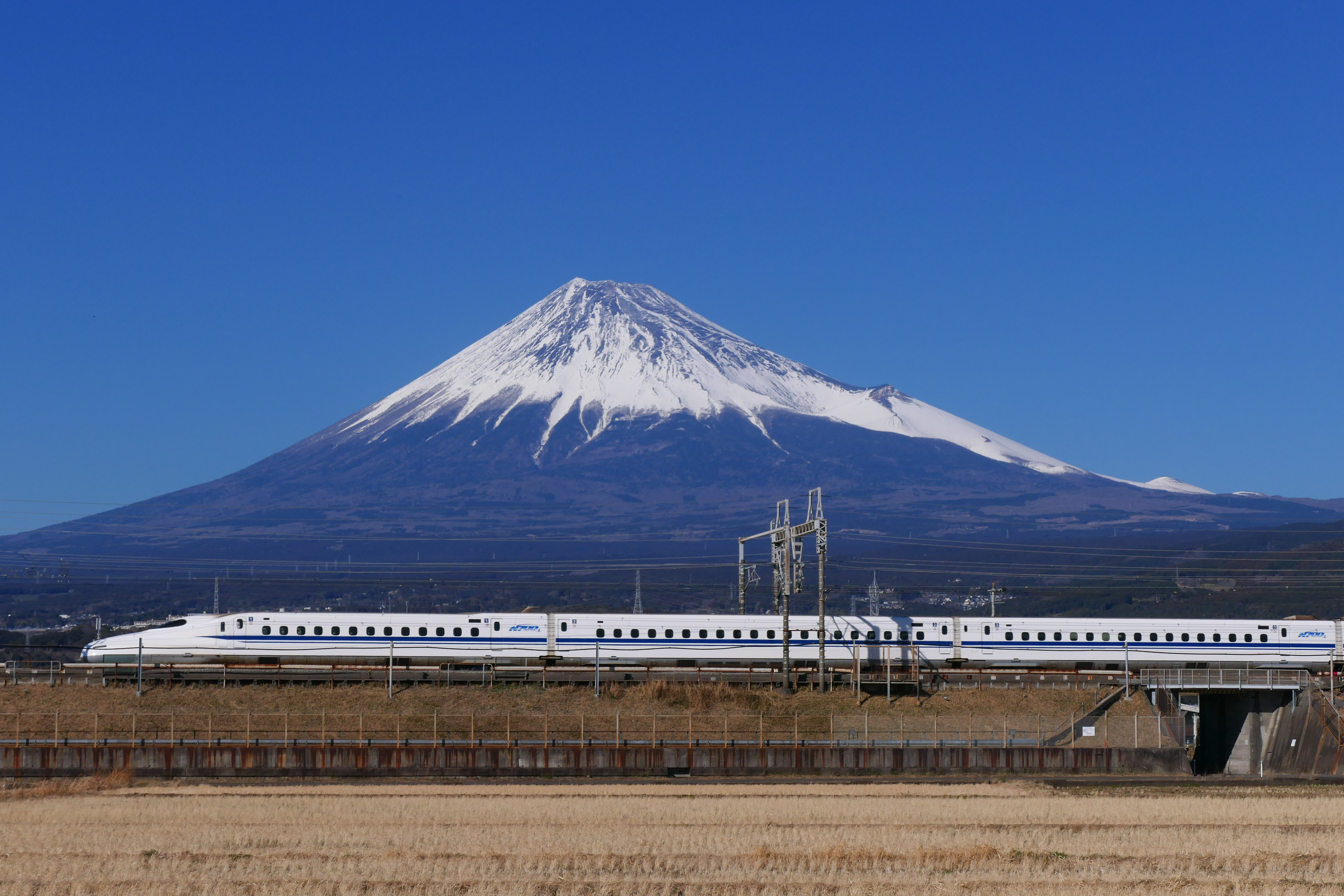
High-speed railway line between Tokyo and Osaka
| Field | Value | |
|---|---|---|
| name | Tōkaidō Shinkansen | |
| native_name | 東海道新幹線 | |
| native_name_lang | ja | |
| color | ||
| mapcolor | Blue | |
| logo | Shinkansen jrc.svg | |
| logo_width | 50 | |
| image | Series-N700S-J2.jpg | |
| caption | An N700S Series train running on the Tōkaidō Shinkansen | |
| type | High-speed rail | |
| system | Shinkansen | |
| status | ||
| routes | *NozomiHikariKodama* | |
| locale | Tokyo, Kanagawa, Shizuoka, Aichi, Gifu, Shiga, Kyoto, and Osaka Prefectures | |
| start | ||
| end | ||
| stations | 17 | |
| open | ||
| owner | ||
| operator | JR Central | |
| depot | TokyoMishimaNagoyaOsaka | |
| stock | N700AN700S | |
| linelength | 515.4 km | |
| tracks | 2 | |
| maxincline | 2% | |
| gauge | ||
| electrification | ||
| speed_km/h | 285 | |
| signalling | Cab signalling | |
| trainprotection | ATC-NS | |
| map | {{Switcher | |
| {{Tōkaidō Shinkansen line map | inline | 1}} |
| speed_km/h = 285 | [[File:Tokaido Shinkansen map.png|240px]] | Show static map | | Show route diagram
The Tōkaidō Shinkansen is a Japanese high-speed rail line and part of the nationwide Shinkansen network. Together with the San'yō Shinkansen, it forms a continuous high-speed corridor through the Taiheiyō Belt, also known as the Tōkaidō corridor.
Opened in 1964 between Tōkyō and Shin-Ōsaka stations, it was the world's first high-speed rail line and remains one of the busiest. Since 1987, it has been operated by the Central Japan Railway Company (JR Central), following its transfer from Japanese National Railways (JNR).
The line offers three service types: the super-express Nozomi, the express Hikari, and the all-stop Kodama. Many Nozomi and Hikari trains continue onto the San’yō Shinkansen, reaching as far as Hakata station in Fukuoka. All services operate at similar top speeds.
The Tōkaidō Shinkansen is among the most frequent high-speed rail services in the world, with up to 17 trains per hour (13 Nozomi, 2 Hikari, and 2 Kodama). In JFY2019, an average of 378 trains operated daily, and as of 2019, the average delay per train was just 12 seconds.
In 2000, the Tōkaidō Shinkansen was designated a joint Historic Mechanical Engineering Landmark and IEEE Milestone by the American Society of Mechanical Engineers and the Institute of Electrical and Electronics Engineers.
History

The Shinkansen route broadly follows the alignment of the conventional Tōkaidō Main Line, which in turn traces the course of the historic Tōkaidō highway. For centuries, the Tōkaidō was one of Japan’s most important transport corridors, linking the political and cultural centers of the Kansai region (including Kyoto and Osaka) with the Kantō region (Tokyo) via the Tōkai region (Nagoya). The name "Tōkaidō" literally means "eastern sea road", referring to the route running along the Pacific coast of central Honshū.
The Tōkaidō Main Line, completed in stages beginning in the late nineteenth century, was one of Japan’s earliest trunk railways and largely followed the alignment of the ancient highway.
At the end of the 1930s, the government conceived a along the Tōkaidō corridor continuing to Shimonoseki at the southwestern tip of Honshū. The line was intended to cover the nearly 1000 km distance in about nine hours and to form the first stage of an East Asian rail network serving Japan's overseas territories. The onset of World War II halted the plan in its early stages, although three tunnels bored for this project were later incorporated into the Shinkansen route.
By 1955, the Tōkaidō Main Line between Tokyo and Osaka was severely congested. Even after electrification the following year, it remained the busiest line in Japan’s railway network, with demand roughly double its capacity. In 1957, a public forum examined "The Possibility of a Three-hour Rail Trip Between Tokyo and Osaka." After substantial debate, Japanese National Railways (JNR) decided to construct a new line parallel to the existing route. JNR president Shinji Sogō lobbied political leaders to support the project, accepting less government funding than the project ultimately required because of its cost and technical complexity.
The Diet approved the plan in December 1958, allocating of the needed for a five-year construction program. Then–finance minister Eisaku Satō recommended obtaining the remainder from non-governmental sources to insulate the project from political change. Construction began on 20 April 1959 under Sogō and chief engineer Hideo Shima. In 1960, they traveled to the United States seeking a loan from the World Bank. Although they requested US$200 million, they secured $80 million—about 15 percent of the project cost—which could not be used for "experimental technology". Severe cost overruns during construction led both Sogō and Shima to resign. The opening was timed to coincide with the 1964 Summer Olympics in Tokyo.
When service began, two train types operated: the express Hikari, which covered the Tokyo–Osaka route in four hours, and the all-stops Kodama, which required five hours. A test run on 25 August 1964 simulating a Hikari service was broadcast nationwide by NHK. The line officially opened on 1 October 1964, with Hikari 1 departing Tokyo for Osaka and Hikari 2 operating in the opposite direction. Although the system was designed for speeds up to 210 km/h, JNR limited regular operation to 160 km/h during the opening period. Concerns remained that the track foundations had not fully settled, and testing had revealed issues, due to the rushed construction and testing schedule. Higher speeds were permitted primarily to recover from delays.
In November 1965, timetables were revised to reduce travel times to for Hikari services and for Kodama services, with 210 km/h operation allowed under normal conditions.
The 1970s proved financially difficult for JNR, as losses on local lines increased. Profits from the Tōkaidō Shinkansen were used to subsidize those operations, slowing investment and service improvements on the Shinkansen for more than a decade. Labor disputes also diverted management attention from research and development initiatives. Despite these challenges, the World Bank loan taken out in 1959 was fully repaid in 1981.
Following the 1987 privatization of JNR, the new operator, JR Central, launched a program to raise operating speeds through infrastructure upgrades and new rolling stock. This effort produced the 300 series and the introduction of the super-express Nozomi service on 14 March 1992, reducing travel time to two and a half hours and permitting speeds from 209 km/h to 270 km/h.
Shinkansen platforms at Tokyo's Shinagawa Station opened in October 2003 to reduce congestion at the Tokyo terminal, accompanied by a major timetable revision that expanded the number of Nozomi services, surpassing the number of Hikari services.
A planned station at Rittō—between Maibara and Kyoto—was canceled in 2007 after political opposition and a Supreme Court of Japan ruling invalidated the city’s construction bond.
A subsequent speed increase, to the current 285 km/h maximum, was announced in 2014 and introduced on 14 March 2015 following the adoption of improved braking technology on the N700 series.
Stations and service patterns
Legend:
| ● | ▲ | | |
|---|---|---|
| All trains stop | ||
| Some trains stop | ||
| All trains pass |
| Station | Distance from | |||
|---|---|---|---|---|
| Tokyokm (mi) | Service | Transfers | Location | |
| ● | ● | ● | ||
| 6.8 km | ● | ● | ● | |
| 25.5 km | ● | ● | ● | |
| 76.7 km | | | ▲ | ● | |
| 95.4 km | | | ▲ | ● | |
| 111.3 km | | | ▲ | ● | |
| 135.0 km | | | | | ● | |
| 167.4 km | | | ▲ | ● | |
| 211.3 km | | | | | ● | |
| 238.9 km | | | ▲ | ● | |
| 274.2 km | | | ▲ | ● | |
| 312.8 km | | | | | ● | |
| 342.0 km | ● | ● | ● | |
| 367.1 km | | | ▲ | ● | |
| 408.2 km | | | ▲ | ● | |
| 476.3 km | ● | ● | ● | |
| 515.4 km | ● | ● | ● | |
| ↓ Through services towards via the ↓ |
Rolling stock
- N700A series 16-car sets, since July 1, 2007 (owned by JR Central and JR West, modified from original N700 series sets)
- N700A series 16-car sets, since February 8, 2013 (owned by JR Central and JR West)
- N700S series 16-car sets, since July 1, 2020 (owned by JR Central and JR West)
The last services operated by 700 series sets took place on March 1, 2020, after which all Tōkaidō Shinkansen services are scheduled to be operated by N700A series or N700S series sets. N700S series sets were then introduced on Tōkaidō Shinkansen services from July 1, 2020.
File:Series-N700A-F20.jpg|N700A series in September 2021 File:JR Central Shinkansen N700 Series passes Tamachi, Tokyo, Japan 17 03 20 (49669009511).jpg|N700S series in March 2020
Former rolling stock
- 0 series 12/16-car sets, October 1, 1964, to September 18, 1999 (owned by JR Central and JR West)
- 100 series 16-car sets, October 1, 1985, to September 2003 (owned by JR Central and JR West)
- 300 series 16-car sets, March 1992 to March 16, 2012 (owned by JR Central and JR West)
- 500 series 16-car sets, November 1997 to February 2010 (owned by JR West)
- 700 series 16-car sets, March 1999 to March 2020 (owned by JR Central and JR West)
File:Shinkansen type 0 Hikari 19890506a.jpg|0 series at Odawara Station in May 1989 File:Shinkansen100.jpg|100 series in January 2003 File:JR Central Shinkansen 300.jpg|300 series in January 2008 File:Shinkansen 500 series W2 formation.jpg|500 series at Odawara Station in June 2008 File:JR Central Shinkansen 700.jpg|700 series in January 2008
Former non-revenue-earning types
- 922 (Set T1) (1961 to 1976)
- 922 (Set T2) (1974 to 2001)
- 923 (Set T4) (Until 29 January 2025)
File:922 T2 Gifu-Hashima 19981011.jpg|JR Central Class 922 "Doctor Yellow" set T2, October 1998 File:Type923-T4.jpg|JR Central's Class 923 "Doctor Yellow" set T4 on the Tōkaidō Shinkansen, September 2021
Timeline
Classes and onboard services
All Tōkaidō Shinkansen trains have two classes of seating: Green Cars (First Class) offer 2+2 configured seating with all-reserved seating. Ordinary cars feature 2+3 configured seating with both reserved and unreserved seating.
Previously, all trains had an onboard trolley service that sold food and drinks. The ice cream sold by these trolleys was popularly known as "Shinkansen too hard ice cream", which eventually became an official sales name. Trolley service on the Tōkaidō Shinkansen was discontinued on October 31, 2023, due to falling sales and labor shortages. This was replaced by a mobile order seat service exclusive for Green Car passengers from 1 November 2023. Passengers can scan a QR code on the back of their seat to purchase refreshments, which would then be brought by a cabin attendant.
In an announcement by JR Central, JR West, and JR Kyushu made on 17 October 2023, the companies stated that all onboard smoking rooms on the Tokaido, San'yo, and Kyushu Shinkansen trains would be discontinued by Q2 2024.
Since 2020, reservations are required to take large pieces of luggage on Tōkaidō Shinkansen trains.
Japan Rail Pass
The Japan Rail Pass is a rail pass available to overseas visitors which allows travel on most major forms of transportation provided by JR Group companies, including the Tōkaidō Shinkansen. Japan Rail Pass holders can ride Hikari or Kodama services free of charge, and since October 2023, pass holders can also ride the Nozomi service by purchasing a special supplementary ticket. Japan Rail Passes purchased prior to this were not valid on Nozomi services, and passengers were required to purchase a full fare ticket to use this service. Certain regional Rail Passes let passengers ride all services, including the Nozomi. These passes typically have limited coverage and shorter usage periods compared to the full Japan Rail Pass.
Ridership
From 1964 to 2012, the Tōkaidō Shinkansen line carried approximately 5.3 billion passengers. Ridership increased from 61,000 per day in 1964 to 391,000 per day in 2012. By 2016, the route was carrying 452,000 passengers per day on 365 daily services making it one of the busiest high speed railway lines in the world.
| Year | 1967 | 1976 | 2004 | Mar 2007 | Nov 2010 | 2012 | Ridership (Cumulative) |
|---|---|---|---|---|---|---|---|
| 100 | 1,000 | 4,160 | 4,500 | 4,900 | 5,300 |
| Year | 1967 | April 1987 | April 2007 | April 2008 | April 2009 | April 2010 | April 2011 | April 2012 | April 2024 | Ridership |
|---|---|---|---|---|---|---|---|---|---|---|
| 22 | 102 | 151 | 149 | 138 | 141 | 149 | 143 | 158 |
Future stations
It was announced in June 2010 that a new Shinkansen station in Samukawa, Kanagawa Prefecture was under consideration by JR Central. If constructed, the station would open after the Chūō Shinkansen, the new maglev service currently under construction, begins operations.
Shizuoka Prefecture has long lobbied JR Central for the construction of a station at Shizuoka Airport, which the line passes directly beneath. The railway has so far refused, citing the close distance to the neighbouring Kakegawa and Shizuoka stations. If constructed, travel time from the center of Tokyo to the airport would be comparable to that for Tokyo Narita Airport, enabling it to act as a third hub airport for the capital. As the station would be built underneath an active airport, it is expected to open after the new maglev line.
References
Sources
References
- (2020). "Shinkansen – Bullet Trains in Japan".
- "Tokaido Shinkansen - Don't leave Japan without it.".
- "#211 Tokaido Shinkansen". American Society of Mechanical Engineers.
- "Milestones:Tokaido Shinkansen (Bullet Train), 1964". IEEE.
- (27 September 2014). "Shinkansen at 50: fast track to the future".
- "Japan's Shinkansen: Revolutionary design at 50".
- "Japan's Shinkansen: Revolutionary design at 50".
- Umehara, Jun. (2024-10-02). "東海道新幹線、開業から60年 常識外れの速さで整備". [[Nikkei Shimbun]].
- Nishinaka, Yūki. (2024-09-28). "開業時の東海道新幹線は「時速160キロ運転」だった!? 「本気出さない運転」だった理由とは". [[Asahi Shimbun]].
- Sugiyama, Jun'ichi. (2014-10-03). "新幹線開業の日、「ひかり2号」が時速210キロを出せたワケ". [[SoftBank Group]].
- "Japan's Shinkansen: Revolutionary design at 50".
- "Japan's Shinkansen: Revolutionary design at 50".
- (30 September 1994). "第2部特集 東海道新幹線開業30周年/30年のゆみ". Kotsu Shimbunsha.
- (2005). "The course of achieving 270 km/h operation for Tokaido Shinkansen – Part 1: Technology and operations overview". Proceedings of the Institution of Mechanical Engineers, Part F: Journal of Rail and Rapid Transit.
- (March 14, 1992). "Japan's Fastest Bullet Train Starts Service".
- "TOKAIDO SHlNKANSEN "NOZOMI" (MARCH 14, 1992) AND THROUGH OPERATION OF THE SHlNKENSEN BETWEEN FUKUSHIMA AND YAMAGATA OF OU LlNE (JULY 1, 1992) START".
- (October 1, 2003). "Tokaido bullet trains to stop at Shinagawa".
- (March 14, 2022). "Nozomi shinkansen trains mark 30 years in service".
- (October 29, 2007). "Shinkansen station in Shiga canceled". The Japan Times.
- (20 December 2014). "Top speed of Nozomi bullet trains to hit 285 kph".
- "Speed increase on the Tokaido Shinkansen".
- (April 2012). "300km/hのトップランナー". Koyusha Co., Ltd..
- (24 June 2016). "". link. Mainichi Shimbun. The Mainichi Newspapers
- (22 October 2015). "". link. News release. Central Japan Railway Company
- Sugiyama, Satoshi. (August 8, 2023). "End of the line for snack carts on Tokyo-Osaka shinkansen".
- (August 9, 2023). "東海道新幹線,10月31日をもって車内ワゴン販売を終了 〜11月1日から新しい車内サービスを開始〜".
- Kinoshita, Kenji. (17 October 2023). "東海道・山陽・九州新幹線の車内喫煙ルーム、2024年春にすべて廃止".
- (April 4, 2020). "「特大荷物スペースつき座席」の予約受付開始およびお客様へのご案内について".
- "Changes Are Coming to the Japan Rail Pass [AUGUST 2 UPDATE]".
- "「ジャパン・レール・パス」の日本国内での発売について".
- (1 September 2018). "Method for Forecasting Fluctuation in Railway Passenger Demand for High-speed Rail Services". Quarterly Report of RTRI.
- (October 2, 2004). "Tokaido Shinkansen Line fetes 40 years".
- [http://english.jr-central.co.jp/company/ir/annualreport-backnumber/_pdf/report-2007.pdf Central Japan Railway Company Annual Report 2007]. Retrieved on 28 April 2009. {{Webarchive. link. (March 3, 2016)
- Kasai, Yoshiyuki. (4 September 2010). "Bullet Train & Maglev System to Cross the Pacific".
- [http://english.jr-central.co.jp/company/company/others/data-book/_pdf/2011.pdf Central Japan Railway Company Annual Report 2011]. Retrieved 3 June 2013. {{Webarchive. link. (July 22, 2013)
- "Central Japan Railway Company".
- JR Central. (2024-03-31). "factsheets2024".
- (June 2, 2010). "神奈川に新幹線の新駅検討 JR東海、リニア開業後".
- Ogawa, Hiroo. (March 21, 2018). "JR新幹線、「静岡空港駅」設置が現実味…「首都圏第3空港」構想".
- Osaka, Naoki. (July 8, 2019). "リニアでJR東海と対立、静岡県の「本当の狙い」 {{!}} 新幹線".
This article was imported from Wikipedia and is available under the Creative Commons Attribution-ShareAlike 4.0 License. Content has been adapted to SurfDoc format. Original contributors can be found on the article history page.
Ask Mako anything about Tokaido Shinkansen — get instant answers, deeper analysis, and related topics.
Research with MakoFree with your Surf account
Create a free account to save articles, ask Mako questions, and organize your research.
Sign up freeThis content may have been generated or modified by AI. CloudSurf Software LLC is not responsible for the accuracy, completeness, or reliability of AI-generated content. Always verify important information from primary sources.
Report