From Surf Wiki (app.surf) — the open knowledge base
Tiraspol
Capital and largest city of Transnistria

Capital and largest city of Transnistria
| Field | Value |
|---|---|
| name | Tiraspol |
| native_name | ТираспольТираспол |
| settlement_type | Municipality |
| image_skyline | {{multiple image |
| border | infobox |
| total_width | 290 |
| image_style | border:1; |
| perrow | 1/2/2/2 |
| image1 | House of Soviets (42912066861).jpgCity Hall |
| image2 | Собор Рождества Христова, Тирасполь.jpgChurch of the Nativity |
| image3 | Театр Тирасполь.jpgState drama theater of Transnistria |
| image4 | Music Hall (42846092711 cropped).jpgPalace of Culture |
| image5 | Верховный совет и правительство ПМР.jpgThe Supreme Council of Transnistria building |
| caption1 | City Hall |
| caption2 | Church of the Nativity |
| caption3 | |
| caption4 | Palace of Culture |
| caption5 | Supreme Council of Transnistria |
| image_flag | Flag of Tiraspol.svg |
| image_shield | Coat of arms of Tiraspol 1847.svg |
| shield_size | 70px |
| anthem | "" |
| mapsize | 230px |
| map_caption | Location of Tiraspol in Transnistria |
| pushpin_map | Moldova Transnistria#Moldova#Europe |
| pushpin_relief | 0 |
| coordinates | |
| subdivision_type1 | Country (de facto) |
| subdivision_name1 | Transnistria |
| subdivision_type | Country (de jure) |
| subdivision_name | Moldova |
| established_title | Founded |
| established_date | 1792 |
| established_title2 | City rights |
| established_date2 | 1795 |
| leader_title | Head of the State Administration of Tiraspol |
| leader_name | Ilona Tyuryaeva. |
| elevation_m | 26 |
| population_total | 126306 |
| population_as_of | 2025 |
| area_code | +373 533 |
| area_total_km2 | 55.56 |
| website |
Tiraspol (, ; also Tirișpolea/Тиришполя; , ; , ) is the capital and largest city of Transnistria, a breakaway state of Moldova, where it is the third-largest city. The city is located on the eastern bank of the Dniester River. Tiraspol is a regional hub of culture, economy, tourism, and light industry, such as furniture and electrical goods production.
The modern city of Tiraspol was founded by the Russian generalissimo Alexander Suvorov in 1792, although the area had been inhabited for thousands of years by varying ethnic groups. The city celebrates its anniversary every year on 14 October.
Etymology
The toponym consists of two ancient Greek words: Τύρας, Tyras, the Ancient name for the Dniester River, and polis, i.e., a city (state).
History
- Moldova Republic of Moldova 1991–present (de jure)
- Transnistria Transnistria 1990–present (de facto)
- USSR USSR 1944–1991
- Romania Kingdom of Romania 1941–1944
- Flag of the USSR (1936-1955).svg USSR 1922–1941
- Flag of the Ukrainian Soviet Socialist Republic (1919–1929).svg Ukrainian SSR 1921–1922
- Flag of Ukraine.svg Ukrainian People's Republic 1917-1919
- Flag of Russia.svg Russian Republic 1917
- Flag of Russia.svg Russian Empire 1792–1917}}
Classical and medieval history
Tyras (Τύρας), also spelled Tiras, was a colony of the Greek city Miletus, probably founded about 600 BC, situated some 10 km from the mouth of the Tiras River (Dniester). Of no great importance in early times, in the second century BC it fell under the dominion of indigenous kings whose names appear on its coins. It was destroyed by the Thracian Getae about 50 BC.
In 56 AD, the Romans restored the city and made it part of the colonial province of Lower Moesia. A series of its coins exist that feature heads of Roman emperors from Domitian to Severus Alexander. Soon after the time of the latter, the city was destroyed again, this time by the invasion of the Goths. Its government was in the hands of five archons, a senate, a popular assembly, and a registrar. The images on its coins from this period suggest a trade in wheat, wine, and fish. The few inscriptions extant are mostly concerned with trade.
Such ancient archeological remains are scanty, as the city site was built over by the great medieval fortress of Monocastro or Akkerman. In the Late Middle Ages, the area around of modern Tiraspol became part of the Grand Duchy of Lithuania. The Lithuanians, unable to settle their vast state on their own, allowed Moldavian settlement in the area.
Tsarist Russian rule
The Russian Empire conquered its way to the Dniester River, taking territory from the Ottoman Empire. In 1792 the Russian army built fortifications to guard the western border near a Moldavian village named Sucleia. Field Marshal Alexander Suvorov is considered the founder of modern Tiraspol; his statue is the city's most distinctive landmark. The city took its name from Tyras, the Greek name of the Dniester River on which it stands. It was granted city rights in 1795.
In 1828, the Russian government established a customs house in Tiraspol to try to suppress smuggling. The customs house was subordinated to the chief of the Odesa customs region. It began operations with 14 employees. They inspected shipments of bread, paper, oil, wine, sugar, fruits and other goods.
In December 1917, Tiraspol hosted a congress of Transnistrian Moldovans, at which they wished to unite the city with Bessarabia.
Soviet Tiraspol

After the Russian Revolution, the Moldavian Autonomous Soviet Socialist Republic was created in Ukraine in 1924, with Balta as its capital. The republic had Romanian, Ukrainian and Russian as its official languages. Its capital was moved in 1929 to Tiraspol, which remained the capital of the Moldavian ASSR until 1940.
In 1940, following the secret provisions of the Molotov–Ribbentrop Pact, the USSR forced Romania to cede Bessarabia. It integrated Tiraspol, until then part of the Moldavian ASSR, into the newly formed Moldavian SSR. On 7 August 1941, following the Axis invasion of the Soviet Union, the city was taken over by Romanian troops. Later that month, on 19 August, the Tiraspol Agreement establishing the Transnistria Governorate was signed. During the occupation, Tiraspol was under Romanian administration. During that period almost all of its Jewish population died: they were slain in situ or deported to German Nazi death camps, and killed there.

In 1941, before the occupation, the newspaper Dnestrovskaya Pravda was founded by the Tiraspol City Council of popular deputies. This is the oldest periodical publication in the region. On 12 April 1944, the city was retaken by the Red Army and became again part of the Moldavian SSR.
According to a 1991 figure by Moldova's Ministry of National Security (now the Security and Intelligence Service, SIS), of the 5,485 people who were sentenced to death in the territory of modern Moldova during totalitarian communist rule, over 4,000 of them were executed in Tiraspol, in the , in 1937 and 1938 alone, during the Great Purge.
Post-secession
On 27 January 1990, the citizens in Tiraspol passed a referendum declaring the city as an independent territory. The nearby city of Bendery also declared its independence from Moldova. As the Russian-speaking independence movement gained momentum, some local governments banded together to resist pressure from the Moldovan government for nationalization.[[File:Calle Tiraspol.jpg|thumb|A trolleybus in Tiraspol painted in the colours of the [[Flag of Transnistria|Transnistrian flag]] ]]
On 2 September 1990, Tiraspol was proclaimed the capital of the new Pridnestrovian Moldavian Soviet Socialist Republic. The new republic was not officially recognized by Soviet authorities; however, it received support from some important Soviet leaders, such as Anatoly Lukyanov. After the dissolution of the Soviet Union, the territory east of the Dniester River declared independence as the Pridnestrovian Moldavian Republic (PMR), with Tiraspol as its capital. It was not recognized by the international community.

On 1 July 2005, the Lucian Blaga Lyceum, a high school with Romanian as its language of instruction, was registered as a Transnistrian non-governmental establishment. The registration of six Romanian language schools has been the subject of negotiations with the government since 2000. The tension increased in the summer of 2004, when the Transnistrian authorities forcibly closed the schools that taught using the Latin script. According to the official PMR view, this is considered as Romanian. "Moldovan", written in the Cyrillic script, is one of the three official languages in the PMR; Romanian is not. Some economic measures and counter-measures were taken on both banks of the Dniester.
Tensions have been seen in terrorist incidents. On 6 July 2006, an explosion, believed to be caused by a bomb, killed at least eight people in a minibus. Later on 13 August, a grenade exploded in a trolleybus, killing two and injuring ten.
On 25 April 2022, during the Russian invasion of Ukraine, several explosions were reported near the Ministry of State Security (Transnistria) in Tiraspol. Firefighters were on the scene but there were no casualties.
On 17 March 2024, Transnistrian official press released a video allegedly showing a Mil Mi-8 helicopter in poor condition and likely not in use, not having been moved in over 13 years at the moment of the explosion, in a military unit in Tiraspol being attacked and destroyed by a kamikaze drone. No victims were reported. Transnistria claimed the drone had been launched from Ukraine from the direction of Odesa, more precisely from a bridge located 5–6 km from the nearest border crossing between Transnistria and Ukraine. Ukraine immediately denied having anything to do with the incident. On the day of the incident, the Bureau for Reintegration of the Republic of Moldova called it an "attempt to provoke panic and fear in the region". Later, on 25 March, the bureau confirmed the explosion of the helicopter was not caused by a drone attack but by "other factors" and that the video contained "obvious elements of video montage". In the video, the drone disappears shortly before the explosion below the helicopter occurs. Reportedly, explosives placed under the helicopter were detonated remotely instead.
On 8 January 2025, during the 2025 Moldovan energy crisis, a woman in Tiraspol died from carbon monoxide poisoning after using a gas water heater to shower without having a chimney.
Geography and climate
Tiraspol features a humid continental climate that closely borders an oceanic climate and has transitional features of the humid subtropical climate due to its warm summers. Summers are mild, with average monthly temperatures at around 21 °C in July and August. Winters are cold, with average temperatures in the coldest month (January) at -2.7 °C. Precipitation is relatively evenly spread throughout the year, though there is a noticeable increase in monthly precipitation in June and July. Tiraspol on average sees nearly 500 mm of precipitation per year. | Jan record high C = 17.4 | Feb record high C = 23.3 | Mar record high C = 27.3 | Apr record high C = 32.3 | May record high C = 36.9 | Jun record high C = 39.1 | Jul record high C = 41.0 | Aug record high C = 40.5 | Sep record high C = 38.5 | Oct record high C = 31.1 | Nov record high C = 25.3 | Dec record high C = 18.3 | year record high C = 41.0 | Jan record low C = -29.4 | Feb record low C = -29.6 | Mar record low C = -19.9 | Apr record low C = -8.5 | May record low C = -2.7 | Jun record low C = 3.3 | Jul record low C = 8.0 | Aug record low C = 5.0 | Sep record low C = -4.6 | Oct record low C = -9.2 | Nov record low C = -16.3 | Dec record low C = -25.1 | year record low C = -29.6 | archive-url = https://web.archive.org/web/20230821002251/https://www.nodc.noaa.gov/archive/arc0216/0253808/1.1/data/0-data/Region-6-WMO-Normals-9120/Moldova/CSV/Tiraspol_33829.csv | archive-date = 21 August 2023 | access-date = 21 August 2023}} | archive-url = https://web.archive.org/web/20250418163724/https://www.meteo.md/images/uploads/news/2023/05/Ghid%20Climatic%20RM_2024.pdf | archive-date = 18 April 2025 | access-date = 24 March 2025}}
Demographics

Population
The population of the city was about 190,000 in 1989 and about 203,000 in 1992. 41% were Russians, 32% Ukrainians (both Eastern Slavic) and 18% were Moldovans (Romanians).
As result of the political and economic situation that followed the proclamation of the independent (unrecognized) Transnistria, as well as large Jewish emigration in the early 1990s, the population of the city fell below its 1989 number and the 2004 Transnistrian census put its population at 158,069. In 1897, 31,616 people lived in the city of Tiraspol, who were classified, by language, in the following way:
| Native language | Population | share of population |
|---|---|---|
| Russian | 14,013 | 44.32% |
| Yiddish | 8,568 | 27.1% |
| Ukrainian | 3,708 | 11.73% |
| Romanian | 3,611 | 11.42% |
| Polish | 1,003 | 3.17% |
| Belarusian | 119 | 0.38% |
| Bulgarian | 56 | 0.18% |
| Lithuanian | 7 | 0.02% |
| Latvian | 7 | 0.02% |
| Czech | 1 | 0.003% |
In 1926, 29,700 people lived in the city of Tiraspol who were classified, by ethnicity, as follows:
| Ethnic group | Population | % total share |
|---|---|---|
| Russian | 16,276 | 54.8% |
| Hebrew | 8,732 | 29.4% |
| Ukrainian | 4,277 | 14.4% |
| Moldovan (Romanians) | 416 | 1.4% |
| Ethnic group | Population | % Total share |
|---|---|---|
| Russian | 14,785 | 33.85% |
| Ukrainian | 12,504 | 28.63% |
| Hebrew | 11,764 | 26.93% |
| Moldovan (Romanian) | 3,480 | 7.97% |
;2004
| Ethnic group | Population | % Total share |
|---|---|---|
| Russian | 65,298 | 41.71% |
| Ukrainian | 52,278 | 33.07% |
| Moldovan (Romanian) | 23,790 | 15.05% |
| Bulgarian | 2,450 | 1.55% |
| Gagauz | 1,988 | 1.26% |
| Belarusian | 1,712 | 1.08% |
| German | 701 | 0.44% |
| Hebrew | 573 | 0.36% |
| Armenian | 360 | 0.23% |
| Polish | 324 | 0.2% |
| Romani/Rromi | 116 | 0.07% |
| Others | 7,849 | 4.98% |
Religion
The Latin Catholic minority is served by the Catholic Diocese of Chișinău.
In the fourteenth century, Tiraspol was the see city of the diocese of Kherson; in 1848, a Catholic Diocese of Tiraspol was erected with its see in Saratov. Since 1993, it did not cover any Moldovan territory, not even Tiraspol. The diocese was suppressed in 2002.
Culture
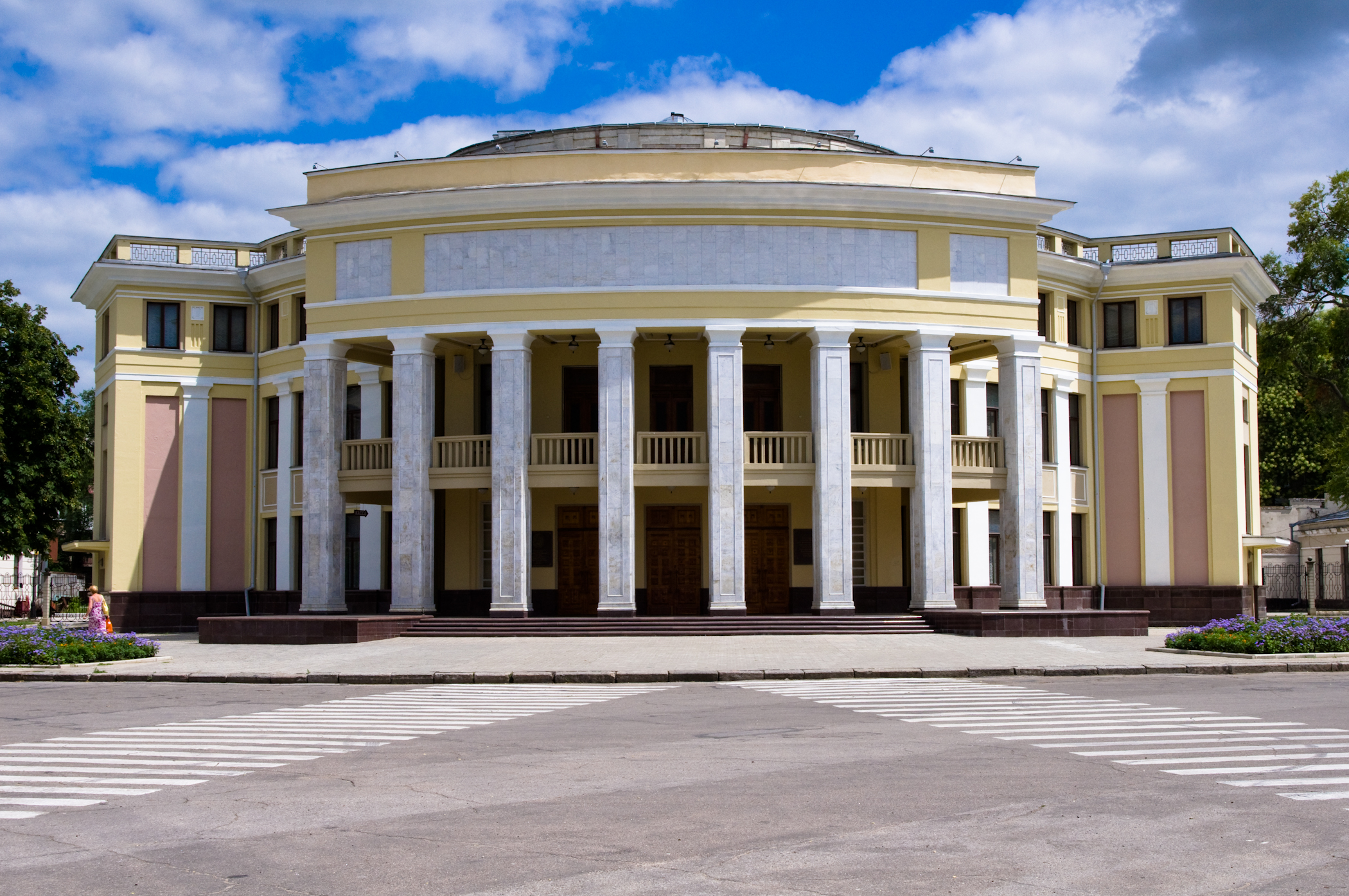
.jpg)
The statue of Alexander Suvorov was erected in the central square in 1979 in commemoration of his 250th anniversary. In front of the Transnistrian Government building there is a statue of Vladimir Lenin. On the opposite side of the central square, a monument plaza features a Soviet T-34 tank, commemorating the Soviet victory in World War II, an eternal flame to those who fell defending the city in 1941 and liberating it in 1944, as well as several monuments dedicated to more recent conflicts, including the Soviet–Afghan War and the War of Transnistria.
Sport

The two main football clubs are Sheriff Tiraspol and FC Tiraspol. Sheriff is the most successful Moldovan football club of recent history, winning 14 league titles since the 2000–2001 season, and 6 Moldovan Cups. The team gained world notoriety for their last-minute 2–1 victory during the 2021–22 UEFA Champions League edition against later tournament winners Real Madrid on 28 September 2021. A third club, CS Tiligul-Tiras Tiraspol, withdrew from competition prior to the 2009–2010 season. Tiraspol is home to the Sheriff Stadium, the largest capacity stadium in the region, with a capacity of 14,300 seats.
International relations
Twin towns – sister cities
- Moldova Bălți, Moldova
- Moldova Comrat, Moldova
- Norway Trondheim, Norway (2000)
- RUS Volgograd, Russia
- RUS Kaluga, Russia
- RUS Kursk, Russia
- RUS Obninsk, Russia
- RUS Severodvinsk, Russia
- RUS Novosibirsk, Russia
- UKR Mykolaiv, Ukraine
- UKR Kherson, Ukraine
- UKR Cherkasy, Ukraine
- UKR Ternopil, Ukraine
- Israel Ashdod, Israel
- Belarus Leninsky District, Minsk, Belarus
- Abkhazia Sokhumi, Abkhazia
- South Ossetia Tskhinvali, South Ossetia
- Portugal Santarem, Portugal
Notable people
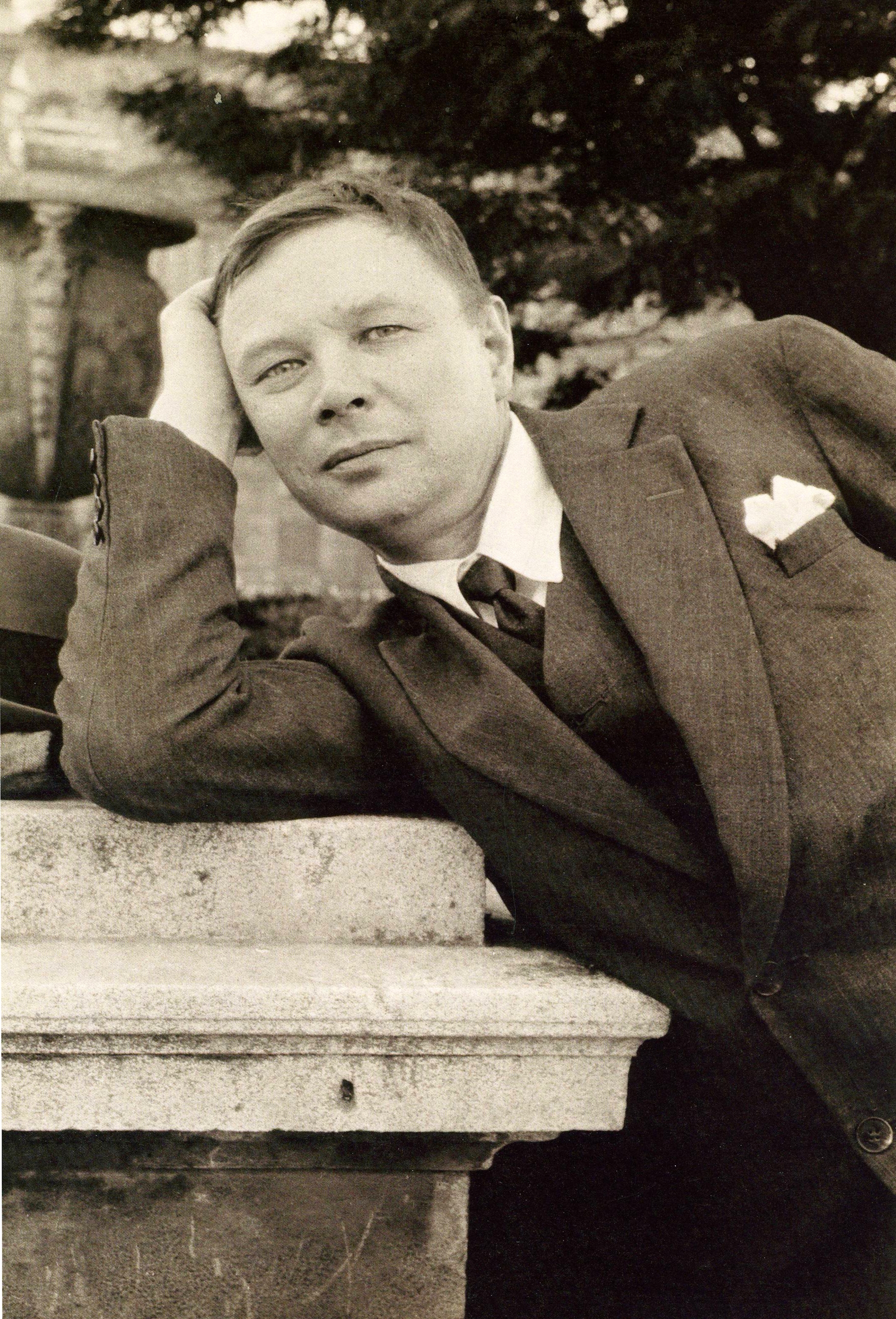

- Yuri Avvakumov (born 1957), Russian architect, artist, and curator
- Nikolay Zelinsky (1861–1953), Russian and Soviet chemist who invented the first filtering activated charcoal gas mask
- Georgi Stamatov (1869–1942), Bulgarian writer
- Mikhail Larionov (1881–1964), Russian avant-garde painter
- Abraham Rabinovitch (1889–1964), Australian-Russian property developer and pioneer of the Sydney Modern Orthodox Jewish community
- Gheorghe Pintilie (1902–1985), Soviet intelligence agent, Russian citizen and naturalised Romanian communist activist of Ukrainian origin, the first Director of the Securitate
- Izrail Shmurun (1912–1985), Moldavian Soviet architect
- Larisa Eryomina (born 1950), stage and screen actress
- Oxana Ionova (born 1966), head of the state tax service of Transnistria and director of Transnistria's central bank from 2008 to 2011
- Vlad Stashevsky (born 1974), Russian pop singer
- Berenika Glixman (born 1984), Israeli classical pianist
- Sergey Stepanov (born 1984), musician and composer, member of the SunStroke Project
- Valeria Lukyanova (born 1985), Ukrainian model, famous for her resemblance to a Barbie doll, lives in Moscow
- Anton Turkul (1892–1957), Russian Imperial Army officer
Politics
- Serhii Kivalov (born 1954), Ukrainian politician, jurist, parliamentarian, head of Central Election Commission
- Vladimir Mikhailovich Belyaev (born 1965), the minister of information and telecommunications
- Maya Parnas (born 1974), politician and was the former acting Prime Minister of Transnistria
- Nina Shtanski (born 1977), former Transnistrian state politician, the Minister of Foreign Affairs 2012 to 2015
- Roman Khudyakov (born 1977), Russian politician, chairman of the Liberal Democratic Party of Transnistria
- Vladimir Yastrebchak (born 1979), the Minister of Foreign Affairs of Transnistria from 2008 to 2012.
- Olga Paterova (born in 1984), politician, the press secretary for the political youth organization Breakthrough
- Yury Cheban, Transnistrian Minister of Natural Resources and Ecological Control
Sport
- Constantin Nour (1906 or 1907 – 1986), Romanian champion middleweight boxer and national team trainer
- Larisa Popova (born 1957), rower who competed for the Soviet Union in the 1976 Summer Olympics
- Igor Samoilenco (born 1977), boxer
- Andrei Mihailov (born 1980), backstroke swimmer, competed in the 2000 and the 2004 Summer Olympics
- Andrei Corneencov (born 1982), Moldovan international footballer.
- Stanislau Tsivonchyk (born 1985), Belarusian pole vaulter, competed in the pole vault at the 2012 Summer Olympics
- Vitalie Bulat (born 1987), footballer
- Oleksandr Kolchenko (born 1988), Ukrainian basketball player
- Dănilă Artiomov (born 1994), breaststroke swimmer
- Artur Dalaloyan (born 1996), Russian artistic gymnast of Armenian origin
Gallery
File:Tiraspol sign.JPG|Sign at the entrance to Tiraspol File:Monument to Suvorov - panoramio.jpg|Statue of Alexander Suvorov at Suvorov Square File:Tiraspolstreet.jpg|A street in central Tiraspol File:TIraspol Transnistria (11359980726).jpg|The Victory Park File:13.07.2008 - panoramio (2).jpg|The Dnestr river passing through Tiraspol File:Lenin Statue on 25 Oktober Street - Tiraspol - Transnistria (36701973581).jpg|The statue of Lenin in front of the parliament building File:Street Scene - Tiraspol - Transnistria - 01 (36008035783).jpg|Street scene File:Tiraspol, PMR (15144382021).jpg|Railway station File:Tiraspol Casa sindicatelor și depoul pompierilor.jpg|Trade union building and fire station File:War Memorial-Tomb of the Unknown Soldier - Tiraspol - Transnistria (36008034023).jpg|War memorial and the Tomb of the Unknown Soldier File:Architectural Detail - Tiraspol - Transnistria - 01 (35982734024).jpg|Part of the city centre File:Tiraspol Suvorov Square.jpg|Suvorov Square File:Tiraspol Suvorov Monument.jpg|Suvorov Monument
Notes
References
References
- "Указ Президента ПМР от 20 ноября 2024 года № 505".
- "Пленарное заседание столичного городского совета народных депутатов".
- Rotaru, Florin. (1996). "Românitatea Transnistriană".
- Frunza, A. (1915). "România Mare".
- "About Transdniestra (Russian)".
- Cooper, Jason. (14 October 2006). "Street Fairs, Celebrations Mark Tiraspol's 214th Birthday". Tiraspol Times & Weekly Review.
- Tsoni, Paula. (June 5, 2022). "How Transnistria's Tiraspol Got Its Ancient Greek Name".
- See E. H. Minns, ''Scythians and Greeks'' (Cambridge, 1909); V. V. Latyshev, ''Inscriptiones Orae Septentrionalis Ponti Euxini,'' vol. I.
- Baranchikov, E. V.. (2017). "ТИРАСПОЛЬ".
- "Tiraspol {{!}} Moldova {{!}} Britannica".
- (1999). "Cartea memoriei: catalog al victimelor totalitarismului comunist". [[National History Museum of Moldova]].
- (12 September 2017). ""Не вернется никто и никогда — здесь сгниете". Как депортировали жителей советской Молдавии". NewsMaker.
- (6 July 2006). "Trans-Dniester Blast Kills Eight". [[BBC News]].
- "Trolley Bus Blasted in Tiraspol Possibly in a Terror Attack". Regnum.
- (14 August 2006). "New Bus Explosion in Tiraspol Leaves One Dead, Eleven Injured". Tiraspol Times & Weekly Review.
- (17 August 2006). "Another Blast in Public Transport in Tiraspol". Moldpres News Agency.
- "Moldovan president holds security meeting after blasts in Transnistria". The Jerusalem Post | Jpost.com.
- Pop, Radu. (26 March 2024). "Tiraspolul înscenează explozii ca să înfricoșeze populația". Știri pe surse.
- (17 March 2024). "VIDEO Momentul atacului reclamat de Transnistria: O dronă lovește un elicopter scos din uz și care era parcat pe platformă". [[HotNews]].
- (8 January 2025). "Четверо бендерчан и тираспольчанка отравились угарным газом от колонок". Novosti Pridnestrovya.
- . (1892). "Słownik geograficzny Królestwa Polskiego i innych krajów słowiańskich, Tom XII".
- "2004 Census: PMR Urban, Multilingual, Multicultural".
- "1897 Counties and Cities".
- "Демоскоп Weekly - Приложение. Всесоюзная перепись населения 1939 года".
- The Transnistrian census of 2004 data by nationality at http://pop-stat.mashke.org/pmr-ethnic-loc2004.htm
- "Молдова {{!}} Официальный сайт Государственной администрации г.Тирасполя и г.Днестровска".
- "Trondheims vennskapsbyer".
- "Норвегия {{!}} Официальный сайт Государственной администрации г.Тирасполя и г.Днестровска".
- "Города-побратимы – РФ {{!}} Официальный сайт Государственной администрации г.Тирасполя и г.Днестровска".
- "Города-побратимы – Украина {{!}} Официальный сайт Государственной администрации г.Тирасполя и г.Днестровска".
- "Израиль {{!}} Официальный сайт Государственной администрации г.Тирасполя и г.Днестровска".
- "Города-побратимы-Республика Беларусь {{!}} Официальный сайт Государственной администрации г.Тирасполя и г.Днестровска".
- "Абхазия – Сухум {{!}} Официальный сайт Государственной администрации г.Тирасполя и г.Днестровска".
- (March 2025). "Южная Осетия {{!}} Официальный сайт Государственной администрации г.Тирасполя и г.Днестровска".
- "Португалия – Сантарен {{!}} Официальный сайт Государственной администрации г.Тирасполя и г.Днестровска".
This article was imported from Wikipedia and is available under the Creative Commons Attribution-ShareAlike 4.0 License. Content has been adapted to SurfDoc format. Original contributors can be found on the article history page.
Ask Mako anything about Tiraspol — get instant answers, deeper analysis, and related topics.
Research with MakoFree with your Surf account
Create a free account to save articles, ask Mako questions, and organize your research.
Sign up freeThis content may have been generated or modified by AI. CloudSurf Software LLC is not responsible for the accuracy, completeness, or reliability of AI-generated content. Always verify important information from primary sources.
Report