From Surf Wiki (app.surf) — the open knowledge base
Tide mill
Type of watermill
Type of watermill
the type of watermill
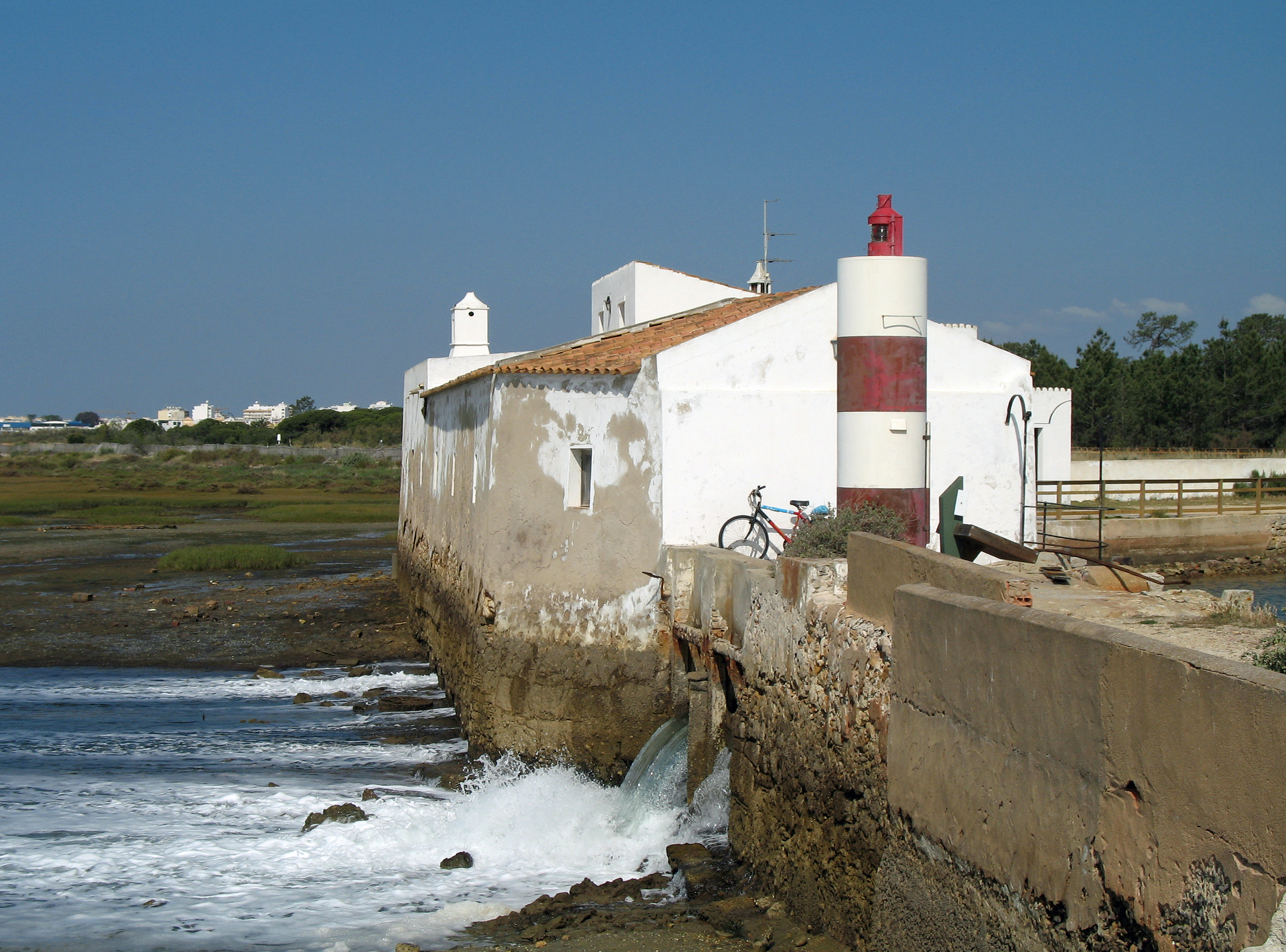
A tide mill is a water mill driven by tidal rise and fall. A dam with a sluice is created across a suitable tidal inlet, or a section of river estuary is made into a reservoir. As the tide comes in, it enters the mill pond through a one-way gate, and this gate closes automatically when the tide begins to fall. When the tide is low enough, the stored water can be released to turn a water wheel.
Tide mills are usually situated in river estuaries, away from the effects of waves but close enough to the sea to have a reasonable tidal range. Cultures that built such mills have existed since the Middle Ages, and some may date back to the Roman period.
A modern version of a tide mill is the electricity-generating tidal barrage.
Early history
Possibly the earliest tide mill in the Roman world was located in London on the River Fleet, dating to Roman times.


In England, an exceptionally well preserved tidal mill, dated by dendrochronology to the late 7th century (691-692 AD) was excavated in the Ebbsfleet Valley (a minor tributary of the River Thames) in Kent during construction of the Ebbsfleet International Station, on the High Speed 1 railway line The earliest recorded tide mills in England are listed in the Domesday Book (1086). Eight mills are recorded on the River Lea (the site at Three Mills remains, with Grade I listed buildings and a small museum), as well as a mill in Dover harbour. By the 18th century, there were about 76 tide mills in London, including two on London Bridge.
Tide mills in southern Iraq, positioned at the mouth of the Tigris-Euphrates river delta in Basra, were described in 960.
Woodbridge Tide Mill, an excellent example, survives at Woodbridge, Suffolk, England. This mill, dating from 1170 and reconstructed in 1792, has been preserved and is open to the public. It was further restored in 2010 and re-opened in 2011 in full working order. It is the second working tide mill in the United Kingdom that is regularly producing flour. Carew Castle in Wales also has an intact tide mill, but it is not operating. The first tide mill to be restored to working order is Eling Tide Mill in Eling, Hampshire. Another example, now extant only in historic documents, is the mill in the hamlet of Tide Mills, East Sussex. Traces of a tide mill may be seen at Fife Ness, revealed through an archaeological survey[[File:Moulin maree brehat.jpg|thumb|Tidal mill at l'île de [[Île-de-Bréhat|Bréhat]]|275x275px]] and the Fish Pond at Culross has been identified as probably having been built originally as a tide mil by Sir George Bruce.
A medieval tide mill still operates at Rupelmonde near Antwerp, and there are several that have survived in the Netherlands.
At one time there were 750 tide mills operating along the shores of the Atlantic Ocean:
- around 300 in North America, including many in colonial Boston over a 150-year span.
- 200 have been documented in the British Isles, and 100 in France. The Rance estuary in France was also home to some of these mills.
Although tide mills were few in number in Australia, the technology was used by colonial settlers during the 19th century. Singleton's mill was a tide mill located on Laybury's Creek, a right bank tributary of the tidal portion of the Hawkesbury River, in an area known now as Singletons Mill.
By the mid-20th century, the use of water mills had declined dramatically. In 1938, an investigation by Rex Wailes discovered that of the 23 extant tidal mills in England, only 10 were still working by their own motive power. Of one at Beaulieu, H. J. Massingham wrote in the 1940s,
Modern examples
Newer tidal power projects apply the same principles of tide mills on a larger scale.
One major example is the Rance tidal power plant in Brittany, France, which opened in 1966 with 24 turbines and a peak capacity of 240 MW. It remains one of the most successful tidal barrage installations.
Another example is SeaGen, a tidal stream turbine installed in 2008 in Strangford Lough, Northern Ireland. With a capacity of 1.2 MW, it operated successfully until its decommissioning in 2019.
These projects illustrate how the same tidal principles that powered historic tide mills are now adapted for modern renewable energy generation.
Surviving tide mills in Britain

- Ashlett Tide Mill, Ashlett, Hampshire (converted as clubhouse)
- Battlesbridge Tide Mill, Battlesbridge, Essex (converted for business)
- Carew Castle tide mill, Pembrokeshire
- Eling Tide Mill, Eling, Hampshire (operation temporarily suspended due to a maintenance issue)
- Fingringhoe Tide Mill, Fingringhoe, Essex (house converted)
- Newhaven Tide Mills, otherwise simply Tide Mills, East Sussex (sluice only)
- Pembroke tide mill, Pembrokeshire (mill ponds only)
- Place Mill, Christchurch, Dorset (working order, restored)
- Quay Mill, Emsworth, Hampshire (converted as clubhouse)
- Three Mills tide mill, Bromley-by-Bow, London
- Thorrington Tide Mill, Thorrington, Essex
- Woodbridge Tide Mill, Woodbridge, Suffolk (working order)
References
Sources
- {{Citation
- {{Citation |url-status = dead
- {{Citation | editor-last = Squatriti | editor-first = Paolo
- Spain, Rob: "A possible Roman Tide Mill", Paper submitted to the Kent Archaeological Society
- {{Citation | author-link = Örjan Wikander
References
- [http://www.kentarchaeology.ac/authors/005.pdf Spain, Rob: "A possible Roman Tide Mill", Paper submitted to the ''Kent Archaeological Society'']
- {{harvnb. Murphy. 2005
- {{harvnb. Wikander. 1985
- {{harnvb. Rynne. 2000
- {{harvnb. McErlean. Crothers. 2007
- {{usurped
- </Oxford Wessex Archaeology Joint Venture 2011. Settling the Ebbsfleet Valley. CTRL Excavations at Springhead and Northfleet, Kent. The Late Iron Age, Roman, Saxon, and Medieval Landscape
- Charlier, Roger H.. (2004). "Ocean sciences bridging the millennia: A spectrum of historical accounts". Intergovernmental Oceanographic Commission.
- Decker, Kris De. (2010-11-16). "Boat Mills: Water Powered, Floating Factories".
- "''Day of Archaeology''".
- (2025). "Sir George Bruce's Coal Mines in the Sea at Culross 1575-1676". Crucible Books, Lancaster.
- Peveril Meigs, "Historical geography of tide mills on the Atlantic coast", ''American Philosophical Society Yearbook 1970'' (Philadelphia, Pennsylvania: American Philosophical Society, 1971), pp. 462-464.
- Peveril Meigs, "Tide mills on the Atlantic", ''Old Mill News'', no. 7, 1979
- (18 December 2021). "» Tide Power in Colonial BostonThe West End Museum".
- Minchinton, W. E. : "Early Tide Mills: Some Problems", ''Technology and Culture'', Vol. 20, No. 4 (Oct. 1979), pp. 777-786
- "Singleton's Mill".
- "Singleton's Mill, a history".
- Skelton, C.P. ''British Windmills and Watermills'', Collins, 1947
- (10 October 2019). "La Rance: learning from the world’s oldest tidal project". Future Power Technology.
- "EDF retrofits world’s first tidal power station". Renewable Energy World.
- "SeaGen Environmental Monitoring Programme Final Report". Tethys.
This article was imported from Wikipedia and is available under the Creative Commons Attribution-ShareAlike 4.0 License. Content has been adapted to SurfDoc format. Original contributors can be found on the article history page.
Ask Mako anything about Tide mill — get instant answers, deeper analysis, and related topics.
Research with MakoFree with your Surf account
Create a free account to save articles, ask Mako questions, and organize your research.
Sign up freeThis content may have been generated or modified by AI. CloudSurf Software LLC is not responsible for the accuracy, completeness, or reliability of AI-generated content. Always verify important information from primary sources.
Report