From Surf Wiki (app.surf) — the open knowledge base
Thrissur-Ponnani Kole Wetlands
Wetland in Kerala, India

Wetland in Kerala, India
| Field | Value |
|---|---|
| name | Thrissur-Ponnani Kole Wetlands |
| image | Koal fileds of Thrissur.jpg |
| caption | A view of Kole Wetlands with birds. A scene from Thomana in Thrissur Metropolitan Area |
| alt | A view of Kole Wetlands with birds |
| location | Thrissur District and Malappuram District, Kerala |
| coords | |
| pushpin_map | Kerala |
| pushpin_map_alt | Location of the Thrissur-Ponnani Kole wetlands within Kerala |
| type | Freshwater |
| inflow | Chalakudy River, Bharathappuzha River |
| outflow | none |
| basin_countries | India |
| area | 13640 ha |
| cities | Thrissur, Ponnani |
| max-depth =
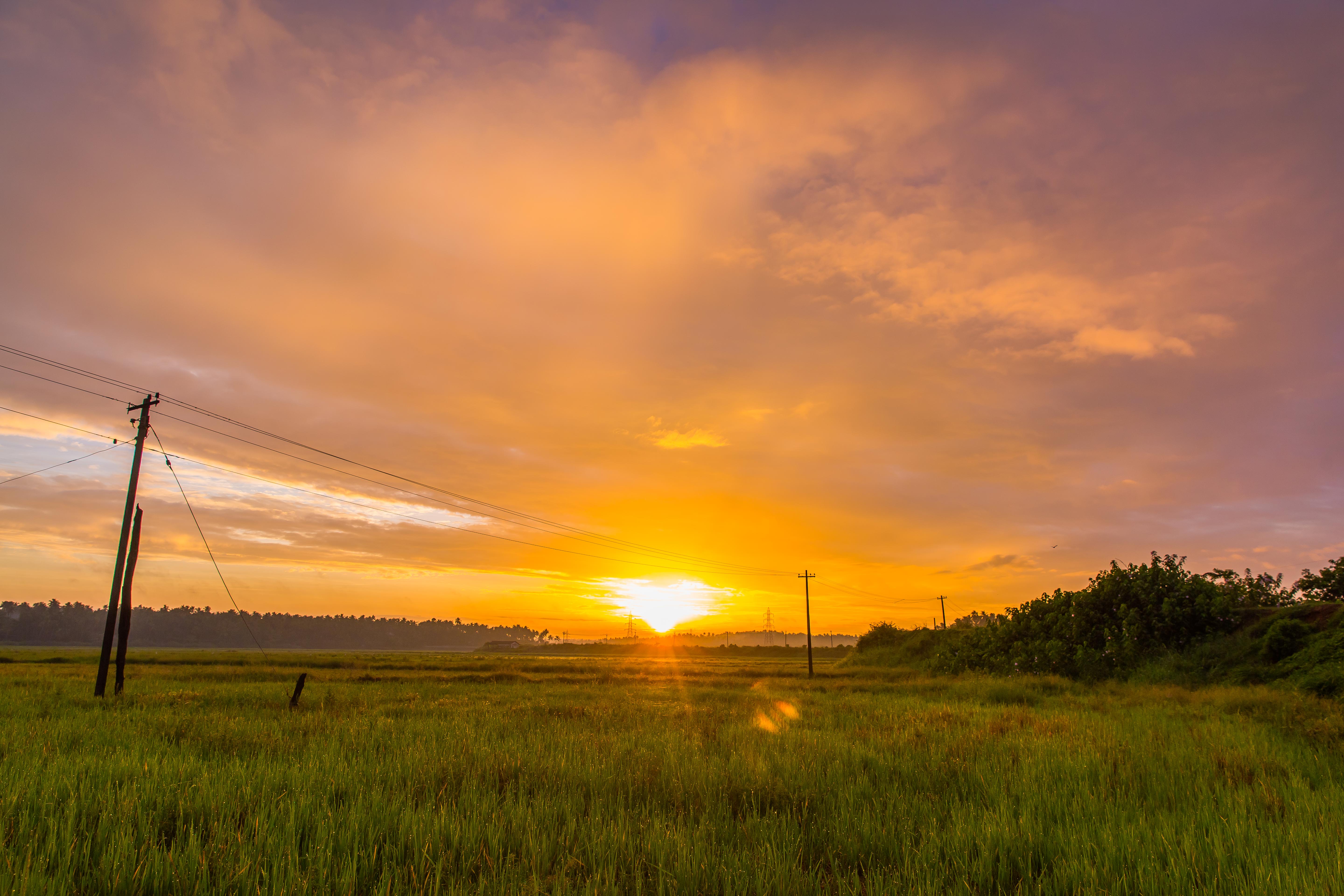
Thrissur-Ponnani Kole Wetlands (Malayalam: തൃശൂർ-പൊന്നാനി കോൾ പാടങ്ങൾ) is a wetland lying in Thrissur and Malappuram districts in Kerala, India. It gives 40 per cent of the Kerala’s rice requirement and acts as a natural drainage system for Ponnani town, Thrissur city, Thrissur District, and Malappuram district. The Kole Wetlands is one of largest, highly productive and threatened wetlands in Kerala and lie on the Central Asian Flyway of migratory birds.
History
From 18th century onwards, rice cultivation in Kole lands is said to have been started. But the Thrissur-Ponnani Kole lands recorded rice cultivation dates back to 1916 only.
Geography
The word Kole is a Malayalam word meaning "a bumper yield". It is a particular cultivation method adopted in wastelands in Malappuram district and Thrissur District from December to May which are otherwise submerged from June to November, half of the year. The Kole wetlands lie between 10° 20' N and 10° 40' N latitudes, and 75° 58' E and 76° 11' E longitudes. The Kole wetlands are low lying tracts located 0.5 to below Mean Sea Level (MSL) and remain submerged for about six months in a year. Kole lands in Thrissur are spread over eight blocks. The average annual rainfall is 3,200 mm and temperature varies from 28 to.
The Kole Wetlands cover an area of about 13,632 ha spread over Thrissur district and Malappuram district. The area extends from Chalakudy River in South to Bharathappuzha River in the North, and to Ponnani Taluk. The Kole Wetlands acts as natural drainage system for Thrissur city and Thrissur district through a network of canals and ponds which connects different parts of Kole Wastelands to Enamavu river, one of the smallest River in Kerala, Canoli Canal, Chettuva River and then to the Arabian Sea. It is fertile with alluvium soil which is deposited Kechery and Karuvannoor river in the monsoon.{{cite web |archive-url=https://web.archive.org/web/20071016093454/http://hindu.com/mag/2007/10/14/stories/2007101450020200.htm |url-status=dead |archive-date=2007-10-16 |access-date=2012-06-07}}{{cite web |access-date=2012-06-07}}{{cite web |archive-url=https://web.archive.org/web/20110424070830/http://www.hindu.com/2011/01/08/stories/2011010860470300.htm |url-status=dead |archive-date=2011-04-24 |access-date=2012-06-07}}{{cite web |archive-url=https://web.archive.org/web/20110719072933/http://www.hindu.com/2011/04/18/stories/2011041854330700.htm |url-status=dead |archive-date=2011-07-19 |access-date=2012-06-07}}
Fauna

In terms of the number of birds, the Thrissur Kole Wetlands is the third largest in India after Chilika Lake in Orissa and Amipur Tank in Gujarat. It has been recognised as one of India's Important Bird Areas by BirdLife International. According to studies, there are 241 species of birds like spot-billed pelican, darter, Oriental darter, black-headed ibis, painted stork, black-bellied tern, cinereous vulture and greater spotted eagle.{{cite web |access-date=2012-06-07}}{{cite web |archive-url=https://archive.today/20130103102600/http://articles.timesofindia.indiatimes.com/2012-02-13/kochi/31054874_1_ramsar-wetland-garganey |url-status=dead |archive-date=2013-01-03 |access-date=2012-06-07}} Fishes like Caranx, Cyprinidae, mangrove red snapper, Megalops cyprinoides and barramundi are also found in Kole Wetland.{{cite web |archive-url=https://web.archive.org/web/20110719072933/http://www.hindu.com/2011/04/18/stories/2011041854330700.htm |url-status=dead |archive-date=2011-07-19 |access-date=2012-06-07}}{{cite web |access-date=2012-06-07}}{{cite web |archive-url=https://web.archive.org/web/20070823215559/http://www.hindu.com/mag/2007/07/22/stories/2007072250120700.htm |url-status=dead |archive-date=2007-08-23 |access-date=2012-06-19}}

Threat
The main threat to Kole Wetlands is expansion of cities and towns like city of Thrissur. The boom in construction industry, especially the real estate business in Central Kerala, has rung the alarm bell for the Kole wetlands. Coconut cultivation, construction of buildings and houses, conversion of fields for sand and clay mining and brick kilns, hunting of wetland birds are the main threats for the Kole wetlands. Fresh water shortage and quality of water due to water intrusion from the Canoly Canal has been reported from various parts of Kole wetlands in Thrissur district.{{cite web |access-date=2012-06-19}}{{cite web |archive-url=https://web.archive.org/web/20110719072933/http://www.hindu.com/2011/04/18/stories/2011041854330700.htm |url-status=dead |archive-date=2011-07-19 |access-date=2012-06-19}}
[[Kole Development Agency]]


The Government of India has approved Rs 425-crore project for the comprehensive development of Thrissur Kole fields. The fund will be used for infrastructure development, construction of bunds, canals, roads, farm mechanisation in Kole fields. At the Rs 15 crore a research centre would be set up to study the Kole land development. The Government of Kerala has formed a Special Purpose Vehicle for the implementation of the Kole development project and the District Collector of Thrissur is designated as special officer to coordinate implementation of the package.{{cite web |access-date=2012-06-19}}{{cite web |access-date=2012-06-19}} For the implementation of the project, Government of Kerala has opened an agency known as Kole Development Agency (KDA) in Thrissur City on 30 June for the development of Kole farming. Thrissur District Collector is the special officer to implement the project.{{cite web |archive-url=https://archive.today/20130103072945/http://articles.timesofindia.indiatimes.com/2012-06-24/kochi/32392817_1_thrissur-ponnani-kda |url-status=dead |archive-date=2013-01-03 |access-date=2012-06-27}}
Kole Birders Collective
Inspired by the rich biodiversity, ecological significance and agricultural potential of the Kole Wetlands a group of individuals with a shared vision came together to form the Kole Birders Collective.
As a tribute to the essence of the Kole wetlands, the collective has been conducting yearly photo exhibitions titled “Kaanapadavukal” from 2024..
“Kaanapadavukal 2.0” was held at the Thrissur Lalithakala Academy Art Gallery from April 30th to May 7th 2025.
Featuring over 200 remarkable photographs captured by more than 100 photographers from the Kole wetlands, the exhibition was a celebration of nature’s splendor and the tireless efforts of the Kole Birders Collective supported by wetland lovers..
Gallery
Image:Edappal malappuram(district) kerala infia.jpg|A view of paddy field from Edappal, Ponnani taluk, Malappuram district Image:Adat Ombathumuri Paadam Thrissur DSCN0887.JPG|A view of paddy field from Thrissur district Image:Beeyam Kayal River near Athani.jpg|A view from Athani, Malappuram district Image:ഒമ്പതുമുറി പാടശേഖരം 1.jpg| A board which announces the citizen to protect the birds. A view from Thrissur district Image:Kerala Houseboat (191490747).jpeg|The Biyyam backwater of Ponnani, Malappuram district, is located on the bank of Kole Wetlands. Image:Irrigation at paddy land DSCN0550.jpg| A view of paddy field from Thrissur district Image:Light house in Ponnani.jpg|Bharathappuzha, the second-longest river of Kerala, merges with Arabian Sea at Ponnani port, near the Kole Wetlands. Image:Thanikkudam - Paddy farms.jpg| A view of paddy field from Thrissur district Image:Adat Ombathumuri Paadam Thrissur DSCN0862.JPG| A view of paddy field from Thrissur district Image:കൊയ്ത് കഴിഞ്ഞ പാടം.jpg| A view of paddy field from Thrissur district
References
References
- "Real estate and Agricultural Wetlands in Kerala". PP Nikhil Raj and PA Azeez.
This article was imported from Wikipedia and is available under the Creative Commons Attribution-ShareAlike 4.0 License. Content has been adapted to SurfDoc format. Original contributors can be found on the article history page.
Ask Mako anything about Thrissur-Ponnani Kole Wetlands — get instant answers, deeper analysis, and related topics.
Research with MakoFree with your Surf account
Create a free account to save articles, ask Mako questions, and organize your research.
Sign up freeThis content may have been generated or modified by AI. CloudSurf Software LLC is not responsible for the accuracy, completeness, or reliability of AI-generated content. Always verify important information from primary sources.
Report