From Surf Wiki (app.surf) — the open knowledge base
Thomas Jefferson University
Private university in Philadelphia, Pennsylvania, US

Private university in Philadelphia, Pennsylvania, US
| Field | Value | |
|---|---|---|
| name | Thomas Jefferson University | |
| image | Thomas Jefferson University seal.jpg | |
| image_size | 150 | |
| motto | "Redefining humanly possible" | |
| former_names | Medical Department of Jefferson College in Philadelphia (1824–1838) | |
| Jefferson Medical College (1838–1969) | ||
| Philadelphia Textile School (1884–1942) | ||
| Philadelphia Textile Institute (1942–1961) | ||
| Philadelphia College of Textiles & Science (1961–1999) | ||
| Philadelphia University (1999–2017) | ||
| established | ||
| type | Private research university | |
| president | Susan C. Aldridge | |
| provost | Matt Dane Baker | |
| city | Philadelphia | |
| state | Pennsylvania | |
| country | United States | |
| coordinates | ||
| students | 7,831 | |
| undergrad | 3,665 | |
| postgrad | 4,361 | |
| endowment | $1.533 billion (2021) | |
| campus | Large city | |
| campus_size | 104 acres (0.42 km2) | |
| logo | Thomas Jefferson University logo.svg | |
| logo_alt | Jefferson logo | |
| colors | Deep blue and bright blue | |
| sporting_affiliations | NCAA Division II – CACC | |
| mascot | Phil the Ram | |
| accreditation | MSCHE | |
| nickname | Rams | |
| website |
Jefferson Medical College (1838–1969) Philadelphia Textile School (1884–1942) Philadelphia Textile Institute (1942–1961) Philadelphia College of Textiles & Science (1961–1999) Philadelphia University (1999–2017)
Thomas Jefferson University is a private research university in Philadelphia, Pennsylvania, United States. Established in its earliest form in 1824, the university officially combined with Philadelphia University in 2017. The university is named for U.S. Founding Father and president Thomas Jefferson. It is classified among "R2: Doctoral Universities – High research activity".
To signify its heritage, the university sometimes carries the nomenclature Jefferson (Philadelphia University + Thomas Jefferson University) in its branding.
History
Philadelphia University
Philadelphia University was originally known as "Philadelphia Textile School" when it was founded in 1884, and then "Philadelphia Textile Institute" for 20 years (1942–1961), "Philadelphia College of Textiles & Science" for 38 years (1962–1999), and Philadelphia University for 18 years (1999–2017), its final name before merging with Thomas Jefferson University. At the 1876 Centennial Exposition, local textile manufacturers noticed that Philadelphia's textile industry was falling behind its rivals' capacity, technology, and ability. In 1880, they formed the Philadelphia Association of Manufacturers of Textile Fabrics, with Theodore C. Search as its president, to fight for higher tariffs on imported textiles and to educate local textile leaders. Search joined the board of directors of the Philadelphia Museum and School of Industrial Art (now the Philadelphia Art Museum and formerly the University of the Arts which has since dissolved), thinking it the perfect partner for his plans for a school, and began fundraising in 1882.
In early 1884, Search himself taught the first classes of the Philadelphia Textile School to five students at 1336 Spring Garden Street. The school was officially opened on November 5, 1884. The school moved to 1303-1307 Buttonwood Street in 1891, then moved again in 1893.
Enrollment had been growing steadily and the school was turning away "bright young fellows" for lack of space. The school acquired the former Philadelphia Institute of the Deaf and Dumb on the corner of Broad and Spruce Streets, which allowed rapid expansion of academic offerings and capacity of students.
In 1942, the school was granted the right to award baccalaureate degrees and changed its name to the Philadelphia Textile Institute (PTI). In 1949, having decided to break its ties with the museum, PTI moved to its present site in the East Falls section of Philadelphia.
In 1961, the school changed its name again, to Philadelphia College of Textiles & Science, but was still known as Philadelphia Textile for short. The university's student population doubled between 1954 and 1964, and doubled again by 1978, with programs in the arts, sciences, and business administration being introduced. The college purchased an adjoining property in 1972, doubling the size of its campus. In 1976, it offered its first graduate degree, the Master of Business Administration. The purchase of additional properties in East Falls in 1980 and 1988 nearly doubled the campus again, adding classrooms, research laboratories, student residences, and athletic facilities. In 1992, the 54000 sqft Paul J. Gutman Library opened.
During the 1990s, the college began to offer undergraduate majors in a wider range of fields, resulting in the college being granted university status by the Commonwealth of Pennsylvania in 1999. The board of trustees voted to change the college's name to Philadelphia University, on July 13, 1999. The school preferred the longer abbreviation of "PhilaU", rather than the simple two-letter abbreviation of "PU", due to the latter's oft-mocked connection with other "PU"-abbreviated schools as an onomatopoetic term for body odor.
Thomas Jefferson University
Thomas Jefferson University began as a medical school. During the early 19th century, several attempts to create a second medical school in Philadelphia had been stymied, largely by University of Pennsylvania School of Medicine alumni. In an attempt to circumvent that opposition, a group of Philadelphia physicians led by George McClellan sent an 1824 letter to the trustees of Jefferson College (now Washington & Jefferson College) in Canonsburg, Pennsylvania, asking them to establish a medical department in Philadelphia. The trustees agreed, establishing the "Medical Department of Jefferson College in Philadelphia" in 1825. An additional 10 Jefferson College trustees, including Joel Barlow Sutherland, were appointed to supervise the new facility from Philadelphia, owing to the difficulty of managing a medical department on the other side of the state. Two years later, this second board was granted authority to manage the Medical Department, while the Jefferson College trustees maintained veto power for major decisions.
_-_Google_Art_Project.jpg)
The first class was graduated in 1826, receiving their degrees only after the disposition of a lawsuit seeking to close the school. Owing to the teaching philosophy of Dr. McClellan, classes focused on clinical practice. At this time, all instructors, including McClellan, were vacated from the school and the trustees hired all new individuals to teach. This has been considered the time at which the school came to be considered a "legitimate" medical school.
In 1841, Jefferson Medical College hired what would be dubbed "The Faculty of '41", an influential collection of professors including Charles Delucena Meigs and Mütter Museum founder Thomas Dent Mütter. This collection of professors would institute numerous changes to Jefferson—including providing patient beds over a shop at 10th and Sansom Streets in 1844—and the staff would remain unchanged for 15 years. The graduating class of 1849 included a son of college founder Joel Barlow Sutherland, Charles Sutherland, who went on to serve as Surgeon General of the United States Army.
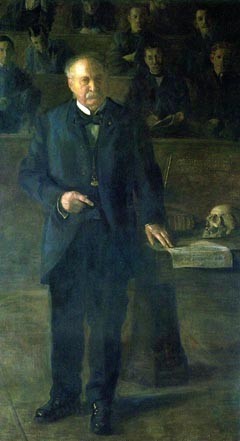
In 1882, a Philadelphia Press newspaper story sparked a sensational trial after a journalist caught body snatchers stealing corpses and providing them to Jefferson Medical College for use as cadavers by medical students. Four grave robbers were arrested and sentenced to Moyamensing Prison for stealing bodies and selling them to Jefferson Medical College at the rate of $8 a body.
The renowned surgeon and Jefferson Medical College anatomy professor, William S. Forbes, was arrested for his role in the grave robbery but was acquitted
Due in part to the Lebanon Cemetery grave robbery scandal, the Pennsylvania Anatomy Act of 1883 was passed which provided for legal means by which medical colleges could obtain cadavers without having to buy them from grave robbers.
A 125-bed hospital, one of the first in the nation affiliated with a medical school, opened in 1877, and a school for nurses began in 1891. The Medical College became Thomas Jefferson University on July 1, 1969. As an academic health care center, Jefferson is currently involved in education, medical research, and patient care. Jefferson Medical College is the 9th oldest American medical school that is in existence today.
In January 2007, the university sold Thomas Eakins' painting The Gross Clinic, which depicts a surgery that took place at the school, for $68 million, to the Pennsylvania Academy of the Fine Arts, in association with the Philadelphia Museum of Art. A reproduction hangs in its place at Jefferson University.
On June 17, 2014, Sidney Kimmel Foundation donated $110 million to Jefferson Medical College, prompting the announcement that Jefferson Medical College would be renamed Sidney Kimmel Medical College. It was the largest donation received in its history.
Merger
In May 2017, Thomas Jefferson University and Philadelphia University announced that they would merge under the name Thomas Jefferson University.
Affiliations
Latrobe Hospital, as well as other hospitals, are affiliated with the Jefferson Medical College.
Academics
| a | #59B7df | 2px}}" | National Program Rankings | Program | Ranking |
|---|---|---|---|---|---|
| Biological Sciences | 130 | ||||
| Engineering | Unranked | ||||
| Medicine: Primary Care | 59 | ||||
| Medicine: Research | 55 | ||||
| Nursing: Anesthesia | 100 | ||||
| Nursing: Midwifery | 17 | ||||
| Nursing: Master's | 90 | ||||
| Nursing: Doctor of Nursing Practice | 100 | ||||
| Occupational Therapy | 6 | ||||
| Pharmacy | 53 | ||||
| Physical Therapy | 49 | ||||
| Physician Assistant | 74 | ||||
| Public Health | 82 |
| a | #59B7df | 2px}}" | Global Program Rankings | Program | Ranking |
|---|---|---|---|---|---|
| Biology and Biochemistry | 372 | ||||
| Cardiac and Cardiovascular Systems | 110 | ||||
| Cell Biology | 106 | ||||
| Clinical Medicine | 128 | ||||
| Molecular Biology and Genetics | 221 | ||||
| Neuroscience and Behavior | 173 | ||||
| Oncology | 74 | ||||
| Radiology, Nuclear Medicine and Medical Imaging | 124 | ||||
| Surgery | 48 |
Jefferson offers 160+ undergraduate and graduate programs, including the Sidney Kimmel Medical College and former Philadelphia University's flagship colleges:
- College of Architecture and the Built Environment
- Kanbar College of Design, Engineering and Commerce
- School of Continuing and Professional Studies
Campus
There are two campuses and a research center.
East Falls
The university's East Falls 100 acre wooded campus is located about eight miles northwest of Center City, Philadelphia, accessible by two of SEPTA's Regional Rail lines. The campus consists of 52 buildings, including classrooms, laboratories, studios, the Paul J. Gutman Library, student resident facilities, an exhibition gallery, and some major additions early in the 21st Century, the 72000 sqft Kanbar Campus Center for students, faculty and staff; the Gallagher Athletic, Recreation and Convocation Center; the SEED Center (certified LEED Gold Center for Sustainability, Energy Efficiency and Design), and the innovative DEC Center. A subsidiary campus is located in Bucks County.
Center City
The university's Center City Philadelphia campus, medical offices, and hospital (called Jefferson Health) are headquartered at 130 South Ninth Street and surrounding city blocks.
Manayunk Research Center
In addition to its major properties, Jefferson runs the Philadelphia University Research Center, which is housed in a restored textile mill (originally opened in 1864) in the Manayunk section of Philadelphia, just south of the main campus. The research center contains both the Engineering and Design Institute and the Laboratory for Engineered Human Protection.
File:WoMedCoOPenn.JPG|Woman's Medical College of Pennsylvania File:Phila U 2021 (04) jeh.jpg|Paul J. Gutman Library File:Phila U 2021 (16) uncut jeh.jpg|The Mansion on the East Falls File:Jefferson University Scott Memorial LIbrary.jpg|Scott Memorial Library File:Jefferson University College and Curtis Buildings 1025 Walnut Street.jpg|The College and Curtis Buildings
Athletics
Main article: Jefferson Rams
thumb|250px|Jefferson athletics wordmark Jefferson's athletic teams are called the Rams. The college is a member of the NCAA Division II ranks, primarily competing as a member of the Central Atlantic Collegiate Conference (CACC) since the 2005–06 academic year; while its women's golf and women's rowing teams compete as Independents. The Rams previously competed in the East Coast Conference (originally known as the New York Collegiate Athletic Conference until 2006) from 1991–92 to 2004–05.
Jefferson sponsors 17 varsity intercollegiate teams: Men's sports include baseball, basketball, cross country, golf, soccer, tennis and track & field; while women's sports include basketball, cross country, golf, lacrosse, rowing, soccer, softball, tennis, track & field and volleyball.
The merged school chose to retain PhilaU's nickname, and the athletic program follows the overall institution in using the branding of "Jefferson" when describing the university as a whole.
Notable alumni
- Harvey Bauman (M.D. 1923), physician, medical missionary, founder of Champa General Hospital (1826), Champa, India
- Adrian Brooks (BSBA 1978, Philadelphia Textile), former professional soccer player.
- James P. Bagian (M.D. 1977), physician, engineer, and former NASA astronaut.
- Pat Chambers, Florida Gulf Coast University men's basketball coach.
- Shahzada Dawood (M.S. 2000), Pakistani businessman and philanthropist, who disappeared aboard the Titan submersible in 2023.
- Jacob Mendes Da Costa (M.D. 1852), discoverer of Da Costa's syndrome.
- Anthony F. DePalma (M.D. 1929), orthopedic surgeon and Jefferson professor
- Bob File, ex-Major League Baseball player, Toronto Blue Jays.
- Carlos Finlay (M.D. 1855), pioneer in the research of yellow fever, determining that it was transmitted through Aedes aegypti.
- William S. Forbes, professor of anatomy.
- John Heysham Gibbon, inventor of the heart-lung machine; awarded the Lasker Prize.
- Robert Gallo, discoverer of the Human Immunodeficiency Virus; awarded the Lasker Prize twice.
- Kermit Gosnell, abortion provider and convicted murderer.
- Samuel D. Gross (M.D. 1828), academic trauma surgeon; referred to as "The Emperor of American Surgery".
- Malcolm C. Grow, first Surgeon General of the United States Air Force.
- Frederick W. Hatch (M.D. 1873), psychiatrist, General Superintendent of State Hospitals in California
- Chevalier Jackson, father of endoscopy alongside Philipp Bozzini
- Maurice Kanbar (1952, H 2003), inventor and philanthropist
- Herbert Kleber, psychiatrist and substance abuse researcher
- William Williams Keen, first neurosurgeon to successfully remove a brain tumor
- Curtis King, ex-Major League Baseball player, St. Louis Cardinals
- Howard Krein, physician, surgeon, venture capitalist
- Robert G. Lahita, physician, internist and rheumatologist, best known for research into systemic lupus erythematosus and other autoimmune diseases
- Fred D. Lublin, neurologist, medical researcher and multiple sclerosis expert
- Herb Magee, head coach of the Jefferson men's basketball team.
- Marty Makary, surgeon, professor, and author.
- Silas Weir Mitchell, father of medical neurology.
- Jay McCarroll, winner of Bravo's inaugural season of Project Runway.
- David L. Reich (1982), academic anesthesiologist and professor; president and COO of the Mount Sinai Hospital, and president of Mount Sinai Queens
- Charles E. de M. Sajous (1878), pioneer of endocrinology
- Richard Smeyne, neuroscientist
- Jacob da Silva Solis-Cohen, performed the first laryngotomy for vocal cord cancer.
- Benjamin Starnes, vascular surgeon, medical researcher, and Alexander Whitehill Clowes Endowed Chair in Vascular surgery at the University of Washington
- John P. Turner, surgeon, hospital administrator, and educator
- Edward John Wherry III (Ph.D. 2000) immunologist and professor
- Greg Wilson, former coach of Rams' men's soccer, and professional player.
- Vincent Wolanin, athlete, businessman, philanthropist
- Anthony Zacchei, ophthalmologist
References
References
- "Thomas Jefferson University".
- "College Navigator – Thomas Jefferson University".
- "Endowment funds of the 120 degree-granting postsecondary institutions with the largest endowments, by rank order: Fiscal year 2021".
- "Academic Brand Style Guide 2.0".
- (June 29, 2017). "Official Combination of Philadelphia University & Thomas Jefferson University Signals Disruption in a Stagnant Education Industry".
- "Official Combination of Philadelphia University & Thomas Jefferson University Signals Disruption in a Stagnant Education Industry".
- "Carnegie Classifications Institution Lookup". Center for Postsecondary Education.
- "History | Jefferson Online (Formerly PhilaU Online)".
- Gayley, James Fyfe. (1858). "A history of the Jefferson Medical College of Philadelphia". Joseph M. Wilson.
- "George McClellan, Founder". Thomas Jefferson University.
- Pedrick, Alexander K.. (1898). "Charitable Institutions of Pennsylvania". State Printer of Pennsylvania.
- "Establishing a School". Thomas Jefferson University.
- (September 1915). "The Pennsylvania Medical Journal".
- Morton, Samuel George. (1849). "Biographical Notice of the Late George McClellan, M. D.". College of Physicians of Philadelphia.
- (September 2014). "Dr Mutter's Marvels: A True Tale of Intrigue and Innovation at the Dawn of Modern Medicine". Avery Books.
- Pilcher, James Evelyn. (1905). "The Surgeon Generals of the Army of the United States of America". [[Association of Military Surgeons of the United States]].
- (2010). "Wicked Philadelphia: Sin in the City of Brotherly Love". The History Press.
- "1882: Grave robbers sold black bodies to medical college".
- (April 13, 2015). "The Curious Case Of Body Snatching at Lebanon Cemetery".
- "Essay::Health Sciences Library". Upstate.edu.
- Michael Kimmelman. (January 12, 2007). "In the Company of Eakins". [[The New York Times]].
- (June 17, 2014). "Kimmel donates $110M to Jefferson". philly-archives.
- Lattanzio, Vince. (May 5, 2017). "Philadelphia University Will Be Renamed Thomas Jefferson University When Merger Complete". NBC 10.
- Loriann Hoff Oberlin, Jenn Phillips, Evan M. Pattak and Michele Margittai, ''Insiders' Guide to Pittsburgh'', 4th edition (Guilford, Conn.: Globe Pequot Press, 2008), pp. 396-7.
- (May 24, 2023). "Stocks".
- "Thomas Jefferson University".
- "Thomas Jefferson University (Global)".
- "About PU".
- "Philadelphia University Research Center".
- SLOBODZIAN, JOSEPH. (March 24, 2013). "Healer or monster?".
- Irvine, Leigh Hadley. (1903). "A History of the New California, Its Resources and People". Lewis Publishing Company.
This article was imported from Wikipedia and is available under the Creative Commons Attribution-ShareAlike 4.0 License. Content has been adapted to SurfDoc format. Original contributors can be found on the article history page.
Ask Mako anything about Thomas Jefferson University — get instant answers, deeper analysis, and related topics.
Research with MakoFree with your Surf account
Create a free account to save articles, ask Mako questions, and organize your research.
Sign up freeThis content may have been generated or modified by AI. CloudSurf Software LLC is not responsible for the accuracy, completeness, or reliability of AI-generated content. Always verify important information from primary sources.
Report