From Surf Wiki (app.surf) — the open knowledge base
Thomas Edison National Historical Park
National Historical Park of the United States

National Historical Park of the United States
| Field | Value |
|---|---|
| name | Thomas Edison National Historical Park |
| nrhp_type | hd |
| nocat | yes |
| nrhp_type2 | nhp |
| image | File:Edison labs Main St Lakeside Av jeh.jpg |
| caption | Thomas Edison's Laboratory |
| location | 211 Main Street, West Orange, NJ 07052 |
| coordinates | |
| mapframe | yes |
| mapframe-marker | building |
| mapframe-zoom | 12 |
| mapframe-caption | Interactive map showing Thomas Edison National Historical Park location |
| area | 21.25 acre |
| built | 1887 |
| architect | H. Hudson Holly |
| architecture | Late Victorian, Queen Anne |
| added | October 15, 1966 |
| designated_nrhp_type2 | September 5, 1962 (as NHS, redesignated NHP March 30, 2009) |
| visitation_num | 55,284 |
| visitation_year | 2011 |
| website | Thomas Edison National Historical Park |
| refnum | 66000052 |
| mapframe-marker = building | mapframe-zoom = 12 | mapframe-caption = Interactive map showing Thomas Edison National Historical Park location
Thomas Edison National Historical Park preserves Thomas Edison's laboratory and residence, Glenmont, in West Orange, New Jersey, United States. These were designed, in 1887, by architect Henry Hudson Holly. The Edison laboratories operated for more than 40 years. Out of the West Orange laboratories came the motion picture camera, improved phonographs, sound recordings, silent and sound movies and the nickel-iron alkaline electric storage battery.
Properties
The park comprises two properties in West Orange: the second Edison Laboratories complex and Edison's home in Llewellyn Park about .5 mi to the west at .
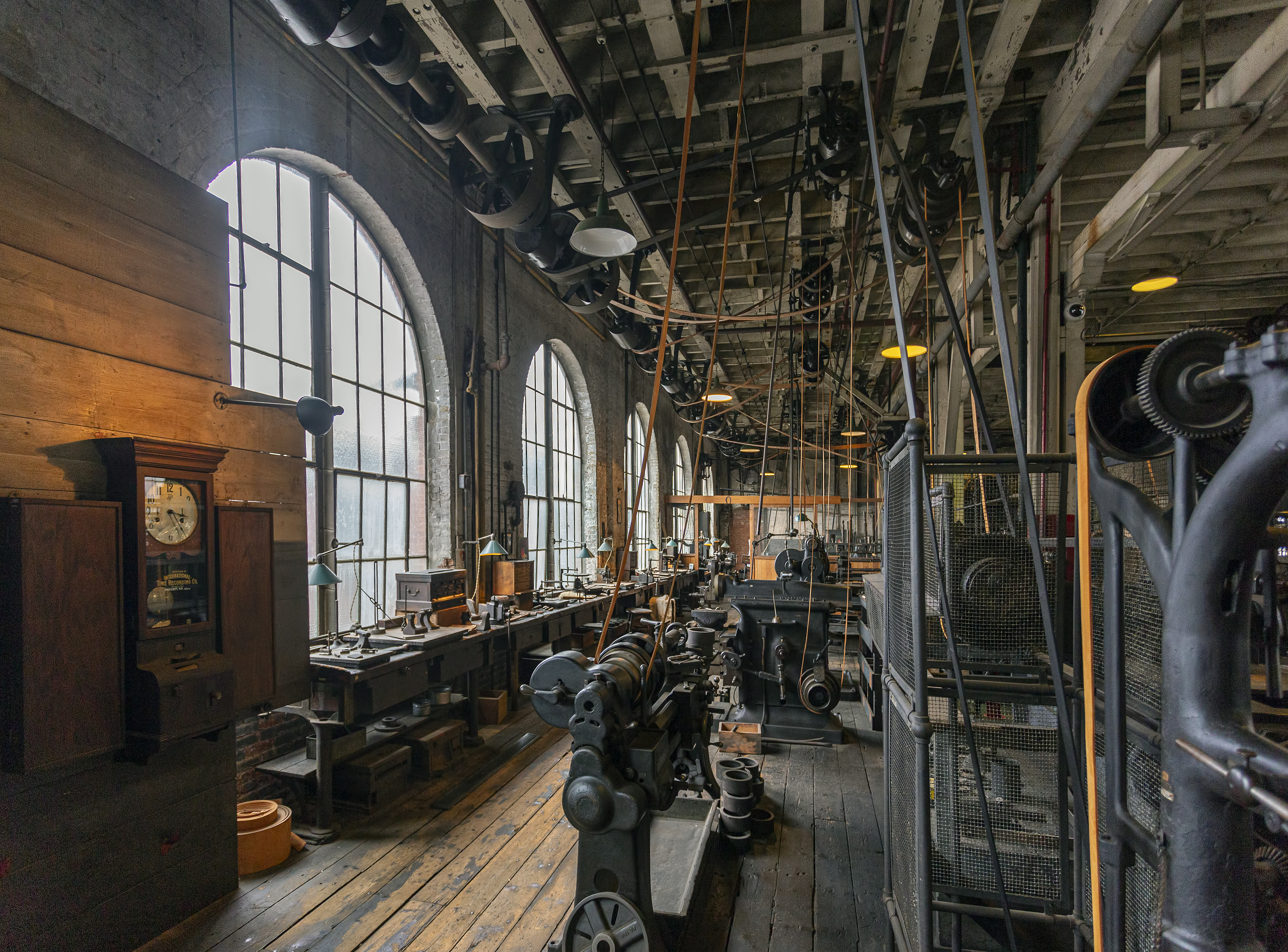
The laboratory complex comprises the industrial facility built by Edison in 1887 to research and develop his inventions. The complex includes more than a dozen buildings that supported Edison's research into electricity, photography, motion pictures, chemistry, metallurgy and other disciplines. A private library was attached to the main laboratory building. Specialty heavy and precision machine shops made tooling and prototypes. Edison's Black Maria was the world's first movie studio, and the building could be rotated on a turntable to keep sunlight on film subjects. A replica of the Black Maria was constructed in 1954.
Edison's Queen Anne style home was designed by Henry Hudson Holly and built between 1880 and 1882 for Henry Pedder. It originally comprised 23 rooms. The mansion was built with gravity-convection central heat, indoor flush toilets, and hot and cold piped water. Pedder was found to have embezzled funds from his employer to build Glenmont, and was forced to surrender the estate, which Edison bought in 1886 for $125,000 (equal to $ today), moving in with his newly married second wife Mina and his three children from his first marriage. The house retains its original furnishings in an Eastlake style interior. Edison added six more rooms, and electrical wiring.
Edison's children with Mina grew up at Glenmont, including future New Jersey governor Charles Edison and industrialist Theodore Miller Edison.

History
Edison's home was designated as the Edison Home National Historic Site on December 6, 1955. The laboratory was designated as Edison Laboratory National Monument on July 14, 1956. On September 5, 1962, the 21 acre site containing the home and the laboratory were designated the Edison National Historic Site. On March 30, 2009, it was renamed Thomas Edison National Historical Park, adding "Thomas" to the title in hopes to relieve confusion between the Edison sites in West Orange and Edison, New Jersey. Following extensive renovations of the laboratory complex, there was a grand reopening on October 10, 2009.
In popular culture
On April 27, 1996, the alternative rock band They Might Be Giants recorded four songs on phonograph cylinder at the museum. One of these recordings, of the song "I Can Hear You", appeared on their album Factory Showroom released later the same year. The other three songs ("Maybe I Know", "The Edison Museum", and "James K. Polk") were released on the band's website in 2002.
References
References
- "Edison Park Management". National Park Service.
- {{NRISref. 2009a
- (26 February 2015). "Edison and his Era". [[National Park Service]].
- "Edison's West Orange Laboratory". National Park Service.
- "The World's First Movie Studio".
- (10 April 2024). "Grand Re- Opening and Ribbon Cutting Ceremony for the Black Maria, the World’s First Motion Picture Studio". National Park Service.
- "Thomas Edison's Historical Home".
- "NPS.govPark HomeLearn About the ParkHistory & CultureCollectionsGlenmont Collections Glenmont Collections". National Park Service.
This article was imported from Wikipedia and is available under the Creative Commons Attribution-ShareAlike 4.0 License. Content has been adapted to SurfDoc format. Original contributors can be found on the article history page.
Ask Mako anything about Thomas Edison National Historical Park — get instant answers, deeper analysis, and related topics.
Research with MakoFree with your Surf account
Create a free account to save articles, ask Mako questions, and organize your research.
Sign up freeThis content may have been generated or modified by AI. CloudSurf Software LLC is not responsible for the accuracy, completeness, or reliability of AI-generated content. Always verify important information from primary sources.
Report