From Surf Wiki (app.surf) — the open knowledge base
They shall not pass
French military slogan
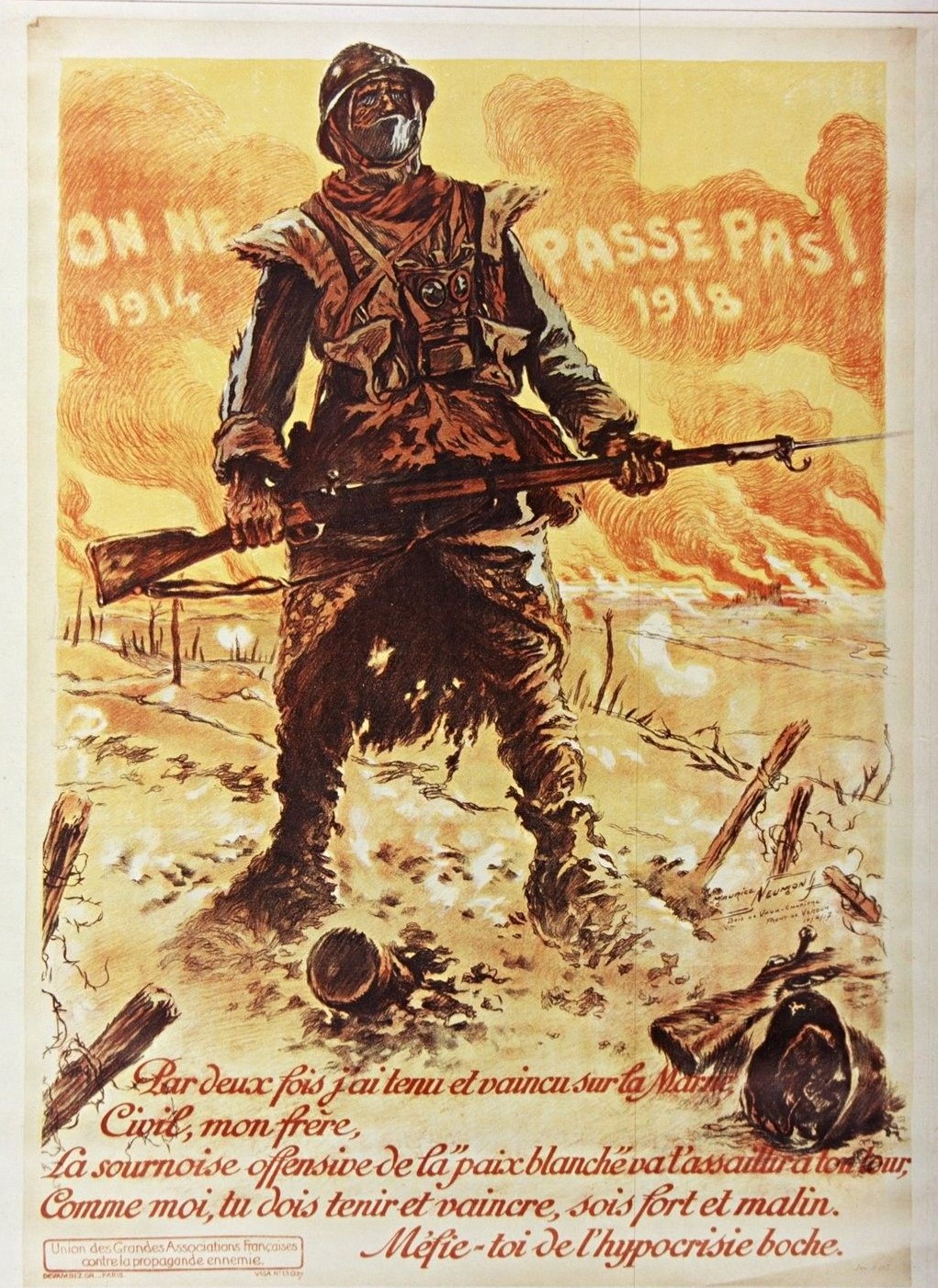
French military slogan
"They shall not pass" ( and ; ; ) is a slogan, notably used by France in World War I, to express a determination to defend a position against an enemy. Its Spanish-language form was also used as an anti-fascist slogan during the Spanish Civil War by the Republican faction.
Origin
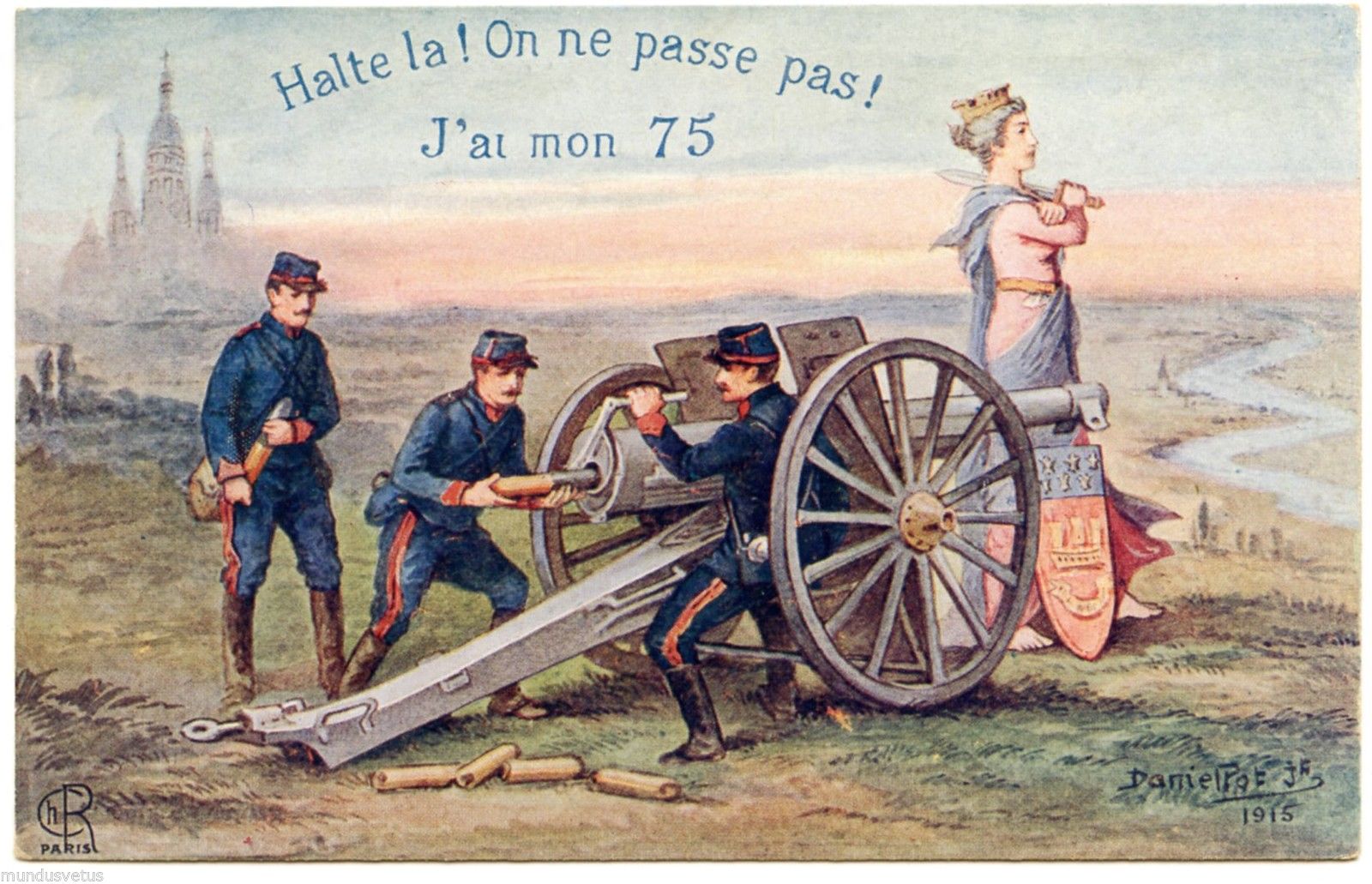
The widespread use of the slogan originates from the 1916 Battle of Verdun in the First World War when French Army General Robert Nivelle urged his troops not to let the enemy pass. The simplified slogan of "they shall not pass" appeared on French war propaganda posters, most notably by French artist Maurice Neumont in the last year of the war after the Allied victory at the Second Battle of the Marne.
Later during the First World War, the slogan was also used by Romanian Army soldiers during the Battle of Mărășești, with the Romanian translation of the phrase being "Pe aici nu se trece", translating as "One does not pass through here."
It has also been use in the late 19th century in the context of the Brazilian War of Canudos.
Later use
French socialist politician Léon Blum (SFIO), in 1934, used this sentence "Ils ne passeront pas !" against the Ligue's demonstration of 6 February. Ils ("they") designated the nationalist protesters.
It was also used during the Spanish Civil War, this time at the siege of Madrid by Dolores Ibárruri Gómez ("Pasionaria"), a member of the Communist Party of Spain, in her famous "No pasarán" speech. The leader of the Nationalist forces, Generalísimo Francisco Franco, upon gaining Madrid, responded to this slogan by declaring "Ya hemos pasao" ("We have already passed").
"¡No pasarán!" was used by British anti-fascists during the October 1936 Battle of Cable Street, and is still used in this context in some political circles. It was often accompanied by the words ¡Nosotros pasaremos! (we will pass) to indicate that communists rather than fascists will be the ones to seize state power.
The slogan was adopted on uniform badges by French units manning the Maginot Line.
The phrase was brought to the public consciousness again following action in December 1943 by French-Canadian officer Paul Triquet of the Royal 22e Regiment; his action included his use of Nivelle's phrase "to win a key objective at Ortona, Italy, in the face of overwhelming German opposition."
In the 1980s, the phrase ¡No pasarán! was a theme in the Central American crisis, particularly in the Nicaraguan Revolution. Nicaragua no pasarán is also the title of a 1984 documentary by David Bradbury about the events in Nicaragua that led to the overthrow of Somoza's dictatorship.
In 2024, it was adopted as a motto by the 155th Mechanized Brigade (Ukraine), because it was trained and equipped by France.
Gallery
File:Médaille de Verdun du colonel Brébant (recto).jpg|On ne passe pas !, French medal for the Battle of Verdun File:Battle-of-Cable-Street-red-plaque.png|alt=Red plaque from Tower Hamlets Environment Trust reading The Battle of Cable Street. The people of East London rallied to Cable Street on the 4th October 1936 and forced back the march of the fascist Oswald Mosley and his Blackshirts through the streets of the East End. 'They Shall Not Pass'|Red plaque commemorating the Battle of Cable Street File:Pe aici nu se trece - mormântul eroului necunoscut - Mausoleul de la Marasesti.jpg|Tomb of the unknown soldier at the Mausoleum of Mărășești with the inscription "Pe aci nu se trece - Mărășești 1917"
References
References
- "Allied Posters of World War I: Par deux fois j'ai tenu et vaincu sur la Marne".
- Robinson, Tony. (September 2018). "Battles that Changed History: Epic Conflicts Explored and Explained". [[DK (publisher).
- Belu, Catalin. (24 July 2023). "”Pe aici nu se trece!”. La 24 iulie 1917 începea Bătălia de la Mărășești | Agenția de presă Rador".
- (1897). "até tomando ares de dizer á Republica: — Alto lá! d’aqui não passarás...".
- (17 November 2020). "1936, le Front Populaire et des lendemains qui chantent".
- (1966). "They Shall Not Pass: The Autobiography of La Pasionaria". International Publishers.
- Audrey Gillan. (2006-10-02). "Day the East End said ''No pasaran'' to Blackshirts". [[The Guardian]].
- (March 6, 1944). "French Canadian Wins Victoria Cross". [[Ottawa Citizen]].
- Kunzle, David. (1995). "The Murals of Revolutionary Nicaragua, 1979–1992". University of California Press.
- Kallen, Stuart A.. (2009). "The Aftermath of the Sandinista Revolution". Twenty-First Century Books.
- "Nicaragua: ''No Pasaran''". Frontline Films.
- (2011). "Australian Documentary: History, Practices and Genres". Cambridge University Press.

This article was imported from Wikipedia and is available under the Creative Commons Attribution-ShareAlike 4.0 License. Content has been adapted to SurfDoc format. Original contributors can be found on the article history page.
Ask Mako anything about They shall not pass — get instant answers, deeper analysis, and related topics.
Research with MakoFree with your Surf account
Create a free account to save articles, ask Mako questions, and organize your research.
Sign up freeThis content may have been generated or modified by AI. CloudSurf Software LLC is not responsible for the accuracy, completeness, or reliability of AI-generated content. Always verify important information from primary sources.
Report