From Surf Wiki (app.surf) — the open knowledge base
There Was a Crooked Man
Traditional song

Traditional song
| Field | Value |
|---|---|
| name | There Was a Crooked Man |
| cover | File:BookOfNurseryRhymes90.png |
| type | Nursery rhyme |
| published | 1842 |
| writer | Unknown |
"There Was a Crooked Man" is an English nursery rhyme. It has a Roud Folk Song Index number of 4826.
Origin
The rhyme was first recorded in print by James Orchard Halliwell in 1842:
There was a crooked man, and he went a crooked mile, He found a crooked sixpence against a crooked stile; He bought a crooked cat, which caught a crooked mouse, And they all liv'd together in a little crooked house.
It gained popularity in the early twentieth century. One legend suggests that this nursery rhyme originated in the once prosperous wool merchant's village of Lavenham, about 70 miles northeast of London, having been inspired by its multicolored half-timbered houses leaning at irregular angles as if they are supporting each other. One Lavenham house in particular, "The Crooked House" is often cited as the inspiration for the rhyme.
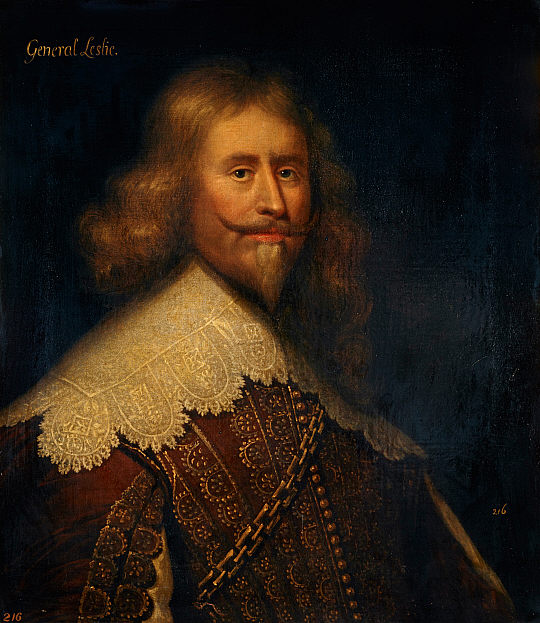
Other sources state that the poem originates from British history, specifically the period of the Scottish Stuart King Charles I of England (reigned 1625–1649). The crooked man is reputed to be the Scottish General Sir Alexander Leslie, who signed a covenant securing religious and political freedom for Scotland. The "crooked stile" in the poem was the alliance between the parliaments of England and Scotland or the border between the two, depending on the source. "They all lived together in a little crooked house" refers to the fact that the English and Scots had at last come to an agreement, despite the continuing great animosity between the two peoples, who nonetheless had to live with each other due to their common border.
The great recoinage around 1696 led to sixpence coins that were made of very thin silver and were easily bent, becoming "crooked".
References
References
- "Roud Folksong Index 4826 There was a crooked man and he walked a crooked mile". [[English Folk Dance and Song Society]].
- Halliwell, James Orchard. (1842). "The Nursery Rhymes of England". C. Richards.
- [[I. Opie and P. Opie]], ''The Oxford Dictionary of Nursery Rhymes'' (Oxford University Press, 1951, 2nd ed., 1997), p. 340.
- Taylor, Bob. (12 September 2011). "Lavenham, England: Part one of four great little places". Washington Times.
- Watkins, Flora. (2022-05-07). "What it's like to live in the world's most famous crooked house".
- Alchin, Linda. (2013). "The Secret History of Nursery Rhymes". Neilsen.
- [https://books.google.com/books?id=WTitDwAAQBAJ&dq=poem+there+was+a+crooked+inspired+by+crooked+house&pg=PT78 Here Comes A Chopper to Chop Off Your Head - The Dark Side of Childhood].
- "The Secret History of Nursery Rhymes", [https://books.google.com/books?id=XKiA1Vb5cREC&dq=poem+there+was+a+crooked+man+crooked+stile+scotland&pg=PA43 page 43].
- "The British Almanac", 1856, [https://books.google.com/books?id=vG83AAAAMAAJ&dq=poem+there+was+a+crooked+man+sixpence+bent+coin&pg=RA1-PA17 page 17].
This article was imported from Wikipedia and is available under the Creative Commons Attribution-ShareAlike 4.0 License. Content has been adapted to SurfDoc format. Original contributors can be found on the article history page.
Ask Mako anything about There Was a Crooked Man — get instant answers, deeper analysis, and related topics.
Research with MakoFree with your Surf account
Create a free account to save articles, ask Mako questions, and organize your research.
Sign up freeThis content may have been generated or modified by AI. CloudSurf Software LLC is not responsible for the accuracy, completeness, or reliability of AI-generated content. Always verify important information from primary sources.
Report