From Surf Wiki (app.surf) — the open knowledge base
Theism
Belief in the existence of at least one deity
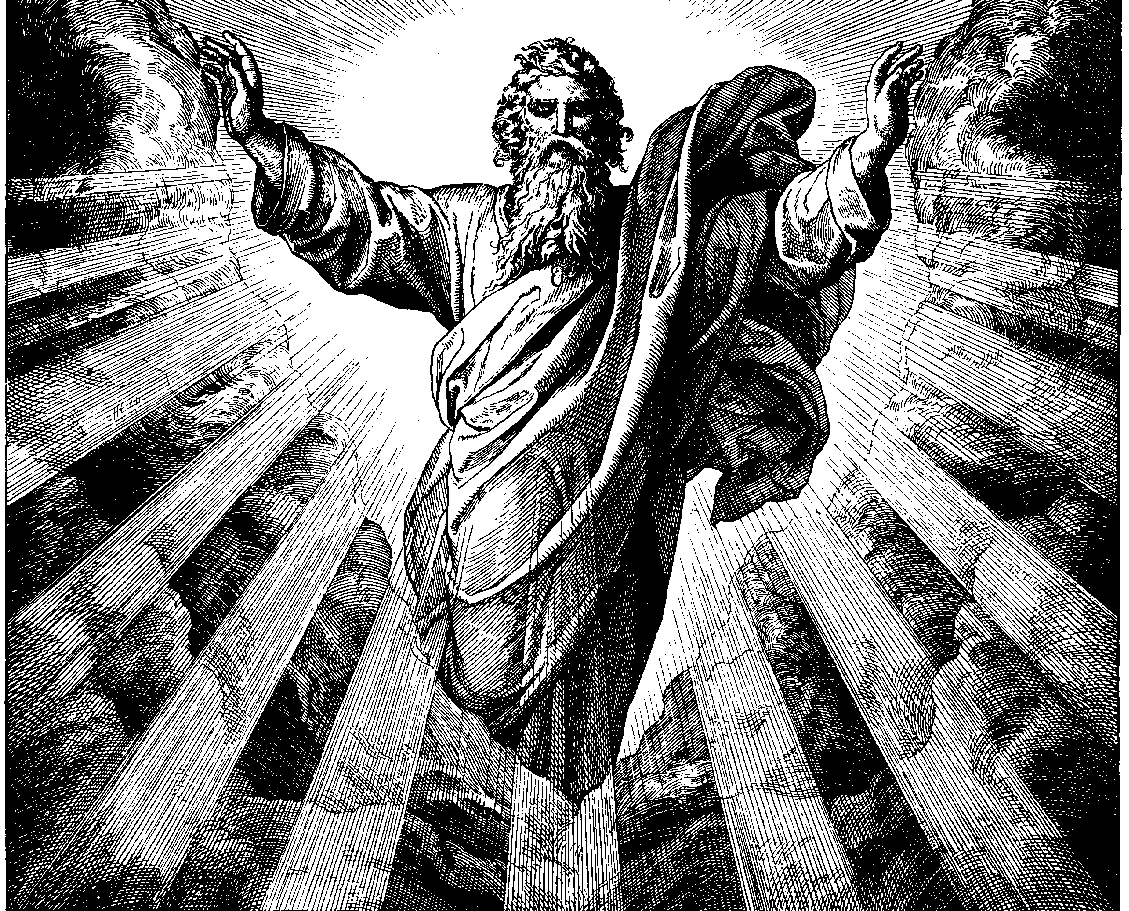
Belief in the existence of at least one deity
Theism is broadly defined as the belief in the existence of at least one deity. In common parlance, or when contrasted with deism, the term often describes the philosophical conception of God that is found in classical theism—or the conception found in monotheism—or gods found in polytheistic religions—or a belief in God or gods without the rejection of revelation, as is characteristic of deism.
Non-theism and atheism is commonly understood as non-acceptance or outright rejection of theism in the broadest sense of the term (i.e., non-acceptance or rejection of belief in God or gods). Related (but separate) is the claim that the existence of any deity is unknown or unknowable; a stance known as agnosticism. Agnostic theism is a personal belief in one or more deities along with acceptance that the existence or non-existence of the deity or deities is fundamentally unknowable.
A 2020 Philpapers survey of professional philosophers found that 66.72% accepted or leaned towards atheism, 18.64% accepted or leaned towards theism, and 14.64% leaned towards another opinion.
Etymology
The term theism derives from the Greek θεός (theós) or theoi meaning 'god' or 'gods'. The term theism was first used by Ralph Cudworth (1617–1688). In Cudworth's definition, they are "strictly and properly called Theists, who affirm that a perfectly conscious understanding being, or mind, existing of itself from eternity, was the cause of all other things".
Types of theism
Classical theism
Main article: Classical theism
Classical theism is the form of theism that describes God as the Absolute Being. Central insights of classical theistic theology includes emanationism and divine simplicity. Classical theistic traditions can be observed in major religions and philosophies, such as Sufism in Islam, Vaishnavism in Hinduism, Sikhism in general, and Platonism.
Monotheism
Main article: Monotheism
Monotheism (from Greek μόνος) is the belief in theology that only one deity exists. Some modern day monotheistic religions include Christianity, Judaism, Islam, Mandaeism, Druze, Baháʼí Faith, Sikhism, Zoroastrianism, Rastafari, some sects of Hinduism, and Eckankar.
Polytheism
Main article: Polytheism
Polytheism is the belief in multiple deities, which are usually assembled into a pantheon, along with their own religious sects and rituals. Polytheism was the typical form of religion before the development and spread of the Abrahamic religions of Judaism, Christianity, and Islam, which enforce monotheism. It is well documented throughout history; from prehistory and the earliest records of ancient Egyptian religion and ancient Mesopotamian religion to the religions prevalent during Classical antiquity, such as ancient Greek religion and ancient Roman religion, and in ethnic religions such as Germanic, Slavic, and Baltic paganism and Native American religions.
Notable polytheistic religions practiced today include Taoism, Chinese folk religion, Japanese Shinto, Santería, most traditional African religions, and various neopagan faiths such as Wicca, Druidry, Romuva, and Hellenism. Hinduism, while popularly held as polytheistic, cannot be exclusively categorised as such as some Hindus consider themselves to be pantheists and others consider themselves to be monotheists. Both are compatible with Hindu texts since there exists no consensus of standardisation in the faith. Advaita Vedanta, a philosophy in Hinduism, offers a combination of monotheism and polytheism, holding that Brahman is the sole ultimate reality of the universe, yet unity with it can be reached by worshipping multiple Devas and Devies.
A major division in modern polytheistic practices is between so-called soft polytheism and hard polytheism. "Soft" polytheism is the belief that different gods may be psychological archetypes, personifications of natural forces, or fundamentally one deity in different cultural contexts (e.g., Odin, Zeus, and Indra all being the same god as interpreted by Germanic, Greek, and Indic peoples, respectively)—known as omnitheism. In this way, gods may be interchangeable for one another across cultures. "Hard" polytheism is the belief that gods are distinct, separate, real divine beings rather than psychological archetypes or personifications of natural forces. Hard polytheists reject the idea that "all gods are one essential god" and may also reject the existence of gods outside their own pantheon altogether.
Polytheism is further divided according to how the individual deities are regarded:
; Henotheism: Henotheism is the belief that there may be more than one deity but only one of them is to be worshiped. Zoroastrianism is sometimes considered an example. ; Kathenotheism: Kathenotheism is the belief that there is more than one deity, but only one deity is worshiped at a time (or ever) and another may be worthy of worship in another time or place. If they are worshiped one at a time, then each is supreme in turn. ; Monolatrism: Monolatrism is the belief that there may be more than one deity but only one is worthy of being worshiped. Most of the modern monotheistic religions may have begun as monolatrous ones, but this is disputed.
Pantheism
Main article: Pantheism
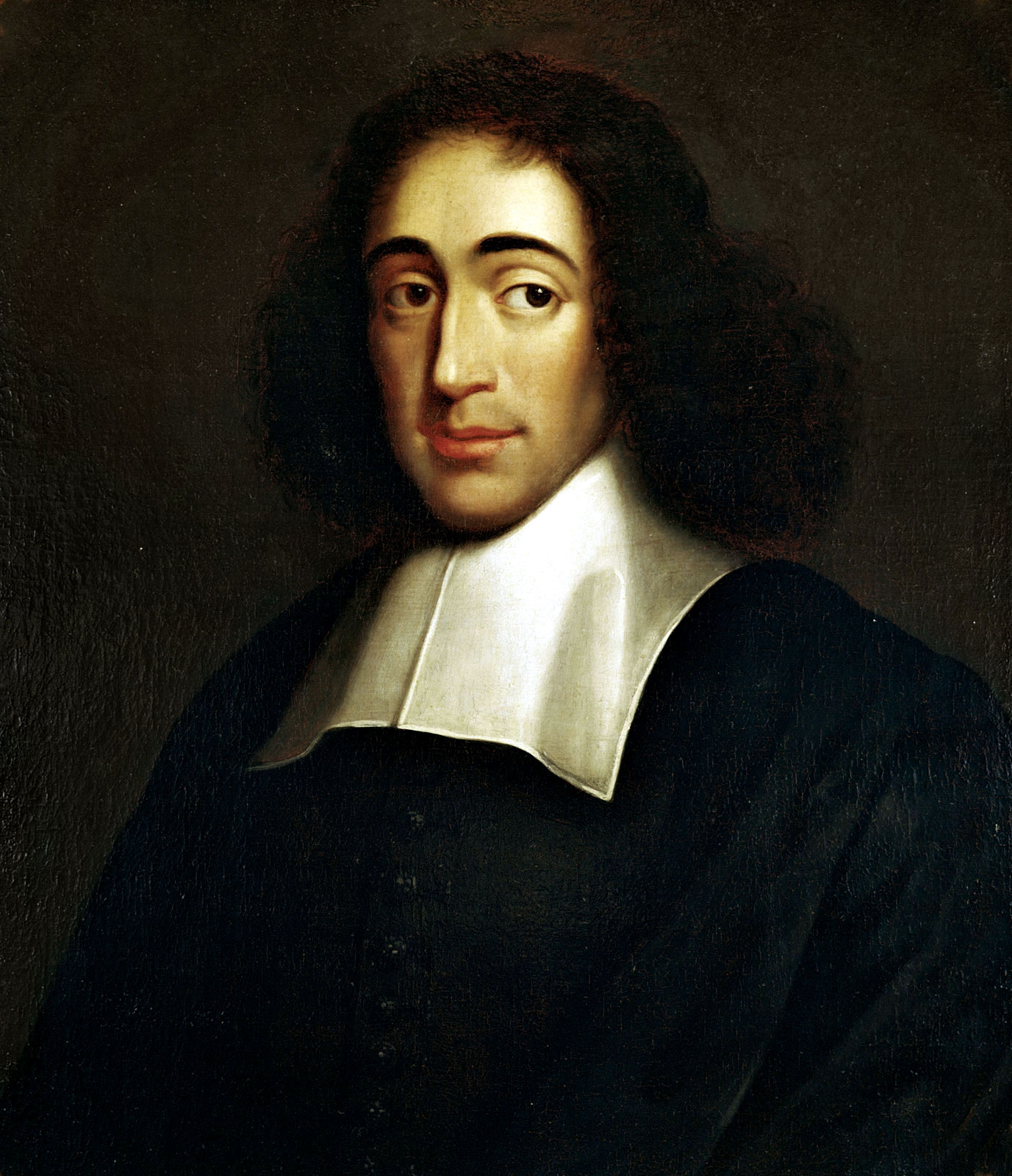
Pantheism is the belief that reality, the universe and the cosmos are identical to divinity and a supreme being or entity. Pointing to the universe as being an immanent creator deity in and of itself, the deity is understood as still expanding, creating, and eternal, or that all things compose an all-encompassing, immanent god or goddess that is manifested as the universe. As such, even astronomical objects are viewed as part of the sole deity. The worship of all gods of every religion has been conceived as a form of pantheism, but such a system is more akin to Omnism. Pantheist belief does not recognize a distinct personal god, anthropomorphic or otherwise, but instead characterizes a broad range of doctrines differing in forms of relationships between reality and divinity.:
- "The idea that Unity that is rooted in nature is what types of nature mysticism (e.g. Wordsworth, Robinson Jeffers, Gary Snyder) have in common with more philosophically robust versions of pantheism. It is why nature mysticism and philosophical pantheism are often conflated and confused for one another."
- "[Wood's] pantheism is distant from Spinoza's identification of God with nature, and much closer to nature mysticism. In fact it is nature mysticism."
- "Nature mysticism, however, is as compatible with theism as it is with pantheism." Pantheistic concepts date back thousands of years, and pantheistic elements have been identified in various religious traditions. The term pantheism was coined by mathematician Joseph Raphson in 1697, and since then has been used to describe the beliefs of a variety of individuals and organizations. Pantheism was popularized in Western culture as a theology and philosophy based on the work of the 17th-century philosopher Baruch Spinoza—in particular, his book Ethics. A pantheistic stance was also expressed by the 16th-century by philosopher and cosmologist Giordano Bruno.
Deism
Main article: Deism
; Classical Deism: Classical deism is the belief that one God exists and created the world, but that the Creator does not alter the original plan for the universe. Instead, the deity presides over it in the form of Providence; some classical deists, however, did believe in divine intervention. Deism typically rejects supernatural events (such as prophecies, miracles, and divine revelations) prominent in organized religion. Instead, deism holds that religious beliefs must be founded on human reason and observed features of the natural world, and that these sources reveal the existence of a supreme being as creator.
defines deism as : 'belief in the existence of a personal god, with disbelief in Christian teaching, or with a purely rationalistic interpretation of Scripture'.
Although Webster's lists deism as a type of theism, deism is completely different from theism. If anything, theism would be an off-shoot of deism since it takes beliefs a step further to include miracles and divine revelation, with deism being the 'base' belief in (a) God. ; Pandeism: Pandeism is the belief that God preceded the universe and created it but is now equivalent with it. ; Polydeism: Polydeism is the belief that multiple gods exist but do not intervene in the universe.
Autotheism
Main article: Egotheism
Autotheism is the belief that divinity exists within oneself and that individuals can achieve a godlike state. It is found in various philosophical and religious traditions emphasizing personal divinity or spiritual progression.
In Advaita Vedanta, a Hindu philosophical school, the phrase *aham Brahmāsmi ("*I am Brahman") expresses the unity of the individual self (atman) with the ultimate reality (Brahman).
In Mormonism, the doctrine of exaltation suggests that faithful individuals can attain godhood in the afterlife.
Autotheistic ideas also appear in Gnosticism, which emphasizes self-knowledge (gnosis) as the path to recognizing one’s divine nature, and in Friedrich Nietzsche’s concept of the Übermensch, which advocates transcending human limitations to create one’s own values.
Value-judgment Theisms
; Eutheism: Eutheism is the belief that a deity is wholly benevolent. ; Dystheism: Dystheism is the belief that a deity is not wholly good, and is possibly evil. ; Maltheism: Maltheism is the belief that a deity exists but is wholly malicious. ; Misotheism: Misotheism is active hatred toward and for God, gods, and/or other divine beings.
Non-theism and atheism
; Atheism : Atheism is defined by most people as the belief in the non-existence of gods, goddesses, and messiahs. Some atheists express an active disbelief or rejection of the existence of such entities.
; Non-theism: Non-theism is the belief in no gods or god.
; Agnosticism : Agnosticism is the belief that it is not known or not knowable whether a god or gods or the supernatural are part of reality regardless of how popular theistic beliefs may be. Agnostics withhold judgement on the existence and non-existence of a god on the basis that there is not enough evidence to come to a definitive conclusion that there is a god or that there is no god'.
Alterity theism
Alterity theism is a belief that the supreme being is radically transcendent to the point that it cannot be recognized as having any genuine being at all.
Academic opinions
A 2020 Philpapers survey of professional philosophers found that:
- 66.72% accepted or leaned towards atheism
- 18.64% accepted or leaned towards theism
- 14.64% leaned towards another opinion
References
References
- [https://www.dictionary.com/browse/theism? "theism"], {{Webarchive. link. (12 December 2021 ''Dictionary.com''. Retrieved 21 October 2016.)
- [http://www.merriam-webster.com/dictionary/theism "theism,"] {{Webarchive. link. (14 May 2011 ''Merriam-Webster Online Dictionary''. Retrieved 18 March 2011.)
- "Dictionary.com Online Dictionary".
- "Dictionary.com Online Dictionary".
- Nielsen, Kai. (2010). "Atheism".
- Edwards, Paul. (2005). "Atheism". MacMillan Reference USA (Gale).
- Hepburn, Ronald W.. (2005). "Agnosticism". MacMillan Reference USA (Gale).
- Rowe, William L.. (1998). "Agnosticism". Taylor & Francis.
- "PhilPapers Survey 2020".
- {{cite EB1911. Robert. Mackintosh
- Cudworth, Ralph (1678). ''The True Intellectual System of the Universe, Vol. I''. New York: Gould & Newman, 1837, p. 267.
- Feser, Edward. (2017). "Five Proofs of the Existence of God". IGNATIUS PRESS.
- [[David Bentley Hart, David Bentley. (September 24, 2013). "The Experience of God: Being, Consciousness, Bliss". [[Yale University Press]].
- "Monotheism", in Britannica, 15th ed. (1986), 8:266.
- Kimmerle, Heinz. (11 April 2006). "The world of spirits and the respect for nature: towards a new appreciation of animism". The Journal for Transdisciplinary Research in Southern Africa.
- Galtsin, Dmitry. (21 June 2018). "Modern Pagan religious conversion revisited". Sacra.
- Hoff, Kraemer, Christine. (2012). "Seeking the mystery : an introduction to Pagan theologies". Patheos Press.
- Negedu, I. A.. (1 January 2014). "The Igala traditional religious belief system: Between monotheism and polytheism". OGIRISI: A New Journal of African Studies.
- Picton, James Allanson. (1905). "Pantheism: its story and significance". Archibald Constable & CO LTD..
- *Fraser, Alexander Campbell "Philosophy of Theism", William Blackwood and Sons, 1895, p 163.
- (1998). "The New [[Oxford Dictionary of English]]". [[Oxford University Press.
- (1967). "Encyclopedia of Philosophy ed. Paul Edwards". Macmillan and Free Press.
- Reid-Bowen, Paul. (15 April 2016). "Goddess as Nature: Towards a Philosophical Thealogy". [[Taylor & Francis]].
- "Definition of Pantheism".
- "A Companion to Philosophy of Religion".
- (2008). "Encyclopedia of Religion and Nature". A&C Black.
- Ann Thomson; Bodies of Thought: Science, Religion, and the Soul in the Early Enlightenment, 2008, page 54.
- Lloyd, Genevieve. (2 October 1996). "Routledge Philosophy GuideBook to Spinoza and The Ethics". [[Routledge]].
- Birx, Jams H.. (11 November 1997). "Giordano Bruno". The Harbinger.
- [https://web.archive.org/web/20051120140834/http://www.askoxford.com/concise_oed/deism AskOxford: deism]
- Gurumayum Ranjit Sharma. (1987). "The Idealistic Philosophy of Swami Vivekananda". Atlantic.
- Davies, Douglas J.. (23 October 2003). "An Introduction to Mormonism". Cambridge University Press.
- "Chapter 47: Exaltation".
- Hans, Jonas. (2001). "The Gnostic Religion: The Message of the Alien God and the Beginnings of Christianity". Beacon Press.
This article was imported from Wikipedia and is available under the Creative Commons Attribution-ShareAlike 4.0 License. Content has been adapted to SurfDoc format. Original contributors can be found on the article history page.
Ask Mako anything about Theism — get instant answers, deeper analysis, and related topics.
Research with MakoFree with your Surf account
Create a free account to save articles, ask Mako questions, and organize your research.
Sign up freeThis content may have been generated or modified by AI. CloudSurf Software LLC is not responsible for the accuracy, completeness, or reliability of AI-generated content. Always verify important information from primary sources.
Report