From Surf Wiki (app.surf) — the open knowledge base
Theda Bara
American actress (1885–1955)
_Publicity_Still.jpg)
American actress (1885–1955)
| Field | Value |
|---|---|
| name | Theda Bara |
| image | Theda Bara 1921 Orval Hixon (cropped).jpg |
| caption | Bara in 1921 |
| birth_name | Theodosia Burr Goodman |
| birth_date | |
| birth_place | Cincinnati, Ohio, U.S. |
| death_date | |
| death_place | Los Angeles, California, U.S. |
| resting_place | Forest Lawn Memorial Park Cemetery |
| alma_mater | University of Cincinnati |
| occupation | Actress |
| years_active | 1908–1926 |
| spouse | |
| relatives | Lori Bara (sister) |
Theda Bara ( ; born Theodosia Burr Goodman; July 29, 1885 – April 7, 1955) was an American silent film and stage actress. Bara was one of the more popular actresses of the silent era and one of cinema's early sex symbols. Her femme fatale roles earned her the nickname "The Vamp" (short for vampire, here meaning a seductive woman), later fueling the rising popularity in "vamp" roles based in exoticism and sexual domination.
Born to a Jewish family in Cincinnati, Ohio, Bara was the biggest star of Fox Studios, which concocted a fictitious persona for her as an Egyptian-born woman interested in the occult. She made 43 films between 1914 and 1926. Three of her films were for Pathe, one was for Chadwick Pictures and 39 were for Fox but most of which were lost in the 1937 Fox vault fire.
After leaving Fox in 1919, Bara was unable to recapture her previous success. Following a marriage to Charles Brabin in 1921, she made three more films and then retired from acting in 1926. Bara never appeared in any sound films.
Early life
Bara was born Theodosia Burr Goodman on July 29, 1885, in Cincinnati, Ohio. She was named after the daughter of U.S. Vice President Aaron Burr. Her father was Bernard Goodman (1853–1936), a prosperous Jewish tailor from Poland. Her mother, Pauline Louise Françoise ( de Coppett; 1861–1957), was born in Switzerland. Bernard and Pauline married in 1882. Theda had two younger siblings: Marque (1888–1954) and Esther (1897–1965), who worked as an actress and writer as Lori Bara.
In 1890 the family moved to Avondale, a Cincinnati suburb with a substantial Jewish community. Bara attended Walnut Hills High School, graduating in 1903. After attending the University of Cincinnati for two years, she worked mainly in local theater productions, but did explore other projects. After moving to New York City in 1908, she made her Broadway debut the same year in The Devil.
Career
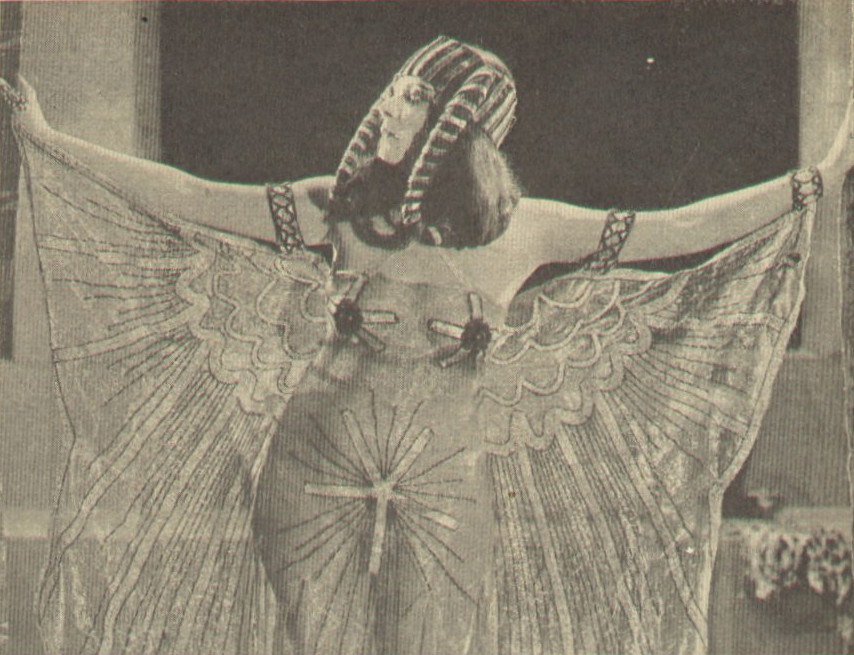
Most of Bara's early films were shot along the East Coast, where the film industry was based, primarily at Fox Studios in Fort Lee, New Jersey. She lived with her family in New York City. The rise of Hollywood as the center of the American film industry forced her to move to Los Angeles to film the epic Cleopatra (1917), which became one of her biggest hits. Only a 1 minute fragment of Cleopatra is known to exist today, but numerous photographs of her in costume as Cleopatra have survived.
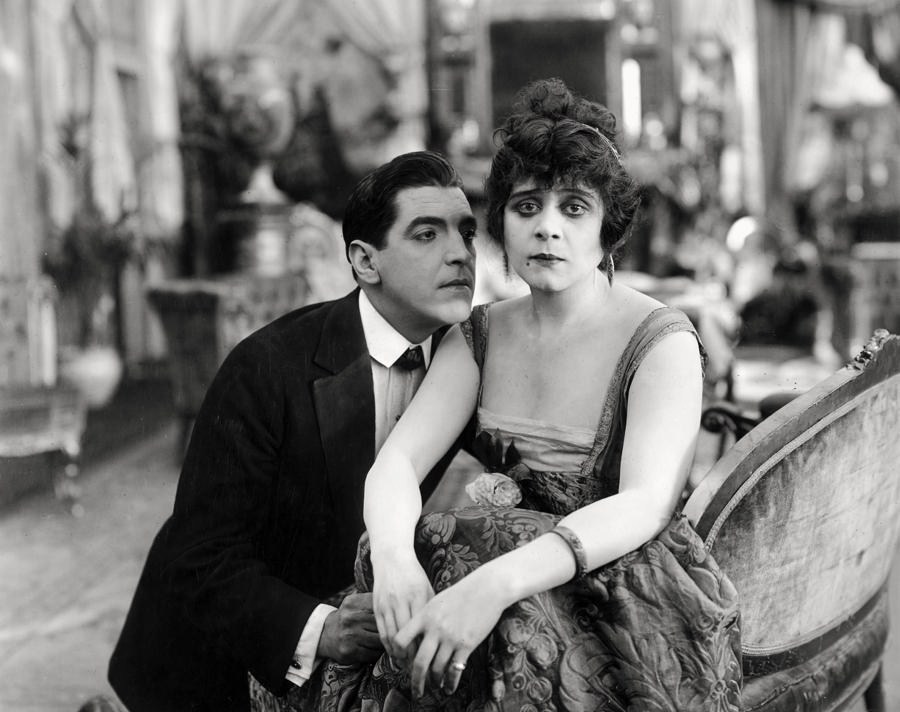
Bara was the Fox studio's biggest star between 1915 and 1919, but tired of being typecast as a vamp, she allowed her five-year contract with the company to expire. Her final Fox film was The Lure of Ambition (1919). In 1920, she turned briefly to the stage, appearing on Broadway in The Blue Flame. Bara's fame drew large crowds to the theater, but her acting was savaged by critics.
.png)
Her career suffered without Fox Studios' support, and she did not make another film until The Unchastened Woman (1925) for Chadwick Pictures. She retired after making only two more films, the short comedies Madame Mystery (1926), and 45 Minutes from Hollywood (1926) directed by Stan Laurel for Hal Roach; in this, Bara parodied her vamp image.
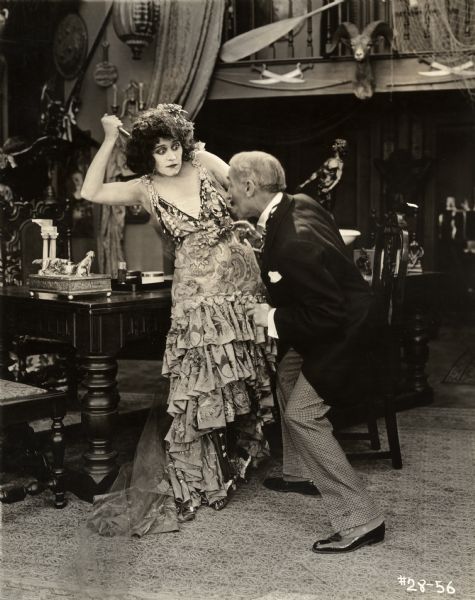
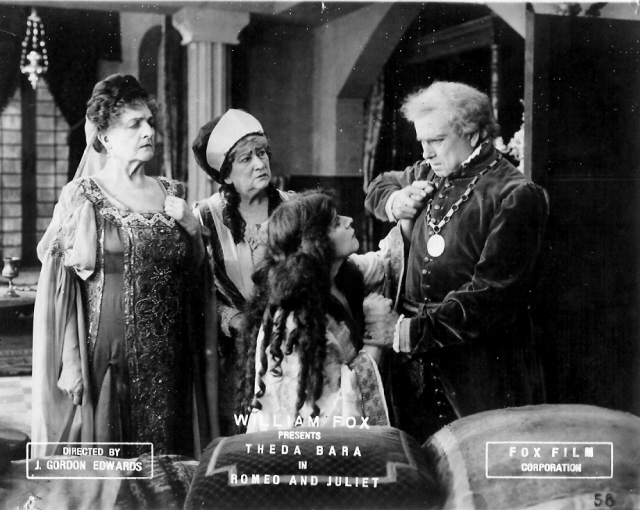
At the height of her fame, Bara earned $4,000 per week (). Her better-known roles were as the "vamp", although she attempted to avoid typecasting by playing wholesome heroines in films such as Under Two Flags and Her Double Life. She appeared as Juliet in a version of Shakespeare's Romeo and Juliet. Although Bara took her craft seriously, she was too successful playing exotic wanton women to develop a more versatile career.
Image and name
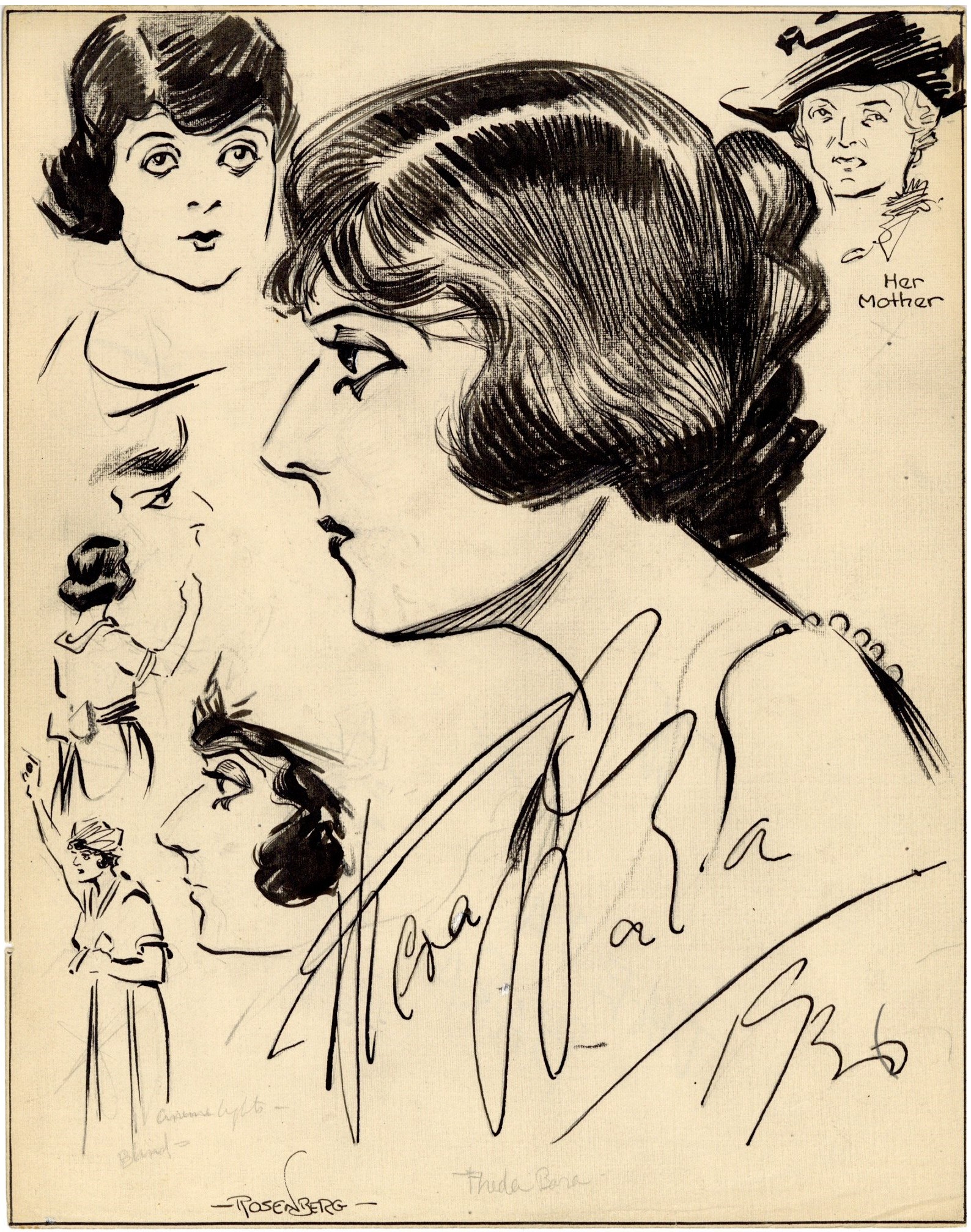
The origin of Bara's stage name is disputed. The Guinness Book of Movie Facts and Feats says it came from director Frank Powell, who learned Theda had a relative named Baranger, and that Theda was a childhood nickname. In promoting the 1917 film Cleopatra, Fox Studio publicists noted that the name was an anagram of Arab death, and her press agents, to enhance her exotic appeal to moviegoers, falsely promoted the young Ohio native as "the daughter of an Arab sheik and a French woman, born in the Sahara". In 1917, the Goodman family legally changed its surname to Bara.
Persona
Bara was known for wearing very revealing costumes in her films. It was popular at that time to promote an actress as mysterious, with an exotic background. The studios promoted Bara with a massive publicity campaign, billing her as the Egyptian-born daughter of a French actress and an Italian sculptor. They claimed she had spent her early years in the Sahara desert under the shadow of the Sphinx, then moved to France to become a stage actress. (In fact, Bara never had been to Egypt, and her time in France amounted to just a few months.)
A 2016 book by Joan Craig and Beverly F. Stout chronicles many personal, first-hand accounts of the lives of Bara and her husband Charles Brabin.
Marriage and retirement

Bara married British-born American film director Charles Brabin in 1921. They honeymooned at The Pines Hotel in Digby, Nova Scotia, Canada, and later purchased a 400 ha property down the coast from Digby at Harbourville, Nova Scotia, overlooking the Bay of Fundy, eventually building a summer home they called Baranook. They had no children. Bara also owned and often enjoyed extended stays in a villa-style home in Cincinnati. The villa was later bought by Xavier University, which used the house as a residence for nuns, and then the "honors villa" for students. The house was demolished in July 2011.
In 1936, she appeared on Lux Radio Theatre during a broadcast version of The Thin Man with William Powell and Myrna Loy. She did not appear in the play but instead announced her plans to make a movie comeback, which never materialized. She appeared on radio again in 1939 as a guest on Texaco Star Theatre.
In 1949, producer Buddy DeSylva and Columbia Pictures expressed interest in making a movie of Bara's life, to star Betty Hutton, but the project never materialized.
Death
On April 7, 1955, after a lengthy stay at California Lutheran Hospital in Los Angeles, Bara died of stomach cancer. She was survived by her husband, her mother, and her younger sister, Lori.
Legacy
Bara often is cited as the first sex symbol of the film era.
For her contributions to the film industry, Bara received a motion pictures star on the Hollywood Walk of Fame in 1960. Her star is located at 6307 Hollywood Boulevard, and is shown in the film MaXXXine.
Bara never appeared in a sound film , lost or otherwise. A 1937 fire at Fox's nitrate film storage vaults in New Jersey destroyed most of the studio's films made before 1930. Bara made 43 films in total between 1914 and 1926, but complete prints of only six still exist. Four are partially lost and 33 are completely lost.
The six films that survive are The Stain (1914), A Fool There Was (1915), East Lynne (1916), The Unchastened Woman (1925), Madame Mystery (1926), and 45 minutes from Hollywood (1926).
The four films that survive in fragments are Cleopatra (1917) (1 minute worth of fragments), The Soul of Buddha (1918) (23 seconds worth of fragments), Salome (1918) (2 minutes worth of fragments), and When A Woman Sins (1918) (23 seconds worth of fragments). Most of the clips can be seen in documentaries such as Theda Bara et William Fox (2001) and The Woman with the Hungry Eyes (2006). Additional footage has been found which shows her behind the scenes on a picture. .
Some of her films and fragments of her films were rediscovered. The Stain (1914), Bara's first and only feature for Pathe, was rediscovered in the 1990s. A complete print of East Lynne (1916) was found in 1971. 23 seconds worth of surviving footage from When A Woman Sins was found in 2019. Two minutes of surviving footage from Salome was discovered in 2021 by an intern at Filmoteca Española. In 2023, 40 seconds of additional footage from Cleopatra was found in a toy projector purchased on eBay by film researcher James Fennell. In 2025 a 23 second fragment of The Soul of Buddha was discovered in the documentary Theda Bara et William Fox (2001).
As to vamping, critics stated that her portrayal of calculating, cold-hearted women was morally instructive to men. Bara responded, "I will continue doing vampires as long as people sin."
In 1994, she was honored with her image on a U.S. postage stamp designed by caricaturist Al Hirschfeld. The Fort Lee Film Commission dedicated Main Street and Linwood Avenue in Fort Lee, New Jersey, as "Theda Bara Way" in May 2006 to honor Bara, who made many of her films at the Fox Studio on Linwood and Main.
Over a period of several years, filmmaker and film historian Phillip Dye reconstructed Cleopatra on video. Titled Lost Cleopatra, the full-length feature was created by editing together production-still picture montages combined with the surviving film clip. The script was based on the original scenario, with modifications derived from research into censorship reports, reviews of the film, and synopses from period magazines. Dye screened the film at the Hollywood Heritage Museum on February 8, 2017.
Filmography
| # |
|---|
| Considered to be Lost |
| Year | Film | Role | Notes | The Kreutzer Sonata# | The Clemenceau Case# | The Devil's Daughter# | Lady Audley's Secret# | The Two Orphans# | Sin# | Carmen# | The Galley Slave# | Destruction# | The Serpent# | Gold and the Woman# | The Eternal Sapho# | Under Two Flags# | Her Double Life# | Romeo and Juliet# | The Vixen# | The Darling of Paris# | The Tiger Woman# | Her Greatest Love# | Heart and Soul# | Camille# | Cleopatra# | The Rose of Blood# | Madame Du Barry# | The Forbidden Path# | The Soul of Buddha# | Under the Yoke# | Salomé# | When a Woman Sins# | The She-Devil# | The Light# | When Men Desire# | The Siren's Song# | A Woman There Was# | Kathleen Mavourneen# | La Belle Russe# | The Lure of Ambition# |
|---|---|---|---|---|---|---|---|---|---|---|---|---|---|---|---|---|---|---|---|---|---|---|---|---|---|---|---|---|---|---|---|---|---|---|---|---|---|---|---|---|
| 1914 | The Stain | Gang moll | Credited as Theodosia Goodman. Presumed lost until a copy was found in the 1990s. | |||||||||||||||||||||||||||||||||||||
| 1915 | A Fool There Was | The Vampire | ||||||||||||||||||||||||||||||||||||||
| 1915 | Celia Friedlander | |||||||||||||||||||||||||||||||||||||||
| 1915 | Iza | |||||||||||||||||||||||||||||||||||||||
| 1915 | Gioconda Dianti | |||||||||||||||||||||||||||||||||||||||
| 1915 | Helen Talboys | |||||||||||||||||||||||||||||||||||||||
| 1915 | Henriette | |||||||||||||||||||||||||||||||||||||||
| 1915 | Rosa | |||||||||||||||||||||||||||||||||||||||
| 1915 | Carmen | |||||||||||||||||||||||||||||||||||||||
| 1915 | Francesca Brabaut | |||||||||||||||||||||||||||||||||||||||
| 1915 | Fernade | |||||||||||||||||||||||||||||||||||||||
| 1916 | Vania Lazar | |||||||||||||||||||||||||||||||||||||||
| 1916 | Theresa Decordova | |||||||||||||||||||||||||||||||||||||||
| 1916 | Laura Bruffins | |||||||||||||||||||||||||||||||||||||||
| 1916 | East Lynne | Lady Isabel Carlisle | Presumed lost until a copy was discovered in 1971. | |||||||||||||||||||||||||||||||||||||
| 1916 | Cigarette | |||||||||||||||||||||||||||||||||||||||
| 1916 | Mary Doone | |||||||||||||||||||||||||||||||||||||||
| 1916 | Juliet | |||||||||||||||||||||||||||||||||||||||
| 1916 | Elsie Drummond | |||||||||||||||||||||||||||||||||||||||
| 1917 | Esmeralda | |||||||||||||||||||||||||||||||||||||||
| 1917 | Princess Petrovitch | |||||||||||||||||||||||||||||||||||||||
| 1917 | Hazel | |||||||||||||||||||||||||||||||||||||||
| 1917 | Jess | |||||||||||||||||||||||||||||||||||||||
| 1917 | Marguerite Gauthier | |||||||||||||||||||||||||||||||||||||||
| 1917 | Cleopatra | 1 minute survives | ||||||||||||||||||||||||||||||||||||||
| 1917 | Lisza Tapenka | |||||||||||||||||||||||||||||||||||||||
| 1917 | Jeanne Vaubernier | |||||||||||||||||||||||||||||||||||||||
| 1918 | Mary Lynde | |||||||||||||||||||||||||||||||||||||||
| 1918 | Priestess | Story, 23 seconds survives from the documentary Theda Bara et William Fox (2001). | ||||||||||||||||||||||||||||||||||||||
| 1918 | Maria Valverda | |||||||||||||||||||||||||||||||||||||||
| 1918 | Salome | 2 minutes survive | ||||||||||||||||||||||||||||||||||||||
| 1918 | Lilian Marchard / Poppea | 23 seconds survives | ||||||||||||||||||||||||||||||||||||||
| 1918 | Lolette | |||||||||||||||||||||||||||||||||||||||
| 1919 | Blanchette Dumond, aka Madame Lefresne | |||||||||||||||||||||||||||||||||||||||
| 1919 | Marie Lohr | |||||||||||||||||||||||||||||||||||||||
| 1919 | Marie Bernais | |||||||||||||||||||||||||||||||||||||||
| 1919 | Princess Zara | |||||||||||||||||||||||||||||||||||||||
| 1919 | Kathleen Cavanagh | |||||||||||||||||||||||||||||||||||||||
| 1919 | Fleurett Sackton/La Belle Russe | |||||||||||||||||||||||||||||||||||||||
| 1919 | Olga Dolan | |||||||||||||||||||||||||||||||||||||||
| 1925 | The Unchastened Woman | Caroline Knollys | ||||||||||||||||||||||||||||||||||||||
| 1926 | Madame Mystery | Madame Mysterieux | Short film | |||||||||||||||||||||||||||||||||||||
| 1926 | 45 Minutes from Hollywood | Herself | Short film |
Cultural references
- The short piano suite Silhouettes from the Screen, Op. 55 (1919) by Mortimer Wilson includes a miniature musical portrait of Theda Bara, who is portrayed in an atonal, expressionistic style.
- Bara is referenced in the 1921 Bert Kalmar/Harry Ruby song "Rebecca Came Back from Mecca" as well as their 1922 "Sheik From Avenue B", sung by Fanny Brice.
- Bara was one of three actresses (Pola Negri and Mae Murray were the others) whose eyes were combined to form the Chicago International Film Festival's logo, a stark, black and white close up of the composite eyes set as repeated frames in a strip of film.
- The International Times logo is a black-and-white image of Theda Bara. The founders' intention had been to use an image of actress Clara Bow, 1920s "It girl", but a picture of Theda Bara was used by accident, and once deployed, not changed.
- During a scene from 2004 film The Aviator when Howard Hughes and Glenn Odekirk are trying to create the H-1 Racer, Odekirk remarks, "Yeah, well, I want a date with Theda Bara, but that ain't gonna happen either."
- There are multiple references to Bara in the X film series. In the 2022 film Pearl, the titular character, portrayed by Mia Goth, feeds an alligator that she has named Theda; the movie theater she visits also has a poster for Bara's movie Cleopatra. In the 2024 film MaXXXine, the titular character, also portrayed by Goth, is seen putting out her cigarette on the Theda Bara Hollywood Walk of Fame star.
- Bara is a central figure in the play On Set with Theda Bara, written by Joey Merlo, directed by Jack Serio, and performed by David Greenspan at the Brick Theater in New York in 2024.
- Bara is featured as the main cover of the Lumineers album Cleopatra, as she was photographed as Cleopatra.
- In an episode of the television comedy series ‘The Munsters’ (Season 1, Episode 33, “Lily Munster, Girl Model,” first aired on May 6, 1965), the character Lily Munster (portrayed by Yvonne De Carlo) is interviewing for a job as a fashion model with a fashion designer character named Laszlo Brastoff (portrayed by Roger C. Carmel), and Brastoff remarks that with the exotic and mysterious appeal of his new line of dresses he is trying to recreate the kind of allure that was reflected by women like Theda Bara, whom he notes was called ‘…”The Vamp.” That’s short for “vampire.”’
Notes
References
Works cited
References
- (April 14, 2010). "Theda Bara Speaking 1936".
- Weinstock, Jeffrey. (2012). "The Vampire Film: Undead Cinema". [[Columbia University Press.
- "The Vampire by Rudyard Kipling - 1897".
- (April 6, 2017). "Silent Film Actresses and Their Most Popular Characters". National Women's History Museum.
- (November 17, 1917). "Theda Makes 'em All Baras". The New York Times.
- (April 28, 1954). "Marque Bara, Ex-Director, Brother of Theda, 'Silent' Star". [[The Brooklyn Daily Eagle]].
- "The Devil – Broadway Play – Original".
- (2006). "Fort Lee: Birthplace of the Motion Picture Industry". Arcadia Publishing.
- (December 4, 2013). "Library Reports on America's Endangered Silent-Film Heritage". Library Of Congress.
- link. ""
- Garza, Janiss. (2008). "Cleopatra (1917)". The New York Times.
- (April 8, 1955). "Famous Silent Screen Vamp Theda Bara Dies Of Cancer". The Montreal Gazette.
- (2016). "Theda Bara, My Mentor: Under the Wing of Hollywood's First Femme Fatale". McFarland and Company, Inc..
- Innis, Lorna. (February 26, 2012). "Hollywood's link with province long, varied". Chronicle Herald.
- (July 7, 2011). "Early film star's Cincinnati mansion being torn down". The Columbus Post Dispatch.
- "The Thin Man". Internet Archive.
- "The Lux Radio Theatre". RadioGOLDINdex.
- Brady, Thomas F.. (January 21, 1949). "De Sylva Working on Movie of Bara". The New York Times.
- Brady, Thomas F.. (December 2, 1949). "Betty Hutton Set for 2 Metro Films". The New York Times.
- (April 8, 1955). "Theda Bara, Screen Star, 65". The New York Times.
- (1955-04-19). "Discussing Theda Bara's will and estate.". Albuquerque Journal.
- "Classic Images – Vol. 250 – April 1996 Issue". Classicimages.com.
- Adinolfi, Francesco. (2008). "Mondo Exotica: Sounds, Visions, Obsessions of the Cocktail Generation". Duke University Press.
- "Theda Bara". Hollywood Chamber of Commerce.
- (2024-07-05). "A24's 'MaXXXine' Is Full of Horror Movie Easter Eggs".
- (1905). "Fads and Fashion of 1900 [& Other Newsreels]". Fun Film.
- (October 2, 2021). "REDISCOVERED: THEDA BARA IN "SALOME", 1918".
- (September 14, 2023). "Cleopatra (1917) - Newly Discovered Footage".
- Panati, Charles. (1998). "Sexy Origins and Intimate Things: The Rites and Rituals of Straights, Gays, Bi's, Drags, Trans, Virgins, and Others". Penguin Books.
- "Smithsonian National Postal Museum Object". Smithsonian Institution.
- (March 26, 1994). "Hirschfeld draws silent screen stars stamps". Stamps.
- Page, Jeffery. (July 9, 2015). "A Star in the Era Before Hollywood". The Record.
- "Lost Cleopatra".
- Ziemba, Christine N.. (February 6, 2017). "Twenty Of The Coolest Events Happening in L.A. This Week in Arts & Entertainment".
- (October 30, 1917). "Theda Bara Makes 'Camille' Reality". [[Hartford Courant]].
- [https://www.youtube.com/watch?v=6VcJT-i1fvo Performance of ''Silhouettes from the Screen'' by Steve Norquist]
- "What's a Nice Jewish Girl Like You Doing in a Place Like This? – Arab Kitsch".
- (2006). "America's Songs: The Stories Behind the Songs of Broadway, Hollywood, and Tin Pan Alley". Taylor & Francis.
- "The sheik of Avenue B".
- "About: Mission & History Our Logo". The Chicago International Film Festival.
- Miles, Barry. (1998). "Many Years From Now". [[Vintage (publisher).
- Schildcrout, Jordan. (December 2024). "Performance Review: On Set with Theda Bara". Theatre Journal.
This article was imported from Wikipedia and is available under the Creative Commons Attribution-ShareAlike 4.0 License. Content has been adapted to SurfDoc format. Original contributors can be found on the article history page.
Ask Mako anything about Theda Bara — get instant answers, deeper analysis, and related topics.
Research with MakoFree with your Surf account
Create a free account to save articles, ask Mako questions, and organize your research.
Sign up freeThis content may have been generated or modified by AI. CloudSurf Software LLC is not responsible for the accuracy, completeness, or reliability of AI-generated content. Always verify important information from primary sources.
Report