From Surf Wiki (app.surf) — the open knowledge base
The Mercury Theatre on the Air
Radio series

Radio series
| Field | Value | ||||
|---|---|---|---|---|---|
| image | Orson-Welles-1938.jpg | ||||
| imagesize | 220px | ||||
| caption | Orson Welles (July 1938) | ||||
| format | Anthology drama | ||||
| runtime | 60 minutes | ||||
| country | United States | ||||
| language | English | ||||
| home_station | CBS | ||||
| presenter | Orson Welles | ||||
| starring | {{Plainlist | ||||
| *{{ill | Virginia Nicolson | lt | Virginia Welles | qid=Q26101945 | short=yes}} |
| announcer | Dan Seymour | ||||
| creator | Orson Welles | ||||
| writer | {{Plainlist | ||||
| *Howard E. Koch, others<ref name | "TIOW"/ | ||||
| director | {{Plainlist | ||||
| *Paul Stewart (rehearsal director)<ref name | "TIOW"/ | ||||
| producer | {{Plainlist | ||||
| *Paul Stewart (associate producer)<ref name | "TIOW"/ | ||||
| executive_producer | Davidson Taylor (for CBS) | ||||
| narrated | Orson Welles | ||||
| first_aired | |||||
| last_aired | |||||
| num_series | 1 | ||||
| num_episodes | 22 | ||||
| open_theme | Piano Concerto No. 1 in B-flat minor by Tchaikovsky |
- Orson Welles
- William Alland
- Edgar Barrier
- Ray Collins
- Joseph Cotten
- George Coulouris
- Arlene Francis
- Alice Frost
- Martin Gabel
- Agnes Moorehead
- Frank Readick
- Elliott Reid
- Everett Sloane
- Howard Smith
- Paul Stewart
- Karl Swenson
- Richard Wilson
- Orson Welles (writer, script editor)
- John Houseman (writer, script editor)
- Howard E. Koch, others
- Orson Welles
- Paul Stewart (rehearsal director)
- John Houseman
- Orson Welles
- Paul Stewart (associate producer)
The Mercury Theatre on the Air is a radio series of live radio dramas created and hosted by Orson Welles. The weekly hour-long show presented classic literary works performed by Welles's celebrated Mercury Theatre repertory company, with music composed or arranged by Bernard Herrmann. The series began July 11, 1938, as a sustaining program on the CBS Radio network, airing Mondays at 9 pm ET. On September 11, the show moved to Sundays at 8 pm.
The show made headlines with its "The War of the Worlds" broadcast on October 30, one of the most famous broadcasts in the history of radio due to the panic it allegedly caused, after which the Campbell Soup Company signed on as sponsor. The Mercury Theatre on the Air made its last broadcast on December 4 of that year, and The Campbell Playhouse began five days later, on December 9.
Production
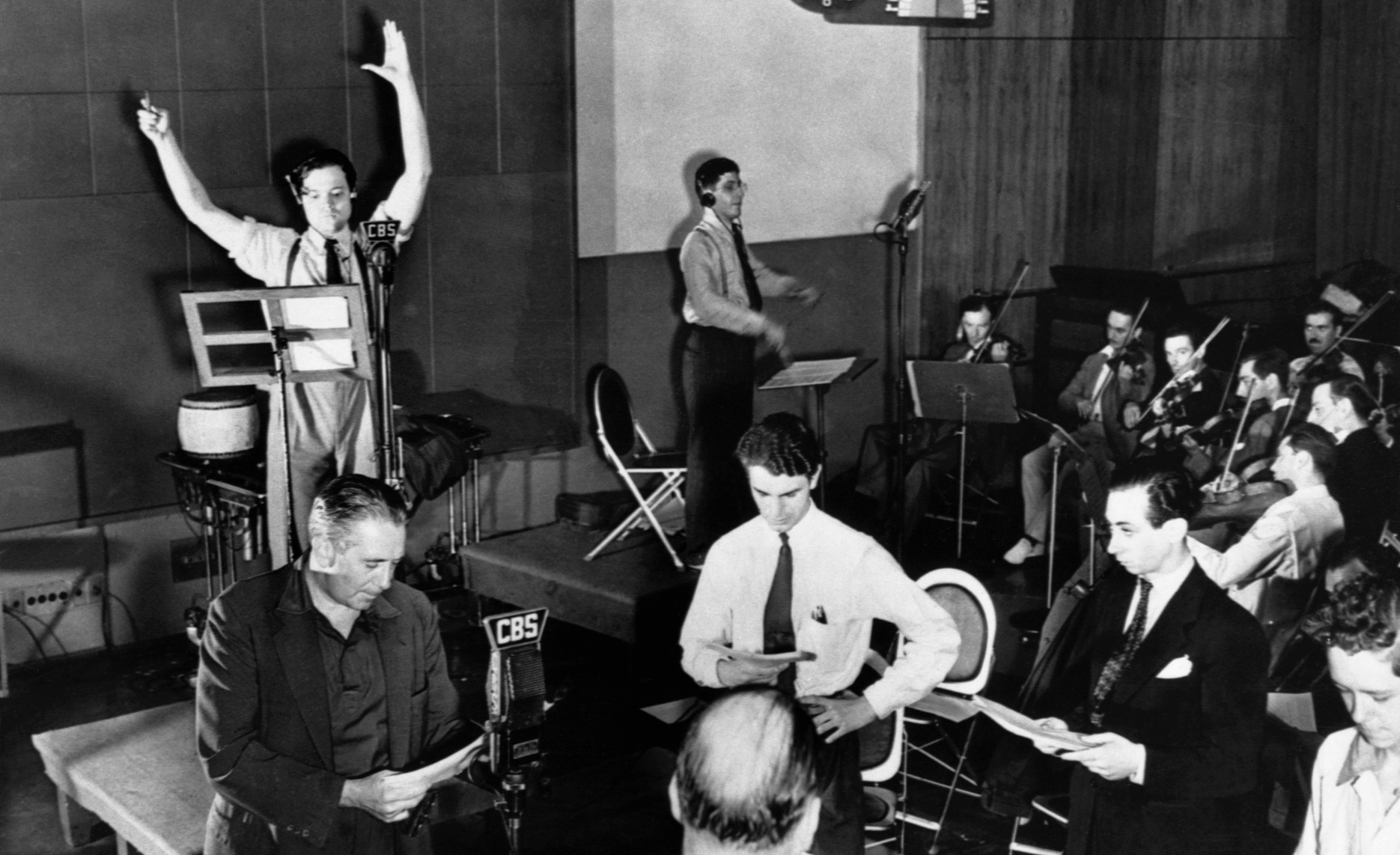
After the theatrical successes of the Mercury Theatre, CBS Radio invited Orson Welles to create a summer show for 13 weeks. The series began July 11, 1938,
Orson Welles presented a special challenge to the CBS sound effects team, The New Yorker reported. "His programs called for all sorts of unheard-of effects, and he could be satisfied with nothing short of perfection." For the first episode, "Dracula", the sound team searched for the perfect sound of a stake being driven through the heart of the vampire. They first presented a savoy cabbage and a sharpened broomstick for Welles's approval. "Much too leafy," Welles concluded. "Drill a hole in the cabbage and fill it with water. We need blood." When that sound experiment also failed to satisfy Welles, he considered awhile—and asked for a watermelon. The New Yorker recalled the effect:
Welles stepped from the control booth, seized a hammer, and took a crack at the melon. Even the studio audience shuddered at the sound. That night, on a coast-to-coast network, he gave millions of listeners nightmares with what, even though it be produced with a melon and hammer, is indubitably the sound a stake would make piercing the heart of an undead body.
As the Mercury's second theatre season began in 1938, Welles and John Houseman were unable to write the Mercury Theatre on the Air broadcasts on their own. For "Hell on Ice" (October 8, 1938), the 14th episode of the series, they hired Howard E. Koch, whose experience in having a play performed by the Federal Theatre Project in Chicago led him to leave his law practice and move to New York to become a writer. The Mercury Theatre on the Air was a sustaining show underwritten by CBS, so in lieu of a more substantial salary Houseman gave Koch the rights to any script he worked on—including, to his literal good fortune, "The War of the Worlds". After five months Koch left the show for Hollywood; his last script was "The Glass Key" (March 10, 1939), by which time The Mercury Theatre on the Air was called The Campbell Playhouse.
Episodes
Cast: Orson Welles (Dr. John Seward, Count Dracula), Elizabeth Farrell (Lucy Westenra), George Coulouris (Jonathan Harker), Agnes Moorehead (Mina Harker), Martin Gabel (Dr. Van Helsing), Ray Collins (Russian Captain), Karl Swenson (Mate) Cast: Orson Welles (adult Jim Hawkins, Long John Silver), Arthur Anderson (Jim Hawkins), George Coulouris (Captain Smollett), Ray Collins (Ben Gunn), Agnes Moorehead (Mrs. Hawkins), Eustace Wyatt (Squire Trelawney), Alfred Shirley (Blind Pew); with William Alland, Stephen Fox, Richard Wilson Cast: Orson Welles (Dr. Alexandre Manette, Sydney Carton), Mary Taylor (Lucie Manette), Eustace Wyatt (Clerk), Edgar Barrier (Charles Darnay), Martin Gabel (Mr. Jarvis Lorry), Frank Readick (Ernest Defarge), Betty Garde (Madame Defarge), Erskine Sanford (the President), Ray Collins (Prosecutor), Kenneth Delmar (Counselor for the Defense) Orson Welles (Richard Hannay, Marmaduke Jopley) "The Open Window" "My Little Boy" Orson Welles, Edgar Barrier and William Alland perform "I'm a Fool" by Sherwood Anderson. Ray Collins, Brenda Forbes and Virginia Welles (as Anna Stafford) perform "The Open Window" by Saki. Betty Garde, Kingsley Colton, Estelle Levy and Orson Welles perform "My Little Boy" by Carl Ewald. Cast: Orson Welles (Abraham Lincoln), Ray Collins (Grant), Edward Jerome (General Lee), George Coulouris (Hook), Joseph Cotten (Seward), Carl Frank (Scott), Karl Swenson (Hay), William Alland (Dennis) and Agnes Moorehead (Mrs. Lincoln) Cast: Orson Welles, Alice Frost, Arlene Francis, Helen Lewis, Ray Collins Cast: Orson Welles (Edmond Dantès), Ray Collins (Abbé Faria), George Coulouris (Monsieur Morrel), Edgar Barrier (de Villefort), Eustace Wyatt (Caderousse), Paul Stewart (Paul Dantés) Sidney Smith (Mondego), Richard Wilson (the Officer), Virginia Welles, as Anna Stafford (Mercédès), William Alland (Merchant) Cast: Orson Welles (Gabriel Syme), Eustace Wyatt (President Sunday), Ray Collins (the Professor), George Coulouis (Mr. Lucian Gregory), Edgar Barrier (the Marquis), Paul Stewart (Gogol), Joseph Cotten (Dr. Bull), Erskine Sanford (Secretary), Alan Devitt (Witherspoon), Virginia Welles, as Anna Stafford (Rosamond) Cast: Orson Welles (Brutus), H. V. Kaltenborn (Commentator), Martin Gabel (Cassius), George Coulouris (Antony), Joseph Holland (Caesar); music by Marc Blitzstein Music by Bernard Herrmann Welles used the disc to prepare the 1943 film in which he starred, and the acetate original was irreparably damaged. Cast: Orson Welles (Sherlock Holmes), Ray Collins (Dr. Watson), Mary Taylor (Alice Faulkner), Brenda Forbes (Madge Larrabee), Edgar Barrier (James Larrabee), Morgan Farley (Inspector Forman), Richard Wilson (Jim Craigin), Eustace Wyatt (Professor Moriarty) Cast: Orson Welles (Fagin), others Cast: Orson Welles, Al Swenson, Bud Collyer, Dan Seymour (announcer), Frank Readick, Howard Smith, Joseph Cotten, Ray Collins, Thelma Schnee, William Alland, Bernard Herrmann (composer, conductor), Davidson Taylor (production supervisor) Cast: Orson Welles (William Sylvanus Baxter), Betty Garde (Mrs. Baxter), Ray Collins (Mr. Parcher), Mary Wickes (Mrs. Parcher), Joseph Cotten (Genesis), Ruth Ford (Lola Pratt, the Baby Talk Girl), Marilyn Erskine (Jane), Elliott Reid (Cousin George), Pattee Chapmen (Rannie), Morgan Farley (Joe Bullitt) Cast: Orson Welles (Phineas Fogg), Ray Collins (Mr. Fix), Edgar Barrier (Passepartout), Eustace Wyatt (Ralph), Frank Readick (Stuart), Arlene Francis (Princess Aouda), Stefan Schnabel (Parsee), Al Swenson (the Captain), William Alland (the Officer) Cast: Orson Welles (producer, director, host, performer: Professor Richard Pierson), Dan Seymour (announcer), Paul Stewart (associate producer, adaptor, performer: Studio announcer, Third Studio Announcer), Frank Readick (Reporter Carl Phillips, Radio operator 2X2L), Kenny Delmar (Policeman at farm, Captain Lansing, Secretary of the Interior, Bayonne radio operator), Ray Collins (Farmer Wilmuth, Harry McDonald the radio VP, Rooftop radio announcer), Carl Frank (Second studio announcer, Fascist stranger), Richard Wilson (Brig. General Montgomery Smith, Officer 22nd Field Artillery, Langham Field), William Alland (Meridian room announcer, Field artillery gunner), Stefan Schnabel (Field artillery observer), William Herz (Newark radio operator, Radio operator 8X3R), Howard Smith (Bomber Lt. Voght), Bernard Herrmann (composer, conductor), John Houseman (producer, adaptor, script editor), Howard Koch (adaptor), Davidson Taylor (production supervisor), Ora Nichols (sound effects), Ray Kremer (sound effects), Jim Rogan (sound effects), John Dietz (sound engineer) "Life With Father" Adaptation of the play Life With Father by Clarence Day, with the following cast: Orson Welles (Father), Mildred Natwick (Mother), Mary Wickes (Employment Office Manager), Alice Frost (Margaret), Arthur Anderson (young Clarence Day) Cast: Orson Welles (Reverend Dr. Ralph Walkes), George Coulouris (Capt. English), Frank Readick (Mr. Stagg), Eustace Wyatt (Mr. Wrangle), Ray Collins (Van Matsys), Alfred Shirley (Mr. Chisholm) Cast: Orson Welles (Sergeant Buzzfuzz, Mr. Jingle), Ray Collins (Samuel Pickwick), Alfred Shirley (Augustus Snodgrass), Frank Readick, Elliott Reid, Edgar Barrier, Eustace Wyatt, Brenda Forbes, others Cast: Orson Welles (Clarence), others
Awards
The Mercury Theatre on the Air was inducted into the National Radio Hall of Fame in 1988.
Notes
References
References
- Dunning, John. (1998). "On the Air: The Encyclopedia of Old-Time Radio". Oxford University Press.
- Fletcher, Lucille. (April 13, 1940). "Squeaks, Slams, Echoes, and Shots".
- Houseman, John. (1972). "Run-Through: A Memoir". [[Simon & Schuster]].
- [[Richard France (writer). France, Richard]] (1977). ''The Theatre of Orson Welles''. Lewisburg, Pennsylvania: Bucknell University Press. {{ISBN. 0-8387-1972-4
- ''Orson Welles on the Air: The Radio Years.'' New York: [[Paley Center for Media. The Museum of Broadcasting]], catalogue for exhibition October 28–December 3, 1988, pp. 50–52
- "First Person Singular: Dracula". Indiana University Bloomington.
- [[Frank Brady (writer). Brady, Frank]], ''Citizen Welles''. New York: Charles Scribner's Sons, 1989, {{ISBN. 0-684-18982-8
- "First Person Singular: Treasure Island". Indiana University Bloomington.
- "First Person Singular: A Tale of Two Cities". Indiana University Bloomington.
- "First Person Singular: The 39 Steps". Indiana University Bloomington.
- (1992). "[[This is Orson Welles]]". [[HarperCollins]] Publishers.
- "First Person Singular: I'm A Fool / The Open Window / My Little Boy". Indiana University Bloomington.
- "First Person Singular: Abraham Lincoln". Indiana University Bloomington.
- Wood, Bret. (1990). "Orson Welles: A Bio-Bibliography". Greenwood Press.
- "First Person Singular: The Count of Monte Cristo". Indiana University Bloomington.
- "First Person Singular: The Man Who Was Thursday". Indiana University Bloomington.
- "The Mercury Theatre on the Air: Julius Caesar". Indiana University Bloomington.
- "The Mercury Theatre on the Air: Sherlock Holmes". [[Indiana University Bloomington]].
- "The Mercury Theatre on the Air: Hell on Ice". Indiana University Bloomington.
- "The Mercury Theatre on the Air: Seventeen". Indiana University Bloomington.
- "The Mercury Theatre on the Air: Around the World in Eighty Days". Indiana University Bloomington.
- "The Mercury Theatre". RadioGOLDINdex.
- (27 October 2008). "Celebrating the 70th Anniversary of Orson Welles's panic radio broadcast The War of the Worlds". Wellesnet, October 26, 2008.
- "The Mercury Theatre on the Air: The War of the Worlds". Indiana University Bloomington.
- "The Mercury Theatre on the Air: Heart of Darkness / Life With Father". Indiana University Bloomington.
- "The Mercury Theatre on the Air: A Passenger to Bali". Indiana University Bloomington.
- [http://www.radiohof.org/adventuredrama/mercury.html ''Mercury Theatre on the Air''] {{Webarchive. link. (2012-04-15 at the Radio Hall of Fame; retrieved June 16, 2012)
This article was imported from Wikipedia and is available under the Creative Commons Attribution-ShareAlike 4.0 License. Content has been adapted to SurfDoc format. Original contributors can be found on the article history page.
Ask Mako anything about The Mercury Theatre on the Air — get instant answers, deeper analysis, and related topics.
Research with MakoFree with your Surf account
Create a free account to save articles, ask Mako questions, and organize your research.
Sign up freeThis content may have been generated or modified by AI. CloudSurf Software LLC is not responsible for the accuracy, completeness, or reliability of AI-generated content. Always verify important information from primary sources.
Report