From Surf Wiki (app.surf) — the open knowledge base
The beautiful game
Nickname given to association football

Nickname given to association football
The beautiful game (, ) is a nickname for association football. It was popularised by Brazilian footballer Pelé, who played from 1957 to 1977. It was a term widely used in Brazil, though the exact origin of the phrase is disputed. Stuart Hall, an English football commentator, used it in 1958. Hall admired Peter Doherty when he went to see Manchester City play at Maine Road and used the term the beautiful game to describe football as a whole. During his career, the Brazilian footballer Ronaldinho was an exponent of the jogo bonito ('nice game' or 'cute game') style of play. Although made famous around the world, the phrase jogo bonito in Brazil has been replaced with futebol-arte ("Art Football") which means the same.
Etymology
The exact origins of the term are disputed. The origin has been attributed to Brazilian footballer Waldyr "Didi" Pereira, and the presenter Stuart Hall claimed to have originated it in 1958. The English author and football fanatic H. E. Bates used the term earlier, including in a 1952 newspaper piece extolling the virtues of the game entitled "Brains in the Feet". Earlier writers used the term in 1848 to describe the game of baaga'adowe, a forerunner of lacrosse as played by Ojibwe at Vauxhall Gardens in London, and to tennis in 1890.
Usage
Brazilian footballer Pelé is credited with making the phrase synonymous with football. In 1977, he named his autobiography My Life and the Beautiful Game. The book's dedication reads: "I dedicate this book to all the people who have made this great game the Beautiful Game." The phrase has entered the lexicon as both a description for football and a tribute to the sport.
"The Beautiful Game" is the title of a 1996 album. Featuring football anthems such as "Three Lions", music writer John Harris states that the album captures how the build-up to UEFA Euro 1996 "caught the imagination of the UK's musicians." It is also referenced in the title of Andrew Lloyd Webber's 2000 musical The Beautiful Game. It is used as a title for the 13-part 2002 series charting the history of the game: History of Football: The Beautiful Game, narrated by the actor Terence Stamp.
The song "Wavin' Flag"—rapper K'naan's Coca-Cola promotional anthem for the 2010 World Cup in South Africa—contained the lyric "let's rejoice in the Beautiful Game". In January 2014, New Model Army released a song called "The Beautiful Game" in support of the project Spirit of Football. A football podcast was released with the title The Beautiful Game.
Terms used
Sportswear company Nike has referenced the beautiful game in its football commercials. In 1996, a Nike commercial titled "Good vs Evil" was a gladiatorial game set in a Roman amphitheatre where ten football players from around the world, including Eric Cantona, Ronaldo, Paolo Maldini, Luís Figo, Patrick Kluivert, Ian Wright, and Jorge Campos, defend "the beautiful game" against a team of demonic warriors, which culminates in Cantona receiving the ball from Ronaldo, pulling up his shirt collar, and delivering the final line, "Au revoir", before striking the ball and destroying evil.
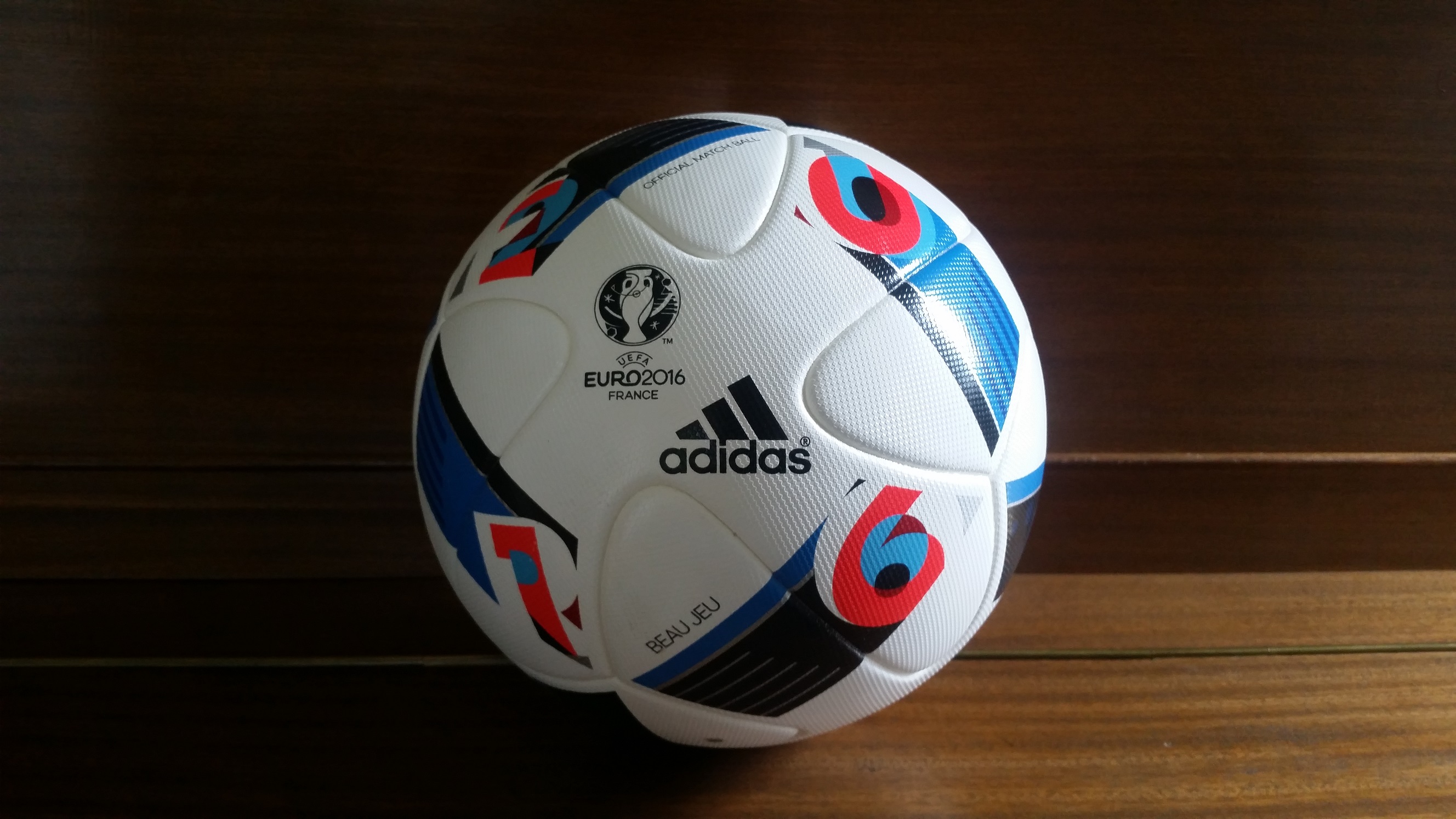
Nike uses the Portuguese phrase joga bonito—meaning "play beautifully" and not "beautiful game", which would be jogo bonito—as one of its slogans for football products. Nike began using the slogan joga bonito in a campaign preceding the 2006 FIFA World Cup in an attempt to curb players' behaviours on the pitch. In collaboration with and promoted by former international footballer Eric Cantona, Nike released a series of adverts to promote a game that is skillful and dignified, not riddled with theatrics and poor sportsmanship. Sportswear company Adidas also named an official match ball of UEFA Euro 2016 Adidas Beau Jeu, which translates to "The Beautiful Game" in English.
References
References
- Harper, Nick. (2 May 2003). "Stuart Hall". The Guardian.
- (9 March 2020). "Ronaldinho's Biography".
- Moore, Brian. (15 July 2010). "South Africa World Cup besmirched 'beautiful' game". The Daily Telegraph.
- Hall, S; Mayo, S: ''The Daily Mayo'', 6 May 2009, BBC Radio 5 Live
- Bates, H. E.. (16 November 1952). "The Sunday Times".
- Catlin, George. (1848). "Notes of eight year's travels and residence in Europe...".
- Heathcote, John Moyer. (1890). "Tennis".
- "The World Cup will show why football is still a beautiful game". The Telegraph.
- Pelé. (2007). "My Life and the Beautiful Game: The Autobiography of Pelé". Skyhorse Publishing Company, Incorporated.
- "Pelé's journey from street urchin to soccer's greatest star hits the big screen". Fox News.
- The Last Party: Britpop, Blair and the Demise of English Rock, John Harris (2003), p. 302
- Brown, David (2004). "God and Enchantment of Place: Reclaiming Human Experience". p. 398. Oxford University Press
- (18 June 2010). "Rapper K'Naan's Wavin' Flag in World Cup triumph". BBC.
- "New Model Army's "Beautiful Game" « The Ball 2014". Theball.tv.
- "The Beautiful Game".
- (10 November 2004). "Sport, Culture and Advertising: Identities, Commodities and the Politics of Representation". Routledge.
- Antony Young (2007). "Profitable Marketing Communications: A Guide to Marketing Return on Investment". p. 138. Kogan Page Publishers,
- Steve Hatch, Jim Taylor (2009). "Rigorous Magic: Communication Ideas and their Application". John Wiley & Sons,
- Kane, Pat. (18 July 2006). "Let football eat itself". The Guardian.
- [https://www.independent.co.uk/sport/football/international/euro-2016-adidas-unveil-beau-jeu-the-tournaments-official-match-ball-a6731786.html "Euro 2016: Adidas unveil 'Beau Jeu', the tournament's official match ball"] {{Webarchive. link. (13 September 2017 . ''The Independent''. Retrieved 30 May 2017)
This article was imported from Wikipedia and is available under the Creative Commons Attribution-ShareAlike 4.0 License. Content has been adapted to SurfDoc format. Original contributors can be found on the article history page.
Ask Mako anything about The beautiful game — get instant answers, deeper analysis, and related topics.
Research with MakoFree with your Surf account
Create a free account to save articles, ask Mako questions, and organize your research.
Sign up freeThis content may have been generated or modified by AI. CloudSurf Software LLC is not responsible for the accuracy, completeness, or reliability of AI-generated content. Always verify important information from primary sources.
Report