Content
Law of accelerating returns
Kurzweil opens by explaining that the frequency of universe-wide events has been slowing down since the Big Bang while evolution has been reaching important milestones at an ever-increasing pace. This is not a paradox, he writes, entropy (disorder) is increasing overall, but local pockets of increasing order are flourishing. Kurzweil explains how biological evolution leads to technology which leads to computation which leads to Moore's law.
Kurzweil unveils several laws of his own related to this progression, leading up to his law of accelerating returns which says time speeds up as order increases. He believes Moore's law will end "by the year 2020" but that the law of accelerating returns mandates progress will continue to accelerate, therefore some replacement technology will be discovered or perfected to carry on the exponential growth.
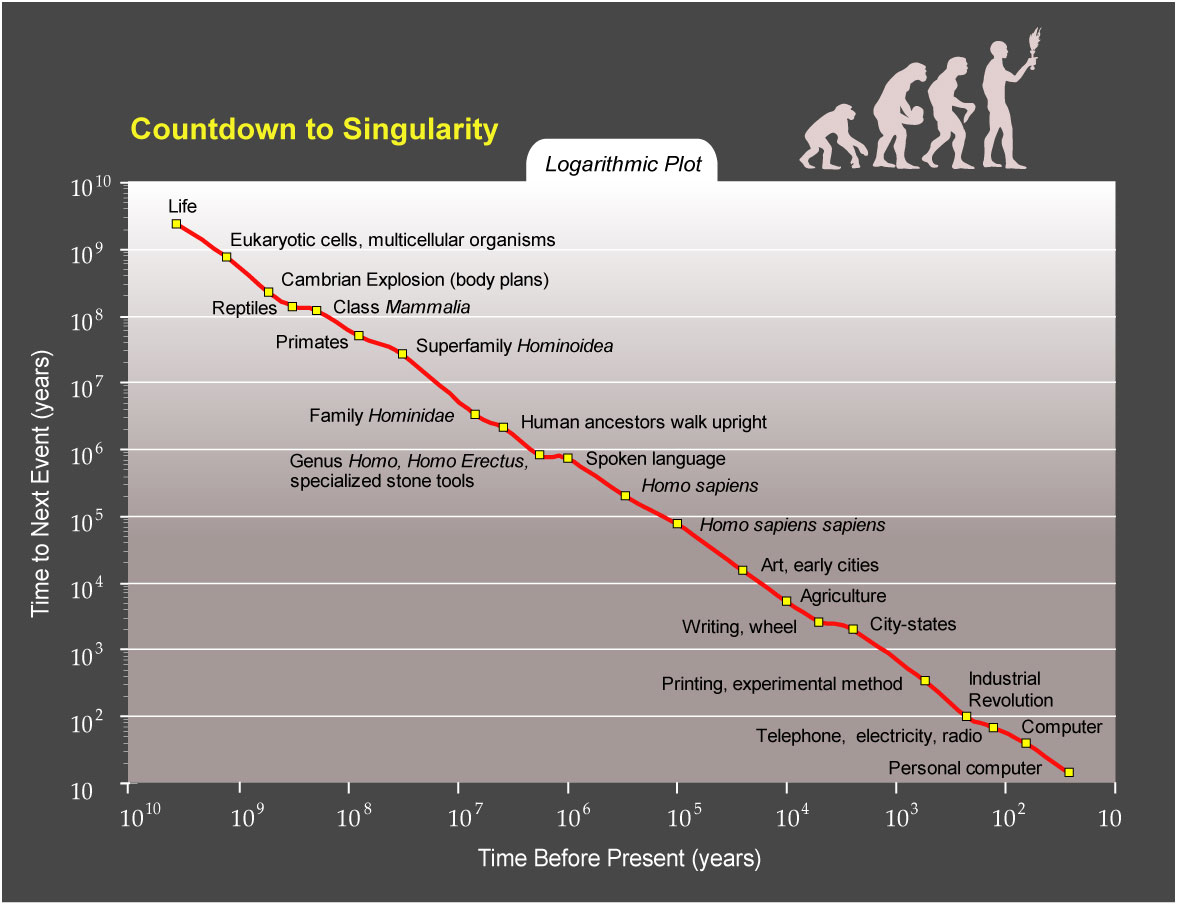
As in The Age of Intelligent Machines Kurzweil argues here that evolution has an intelligence quotient just slightly greater than zero. He says it is not higher than that because evolution operates so slowly, and intelligence is a function of time. Kurzweil explains that humans are far more intelligent than evolution, based on what we have created in the last few thousand years, and that in turn our creations will soon be more intelligent than us. The law of accelerating returns predicts this will happen within decades, Kurzweil reveals.
Philosophy of mind
Kurzweil introduces several thought experiments related to brain implants and brain scanning; he concludes we are not a collection of atoms, instead we are a pattern which can manifest itself in different mediums at different times. He tackles the mystery of how self-awareness and consciousness can arise from mere matter, but without resolution. Based partly on his Unitarian religious education Kurzweil feels "all of these views are correct when viewed together, but insufficient when viewed one at a time" while at the same time admitting this is "contradictory and makes little sense".
Kurzweil defines the spiritual experience as "a feeling of transcending one's everyday physical and mortal bounds to sense a deeper reality". He elaborates that "just being—experiencing, being conscious—is spiritual, and reflects the essence of spirituality". In the future, Kurzweil believes, computers will "claim to be conscious, and thus to be spiritual" and concludes "twenty-first-century machines" will go to church, meditate, and pray to connect with this spirituality.
Artificial intelligence

Kurzweil says Alan Turing's 1950 paper Computing Machinery and Intelligence launched the field of artificial intelligence. He admits that early progress in the field led to wild predictions of future successes which did not materialize. Kurzweil feels intelligence is the "ability to use optimally limited resources" to achieve goals. He contrasts recursive solutions with neural nets, he likes both but specifically mentions how valuable neural nets are since they destroy information during processing, which if done selectively is essential to making sense of real-world data. A neuron either fires or not "reducing the babble of its inputs to a single bit". He also greatly admires genetic algorithms which mimic biological evolution to great effect.
Recursion, neural nets and genetic algorithms are all components of intelligent machines, Kurzweil explains. Beyond algorithms Kurzweil says the machines will also need knowledge. The emergent techniques, neural nets and genetic algorithms, require significant training effort above and beyond creating the initial machinery. While hand-coded knowledge is tedious and brittle acquiring knowledge through language is extremely complex.
Building new brains
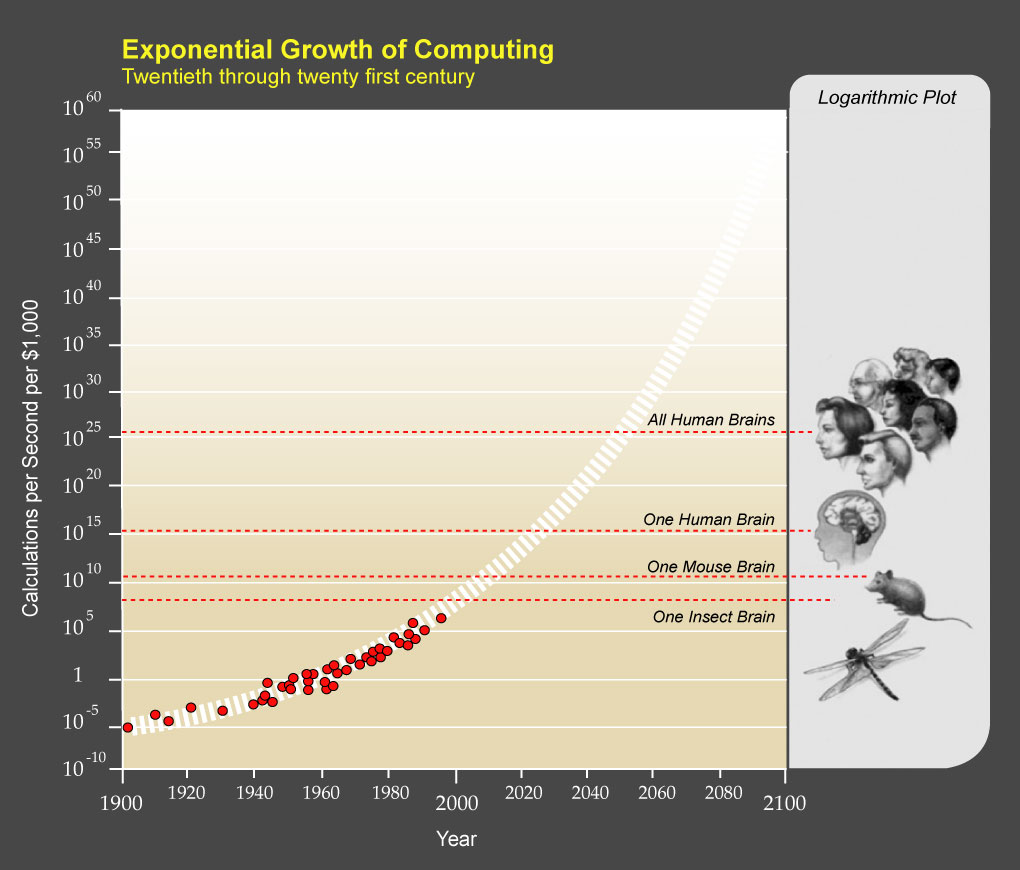
To build an artificial brain requires formulas, knowledge and sufficient computational power, explains Kurzweil. He says "by around the year 2020" a $1,000 personal computer will have enough speed and memory to match the human brain, based on the law of accelerating returns and his own estimates of the computational speed and memory capacity of the brain. Kurzweil predicts Moore's law will last until 2020 so current integrated circuits should come close to human brain levels of computation, but he says three dimensional chips will be the next big technology, followed potentially by optical computing, DNA computing, nanotubes, or quantum computing.
Kurzweil feels the best model for an artificial brain is a real human brain, and suggests slicing up and digitizing preserved human brains or examining them non-invasively as technology permits. Kurzweil differentiates between scanning the brain to understand it, in a generic fashion, and scanning a particular person's brain in order to preserve it in exact detail, for "uploading" into a computer for example. The latter is much harder to do, he notes, because it requires capturing much more detail, but it will eventually happen as well. When it does "we will be software, not hardware" and our mortality will become a function of our ability to "make frequent backups".
Building new bodies
Kurzweil notes that many thoughts people have are related to their bodies, and reassures that he does not believe in creating a disembodied brain. He reviews all the various body implants that existed when the book was published, explaining that our bodies are already becoming more synthetic over time. Kurzweil says this trend will continue and that the technology will advance from macroscopic implants, to cellular sized insertions, and finally to nanotechnology.
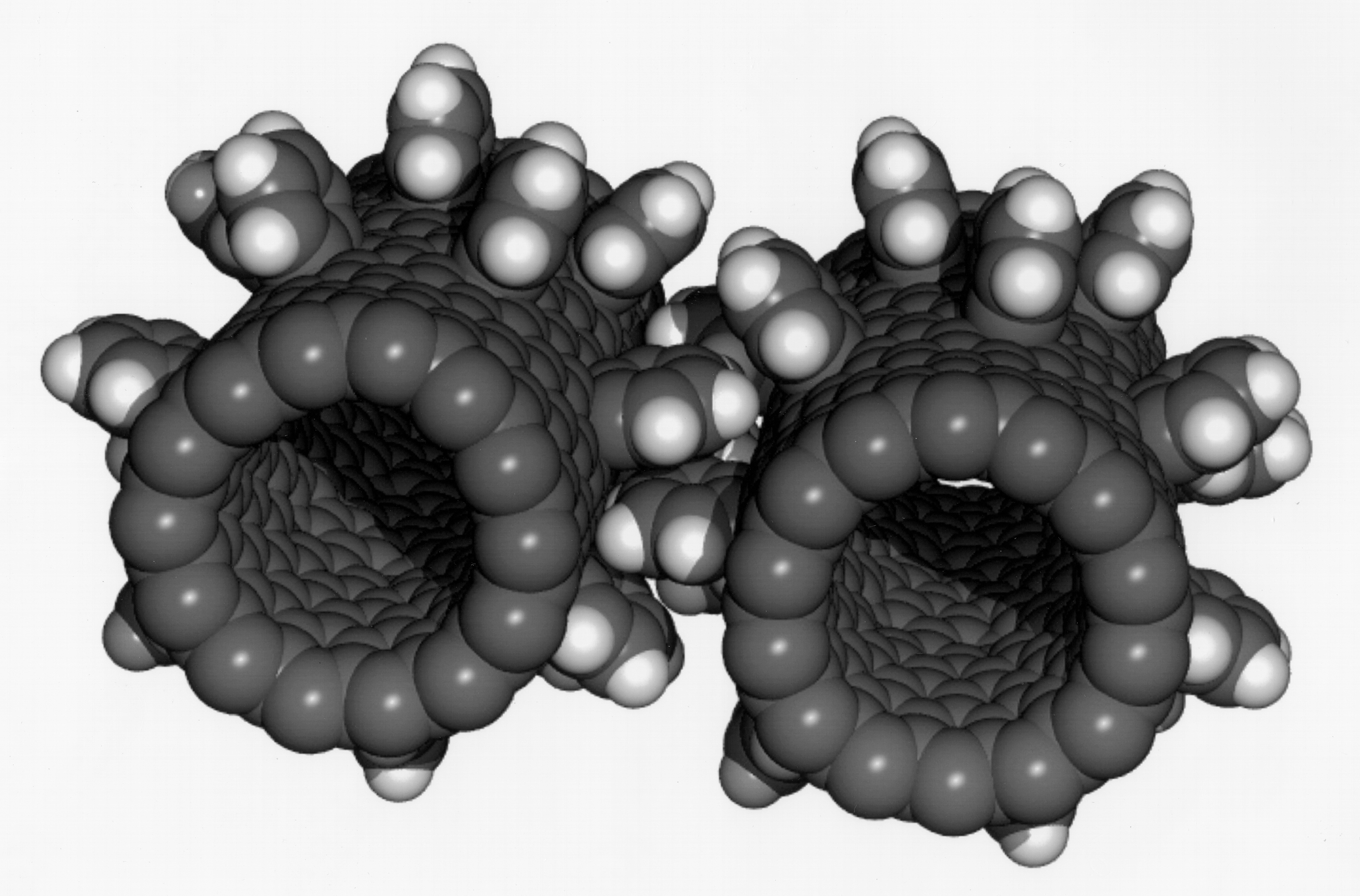
Nanotechnology has the potential to reshape the entire world, Kurzweil exclaims. Assembling materials molecule by molecule could solve energy problems, cure cancer and other diseases, strengthen our bodies, and produce self-assembling food, clothing, and buildings. Kurzweil admits that nanotechnology carries a big risk; a self-replicating substance, without the constraints of a living organism, might grow out of control and consume everything. However he points out that today there are already technologies which pose grave risks, for example nuclear power or weapons, and we have managed to keep them relatively safe, so he feels we can probably do the same with nanotechnology.
Finally Kurzweil says there is the prospect of virtual bodies, where direct neural implants would give us the sensation of having bodies and a way to exert control, without any physical manifestation at all. Although he quickly brings things back to nanotechnology by pointing out that sufficiently advanced nanotechnology will be like having a virtual world, since "utility fog" will appear to be entirely absent and then instantly morph into functional physical shapes. Kurzweil broaches the topic of sex in futuristic times, reminding us that every new technology "adopts sexual themes". Kurzweil envisions virtual sex, sexbots, and as well as more chaste activities like strolling along a "virtual Cancún beach".
State of the art
Kurzweil explains that in 1999 computers are essential to most facets of life, yet he predicts no major disruption related to the then-pending Y2K problem. He says computers are narrow-minded and brittle so far, but suggests in specific domains they are showing signs of intelligence. As examples Kurzweil cites computer-generated or assisted music, and tools for the automatic or semi-automatic production of literature or poetry. He shows examples of paintings by AARON as programmed by Harold Cohen which can be automatically created. Kurzweil reviews some of his predictions from The Age of Intelligent Machines and various past presentations, and is very pleased with his record. Finally he predicts a new Luddite movement as intelligent machines take away jobs, although he predicts a net gain of new and better jobs.
Predictions
Main article: Ray Kurzweil#Predictions
Kurzweil has a dense chapter of predictions for each of these years: 2009, 2019, 2029, 2099. For example, when discussing the year 2009 he makes many separate predictions related to computer hardware, education, people with disabilities, communication, business and economics, politics and society, the arts, warfare, health and medicine, and philosophy.
As one example he predicts a 2009 computer will be a tablet or smaller sized device with a high quality but somewhat conventional display, while in 2019 computers are "largely invisible" and images are mostly projected directly into the retina, and by 2029 he predicts computers will communicate through direct neural pathways. Similarly in 2009 he says there is interest and speculation about the Turing test, by 2019 there are "prevalent reports" of computers passing the test, but not rigorously, while by 2029 machines "routinely" pass the test, although there is still controversy about how machine and human intelligence compare.
In 2009 he writes it will take a supercomputer to match the power of one human brain, in 2019 $4,000 will accomplish the same thing, while in 2029 $1,000 will buy the equivalent of 1000 humans brains. Dollar figures are in 1999 dollars. Kurzweil predicts life expectancy will rise to "over one hundred" by 2019, to 120 by 2029, and will be indefinitely long by 2099 as humans and computers will have merged.
Molly
The book features a series of sometimes humorous dialogs between an initially unnamed character, later revealed to be a young woman named Molly, and the author. For most of the book she serves as proxy for the reader, asking the author for clarification, challenging him, or otherwise eliciting additional commentary about the current chapter. For example:
So I'll be able to download memories of experiences I've never had?
Yes, but someone has probably had the experience. So why not have the ability to share it?
I suppose for some experiences, it might be safer to just download the memories.
Less time-consuming also.
Do you really think that scanning a frozen brain is feasible today?
Sure, just stick your head in my freezer here.
Later in the book during the prediction chapters Molly seems to inhabit whatever year the predictions are about, while Kurzweil remains in the present. So Kurzweil starts questioning her about how things are in future, and her lines serve as additional predictions or commentary. For example:
No, I'm talking about real reality now. For example, I can see that Jeremy is two blocks away, headed in this direction.
An embedded chip?
That's a reasonable guess. But it's not a chip exactly. It's one of the first useful nanotechnology applications. You eat this stuff.
Stuff?
Yeah, it's a paste, tastes pretty good, actually. It has millions of little computers — we call them trackers — which work their way into your cells.
The rest of the universe
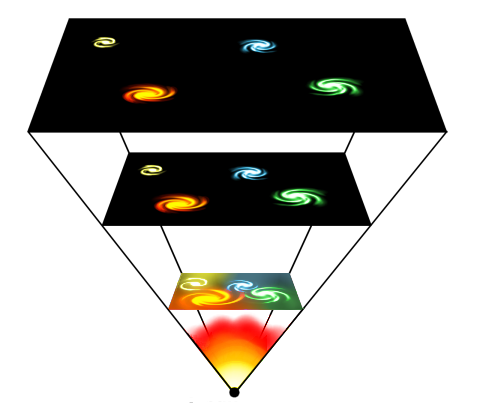
Kurzweil says life in the universe is "both rare and plentiful" meaning for vast stretches there is nothing then piled into a small space it is everywhere. He suggests any form of life that invents technology will, if it survives, relatively quickly reach the point of merging with that technology, the same thing he predicts will happen to humans. Therefore, Kurzweil explains if we ever met another civilization, we would really be meeting with its technology. The technology would likely be microscopic in size because that is all that would be necessary for exploration. The civilization would not be looking for anything except knowledge, therefore we would likely never notice it.
Kurzweil feels intelligence is the strongest force in the universe, because intelligence can cause sweeping physical changes like defending a planet from an asteroid. Kurzweil predicts that as the "computational density" of the universe increases, intelligence will rival even "big celestial forces". There is disagreement about whether the universe will end in a big crunch or a long slow expansion, Kurzweil says the answer is still up in the air because intelligence will ultimately make the decision.