From Surf Wiki (app.surf) — the open knowledge base
Thallophyte
Polyphyletic group of non-motile, plant-like organisms
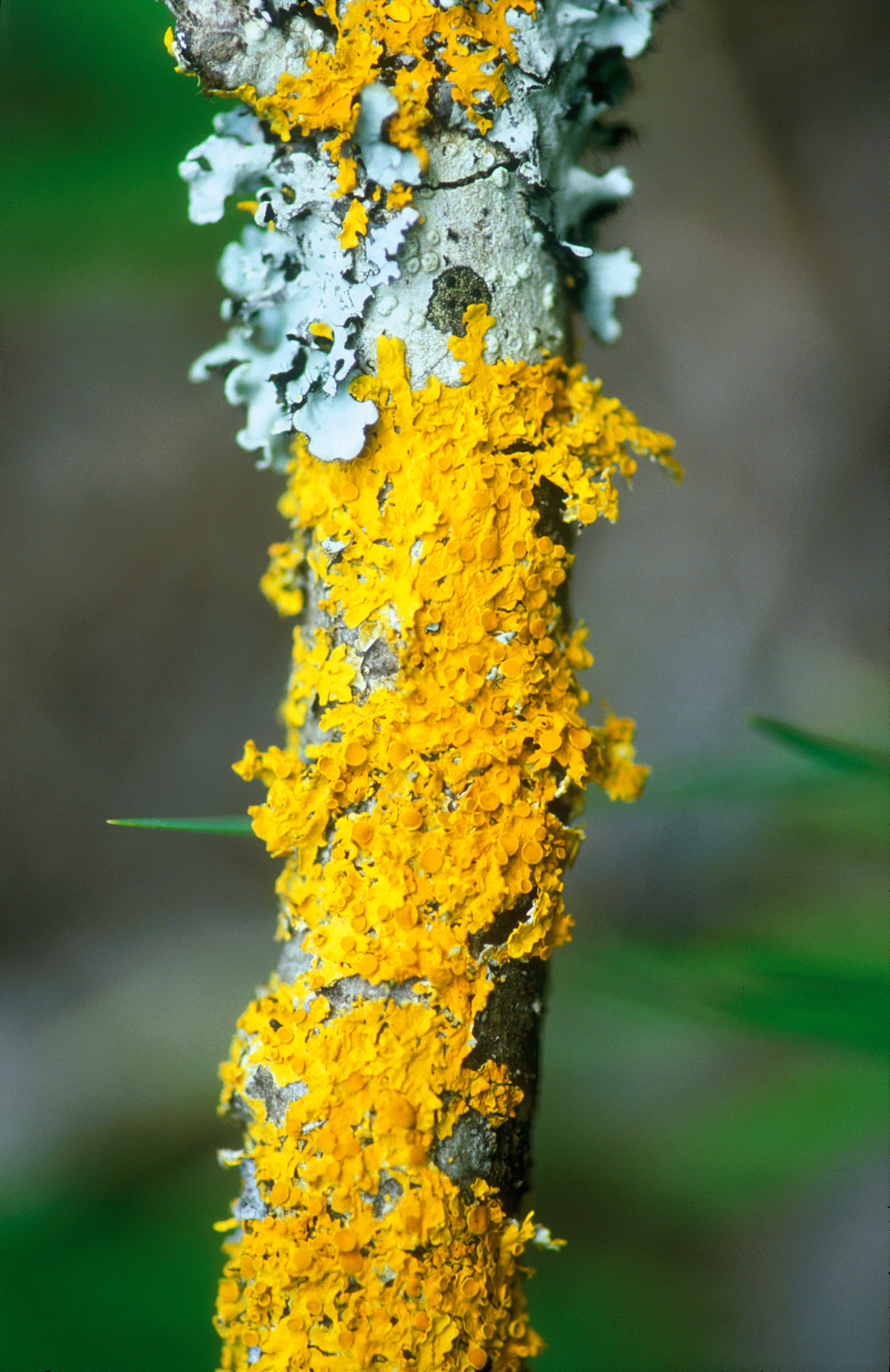
Polyphyletic group of non-motile, plant-like organisms
Thallophytes (Thallophyta or Thallobionta) are a polyphyletic group of non-motile organisms traditionally described as "thalloid plants", "relatively simple plants" or "lower plants". They form a division of kingdom Plantae that include lichens and algae and occasionally bryophytes, bacteria and slime moulds. Thallophytes have a hidden reproductive system and hence they are also incorporated into the similar Cryptogamae category (together with ferns), as opposed to Phanerogamae. Thallophytes are defined by having undifferentiated bodies (thalloid, pseudotissue), as opposed to cormophytes (Cormophyta) with roots and stems. Various groups of thallophytes are major contributors to marine ecosystems.
Definitions
Several different definitions of the group have been used.
Thallophytes (Thallophyta or Thallobionta) are a polyphyletic group of non-mobile organisms traditionally described as "thalloid plants", "relatively simple plants" or "lower plants". Stephan Endlicher, a 19th-century Austrian botanist, separated the vegetable kingdom into the thallophytes (algae, lichens, fungi) and the cormophytes (including bryophytes and thus being equivalent to Embryophyta in this case) in 1836. This definition of Thallophyta is approximately equivalent to Protophyta, which has always been a loosely defined group.
In the Lindley system (1830–1839), Endlicher's cormophytes were divided into the thallogens (including the bryophytes), and cormogens ("non-flowering" plants with roots), as well as the six other classes. Cormogens were a much smaller group than Endlicher's cormophytes, including just the ferns (and Equisetopsida) and the plants now known as lycopodiophytes.
Thallophyta is a division of the plant kingdom including primitive forms of plant life showing a simple plant body. Including unicellular to large algae, fungi, lichens.
The first ten phyla are referred to as thallophytes. They are simple plants without roots stems or leaves.
They are non-embryophyta. These plants grow mainly in water.
Subdivisions
The Thallophyta have been divided into two subdivisions:
- Myxothallophyta (myxomycetes)
- Euthallophyta (bacteria, fungi, lichens, algae)
The term Euthallophyta was originally used by Adolf Engler.
References
Bibliography
References
- Stephan Endlicher. (1836–1840). "Genera plantarum secundum ordines naturales disposita". F. Beck; The [[Biodiversity Heritage Library]].
- [https://www.biodiversitylibrary.org/item/32198#page/52/mode/1up Lindley (1846), page 46]
- Fritsch, F.E.. (1929). "Evolutionary Sequence and Affinities among Protophyta". Biological Reviews.
- [https://www.biodiversitylibrary.org/item/32198#page/55/mode/1up Lindley (1846), page 49]
- Abercrombie, M., Hichman, C.J. and Johnson, M.L. 1966. ''A Dictionary of Biology.'' Penguin Books.
- Robbins, W.W., Weier, T.E. and Stocking, C.R. 1959. ''Botany an Introduction to Plant Science.'' Chapman & Hall, Limited, Limited
This article was imported from Wikipedia and is available under the Creative Commons Attribution-ShareAlike 4.0 License. Content has been adapted to SurfDoc format. Original contributors can be found on the article history page.
Ask Mako anything about Thallophyte — get instant answers, deeper analysis, and related topics.
Research with MakoFree with your Surf account
Create a free account to save articles, ask Mako questions, and organize your research.
Sign up freeThis content may have been generated or modified by AI. CloudSurf Software LLC is not responsible for the accuracy, completeness, or reliability of AI-generated content. Always verify important information from primary sources.
Report