From Surf Wiki (app.surf) — the open knowledge base
Texas rig
Technique used for fishing with soft plastic lures
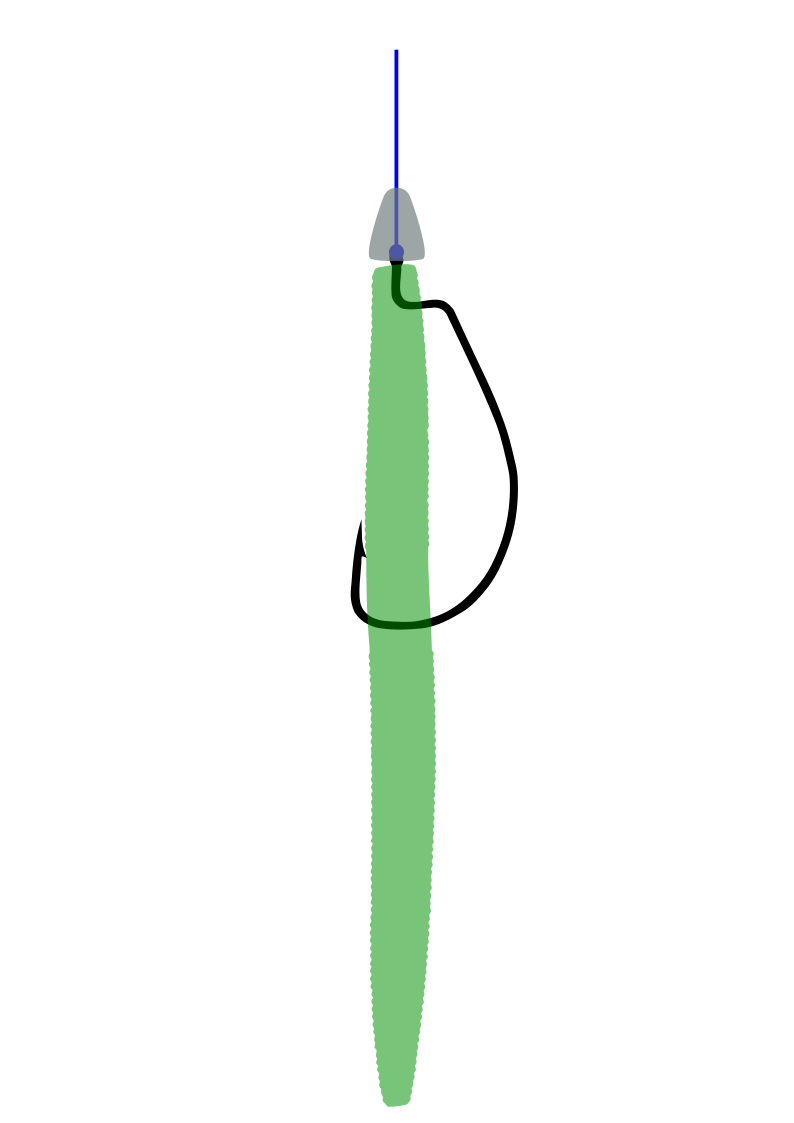
Technique used for fishing with soft plastic lures
The Texas rig is a fishing rig used for angling with soft plastic lures.
It comprises a bullet weight or similar sliding fishing sinker, an offset worm hook, and a soft plastic lure.
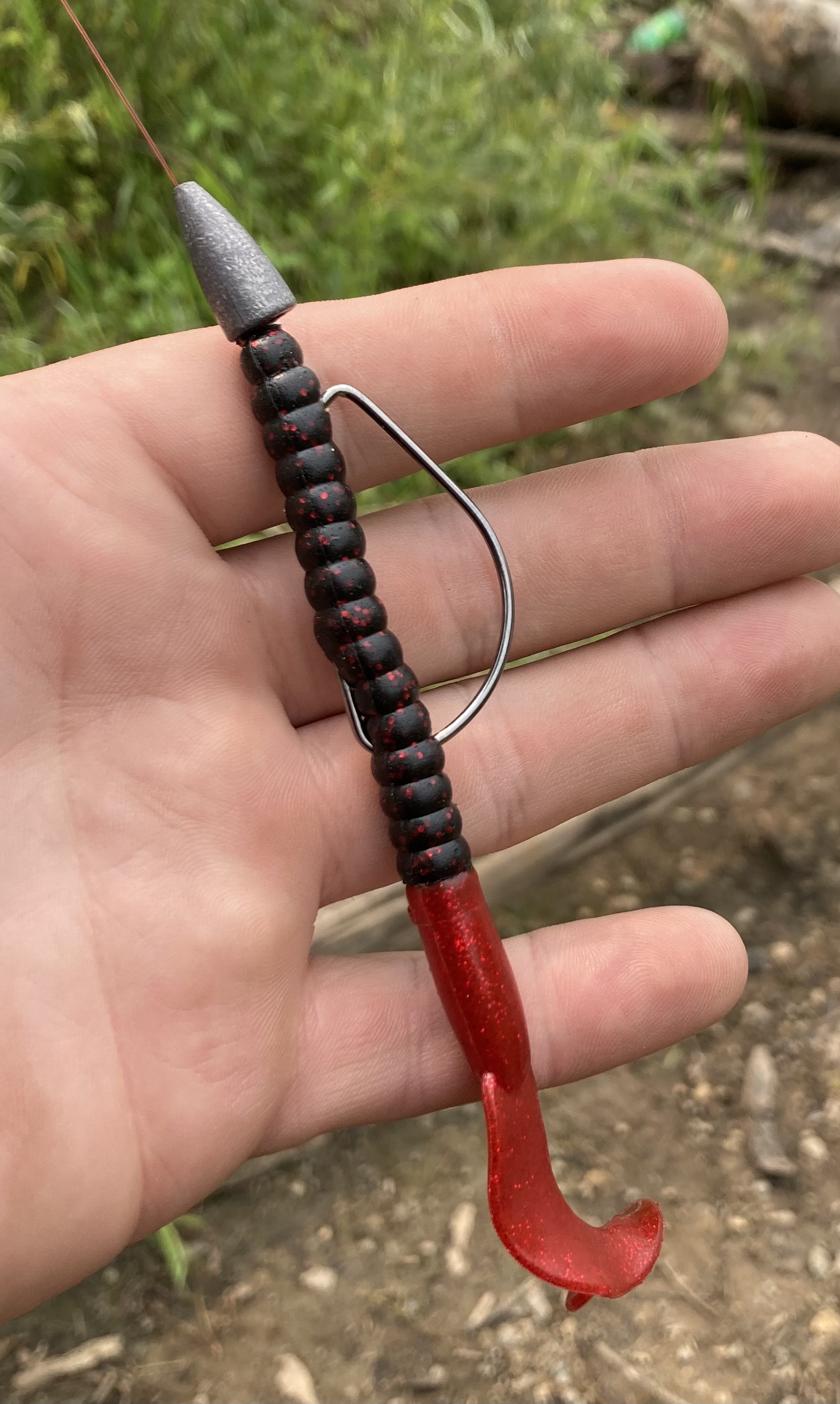
This rig is most commonly used to target freshwater fish such as largemouth bass and smallmouth bass.
Usage
The Texas rig is typically fished in a cast-and-retrieve style; it is cast into a body of water and worked slowly along the bottom in a manner designed to entice nearby fish. However, fish will often strike this rig as it first sinks into the water.
Variants
In some cases, a glass or plastic bead is threaded onto the line between the weight and the hook. Some anglers believe that the added noise or color provided by the bead serves some advantage in attracting fish, especially in stained or muddied water, as the clicking sound of the weight hitting the bead may imitate the sound of a crayfish, a common food for freshwater bass and similar trophy fish.
Some variants of the Texas rig call for the weight to be "stopped" (i.e. made unable to slide back-and-forth on the line). This is usually accomplished by inserting a toothpick through the weight and breaking it off so that part of the toothpick is lodged between the weight and the line. Others attach a bobber stop just above the weight to keep the latter in place.
Some fishermen keep the point of the hook exposed when rigging a Texas rig, while others embed it fully within the soft plastic of the lure. The former approach, sometimes referred to as a Texpose rig, increases the likelihood of a fish being hooked when it strikes, while the latter approach, sometimes referred to as a weedless Texas rig, reduces the likelihood of the hook getting caught on underwater debris.
In order to reduce the rate of the lure's descent and allow for greater finesse in moving it to entice fish, some fishermen leave out the weight altogether; this is often referred to as a weightless Texas rig.
Hooking the soft plastic lure
One can attach a soft plastic lure to a hook using the below steps, which may be followed either before or after tying the hook to the line.
| [[File:Texas Rig Diagram 3.svg | thumb | Flip the hook over so that the point is facing the lure.]] | [[File:Texas Rig Diagram 4.svg | thumb | Insert the hook back into/through the lure.]] |
|---|
References
References
- Dunaway, Vic. "Complete book of Baits Rigs & Tackle". [[Florida Sportsman]].
- Anderson, Margie. (October 30, 2008). "How To Fish A Texas Rig". Inside Line Magazine.
- "Rigging Up, Not Wigging Out". Texas Parks & Wildlife Foundation.
- "Texas Rig: Ultimate Guide to Rigging & Fishing".
- Schultz, Ken. (2010). "Ken Schultz's Essentials of Fishing". John Wiley & Sons, Inc..
This article was imported from Wikipedia and is available under the Creative Commons Attribution-ShareAlike 4.0 License. Content has been adapted to SurfDoc format. Original contributors can be found on the article history page.
Ask Mako anything about Texas rig — get instant answers, deeper analysis, and related topics.
Research with MakoFree with your Surf account
Create a free account to save articles, ask Mako questions, and organize your research.
Sign up freeThis content may have been generated or modified by AI. CloudSurf Software LLC is not responsible for the accuracy, completeness, or reliability of AI-generated content. Always verify important information from primary sources.
Report