From Surf Wiki (app.surf) — the open knowledge base
Tetovo

| Field | Value | |
|---|---|---|
| <!-- Basic info ----------------> | name | Tetovo |
| native_name | mk | |
| sq | ||
| settlement_type | City | |
| motto | ||
| image_skyline | {{Photomontage | position=center |
| photo1a | 20090715 Tetovo view from the mountain.jpg | |
| photo2a | Historic architectural facility 68.JPG | |
| photo2b | Arabati Baba Tekke.jpg | |
| photo3a | Шарена џамија 2.jpg | |
| photo3b | Kiril i Metodij vo Tetovo 01.JPG | |
| photo4a | Popova-Shapka-Panoramic-View.jpg | |
| photo4b | Niz Tetovo Stari kuki (95).JPG | |
| photo5a | Archaeological areas 8.JPG | |
| photo5b | Stadtzentrum Tetovo.jpg | |
| size | 270 | |
| spacing | 1 | |
| color | #FFFFFF | |
| border | 1 | |
| foot_montage | }} | |
| imagesize | 200px | |
| image_caption | From top: View over Tetovo, Isa Beg Hammam, Arabati Baba Teḱe, Painted Mosque, Church of St Cyril and Methodius, Popova Šapka, Urban Tetovo, Baltepe Fortress, Tetovo centre. | |
| image_flag | Flag of Tetovo Municipality, North Macedonia.svg | |
| image_shield | Coat of arms of Tetovo Municipality, Macedonia.svg | |
| pushpin_map | North Macedonia#Europe | |
| pushpin_relief | 1 | |
| pushpin_map_caption | Location within North Macedonia | |
| pushpin_mapsize | ||
| subdivision_type | Country | |
| subdivision_name | ||
| subdivision_type1 | Region | |
| subdivision_name1 | [[File:Logo of Polog Region.svg | 13px]] Polog |
| subdivision_type2 | Municipality | |
| subdivision_name2 | [[File:Coat of arms of Tetovo Municipality, Macedonia.svg | 13px]] Tetovo |
| parts_style | ||
| parts | ||
| p2 | ||
| leader_title | Mayor | |
| leader_name | Bilal Kasami (VLEN) | |
| leader_title1 | ||
| established_title | ||
| established_date | ||
| unit_pref | ||
| area_total_km2 | 1068 | |
| area_land_km2 | ||
| area_water_percent | ||
| elevation_footnotes | tags-- | |
| elevation_m | 468 | |
| elevation_min_ft | ||
| population_as_of | 2021 | |
| population_footnotes | ||
| population_total | 63176 | |
| population_density_km2 | auto | |
| timezone | CET | |
| utc_offset | +1 | |
| timezone_DST | CEST | |
| utc_offset_DST | +2 | |
| coor_type | ||
| coordinates | ||
| <!-- Area/postal codes & others --------> | postal_code_type | Postal code |
| postal_code | 1200 | |
| area_code | +389 044 | |
| website | tetovo.gov.mk | |
| blank_name | Vehicle registration | |
| blank_info | TE | |
| blank1_name | Climate | |
| blank1_info | Cfb | |
| population_demonym | (Macedonian: Тетовчанец/Тетовчанка) | |
| (Albanian: Tetovar/Tetovare) |
sq Default is list if up to 5 items, coll if more than 5--
(Albanian: Tetovar/Tetovare)
Tetovo (, ; , Tetova) is a city in the northwestern part of North Macedonia, built on the foothills of Šar Mountain and divided by the Pena River. The municipality of Tetovo covers an area of 1080 km2 at 468 m above sea level, with a population of 63,176, making it the country's fifth largest city. The city of Tetovo is the seat of Tetovo Municipality.
Tetovo was founded in the 14th century on the place of the ancient town of Oaeneon.
In the 15th century AD, Tetovo came under Ottoman rule for about five centuries. After its conquest by the Ottomans, most of the city's population converted to Islam and many Ottoman-style structures were built, such as the Šarena Džamija and the Arabati Baba Teḱe, which still stand as two of North Macedonia's most significant landmarks of its Ottoman period. During this period, the town belonged to the Vilayet of Kosovo, became a firearm and cannon foundry, and was renamed Kalkandelen (meaning "Shield Penetrator"); as a result, the town attracted many workers and grew into a city. Following the First and Second World Wars, Tetovo became a part of Yugoslavia and, later, the Republic of Macedonia.
The South East European University, North Macedonia's third biggest university after Skopje and Bitola, is located in Tetovo. Tetovo is also home to the State University of Tetovo. Tetovo is regarded as the de facto capital of North Macedonia's ethnic Albanian population.
Name
The region was referred to as Htetovo in a Serbian Charter. During the Ottoman rule the name of the town was Kalkandelen.
History
Early antiquity
Roman period
Christianity spread to Oaeneum during the later period of Roman invasion and reached the region relatively early. St Paul preached the Gospel in the region. In the 2nd to the 4th centuries, the main language to spread the Christian religion was Latin.
Middle Ages
In the 13th and 14th centuries, Byzantine control was punctuated by periods of Bulgarian and Serbian rule. Konstantin Asen ruled as Tsar of the Bulgarian Empire from 1257 to 1277. Later the region was overrun and taken by Serbian Tsar Stefan Dušan. In a document dated between 1348 and 1353, Dušan restored the Lešok Monastery and gifted the monastery entire Albanian-populated villages, as well as the Nanov Dol highlands. Stefan Dušan also forbade agricultural and livestock activity in the Nanov Dol highlands for state pasture tax collectors, Albanians and Vlachs.
The initial Ottoman occupation did not last as Skanderbeg and his Albanian force with aid from Tetovo, took on the Ottoman forces led by Ibrahim Pasha in the Battle of Polog. Skanderbeg slayed Ibrahim Pasha, who was an old friend of his during his time with the Ottomans. After the battle, Tetovo came under Albanian control. In August 1462, after Skanderbeg defeated Ottoman forces under Hasan Bey in Mokra, Isuf Bey went to move against Skanderbeg. Isuf Bey marched out with 18,000 troops to Skopje, and from there, he marched onto Polog near Tetovo. Skanderbeg attacked and annihilated Isuf's force and the Pasha fled, leaving his army behind to be reduced.
Ottoman Period
In the 1660s, Evliya Celebi considered the highlands around Tetovo as being the mountains of Arnavutluk (Albania).
During the early 19th century, Abdurrahman Pasha, a prominent Albanian landowner, beautified the city of Tetovo, refurbishing many estates including the notable landmarks such as the Colored Mosque, the Teke and the Baltepe fortress. In the 19th century, the Russian diplomat Ivan Jastrebov spoke highly of Tetovo's climate, liking the mild snowy winters, sunny and comfortably warm summers. The traveler Ami Bue described Tetovo as a very clean city. The Tanzimat reforms, initiated by the Ottoman Empire in 1839, sought to modernize and centralize the administration by imposing new taxes and diminishing the power of local feudal magnates, while appointing administrators from Anatolia to oversee the provinces. These changes, however, faced strong opposition, particularly local Albanian pashas. In 1843, the arrest of key Albanian leaders who resisted the reforms triggered an uprising that resulted in the expulsion of Ottoman officials from several major towns. After three weeks of intense fighting, the rebels captured Kalkandelen (modern-day Tetovo), which subsequently became the headquarters of the Albanian Great Council. The Council demanded the annulment of the Tanzimat reforms, challenging the central government's authority. In response, the sultan dispatched Omer Pasha with a force of 30,000 troops to suppress the rebellion. Following a prolonged siege of Kalkandelen, lasting several weeks, the Ottoman forces captured the town, arrested the rebel leaders, and effectively ended the uprising.
Albanian diplomat Mid'hat Frashëri, in his work "Pjesa kombiare" writes that due to the pressure of Turkey, Greece and Serbia, a part of the Albanian population lost their mother tongue. "The people of Gjirokastra speak Greek and in Tetovo and Prizren [they speak] Turkish and Slavic".
During the World Wars
During World War I, a rift occurred between Bulgaria and Serbia. The Bulgarian army started making way through the area and annexed Tetovo and the rest of the region of Macedonia. At the end of the war Serbia regained control of the region. Within the Kingdom of Yugoslavia, Tetovo was part of the Vardar Banovina from 1929 to 1941.
In 1941, the Vardar Banovina ceased to exist as a result of the Axis occupation of Yugoslavia. The western region, predominantly inhabited by Albanians, was incorporated into the Italian-protected Kingdom of Albania, resulting in Tetovo once again coming under Albanian control. The Italian military intelligence service, OVRA, established the "Ljuboten Battalion" in Tetovo, composed primarily of ethnic Albanians from the region. The unit was tasked with identifying, interrogating, and neutralizing any resistance to the Italian occupation. Following Italy's surrender on September 8, 1943, the German forces retained control over the battalion, permitting its members to retain their Italian-issued uniforms and weapons. Subsequently, members of the Balli Kombëtar, an Albanian nationalist group, joined the battalion, further strengthening its ranks.
The Balli Kombëtar ruled Tetovo with military and financial aid from the Axis powers. The Albanian national flag was raised in Tetovo, the Albanian Franc was introduced as the official currency as well as the official language and education facilities in Albanian.

After the Germans had been driven out, the communist authorities ordered the collection of weapons but this order was not well received. In Tetovo, the remaining Ballists tried to retain their control after the Yugoslav Partisans announced victory. As result an armed uprising of massive proportions broke in the area led by the Balli Kombëtar, which aimed to resist the incorporation of the region into communist Yugoslavia. It was only in July 1945 that the Yugoslav Partisans were able to push down the uprising and re-establish their control.
SFR Yugoslavia


Breakup of Yugoslavia
Main article: Battle of Tetovo

Tetovo, along with the city of Gostivar, took in and sheltered several thousands of Bosnian Muslim refugees from 1992 until the end of the Bosnian war.
In 1997, Alajdin Demiri, the mayor of Tetovo, was jailed for raising the double headed eagle flag of Albania from Tetovo's town hall, and by 2000 the outbreak of hostilities in Tanuševci had spilled into the towns of Tetovo and Gostivar. In 2001, ethnic Albanians launched an insurgency, with Tetovo being the main backdrop of the war. After the signing of the Ohrid Agreement, fighting ceased and peace returned to the city, lasting to the present day.
Present day
_-_panoramio_(5).jpg)
In economic terms, Tetovo is one of the most developing cities in North Macedonia with some multinational companies (Ecolog International, Mercure Tetovo, Renova, Kipper) being located in this town. Despite the interest of private companies in Tetovo, the city is often neglected by the government. Tetovo suffers from urban sprawl, and due to the lack of government regulations, the city has no system for building permits, and many houses and buildings have been built unsafely and randomly along footpaths, roads and in parks. Its air pollution levels are among the highest in Europe.{{Cite web
The tallest building in the city is Mercure Tetovo measuring about 80 meters in height.
Tetovo is one of the main educational centres in North Macedonia, hosting two universities: the South East European University (Public Private Non-profitable) and the State University of Tetovo (Public University). The first of the two has educational leadership in the region, whereas the Bologna Process is applicable since its establishment, has the best campus in the region of South East Europe and is trend with international developments in education. More than 20,000 students get their education and degrees in Tetovo.
In addition, Tetovo is a centre of ethnic Albanian politics. Most Albanian political parties on North Macedonia (Democratic Party of Albanians (DPA), Democratic Union for Integration (DUI) and the Party for Democratic Prosperity (PDP)) have their main seats there.
Tetovo has one of the highest crime rates in North Macedonia, second only to the much larger capital Skopje. The city was home to 1,229 criminal acts in the first half of 2009.
On September 8, 2021, at least fourteen people were killed in a fire at a COVID-19 center in the town's general hospital.
Culture

Tetovo has been under many different empires; from the Mycenae and Illyrians, to the Romans, Byzantines and Ottomans, giving the city a vast range of diverse cultures. The museum of Tetovo, established in 1950, contains the history of the town of Tetovo and is situated in the Memorial House of the Central Committee of the Communist Party of Macedonia.
Landmarks
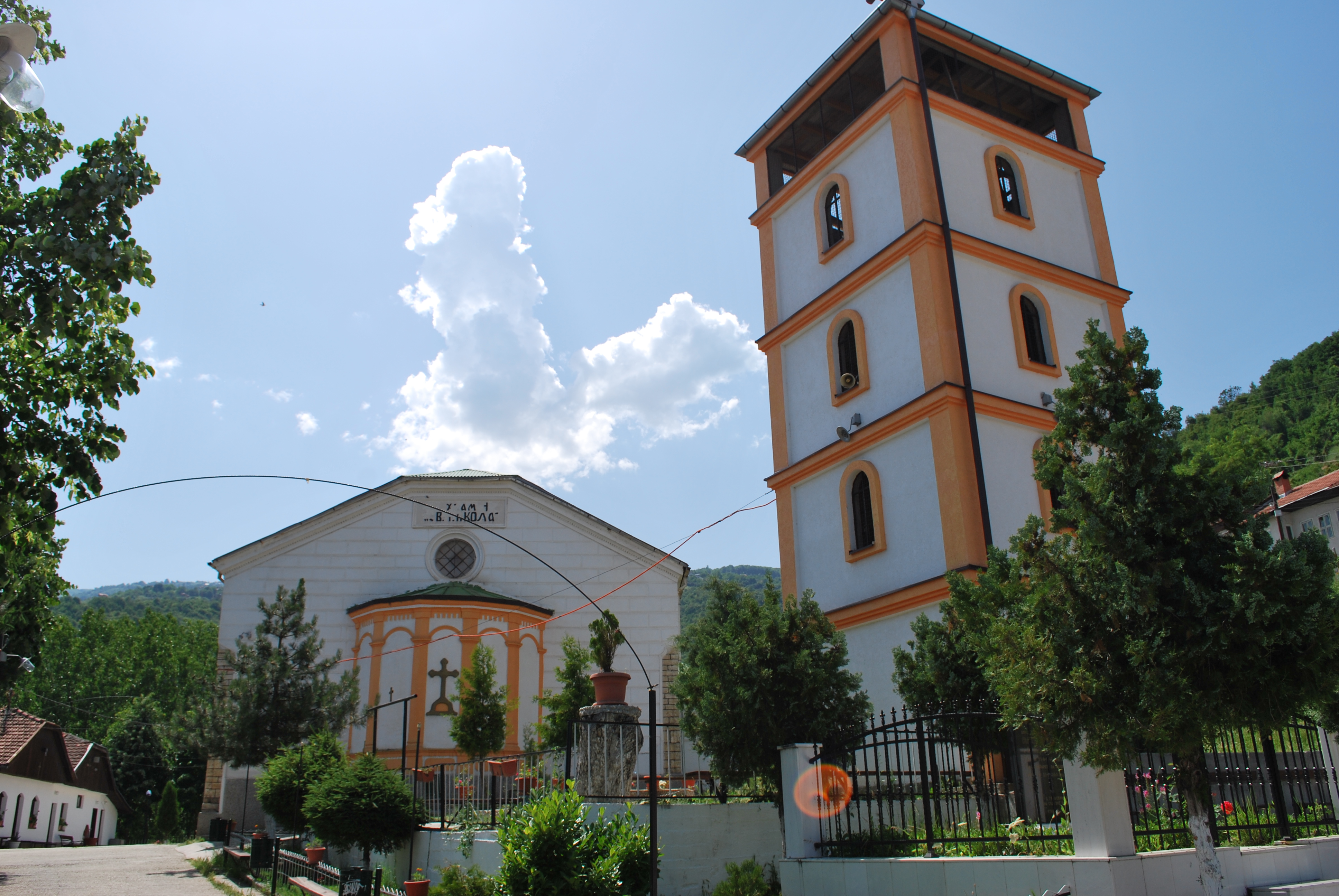
The Municipality of Tetovo is home to 15 sites designated as Cultural Heritage by the Ministry of Culture, of which 14 are located within Tetovo's city limits. Nine of these are historic homes.
The main attractions of Tetovo are its historic areas and structures. The Šarena Džamija ("Painted Mosque") is located near the Pena River in the old part of the town. The mosque was built in 1438 and rebuilt in 1833 by Abdurrahman Pasha, the son of Rexhep Pasha. It is one of the most important cultural and historical structures of Tetovo and represents the style of early Ottoman architecture. The painted mosque continues to be an important monument to the residents of Tetovo, and is the town's main tourist attraction for many foreign visitors.
Sitting directly across the Pena River from the Šarena Mosque is Tetovo's Ottoman-era hamam, known as the Čifte Hamam, or Bey's Hamam. It was built in the late 15th/early 16th century. Declared a monument of cultural heritage, it houses the Tetovo Art Gallery. The building was renovated between 2012 and 2015.

The Tetovo Fortress, located on the top of the Baltepe Hill, above Tetovo, was built in 1820 by Abdurrahman Pasha.
.JPG)
The Alim Bey House is an historic estate in Tetovo. Along with the Saraj in Resen, it is among the more prominent examples of lodgings built by wealthy Ottoman pashas and beys in North Macedonia that were constructed in Western-inspired architecture. The Alim Bey House is an asymmetrical estate built in a neo-Baroque style with decorated façades, ornate friezes, and the use of various geometric shapes including a hexagonal tower. The three-story home is a protected monument of cultural heritage. The building functioned as a hospital until 1993. Renovation works funded by Ministry of Culture of the Republic of Macedonia occurred in 2016.
The Museum of the Tetovo Region is housed within the historic Goce Stojčevski house. The museum was established in 1950, originally situated in the Arabati Baba Tekke complex. It contains various archaeological, ethnological, historical, and art exhibits. The house is where Macedonian partisan Goce Stojčevski - Ambarče was born in 1919.

Popova Šapka is a ski resort located in the Šar Mountains. Despite being around 7 km from the city area, it is generally associated with Tetovo. Popova Šapka attracts many tourists in winter due it being one of the more popular ski resorts in the former Yugoslavia. Aside from hosting recreational and competitive skiing competitions, Popova Šapka has many villas and restaurants to accommodate visitors. The rise in hotels was because the cable car that took people from Tetovo to Popova Šapka was destroyed during the 2001 Macedonia insurgency. Therefore, people stay at Popova Šapka overnight before returning to Tetovo.
There are three stone bridges in Tetovo and each cross the Pena river; one of these, which connects the Goce Stojčeski Street one block downstream of the Šarena Mosque, is listed as an Object of Cultural Heritage. The bridges are some of the oldest structures in Tetovo. Most of the old heritage buildings are situated in the old town, near the centre of Tetovo. Tetovo has many old buildings and monuments however, they are endangered of being demolished by people building unpermitted buildings
Cuisine
Tetovo is where the Tavče Gravče dish originates. In Albanian, it is also known as Tavë me Groshë. During Socialist Yugoslavia, the dish was known around the country as Tetovsko Gravče, in reference to the city of Tetovo, where the dish comes from. Although different varieties of the meal are made throughout the Balkans, the traditional Tetovo tavče gravče is cooked and served in a terracotta pot.
Most cuisines in Tetovo have a strong Ottoman influence or foundation such as Ajvar, Sujuk and Gevrek. Tetovo is known for its barbecue restaurants, Qebaptorë, where Ćevapi and Pljeskavica (including the Shar Pljeskavica" (Šarska pljeskavica), stuffed with kashkaval cheese). Byrektorës, pastry restaurants, are also common in Tetovo and produce Burek, while Ëmbëltore, which are sweet shops, produce locally made traditional sweets such as Lukum, Tulumba, Kataif and Baklava. Boza is also fermented in Tetovo and is a commonly consumed beverage.
The cuisines in Tetovo have a unique taste and flavour due to the local agricultural products used to make the cuisines. In North Macedonia, the Tetovo variety of Kashkaval cheese is the most popular as it is made naturally from sheep's milk in the Šar Mountains. During the Yugoslav period, apples from Tetovo were popular in Belgrade and were known as Tetovski Jabuka.
Albanians from the Macedonian region of Polog, a conurbation of villages between Tetovo and Gostivar, specialised in confectionary, ice-cream and general hospitality businesses like cafes and grills around Yugoslavia. It was even stereotyped in Yugoslavia.
Sports
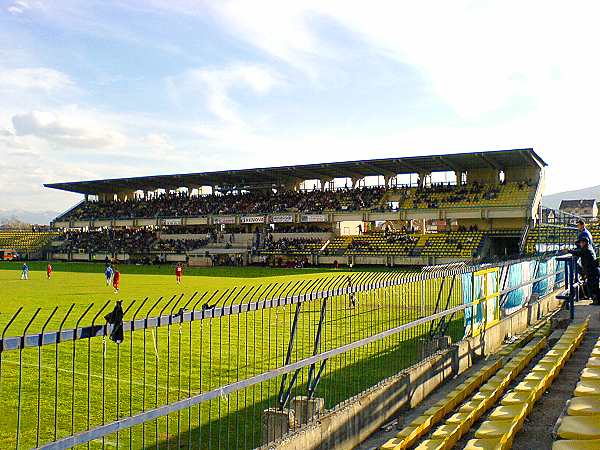
- KF Shkëndija, supported by the majority of Albanians living in Tetovo.
- FK Renova, mainly supported by Albanians but has significant Macedonian support, and are based in Džepčište.
- FK Teteks is the team supported by the Macedonians living in Tetovo.
FK Drita currently play in the Treta Liga (Third League), based in the village of Bogovinje, while FK Vrapčište, who also play in the Third League, play their home games in the village stadium of Vrapčište.
Wrestling, karate and volleyball are also fairly popular sports in Tetovo. Few volleyball teams are active in the volleyball league of North Macedonia: Škendija, Bami Kor Medika, etc.
Demographics
Between the years 1348-1353, Albanians are mentioned by Serbian Tsar Stefan Dušan as farmers and soldiers in the district of Tetovo.
Ottoman statistics from 1452 for the nahiya of Tetovo recorded 146 Christian and 60 Muslim households. In 1453, the population consisted of 153 Christian and 56 Muslim families. The 1455 defter recorded Albanian presence. The 1467 Ottoman defter records of Tetovo attests that the Muslim neighborhood of Tetovo was inhabited by 6 heads of families with mixed anthroponyms of Islamic Albanian character, while the Christian quarter of Tetovo was characterized with Slavic-Christian and Albanian-Christian names, with some cases of Slavicisation.
In 1468, Tetovo had 180 Christian and 41 Muslim families. In 1545 there were 99 Christian and 101 Muslim families (38 were islamicised) in Tetovo, and in 1568 there were 108 Christian and 329 Muslim (184 islamicised).
By the 19th century, when the population of Tetovo began to increase with settlement from the surrounding villages, the French traveler Ami Boue noted that the population had reached about 4,500 people, which are Bulgarians and Albanians. In 1854, the total population of the Pashalik of Tetovo was 30,000–40,000 and consisted of Bulgarians who are Eastern Orthodox and of Albanian who are Muslims.
According to the statistics of the Bulgarian ethnographer Vasil Kanchov, in 1900 the population of Tetovo was 19,200, consisting of 8,500 Bulgarians, 9,000 Turks, 500 Arnauts and 1,200 Romani. Kanchov wrote that many Albanians declared themselves as Turks. In Tetovo the population that declared itself Turkish "was of Albanian blood", but it "had been Turkified after the Ottoman invasion, including Skanderbeg", referring to Islamization.
In 1916, under the Kingdom of Bulgaria, the Bulgarian registries had recorded that Tetovo had a population of 22,000. Two-thirds of this population was listed as Albanian and one-third consisted of Bulgarians (most of them with Serbian national feeling, labeled as Serbomans).
According to the 1942 Albanian census, Tetovo was inhabited by 10,252 Muslim Albanians, 3,496 Bulgarians and 2,136 Serbs.
As of 2021, the city of Tetovo has 63,176 inhabitants and the ethnic composition was the following:
- Albanians – 41,356 (65.5%)
- Macedonians – 14,116 (22.3%)
- Persons for whom data are taken from administrative sources - 3,326 (5.3%)
- Roma – 1,877 (3.0%)
- Turks – 1,745 (2.8%)
- Serbs – 248 (0.4%)
- Bosniaks – 188 (0.3%)
- others – 290 (0.5%)
| Ethnic | |||||||||||||||||||||||||||||||||
|---|---|---|---|---|---|---|---|---|---|---|---|---|---|---|---|---|---|---|---|---|---|---|---|---|---|---|---|---|---|---|---|---|---|
| group | census 1948 | census 1953 | census 1961 | census 1971 | census 1981 | census 1994 | census 2002 | census 2021 | Number | % | Number | % | Number | % | Number | % | Number | % | Number | % | Number | % | Number | % | Total | 17,132 | 20,209 | 25,357 | 35,745 | 46,523 | 50,344 | 52,915 | 63,176 |
| Albanians | .. | .. | 7,155 | 35.4 | 6,435 | 25.4 | 15,388 | 43.1 | 21,741 | 46.7 | 25,128 | 49.9 | 28,897 | 54.7 | 41,356 | 65.5 | |||||||||||||||||
| Macedonians | .. | .. | 7,575 | 37.5 | 11,631 | 45,9 | 14,415 | 40.3 | 17,817 | 38.3 | 19,439 | 38.6 | 18,555 | 35.1 | 14,116 | 22.3 | |||||||||||||||||
| Turks | .. | .. | 4,470 | 22.1 | 5,864 | 23.1 | 3,543 | 9.9 | 2,757 | 5.9 | 2,073 | 4.1 | 1,878 | 3.6 | 1,745 | 2.8 | |||||||||||||||||
| Romani | .. | .. | 227 | 1.1 | 0 | 0.0 | 823 | 2.3 | 1,709 | 3.7 | 2,260 | 4.5 | 2,352 | 4.5 | 1,877 | 3.0 | |||||||||||||||||
| Vlachs | .. | .. | 11 | 0.1 | 0 | 0.0 | 0 | 0.0 | 4 | 0.0 | 18 | 0.0 | 13 | 0.0 | 10 | 0.0 | |||||||||||||||||
| Serbs | .. | .. | 481 | 2.4 | 839 | 3.3 | 920 | 2.6 | 877 | 1.9 | 830 | 1.7 | 587 | 1.1 | 248 | 0.4 | |||||||||||||||||
| Bosniaks | .. | .. | 0 | 0.0 | 0 | 0.0 | 0 | 0.0 | 0 | 0.0 | 0 | 0.0 | 156 | 0.3 | 188 | 0.3 | |||||||||||||||||
| Others | .. | .. | 290 | 1.4 | 588 | 2.3 | 656 | 1.8 | 1,618 | 3.5 | 596 | 1.2 | 477 | 0.9 | 290 | 0.5 | |||||||||||||||||
| PWDTFAS* | 3,326 | 5.3 |
- PWDTFAS-Persons for whom data are taken from administrative sources
Notable people from Tetovo
Main article: List of people from Tetovo
Honorary citizens
- Blerim Dzemaili
- Tanja Fajon
- Ramush Haradinaj
- Ismail Kadare
- Stjepan Mesić
- Ferid Murad
International relations
Twin towns – Sister cities
Tetovo is twinned with:
- Kosovo Prizren, Kosovo
- ALB Kukës, Albania
- USA Sterling Heights, Michigan, United States
- TUR Konya, Turkey
- HUN Dorog, Hungary
References
References
- "Total resident population of the Republic of North Macedonia by ethnic affiliation, by settlement, Census 2021".
- "2002 Census results".
- Thammy Evans, Philip Briggs, Bradt Travel Guides, 2019, North Macedonia, {{ISBN
- Trankova, Dimana. (2011). "Tito, Teto and Some Troubled Tourism Await You in Tetovo, Macedonia". Balkan Traveller.
- Evans, Thammy. (2012). "Macedonia". The Globe Pequot Press Inc.
- (27 October 2006). "The Albanian Question - Reshaping the Balkans". [[I.B.Tauris]].
- (27 October 2020). "Conflict Areas in the Balkans". Lexington Books.
- Balkanološki institut (Srpska akademija nauka i umetnosti), Srpska akademija nauka i umetnosti. (2008). "Balcanica".
- Schnabel, Sckhard. ''Paul the Missionary: Realities, Strategies, and Methods.'' Downers Grove, IL: InterVarsity Press, 2008. p. 113.
- Lloshi p. 92
- (25 January 2008). "La question nationale en Europe du Sud-Est : genèse, émergence et développement de l'indentité nationale albanaise au Kosovo et en Macédoine". P. Lang.
- Koprivica, Marija. "Hrisovulja kralja Stefana Dušana Htetovskom manastiru, Stari srpski arhiv 13 (2014), 143-179". [[Archive of Serbia]].
- (2014). "Emrat e Shqiptareve ne Shek. XIII-XV ne driten e burimeve kishtare Serbe". Shtepia Botuese "Tenda".
- Franco p. 329.
- Anscombe, Frederick (2006). "The Ottoman Empire in Recent International Politics – II: The Case of Kosovo". The International History Review. 28 (4): 772.
- Dankoff, Robert. (2001). "An Ottoman Mentality: The World of Evliya Çelebi". Koninklijke Brill.
- "City of Tetovo".
- (2016). "The pursuit of power : Europe 1815-1914". Penguin Books, UK.
- Salajdin SALIHI. "DISA SHËNIME PËR SHQIPTARËT ORTODOKSË TË REKËS SË EPËRME". FILOLOGJIA - International Journal of Human Sciences 19:85-90.
- "Të dhëna nga regjistrimi i popullsisë së Tetovës në vitin 1916 (FOTO)". Tetova1.
- (2008). "The Macedonian Question". OUP Oxford.
- (2010). "Through Hitler's Back Door, SOE Operations in Hungary, Slovakia, Romania and Bulgaria 1939 - 1945". OUP Oxford.
- Noel Malcolm, Kosovo: A Short History, New York University Press, 1998, pp. 310-313, {{ISBN. 0814755984.
- Livanios, Dimitris, 'The Difficult Withdrawal: Britain and the Bulgarian Army in Yugoslav and Greek Macedonia, September–December 1944', The Macedonian Question: Britain and the Southern Balkans 1939-1949, Oxford Historical Monographs (Oxford, 2008; online edn, Oxford Academic, 1 May 2008), https://doi.org/10.1093/acprof:oso/9780199237685.003.0004, accessed 5 September 2022.
- "19 ноември 1944, ослободување на Тетово од фашистичкиот окупатор".
- (19 November 2019). "ТЕТОВО ПО 15 ГОДИНИ ПОВТОРНО ГО ОДБЕЛЕЖА ДЕНОТ НА ОСЛОБОДУВАЊЕТО ОД ФАШИСТИЧКАТА ОКУПАЦИЈА".
- P. Ramet, Sabrina. (2006). "The Three Yugoslavias: State-building and Legitimation, 1918–2005". Indiana University Press.
- "Zemra Shqiptare".
- "Investigation of Environmental Pollution by Molecular Absorption Spectroscopy".
- John Sparrow. "International Federation of Red Cross and Red Crescent Societies".
- (13 February 2017). "Tipping point: revealing the cities where exercise does more harm than good". The Guardian.
- "MINA Breaking News – Skopje with highest crime rate".
- "UZNEMIRUJUĆI SNIMCI - STRADALO NAJMANJE 14 OSOBA: Detalji tragedije u Tetovu, požaru u kovid bolnici prethodila eksplozija (VIDEO)". NOVOSTI.
- (2012-12-31). "СПИСОК НА ЗАШТИТЕНИ ДОБРА". Ministry of Culture.
- http://arhiva.kultura.gov.mk/images/stories/dokumenti/obrasci/NACIONALEN_REGISTAR_NA_OBJEKTI_KOI_SE_ZASTITENO_KULT_NASLEDSTVO_31122012.doc{{Webarchive. link. (14 June 2022 Список на заштитени добра. Состојба до 31.12.2012. Скопје: Управа за заштита на културното наследство.)
- [https://web.archive.org/web/20190403104622/http://www.tetova.gov.mk/getartm.aspx?aid=259&men=9&lan=2&sub=57 Визуелна уметничка галерија Тетово]
- (1 September 2015). "Стариот амам во Тетово ќе биде заштитен со четири фази на активности". MKD.mk.
- "Алимбегова куќа". Republic of Macedonia Ministry of Culture.
- (18 August 2016). "Конзервација, реставрација и конструктивно зајакнување на Алимбеговата куќа во Тетово". Kanal 5.
- (18 December 2021). "Музеј на тетовскиот крај". Nova Makedonija ].
- "The Complete Travel Guide for Tetovo". YourGuide Ltd..
- (2021). "Nutritional and Health Aspects of Food in the Balkans". Academic Press.
- (1962). "Opština Podaci". Novinsko-štamparsko poduzeće "Orbis".
- (10 Feb 2023). "Albanian labor migration, the Yugoslav private sector and its Cold War context". Taylor & Francis Group.
- "Ottoman defter".
- Madgearu, Alexandru. (2008). "The Wars of the Balkan Peninsula: Their Medieval Origins". Rowman & Littlefield Publishers, Inc..
- Iljaz, Rexha. (2011). "VENDBANIMET DHE POPULLSIA ALBANE GJATË MESJETËS NË HAPËSIRËN E MAQEDONISË SË SOTME (Sipas burimeve sllave dhe osmane)". Prishtina Institute for Albanology.
- "Составот на населението во Тетовската нахија во XV век".
- La Turquie d'Europe; observations sur la geographie, la géologie, l'histoire naturelle, etc. (Paris, 1840), p. 306-307.
- (1854). "Recueil d'itinéraires dans la Turquie d'Europe: détails géographiques, topographiques et statistiques sur cet Empire, Volume 122". en commission chez W. Braumüller libraire de l'Académie impériale des sciences.
- В. Кѫнчовъ, Македония. Етнография и статистика. (I изд. Бълг. Книжовно Д-во, София, 1900; II фототипно изд. "Проф. М. Дринов", София, 1996), {{ISBN. 954430424X, стр. 210
- "Të dhëna nga regjistrimi i popullsisë së Tetovës në vitin 1916 (FOTO)". Tetova1.
- "Ethnic/Religious composition of Dibër and Tetovë prefectures".
- "Archived".
- "Censuses of population 1948 – 2002".
- "Total resident population of the Republic of North Macedonia by ethnic affiliation, by settlement, Census 2021".
- Enisa Bajrami. "Tanja Fajon visited Tetova!".
- Besar Rexhaili. "Ramush Haradinaj Qytetar ndrei i Tetoves".
- Slobodebpecat. (July 2024). "Ismail Kadare, prominent Albanian writer and honorary citizen of Tetovo, died". Слободен печат.
- tetova.gov.mk. "Mesic: Tetovo is a home to people with different cultural backgrounds".
- South East European University. "Ferid Murad, Honoured Guest of the SEEU Graduation Ceremony". South East European University.
- link. (12 December 2010 -Утрински весник)

This article was imported from Wikipedia and is available under the Creative Commons Attribution-ShareAlike 4.0 License. Content has been adapted to SurfDoc format. Original contributors can be found on the article history page.
Ask Mako anything about Tetovo — get instant answers, deeper analysis, and related topics.
Research with MakoFree with your Surf account
Create a free account to save articles, ask Mako questions, and organize your research.
Sign up freeThis content may have been generated or modified by AI. CloudSurf Software LLC is not responsible for the accuracy, completeness, or reliability of AI-generated content. Always verify important information from primary sources.
Report