From Surf Wiki (app.surf) — the open knowledge base
Tetanus vaccine
Vaccines used to prevent tetanus
Vaccines used to prevent tetanus
Tetanus vaccine, also known as tetanus toxoid (TT), is a toxoid vaccine used to prevent tetanus. During childhood, five doses are recommended, with a sixth given during adolescence.
After three doses, almost everyone is initially immune, A booster shot should be given within 48 hours of an injury to people whose immunization is out of date.
Confirming that pregnant women are up to date on tetanus immunization during each pregnancy can prevent both maternal and neonatal tetanus. The vaccine is very safe, including during pregnancy and in those with HIV/AIDS.
Redness and pain at the site of injection occur in between 25% and 85% of people. Fever, feeling tired, and minor muscle pain occurs in less than 10% of people. Severe allergic reactions occur in fewer than one in 100,000 people.
A number of vaccine combinations include the tetanus vaccine, such as DTaP and Tdap, which contain diphtheria, tetanus, and pertussis vaccines, and DT and Td, which contain diphtheria and tetanus vaccines. The lowercase d and p denote lower strengths of diphtheria and pertussis vaccines.
Tetanus antiserum was developed in 1890, with its protective effects lasting a few weeks. The tetanus toxoid vaccine was developed in 1924, and came into common use for soldiers in World War II. Its use resulted in a 95% decrease in the rate of tetanus.
Medical uses
Effectiveness
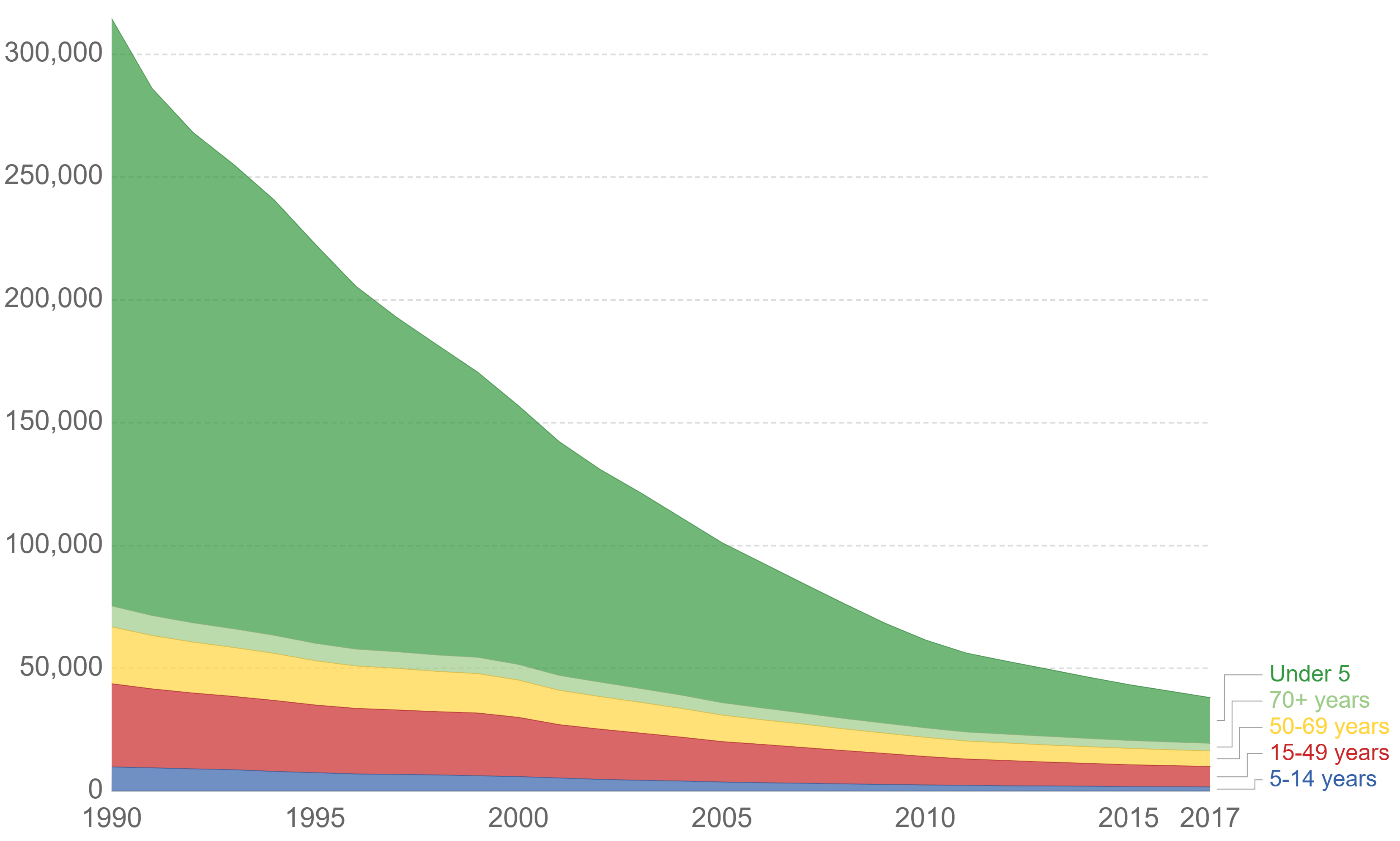
Vaccination confers near-complete protection from tetanus, provided the individual has received their recommended booster shots. Globally, deaths from tetanus in newborns decreased from 787,000 in 1988 to 58,000 in 2010, and 34,000 deaths in 2015 (a 96% decrease from 1988). In the 1940s, before the vaccine, there were about 550 cases of tetanus per year in the United States, which has decreased to about 30 cases per year in the 2000s.
Pregnancy
Guidelines on prenatal care in the United States specify that women should receive a dose of the Tdap vaccine during each pregnancy, preferably between weeks 27 and 36, to allow antibody transfer to the fetus. All postpartum women who have not previously received the Tdap vaccine are recommended to get it prior to discharge after delivery. It is recommended for pregnant women who have never received the tetanus vaccine (i.e., neither DTP or DTaP, nor DT as a child or Td or TT as an adult) to receive a series of three Td vaccinations starting during pregnancy to ensure protection against maternal and neonatal tetanus. In such cases, Tdap is recommended to be substituted for one dose of Td, again preferably between 27 and 36 weeks of gestation, and then the series completed with Td.
Specific types
The first vaccine is given in infancy. The baby is injected with the DTaP vaccine, which is three inactive toxins in one injection. DTaP protects against diphtheria, pertussis, and tetanus. This acellular vaccine is safer than the previously used DTP with whole inactivated pertussis (now retroactively notated DTwP).
For the every ten-year booster Td or Tdap may be used, though Tdap is more expensive.
Schedule
Because DTaP and DT are administered to children less than a year old, the recommended location for injection is the anterolateral thigh muscle. However, these vaccines can be injected into the deltoid muscle if necessary.
The World Health Organization (WHO) recommends six doses in childhood starting at six weeks of age. Four doses of DTaP are to be given in early childhood. The first dose should be around two months of age, the second at four months, the third at six, and the fourth from fifteen to eighteen months of age. There is a recommended fifth dose to be administered to four- to six-year-olds.
Td and Tdap are for older children, adolescents, and adults and can be injected into the deltoid muscle.
Additional doses
Booster shots are important because lymphocyte production (antibodies) is not at a constant high rate of activity. This is because after the introduction of the vaccine when lymphocyte production is high, the production activity of white blood cells will start to decline. The decline in activity of the T-helper cells means that there must be a booster to help keep the white blood cells active.
Td and Tdap are the booster shots given every ten years to maintain immunity for adults nineteen years of age to sixty-five years of age.
Tdap is given as a one-time, first-time-only dose that includes the tetanus, diphtheria, and acellular pertussis vaccinations. This should not be administered to those who are under the age of eleven or over the age of sixty-five.
Td is the booster shot given to people over the age of seven and includes the tetanus and diphtheria toxoids. However, Td has less of the diphtheria toxoid, which is why the "d" is lowercase and the "T" is capitalized.
In 2020, the US Centers for Disease Control and Prevention (CDC) Advisory Committee on Immunization Practices (ACIP) recommended that either tetanus and diphtheria toxoids (Td) vaccine or Tdap to be used for the decennial Td booster, tetanus prevention during wound management, and for additional required doses in the catch-up immunization schedule if a person has received at least one Tdap dose.
Side effects

Common side effects of the tetanus vaccine include fever, redness, and swelling with soreness or tenderness around the injection site (one in five people have redness or swelling). Body aches and tiredness have been reported following Tdap. Td / Tdap can cause painful swelling of the entire arm in one of 500 people. Tetanus toxoid containing vaccines (DTaP, DTP, Tdap, Td, DT) may cause brachial neuritis at a rate of one out of every 100,000 to 200,000 doses.
Mechanism of action
The type of vaccination for this disease is called artificial active immunity. This type of immunity is generated when a dead or weakened version of the disease enters the body, causing an immune response which includes the production of antibodies. This is beneficial because it means that if the disease is ever introduced into the body, the immune system will recognize the antigen and produce antibodies more rapidly.
History
The first vaccine for passive immunology was discovered by a group of German scientists under the leadership of Emil von Behring in 1890. The first inactive tetanus toxoid was discovered and produced in 1924. A more effective adsorbed version of the vaccine, created in 1938, was proven to be successful when it was used to prevent tetanus in the military during World War II. Half of those who received the DT(w)P vaccine had redness, swelling, and pain around the injection site, which convinced researchers to find a replacement vaccine.
Two new vaccines were launched in 1992. These combined tetanus and diphtheria with acellular pertussis (TDaP or DTaP), which could be given to adolescents and adults (as opposed to previously when the vaccine was only given to children).
References
References
- (14 January 2021). "Active substance: diphtheria / tetanus vaccines (adsorbed), diphtheria vaccines (adsorbed)". European Medicines Agency.
- (February 2017). "Tetanus vaccines: WHO position paper – February 2017". Weekly Epidemiological Record.
- (2015). "Epidemiology and Prevention of Vaccine-Preventable Diseases". [[Centers for Disease Control and Prevention]] (CDC).
- (4 February 2015). "Puncture wounds: First aid".
- (3 February 2020). "Recommended Child and Adolescent Immunization Schedule for ages 18 years or younger, United States, 2020".
- "Vaccines: VPD-VAC/Tetanus/main page". [[Centers for Disease Control and Prevention]] (CDC).
- (2010). "Evaluating and Standardizing Therapeutic Agents, 1890-1950". Springer.
- (2016). "Pharmacology for Student and Pupil Nurses and Students in Associated Professions". Elsevier.
- "Deaths from tetanus, by age".
- (2011). "Epidemiology and Prevention of Vaccine-Preventable Diseases (CDC, Epidemiology and Prevention of Vaccine-Preventable Diseases)". Public Health Foundation.
- (9 May 2018). "Tetanus".
- (February 2013). "Updated recommendations for use of tetanus toxoid, reduced diphtheria toxoid, and acellular pertussis vaccine (Tdap) in pregnant women--Advisory Committee on Immunization Practices (ACIP), 2012". MMWR Morb. Mortal. Wkly. Rep..
- (August 2016). "Pregnancy Guidelines and Recommendations by Vaccine - Tetanus, Diphtheria, and Pertussis (Tdap); & Tetanus and Diphtheria (Td)".
- (January 2020). "Use of Tetanus Toxoid, Reduced Diphtheria Toxoid, and Acellular Pertussis Vaccines: Updated Recommendations of the Advisory Committee on Immunization Practices - United States, 2019". MMWR Morb. Mortal. Wkly. Rep..
- (February 2017). "Choosing from Whole Cell and Acellular Pertussis Vaccines-Dilemma for the Developing Countries". Iranian Journal of Public Health.
- "2016 Binational Immunization Resource Tool for Children from Birth Through 18 Years". [[Centers for Disease Control and Prevention]] (CDC).
- (October 2008). "Licensure of a diphtheria and tetanus toxoids and acellular pertussis adsorbed, inactivated poliovirus, and haemophilus B conjugate vaccine and guidance for use in infants and children". MMWR Morb. Mortal. Wkly. Rep..
- (2014). "Combined hexavalent diphtheria-tetanus-acellular pertussis-hepatitis B-inactivated poliovirus-Haemophilus influenzae type B vaccine; Infanrix™ hexa: twelve years of experience in Italy". Hum Vaccin Immunother.
- (2010). "The Safety of Immunizing with Tetanus–diphtheria–acellular Pertussis Vaccine (Tdap) Less than 2 Years following Previous Tetanus Vaccination: Experience during a Mass Vaccination Campaign of Healthcare Personnel during a Respiratory Illness Outbreak".
- (1981). "Tetanus: Important New Concepts". Excerpta Medica.
- (September 1996). ["Update: vaccine side effects, adverse reactions, contraindications, and precautions. Recommendations of the Advisory Committee on Immunization Practices (ACIP)"]( https://www.cdc.gov/mmwr/PDF/rr/rr4512.pdf). MMWR Recomm Rep.
- "Vaccines & Immunizations". U.S. [[Centers for Disease Control and Prevention]] (CDC).
This article was imported from Wikipedia and is available under the Creative Commons Attribution-ShareAlike 4.0 License. Content has been adapted to SurfDoc format. Original contributors can be found on the article history page.
Ask Mako anything about Tetanus vaccine — get instant answers, deeper analysis, and related topics.
Research with MakoFree with your Surf account
Create a free account to save articles, ask Mako questions, and organize your research.
Sign up freeThis content may have been generated or modified by AI. CloudSurf Software LLC is not responsible for the accuracy, completeness, or reliability of AI-generated content. Always verify important information from primary sources.
Report