From Surf Wiki (app.surf) — the open knowledge base
Terra incognita
"Unknown land", area not mapped by cartographers
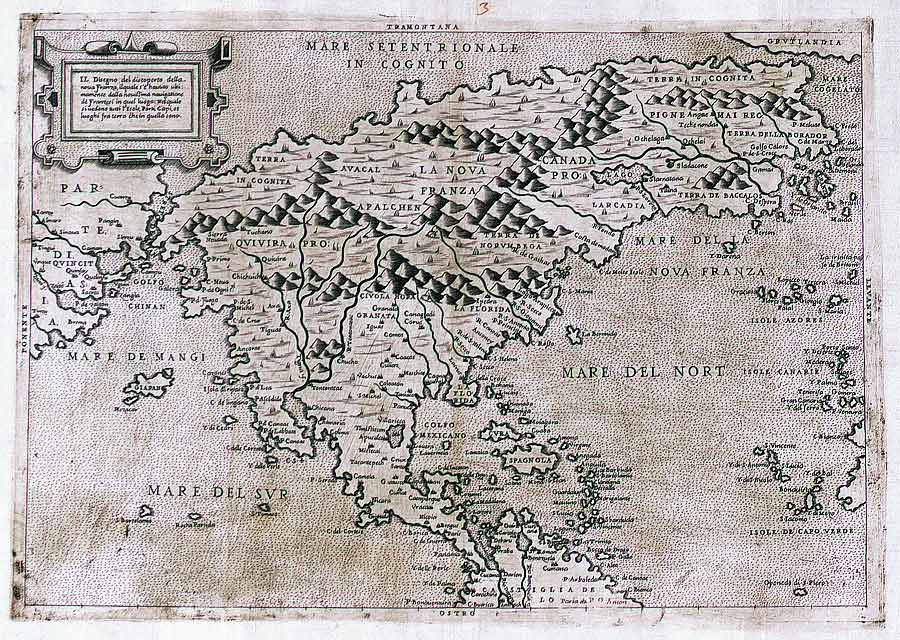
"Unknown land", area not mapped by cartographers
Terra incognita or terra ignota (Latin "unknown land"; incognita is stressed on its second syllable in Latin, but with variation in pronunciation in English) is a term used in cartography for regions that have not been mapped or documented. The expression is believed to be first seen in Ptolemy's Geography c. 150. The term was reintroduced in the 15th century from the rediscovery of Ptolemy's work during the Age of Discovery. The equivalent on French maps would be terres inconnues (plural form), and some English maps may show Parts Unknown. Similarly, uncharted or unknown seas would be labeled mare incognitum, Latin for "unknown sea".
Details
Popular belief holds that cartographers used to label such regions with "Here be dragons". Although cartographers did claim that fantastic beasts (including large serpents) existed in remote corners of the world and depicted such as decoration on their maps, only one known surviving map, the Hunt–Lenox Globe, in the collection of the New York Public Library,{{cite web |access-date=2006-08-22 |archive-date=20 November 2015 |archive-url=https://web.archive.org/web/20151120021337/http://digilib.nypl.org/dynaweb/williams/williams/@Generic__BookTextView/24166;td=2;nn=1;pt=24166 |url-status=dead |archive-url=https://web.archive.org/web/20000310224025/http://www.maphist.nl/extra/herebedragons.html |url-status=usurped |archive-date=10 March 2000 |access-date=2006-08-22

Alternatively, terra incognita may refer to the hypothesized continent Terra Australis Incognita ("The unknown land of the South"), as seen in the Theatrum Orbis Terrarum map by Abraham Ortelius (1570). During the 19th century, terra incognita disappeared from maps. Both the coastlines and the inner parts of the continents became fully explored, even prior to the advent of aerial photography and satellite imagery in the 20th century; however, the bottoms of oceans remain mostly unmapped, as do many other land surfaces in the Solar System, and the phrase is now used metaphorically to describe any unexplored subject or field of research. For example, only 40% of the surface of Neptune's Moon Triton has been mapped with the remainder being terra incognita.
Etymology
- Terra: Latin for "earth" or "land". Related English words include terrestrial, territory, and terrain.
- Incognita: from Latin cognoscere, "to know, be acquainted with" (negated by the prefix in-), which is related to English know and Greek γνῶσις (gnosis, "knowledge"). Related English words include agnostic, cognition, and gnosticism.
In media
Track 12 of the Ergo Proxy opus 2 soundtrack is titled "Terra Incognita".
Notes
References
- Guide to the Research Collections . pp. 207–208. New York Public Library.
References
- Van Duzer, Chet. (2014-06-04). "Bring on the Monsters and Marvels: Non-Ptolemaic Legends on Manuscript Maps of Ptolemy's Geography". Viator.
- Carter, Jamie. (September 10, 2019). "Welcome To Triton, Neptune's Bizarre 'Wet Moon' That Could Change Where We Look For Alien Life". Forbes.
This article was imported from Wikipedia and is available under the Creative Commons Attribution-ShareAlike 4.0 License. Content has been adapted to SurfDoc format. Original contributors can be found on the article history page.
Ask Mako anything about Terra incognita — get instant answers, deeper analysis, and related topics.
Research with MakoFree with your Surf account
Create a free account to save articles, ask Mako questions, and organize your research.
Sign up freeThis content may have been generated or modified by AI. CloudSurf Software LLC is not responsible for the accuracy, completeness, or reliability of AI-generated content. Always verify important information from primary sources.
Report