From Surf Wiki (app.surf) — the open knowledge base
Termination of employment
End of an existing relationship between an employee and their employer

End of an existing relationship between an employee and their employer
Termination of employment or separation of employment is an employee's departure from a job and the end of their time with an employer. Termination may be voluntary on the employee's part (resignation), or it may be at the hands of the employer, often in the form of dismissal (firing or sacking) or a layoff. Dismissal or firing is usually thought to be the employee's fault, whereas a layoff is generally done for business reasons (for instance, a business slowdown or an economic downturn) outside the employee's performance.
Firing carries a stigma in many cultures and may hinder the jobseeker's chances of finding new employment, particularly if they have been terminated from a previous job. Jobseekers sometimes do not mention jobs from which they were fired on their resumes. Accordingly, unexplained gaps in employment, and refusal or failure to contact previous employers are often regarded as "red flags".
Dismissal
Main article: Dismissal (employment)
Dismissal is when the employer chooses to require the employee to leave, usually for the reason that is the employee's fault. The most common colloquial terms for dismissal in the United States are "getting fired" or "getting canned" whereas in the United Kingdom the terms "getting the sack" or "getting sacked" are also used.
Layoff
Main article: Layoff
A less severe form of involuntary termination is often referred to as a layoff (also redundancy or being made redundant in British English). A layoff is usually not strictly related to personal performance but instead due to economic cycles or the company's need to restructure itself, the firm itself going out of business, or a change in the function of the employer (for example, a certain type of product or service is no longer offered by the company, and therefore jobs related to that product or service are no longer needed). One type of layoff is the aggressive layoff; in such a situation, the employee is laid off but not replaced as the job is eliminated.
In an economy based on at-will employment, such as that of the United States, a large proportion of workers may be laid off at some time in their life, and often for reasons unrelated to performance or ethics. Employment termination can also result from a probational period, in which both the employee and the employer agree that the employer is allowed to lay off the employee if the probational period is not satisfied.
Often, layoffs occur as a result of "downsizing", "reduction in force" or "redundancy". These are not technically classified as firings; laid-off employees' positions are terminated and not refilled because either the company wishes to reduce its size or operations or lacks the economic stability to retain the position. In some cases, a laid-off employee may eventually be offered their old position again by their respective company, though by this time, they may have found a new job.
Some companies resort to attrition (voluntary redundancy) as a means to reduce their workforce. Under such a plan, no employees are forced to leave their jobs. However, those who do depart voluntarily are not replaced. Additionally, employees may resign in exchange for a fixed amount of money, frequently a few years of their salary. Such plans have been carried out by the United States Federal Government under President Bill Clinton during the 1990s, and by the Ford Motor Company in 2005.
However, "layoff" may be specifically addressed and defined differently in the contract articles in the case of unionised work.
Unfair Termination of Employment
General overview
Unfair termination of employment refers to the dismissal of an employee without a valid legal reason, usually not applicable in cases of redundancy, incompetence, or misconduct. According to Michael Salamon, author of Industrial Relations: Theory and Practice (2000), employers hold the legal authority to enforce workplace rules and expect employees to follow societal and job-related norms, avoiding from misconduct. However, some workplaces unjustly apply these rules, leading to excessive legal control over employees.
The Law of Unfair Termination
There is not a single worldwide legal framework that governs unfair termination across all countries. Employment laws, including those related to unfair termination, vary significantly from one country to another. Each country has its legal framework and regulations concerning employment relationships, which may include provisions about dismissal and termination.
For example, The Employment Rights Act 1996 (ERA 1996) is the United Kingdom (UK) employment legislation that governs the rights and responsibilities of employers and employees in the context of employment relationships within the UK. The ERA 1996 outlines various aspects of employment law, including unfair termination, redundancy, employment contracts, and minimum notice periods, among other matters. These regulations and protections apply to individuals working in the UK or to UK-based employers.
However, international labor standards and guidelines are set forth by organizations such as ILO, known as "ILO Convention No. 158 - Termination of Employment Convention, 1982." These international standards provide overarching principles and recommendations for labor rights and practices but do not constitute binding laws for individual countries.
The example of unfair termination: Tanzania
In Tanzania, around 700 ex-mineworkers from the Bulyanhulu underground gold mining site won an unfair dismissal case in July 2010. They were terminated because of participating in a strike in 2007 following failed wage negotiations. The mine temporarily halted production and fired 1,300 striking employees, claiming they had left illegally. Some were rehired, while others sought legal assistance.
Another example of unfair termination in Tanzania involved the Sun Flag Textile Factory. The company employs 2,100 workers who work 24/7. In February 2008, around 350 workers were unfairly terminated for protesting lower wages from the factory, against government recommendations. Subsequently, about a hundred workers were reemployed at different production sites.
Terminating in a safe, legal, and humane manner
An inadequately handled termination of employment can lead to legal conflicts or accusations of wrongful termination. Examples of wrongful termination include an employer firing an employee for filing or pursuing a workers' compensation claim after a workplace injury, discriminatory termination based upon membership within a protected class, or terminating workers for refusing to commit illegal acts. Some experts suggest organizations should have a well-defined termination policy and a direct and brief termination meeting to minimize undesired outcomes, such as departing employees displaying aggression and causing disturbances within workgroups. Most employees anticipate receiving the reason for their termination, although it is usually not mandated by law. Therefore, managers must communicate the rationale of the termination to the employee without repeating prior issues, using clichés, or trying to present termination in a favorable light that can offend.
There are four effective and efficient steps for terminating employee in a safe, legal, and humane manner:
- Pre-termination decision-making:
- Document the reasons for termination promptly: Create a memo or report detailing the decision rationale and attaching relevant documents like performance reviews, witness statements, and disciplinary notices. This record is not shared with the employee but ensures a credible, comprehensive, and immediate account of the termination's grounds for potential legal use.
- Investigate before terminating: Employers should diligently investigate potential job separations. Engage with all parties involved impartially and document their accounts
- Consider alternatives (e.g., performance improvement plans, gradual disciplinary measures, final chance arrangements, voluntary resignations).
- Subject the decision to scrutiny by higher-level management and/or HR professionals.
- Contemplate the possibility of extending a severance package in return for a release of liability.
- Preparing the termination meeting or exit interview:
- Schedule the meeting: While there is some debate in the literature, many experts recommend scheduling terminations for early in the day and early in the week.
- Coordinate with the IT department to deactivate network access at the time of the termination.
- Prepare a meeting place by booking a room that private and separated from other employees.
- Conducting the meeting:
- Keep the meeting duration in 15 minutes or less.
- Using clear and straightforward language, such as "We have decided to terminate your employment, and today will be your final day" Is recommended. Formulating the statement in the past tense helps to prevent disputes, negotiations, or requests for reconsideration.
- Articulate the termination reason in concise and using general terms, refraining from delving into specifics or revisiting past issues that could lead in potential termination-related disputes.
- Avoid debate: If the employee did not accept the reason of termination, it is advisable to decline further discussion during the meeting to avoid debate but offer solution by scheduling other discussion.
- Demonstrate comfort with emotional expressions but avoid excessive responses and using clichés.
- Finalizing the process:
- Offer a concise explanation of post-termination compensation and available services (e.g., continued benefits, severance pay, job placement assistance).
- Retrieve company assets (e.g., keys, laptops, corporate credit cards) from the departing employee.
- Maintain discretion regarding the specifics of the termination meeting.
Termination by mutual agreement
Some terminations result from a mutual agreement between the employer and the employee. When this happens, it is sometimes debatable if the termination was indeed mutual. In many of these cases, it was initially the employer's wish for the employee to depart, but the employer offered the mutual termination agreement to soften the firing (as in a forced resignation). But there are also times when a termination date is agreed upon before the employment starts (as in an employment contract).
Some types of termination by the mutual agreement include:
- The end of an employment contract for a specified period (such as an internship)
- Mandatory retirement. Some occupations, such as commercial airline pilots, face mandatory retirement at a certain age.
- Forced resignation
Changes of conditions
Firms that wish for an employee to exit of their own accord but do not wish to pursue firing or forced resignation may degrade the employee's working conditions, hoping that they will leave "voluntarily".
The employee may be moved to a different geographical location, assigned to an undesirable shift, given too few hours if part-time, demoted (or relegated to a menial task), or assigned to work in uncomfortable conditions. Other forms of manipulation may be used, such as being unfairly hostile to the employee and punishing them for things other employees deliberately overlook.
Often, these tactics are done so the employer will not have to fill out termination papers in jurisdictions without at-will employment. In addition, with a few exceptions, employees who voluntarily leave generally cannot collect unemployment benefits.
Such tactics may amount to constructive dismissal, which is illegal in some jurisdictions.
Pink slip
Pink slip refers to the American practice, by a human resources department, of including a discharge notice in an employee's pay envelope to notify the worker of their involuntary termination of employment or layoff.
The "pink slip" has become a metonym for the termination of employment in general. According to an article in The New York Times, the editors of the Random House Dictionary have dated the term to at least as early as 1910.
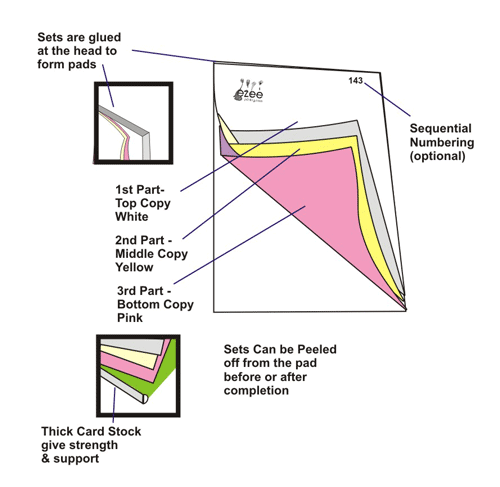
The phrase may have originated in vaudeville. When the United Booking Office (established in 1906) would issue a cancellation notice to an act, the notice was on a pink slip. Another possible etymology is that many applications (including termination papers) are done in triplicate form, with each copy on a different color of paper, one of which is typically pink.
In the UK and, until 1 January 2019 in Ireland, the equivalent of a pink slip is a P45; in Belgium the equivalent is known as a C4.
Rehire following termination
In certain situations, an individual who has been terminated or left from their job may have the opportunity to be reemployed by the same employer. In some cases, when an employee departs on good terms, such as pursuing a specific career goal, going to graduate school or pregnancy, they might be given special priority by the employer when seeking to rehire. Conversely, an employer is not likely to rehire a former employee who was terminated for cause, for example as a result of workplace violation, discriminatory, misconduct, insubordination, and ethics violations.
"Boomerang" is the term for workers who depart from an organization but are subsequently rehired by the same organization. Reemployment could be a good option because boomerangs tend to have longer tenure and lower absenteeism rates than other recruitment sources. Breaugh (2008) added that rehiring former employees, categorized as "targeted recruitment", usually produces candidates with a higher likelihood of receiving and accepting job offers, better job performance, and longer organizational retention compared to candidates from "untargeted recruitment". In terms of loyalty, boomerangs may have better loyalty as they voluntarily choose to return, having experience with their former and subsequent employers and making an informed decision to return.
There are three main types of employee rehiring; rehiring retirees, rehiring female employees who left voluntarily due to having children or caring for other family members, and rehiring as a natural outcome of the evolving concept of multi-faceted careers.
A notable example of a successful "rehire following termination" is Steve Jobs, a co-founded Apple Computers Inc. He initially left the company after being removed as CEO, spending eleven years building successful ventures outside of Apple. He returned to Apple in 1996 when the company was facing financial challenges. His comeback is considered one of the top ten most successful corporate turnarounds, leading to the introduction of innovative products and profitability.
Final pay after Termination - Practices in New Zealand
1. Definition
Final pay, which is also refers to termination pay, is a financial package provided by employers to employees when their employment is terminated under specific circumstances.
2. When to pay
If an employee terminates on notice, their final pay should be given on the agree-upon pay day mentioned in their employment contract. If there is no agreed date, the final pay should be available after the last working day.
If the employer and employee mutually decide to end the employment immediately with a payment in lieu notice, they can set a different date for the final pay. However, it is advisable for this payment to align with the actual last day of employment.
If an employee does not receive all the components of their final pay which are owing, they may have a claim for unpaid wages or holiday pay or other breach of their employment agreement.
3. Purpose of Final pay
In general, final pay package is typical meant to pay employees for any remaining wages and benefits happen since the last pay day to their last working day. It serves to provide financial support to employees during the transition period, ensure compliance with legal requirements, and in some cases, protect both parties from potential legal disputes.
4. Components of Final pay
Final pay packages usually come in a lump sum and consist of various components based on company policies and employment agreements, but typically must include:
4.1 Wages and salary for all the hours worked since the last pay until the last working day of employment.
4.2 Any leave entitlements owed to employee, including:
-
Unused annual holidays, which is calculated at the rate of the greater of whichever is higher: the regular weekly pays or average weekly earnings. Additionally, the employee is also entitled to receive 8% of their total earnings since their last anniversary date for annual holidays (which may include payments for annual holidays, public holidays, and alternative holidays).
-
Public holidays (when applicable). Public holidays will be paid if it falls within the duration created by adding their remaining annual holidays to the end of their employment and occurs on a day that aligns with their regular work schedule if they were still employed, and that day was not public holiday. If the employee qualifies for payment on a public holiday, then the duration covered by annual holidays is prolonged by one day for each eligible public holiday. This extended period may include additional public holidays that should also be considered for compensation.
-
Accrued but unused alternative holidays of their prior work on public holidays. Alternative holidays do not affect the termination date and are not treated as calculation pay for public holidays as aforementioned.
4.3 Non-reimbursed expenses or allowance from employee’s work travel or working overtime before end of employment.
4.4 Any deductions or forfeiture related to financial loss or damage that employer had to suffer due to employee’s failure to fulfill their duty. Deductions or forfeiture from employee’s final pay require written consent or a specific clause in the employment agreement. Employers should notice employee beforehand about any deductions or forfeiture if applicable.
4.5 Any other allowances, bonuses that stated in the employment agreement.
Final pay package may or may not include:
4.6 Sick leave and bereavement leave: There is no legal requirement to provide payment for unused sick or bereavement leave when an employee leaves their job. It is on hand of employer to pay entirety, a portion or not to pay.
4.7 Severance pay: is a special allowance/bonus, which is offered to terminated employees in special contexts, such as redundancy, downsizing, or lay off. Severance pay is not mandatory; however, employers usually offer severance package as a gesture of goodwill and competitive advantage. Severance pay is paid, if any, based on employee’s years of service and contribution to the company. It may also include continuation of benefits and other perks (health insurance, outplacement assistant, etc.).
The primary purpose of severance pay is to provide financial support to employees during the transition period following their termination. It helps employees bridge the gap until they secure new employment and helps employers comply with employment laws and regulations and to mitigate potential legal disputes and claims.
In some special situations, employers and employees may decide to end the employment relationship through mutual agreement as a best solution to resolve their differences. In this case, severance pay is understood as an exchange for the employee giving up the right to take legal actions against the employer. This financial settlement is referred to as “exit packages” or “golden handshakes” and is legalized in a “record of settlement” signed by both parties and endorsed by a mediator. It helps ensuring a smooth transition while protecting the interests of both parties.
Death is also considered as a special type of termination and should be also entitled to severance package. It is provided to family or beneficiaries of employee who died while employed to help them overcome the difficult time of losing the breadwinner.
References
References
- "10 Reasons Employees Get Fired". BeingFired.com.
- Macmillan Dictionary, [https://www.macmillandictionary.com/dictionary/british/get-be-given-your-cards Get/be given your cards], accessed 17 February 2021
- Ayto, J., and Simpson, J. (1992). ''The Oxford dictionary of modern slang.'' Oxford: Oxford University Press. {{ISBN. 0-19-280007-8; p. 24.
- Leland, L.S., jr. (1980). ''A personal Kiwi-Yankee dictionary.'' Dunedin, NZ: John McIndoe Ltd. {{ISBN. 0-86868-001-X; p. 16.
- "attrition - Definitions from Dictionary.com". Dictionary.reference.com.
- (2007-09-22). "Bill Clinton for President 1992 Campaign Brochure". 4president.org.
- Woodyard, Chris. (2006-01-25). "Ford will cut 25,000 to 30,000 jobs, close 14 plants". Usatoday.Com.
- World Bank (2017). Doing Business 2018: Reforming to Create Jobs. Washington, DC. {{doi. 10.1596/978-1-4648-1146-3
- International Labour Organization (ILO), Convention Concerning Termination of Employment at the Initiative of the Employer, 22 June 1982, C158, available at: https://www.refworld.org/docid/5c6fc0e74.html
- WorldBank (2018). Labor Regulations throughout the World: An Overview. https://documents1.worldbank.org/curated/en/221471546254761057/pdf/Labor-Regulations-Throughout-the-World.pdf
- International Labour Organization (ILO), Recommendation Concerning Termination of Employment at the Initiative of the Employer, 22 June 1982, R166. https://www.refworld.org/docid/5c77a3c77.html
- Salamon, Michael. (2000). "Industrial Relations: Theory and Practice". Financial Times Prentice Hall.
- (2015). "Employment Protection Legislation".
- "Employment Rights Act 1996".
- (1985). "C158 - Termination of Employment Convention, 1982 (No. 158)".
- Refugees, United Nations High Commissioner for. "Refworld {{!}} 2010 Annual Survey of violations of trade union rights - Tanzania".
- Madinda, Alexander S.. (2014-07-26). "UNFAIR TERMINATION OF EMPLOYMENT AT WORKPLACES". International Journal of Emerging Trends in Science and Technology.
- (September 2000). "The Winding Road from Employee to Complainant: Situational and Psychological Determinants of Wrongful-Termination Claims". Administrative Science Quarterly.
- (1 November 2007). "Case Study: Wrongful Termination and Workers' Compensation". Journal of the California Dental Association.
- (1 January 1999). "Wrongful Termination, ADA, and the Courts". Journal of Individual Employment Rights.
- (1985). "Reconstructing Breach of the Implied Covenant of Good Faith and Fair Dealing as a Tort". California Law Review.
- (March 1999). "Expert Advice on Employment Termination Practices: How Expert is It?". Public Personnel Management.
- Kruse & Millette, Kevin E & T. E. (2017). "How to fire an employee: The Right Way to Terminate Someone.". LEADx.
- Walsh, David J.. (2018-10-03). "Employment Law for Human Resource Practice". Cengage Learning.
- Pearson, Lowell. (2010). "The Eight Steps to an Effective Employee Termination Policy". Missouri Medicine.
- (March 1999). "Expert Advice on Employment Termination Practices: How Expert is It?". Public Personnel Management.
- Prial, Frank J.. (18 June 1991). ""Among Those Let Go, the Pink Slip Itself"". [[The New York Times]].
- "The Argot of Vaudeville Part I", ''The New York Times'', December 16, 1917, p. X7.
- "Archived copy".
- "Unemployment in Belgium - Belgium".
- (2018-05-31). "Turning Over Employee Turnover: A Review on Employee Alumni and Rehiring". SocArXiv.
- "Employment, Professional Perspective - California's Prohibition Against No-Rehire Provisions". Bloomberg.
- (November 2021). "Welcome Back? Job Performance and Turnover of Boomerang Employees Compared to Internal and External Hires". Journal of Management.
- (June 2000). "Research on Employee Recruitment: So Many Studies, So Many Remaining Questions". Journal of Management.
- Breaugh, James A.. (2008-09-01). "Employee recruitment: Current knowledge and important areas for future research". Human Resource Management Review.
- (June 2014). "Gone Today but here Tomorrow: Extending the Unfolding Model of Turnover to Consider Boomerang Employees". Personnel Psychology.
- (December 2014). "How Likely are Employers to Rehire Older Workers After Mandatory Retirement? A Vignette Study Among Managers". De Economist.
- (2005-03-01). "Off-Ramps and On-Ramps: Keeping Talented Women on the Road to Success". Harvard Business Review.
- Isaacson, Walter. (2011). "Steve Jobs". Simon & Schuster.
- "Canterbury Employer's Chamber of Commerce (2021), A-Z of Employing: Termination of Employment".
- (2023-06-02). "Your last pay when you leave a job".
- "What Is Severance Pay? Definition and Why It's Offered".
- '''Employment New Zealand (2019), ''Leave and Holidays: A guide for employees’ legal entitlements'', New Zealand Government'''
- "Employment New Zealand (2019), Holiday Act guidance tools – Termination Pay".
- '''Ministry of Business, Innovation, and Employment (2000), ''Employment Relation Act 2000'', New Zealand Government'''
- '''Ministry of Business, Innovation, and Employment (2003), ''Holiday Act 2003''. New Zealand Government'''
This article was imported from Wikipedia and is available under the Creative Commons Attribution-ShareAlike 4.0 License. Content has been adapted to SurfDoc format. Original contributors can be found on the article history page.
Ask Mako anything about Termination of employment — get instant answers, deeper analysis, and related topics.
Research with MakoFree with your Surf account
Create a free account to save articles, ask Mako questions, and organize your research.
Sign up freeThis content may have been generated or modified by AI. CloudSurf Software LLC is not responsible for the accuracy, completeness, or reliability of AI-generated content. Always verify important information from primary sources.
Report