From Surf Wiki (app.surf) — the open knowledge base
Tenpin bowling
Type of bowling

Type of bowling
| Field | Value |
|---|---|
| name | Tenpin bowling |
| image | 10-pin-bowling-strike.gif |
| imagesize | 225px |
| caption | Ball contacts the 1, 3, 5, and 9 pins (sequentially tinted red) to achieve a strike. |
| first | c. 1810 England (outdoors) |
| c. 1820, United States | |
| union | International Bowling Federation |
| contact | No |
| mgender | Yes |
| category | Ball sport, Target sport |
| equipment | Bowling ball, pins, lanes, bowling shoes |
| venue | Bowling lanes |
| glossary | Glossary of bowling |
| olympic | Demonstration sport in 1988 |
| IWGA | Since 1981 |
c. 1820, United States Tenpin bowling is a type of bowling in which a bowler rolls a bowling ball down a wood or synthetic lane toward ten pins positioned evenly in four rows in an equilateral triangle. The goal is to knock down all ten pins on the first delivery (a strike), or failing that, on the second delivery (a spare). While most people approach modern tenpin bowling as a simple recreational pastime, those who bowl competitively, especially at the highest levels, consider it a demanding sport requiring precision and skill. A 15 ft long approach area is used by the bowler to impart speed and apply side rotation to the bowling ball and is separated from the lane by a foul line. Crossing this foul line is detectable via sensors and results in a score of zero for the delivery in league or tournament play. The 41.5 in, 60 ft lane is bordered along its length by gutters (channels) that collect errant balls. The lane's long and narrow shape limits straight-line ball paths to angles that are shallower than the ideal entry angle(s) for achieving strikes; accordingly, bowlers impart side rotation to hook (curve) the ball into the pins to increase the likelihood of striking.
Oil is applied to approximately the first two-thirds of the lane's length to allow a "skid" area for the ball before it encounters friction and hooks. The oil is applied in different lengths and layout patterns, especially in professional and tournament play, to add complexity and regulate challenge in the sport. When coupled with technological developments in bowling ball designs dating back to the early 1990s, easier oil patterns commonly used for league play have enabled many league bowlers to achieve scores rivaling those of professional bowlers who compete on more difficult patterns—a development that has caused substantial controversy.
Tenpin bowling arose in the early 1800s as an alternative to nine-pin bowling, with truly standardized regulations not being agreed on until nearly the end of that century. After the development of automated mechanical pinsetters, the sport enjoyed a "golden age" in the mid twentieth century. Following substantial declines since the 1980s in both professional tournament television ratings and amateur league participation, bowling centers have increasingly expanded to become diverse entertainment centers.
Tenpin bowling is often simply referred to as bowling. Tenpin, or less commonly big-ball, is prepended in the English-speaking world to distinguish it from other bowling types such as bowls, candlepin, duckpin and five-pin.
Facilities and equipment
Lanes
Tenpin bowling lanes are 60 ft from the foul line to the center of the head pin (1-pin), with guide arrows (aiming targets) about 15 ft from the foul line. The lane is 41.5 in wide and has 39 wooden boards, or is made of a synthetic material with the 39 "boards" simulated using marking lines. The approach has two sets of dots, respectively 12 ft and 15 ft behind the foul line, to help with foot placement.
Modern bowling lanes have oil patterns designed not only to shield the lanes from damage from bowling ball impacts, but to provide bowlers with different levels of challenge in achieving strikes. As illustrated, a typical house pattern (or THS, typical house shot) has drier outside portions that give bowling balls more friction to hook (curve) into the pocket, but heavier oil concentrations surrounding the centerline so that balls slide directly toward the pocket with less hooking. In the more challenging sport patterns used in tournaments and professional-level matches, a "flat" oil pattern—one with oil distributed more evenly from side to side—provides little assistance in guiding the ball toward the pocket, and is less forgiving with regard to off-target shots. The ratio of centerline oil concentration to side oil concentration (the oil ratio) can exceed 10-to-1 for THSs but is restricted to 3-to-1 or less for sport shots.
Lane oils, also called lane conditioners, are composed of about 98% mineral oil that, with numerous additives, are designed to minimize breakdown and carry-down that would change ball reaction after repeated ball rolls.
Balls

Rubber balls (introduced in 1905) were eventually supplanted by polyester ("plastic") balls (1959) and polyurethane ("urethane") balls (1980s). Coverstocks (surfaces) of bowling balls then evolved to increase the hook-enhancing friction between ball and lane: reactive resin balls arrived in the early 1990s, and particle-enhanced resin balls in the late 1990s. Meanwhile, the increasingly sophisticated technology of internal cores (also called weight blocks) has increased balls' dynamic imbalance, which, in conjunction with the coverstocks' increased friction, enhances hook (curving) potential to achieve the higher entry angles that have enabled dramatic increases in strike percentage and game scores.
Hook potential has increased so much that dry lane conditions or spare shooting scenarios sometimes compel use of plastic or urethane balls, to purposely avoid the larger hook provided by reactive technology.
The United States Bowling Congress (USBC) regulates ball parameters including diameter (between 8.500 and), circumference (between 26.704 and), and weight (maximum of 16 lb, no minimum).
Ball motion

Because pin spacing is much larger than ball size, it is impossible for the ball to contact all pins. Therefore, a tactical shot is required, which would result in a chain reaction of pins hitting other pins (called pin scatter). In what is considered an ideal strike shot, the ball contacts only the 1, 3, 5 and 9 pins (right-handed deliveries).
Most new players roll the ball straight, while more experienced bowlers may roll a hook that involves making the ball start out straight but then curve toward a target, to increase the likelihood of striking: USBC research has shown that shots most likely to strike enter the pocket at an angle of entry that is achievable only with a hook.
A complex interaction of a variety of factors influences ball motion and its effect on scoring results. Such factors may be categorized as:
- The bowler's delivery (see Effect of delivery characteristics on ball motion) Characteristics of the ball's delivery that affect ball motion include the ball's speed going down the lane, its rotational speed (rev rate), the angle of the ball's axis of rotation in horizontal and vertical planes (axis rotation and axis tilt, respectively), and how far beyond the foul line that the ball first contacts the lane (loft).
- Bowling ball design (see Effect of coverstock, core and layout on ball motion). A 2005-2008 USBC Ball Motion Study found that the ball design factors that most contributed to ball motion were the microscopic spikes and pores on the ball's surface (present in balls with reactive resin coverstock), the respective coefficients of friction between ball and lane in the oiled and dry parts of the lane, and the ball's oil absorption rate, followed in dominance by certain characteristics of the ball's core (mainly radius of gyration and total differential). Friction-related factors may be categorized as chemical friction (degree of "stickiness" designed by manufacturers into the resin coverstock) and physical friction (which can be modified by sanding or polishing, or by including additives that physically increase lubrication). "Weak" (pin down) versus "strong" (pin up) layouts of the finger and thumb holes with respect to core orientation affect skid lengths and hook angularity.
- Lane conditions (see Effect of lane characteristics on ball motion). Lane conditions that affect ball motion include lane transition (including breakdown and carry-down), the oil absorption characteristics of previously thrown balls and the paths they followed, wood versus synthetic composition of the lane (more generally: soft vs. hard lanes), imperfections in lane surface (topography), and oil viscosity (thick or thin consistency; innate viscosity being affected by temperature and humidity).
Pins and pin carry
Bowling pins (with a maximum thickness of 4.766 in at the waist) are "spotted" (placed) in four rows, forming an equilateral triangle with four pins on a side to form a tetractys.
Pin carry—essentially determining the probability of achieving a strike if the ball impacts in or near the pocket—varies with several factors. Even before a 2008 USBC pin carry study, it was known that entry angle and ball weight affect strike percentages. The 2008 study concluded that an impact with the ball centered at "board 17.5" causes pin scatter that maximizes likelihood of striking. The material of the pin deck and "kickback" (side) plates was also found to materially affect pin carry.
Ball delivery
Delivery style categories
Three widely recognized categories are stroker, cranker and tweener.
- Strokers—using the most "classic" bowling form—tend to keep the shoulders square to the foul line and develop only a moderately high backswing, achieving modest ball rotation ("rev") rates and ball speeds, which thus limit hook potential and kinetic energy delivered to the pins. Strokers rely on accuracy and repeatability, and benefit from the high entry angles that reactive resin balls enable.
- Crankers tend to open (rotate) the shoulders and use strong wrist and arm action in concert with a high backswing, achieving higher rev rates and ball speeds, thus maximizing hook potential and kinetic energy. Crankers rely on speed and power, but may leave splits rarely left by strokers.
- Tweeners (derived from "in-between") have styles that fall between those of strokers and crankers; the term is considered by some to include power strokers who combine the high rev rates of crankers with the smooth delivery of strokers.
Alternative deliveries
Though it is often incorrectly called a two-handed release, the actual release involves a single dominant hand for most bowlers. For most two-handed deliveries, the thumb is never inserted into the ball in the first place, allowing a high rev rate and resultant hook. (shown: Zach Wilkins)
(shown: Zach Wilkins)
- So-called two-handed bowling, first popularized late in the 2000s by Australian Jason Belmonte, involves not inserting the thumb into any thumbhole, with the opposite hand supporting and guiding the ball throughout almost the entire forward swing. This delivery style, involving more athletic ability, is increasingly popular with younger bowlers and technically still involves a one-handed release. It allows the inserted fingers to generate higher revolution rates and thus attain greater hook potential than with a thumb-in-hole approach. In contrast, in what is literally a two-handed delivery and release, children or physically challenged players use both hands to deliver the ball forward from between the legs or from the chest.
- No-thumb bowling involves only a single hand during the forward swing, without the thumb inserted. The ball is often balanced on the wrist and forearm of the delivery hand for this technique. A successful professional who uses the one-handed no-thumb delivery is Tom Daugherty.

- The spinner style, which is mainly popular in parts of Asia, has a "helicopter" or "UFO" release that involves rotating the wrist to impart a high (vertical) axis of rotation that causes the bowling ball to spin like a top while traveling straight down the lane.
- In the backup (or reverse hook) release, the wrist rotates clockwise (for right hand releases) or counter-clockwise (for left hand releases), causing the ball to hook in a direction opposite to that of conventional releases.
Grips
A conventional grip, used on non-customized house balls and some custom-drilled balls, involves insertion of fingers to the second knuckle.
Pins and scoring
Pins
The USBC indicated that, effective August 1, 2023, it is certifying string pinsetters and string pin bowling as an independent category of equipment and competition separate from conventional free-fall pinsetters. String pinsetters are less expensive and easier to maintain, motivating bowling centers to phase them in.
Traditional scoring
Frame one: 10 + (3 + 6) = 19 Frame two: 3 + 6 = 9 → Total = 28 Frame one: (7 + 3) + 4 = 14 Frame two: 4 + 2 = 6 → Total = 20

In traditional scoring, one point is scored for each pin that is knocked over, and when fewer than all ten pins are knocked down in two rolls in a frame (an open frame), the frame is scored with the total number of pins knocked down. However, when all ten pins are knocked down with either the first or second rolls of a frame (a mark), bonus pins are awarded as follows:
- Strike: When all ten pins are knocked down on the first roll (marked "X" on the scorescreen), the frame receives ten pins plus a bonus of pinfall on the next two rolls (not necessarily the next two frames). A strike in the tenth (final) frame receives two extra rolls for bonus pins.
- Spare: When a second roll of a frame is needed to knock down all ten pins (marked "/" on the scorescreen), the frame receives ten pins plus a bonus of pinfall in the next roll (not necessarily the next frame). A spare in the first two rolls in the tenth (final) frame receives a third roll for bonus pins.
- Split: When pins that have not yet been knocked down form a gap that's at least one pin apart, therefore making it very difficult to get a spare (marked by highlighting the number of the roll in red on the scorescreen).
- Gutter: When no pins are hit on a roll (marked "-" on the scorescreen).
The maximum score is 300, achieved by getting twelve strikes in a row within the same game (known as a perfect game).
World Bowling scoring
The World Bowling scoring system—described as "current frame scoring"—awards pins as follows: :* A strike is 30 pins, regardless of ensuing rolls' results. :* A spare is 10 pins, plus the pinfall on first roll of the current frame. :* An open frame is the total pinfall of the current frame. The maximum score is 300, achieved with ten consecutive strikes (as opposed to twelve in traditional scoring), but with no bonus pins received in the tenth frame.
World Bowling scoring is thought to make bowling easier to follow than with traditional scoring,
Variant of World Bowling scoring
Another variant of scoring, a 12-frame system introduced at the November 2014 World Bowling Tour (WBT) finals, resembles golf's match play scoring in counting the greater number of frames won rather than measuring accumulated pinfall score.
History
Early history
Modern tenpin bowling derives mainly from the German Kegelspiel, or kegeling, which used nine pins set in a diamond formation. The enjoyment of kegeling by German peasants contrasted with (lawn) bowls that was reserved for the upper classes, consistent with tenpin bowling's enduring reputation as a common man's sport.
A circa 1810 painting of Ipswich, England, shows a man bowling outdoors with a triangular formation of ten pins. An outdoor version of tenpin bowling was advertised, also in Ipswich, at least as early as 1828.
An 1841 Connecticut law banned ninepin bowling because of its perceived association with gambling and crime, and people were said to circumvent the prohibition by adding a tenth pin. Other locations (e.g., 1838, re Baltimore) also recount that strategy. Even earlier, an 1834 Washington, D.C. ordinance had limited the time (before 8 p.m. and not on Sundays) and place (more than 100 yards from inhabited houses) of "nine pin and ten pins" or "any game in the likeness or imitation thereof ... played with any number of pins whatsoever". U.S. newspapers referred to "ten pin alleys" at least as early as 1820 (also later in the 1820s and in the 1830s ).
In the mid-1800s, various alternatives to free-standing pins received U.S. patents to solve perceived problems in pinsetting and ball return, aiming to avoid the need for human pinsetters to perform these functions. One scheme (1851) involved pins with spherical bases that when hit by a ball merely fell over, in place, to be rotated back to a vertical position. A second arrangement (1853) involved resetting the pins via cords descending from respective pin bottoms to weights beneath the pin deck. Another design (1869) involved suspending the pins with overhead cords.
In 1884, the Brunswick Corporation became the first American bowling ball manufacturer, and by 1905 introduced the Mineralite (hard rubber) ball that was considered so revolutionary over wooden balls that it was displayed at the Century of Progress Exposition in 1934. and over decades strove to elevate the sport's image to compete with upper-class diversions such as theaters and opera houses.
In 1875, delegates from New York City and Brooklyn bowling clubs formed the National Bowling Association (NBA) to standardize rules, but disagreements prevailed. In 1887 Albert G. Spalding wrote Standard Rules for Bowling in the United States, and in the mid-1890s the United Bowling Clubs (UBC) was organized with 120 members. The American Bowling Congress (ABC) was established in 1895, followed by the Women's International Bowling Congress (WIBC) in the 1910s, such organizations promoting standardized rules and striving to improve the sport's image.
From 1920 to 1929, the number of ABC-sanctioned alleys grew from 450 to about 2,000, with Prohibition leading to the growth of family-appropriate "dry" alleys. The 1933 repeal of Prohibition allowed breweries to sponsor teams and bowlers, adding to bowling's reputation as a working-class sport. Though at the turn of the twentieth century most bowling alleys were small establishments, post-Prohibition bowling lanes shifted from side entertainment at fancy Victorian venues or seedier saloons to independent establishments that embraced the Art Deco style and fit the era's perceived "need for speed".
1940s to early 1960s

Gottfried Schmidt invented the first mechanical pinsetter in his garage in 1936, one implementation of which was publicly exhibited in 1946 before AMF placed a production model into service in 1952.
Bowling in the U.S. flourished during World War II, when employers sponsored teams in industrial leagues to boost worker morale. The U.S. government's "Bowling for Health" campaigns promoted bowling for its health benefits, and the military made bowling centers a regular feature on military bases.
Initially, ABC and WIBC constitutions had banned non-Caucasians from membership. The National Negro Bowling Association, formed in 1939 and renamed The National Bowling Association (TNBA) five years later, had served minority bowlers before ABC and WIBC membership restrictions were removed in 1950.
The 1940s through the 1970s became known as the "golden age of bowling", with ABC membership growing from 700,000 (1940), to 1.1 million (1947), to 2.3 million (1958), to 4.5 million (1963), Women's International Bowling Congress membership growing from 82,000 (1940) to 866,000 (1958), American Junior Bowling Congress membership growing from 8,000 (1940) to 175,000 (1958), and sanctioned individual lanes growing from 44,500 (1947) to 159,000 (1963).
Bowling's growth was fueled by the deployment of automatic mechanical pinsetters by AMF (1952) and Brunswick (1955), television broadcasts (said to be "ubiquitous" in the 1950s), modernization and stylization of establishments with amenities to attract broader clientele, and formation of bowling leagues.
Sports agent Eddie Elias founded the Professional Bowlers Association (PBA) in 1958 with 33 members, and the first PBA tournaments began in 1959. The Pro Bowlers Tour TV program aired from 1962 through 1997.
In the 1930s and 1940s, professional bowling was dominated by "beer leagues" with many of the best bowlers sponsored by beer companies, but by 1965 the PBA tour was televised nationally on ABC Sports with sponsors such as Coca-Cola and Ford.
In parallel with professional bowling was "action bowling" or "pot bowling"—bowling matches based on monetary bets—historically associated with the New York underworld from the 1940s to the 1970s.
Late 1960s to 1980
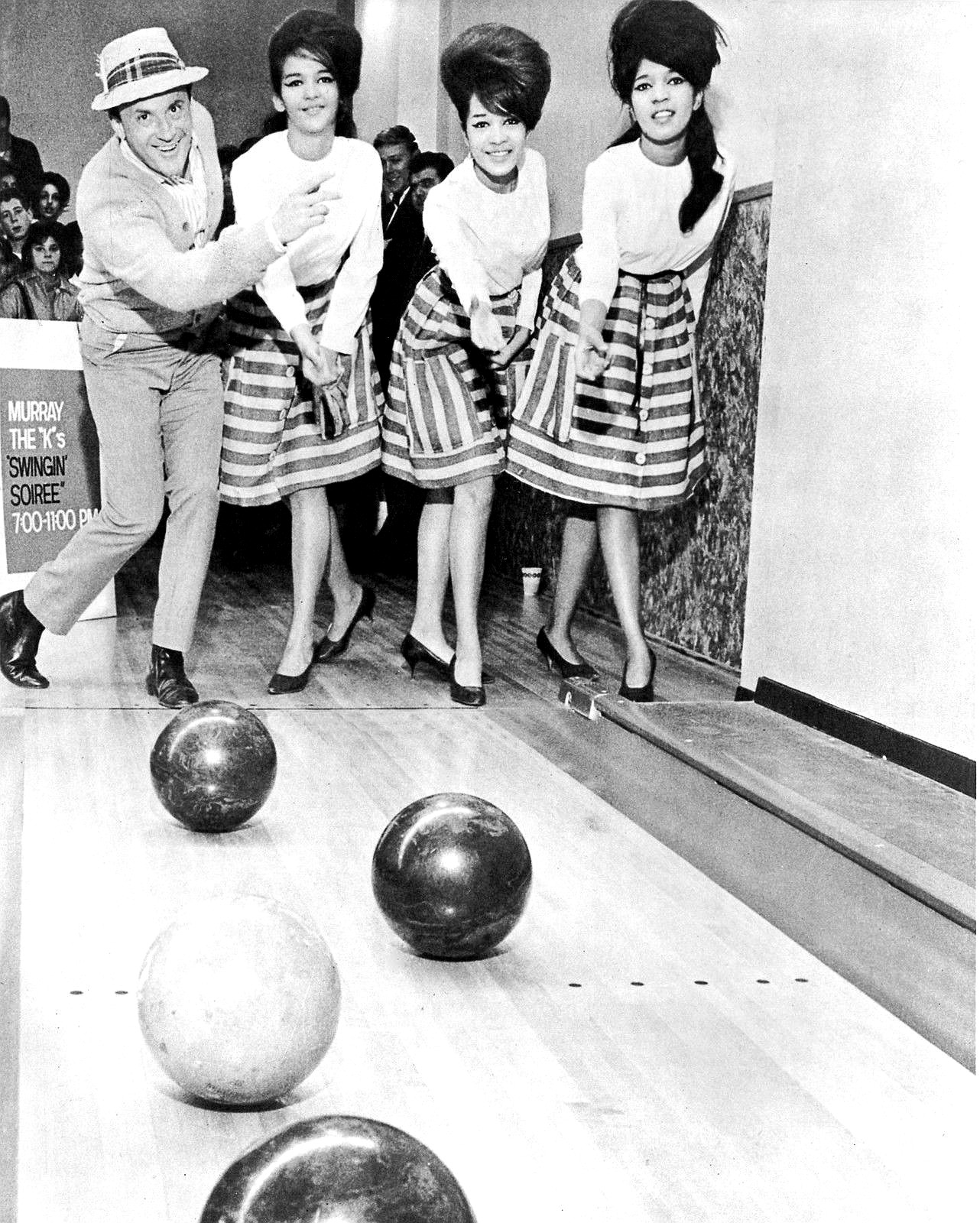
The first ten-pin lanes in Europe had been installed in Sweden in 1909, but attempts to popularize the sport in Europe were unsuccessful over the next several decades, though hundreds of lanes were installed on U.S. military bases in the U.K. during World War II. Various countries developed the sport to some extent, and the Fédération Internationale des Quilleurs (FIQ; now World Bowling) was formed in 1952 to coordinate international amateur competition.
A firmer establishment of the sport began in the U.K. in 1960 in London (Stamford Hill) in January 1960, and the British Tenpin Bowling Association (BTBA) was formed the following year. Various other countries, including Australia, Mexico and Japan, adopted the trend over the ensuing decade.
The "Lane Master" automatic lane cleaning and conditioning machine was first deployed in the 1960s.
In the 1960s and early 1970s, top bowling professionals made twice as much money as NFL football stars, received million-dollar endorsement contracts, and were treated as international celebrities. The number of sanctioned bowling alleys peaked at about 12,000 in the mid-1960s, and Women's International Bowling Congress (WIBC) membership peaked at 4.2 million members in 1979.
In the late 1960s, the participation sport of bowling found itself competing with spectator sports and outdoor recreational activities.
1980 to 2000


Tournament prize funds in the 1980s included the PBA National Championship ($135,000, its largest) and the Firestone Tournament of Champions ($150,000), and PBA membership approached 2,500. Ten-pin bowling became an exhibition sport at the 1988 Summer Olympics (Seoul), and was included in the 1998 Commonwealth Games (Kuala Lumpur).
Outside elite and professional bowling, participation in leagues—traditionally the more profitable end of the business—declined from a 1980 peak (8 million), compelling alleys to further diversify into entertainment amenities. While league bowling decreased by 40 percent between 1980 and 1993, the total number of bowlers actually increased by 10 percent during that period, with nearly 80 million Americans going bowling at least once during 1993.
In 1991, equipment manufacturer DBA Products released "The Lane Walker"—the first computer-driven lane cleaning and oiling machine, programmable to clean up to 50 lanes.
The early 1990s brought the development of reactive resin ("reactive") balls with chemically "tacky" surfaces that enhance traction to dramatically enhance hook and substantially increase the likelihood of striking, raising average scores even for less experienced bowlers.
In 1998, the Sporting Goods Manufacturers Association (SGMA) president attributed an increase in popularity to bowling alley remodeling, technological innovations in balls and lanes, computerized scoring, and promotion by bowling organizations.
2000 to present

From 1998 to 2013, the number of American bowling centers fell by one quarter. Similarly, in the two decades following 1997, the number of USBC-certified lanes—also indicative of business viability—declined by one-third. This business decline is often attributed to waning league participation: USBC membership—indicative of league participation that was the main source of revenue—declined by two-thirds in those two decades, and the portion of alley revenue attributable to leagues is estimated to have dropped from 70% to 40%. Political scientist Robert D. Putnam's book Bowling Alone (2000) asserts, with some controversy, that the retreat from league bowling epitomizes a broader societal decline in social, civic and community engagement in the U.S.
As an indication of the decline, AMF Bowling, the largest operator of bowling centers in the world at the time, filed for Chapter 11 bankruptcy in 2001, and again in 2012. By 2013, AMF Bowling had merged with New York–based Bowlmor (no relation to the defunct, 1940s-founded Bowl-Mor firm that invented the automatic pinsetter for candlepin bowling), the company becoming known as Bowlmor AMF.
In 2000, three former tech industry executives bought a debt-laden PBA—which saw its 36-year television contract with ABC Sports end in 1997—and turned it from a non-profit league into a for-profit organization, and invested heavily in marketing. The January 2005 merger of four U.S. bowling organizations to form the USBC formed a "central brand" aiming to grow the sport. the strategy being that basing teams in specific geographic localities would generate viewer enthusiasm and corporate sponsorship in the same manner as teams in other professional sports. Still, continuing the reversal of bowling's peak popularity in the 1960s, in the 2012–2013 season the average yearly winnings of the ten highest-earning PBA competitors was less than US$155,000, and the average for the remaining 250 competitors was $6,500—all much less than a rookie NFL football player's minimum base salary of $375,000.

Estimates of the number of total (league and non-league) bowlers in the U.S. have varied, from 82 million (1997, International Bowling Museum) the USBC stating in 2019 that bowling is still the #1 participation sport in the U.S. More broadly, the International Bowling Museum stated in 2016 that bowling is played by 95 million people in more than 90 countries. In an era of continual decline in league participation, Some offered laser tag, indoor playgrounds, go-karting, climbing walls, arcade games, skating rinks, gourmet restaurants, and nightclub-style bowling lounges. School sport programs expanded, the USBC stating that more than 5,000 high schools offered bowling as a competitive sport, with 50,000 student bowlers participating in 2009–2010. In 2011, the Bowling Proprietor's Association of America stated that more than 60% of U.S. bowlers were under age 34, that 46% were girls and women, and that children participated in bowling at a higher rate than any other population group.
Since 1997, Bowlero Corporation (later called Lucky Strike Entertainment Corporation) acquired competitors AMF Bowling, Brunswick and Lucky Strike Lanes, and purchased the Professional Bowlers Association (PBA).
In contrast to the U.S., the 2000s and 2010s brought a bowling renaissance in the U.K., achieved by accommodating sophisticated modern tastes by providing (for example) retro-style bowling alleys outfitted with 1950s Americana, "boutique bowling", "VIP lanes", and cameras for instant replays, and by rejuvenating bowling "alleys" into diverse-entertainment bowling "centres". The population of ten-pin bowling centres grew from a low of barely 50 (in the 1980s) to over 200 (2006), with almost a third of Britons going bowling in 2016 and league participation growing over 20% over two years (2015–2017).
Though ten-pin bowling was a demonstration sport in the 1988 Summer Olympics (Seoul) after making the shortlist for inclusion in the 2020 Summer Olympics (Tokyo), it was cut. One commentator noted that the sport's limited geographic popularity (the U.S., Australia and a few European and South American countries), and aging demographic of those who follow the sport, make it difficult to convince an Olympic Committee that wants to appeal to youth.
Governing organizations
Bowling organizations
International
World Bowling (WB) was formed in 2014 from component organizations of the Fédération Internationale des Quilleurs (FIQ, International Federation of Bowlers), which in 1952 developed from the International Bowling Association (IBA) which began operations in 1926. The World Tenpin Bowling Association "membership discipline" (component organization) of WB serves the amateur sport of ten-pin bowling worldwide, adopting uniform playing rules and equipment specifications.
United Kingdom
The British Tenpin Bowling Association (BTBA, formed in 1961) is the official governing body recognized by World Bowling as the official sanctioning body in England, and as such "is responsible for the protection, integrity and development of the sport".
The National Association of Youth Bowling Clubs (NAYBC) is a BTBA subcommittee serving youth bowlers and youth bowling clubs.
The British Universities Tenpin Bowling Association (BUTBA, formed in 2008) organizes bowling events for present and former university and college students.
The Tenpin Bowling Proprietors Association (TBPA, formed in 1961 as an umbrella organization) is a trade association for the British ten-pin bowling industry.
United States

The United States Bowling Congress (USBC) was formed as the governing body for the U.S. on January 1, 2005, by the merger of:
- the American Bowling Congress (ABC, an originally male-only organization founded in 1895),
- the Women's International Bowling Congress (WIBC, 1916),
- the Young American Bowling Alliance (YABA, 1982), which itself was formed from combining the American Junior Bowling Congress (AJBC, 1946), Youth Bowling Association (YBA, 1963–64), and ABC/WIBC Collegiate division (mid-1970s), and
- (Team) USA Bowling (1989). As the national governing body for bowling, its stated mission is to provide services, resources and the standards for the sport, its stated goals including growing the sport and promoting values of "credibility, dedication, excellence, heritage, inclusiveness, integrity, philanthropy and sportsmanship".
The National Bowling Association (TNBA), formed in 1939 as the National Negro Bowling Association, served minority bowlers before the ABC and WIBC in 1950 removed restrictions limiting membership to Caucasians. Today's TNBA membership remains open to men and women without regard to race, creed or color.
Museums
The International Bowling Museum and Hall of Fame is located on the International Bowling Campus in Arlington, Texas, U.S.
Tournaments

World Bowling oversees quadrennial World Championship tournaments, and international championships for various sectors, including for women, seniors, youth and junior bowlers.
The QubicaAMF Bowling World Cup (begun in 1965) is recognized as bowling's largest event in terms of number of countries competing, according to the USBC in 2018.
The Professional Bowlers Association (PBA) Tour has held anywhere from 15 to 25 events annually in recent years, mainly at U.S. locations. The PBA Tour includes "major" championship events: the U.S. Open, the USBC Masters, the PBA Tournament of Champions, the PBA World Championship, and the PBA Players Championship. Dozens more PBA tournaments are held in various U.S. geographical segments as part of the PBA Regional Tour.
The United States Bowling Congress (USBC) has various tournaments for the PBA tour, PWBA, youth and seniors, including the USBC Masters and U.S. Open (both major tournaments on the PBA tour), and USBC Queens and U.S. Women's Open (both major tournaments on the PWBA tour), plus the USBC Team USA Trials/U.S. National Amateur Bowling Championships. Additionally, the USBC has regional tournaments and certifies local tournaments.
The European Tenpin Bowling Federation (ETBF) owns the European Bowling Tour (organized in 2000), including its final tournament, the European Bowling Tour Masters (first edition: 2008).
The Commonwealth Tenpin Bowling Federation (CTBF), made up of World Bowling member federations within the Commonwealth of Nations, owns the Commonwealth Tenpin Bowling Championships, which has held tournaments at irregular intervals since 2002.
The Weber Cup is an annual, three-day US vs. Europe tournament, named after Dick Weber, that began in 2000 and has been held almost exclusively in the U.K.
In the decade of the 2000s, the World Ranking Masters, owned by World Bowling, ranked standings in the Pan American Bowling Confederation (PABCON), Asian Bowling Federation (ABF), and European Tenpin Bowling Federation (ETBF).
Though ten-pin bowling has not progressed beyond a demonstration sport at the Olympic Games, and the Pan American Games (governed by the Pan American Sports Organization, PASO). The Maccabiah Games (governed by the Israeli Bowling Federation, IBF, with events played according to WTBA-ETBF rules) host ten-pin tournaments as medal events.
Leagues
Bowling leagues vary in format, including demographic specialization (male, female, mixed, senior, youth), number of bowlers per team (usually 3–5), number of games per series (usually 3), day and time of scheduled sessions, starting dates and duration of league seasons, scoring (scratch versus handicap), and systems for bestowing awards and prizes. Usually, each team is scheduled to oppose each of the other teams over the course of a season. Position rounds—in which the first place team opposes the second place team, third place opposes fourth place, and so on—are often inserted into the season schedule.
Customarily, team position standings are computed after each series, awarding a first number of points for each game won and a second number of points for achieving the higher team score for that series, the particular numbers being specified in each league's rules.
The number of league bowlers in the U.S. peaked at 8 million in 1980, declining to approximately 1 million by the early 2020s.
Notable professional achievements
Titles and scores
- First perfect game on live national television: Jack Biondolillo (1967, Firestone Tournament of Champions)
- First female to bowl a perfect game on national television: Ritsuko Nakayama (1970, Japan)
- Most titles in a single PBA Tour season: Mark Roth (8 titles in 1978)
- Most titles in a single PWBA Tour season: Carolyn Dorin-Ballard (7 titles in 2001)
- First woman to win a PBA Tour event: Kelly Kulick (2010, PBA Tournament of Champions)
- Most PBA Tour titles (career): Walter Ray Williams Jr. (47 titles, reached in 2010)
- Most PWBA Tour titles (career): Lisa Wagner (32 titles, reached in 1999)
- First to earn 100 combined titles in PBA Tour, PBA50 Tour and regional competition: Walter Ray Williams Jr. (2016)
- Most PBA Tour major titles (career): Jason Belmonte (15, reached in 2023)
- Most PWBA Tour major titles (career): Liz Johnson (10, reached in 2017)
- Only winners of a career "Super Slam" (all five PBA majors): Mike Aulby (1996) and Jason Belmonte (2020)
Earnings and contracts
- First (in any sport) to receive $1,000,000 endorsement contract: Don Carter (1964, with Ebonite International)
- First to earn more than US$100,000 in a single season: Earl Anthony (1975)
- First female to earn more than US$100,000 in a single season: Lisa Wagner (1988)
- First to earn US$1 million in career earnings: Earl Anthony (1982)
- First female to earn US$1 million in career earnings: Aleta Sill (1996)
- First to earn US$2 million in career earnings: Walter Ray Williams Jr. (1997).
- Most earnings in a single PBA season: Kyle Troup ($496,900 in 2021)
- First to earn US$3 million in career earnings: Walter Ray Williams Jr. (2002–03)
- Highest first-place prize awarded in a single professional bowling tournament: $250,000 in the 2011 PBA Tournament of Champions (won by Mika Koivuniemi) and 2021 PBA Players Championship (won by Kyle Troup)
Youngest
- Youngest to win a standard PBA Tour title: Norm Duke (1983, at age 18 years, 345 days)
- Youngest to earn cash in a PBA Tour event: Kamron Doyle (age 14, 2012 U.S. Open)
- Youngest to win a PBA Tour major tournament: Anthony Simonsen (2016 USBC Masters at age 19 years, 39 days)
- Youngest to win a standard PWBA Tour event: Jillian Martin (2021 PWBA BowlTV Classic at age 17 years, 16 days)
- Youngest to win a PWBA Tour major event: Wendy Macpherson (1986 U.S. Women's Open at age 18 years, 69 days)
Oldest
- Oldest to win a standard PBA Tour title: John Handegard (1995, at age 57 years, 139 days)
- Oldest to win a PBA Tour major tournament (that was classified as a major when it took place): Pete Weber (2013 Barbasol Tournament of Champions at age 50 years, 222 days)
Perfect (300) game history
Main article: Perfect game (bowling)
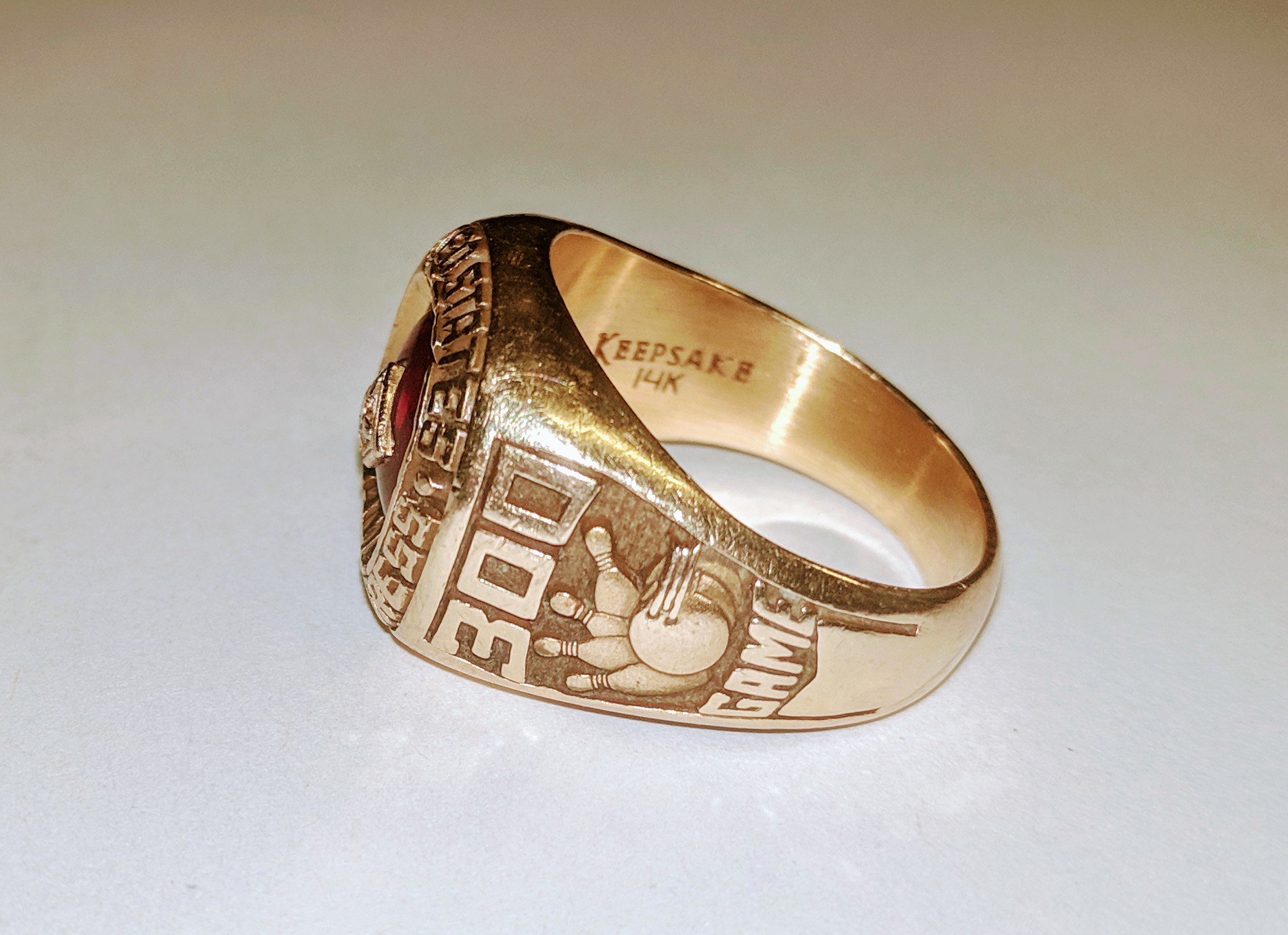
Ernest Fosberg (East Rockford, Illinois) bowled the first recognized 300 in 1902, before awards were given out.
On January 7, 2006, Elliot John Crosby became the youngest British bowler to bowl a BTBA-sanctioned 300 game at the age of 12 years, 2 months and 10 days, breaking the 1994 record of Rhys Parfitt (age 13 years, 4 months).
On November 17, 2013, Hannah Diem (Seminole, Florida) became the youngest American bowler to bowl a USBC-certified 300 game at the age of 9 years, 6 months and 19 days, breaking the 2006 record of Chaz Dennis (age 10) and the 2006 female record of Brandie Reamy (age 12).
Jeremy Sonnenfeld (Sioux Falls, South Dakota) rolled the first certified 900 series in 1997. A well-publicized court-contested 900 series by Glenn Allison in 1982, considered by many to be the first-ever 900 series, was denied certification due to non-conforming lane conditions.
"Score inflation" controversy

The 905 perfect games that were rolled during the 1968–69 season increased 38-fold to 34,470 in the 1998–99 season. The USBC Technical Director wrote that the "USBC is concerned that technology has overtaken player skill in determining success in the sport of bowling," announcing in 2007 the completion of a ball motion study undertaken "to strike a better balance between player skill and technology".
Separately, a USBC pin carry study completed in about 2008 found that dramatically increased entry angles improve pin carry to result in higher scores—regardless of whether the bowlers supplied additional effort or improved their skill. Among the factors allowing higher scores were technological advances in coverstock and core design combined with improved lane surfaces and accommodative oil patterns.
Specifically, the reactive resin balls and particle balls that came out in the 1990s increased frictional engagement with the lane to provide greater hook potential that made high entry angles easier to achieve. Technological progress allowed some 1990s league scores to surpass those of professionals in the 1950s.
Responding to such concerns, the USBC initiated "sport bowling" leagues and tournaments that provide "sport", "challenge" and "PBA Experience" oil patterns that are more challenging than the accommodative patterns of typical house shots.
As a result of various USBC studies, including a bowling technology study published in February 2018, the USBC Equipment and Specifications Committee established new specifications focusing mainly on balls.
In media
Coverage of events
Beginning in 1962, ABC's Pro Bowlers Tour was broadcast on Saturday afternoons to be viewed by millions, and—with various entertainment-oriented programs including Make That Spare, Celebrity Bowling and Bowling for Dollars—confirmed the sport's popularity. The Pro Bowlers Tour garnered excellent ratings in the 1960s and early 1970s, as a lead-in to ABC's Wide World of Sports. However, television ratings fell substantially, from 9.1 in the mid-1970s to 2.0 in 1997, the year in which Pro Bowlers Tour was canceled.
The decline in bowling event coverage has been attributed to a variety of factors, including time demands burdening the schedules of two-income households, and an aging audience for TV bowling. A 2006 PBA article describing the PBA bowlers in the documentary A League of Ordinary Gentlemen called bowling athletes "the Rodney Dangerfields of professional sports".
The decline in coverage has also been attributed to the perception that bowling is less an athletic sport (not being in the Olympic Games)
Former PBA Commissioner Mark Gerberich said that ABC paid the PBA $200,000 per broadcast in 1991, but by 1997 "we were paying $150,000 to stay on TV." Said to be "near bankruptcy" in 2000, the PBA changed ownership to one that emphasized marketing with the goal of running the organization as a for-profit business. ESPN featured bowling from 2000 to 2018 on Sunday afternoons, with CBS Sports Network also airing a smaller number of bowling tournaments.
In 2019, the PBA entered an agreement, expected to last four years, in which Fox Sports would sell advertising and sponsorships for the sport to establish the sport's presence on broadcast television, also providing cable, streaming, and social media programming. In September 2019, Bowlero Corporation purchased the PBA.
Portrayal on television
Particular television broadcasts include:
- 1950s: The Honeymooners (1952); Championship Bowling (1952).
- 1960s: Make That Spare; premiere episode of The Flintstones (1960-1966); Jackpot Bowling (1959-1961).
- 1970s: Celebrity Bowling (beginning in 1971); All In the Family; Bowling for Dollars (through 1980); Laverne and Shirley (1976 debut); ESPN broadcasts five of six fall PBA Tour events in its debut year (1979).
- 1980s: The New Celebrity Bowling (beginning in 1987);
- 1990s: The Simpsons; The Drew Carey Show (annual contest);
- 2000s: According to Jim; Let's Bowl! (on Comedy Central: bowling to settle court disputes); Malcolm in the Middle.
- 2020s: How We Roll (2022)
In print
- In J. K. Rowling's Harry Potter and the Philosopher's Stone, Professor Albus Dumbledore is a fan of ten-pin bowling.
Non-fiction films
-
Strikes and Spares (1934) was nominated for an Academy Award for Best Novelty Short.
-
Pin Gods (1996) presents the early challenges of three young bowlers breaking into professional bowling.
-
The PBS Independent Lens documentary A League of Ordinary Gentlemen (2006) chronicles the stories of four PBA Tour bowlers at different stages of their careers, following the purchase of the PBA and appointment of former Nike executive Steve Miller as Director.
Fiction films
-
In the animated short cartoon The Bowling Alley-Cat (1942), cat and mouse Tom and Jerry do battle inside a bowling center.
-
In Dreamer (1979), Tim Matheson plays a man aspiring to be a professional bowler who faces a challenger played by Dick Weber.
-
In Greedy (1994), Michael J. Fox plays an "honest but luckless pro bowler with a bad wrist and a good woman."
-
The Farrelly brothers' comedy Kingpin (1996) is a bowling comedy about which Randy Quaid said in an interview, "If we can't laugh at bowling, what can we laugh at?"
-
In the Coen Brothers' The Big Lebowski (1998), "the Dude" (Jeff Bridges), a "slacker's slacker", hangs out with his buddies at a bowling alley, in which John Goodman's character pulls out a gun to threaten a competitor who stepped over the foul line and refused to accept the mandatory zero score for the shot.
-
In the Disney Channel's Alley Cats Strike (2000), high school students engage in a bowling rivalry.
Games
:See also Bowling video games.
_-_U.S._patent_107,030.png)
What is believed to be the first bowling video game was released in the 1977, a built-in provided with the RCA Studio II console.
Publications
- USBC, Equipment Specifications and Certifications Division.
- Study began in 2005. Publication date is estimated based on article content.
- (date is estimated)
References
References
- (April 5, 2013). "Is Bowling A Sport Or A Game?". BowlingBall.com (Bowlversity educational section).
- (2012). "Bowling Lane Oil Facts". BowlingBall.com (Bowlversity educational section).
- (June 2012). "Bowling Ball Evolution". BowlingBall.com (Bowlversity educational section).
- (April 23, 2007). "Understanding the relationship between core and cover stock".
- (July 28, 2016). "Bowling Ball Reaction Keys". BowlingBall.com (Bowlversity educational section).
- (February 5, 2013). "The Simple Keys Of Bowling Ball Motion". BowlingBall.com (Bowlversity educational section).
- (December 29, 2016). "Your Bowling Ball Motion". BowlingBall.com (Bowlversity educational section).
- (April 18, 2016). "Variables You Encounter When Bowling". BowlingBall.com (Bowlversity educational section).
- (January 2015). "How Should My Bowling Ball Be Drilled?". BowlingBall.com (Bowlversity educational section).
- (April 11, 2017). "What is the difference between Pin up and Pin down Drilling on a Bowling Ball?".
- (February 2012). "USBC Equipment Specifications and Certifications Manual".
- Wallace, Rich. (January 6, 2011). "Understanding Bowling Styles".
- (February 5, 2009). "Young Australian Puts a New Spin on Bowling: He Throws Two-Handed". The Wall Street Journal.
- (December 7, 2016). "One Handed Bowling Swing". BowlingBall.com (Bowlversity educational section).
- (March 20, 2010). "Two-handed delivery". Kegel, LLC.
- (2011). "2-Handed Bowling: Is It A Fad Or The Future?". BowlingBall.com (Bowlversity educational section).
- (May 21, 2014). "Xtra Slow Motion - Tom Daugherty's Bowling Release".
- (2004). "The Game » Styles".
- (September 9, 2018). "Determining Stance Distance & Position". BowlingBall.com (Bowlversity education section).
- (December 3, 2017). "Looking for a bowling ball? Here's the guy to see". Great Falls Tribune.
- (April 27, 2023). "USBC Certifies String Pin Bowling as Independent Competition Effective August 1, 2023". United States Bowling Congress (USBC).
- (January 22, 2023). "New 'String Pin' Technology May Change Bowling".
- (2018). "Chapter 2: General Playing Rules / Rule 2 – The Game". United States Bowling Congress (USBC).
- (December 8, 2012). "Keep Your Bowling Score". BowlingBall.com (Bowlversity educational section).
- (February 20, 2016). "New scoring system introduced for World Bowling Tour finals to try to help sport's Olympic ambitions".
- (July 29, 2016). "Weber to go to World Scoring". Weber Cup.
- (February 21, 2016). "World Bowling Tour final winner backs new scoring system if it helps Olympic campaign".
- (October 2014). "New Scoring System for Competitive Bowling to be Unveiled During World Bowling Tour Finals at WSOB VI". World Bowling.
- (June 10, 1820). "H. G. Kirk ... Banking and Confectionary Business (advertisement)". Indiana Centinel & Public Advertiser.
- (June 22, 1829). "Religious / From the ''Christian Examiner'' / Address of the National Society for Promoting the Observance of the Sabbath". Georgia Journal.
- (March 10, 1838). "Evasions of Law". Logansport Telegraph.
- (June 29, 1839). "An Ordinance to License Taverns, Groceries, Coffee-Houses, Exchanges &c;". Logansport Telegraph.
- Woloson, Wendy. (2002). "Bowling". Gale Group.
- Pluckhahn, Bruce. (December 1988). "Bowling Games People Play". National Bowlers Journal Inc. }} ([[:File:1810 Ransome & Son - painting - outdoor ten pin bowling.jpg.
- (April 26, 1828). "Bury Saint Edmunds / Free Public House". The Ipswich Journal.
- (March 30, 2018). "Final frame looms for longstanding North Van bowling alley". North Shore News.
- (February 7, 2012). "Charles Dickens at 200: When the great chronicler of London visited New York". New York Daily News.
- (November 8, 1842). "''American Notes for General Circulation'' / Additional Extracts / New York". The New York Herald.
- (August 7, 1834). "AN ACT to restrict the playing at the game of Nine Pins.". Daily National Intelligencer.
- (May 26, 1821). "Miscellaneous / From the Western Spy". The Maryland Republican and Political and Agricultural Museum.
- (April 2, 1830). "White House Retreat (advertisement)". Daily National Intelligencer.
- (June 21, 1831). "York Sulphur Springs". Daily National Intelligencer.
- (June 28, 1832). "For Rent". The Globe.
- (May 18, 1833). "The ''Philadelphia Chronicle'' publishes the following pleasant notice". The Boston Morning Post.
- (May 3, 1834). "Sheriff's Sale". Daily Savannah Republican.
- (September 24, 1836). "Valuable Real Estate for Sale". Daily National Intelligencer.
- (March 18, 1837). "The Globe Hotel - By Geo. Kensett". The Globe.
- "Game Board (Apparatus For Setting Up Ten-Pins)".
- "Game Board (Setting Up Ten-Pins And Returning Balls)".
- "Bowling Alley (Improvement in Bowling-Alleys)".
- (1895). "Bowling Catalog E". Narragansett Machine Company.
- (November 7, 1905). "Pollack Wins Tourney With a Mineralite". Oregon Journal.
- (January 10, 1937). "JOSEPH THUM DIES; A BOWLING FIGURE; ' Father' of the Game in This Country Had Been Active in Sport Half Century.". The New York Times.
- "History of bowling".
- (July 23, 1940). "Bowling Pin Setting Apparatus". United States Patent and Trademark Office.
- (2017). "Encyclopedia of Cleveland History / Bowling". Case Western Reserve University.
- (May 27, 2014). "A lane of their own". Detroit Metro Times.
- Rigali, James. H.. (July 2005). "Afro-Americans in New York Life and History: The integration of the American Bowling Congress: the Buffalo experience". Afro-American Historical Association of the Niagara Frontier.
- (2014). "Organization". The National Bowling Association (TNBA).
- (2004). "The Game >> History".
- "Bowling".
- (2014). "Bowling History 101: The First British Bowling Alley".
- "BTBA Bowling Pin – Who was William Ivor Massil? – Talk Tenpin".
- (2007). "Bowling through the Decades: The 1960s".
- (July 22, 2017). "Bowling Was The Sport of Kings Back Then and Now of Working Men".
- (2007). "Bowling Through The Decades: The 1970s".
- (24 August 2025). "Disconnected: Life in a Disruptive Digital Age". CNN.
- (2007). "Bowling Through The Decades: The 1980s".
- (2007). "Bowling Through The Decades: The 1990s".
- "1998 - Kuala Lumpur".
- (June 21, 1997). "It's the End of the Lane for ABC's Bowling Broadcast". The Washington Post.
- Krakowka, Lisa. (July 1998). "American Demographics: Bowling throws a strike". Media Central, Inc..
- Stempel, Jonathan. (November 13, 2012). "AMF Bowling files for bankruptcy again". Reuters.
- Dorbian, Iris. (July 1, 2013). "AMF Bowling Worldwide and Bowlmor Complete Merger". pehub.com.
- (March 22, 2000). "High-tech execs spare PBA". CNN.
- (January 2013). "The League". Professional Bowlers Association.
- (January 23, 2013). "PBA League Is Must-See TV: PDW, Duke, Barnes, Belmonte and Others Tell You Why". Bleacher Report.
- (2010). "Press Room / Bowlers". United States Bowling Congress (USBC).
- (January 2019). "Bowlers".
- (2016). "History of Bowling".
- (2007). "What's happening to bowling?". White Hutchinson.
- (March 15, 2024). "More than $200 to go bowling? Why some metro Denver alleys are so expensive now.". The Denver Post.
- (March 19, 2006). "Tenpin bowling is reborn as the new cool". The Guardian.
- (July 22, 2017). "Tenpin alleys boom as Britain is bowled over by retro vibes of 1950s America". The Guardian.
- (April 1, 2015). "10 Pan Am Games sports you won't see at the Olympics". Global News.
- (December 3, 2018). "To grow, bowling needs Olympics". Times Union (Albany, NY).
- (March 5, 2013). "Squeezing Your Bowling Ball Gripping Holes". BowlingBall.com (Bowlversity educational section).
- (2019). "World Bowling / About".
- (June 1, 2015). "WTBA Rules / 2015-06-01 / Introduction / Background".
- (May 12, 2017). "About". British Tenpin Bowling Association.
- "Frequently Asked Questions / '''+''' What is the NAYBC?". National Association of Youth Bowling Clubs.
- "Home / Coming Events". British University Tenpin Bowling Association.
- (2019). "What is the TBPA?".
- (January 12, 1901). "Bowlers' Tourney in Chicago / New York Teams First and Second in Two-Men Contest". The New York Times.
- (January 12, 1901). "Protest New York Bowlers / Chicagoan Objects to Awarding Championship to Starr and Voorhies". The New York Times.
- "Home / Youth / About Us / History". United States Bowling Congress.
- "About USBC".
- "USBC, ABC, WIBC and Team USA Bowling".
- "About / Overview".
- (2015). "Level 4 § 3. How do these tournaments work?".
- "World Championships".
- (November 5, 2018). "Opening Ceremony Kicks Off 2018 QubicaAMF World Cup In Las Vegas".
- "2019 Go Bowling! PBA Tour Schedule". Professional Bowlers Association.
- (2019). "Fox PBA 2019 TV Schedule". Professional Bowlers Association.
- "Championship Tournaments / Tournament Information". United States Bowling Congress (USBC).
- "2019 USA Bowling Regional Tournament Schedule". United States Bowling Congress (USBC).
- (August 1, 2010). "Tournaments". United States Bowling Congress (USBC).
- "European Bowling Tour: A Historical Review". European Tenpin Bowling Federation.
- "European Bowling Tour Masters: A Historical Review". European Tenpin Bowling Federation.
- "Commonwealth Championships: A Historical Review". European Tenpin Bowling Federation.
- "Weber Cup / About".
- "Weber Cup / History".
- "World Ranking Masters: A Historical Review". European Tenpin Bowling Federation.
- "Team USA Home / 2019 Pan American Games". United States Bowling Congress (USBC).
- (July 28, 2016). "Ten-Pin Bowling Regulations". Maccabi World Union.
- Data: [[Wayback Machine]] archives of USBC's bowl.com website. Links provided on [https://commons.wikimedia.org/wiki/File:1997-_Bowling_centers,_league_members,and_lanes-_normalized.svg Wikimedia's image page] ([https://web.archive.org/web/20250129051758/https://commons.wikimedia.org/wiki/File:1997-_Bowling_centers,_league_members,and_lanes-_normalized.svg archive thereof])
- "BLS Data Viewer / Time series CES7071395001".
- (October 26, 2019). "How Bowling Alleys Made a Comeback". Bloomberg.
- (August 3, 2012). "Bowling Leagues". BowlingBall.com (Bowlversity educational section).
- "Bowling League Schedule". United States Bowling Congress (USBC).
- (March 6, 2017). "Position Round in Bowling".
- "Sample Adult League Rules". United States Bowling Congress (USBC).
- (August 15, 1993). "Match point scoring can make league night more lively bowling". The Baltimore Sun.
- {{YouTube. CLSZWvaNV5E. Video of Nakayama rolling a perfect game
- "Hall of Fame / 35 / Mark Roth". Professional Bowlers Association.
- "Women's Pro History". 11thframe.com.
- "All-Time PBA Tour Titlists". Professional Bowlers Association.
- "Lisa Wagner – USBC profile". bowl.com.
- Hughes, Nolan. (March 19, 2023). "JASON BELMONTE WINS RECORD-SETTING FOURTH TOURNAMENT OF CHAMPIONS TITLE".
- (August 6, 2017). "Liz Johnson wins 2017 U.S. Women's Open for 10th major title". pwba.com.
- (October 22, 2003). "Aulby Announces Retirement Plans".
- Vint, Bill. (February 23, 2020). "Australia's Jason Belmonte Wins U.S. Open, Becomes Second Bowler to Complete PBA "Super Slam"". pba.com.
- (March 21, 2014). "The Rise and Fall of Professional Bowling". Priceonomics.
- "Lisa Wagner". Infoplease.
- "PBA History". Professional Bowlers Association.
- Mullen, Michelle. (June 12, 2008). "Aleta Rzepecki-Sill – Bowling's First Lady Millionaire". National Polish-American Sports Hall of Fame.
- (May 16, 2021). "Kyle Troup Wins KIA PBA Playoffs for Eighth Career Title". pba.com.
- Vint, Bill. (January 22, 2011). "'Major Mika' Wins PBA Tournament of Champions, Record $250,000 First Prize". PBA.
- Goodger, Jef. (February 21, 2021). "Kyle Troup Wins PBA Players CHampionship for First Career Major Title". PBA.com.
- (August 31, 1982). "Norm Duke". Professional Bowlers Association.
- (February 23, 2012). "Shafer Leads U.S. Open, But 14-Year-Old Kamron Doyle Becomes Youngest Casher in PBA Tour History". Professional Bowlers Association.
- (August 11, 2021). "Stow's Jillian Martin, 17, becomes youngest woman to win pro bowling event". Akron Beacon Journal.
- "Southern Nevada Sports Hall of Fame - Wendy Macpherson". Southern Nevada Sports Hall of Fame.
- "John Handegard". Professional Bowlers Association.
- (2004). "Bowling Trivia 1". BowlingBall.com ("Info" section).
- (January 15, 2006). "Elliot Crosby becomes the youngest player in the UK to shoot 300".
- (November 20, 2013). "Florida Bowler Becomes Youngest to Bowl 300 Game".
- (2004). "Bowling Trivia 2". BowlingBall.com ("Info" section).
- (November 22, 2014). "USBC Concludes Re-evaluation of Glenn Allison 900 Series".
- (December 17, 2007). "Research complete on USBC Bowling Ball Motion Study".
- (February 2018). "Bowling Technology Study: An Examination and Discussion on Technology's Impact in the Sport of Bowling".
- (2012). "Are Today's Bowling Scores Too High?". BowlingBall.com (Bowlversity educational section).
- (January 15, 2018). "USBC to reclassify more than 700 leagues as Sport or Challenge leagues based on research".
- (February 2018). "Bowling Technology Study: An Examination and Discussion on Technology's Impact in the Sport of Bowling".
- (2018). "Bowling Technology Updates -- Frequently Asked Questions".
- (June 30, 1997). "The Last Frame After 36 Years on ABC, Bowling and Announcer Chris Schenkel Got Tossed Into the Gutter".
- (February 16, 2017). "Mark Gerberich, Three Former PBA Stars Enter PBA Hall of Fame".
- Steinberg, Brian. (March 20, 2018). "Professional Bowling Rolls to Fox Sports". Variety.
- (September 11, 2020). "Professional Bowlers Association sold as Bowlero aims for perfect game". Fox Business.
- (2007). "Bowling Through The Decades: The 1950s".
- (2020-05-25). "This confronting advertising campaign ran for only three weeks in the 1980s, but it is seared on the nation's collective memory". Canberra Times.
- ''[[Nubeluz]]'' ("Los Palitroques Gigantes", one of the Peruvian show's signature games)https://www.youtube.com/watch?v=CbSgGBGXm9g Bowling game featured on Nubeluz
- (2007). "Bowling Through The Decades: The 2000s".
- (November 12, 2009). "The best TV episodes of the decade". AV Club.
- (March 30, 2022). "'How We Roll' Hopes To Bowl Over Viewers With An Aspirational Story".
- J.K. Rowling, ''Harry Potter and the Philosopher's Stone'' (Vancouver: Raincoast Books, 2004 paperback edition), p. 114.
- (2011). "Strikes and Spares (1934)". [[The New York Times]].
- (May 3, 2010). "Reviews / Pin Gods". [[PopMatters]].
- (April 19, 2006). "PBS to Air ''A League of Ordinary Gentlemen'' Next Week". Professional Bowlers Association (PBA).
- (2006). "A League of Ordinary Gentlemen / The Film". [[PBS]].
- (October 13, 2009). "Review: ''Tom and Jerry's Greatest Chases, Vol. 3''". DVD Talk.
- (1970). "AFI Catalog of Feature Films / Dreamer (1979)". American Film Institute (AFI).
- (March 4, 1994). "''Greedy'' (review)". The Washington Post.
- "''The Big Lebowski'' / 1998".
- (June 26, 2014). "The Longest Movie Plot Summary on Wikipedia". Slate.
- [https://patents.google.com/patent/US107030 U.S. patent 107,030], "Game Board" or "Game-Box For Ten-Pins", issued September 6, 1870, to George Benedict Fowler of Brooklyn, New York. ([https://web.archive.org/web/20220720165241/https://patentimages.storage.googleapis.com/bf/1a/36/5ac1c079b7c8b4/US107030.pdf Archive (PDF)])
- (February 2, 2019). "A History Of Bowling In Video Games". [[Kotaku]].
This article was imported from Wikipedia and is available under the Creative Commons Attribution-ShareAlike 4.0 License. Content has been adapted to SurfDoc format. Original contributors can be found on the article history page.
Ask Mako anything about Tenpin bowling — get instant answers, deeper analysis, and related topics.
Research with MakoFree with your Surf account
Create a free account to save articles, ask Mako questions, and organize your research.
Sign up freeThis content may have been generated or modified by AI. CloudSurf Software LLC is not responsible for the accuracy, completeness, or reliability of AI-generated content. Always verify important information from primary sources.
Report