From Surf Wiki (app.surf) — the open knowledge base
Templum Domini
Crusader-era church in the repurposed Dome of the Rock, Jerusalem
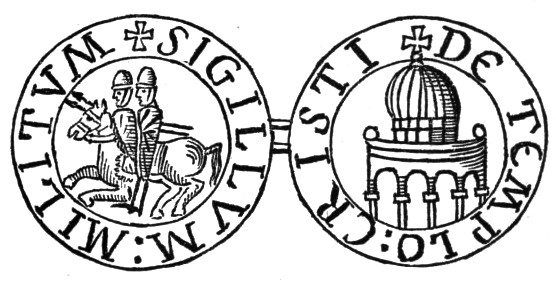
Crusader-era church in the repurposed Dome of the Rock, Jerusalem
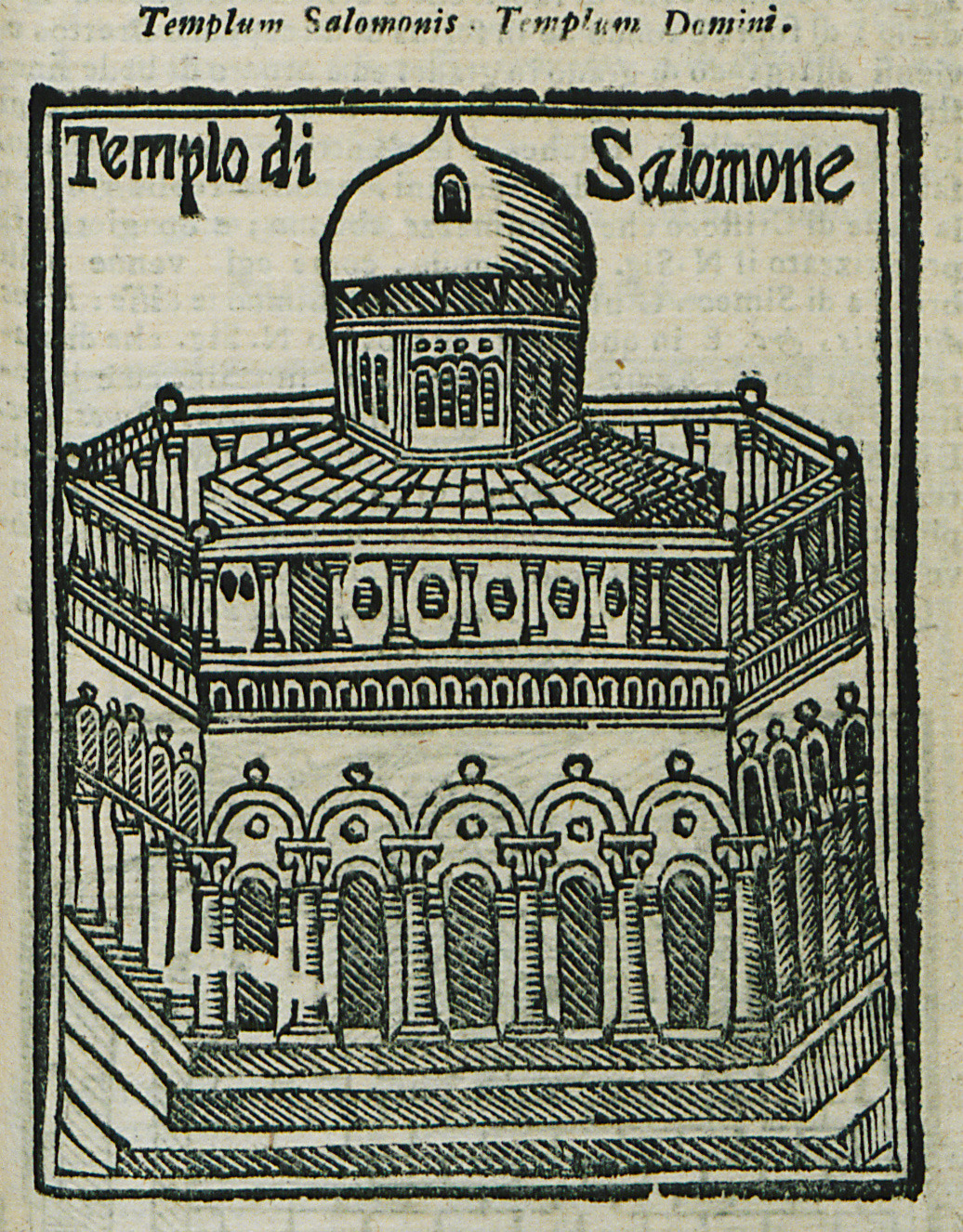
The Templum Domini (Vulgate translation of Hebrew: הֵיכָל יְהֹוָה "Temple of the Lord") was the name attributed by the Crusaders to the Dome of the Rock in Jerusalem. It became an important symbol of Jerusalem, depicted on coins minted under the Catholic Christian Kingdom of Jerusalem.
History
The Dome of the Rock was erected in the late 7th century under the 5th Umayyad Caliph Abd al-Malik ibn Marwan at the site of the former Jewish Second Temple (or possibly added to an existing Byzantine building dating to the reign of Heraclius, 610–641). After the capture of Jerusalem in the First Crusade (1099), the Dome of the Rock was given into the care of Augustinian canons regular. At first, the rock around which the shrine had been built was left uncovered and the canons placed an altar on it. Later the rock was covered with white marble and an altar choir constructed upon it, a work that likely was completed only in 1140. In 1138 the Templum Domini was raised to the status of an abbey under Geoffrey and on 1 April 1141, the church was dedicated solemnly by papal legate Alberic of Ostia, possibly to St. Mary.
The adjacent Al-Aqsa Mosque was called Templum Solomonis ("Temple of Solomon") by the Crusaders. It first became a royal palace. The image of the Dome, as representing the "Temple of Solomon", became an important iconographic element in the Kingdom of Jerusalem. The seals of the kings of Jerusalem depicted the city symbolically by combining the Tower of David, the Church of the Holy Sepulchre, the Dome of the Rock and the city walls.
After the completion of the purpose-built royal palace near the Jaffa Gate and to the south of the Tower of David, the king gave the building to the Catholic monastic-military order, the Knights Templar, who maintained it as their headquarters. The Dome was indicated on the reverse of the seals of the grand masters of the Knights Templar (such as Everard des Barres and Renaud de Vichiers), and it is possibly the architectural model for round Templar churches across Europe.
Although the adjacent Dome of the Ascension was constructed as a baptistry during the Crusader period, it has since remained in the hands of Islamic authorities as part of the larger complex of the Dome of the Rock. It was turned back into a mosque after the Crusades.
References
Sources
References
- Drawing from T. A. Archer, ''The Crusades: The Story of the Latin Kingdom of Jerusalem'' (1894), p. 176. The design with the two knights on a horse and the inscription ''SIGILLVM MILITVM XRISTI'' is attested in 1191; see Jochen Burgtorf, ''The central convent of Hospitallers and Templars: history, organization, and personnel (1099/1120-1310)'', Volume 50 of History of warfare (2008), {{ISBN. 978-90-04-16660-8, pp. 545–546.
- (1993). "The Churches of the Crusader Kingdom of Jerusalem: Volume 3, The City of Jerusalem". Cambridge University Press.
- (2012-03-02). "Remembering the Crusades: Myth, Image, and Identity". JHU Press.
- Jeffery, George. (2010-10-31). "A Brief Description of the Holy Sepulchre Jerusalem and Other Christian Churches in the Holy City: With Some Account of the Mediaeval Copies of the Holy Sepulchre Surviving in Europe". Cambridge University Press.
- H. Busse, "Zur Geschichte und Deutung der frühislamischen Ḥarambauten in Jerusalem", '' Zeitschrift des Deutschen Palästina-Vereins'' 107 (1991), 144–154. (gere 145f).
- "". link
- ''The Architecture of the Italian Renaissance,'' Jacob Burckhardt, Peter Murray, James C. Palmes, University of Chicago Press, 1986, p. 81
- (1996). "The History of Jerusalem: The Early Muslim Period (638–1099)". New York University Press.
- [[Simon Sebag Montefiore]], [[Jerusalem: The Biography]], p. 276.
This article was imported from Wikipedia and is available under the Creative Commons Attribution-ShareAlike 4.0 License. Content has been adapted to SurfDoc format. Original contributors can be found on the article history page.
Ask Mako anything about Templum Domini — get instant answers, deeper analysis, and related topics.
Research with MakoFree with your Surf account
Create a free account to save articles, ask Mako questions, and organize your research.
Sign up freeThis content may have been generated or modified by AI. CloudSurf Software LLC is not responsible for the accuracy, completeness, or reliability of AI-generated content. Always verify important information from primary sources.
Report