From Surf Wiki (app.surf) — the open knowledge base
Templeogue
Suburb of Dublin in Ireland
.jpg)
Suburb of Dublin in Ireland
| Field | Value |
|---|---|
| name | Templeogue |
| native_name | ga |
| etymology | new chapel (teampal óg) |
| settlement_type | Suburb |
| image_skyline | Templeogue aerial view.jpg |
| image_caption | Templeogue in the 1970s |
| pushpin_map | Dublin#Ireland |
| pushpin_label_position | left |
| pushpin_map_caption | Location in Dublin |
| subdivision_type | Country |
| subdivision_name | Ireland |
| subdivision_type1 | Province |
| subdivision_name1 | Leinster |
| subdivision_type2 | County |
| subdivision_name2 | County Dublin |
| unit_pref | Metric |
| area_total_km2 | 5.34 |
| population_as_of | 2022 |
| population_urban | 18076 |
| population_density_km2 | auto |
| timezone1 | WET |
| utc_offset1 | +0 |
| timezone1_DST | IST (WEST) |
| utc_offset1_DST | -1 |
| coordinates | |
| elevation_footnotes | |
| elevation_m | 55 |
| blank_name_sec1 | Irish Grid Reference |
| blank_info_sec1 | |
| postal_code_type | Eircode (Routing Key) |
| postal_code | D6W |
Templeogue{{efn-ua|,{{cite journal
Geography
Location
Templeogue is 6 km from Dublin city centre to the north, from the Dublin Mountains to the south, and from the coast at Dublin Bay, on the Irish Sea. It is 55 m above sea level and occupies an area of 534 ha.
Suburbs adjacent to Templeogue are Ballyroan, Firhouse, Greenhills, Kimmage, Knocklyon, Perrystown, Rathfarnham, Tallaght, and Terenure.
Transport
The three main routes through the suburb are the R112 regional road (Templeville Road), the R137 regional road (Templeogue Road), and the R817 regional road (Cypress Grove Road and Wainsfort Road). The M50 motorway borders the suburb to the west.

Dublin Bus operates the following bus routes through Templeogue: 15, 15A, 15B, 15D, 65, 65B, 82, 150, F1, F2 and F3.
Natural features

The River Dodder forms a natural southern border with Rathfarnham and Knocklyon, while the River Poddle forms the northern border with Greenhills and Kimmage. The historical artificial watercourse from the Dodder at Firhouse to the Poddle passed through Templeogue.
Prominent views from Templeogue are of Montpelier Hill 5.7 km to the southwest, topped by the ruin of the Hellfire Club at 383 m, and of Three Rock Mountain (450 m), topped by transmitter masts, 7.3 km to the southeast.
Etymology
Before the Irish language was standardised officially by the Caighdeán Oifigiúil (official standard), the original name of Templeogue in Irish varied, including such spellings as Teampal Óg ("new chapel") referring to a chapel that was built there in about 1273, as well as Tachmelóg, Tigh Malóg, and Tachmelag. An early anglicisation was spelled Temple Oyge. The standardised modern spelling in Irish used by the official Placenames Database of Ireland is Teach Mealóg.
History
Templeogue was originally a village in the rural, southern part of County Dublin.
In Elizabethan times it was owned by the Talbot family, who later became prominent as the owners of Mount Talbot. The Talbot's estate was forfeited to the Crown on the Restoration of Charles II.
In the later seventeenth and eighteenth centuries, it was owned by the Domviles. The Domviles effectively had some control over the canal drawn from the Dodder to the Poddle, which passed through their estates- at that time it provided Dublin's main drinking water supply, as well as critical power for multiple watermills.

An illustration of the Doric temple at Templeogue House by Gabriel Beranger from around 1751 illustrates the grounds of the Domville estate as it would have looked when lived in by Sir Compton Domvile, 2nd Baronet. The temple was later moved to another family property, Santry Court, along with a number of other follies in 1781 when Charles Domvile vacated the estate as the house had fallen into disrepair. Today Templeogue House still contains many of the original features and is one of the oldest structures in the area.
In 1801, the Templeogue Road was constructed, originally as a toll road.
Urban expansion of Dublin during the 1950s and '60s absorbed the village.
Amenities
Schools
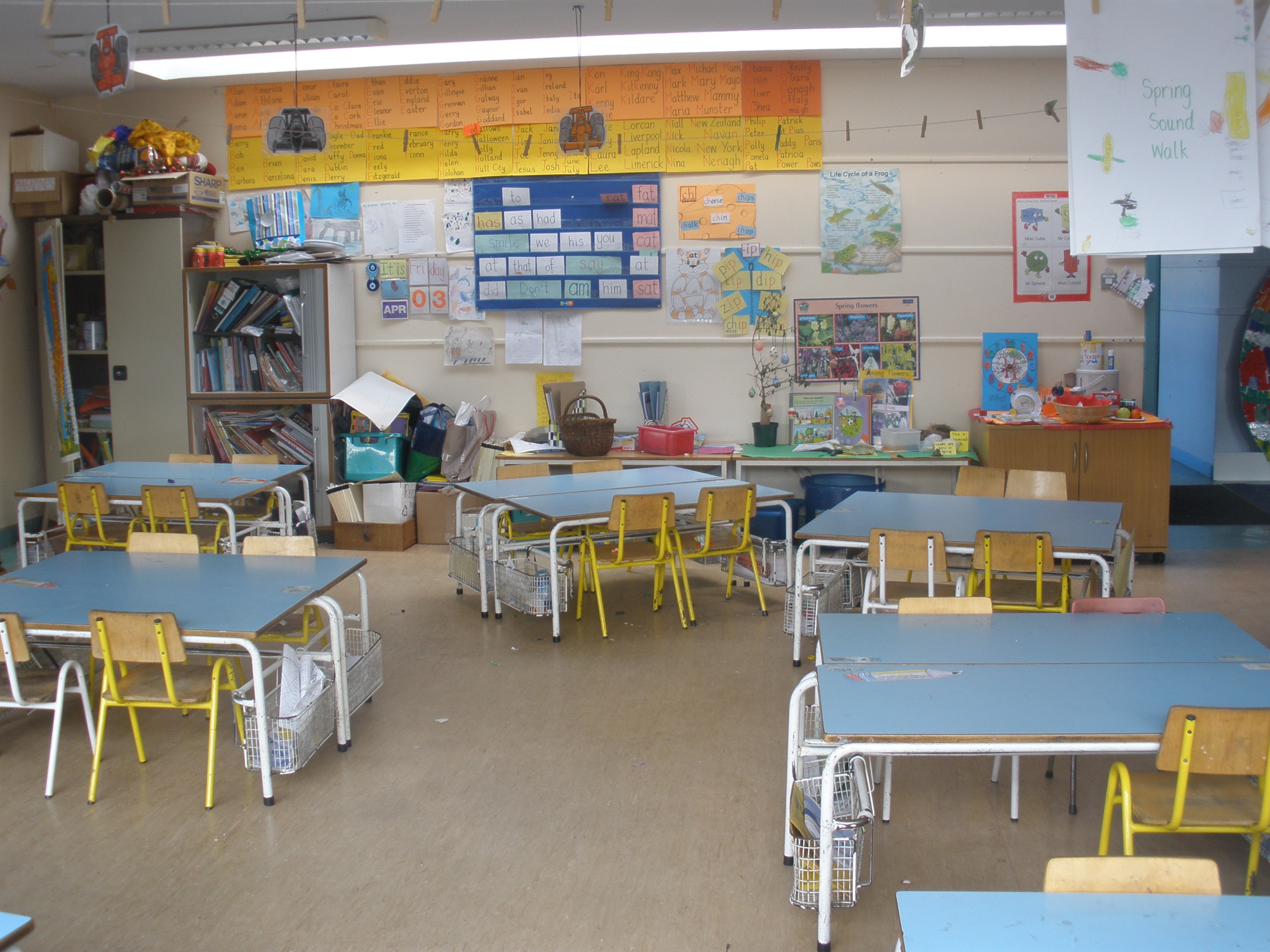
The local schools are St. Pius X National School, Our Lady's Secondary School, Templeogue College, St. Mac Dara's Community College, Bishop Galvin National School, Bishop Shanahan National School, and Ashfield College.
Sports
Local sports facilities are Faughs GAA Club, St. Judes GAA Club, St. Mary's College RFC, Templeogue Swimming Club, Templeogue Tennis Club, and Templeogue United Football Club.
Shops and services

Shops, restaurants, and small business services are located in the village on Templeogue Road, as well as in Fortfield Park, Cypress Park, Wainsfort Drive, Orwell Shopping Centre, and Rathfarnham Shopping Centre.
.jpg)
Although surrounded by pubs in adjacent neighbourhoods, Templeogue has only one pub inside its boundaries, The Templeogue Inn, also known as The Morgue. In the 19th and early 20th centuries, the Dublin and Blessington Steam Tramway passed through Templeogue so close to the pub that pedestrians were sometimes hit. Some corpses were sheltered in the pub until taken away and the pub acquired the permanent, morbid nickname. The Templeogue Inn was, for a while, the most expensive pub in Ireland when it changed hands on 12 October 1983 for IR£660,000, a remarkable sum at the time.{{cite news | url-access = subscription | access-date = 3 December 2009 | archive-date = 21 October 2012 | archive-url = https://web.archive.org/web/20121021213351/http://www.irishtimes.com/newspaper/archive/1983/1013/Pg001.html | url-status = live --
Churches

The Roman Catholic parish church is St. Pius X which opened on 27 November 1960 on College Drive.{{cite web | access-date = 2024-01-25 | archive-url = https://web.archive.org/web/20230922185434/https://www.stpiusx.ie/ | archive-date = 2023-09-22
St. Jude's church was built at Orwell Park on 7 December 1975 to serve the newer housing estates of Orwell, Willington, Rossmore and surrounding areas.{{cite web | access-date = 2024-01-25 | archive-url = https://web.archive.org/web/20240125040827/http://www.stjudesparish.net/history2.htm | archive-date = 2024-01-25
Political geography
Templeogue is in the Dáil constituency of Dublin South-West.
It is in the county of South Dublin and is in the local electoral area of Rathfarnham–Templeogue for elections to South Dublin County Council.
Templeogue is part of the Dublin 6W postal district.
Population
Templeogue's population at the 2022 census was 18,076, a rise of 3.9 percent from the previous 2016 census. In the 36 years from 1986 to 2022, the population fell by 1,566, a decrease of 8 percent.
| access-date = 2024-12-01
- {{citation
- {{cite web | access-date = 2012-01-23
- {{cite web | access-date = 2012-01-23
- {{cite web | access-date = 2011-11-19 | archive-date = 14 March 2016 | archive-url = https://web.archive.org/web/20160314075225/http://www.cso.ie/census/table8.htm | url-status = dead
- {{cite web | access-date = 2019-12-22 | archive-date = 12 October 2014 | archive-url = https://web.archive.org/web/20141012073442/http://census.cso.ie/sapmap/ | url-status = dead |1986 |19642 |1991 |19647 |1996 |18662 |2002 |18383 |2006 |17699 |2011 |17378 |2016 |17395 |2022 |18076
| Electoral Division | Population | |||||||||||||||
|---|---|---|---|---|---|---|---|---|---|---|---|---|---|---|---|---|
| 2022 | Population | |||||||||||||||
| 2016 | Population | |||||||||||||||
| 1986 | Change | |||||||||||||||
| 2016-2022 | Change | |||||||||||||||
| 1986-2022 | Templeogue Total | align="right" | 18,076 | style="text-align: right;" | 17,395 | style="text-align: right;" | 19,642 | style="text-align: right;" | +3.91% | style="text-align: right;" | –7.97% | |||||
| Templeogue-Cypress | 2,807 | |||||||||||||||
| Templeogue-Kimmage Manor | 4,929 | |||||||||||||||
| Templeogue-Limekiln | 3,821 | |||||||||||||||
| Templeogue-Orwell | 1,991 | |||||||||||||||
| Templeogue-Osprey | 2,258 | |||||||||||||||
| Templeogue Village | 2,270 |
Culture
Literature
The author James Joyce, who was born 2km to the northeast in Rathgar, refers to Templeogue in his novel, Finnegans Wake.{{cite web | author-link = James Joyce | access-date = 2010-04-02 | url-status = dead | archive-date = 2 April 2010 | archive-url = https://web.archive.org/web/20100402092301/http://www.trentu.ca/faculty/jjoyce/fw-553.htm (Note that this e-text contains errors, many of which are listed at F.W.E.E.T. )
The poet Austin Clarke lived in Bridge House beside Templeogue Bridge, which spans the River Dodder. After his death, there was a proposal to preserve the house and his library of 6,500 books as a memorial. This was not possible owing to long-term plans to demolish the house and widen the road. The old Templeogue Bridge, built in 1800, and Bridge House were removed and a new bridge at the same location was opened by Councillor Mrs. Bernie Malone, Chairman Dublin City Council on 11 December 1984, which was renamed Austin Clarke Bridge in his honour.
The novelists Mary Beckett, Charles Lever, and Flora Shaw resided in Templeogue as did journalists Ursula Halligan and Michael Mills, and radio music host Larry Gogan.
Sculpture

An outdoor bronze sculpture in Templeogue Village, Love All by Irish artist Rachel Joynt, was unveiled by the mayor of South Dublin, Billy Gogarty, on 14 July 2007. Commissioned by the South Dublin County Council and installed near the Templeogue Tennis Club, the 1.1metre artwork depicts a tennis ball which, on closer scrutiny, reveals a miniature world including streets, road traffic, houses, people, and mountains, and the seam of the tennis ball resembles a winding river with bridges, inspired by the local River Dodder. The tennis-ball world rotates on its axle like a globe on its axis, when pushed.{{cite web | archive-url = https://web.archive.org/web/20210602231629/http://www.sdublincoco.ie/Media/Item/13201 | url-status = dead | archive-date = 2021-06-02 | access-date = 2025-02-11 | archive-url = https://web.archive.org/web/20241202192602/http://www.racheljoynt.com/love-all-2007/ | url-status = live | archive-date = 2024-12-02
Cuisine
The spice bag, Ireland's most popular fast food item during the 2010s and 2020s, was invented at the Sunflower restaurant in the Orwell Shopping Centre in Templeogue in 2006. It usually consists of chicken, chips, stir-fried vegetables, and hot seasonings.{{cite web | archive-url = https://web.archive.org/web/20210621180025/https://soundcloud.com/liam_geraghty/who-invented-the-spice-bag | archive-date = 2021-06-21}} (Originally broadcast on The Business on RTÉ Radio 1 on 27 August 2016.) In 2025, the term "spice bag" was added to the Oxford English Dictionary, and the dictionary credited the Sunflower as the source of the term.
- {{cite web
- {{cite web
Notable residents
- Mary Beckett — Novelist and short story writer.
- Austin Clarke — Poet, novelist, playwright, author, English lecturer.
- Liam Cosgrave — Taoiseach; leader of Fine Gael.
- W. T. Cosgrave — First President of the Executive Council of the Irish Free State.
- Larry Gogan — Disc jockey; radio and television broadcaster.
- Hermann Görtz — Nazi spy, stayed at 245 Templeogue road during May 1940.
- Ursula Halligan — Journalist and broadcaster.
- Charles Lever — Doctor and novelist.
- John McCann — Teachta Dála for Dublin South; Alderman on Dublin City Council; Lord Mayor of Dublin; playwright and author; journalist; father of the actor Donal McCann.
- Kevin McManamon — Football player for St Jude's GAA club and formerly for Dublin county football team (2010 to 2021).
- Michael Mills — Political journalist with the Irish Press and Ombudsman of Ireland.
- Flora Shaw — Writer who coined the name "Nigeria" for the African country.
- Sir Frederick Shaw — Recorder of Dublin 1830–76 and Dundalk; built Kimmage Manor.
- Sir Robert Shaw — Tory MP for Dublin City 1830–1831 and 1832; member of the Privy Council of Ireland; owner of Bushy Park estate.
- George Simms — Church of Ireland Archbishop of Dublin; Archbishop of Armagh and Primate of All Ireland.
- Mervyn Taylor — Dublin County Councillor, Teachta Dála, Minister for Labour, and Minister for Equality and Law Reform.
Gallery
File:Templeogue, Dublin, Ireland in the 1960s 02.jpg|Templeogue Road (R137) near Templeogue Bridge in the 1960s File:River-Poddle-2010-02-19a.jpg|The River Poddle at upper Templeville Road File:Cypress Grove House.jpg|Cypress Grove House on Cypress Grove Road File:St. Pius X National School.jpg|St. Pius X National School on Fortfield Park
Notes
References
Sources
References
- "Elevation data from earthtools.org".
- "Timetables: Search by place name - Templeogue". Dublin Bus.
- (May 2013). "Ten Dozen Waters: The Rivers and Streams of County Dublin". Rath Eanna Research.
- "Montpelier Hill Wikimapia reference".
- "Three Rock Mountain Wikimapia reference".
- "Templeogue entry at the official ''Placenames Database of Ireland''.".
- "Templeogue - Chronology". South Dublin County History.
- "View at Temple-oge, in the demesne of Domville Esqr., 3 miles from Dublin, RIA MS 3 C 31/1 - Digital Repository of Ireland".
- (11 July 2008). "Temple at Templeogue".
- "Templeogue House, Templeogue Road, TEMPLEOGUE, DUBLIN".
- Kearns, Martha. (28 August 2011). "Ashfield to reopen under new owner". Sunday Business Post.
- "Templeogue United F.C.".
- (19 December 2023). "[[Electoral (Amendment) Act 2023]]".
- "Polling Station Locations 2024 SDCC". South Dublin County Council.
- (19 December 2018). "County of South Dublin Local Electoral Areas Order 2018".
- "Brighton Square, Rathgar Wikimapia reference".
- The dedication plaque on the bridge reads, "Austin Clarke Bridge opened by Councillor Mrs. Bernie Malone Chairman Dublin City Council 11 December 1984. Chief Engineer: Brendan Murphy B.E., C. Eng., F. IEI."
- "History of Templeogue". South Dublin County History.
- "My Club: Kevin McManamon - St Jude's".
- (19 June 2008). "Mills, Michael : Acknowledgement notice". The Irish Times.
- Templeogue Ladies Club. (1992-05). "The Story of Templeogue". Templeogue Ladies Club.
This article was imported from Wikipedia and is available under the Creative Commons Attribution-ShareAlike 4.0 License. Content has been adapted to SurfDoc format. Original contributors can be found on the article history page.
Ask Mako anything about Templeogue — get instant answers, deeper analysis, and related topics.
Research with MakoFree with your Surf account
Create a free account to save articles, ask Mako questions, and organize your research.
Sign up freeThis content may have been generated or modified by AI. CloudSurf Software LLC is not responsible for the accuracy, completeness, or reliability of AI-generated content. Always verify important information from primary sources.
Report