From Surf Wiki (app.surf) — the open knowledge base
Temple of Kom Ombo
Building in Egypt

Building in Egypt
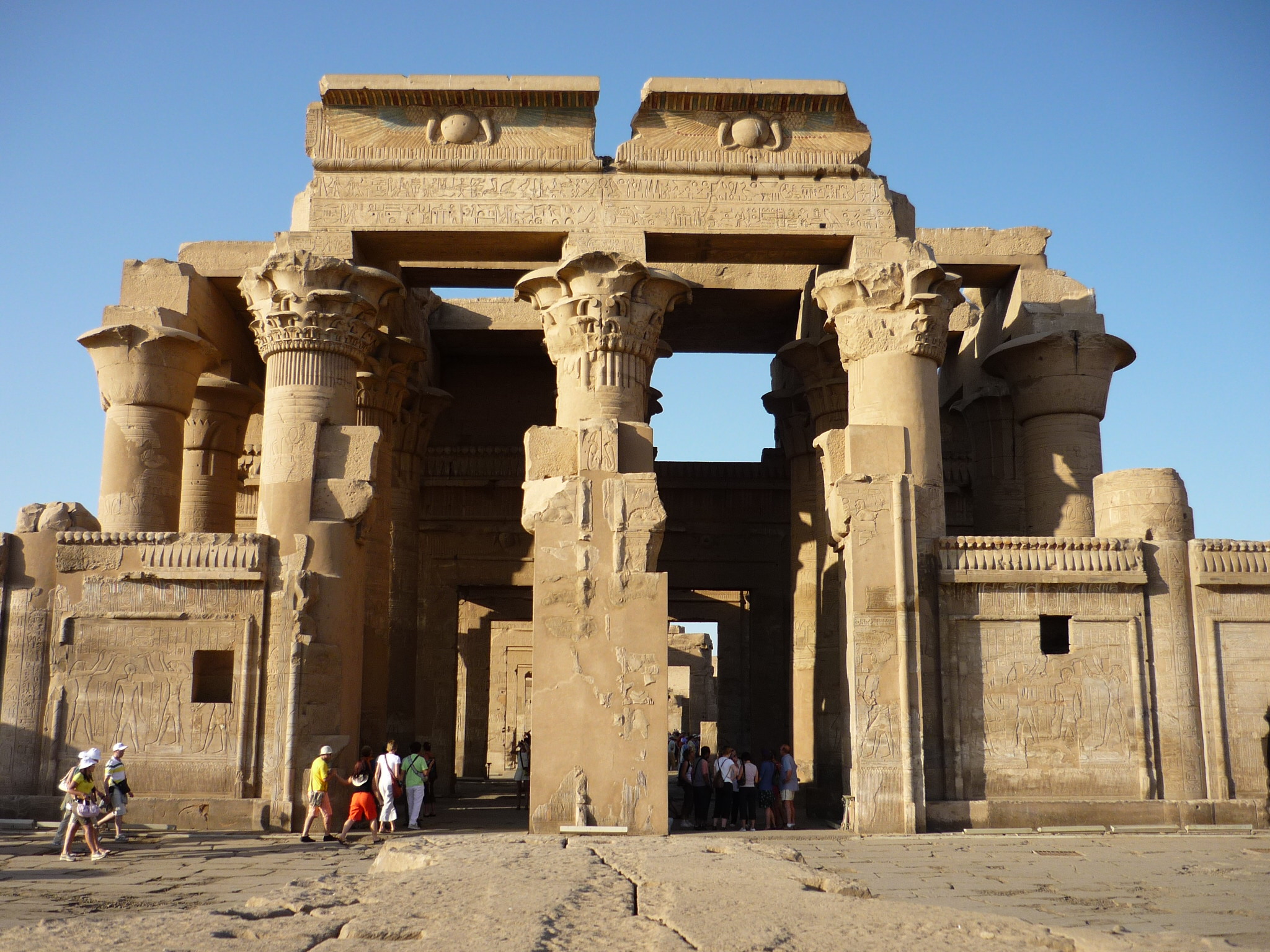

The Temple of Kom Ombo is an unusual double temple in the town of Kom Ombo in Aswan Governorate, Upper Egypt. It was constructed during the Ptolemaic dynasty, 180–47 BC. Some additions to it were later made during the Roman period.
Architecture
The building is unique because its 'double' design meant that there were courts, halls, sanctuaries and rooms duplicated for two sets of gods. The southern half of the temple was dedicated to the crocodile god Sobek, god of fertility and creator of the world with Hathor and Khonsu. Meanwhile, the northern part of the temple was dedicated to the falcon god Haroeris ("Horus the Elder"), along "with Tasenetnofret (the Good Sister, a special form of Hathor or Tefnut) and Panebtawy (Lord of the Two Lands)". The temple is atypical because everything is perfectly symmetrical along the main axis.
Decorations
The texts and reliefs in the temple refer to cultic liturgies which were similar to those from that time period. The temple itself had a specific theology. The characters invoked the gods of Kom Ombo and their legend. Two themes were present in this temple: the universalist theme and the local theme. The two combine to form the theology of this temple. A temple was already built in the New Kingdom to honor these gods, however, this site gained in importance during the Ptolemaic Kingdom. Little remains of the New Kingdom temple. The existing temple was begun by Ptolemy VI Philometor (180–145 BC) at the beginning of his reign and added to by other Ptolemies, most notably Ptolemy XIII Theos Philopator (51–47 BC), who built the inner and outer hypostyles. The scene on the inner face of the rear wall of the temple is of particular interest, and "probably represents a set of surgical instruments".
Current state
Much of the temple has been destroyed by the Nile, earthquakes, and later builders who used its stones for other projects. Some of the reliefs inside were defaced by Copts, who once used the temple as a church. All the temples buildings in the southern part of the plateau were cleared of debris and restored by Jacques de Morgan in 1893.
Crocodile Museum
A few of the three hundred crocodile mummies discovered in the vicinity are displayed in The Crocodile Museum.
In April 2018, the Egyptian Ministry of Antiquities announced the discovery of the head of the bust of Roman Emperor Marcus Aurelius during work to protect the site from groundwater.
In September 2018, the Egyptian antiquities ministry announced that a sandstone sphinx statue had been discovered at the temple. The statue, measuring approximately 28 cm in width and 38 cm in height, likely dates to the Ptolemaic Dynasty.
Gallery
File:Komombo (before restoration).jpg|Kom Ombo Temple before reconstruction File:KomOmbo 2004-12.jpg|A well-preserved frieze inside Kom Ombo temple File:KomOmbo2.jpg|Overview of the Temple File:Ptolemy VI relief, Temple of Kom Ombo, Egypt - 20070306.jpg|Ptolemy VI Philometor makes an offering to Hathor and Horus at Kom Ombo File:Kom Ombo 16.jpg|Preserved papyrus shaped column and ceiling at Kom Ombo temple File:Flickr - archer10 (Dennis) - Egypt-5B-040 - Komombo Temple.jpg|Kom Ombo Temple File:The Crocodile Museum 0283.JPG|The Crocodile Museum File:Egypt.KomOmbo.Shaduf.01.jpg|Shadoof beside Kom Ombo temple File:Graffiti Kom Ombo.JPG|Ancient graffito on a temple stone File:Kom Ombo Säulenhof 02.JPG|Kom Ombo, column detail File:Kom Ombo Säulenhof 17.jpg|Kom Ombo, column detail File:Kom Ombo Säulenhof 14.jpg|Kom Ombo, column detail File:Ceiling Kom Ombo1.JPG|Ceiling Kom Ombo File:Kom-Ombo.jpg|Kom Ombo, crocodile head File:Relieve del templo de Kom Ombo, Egipto..JPG|Sobek relief
References
References
- Rosalie David, Discovering Ancient Egyptology, Facts on File, 1993. p. 99
- David, p. 99
- Wilkinson, Richard H. The Complete Gods and Goddesses of Ancient Egypt
- Gods and Men in Egypt 3000 BCE to 395 CE
- "Crocodile Museum opens in Aswan - Museums - Heritage - Ahram Online".
- (2018-04-22). "Archaeologists find bust of Roman emperor in Egypt dig in Aswan".
- (2018-04-22). "Shrine to Osiris and bust of Roman emperor found in Egypt".
- DPA, Daily Sabah with. (2018-04-22). "Archeologists find Roman emperor bust, ancient shrine in Egypt".
- (2018-09-17). "Archaeologists find sphinx at Egypt temple". BBC News.
This article was imported from Wikipedia and is available under the Creative Commons Attribution-ShareAlike 4.0 License. Content has been adapted to SurfDoc format. Original contributors can be found on the article history page.
Ask Mako anything about Temple of Kom Ombo — get instant answers, deeper analysis, and related topics.
Research with MakoFree with your Surf account
Create a free account to save articles, ask Mako questions, and organize your research.
Sign up freeThis content may have been generated or modified by AI. CloudSurf Software LLC is not responsible for the accuracy, completeness, or reliability of AI-generated content. Always verify important information from primary sources.
Report