From Surf Wiki (app.surf) — the open knowledge base
Temple Entry Proclamation
1936 order in Kerala, India
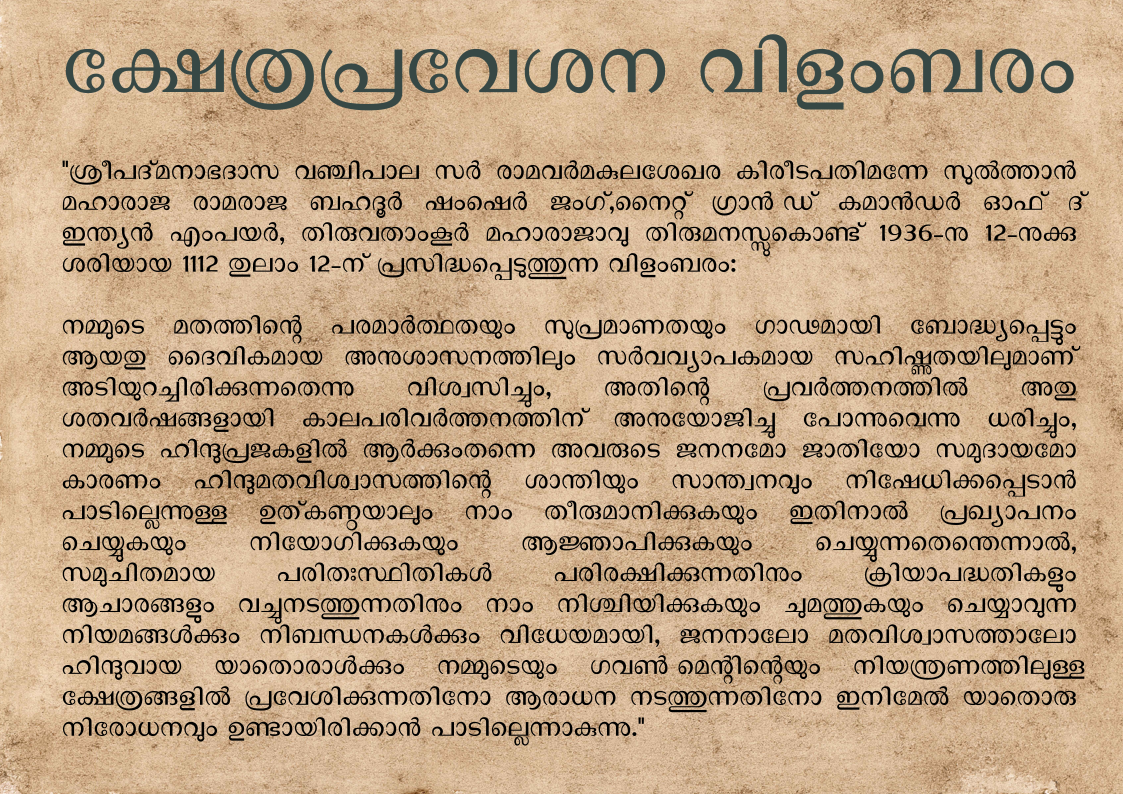
1936 order in Kerala, India
The Temple Entry Proclamation was issued by Maharaja Chithira Thirunal Balarama Varma on November 12, 1936. The Proclamation abolished the ban on the backward and marginalised communities, from entering Hindu temples in the Princely State of Travancore, now part of Kerala, India.
The proclamation was a milestone in the history of Travancore and Kerala. Temple Entry Proclamation Day is considered to be a social reformation day by the Government of Kerala.
History
Following the campaign to introduce social reform in Travancore inspired by the teachings of Narayana Guru and others, a deputation of six leaders appointed by the Harijan Sevak Sangh toured the princely state to obtain support from caste Hindus for the backward castes to be allowed to enter state-operated temples.
Vaikom Satyagraha
According to historian Romila Thapar, protests in 1924–25 against the prohibition of Dalits using a public road near a temple in Vaikom were a significant precursor to the temple entry movement. Known as the Vaikom Satyagraha, it involved the leadership of Mahatma Gandhi. The protests sought equal rights of access in areas previously restricted to members of forward castes. The protests expanded to become a movement seeking rights of access to the interior of the temples themselves. These peaceful protests inspired the future, it widely criticized that Temple Entry Declaration was done in order to prevent backward caste people from converting in mass to Christianity. The then-Travancore rulers feared that if the Hindu majority is lost in the country, it will be difficult for them to manage.
Temple entry committee

In 1932, the Maharajah, Chithira Thirunal appointed a committee to examine the question of temple entry. This opened the possibility of reversing the opposition to the practice that had been shown by his predecessors, Moolam Thirunal and Regent Maharani Sethu Lakshmi Bayi. Subsequent to a meeting with Gandhi, Bayi had released those who had been imprisoned by Moolam Thirunal for involvement with the Vaikom Satyagraha and had opened the north, south and west public roads that provided access to Vaikom Mahadeva Temple to all castes. She refused to open the eastern road to the temple because it was used by Brahmins. She avoided acting on Gandhi's advice by pointing out that she was a regent for her minor nephew, Chithira Thirunal and so had no power to do so.
Annoyed with this response Gandhi asked the 12-year-old prince, who immediately promised that it would happen during his reign. This incident was later quoted by K. R. Narayanan, the former President of India, in his speech referring to the progressive mind of Chithira Thirunal.
The Regent's refusal to act on temple entry rights attracted criticism from people such as Mannathu Padmanabhan, who accused her of being under the influence of the Brahmins and said that her excuse that she had no power to decide was a lie.
Royal proclamation and its aftermath
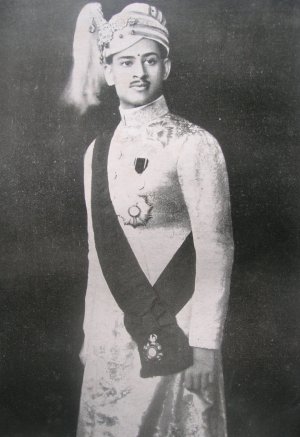
Chithira Thirunal signed the Proclamation on the eve of his 24th birthday in 1936. C. P. Ramaswami Iyer said of the decision that:
In an open letter addressed to the maharajah, Gandhi said:
The Universities of Andhra and Annamalai conferred D.Litt. degrees on the Maharajah, and life-size statues of him were erected in Trivandrum and Madras.
Sociologists believe that the Proclamation struck at the root of caste discrimination in Travancore and that by serving to unite Hindus it prevented further conversions to other religions. The Proclamation was the first of its kind in a princely state as well as in British India. Even though there were agitations in various parts of India as well as rest of Kerala for temple entry, none managed to achieve their aim.
Temple entry in Cochin And Malabar
The Travancore Temple Entry Proclamation did not have a serious influence in Cochin or British Malabar as the Maharajah of Cochin and the Zamorin were staunch opponents of temple entry for dalits. The Cochin ruler even forbade rituals like Arattu (holy bathing) and Para (holy procession) in Tripunithura and Chottanikkara temples. Eventually, a temple entry proclamation was issued in Cochin on December 22,1947 which came into force on April 14,1948. Even when universal temple entry was granted in 1947 the Cochin Maharajah made an exemption in the bill so as to keep his family temple, "Sree Poornathrayeesha", out of the purview of temple entry. The inhabitants of the Malabar region also finally received this right, as per the Madras Temple entry proclamation issued on June 12,1947.
The Zamorin of Malabar had no wish to change the existing customs and usages in temples; on hearing the news of the Travancore Temple Entry proclamation he said that the Travancore Maharajah did not have the authority to do so as he was only a trustee of the temples which were under the supervision of Hindu Religions Endowment Board. He also sent a memorandum to the authorities claiming no one had the authority to take decisions regarding temple entry as they were private properties. Universal temple entry was only granted in Malabar region in 1947 after India's independence.
References
References
- Religion and Social Conflict in South Asia By Bardwell L. Smith, p42, [https://books.google.com/books?id=07Y3AAAAIAAJ&pg=PA42&dq=Temple+Entry+Proclamation Google book]
- Religion and Social Conflict in South Asia By Bardwell L. Smith, p42, [https://books.google.com/books?id=07Y3AAAAIAAJ&pg=PA42&dq=Temple+Entry+Proclamation Google book]
- (22 July 2009). "Extreme injustice led to Vaikom Satyagraha, says Romila Thapar". [[The Hindu]].
- "Gandhi Marg". Gandhi Peace Foundation, 2007.
- K. R. Narayanan, His Excellency. "'INCARNATION OF MODESTY'- First Sree Chithira Thirunal Memorial Speech delivered at Kanakakunnu Palace, Trivandrum on 25-10-1992".
- "Religion and Public Culture: Encounters and Identities in Modern South India".
- "CHAPTER – VI TEMPLE ENTRY FREEDOM IN KERALA". RESEARCHERS OF MAHATMA GANDHI UTY, KOTTAYAM, KERALA.
- Of India, Supreme Court. "Good Governance: Judiciary and the rule of law". Sree Chitira Thirunal Memorial Lecture, 29 December 2007.
- The letter was published in the Collected Works of Mahatma Gandhi in the 98th volume.
- (3 August 2013). "Setting the record right". The New Indian Express.
- Mahadevan, G.. "Temple Entry Proclamation the greatest act of moral freedom: Uthradom Tirunal". The Hindu.
- "CHAPTER – VI TEMPLE ENTRY FREEDOM IN KERALA". RESEARCHERS OF MAHATMA GANDHI UTY, KOTTAYAM, KERALA.
- (26 March 2002). "The Casabianca of Travancore". The Hindu.
- Digital Concepts Cochin, BeeHive Digital Concepts Cochin for. "TEMPLE ENTRY FREEDOM IN KERALA". Shodhganga.inflibnet.ac.
This article was imported from Wikipedia and is available under the Creative Commons Attribution-ShareAlike 4.0 License. Content has been adapted to SurfDoc format. Original contributors can be found on the article history page.
Ask Mako anything about Temple Entry Proclamation — get instant answers, deeper analysis, and related topics.
Research with MakoFree with your Surf account
Create a free account to save articles, ask Mako questions, and organize your research.
Sign up freeThis content may have been generated or modified by AI. CloudSurf Software LLC is not responsible for the accuracy, completeness, or reliability of AI-generated content. Always verify important information from primary sources.
Report