From Surf Wiki (app.surf) — the open knowledge base
Teleorman County
County of Romania

County of Romania
| Field | Value | |
|---|---|---|
| name | Teleorman County | |
| native_name | Județul Teleorman | |
| native_name_lang | ro | |
| settlement_type | County | |
| image_skyline | {{multiple image | |
| total_width | 290 | |
| border | infobox | |
| perrow | 1/2/1 | |
| caption_align | center | |
| image1 | Cetatea Turnu 2019.jpg | |
| caption1 | Turnu Fortress | |
| image2 | Alexandria, Teleorman - Catedrala Episcopală " Sf. Alexandru".jpg | |
| caption2 | St. Alexander Cathedral, Alexandria | |
| image3 | Manastirea Cosoteni 2.jpg | |
| caption3 | Coșoteni Monastery | |
| image_flag | Teleorman flag.webp | |
| image_shield | [[File:Stema Teleorman.svg | 65px]] |
| image_map | Teleorman in Romania.svg | |
| map_alt | Administrative map of Romania with Teleorman county highlighted | |
| subdivision_type | Country | |
| subdivision_name | Romania | |
| subdivision_type1 | Development region | |
| subdivision_name1 | Sud | |
| subdivision_type2 | Historical region | |
| subdivision_name2 | Muntenia | |
| seat_type | Capital | |
| seat | Alexandria | |
| leader_party | PSD | |
| leader_title | President of the County Board | |
| leader_name | ||
| leader_title1 | Prefect | |
| leader_name1 | ||
| unit_pref | Metric | |
| area_total_km2 | 5,790 | |
| area_rank | 19th | |
| population_total | ||
| population_as_of | ||
| population_footnotes | ||
| population_density_km2 | auto | |
| population_rank | 24th | |
| area_code_type | Telephone code | |
| area_code | (+40) 247 or (+40) 347 | |
| iso_code | RO-TR (TR county) | |
| website | County Council County Prefecture | |
| blank1_name | GDP (nominal) | |
| blank1_info | US$ 1.93 billion (2015) | |
| blank2_name | GDP per capita | |
| blank2_info | US$ 6,315 (2015) |
Teleorman County () is a county (județ) of Romania on the border with Bulgaria, in the historical region Muntenia, with its capital city at Alexandria.
The name Teleorman is of Cumanic (Turkic) origin. It literally means wild/crazy forest (modern Turkish, Deli orman) and, by extension, "thick and shadowy forest" in the Cuman language. It can be encountered in other toponyms, such as the Turkish name of the Ludogorie Plateau in northeastern Bulgaria, Deliorman.
Demographics
In 2021, the county had a population of 323,544 and the population density was .
- Romanians – 87.35%
- Roma – 2.92%
- Bulgarians – 0.01%
- Others – 0.06%
- Unknown – 9.66%
| Year | County population | 1948 | 1956 | 1966 | 1977 | 1992 | 2002 | 2011 | 2021 |
|---|---|---|---|---|---|---|---|---|---|
| 487,394 | |||||||||
| 510,488 | |||||||||
| 516,222 | |||||||||
| 518,943 | |||||||||
| 482,281 | |||||||||
| 436,025 | |||||||||
| 360,178 | |||||||||
| 323,544 |
Geography
Teleorman County has a total area of 5790 km2.
Two distinctive elements can be found:
- In the North and center there are plains from the Romanian Plain. They are separated by small rivers, which sometimes form deep valleys.
- In the South there is the Danube valley, very wide, with ponds and small channels.
Beside the Danube, the main river crossing the county is the Olt River which flows into the Danube close to the village of Islaz. Other important rivers are: the Vedea River, the Teleorman River, and the Călmățui River.
Neighbours
- Giurgiu County to the east.
- Olt County to the west.
- Argeș County and Dâmbovița County to the North.
- Bulgaria to the South – Veliko Tarnovo Province, Pleven Province, and Ruse Province.
Economy
The predominant industries in the county are:
- Food and beverages industry.
- Textile industry.
- Chemical industry.
- Mechanical components industry; in Alexandria there is a big roll-bearing enterprise.
Agriculture is the main occupation in the county. Both extensive agriculture, and small scale — vegetables and fruits for the Bucharest markets — is practiced. The area is well suited for irrigations.
Tourism
The county doesn't have many spectacular attractions, but its cultural folk heritage is very rich. Many Romanian personalities have been born here, some of them later describing the life in a village in a very picturesque way. Also, the area was one of the places where the Wallachian Revolution of 1848 unfolded.
The main tourist destinations are:
- The city of Alexandria.
- Fishing on the Danube and other lakes or ponds.
Politics
The Teleorman County Council, renewed at the 2024 local elections, consists of 30 councilors, with the following party composition:
| Party | Seats | Current County Council | |
|---|---|---|---|
| Social Democratic Party (PSD) | 18 | ||
| National Liberal Party (PNL) | 9 | ||
| Alliance for the Union of Romanians (AUR) | 3 |
Administrative divisions


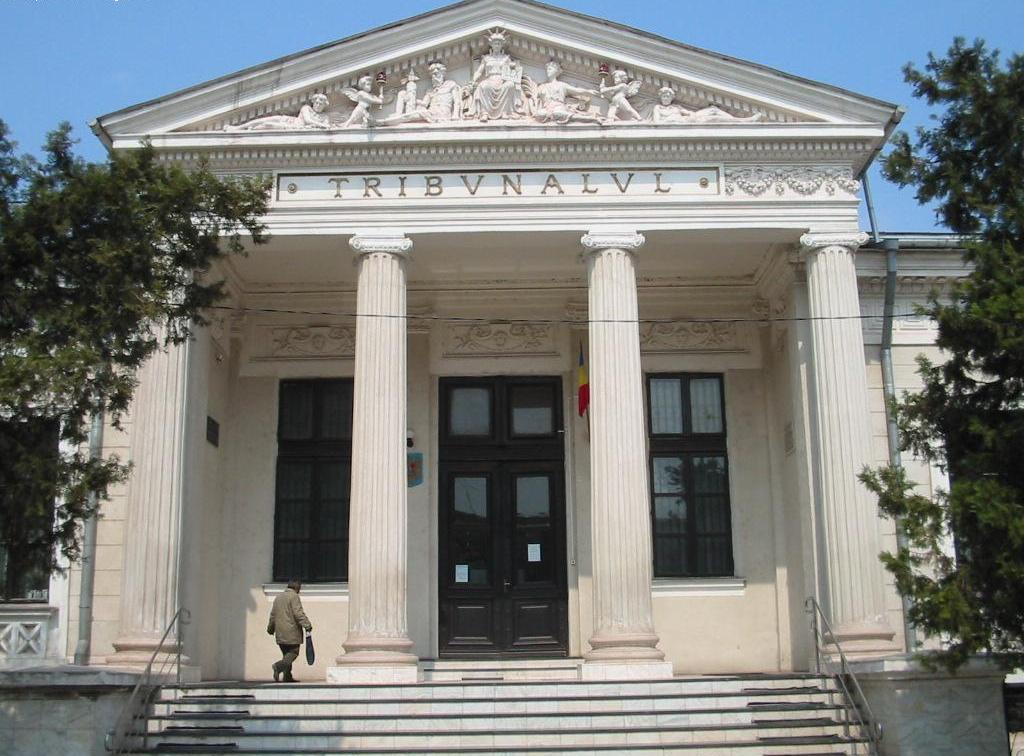
Teleorman County has 3 municipalities, 2 towns and 92 communes ;Municipalities
- Alexandria - capital city; population: 42,129 (as of 2011)
- Roșiorii de Vede
- Turnu Măgurele ;Towns
- Videle
- Zimnicea - the southernmost locality in Romania
;Communes
- Băbăița
- Balaci
- Beciu
- Beuca
- Blejești
- Bogdana
- Botoroaga
- Bragadiru
- Brânceni
- Bujoreni
- Bujoru
- Buzescu
- Călinești
- Călmățuiu
- Călmățuiu de Sus
- Cervenia
- Ciolănești
- Ciuperceni
- Conțești
- Cosmești
- Crângu
- Crevenicu
- Crângeni
- Didești
- Dobrotești
- Dracea
- Drăcșenei
- Drăgănești de Vede
- Drăgănești-Vlașca
- Fântânele
- Frăsinet
- Frumoasa
- Furculești
- Gălăteni
- Gratia
- Islaz
- Izvoarele
- Lisa
- Lița
- Lunca
- Măgura
- Măldăeni
- Mârzănești
- Mavrodin
- Mereni
- Moșteni
- Nanov
- Năsturelu
- Necșești
- Nenciulești
- Olteni
- Orbeasca
- Peretu
- Piatra
- Pietroșani
- Plopii-Slăvitești
- Plosca
- Poeni
- Poroschia
- Purani
- Putineiu
- Rădoiești
- Răsmirești
- Săceni
- Saelele
- Salcia
- Sârbeni
- Scrioaștea
- Scurtu Mare
- Seaca
- Segarcea-Vale
- Sfințești
- Siliștea
- Siliștea Gumești
- Slobozia Mândra
- Smârdioasa
- Stejaru
- Ștorobăneasa
- Suhaia
- Talpa
- Tătărăștii de Jos
- Tătărăștii de Sus
- Țigănești
- Traian
- Trivalea-Moșteni
- Troianul
- Uda-Clocociov
- Vârtoape
- Vedea
- Viișoara
- Vitănești
- Zâmbreasca
People
Natives of Teleorman County include:
- Marin Preda
- Zaharia Stancu
- Gala Galaction
- Constantin Noica
- Victor Antonescu
- Anghel Demetrescu
Historical county
Historically, the county was located in the southern part of Greater Romania, in the southwestern part of the historical region of Muntenia. Its capital was Turnu Măgurele. The county was bordered on the west by the counties Romanați County and Olt County, to the north by Argeș County, to the east by Vlașca County, and in the south across the Danube River by the Kingdom of Bulgaria. Its territory coincides in large part with that of the present county.
Administration

The county was originally divided into five administrative districts (plăși):
- Plasa Alexandria, headquartered at Alexandria
- Plasa Balaci, headquartered at Balaci
- Plasa Roșiori de Vede, headquartered at Roșiori de Vede
- Plasa Turnu Măgurele, headquartered at Turnu Măgurele
- Plasa Zimnicea, headquartered at Zimnicea
Subsequently, the county established three more districts: Plasa Călmățuiu, headquartered at Călmățuiu Plasa Slăvești, headquartered at Slăvești Plasa Vârtoapele de Sus, headquartered at Vârtoapele de Sus
The county contained four urban communes: Turnu Măgurele, Alexandria, Roșiorii de Vede, and Zimnicea.
Population
According to the 1930 census data, the county population was 347,294 inhabitants, ethnically divided as follows: 98.1% Romanians, 1.4% Romanies, as well as other minorities. From the religious point of view, the population was 99.0% Eastern Orthodox, 0.6% Adventist, 0.1% Muslim, as well as other minorities.
Urban population
In 1930, the county's urban population was 58,632 inhabitants, comprising 94.4% Romanians, 3.3% Romanies, 0.4% Hungarians, 0.4% Jews, as well as other minorities. From the religious point of view, the urban population was composed of 98.1% Eastern Orthodox, 0.6% Muslim, 0.4% Jewish, 0.4% Roman Catholic, as well as other minorities.
References
References
- The number used depends on the numbering system employed by the phone companies on the market.
- {{in lang. ro Claudiu Dumitrache, [http://adevarul.ro/locale/alexandria/judetul-teleorman-padurea-nebuna-granarul-tarii-1_50efe7ff56a0a6567e69c156/index.html "Județul Teleorman, de la 'pădurea nebună' la grânarul țării"], ''[[Adevărul]]'', January 11, 2013; accessed July 2, 2013
- "Rezultate definitive RPL 2021 – Recensamantul Populatiei si Locuintelor".
- National Institute of Statistics, ''[http://www.insse.ro/rpl2002rezgen/18.pdf "Populația la recensămintele din anii 1948, 1956, 1966, 1977, 1992 și 2002"]''
- "Consiliul Judetean Teleorman".
- [http://romaniainterbelica.memoria.ro/judete/teleorman/ Portretul României Interbelice - Județul Teleorman]
This article was imported from Wikipedia and is available under the Creative Commons Attribution-ShareAlike 4.0 License. Content has been adapted to SurfDoc format. Original contributors can be found on the article history page.
Ask Mako anything about Teleorman County — get instant answers, deeper analysis, and related topics.
Research with MakoFree with your Surf account
Create a free account to save articles, ask Mako questions, and organize your research.
Sign up freeThis content may have been generated or modified by AI. CloudSurf Software LLC is not responsible for the accuracy, completeness, or reliability of AI-generated content. Always verify important information from primary sources.
Report