From Surf Wiki (app.surf) — the open knowledge base
Tekufah
Four seasons of the year recognized by Talmud writers
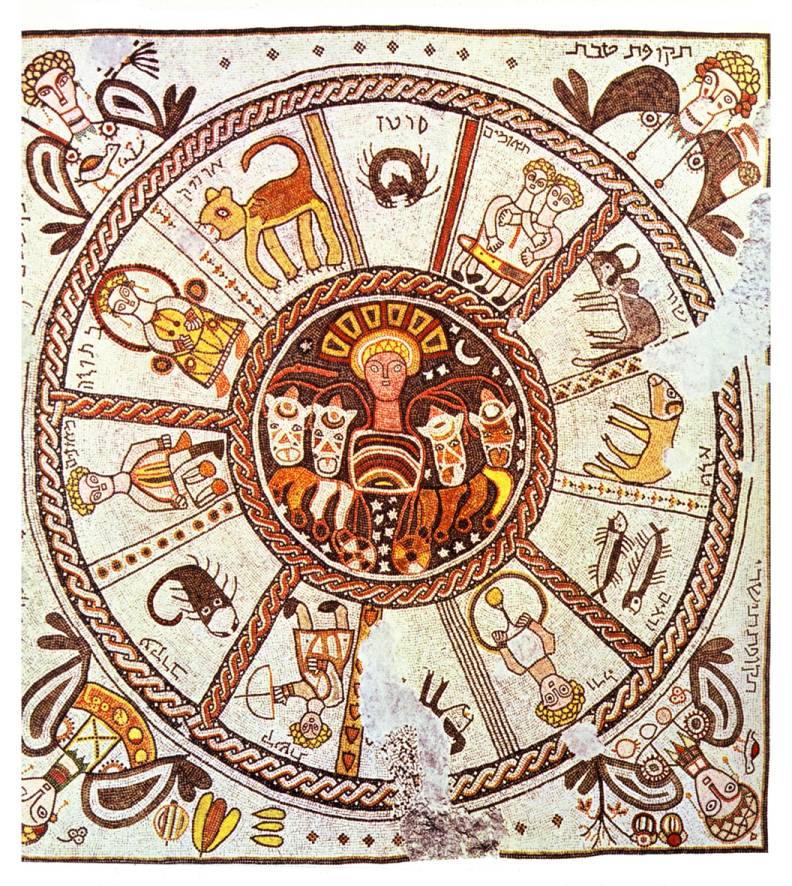
Four seasons of the year recognized by Talmud writers
Tekufot (, singular təqufā, literally, "turn" or "cycle") are the four seasons of the year recognized by Talmud writers. According to Samuel of Nehardea in Lower Mesopotamia, each tekufah marks the beginning of a period of 91 days 7½ hours. The four tekufot are:
- Tekufat Nisan, the March equinox, when the sun enters Aries; this is the beginning of spring, or "eit hazera" (seed-time), when day and night are equal.
- Tekufat Tammuz, the June solstice, when the sun enters Cancer; this is the summer season, or et ha-katsir (harvest-time), when the day is the longest in the year.
- Tekufat Tishrei, the September equinox, when the sun enters Libra, and autumn, or "et ha-batsir" (vintage-time), begins, and when the day again equals the night.
- Tekufat Tevet, the December solstice, when the sun enters Capricornus; this is the beginning of winter, or "et ha-ḥoref" (winter-time) when the night is the longest during the year.
Superstition
An ancient superstition is connected with the tekufot.
The origin of the superstition cannot be traced. Hai ben Sherira, in the 10th century, in reply to a question as to the prevalence of this custom in the "West" (i.e., west of Mesopotamia), said it was followed only so that the new season might be begun with a supply of fresh, sweet water. Ibn Ezra ridicules the fear that the tekufah water will cause swelling and ascribes the belief to the "gossip of old women." The danger lurks only in unused water, not in water that has been boiled or used in salting or pickling. The danger in unused water may be avoided by putting in it a piece of iron or an iron vessel. Yaakov ben Moshe Levi Moelin required that a new iron nail should be lowered using a string into the water used for baking matza during Tekufat Nisan.
Notes
References
Bibliography
References
- (1906). "Tekufah".
- (29 December 2010). "Stripping Down for Winter".
- All water that may be in the house or stored away in vessels in the first hour of the tekufah is thrown away in the belief that the water is then poisoned, and if drunk would cause swelling of the body, sickness, and sometimes death. Several reasons are advanced for this. Some say it is because the angels who protect the water change guard at the tekufah and leave it unwatched for a short time. Others say that [[Cancer (constellation). Cancer]] fights with [[Libra (constellation). Libra]] and drops blood into the water. Another authority accounts for the drops of blood in the water at Tekufat Nisan by pointing out that the waters in [[Egypt]] turned to blood at that particular moment. At Tekufat [[Tammuz (Hebrew month)
- [[Hezekiah da Silva]], however, warns his co-religionists to pay no attention to ibn Ezra's remarks, asserting that in his time, many persons who drank water when the tekufah occurred fell ill and died in consequence. Da Silva says the principal danger lies in the first tekufah (Nisan), and the [[beadle]] made a special announcement of its occurrence of the congregation.''Peri Ḥadash,'' on ''[[Orach Chayim]]'', 428, end
- [[Beit Yosef (book). Bet Yosef]], and [[Isserles]]' note to ''[[Shulchan Aruch]]'', ''Orach Hayyim'', 455:1; ''Be'er Hetev'' to ''Yore De'ah'' 116:5
- ''Sefer Maharil,'' p. 6b, ed. Warsaw
This article was imported from Wikipedia and is available under the Creative Commons Attribution-ShareAlike 4.0 License. Content has been adapted to SurfDoc format. Original contributors can be found on the article history page.
Ask Mako anything about Tekufah — get instant answers, deeper analysis, and related topics.
Research with MakoFree with your Surf account
Create a free account to save articles, ask Mako questions, and organize your research.
Sign up freeThis content may have been generated or modified by AI. CloudSurf Software LLC is not responsible for the accuracy, completeness, or reliability of AI-generated content. Always verify important information from primary sources.
Report