From Surf Wiki (app.surf) — the open knowledge base
Tehran province
Province of Iran

Province of Iran
| Field | Value |
|---|---|
| name | Tehran province |
| native_name | fa |
| settlement_type | Province |
| image_skyline | {{multiple image |
| border | infobox |
| total_width | 300 |
| perrow | 1/1/2/2/2/2 |
| image1 | نمایی از برج های شمس العماره.jpg |
| alt1 | Golestan Palace |
| image2 | Aerial View of Tehran and Tochal.JPG |
| alt2 | Aerial View of Tehran and Tochal |
| image3 | نقش برجسته.jpg |
| alt3 | Fath-Ali Shah relief (Cheshmeh-Ali) |
| image4 | TitSh1.jpg |
| alt4 | City Theater of Tehran |
| image5 | Bahramfiretempleyo.jpg |
| alt5 | Bahram fire temple in Rey |
| image6 | Grand Bazaar, Tehran 12.jpg |
| alt6 | Grand Bazaar |
| image7 | Tehran Waterfall Park and a new Tehran district (41208787630).jpg |
| alt7 | Tehran Waterfall Park and a new Tehran district |
| image8 | Tunnel de Tohid, Téhéran.jpg |
| alt8 | District 2, Tehran |
| image9 | Národní muzeum Íránu.jpg |
| alt9 | National Museum of Iran Darafsh (841).JPG |
| image10 | Azadistadium tehran iran.jpg |
| alt10 | Azadi stadium |
| image_map | Tehran Province location map (with labels).svg |
| image_map1 | IranTehran-SVG.svg |
| map_caption | Counties of Tehran province |
| map_caption1 | Location of Tehran province within Iran |
| coordinates | |
| coordinates_footnotes | |
| subdivision_type | Country |
| subdivision_name | Iran |
| subdivision_type1 | Region |
| subdivision_name1 | Region 1 |
| parts_type | Counties |
| parts_style | para |
| p1 | 16 |
| seat_type | Capital |
| seat | Tehran |
| leader_party | Independent |
| leader_title | Governor-general |
| leader_name | Mohammad-Sadegh Motamedian |
| unit_pref | Metric |
| area_total_km2 | 18814 |
| population_footnotes | |
| population_total | 13267637 |
| population_as_of | 2016 |
| population_density_km2 | auto |
| blank_name_sec1 | Main language(s) |
| blank_info_sec1 | Persian |
| timezone1 | IRST |
| utc_offset1 | +03:30 |
| area_code | 021 |
| iso_code | IR-23 |
| blank_name_sec2 | HDI (2018) |
| blank_info_sec2 | 0.834 |
| · 1st | |
| website | |
| population_est | 13,973,000 |
| pop_est_as_of | 2020 |
· 1st
Tehran Province () is one of the 31 provinces of Iran. Its capital is the city of Tehran, the national capital of Iran.
Tehran Province covers an area of 18814 sqkm and is located to the north of the Central Plateau of Iran. It was made a part of the First Region with its secretariat located in Tehran, upon the division of the provinces into 5 regions, solely for coordination and development purposes on June 22, 2014.
Tehran Province is situated in north-central Iran, lying on the southern slopes of the Alborz Mountains. The province’s location within the Alborz range gives it a diverse topography, with high mountains in the north and gradually descending plains toward the south. This geographical setting creates a varied climate, from cool alpine conditions to semi-arid lowlands.
The province of Tehran has over 12 million inhabitants and is Iran's most densely populated region. Approximately 86.5 percent reside in urban areas and 13.5 percent in rural areas of the province.
History
Tehran province has several archeological sites indicating settlements dating back several thousand years. Until 300 years ago, Rey was the most prominent of the cities of the province. However, the city of Tehran rose to become the largest city and capital of Iran by 1796, and since then has been the political, cultural, economic, and commercial nucleus of Iran.
Tehran has over 1,500 historical sites of cultural significance registered with the Cultural Heritage Organization of Iran. The oldest of these in Tehran Province is the remains of two sites in Firuzkuh County that date back to the fourth millennium BCE.
After the 2006 census, Karaj, Nazarabad, and Savojbolagh Counties were separated from the province in the establishment of Alborz province.
Demographics
Ethnicity
Persians
The majority of people living in Tehran province are ethnically Persian, and Tehran is the largest Persian-speaking city in the world.
Azerbaijanis
Azerbaijanis are one of the Iranian ethnic groups living in Tehran province, who also form the largest group of immigrants in Tehran province. Azeris in Tehran speak the Azeri and Persian languages.
Mazanderanis
Mazanderanis are the third largest tribe of Tehran province, who mostly migrated to Tehran from the cities of Babol, Sari, Amol, Qaem Shahr and Savadkuh. In addition to Tehran city, Mazanderani language is also spoken in Firuzkuh, Damavand and Shemiranat cities.
Kurds
Many Kurds have migrated to Tehran province in recent years to continue their studies or to find jobs. Also, the people of Sarbandan, Jaban, Sorkheh Deh and Khosrovan districts of Damavand county in the east of Tehran province speak Kurmanji Kurdish language. The people of these areas are Kurmanji Kurds who moved to this area from Khorasan during the Qajar period. Simultaneously with the migration of Kurmanji tribes from Khorasan to Damavand, another group of Kurds from Khorasan migrated from Chenaran to Piranshahr, one of the cities of Kurdistan south of Lake Urmia.
Lurs
Many Lurs migrate to Tehran province every year, and in this way, Tehran has a minority of Lurs. Also, Hadavand clan is one of the oldest and largest clans of Tehran province, which moved to Tehran province during the time of Karim Khan Zand.
Gilaks
A population of Gilaks also live in Tehran and speak the Gilaki and Persian languages.
Armenians
A population of Armenians mainly lives in the eastern areas of Tehran.
Citizens of other countries
A population of Iraqi nationals who are of Iranian origin that live in Dolat Abad area of Tehran.
The unstable situation and the war in neighbouring Afghanistan and Iraq prompted a rush of refugees into the country who arrived in their millions, with Tehran being a magnet for much seeking work, who subsequently helped the city to recover from war wounds, working for far less pay than local construction workers. Many of these refugees are being repatriated with the assistance of the UNHCR, but there are still sizable groups of Afghan and Iraqi refugees in Tehran who are reluctant to leave, being pessimistic about the situation in their own countries. Afghan refugees are mostly Dari-speaking Tajik, Parsiwans and Hazara, speaking a variety of Persian, and Iraqi refugees are mainly Mesopotamian Arabic-speakers who are often of Iranian and Persian ethnic heritage.
Population
At the time of the 2006 National Census, the province's population was 13,281,858 in 3,729,010 households. The following census in 2011 counted 12,183,391 people in 3,731,480 households. The 2016 census measured the population of the province as 13,267,637 in 4,288,563 households.
Administrative divisions

The population history and structural changes of Tehran province's administrative divisions over three consecutive censuses are shown in the following table.
| Counties | 2006 | 2011 | 2016 |
|---|---|---|---|
| Baharestan | — | 523,636 | 536,329 |
| Damavand | 96,860 | 100,690 | 125,480 |
| Eslamshahr | 447,192 | 485,688 | 548,620 |
| Firuzkuh | 37,416 | 38,712 | 33,558 |
| Karaj | 1,709,481 | — | — |
| Malard | — | 373,994 | 377,292 |
| Nazarabad | 128,666 | — | — |
| Pakdasht | 240,841 | 291,397 | 350,966 |
| Pardis | — | — | 169,060 |
| Pishva | — | 75,454 | 86,601 |
| Qarchak | — | — | 269,138 |
| Qods | — | 290,663 | 316,636 |
| Ray | 292,016 | 319,305 | 349,700 |
| Robat Karim | 608,530 | 195,917 | 291,516 |
| Savojbolagh | 215,086 | — | — |
| Shahriar | 1,044,707 | 624,440 | 744,210 |
| Shemiranat | 37,778 | 44,061 | 47,279 |
| Tehran | 7,882,843 | 8,293,140 | 8,737,510 |
| Varamin | 540,442 | 526,294 | 283,742 |
| Total | 13,281,858 | 12,183,391 | 13,267,637 |
Cities
According to the 2016 census, 12,452,230 people (nearly 94% of the population of Tehran province) live in the following cities:
| City | Population |
|---|---|
| Abali | 2,758 |
| Absard | 10,648 |
| Ahmadabad-e Mostowfi | 14,077 |
| Andisheh | 116,062 |
| Arjomand | 1,124 |
| Baghestan | 83,934 |
| Baqershahr | 65,388 |
| Bumahen | 79,034 |
| Chahardangeh | 49,950 |
| Damavand | 48,380 |
| Eslamshahr | 448,129 |
| Fasham | 6,945 |
| Ferdowsiyeh | 34,221 |
| Ferunabad | 21,682 |
| Firuzkuh | 17,453 |
| Golestan | 239,556 |
| Hasanabad | 43,922 |
| Javadabad | 4,844 |
| Kahrizak | 37,527 |
| Kilan | 2,882 |
| Lavasan | 18,146 |
| Malard | 281,027 |
| Nasimshahr | 200,393 |
| Nasirshahr | 28,644 |
| Pakdasht | 236,319 |
| Parand | 97,464 |
| Pardis | 73,363 |
| Pishva | 59,184 |
| Qarchak | 231,075 |
| Qods | 309,605 |
| Robat Karim | 105,393 |
| Rudehen | 28,533 |
| Sabashahr | 53,971 |
| Safadasht | 32,476 |
| Salehabad | 58,683 |
| Shahedshahr | 25,544 |
| Shahriar | 309,607 |
| Sharifabad | 18,281 |
| Shemshak | 3,423 |
| Tehran | 8,693,706 |
| Vahidiyeh | 33,249 |
| Varamin | 225,628 |
The following table shows the ten largest cities of Tehran province:
| Rank | Name | County | 2016 |
|---|---|---|---|
| 1 | Tehran | Tehran | 8,693,706 |
| 2 | Eslamshahr | Eslamshahr | 448,129 |
| 3 | Shahriar | Shahriar | 309,607 |
| 4 | Qods | Qods | 309,605 |
| 5 | Malard | Malard | 281,027 |
| 6 | Golestan | Baharestan | 239,556 |
| 7 | Pakdasht | Pakdasht | 236,319 |
| 8 | Qarchak | Qarchak | 231,075 |
| 9 | Varamin | Varamin | 225,628 |
| 10 | Nasimshahr | Baharestan | 200,393 |
Geography
Tehran province borders Mazandaran Province in the north, Qom Province in the south, Semnan Province in the east, Alborz Province in the west and Markazi Province in the southwest. The metropolis of Tehran is the capital city of the province and of Iran.
Tehran province is the richest in Iran, as it contributes approximately 29% of the country's gross domestic product (GDP). Furthermore, it houses approximately 18% of the country's population and is the most industrialized province in Iran, with nearly 94% of its residents living in the cities as of 2016.
The province gained importance when Tehran was proclaimed the capital by the Qajar dynasty in 1778. Today, Tehran, with a population of 8 million, is ranked amongst the 40 most populous metropolitan cities of the world.
The largest rivers of this province are Karaj River and Jajrood River.
Mountain ranges such as The Alborz span the north; Savad Kooh and Firooz Kooh are located in the northeast; Lavasanat, Qarah Daq, Shemiranat, Hassan Abad and Namak Mountains are in the southern areas; Bibi Shahr Banoo and Alqadr are situated in the southeast and the heights of Qasr-e-Firoozeh been located to the east of the province.
Environmentally, the climate of Tehran province is stable and has four seasons, in winter its experiences cold and snowy conditions, in spring and autumn it experiences generally mild conditions with ample rain, and in summer it experiences warm to hot conditions, and is generally dry. In the mountains, however, it is cold and semi-humid all year round, and the higher regions are colder with long winters. The hottest months of the year are from mid-July to mid-September when temperatures range from 28 C to 30 C and the coldest months experience 1 C around January–February, but at certain times in winter it can reach -20 C. Tehran city has cold winters and warm to hot summers. Average annual rainfall is approximately 200 mm, the maximum being during the winter season mostly in the form of snow. On the whole, the province has a cold semi-arid, steppe climate in the south and an alpine climate in the north.

Tehran province today
Tehran is the commercial heart of Iran. Tehran Province has over 17,000 industrial units employing 390,000 people, 26% of all units in Iran. The province contains 30% of Iran's economy, and comprises 40% of Iran's consumer market. The province has three hydro dams namely Latiyan, Lar, and Amir Kabir as well as two natural lakes, providing the water supply of Tehran and the province.
The province contains 170 mines, over 330 square kilometres of forests, and over 12800 square kilometres of pasture.
Generally speaking, year round, regions such as the southern slopes of the Alborz Mountains, especially in the mountains, valleys, and rivers and artificial lakes formed behind the great dams of Amir Kabir, Latiyan and Lar along with natural lakes of Jaban and Tarr provide considerable recreation for the province.
Moreover, due to excessive snowfall in the northern areas of the province during the winter season, the Alborz mountains form an excellent environment for winter sports such as skiing. Dizin, Shemshak, and Tochal are the most popular skiing resorts.
Anthropology
Tehran Province is the most populous province of Iran. The population density in this province is 969 people per square kilometer. During a research that was commissioned by the General Culture Council in 2009 and based on a field survey and a statistical community among the residents of 288 cities and about 1400 villages across the country, the percentage of ethnic groups that were sampled in this survey in this province was as follows. Persians was 56.9%, Azari 56.9%, Northern (Mazani, Gilak and Talish) 30.3%, Kurdish 5.5%, Lurs 2.8%, Baloch 2.1%.
Transportation
Road transport

Tehran province is served by a large freeway and expressway network:
- [[File:IR Freeway 2 sign.svg|43px]] Freeway 2 (Tehran–Karaj Freeway): This freeway connects Tehran to the capital city of neighboring province of Alborz, Karaj and continues towards Tabriz and Europe.
- [[File:IR Freeway 5 sign.svg|43px]] Freeway 5 (Tehran–Saveh Freeway): This Freeway connects city of Tehran to its southern suburbs such as Sabashahr, Robat Karim and Parand and continues towards Markazi province to Saveh and Salafchegan. There are plans to continue the freeway towards Khuzestan.
- [[File:IR Freeway 7 sign.svg|43px]] Freeway 7 (Tehran–Qom Freeway/Khalij-e-Fars (Persian Gulf) Freeway): This Freeway connects Tehran City to its airport, Imam Khomeini International Airport and continues towards Qom and Isfahan.
- [[File:IR Freeway 5 sign.svg|43px]] Tehran–Pardis Freeway: This freeway connects Tehran City to its northeastern suburbs such as Pardis, Bumehen and Rudehen and joins Haraz Road and Firuzkuh Road.
- [[File:Zeichen 123 - Baustelle, StVO 1992.svg|30px]][[File:IR Freeway 3 sign.svg|43px]] Tehran–Shomal Freeway: This under construction freeway will connect Tehran to Chalus and the touristic areas in Shomal.
- [[File:Road32.png|18px]] Makhsus Road: This road is the old road from Tehran to Karaj. Because trucks are not allowed on the freeway this road has a high congestion of trucks.
- [[File:Iran First Level Road 38.png|18px]] Road 38: This road connects Tehran to Shahriar and Malard in southwestern Tehran and continues towards Buin-Zahra in Qazvin province.
- [[File:Road44.png|18px]] Road 44: This Expressway connects Tehran to Mashhad.
- [[File:Road65.png|18px]] Road 65 (Saidi Expressway/Saveh Road): This road connects Tehran to its southern suburbs such as Chahardangeh, Eslamshahr and Golestan. It continues towards Saveh and further south towards Isfahan, Abadeh, Shiraz and finally the Persian Gulf coastal industrial city of Asaluyeh.
- [[File:Road71.png|18px]] Road 71 (Qom old Road): This road is the road that connected Tehran to Qom as a main road before the opening of the freeway in 1980. It is still an important transit road because trucks are not allowed in the freeway.
- [[File:Iran First Level Road 77.png|18px]] (Damavand Road/Haraz Road): This road connects Tehran to cities like Rudehen, Abali and Damavand and continues towards Amol in Mazandaran province in Shomal. It is the most congested road from Tehran to Shomal after Chalous Road.
- [[File:Iran First Level Road 79.png|18px]] Road 79 (Firuzkuh Road): This road connects Tehran to Firuzkuh and Qaemshahr and therefore Sari.
- Greater Tehran Expressway Network:
Rail network
National Rail Network
The city of Tehran is connected to the North, South, West and East with the railway. It has weekly trains for Istanbul. Tehran is the headquarters of RAJA (Iran national railway). There may be plans to build high speed railway lines from Tehran to Mashhad and Isfahan.
Tehran Metro
Main article: Tehran Metro

Tehran is served by a system of metro of three urban lines (1, 2, 4) and one suburban line (5) serving Karaj and Tehran western suburbs. There are plans to extend the system to eight urban lines and express express suburban lines.
Airports
Tehran province has two main passenger airports:
- Mehrabad Airport
- Imam Khomeini Airport
It also has a number of air force bases.
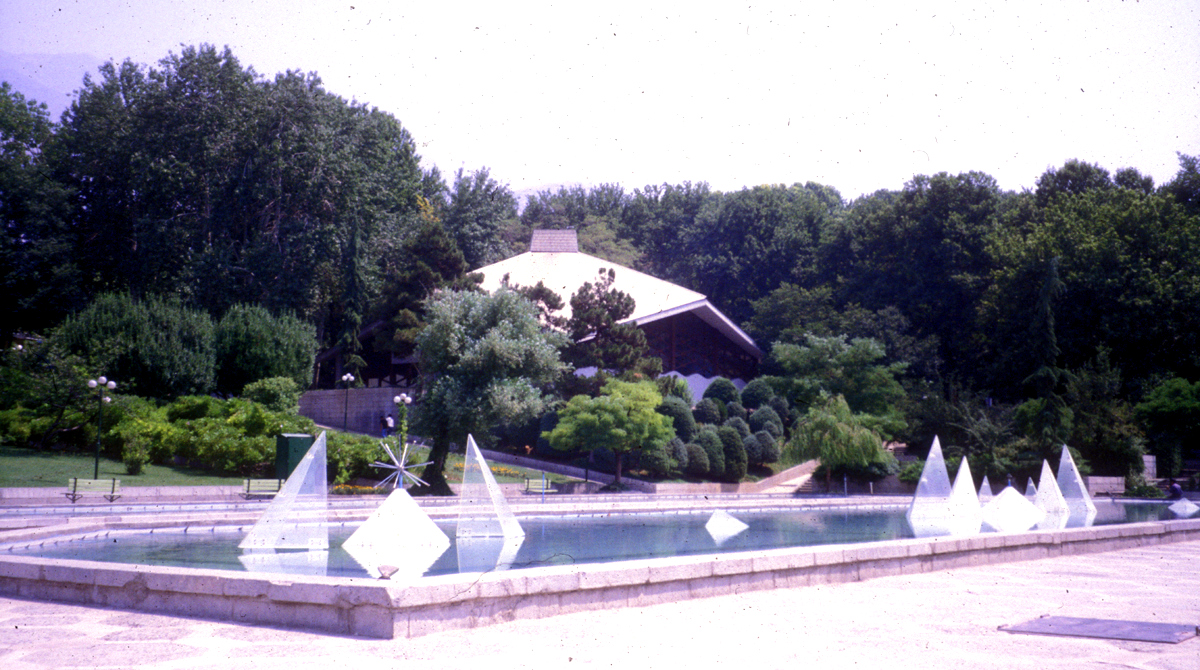
Parks, recreation and other attractions



- Darband (hiking trail)
- Chitgar Park
- Mellat Park
- Laleh Park
- Jamshidieh Park
- Niavaran Park
- Sa'ei Park
- Shatranj Park
- Tangeh Savashi
- Police Park
- Darabad hiking trail
- Darakeh hiking trail
- Jahan-e Kudak Park
- Azadi Sports complex
- Enghelab Sports Complex and Golf course
- Eram Amusement Park
- Several caves, springs, and waterfalls outside Tehran
- Latyan Lake
- Lavizan Forest Park
- Vard-Avard Forest Park
- Khojir National Park
- Kavir National Park
- Tar Lake
- Amir Kabir Lake
- Lar Protected Natural Habitat
- Varjeen Protected Natural Habitat
Religious centers
Mosques, shrines, mausoleums, and tombs
- Soltani Mosque, built by Fath Ali Shah
- Atiq Mosque, built in 1663.
- Mo'ezz o-dowleh mosque, built by Fath Ali Shah
- Haj Seyd Azizollah mosque, built by Fath Ali Shah
- Al-javad mosque, Iran's first modernist design mosque.
- The Old Sepahsalar mosque, another prominent Qajar era mosque.
- The new Sepahsalar Mosque (Madreseh e Motahari)
- Filsuf o-dowleh Mosque, Qajar era
- Moshir ol-Saltaneh Mosque, Qajar era
- Mo'ayyer ol-Mamalik Mosque, Qajar era
- Shahr Banu Mausopleum
- Javan-mard Qassab Mausoleum, a pre-Islamic semi-mythical hero
- Dozens of Imam-zadeh shrines, hundreds of years old, including that of Imam Zadeh Saleh.
- Dozens of Saqa Khanehs: traditional places of prayer
- Several Tekyehs: traditional places for mourning Muharram ceremonies for Husayn ibn Ali.
- Ebn-e Babooyeh cemetery, where numerous Iranian figures, such as Takhti and Ali Akbar Dehkhoda, are buried.
- Zahir o-dowleh cemetery, housing the tombs of art and cultural figures such as Iraj Mirza, Mohammad Taghi Bahar, Forough Farrokhzad, Abolhasan Saba, Ruhollah Khaleghi, and Darvish-khan are buried.
- Kordan Tomb, Seljuqi era, Karaj.
- Maydanak Tomb, 13th century, Karaj
- The Polish cemetery north of Tehran, where numerous Western Allied soldiers of World War II are buried
Churches
- Surep Georg Church, 1790
- Thaddeus Bartoqimus Church, 1808
- Enjili Church, 1867
- Assyrian Church
Higher education

Tehran province's major universities are:
- Shariaty Technical College
- Allameh Tabatabaii University
- Amirkabir University of Technology (Tehran Polytechnic)
- Alzahra University
- Shamsipour Technical College
- Baqiyatallah Medical Sciences University
- Farabi Institute of Virtual Higher Education
- Iran University of Science and Technology (IUST)
- Imam Hossein University
- Imam Sadeq University (ISU)
- Iran University of Medical Sciences
- K.N.Toosi University of Technology
- Shahed University
- Shahid Beheshti University
- Sharif University of Technology
- Tarbiat Modarres University (Professor Training University)
- Tehran University of Medical Sciences
- Tarbiat Moaalem University
- University of The Arts
- University of Social Welfare and Rehabilitation Sciences
- University of Tehran
- Islamic Azad University of Tehran-Science and Research
- Islamic Azad University of Pishva
- Islamic Azad University of Islamshahr
- Islamic Azad University of Damavand
- Islamic Azad University of Roodehen
- Islamic Azad University of Tehran-Medical Sciences
- Islamic Azad University North Tehran Branch
- Islamic Azad University of Tehran-South
- Islamic Azad University Central Tehran Branch
- Shahid Beheshti University of Medical Sciences
- Institute for Studies in Theoretical Physics and Mathematics (IPM)
- Hadith College of Tehran
- Imam Ali University for Army Officers
- Comprehensive University of Technology
- Tehran University of Applied Science and Technology
- Bagher Aloloum University
- Iran College of Tele-communications
- Medical University for the Islamic Republic of Iran's Army
- NAJA University of Police
- School of Economic Affairs (SEA)
- School of International Relations
- Shahed University of Medical Sciences
- Shahid Sattari University of Aeronautical Engineering
- University of Islamic Sects
- The Research Institute of The Petroleum Industry
- Iran Polymer and Petrochemical Institute
- Power and Water Institute of Technology (PWIT)
- Payame Noor University
Notes
References
Bibliography
References
- ((OpenStreetMap contributors)). (24 May 2024). "Qaleh Now District, Rey County, Tehran Province, 18451-66059, Iran".
- "GGM8+8MM Zaman Abad, Tehran Province, Iran".
- [http://www.hamshahrionline.ir/details/263382/Iran/-provinces همشهری آنلاین-استانهای کشور به ۵ منطقه تقسیم شدند]
- "Sub-national HDI - Area Database - Global Data Lab".
- "توجه: تفاوت در سرجمع به دليل گرد شدن ارقام به رقم هزار مي باشد. (in Persian)".
- Hassan. Habibi. fa. تاریخ تصویب (Approval date) 1369/06/21 (Iranian Jalali calendar). (12 September 1990 ). link. fa. لام تا کام [Lam ta Kam]. {{lang. fa. وزارت کشور [Ministry of the Interior]. fa. کمیسیون سیاسی دفاعی هیأت دولت [Political Defense Commission of the Government Board]. fa. شناسه [ID] B559F46F-4863-4D87-ACAB-5274C02BA3C5. {{lang. fa. شماره دوره [Course number] 69, {{lang. fa. شماره جلد [Volume number] 3.
- https://www.britannica.com/place/Alborz-Mountains
- [http://www.sci.org.ir/content/userfiles/_sci_en/sci_en/sel/j-shvro-84.html www.sci.org.ir/content/userfiles/_sci_en/sci_en/sel/j-shvro-84.html]. Retrieved November 2011 {{Webarchive. link. (2021-02-22)
- Larijani, Ali. (2010). "Alborz province establishment law". Guardian Council.
- (2023-10-28). "Tehran {{!}} History, Population, & Tourism {{!}} Britannica".
- "Tehran Population 2023".
- Ahmady, Kameel. (2019). "From Border to Border. Comprehensive research study on identity and ethnicity in Iran". Mehri publication.
- "Tehran, Iran - Image of the Week - Earth Watching".
- "Iran - Azarbaijanis".
- "About this Collection {{!}} Country Studies {{!}} Digital Collections {{!}} Library of Congress".
- "The Turkish Language in Iran". Khazar University Press.
- TABNAK, تابناک {{!}}. "یک میلیون مازندرانی در تهران هستند".
- "«یک و نیم میلیون مازندرانی پایتختنشین شدند». ایرنا.".
- Ahmady, Kameel. (2022-01-25). "A Peace-Oriented Investigation of the Ethnic Identity Challenge in Iran (A Study of Five Iranian Ethnic Groups with the GT Method)". International Journal of Kurdish Studies.
- "سربندان، مرکز دهستان ابرشیوه دماوند در آئینه تاریخ".
- (2012). "Exposure assessment of the tehran population (iran) to zearalenone mycotoxin". Iranian Journal of Pharmaceutical Research.
- "بررسی ابعاد مهاجرت کُردها به تهران و اقلیم کُردستان".
- (2017-09-25). "طی پنج سال گذشته؛ 42 هزار لرستانی به تهران مهاجرت کردهاند".
- (2023-03-19). "Iranian Lurs Ethnic - Bakhtiari Nomad People in Iran".
- "Lur {{!}} Persian Plateau, Ethnic Group, Nomadic {{!}} Britannica".
- Iskandaryan, Gohar. (2019). "The Armenian community in Iran: issues and emigration".
- "Tehran".
- Foundation, Encyclopaedia Iranica. "Welcome to Encyclopaedia Iranica".
- (2007-10-24). "FACTBOX-Facts about Armenians in Iran". Reuters.
- "Refugees in Iran".
- Ahmady, Kameel. "Ahmady, Kameel 2021:Traces of Exploitation in Childhood A Comprehensive Research on Forms, Causes and Consequences of Child Labour in Iran. Avaye Buf, Denmark".
- (2023-11-03). "Nearly 2.5 Million Afghans Reside in Western Tehran".
- Azadi, RFE/RL's Radio. "Afghan Refugees In Iran Say Camps Filled With Misery As They Await Fate". RadioFreeEurope/RadioLiberty.
- (2023-01-21). "Health condition of Afghan refugees residing in Iran in comparison to Germany: a systematic review of empirical studies". International Journal for Equity in Health.
- fa. مرکز آمار ایران [Statistical Centre of Iran]. link
- link. fa. مرکز آمار ایران [Statistical Centre of Iran]
- fa. مرکز آمار ایران [Statistical Centre of Iran]. link
- Mohammad Reza. Rahimi. fa. تاریخ تصویب (Approval date) 1389/12/01 (Iranian Jalali calendar). (20 February 2011 ). link. fa. لام تا کام [Lam ta Kam]. {{lang. fa. وزارت کشور [Ministry of the Interior]. fa. هیات وزیران [Council of Ministers]. fa. شماره ابلاغیه 293643/ت44783ه [Notification number 293643/T44783H].
- Parviz. Davoodi. fa. تاریخ تصویب (Approval date) 1388/01/23 (Iranian Jalali calendar). (12 April 2009 ). link. fa. لام تا کام [Lam ta Kam]. {{lang. fa. وزارت کشور [Ministry of the Interior]. fa. هیات وزیران [Council of Ministers]. fa. شناسه [ID] C826BA47-F8BD-44D9-8863-011042C70E44.
- Mohammad Reza. Rahimi. fa. تاریخ تصویب (Approval date) 1391/09/29 (Iranian Jalali calendar). (19 December 2012 ). link. fa. لام تا کام [Lam ta Kam]. {{lang. fa. وزارت کشور [Ministry of the Interior]. fa. هیات وزیران [Council of Ministers]. fa. شماره ابلاغیه ۱۹۷۲۱۰/ت۴۶۵۹۰ه [Notification number 177210/T46590H].
- Mohammad Reza. Rahimi. link. {{lang. fa. وزارت کشور [Ministry of the Interior]. fa. هیات وزیران [Council of Ministers]. fa. 6 آذر 1389 (Iranian Jalali calendar). (27 November 2010 )
- Mohammad Reza. Rahimi. fa. تاریخ تصویب (Approval date) 1391/09/29 (Iranian Jalali calendar). (19 December 2012 ). link. fa. لام تا کام [Lam ta Kam]. {{lang. fa. وزارت کشور [Ministry of the Interior]. fa. هیات وزیران [Council of Ministers]. fa. شماره ابلاغیه ۲۰۰۶۷۸/ت۴۷۱۴۰ه [Notification number 200678/T47140H].
- Parviz. Davoodi. fa. تاریخ تصویب (Approval date) 1388/01/23 (Iranian Jalali calendar). (12 April 2009 ). link. fa. لام تا کام [Lam ta Kam]. {{lang. fa. وزارت کشور [Ministry of the Interior]. fa. هیات وزیران [Council of Ministers]. fa. شناسه [ID] F62607B7-6E01-4A3D-A5E8-4435A39CC218.
- "Tehran {{!}}".
- Wainwright, Oliver. (2019-01-09). "'Like LA with minarets': how concrete and cars came to rule Tehran". The Guardian.
- "Tehran, Iran Metro Area Population 1950-2023".
- Ahmady, Kameel. (2022-08-25). "Ethnicity and Identities in Iran: Progress and Equality". International Journal of Kurdish Studies.
- "شماره کتابشناسه ملّی:۲۸۸۷۱۴۱طرح بررسی و سنجش شاخصهای فرهنگ عمومی کشور (شاخصهای غیرثبتی){گزارش}:استان تهران/به سفارش شورای فرهنگ عمومی کشور؛ مدیر طرح و مسئول سیاست گذاری:منصور واعظی؛ اجرا:شرکت پژوهشگران خبره پارس -شابک:۷-۴۲-۶۶۲۷-۶۰۰-۹۷۸ *وضعیت نشر:تهران-موسسه انتشارات کتاب نشر ۱۳۹۱ *وضعیت ظاهری:۲۹۶ ص:جدول (بخش رنگی)، نمودار (بخش رنگی)".
- "Iran's Ethnic Groups".
- "A Geopolitical Analysis of Ethnicity in Iran".
- Shahshahani, Soheila. (2022-11-02). "Anthropology and ethnic studies, Iran". International Journal of Anthropology and Ethnology.
- (2019-08-23). "Representation of ethics, social behaviors and cultural traditions of Tehran's people during the Qajar period, Relying on foreign traveler reports". Journal of History.
This article was imported from Wikipedia and is available under the Creative Commons Attribution-ShareAlike 4.0 License. Content has been adapted to SurfDoc format. Original contributors can be found on the article history page.
Ask Mako anything about Tehran province — get instant answers, deeper analysis, and related topics.
Research with MakoFree with your Surf account
Create a free account to save articles, ask Mako questions, and organize your research.
Sign up freeThis content may have been generated or modified by AI. CloudSurf Software LLC is not responsible for the accuracy, completeness, or reliability of AI-generated content. Always verify important information from primary sources.
Report