From Surf Wiki (app.surf) — the open knowledge base
Technisches Hilfswerk
Civil protection organization
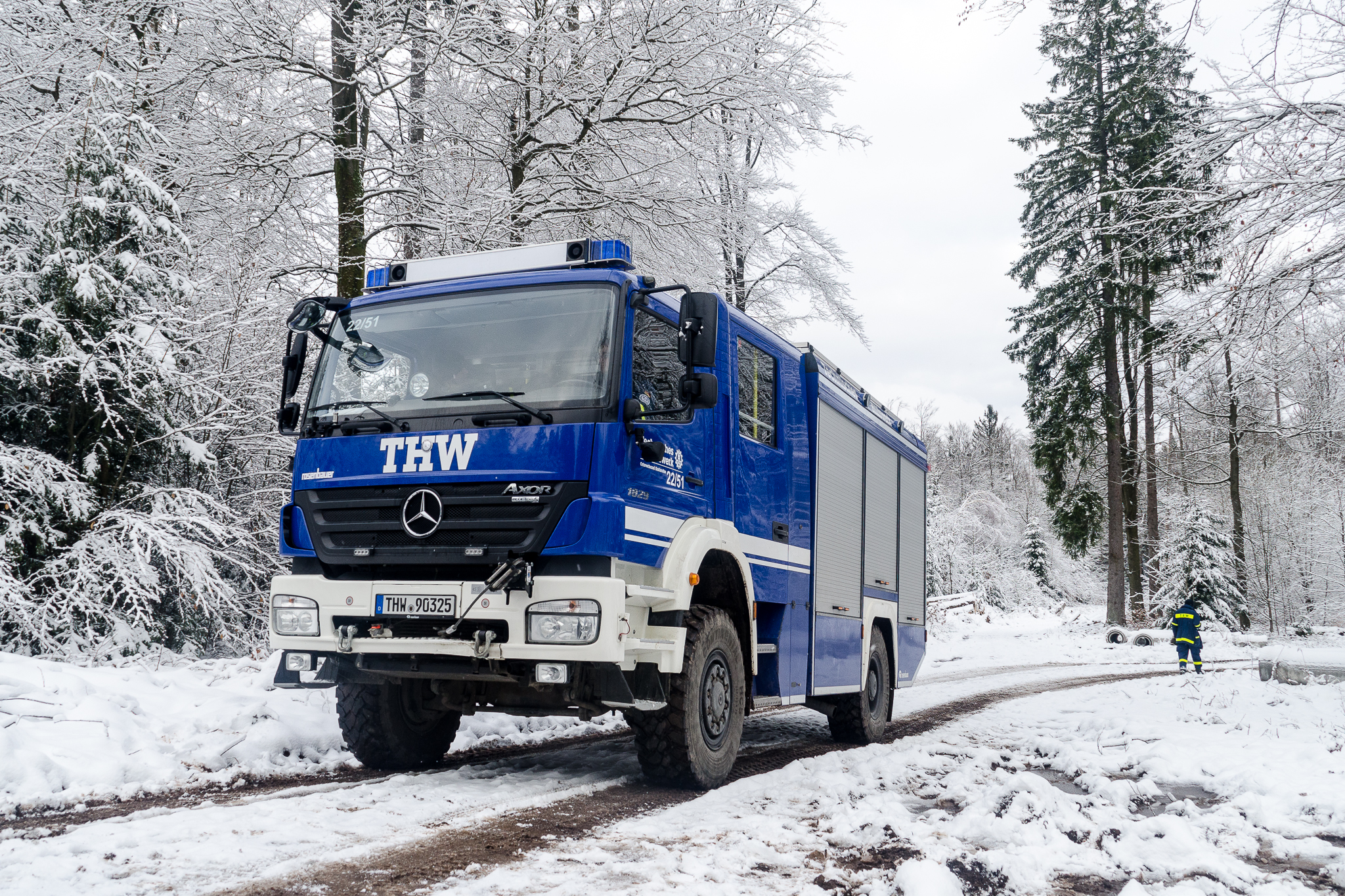
Civil protection organization
| Field | Value |
|---|---|
| name | Federal Agency for Technical Relief |
| native_name | Bundesanstalt Technisches Hilfswerk (THW) |
| type | agency |
| seal | Bundesanstalt Technisches Hilfswerk logo.svg |
| seal_width | 180px |
| seal_caption | Federal sign of the THW |
| logo | THW.svg |
| logo_width | 180px |
| logo_caption | Main logo of the THW |
| formed | |
| preceding1 | Technische Nothilfe |
| jurisdiction | Germany |
| headquarters | Bonn-Lengsdorf |
| employees | 2,200+; 88 000+ volunteers |
| budget | EUR 428,629,000 (2023) |
| chief1_name | Sabine Lackner, president |
| parent_agency | Federal Ministry of the Interior |
| child1_agency | 3 training centers |
| child2_agency | 8 regional offices |
| child3_agency | 4 logistic centers |
| child4_agency | 66 branch offices |
| child5_agency | 669 local sections |
| website | www.thw.de |
The Bundesanstalt Technisches Hilfswerk (, (THW) , English: Federal Agency for Technical Relief) is the federal civil protection organisation of Germany. It is legally part of the Federal Ministry of the Interior and controlled by the German federal government. 97% of its more than 88,000 members (2025) are volunteers.PDF of THW: Die Bundesanstalt Technisches Hilfswerk (THW)
im Überblick, Mai 2025
The predecessor of THW was the "Technische Nothilfe" (Technical Emergency Relief) (TN), founded in 1919 by Otto Lummitzsch, a pioneer (Combat support) officer, which existed in the Weimar Republic and in Nazi Germany until 1945.
Obligations
The obligations are defined in section 1 of the THW act (Gesetz über das Technische Hilfswerk). These include:
- technical and logistical support for other (German) GOs, NGOs and other authorities like fire brigades, police or the customs authorities
- technical or humanitarian relief in foreign countries, as assigned by the federal government
- technical relief in Germany as part of national civil protection measures.
History
After World War II the Technisches Hilfswerk was founded in 1950, by order of the minister of the interior Gustav Heinemann. The first president of the THW was , who had founded the THW's predecessor, the Technische Nothilfe (TN) in 1919.
The 'Technical Emergency Corps' (TN) began as a strikebreaker organisation after the First World War, but developed into a volunteer emergency response unit. During the Nazi Germany from 1933 till 1945 TN became in charge of technical civil defence.
When it was founded, the main purpose of the THW was also civil defense in the event of war. This has changed over the decades; today the THW intervenes in a wide spectrum of disasters, such as traffic accidents, industrial disasters, or earthquakes.
On February 7, 1953, the THW embarked on its first international deployment: Following a major storm in the Netherlands, THW teams participated in the relief and rescue operations. For the first time since World War II, Germans were assisting other countries in an international mission.
The most important domestic operations in the 1960s were the North Sea storm flood in 1962 and the mining accident of Lengede in 1963.
The largest disaster control action took place in August 2002 after the flooding of the Elbe river in eastern Germany. About 24,000 THW members participated in the operation, with up to 10,000 people helping simultaneously along the Elbe and its tributaries.
The largest engagement outside Germany was in France in 2000, after storms Lothar and Martin blew down power lines and trees, blocking many streets, between 26 and 28 December 1999. The main contribution was supplying temporary electrical power for hospitals and other important institutions and rebuilding parts of the electrical system.
The organisation has also been active in many disaster relief operations abroad, for example in Thailand and Sri Lanka after the 2004 Indian Ocean earthquake, in the United States after Hurricane Katrina in 2005, in Pakistan after the 2005 Kashmir earthquake, in 2010 during the flooding in Poland, the 2011 Tōhoku earthquake and tsunami in Japan, the April 2015 Nepal earthquake, and the 2020 Beirut explosions.
In 2021, the THW provided relief during major flooding in southwestern Germany, particularly in the Ahr Valley.
The Russian invasion of Ukraine starting in February 2022 led to the THW's largest logistical operation abroad. By May 2025, the THW had procured and delivered relief supplies worth more than €150 million to its partners. The THW focused particularly on supporting institutions in the front-line areas and on supporting its state partners, the Ukrainian Civil Protection and Disaster Relief Agency, and the Ukrainian Border Guard.
In February 2023, THW personnel deployed to Turkey in the aftermath of the 2023 Turkey–Syria earthquake.
Organization and personal
As a federal authority which is part of the Federal Ministry of the Interior, the THW is headed by a president and board. Its headquarters (THW-Leitung) are in Bonn-Lengsdorf, together with the Bundesamt für Bevölkerungsschutz und Katastrophenhilfe (BBK) (Federal Office for Civil Protection and Disaster Assistance).
The THW comprises 669 local chapters, 66 regional offices, eight state associations, and the THW administration in Bonn, which consists of the management staff, the commissioner of volunteers, and the Deployment Section with the units
- E1 mission
- E2 foreign
- E3 training
- E4 logistics
- E5 technology
- and the Central Services Section with the units Z1 volunteers and staff, Z2 organization, Z3 finance, Z4 security and health protection, and Z5 information and communication.
The THW logistics center has its office in Heiligenhaus between Düsseldorf and Essen in the highly populated Western part of Germany and is, via its attachment to the Logistics Unit E4, part of the THW administration.
Heads of THW
- 1952–1955: Otto Lummitzsch
- 1955–1958: Alexander Löfken
- 1958–1962: Rudolf Schmidt
- 1962–1977: Hans Zielinski
- 1977–1985: Hermann Ahrens
- 1985/1986: Helmut Meier
- 1986–2002: Gerd Jürgen Henkel
- 2002–2006: Georg Thiel
- 2006–2020:
- 2020–2023:
- since 1 July 2023: Sabine Lackner
Personal
Nearly 88,000 people across Germany volunteer with the THW, of which almost 17,000 are women and girls, and this number is rising.
In Germany, military service was mandatory for adult males until 2011. Instead of joining the military for a shorter period full-time, one of the alternatives was to join a non-combatant volunteer organisation within the German Katastrophenschutz (disaster relief) or Zivilschutz (civil defense) for a minimum of four years (this is calculated so that although serving far less time every week, in the end the number of served hours was about the same). The THW was one of those organisations. Others were too, such as volunteer fire brigades and various organisations engaged in emergency medical service; however, the THW relied more heavily on such quasi-conscripts, as it tends to have less local popularity than e.g. volunteer fire brigades (who tend to be the chief social club of their respective village or town-quarter), and as it had less of an infrastructure of paid employees than, for instance, the German Red Cross.
The THW has its own decoration for meritorious service or exemplary achievements in the field of emergency management or civil protection: All three classes of the Ehrenzeichen des Technischen Hilfswerks are approved by the president of Germany.
While the number of 17-year-olds moving from youth to active service was lower in 2012 (913 new members) than in 2010 (1056 new members), the theory of a decisive influence by conscription on THW volunteer recruiting is not supported by empirical data.
Commented that out as unsourced: not supported by empirical data would mean that no empirical data can support the statement. The fact that a comparison of randomly picked data from 2012 to 2010 doesn't (which in itself is true) support it is no proof for that, even if in 2011 conscription was abolished. We would have to look at the years with large conscript numbers (Cold War) and especially when conscientous objections actually had to be defended and were not formalities. And it is quite well-known that at that time, the usual manner of avoiding military service in this way was to apply for the THW; not so much the fire brigade. The conclusion seems legitimate that the influence of conscription on the THW recruiting did have something of a decisive influence in that time - though less so in 2010 when most people who didn't want to do military service either were judged incapable or filed for conscientous objection. !--====Ranks==== In general, the rank structure of the THW is divided into two groups: the volunteers and the full-time employees.
Volunteers
| Head of Local Branch | |||||||
|---|---|---|---|---|---|---|---|
| (Ortsbeauftragter) | Deputy Head of Local Branch | ||||||
| (Stv. Ortsbeauftragter) | Training and Qualification Officer (Ausbildungsbeauftragter) | ||||||
| Expert Advisor (Fachberater) | Youth Activity Leader (Jugendbetreuer) | ||||||
| Maintenance Sergeant (Schirrmeister) | |||||||
| Public Relations and Volunteers Recruitment Officer (Beauftragter für Öffentlichkeitsarbeit) | |||||||
| Administration Secretary (Verwaltungsbeauftragter) | |||||||
| Cook (Koch) | |||||||
| [[File:Dst.-Kennz. Ortsbeauftragter 2013.svg | 120px]] | [[File:Dst.-Kennz. Stv. Ortsbeauftragter 2013.svg | 120px]] | [[File:Dst.-Kennz. AB, FB 2013.svg | 120px]] | [[File:Dst.-Kennz. JB, BÖ, SM, VwBe, Koch 2013.svg | 120px]] |
| Technical Platoon Leader (Zugführer) | |||||||||
|---|---|---|---|---|---|---|---|---|---|
| Team Leader Logistics Unit(Leiter der Fachgruppe Logistik) | |||||||||
| Team Leader Command and Communications | |||||||||
| (Leiter der Fachgruppe Führung/Kommunikation) | Command Squad Leader | ||||||||
| (Zugtruppführer)Command Department Head | |||||||||
| (Sachgebietsleiter der Fachgruppe Führung/Kommunikation) | Group Leader | ||||||||
| (Gruppenführer) | Squad Leader (Truppführer) | ||||||||
| Command Assistant (Führungsgehilfe) | Helper | ||||||||
| (Helfer) | |||||||||
| [[File:Thw dienststellungskennzeichen zugfuehrer.svg | 120px]] | [[File:Thw dienststellungskennzeichen zugtruppfuehrer.svg | 120px]] | [[File:Thw dienststellungskennzeichen gruppenfuehrer.svg | 120px]] | [[File:Thw dienststellungskennzeichen truppfuehrer.svg | 120px]] | [[File:Thw dienststellungskennzeichen helfer.svg | 120px]] |
| Federal Spokesperson | |||||||||||
|---|---|---|---|---|---|---|---|---|---|---|---|
| (Bundessprecher) | Deputy Federal Spokesperson | ||||||||||
| (Stv. Bundessprecher) | State Spokesperson | ||||||||||
| (Landessprecher) | Deputy State Spokesperson | ||||||||||
| (Stv. Landessprecher) | Local Spokesperson | ||||||||||
| (Helfersprecher) | |||||||||||
| Deputy Local Spokesperson | |||||||||||
| (Stv. Helfersprecher) | Representative, Federal Association | ||||||||||
| ('Vertreter Bundesvereinigung) | |||||||||||
| Representative, State Association | |||||||||||
| (Vertreter Landesvereinigung) | |||||||||||
| [[File:Dst.-Kennz. Bundessprecher 2013.svg | 120px]] | [[File:Dst.-Kennz. Stv. Bundessprecher 2013.svg | 120px]] | [[File:Dst.-Kennz. Landessprecher 2013.svg | 120px]] | [[File:Dst.-Kennz. Stv. Landessprecher 2013.svg | 120px]] | [[File:Dst-Kennz. Helfersprecher 2013.svg | 120px]] | [[File:Dst-Kennz. Vertreter Bundesvereinigung.svg | 120px]] |
Full-time employees
| Chief | |||||||||
|---|---|---|---|---|---|---|---|---|---|
| (Präsident) | Vice-Chief | ||||||||
| (Vizepräsident) | State Commissioner (Landesbeauftragter) | ||||||||
| Headmaster of the Federal Academy (Leiter der Bundesschule) | |||||||||
| Division Chief (Abteilungsleiter) | |||||||||
| Commissioner of Volunteers (Beauftragter für das Ehrenamt) | Department Chief (Referatsleiter) | ||||||||
| Academy Manager (Schulmanager) | |||||||||
| Chief of the Management Staff | |||||||||
| (Leiter des Leitungsstabes) | Department Consultant | ||||||||
| (Referent) | |||||||||
| [[File:Dienststellungskennzeichen des Präsidenten.png | 120px]] | [[File:Dst.-Kennz. Viezepräsident 2013.svg | 120px]] | [[File:Dst.-Kennz. LB, Leiter der BuS, Abteilungsleiter, BEA 2013.svg | 120px]] | [[File:Dst.-Kennz. Referatsleiter, Schulmanager, Leiter des Leitungsstabes 2013.svg | 120px]] | [[File:Dst.-Kennz. Referent 2013.svg | 120px]] |
| Regional Office Chief | |||||||
|---|---|---|---|---|---|---|---|
| (Regionalstellenleiter) | Senior Consultant (Sachbearbeiter) | ||||||
| Specialist Teacher (Fachlehrer) | Service Consultant (Bürosachbearbeiter Service) | ||||||
| Instructor (Ausbilder) | |||||||
| Artisan (Gerätehandwerker) | |||||||
| Driver (Kraftfahrer) | Consultant (Bürosachbearbeiter) | ||||||
| Trainee (Auszubildender) | |||||||
| Federal Service Volunteer (Absolvent Bundesfreiwilligendienst) | |||||||
| Social Service Volunteer (Absolvent Freiwilliges Soziales Jahr) | |||||||
| Intern (Praktikant) | |||||||
| [[File:Dst.-Kennz. Geschäftsführer 2013.svg | 120px]] | [[File:Dst.-Kennz. Sachbearbeiter 2013.svg | 120px]] | [[File:Dst.-Kennz. Bürosachbearbeiter Service 2013.svg | 120px]] | [[File:Dst.-Kennz. Bürosachbearbeiter 2013.svg | 120px]] |
Field organization
Organization in Germany
The THW is stationed all over Germany in 669 local chapters, called Ortsverbände (OV). Some 80,000 people are active in this organisation including about 15,000 young volunteers (members of the THW Youth). The majority of those are volunteers, while about 1,800 work full-time in its administration. Each local chapter (Ortsverband) maintains one or more Technische Züge (technical platoons), each consisting of one Zugtrupp (command squad), comprising four volunteers, one Bergungsgruppe (rescue units) comprising nine to twelve volunteers, and one to three Fachgruppen (technical units), comprising four to eighteen volunteers.


The main type of THW unit is one of two Bergungsgruppen (1st and 2nd Rescue Groups), equipped with heavy tools like hydraulic cutting devices, chain saws, and pneumatic hammers. Their vehicles are the Gerätekraftwagen 1 (GKW 1) (Equipment Truck 1) for the 1st Rescue Group and the Mehrzweckkraftwagen (MzKW) (Multi-Purpose Truck) or the older Gerätekraftwagen 2 (GKW 2) — which is scheduled to be phased out — for the 2nd Rescue Group.
The Fachgruppen (Technical Units) include:
- Bridge Building (Brückenbau)
- Debris Clearance (Räumen)
- Demolition/Blasting (Sprengen)
- Electricity Supply (Elektroversorgung)
- Emergency Supply and Maintenance, (Notinstandsetzung & Notversorgung, introduced 2019 as a replacement for the former technical unit Illumination and many 2nd rescue units)
- Infrastructure (Infrastruktur)
- Oil Pollution (Ölschaden)
- Search and Rescue (Ortung)
- Water Damage / Pumping (Wasserschaden / Pumpen)
- Water Hazards (Wassergefahren)
- Water Supply and Treatment (Trinkwasserversorgung)
- Recovery (Bergung)
- Unmanned Aerial Systems (Unbemannte Luftfahrtsysteme)
Furthermore, two types of technical units exist outside of technical platoons. They provide support mainly during major incidents or multi-regional operations:
- Logistics (Logistik)
- Command, Control and Communications (Führung und Kommunikation)
International deployment
For relief in foreign countries, there are four Schnelleinsatzeinheiten Bergung Ausland or SEEBA (Rapid Deployment Unit Search and Rescue Abroad) units according to INSARAG standards, able to go airborne within six hours, and three Schnelleinsatzeinheiten Wasserversorgung Ausland or SEEWA (Rapid Deployment Unit Water Supply and Treatment Abroad) units.
The Schlauchschwinger also operates high capacity pumping (HCP) modules for the EU Civil Protection Mechanism.
Furthermore, the THW has a pool of experts which can be rapidly deployed to places of crisis to perform assessment and coordination tasks within the fields of technical and logistical support. Those experts are also active in capacity building operations.
Services provided


Technical threat prevention
- Area lighting
- Clearing and blasting
- Combating flooding and inundation
- Search and rescue, and salvage
- Water rescue
Infrastructure technical support
- Electricity supply
- Emergency bridge work
- Drinking water supply
- Waste water disposal
Command and communication, logistics
- Catering and care of operational staff
- Command center establishment and operation
- Command support
- Creation of temporary telecommunication systems
- Establishment and operation of logistical bases
- Maintenance of material, repair and maintenance work for mission equipment
- Transportation of consumer goods for mission demands
Technical support in environmental protection
- Combating and mitigating oil damage
- Water analysis
Provision of the population
- Electricity and drinking water provision
- Establishment and equipment of emergency accommodation and collecting points with matching infrastructure
- Waste water disposal
Technical support
- Diving
- Makeshift road works
- Maintenance of civil protection facilities such as emergency wells and shelters
- Rescue from heights
- Technical help on traffic routes
{{lang|de|THW-Jugend}}
The THW-Jugend (THW Youth) is the youth organization of the THW. It has set itself the target to introduce boys and girls from the age of six to the work of the THWs in a fun way. The THW-Jugend is not part of the Federal Agency for Technical Relief, but is an independently registered charity. This arrangement was made in order to avoid maintaining a state youth organization.
References
References
- "Annual Report 2021".
- "Budget THW 2023". Federal Ministry of Finance.
- "Leitung Technisches Hilfswerk". Technisches Hilfswerk.
- "THW-Gesetz - Gesetz über das Technische Hilfswerk".
- deutschlandfunk.de. (2019-09-30). "100 Jahre Technische Nothilfe - Der Vorläufer des THW wird gegründet".
- "Geschichte".
- (2 August 2012). "Flutkatastrophe 2002: Wasser, soweit das Auge reichte".
- (19 August 2002). "Rund 10.000 THW-Helfer im Einsatz".
- (2004-12-28). "Germany Doubles Aid to Tsunami Area". [[Deutsche Welle]].
- (2005-09-16). "German Federal Agency for Technical Relief assists in relief efforts". [[U.S. Northern Command]].
- (2005-11-08). "Technical and Humanitarian Assistance Worldwide". Technisches Hilfswerk.
- (2010-06-30). "THW-Flood Mission in Poland: The Water Recedes, the Mud Remains". Technisches Hilfswerk.
- (2011-03-14). "Erdbeben in Japan: THW setzt Hilfe fort". Technisches Hilfswerk.
- (2015-04-27). "Erdbeben in Nepal: THW-Kräfte nehmen Arbeit auf". Technisches Hilfswerk.
- (2020-08-05). "Bundesregierung schickt THW-Bergungsteam in den Libanon". [[Die Zeit]].
- (2021-08-07). "Kreis Ahrweiler beziffert Flutschäden auf mehr als 3,7 Milliarden". [[Frankfurter Allgemeine Zeitung]].
- (2023-02-08). "THW-Helfer aus RLP im Erdbebengebiet angekommen". [[Südwestrundfunk.
- ''Bundesanstalt Technisches Hilfswerk'': Jahresbericht 2012 [http://www.bevoelkerungsschutz-portal.de/SharedDocs/Downloads/BVS/DE/Zustaendigkeiten/THW/Jahresbericht2012.pdf], page 28.
- "Die Bundesanstalt Technisches Hilfswerk im Überblick". THW.
- "The SEEBA Special Unit – the Government's Tool to Help Rescue and Salvage Operations Domestically and Abroad".
This article was imported from Wikipedia and is available under the Creative Commons Attribution-ShareAlike 4.0 License. Content has been adapted to SurfDoc format. Original contributors can be found on the article history page.
Ask Mako anything about Technisches Hilfswerk — get instant answers, deeper analysis, and related topics.
Research with MakoFree with your Surf account
Create a free account to save articles, ask Mako questions, and organize your research.
Sign up freeThis content may have been generated or modified by AI. CloudSurf Software LLC is not responsible for the accuracy, completeness, or reliability of AI-generated content. Always verify important information from primary sources.
Report