From Surf Wiki (app.surf) — the open knowledge base
Tau protein
Group of six protein isoforms produced from the MAPT gene
Group of six protein isoforms produced from the MAPT gene
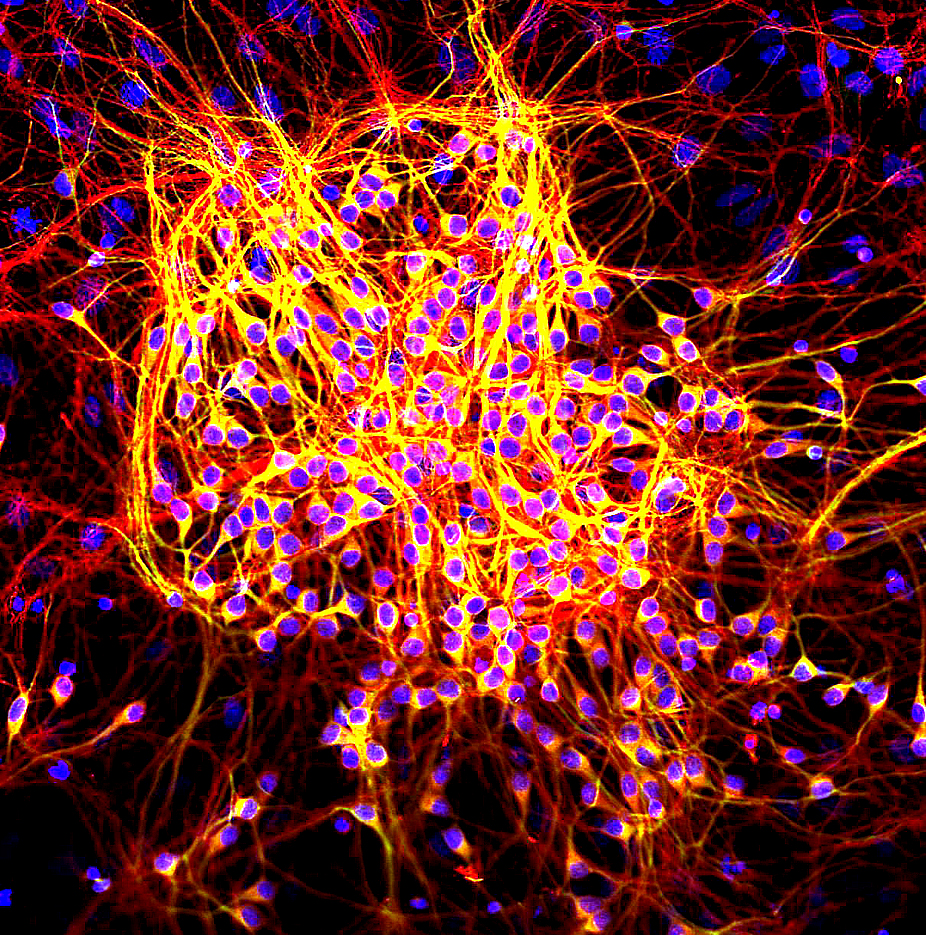
The tau proteins (abbreviated from tubulin associated unit) form a group of six highly soluble protein isoforms produced by alternative splicing from the gene MAPT (microtubule-associated protein tau). They have roles primarily in maintaining the stability of microtubules in axons and are abundant in the neurons of the central nervous system (CNS), where the cerebral cortex has the highest abundance. They are less common elsewhere but are also expressed at very low levels in CNS astrocytes and oligodendrocytes.
Pathologies and dementias of the nervous system such as Alzheimer's disease and Parkinson's disease are associated with tau proteins that have become hyperphosphorylated insoluble aggregates called neurofibrillary tangles. The tau proteins were identified in 1975 as heat-stable proteins essential for microtubule assembly, and since then they have been characterized as intrinsically disordered proteins.
Gene
In humans, the MAPT gene for encoding tau protein is located on chromosome 17q21, containing 16 exons. The major tau protein in the human brain is encoded by 11 exons. Exons 2, 3 and 10 are alternatively spliced, which leads to the formation of six tau isoforms. In the human brain, tau proteins constitute a family of six isoforms with a range of 352–441 amino acids. Tau isoforms are different in having either zero, one, or two inserts of 29 amino acids at the N-terminal part (exons 2 and 3) and three or four repeat-regions at the C-terminal part (exon 10). Thus, the longest isoform in the CNS has four repeats (R1, R2, R3 and R4) and two inserts (441 amino acids total), while the shortest isoform has three repeats (R1, R3 and R4) and no insert (352 amino acids total).
The MAPT gene has two haplogroups, H1 and H2, in which the gene appears in inverted orientations. Haplogroup H2 is common only in Europe and in people with European ancestry. Haplogroup H1 appears to be associated with increased probability of certain dementias, such as Alzheimer's disease. The presence of both haplogroups in Europe means that recombination between inverted haplotypes can result in the lack of one of the functioning copies of the gene, resulting in congenital defects. The risk haplotype H1H1 in iPSC-derived cortical neurons revealed a higher expression of alpha-synuclein compared to H2H2, which may explain the association of haplotype with synucleinopathies such as Parkinson's disease.
Structure
Six tau isoforms exist in human brain tissue, and they are distinguished by their number of binding domains. Three isoforms have three binding domains and the other three have four binding domains. The binding domains are located in the carboxy-terminus of the protein and are positively charged (allowing it to bind to the negatively charged microtubule). The isoforms with four binding domains are better at stabilizing microtubules than those with three binding domains. Tau is a phosphoprotein with 79 potential serine (Ser) and threonine (Thr) phosphorylation sites on the longest tau isoform. Phosphorylation has been reported on approximately 30 of these sites in normal tau proteins.
Phosphorylation of tau is regulated by a host of kinases, including PKN, a serine/threonine kinase. When PKN is activated, it phosphorylates tau, resulting in disruption of microtubule organization. Phosphorylation of tau is also developmentally regulated. For example, fetal tau is more highly phosphorylated in the embryonic CNS than adult tau. The degree of phosphorylation in all six isoforms decreases with age due to the activation of phosphatases. Like kinases, phosphatases too play a role in regulating the phosphorylation of tau. For example, PP2A and PP2B are both present in human brain tissue and have the ability to dephosphorylate Ser396. The binding of these phosphatases to tau affects tau's association with microtubules.
Phosphorylation of tau has also been suggested to be regulated by O-GlcNAc modification at various Ser and Thr residues. Elevation of O-GlcNAc has been explored as a therapeutic strategy to protect against tau hyperphosphorylation.
Function
Microtubule stabilization
Tau proteins are found more often in neurons than in non-neuronal cells in humans. One of tau's main functions is to modulate the stability of axonal microtubules.** Other nervous system microtubule-associated proteins (MAPs) may perform similar functions, as suggested by tau knockout mice that did not show abnormalities in brain development – possibly because of compensation in tau deficiency by other MAPs.
Although tau is present in dendrites at low levels, where it is involved in postsynaptic scaffolding, it is active primarily in the distal portions of axons, where it provides microtubule stabilization but also flexibility as needed. Tau proteins interact with tubulin to stabilize microtubules and promote tubulin assembly into microtubules. Tau has two ways of controlling microtubule stability: isoforms and phosphorylation.
In addition to its microtubule-stabilizing function, Tau has also been found to recruit signaling proteins and to regulate microtubule-mediated axonal transport.
mRNA translation
Tau is a negative regulator of mRNA translation in Drosophila, mouse, and human brains, through its binding to ribosomes, which results in impaired ribosomal function, reduction of protein synthesis and altered synaptic function.** Tau interacts specifically with several ribosomal proteins, including the crucial regulator of translation rpS6.
Behavior
The primary non-cellular functions of tau is to negatively regulate long-term memory and to facilitate habituation (a form of non-associative learning), two higher and more integrated physiological functions. Since regulation of tau is critical for memory, this could explain the linkage between tauopathies and cognitive impairment.
In mice, while the reported tau knockout strains present without overt phenotype when young, when aged, they show some muscle weakness, hyperactivity, and impaired fear conditioning. However, neither spatial learning in mice, nor short-term memory (learning) in Drosophila seems to be affected by the absence of tau.
In addition, tau knockout mice have abnormal sleep-wake cycle, with increased wakefulness periods and decreased non-rapid eye movements (NREM) sleep time.
Other functions
Other typical functions of tau include cellular signalling, neuronal development, neuroprotection and apoptosis. Atypical, non-standard roles of tau are also under current investigation, such as its involvement in chromosome stability, its interaction with the cellular transcriptome, its interaction with other cytoskeletal or synaptic proteins, its involvement in myelination or in brain insulin signaling, its role in the exposure to chronic stress and in depression, etc.
Mechanism
The accumulation of hyperphosphorylated tau in neurons is associated with neurofibrillary degeneration. The actual mechanism of how tau propagates from one cell to another is not well identified. Also, other mechanisms, including tau release and toxicity, are unclear. As tau aggregates, it replaces tubulin, which in turn enhances fibrilization of tau. Several propagation methods have been proposed that occur by synaptic contact such as synaptic cell adhesion proteins, neuronal activity and other synaptic and non-synaptic mechanisms. The mechanism of tau aggregation is still not completely elucidated, but several factors favor this process, including tau phosphorylation and zinc ions. Moreover, recent studies show that tau can coordinate up to three Zn²⁺ ions via distinct sites in the N-terminal, repeat, and C-terminal regions; occupancy of two Zn²⁺ sites is sufficient to promote liquid–liquid phase separation (LLPS) of tau in vitro, linking zinc homeostasis to condensate-driven aggregation pathways.
Release
Tau is involved in uptake and release processes, which are known as seeding. Uptake of tau protein requires the presence of heparan sulfate proteoglycans at the cell surface, which happens by macropinocytosis. On the other hand, tau release depends on neuronal activity. Many factors influence tau release such as, for example, the isoforms or MAPT mutations that change the extracellular level of tau. According to Asai and his colleagues, the spreading of tau protein occurs from the entorhinal cortex to the hippocampal region in the early stages of the disease. They also suggested that microglia were also involved in the transport process, and their actual role is still unknown.
Uptake
Tau protein has been found in the extracellular environment including Cerebrospinal fluid (CSF) and Interstitial fluid (ISF) under physiological and pathological conditions. Low-density lipoprotein receptor-related protein 1 (LRP1) has been shown as the receptor for Tau internalization into cells. However, studying Tau uptake in human neurons revealed that physiological Tau monomers mainly use LRP1 for internalization, while the uptake of pathological Tau aggregates depend on heparan sulfate proteoglycans.
Toxicity
Tau causes toxic effects through its accumulation inside cells. Many enzymes are involved in toxicity mechanism such as PAR-1 kinase. This enzyme stimulates phosphorylation of serine 262 and 356, which in turn leads to activate other kinases (GSK-3 and CDK5) that cause disease-associated phosphoepitopes. The degree of toxicity is affected by different factors, such as the degree of microtubule binding. Toxicity could also happen by neurofibrillary tangles (NFTs), which leads to cell death and cognitive decline.
Clinical significance
Hyperphosphorylation of the tau protein (tau inclusions, pTau) can result in the self-assembly of tangles of paired helical filaments and straight filaments, which are involved in the pathogenesis of Alzheimer's disease, frontotemporal dementia and other tauopathies. All of the six tau isoforms are present in an often hyperphosphorylated state in paired helical filaments in the Alzheimer's disease brain. In other neurodegenerative diseases, the deposition of aggregates enriched in certain tau isoforms has been reported. When misfolded, this otherwise very soluble protein can form extremely insoluble aggregates that contribute to a number of neurodegenerative diseases. Tau protein has a direct effect on the breakdown of a living cell caused by tangles that form and block nerve synapses.
Gender-specific tau gene expression across different regions of the human brain has recently been implicated in gender differences in the manifestations and risk for tauopathies. Some aspects of how the disease functions also suggest that it has some similarities to prion proteins.
Tau hypothesis of Alzheimer's disease
The tau hypothesis states that excessive or abnormal phosphorylation of tau results in the transformation of normal adult tau into paired-helical-filament (PHF) tau and neurofibrillary tangles (NFTs). The stage of the disease determines NFTs' phosphorylation. In AD, at least 19 amino acids are phosphorylated; pre-NFT phosphorylation occurs at serine 199, 202 and 409, while intra-NFT phosphorylation happens at serine 396 and threonine 231. Through its isoforms and phosphorylation, tau protein interacts with tubulin to stabilize microtubule assembly. All of the six tau isoforms are present in an often hyperphosphorylated state in paired helical filaments (PHFs) in the AD brain.
Tau mutations have many consequences, including microtubule dysfunction and alteration of the expression level of tau isoforms. Mutations that alter function and isoform expression of tau lead to hyperphosphorylation. The process of tau aggregation in the absence of mutations is not known but might result from increased phosphorylation, protease action or exposure to polyanions, such as glycosaminoglycans. Hyperphosphorylated tau disassembles microtubules and sequesters normal tau, MAPT 1 (microtubule associated protein tau 1), MAPT 2 and ubiquitin into tangles of PHFs. This insoluble structure damages cytoplasmic functions and interferes with axonal transport, which can lead to cell death.
Hyperphosphorylated forms of tau protein are the main component of PHFs of NFTs in the brain of AD patients. It has been well demonstrated that regions of tau six-residue segments, namely PHF6 (VQIVYK) and PHF6* (VQIINK), can form tau PHF aggregation in AD. Apart from the PHF6, some other residue sites like Ser285, Ser289, Ser293, Ser305 and Tyr310, located near the C-terminal of the PHF6 sequences, play key roles in the phosphorylation of tau. Hyperphosphorylated tau differs in its sensitivity and its kinase as well as alkaline phosphatase activity and is, along with beta-amyloid, a component of the pathologic lesion seen in Alzheimer disease. A recent hypothesis identifies the decrease of reelin signaling as the primary change in Alzheimer's disease that leads to the hyperphosphorylation of tau via a decrease in GSK3β inhibition.
A68 is a name sometimes given (mostly in older publications) to the hyperphosphorylated form of tau protein found in the brains of individuals with Alzheimer's disease.
In 2020, researchers from two groups published studies indicating that an immunoassay blood test for the p-tau-217 form of the protein could diagnose Alzheimer's up to decades before dementia symptoms were evident.
Traumatic brain injury
Repetitive mild traumatic brain injury (TBI) is a central component of contact sports, especially American football, and the concussive force of military blasts. It can lead to chronic traumatic encephalopathy (CTE), a condition characterized by fibrillar tangles of hyperphosphorylated tau. After severe traumatic brain injury, high levels of tau protein in extracellular fluid in the brain are linked to poor outcomes.
Prion-like propagation hypothesis
The term "prion-like" is often used to describe several aspects of tau pathology in various tauopathies, like Alzheimer's disease and frontotemporal dementia. True prions are defined by their ability to induce misfolding of native proteins to perpetuate the pathology. True prions, like PRNP, are also infectious with the capability to cross species. Since tau has yet to be proven to be infectious it is not considered to be a true prion but instead a "prion-like" protein. Much like true prions, pathological tau aggregates have been shown to have the capacity to induce misfolding of native tau protein. Both misfolding competent and non-misfolding competent species of tau aggregates have been reported, indicating a highly specific mechanism.
Interactions
Tau protein has been shown to interact with:
- Alpha-synuclein,
- FYN,
- Proto-oncogene tyrosine-protein kinase Src
- S100B, and
- YWHAZ.
References
References
- (June 1988). "Cloning and sequencing of the cDNA encoding a core protein of the paired helical filament of Alzheimer disease: identification as the microtubule-associated protein tau". Proceedings of the National Academy of Sciences of the United States of America.
- (October 1989). "Multiple isoforms of human microtubule-associated protein tau: sequences and localization in neurofibrillary tangles of Alzheimer's disease". Neuron.
- (June 2022). "Distribution of five clinically important neuroglial proteins in the human brain". Molecular Brain.
- (May 1991). "Hydrated autoclave pretreatment enhances tau immunoreactivity in formalin-fixed normal and Alzheimer's disease brain tissues". Laboratory Investigation; A Journal of Technical Methods and Pathology.
- (November 2010). "Tau protein: relevance to Parkinson's disease". The International Journal of Biochemistry & Cell Biology.
- (May 1975). "A protein factor essential for microtubule assembly". Proceedings of the National Academy of Sciences of the United States of America.
- (October 1977). "Purification of tau, a microtubule-associated protein that induces assembly of microtubules from purified tubulin". Journal of Molecular Biology.
- (October 1977). "Physical and chemical properties of purified tau factor and the role of tau in microtubule assembly". Journal of Molecular Biology.
- (December 1986). "Identification of cDNA clones for the human microtubule-associated protein tau and chromosomal localization of the genes for tau and microtubule-associated protein 2". Brain Research.
- (January 2005). "Tau protein as a differential biomarker of tauopathies". Biochimica et Biophysica Acta (BBA) - Molecular Basis of Disease.
- (September 2006). "Microdeletion encompassing MAPT at chromosome 17q21.3 is associated with developmental delay and learning disability". Nature Genetics.
- (September 2008). "Evolutionary toggling of the MAPT 17q21.31 inversion region". Nature Genetics.
- (November 2008). "H1 tau haplotype-related genomic variation at 17q21.3 as an Asian heritage of the European Gypsy population". Heredity.
- (August 2005). "Evidence suggesting that Homo neanderthalensis contributed the H2 MAPT haplotype to Homo sapiens". Biochemical Society Transactions.
- (31 August 2021). "iPS Cell-Based Model for ''MAPT'' Haplotype as a Risk Factor for Human Tauopathies Identifies No Major Differences in TAU Expression". Frontiers in Cell and Developmental Biology.
- (May 1997). "Regulated phosphorylation and dephosphorylation of tau protein: effects on microtubule interaction, intracellular trafficking and neurodegeneration". The Biochemical Journal.
- (March 2001). "Phosphorylation of tau is regulated by PKN". The Journal of Biological Chemistry.
- (May 1992). "Fetal-type phosphorylation of the tau in paired helical filaments". Journal of Neurochemistry.
- (December 1994). "The phosphorylation state of tau in the developing rat brain is regulated by phosphoprotein phosphatases". The Journal of Biological Chemistry.
- (October 1994). "Biopsy-derived adult human brain tau is phosphorylated at many of the same sites as Alzheimer's disease paired helical filament tau". Neuron.
- (July 2004). "O-GlcNAcylation regulates phosphorylation of tau: a mechanism involved in Alzheimer's disease". Proceedings of the National Academy of Sciences of the United States of America.
- (November 2024). "Opportunities for Therapeutic Modulation of O-GlcNAc". Chemical Reviews.
- (October 2019). "Drosophila Tau Negatively Regulates Translation and Olfactory Long-Term Memory, But Facilitates Footshock Habituation and Cytoskeletal Homeostasis". The Journal of Neuroscience.
- (June 1994). "Altered microtubule organization in small-calibre axons of mice lacking tau protein". Nature.
- (June 2008). "Microtubule-associated protein tau in development, degeneration and protection of neurons". Progress in Neurobiology.
- (June 2012). "Lessons from tau-deficient mice". International Journal of Alzheimer's Disease.
- (August 2010). "Dendritic function of tau mediates amyloid-beta toxicity in Alzheimer's disease mouse models". Cell.
- (2004). "The MAP2/Tau family of microtubule-associated proteins". Genome Biology.
- (2019-07-01). "Decreased synthesis of ribosomal proteins in tauopathy revealed by non-canonical amino acid labelling". The EMBO Journal.
- (January 2016). "Pathological Tau Promotes Neuronal Damage by Impairing Ribosomal Function and Decreasing Protein Synthesis". The Journal of Neuroscience.
- (2021-06-19). "Altered ribosomal function and protein synthesis caused by tau". Acta Neuropathologica Communications.
- (April 2019). "Tau drives translational selectivity by interacting with ribosomal proteins". Acta Neuropathologica.
- (March 2001). "Inhibition of neuronal maturation in primary hippocampal neurons from tau deficient mice". Journal of Cell Science.
- (July 2007). "14-3-3 proteins and protein phosphatases are not reduced in tau-deficient mice". NeuroReport.
- (February 2000). "Muscle weakness, hyperactivity, and impairment in fear conditioning in tau-deficient mice". Neuroscience Letters.
- (May 2007). "Reducing endogenous tau ameliorates amyloid beta-induced deficits in an Alzheimer's disease mouse model". Science.
- (August 2010). "Loss of tau elicits axonal degeneration in a mouse model of Alzheimer's disease". Neuroscience.
- (August 2010). "Tau protein role in sleep-wake cycle". Journal of Alzheimer's Disease.
- (November 2017). "Atypical, non-standard functions of the microtubule associated Tau protein". Acta Neuropathologica Communications.
- (January 1997). "Abnormal phosphorylation of tau and the mechanism of Alzheimer neurofibrillary degeneration: sequestration of microtubule-associated proteins 1 and 2 and the disassembly of microtubules by the abnormal tau". Proceedings of the National Academy of Sciences of the United States of America.
- (May 2009). "Propagation of tau misfolding from the outside to the inside of a cell". The Journal of Biological Chemistry.
- (May 2015). "Synaptic Contacts Enhance Cell-to-Cell Tau Pathology Propagation". Cell Reports.
- (February 2019). "Zinc Induces Temperature-Dependent Reversible Self-Assembly of Tau". Journal of Molecular Biology.
- (March 2019). "The elusive tau molecular structures: can we translate the recent breakthroughs into new targets for intervention?". Acta Neuropathologica Communications.
- (June 1, 2022). "Identification of the three zinc-binding sites on tau protein". International Journal of Biological Macromolecules.
- (December 31, 2022). "Binding of two zinc ions promotes liquid-liquid phase separation of Tau". International Journal of Biological Macromolecules.
- (July 2017). "Propagation of Tau Aggregates and Neurodegeneration". Annual Review of Neuroscience.
- (2017). "Extracellular Tau and Its Potential Role in the Propagation of Tau Pathology". Frontiers in Neuroscience.
- (November 2015). "Depletion of microglia and inhibition of exosome synthesis halt tau propagation". Nature Neuroscience.
- (September 2019). "Four-repeat tauopathies". Progress in Neurobiology.
- (April 2020). "LRP1 is a master regulator of tau uptake and spread". Nature.
- (December 2024). "Distinct regulation of Tau Monomer and aggregate uptake and intracellular accumulation in human neurons". Molecular Neurodegeneration.
- (March 2004). "PAR-1 kinase plays an initiator role in a temporally ordered phosphorylation process that confers tau toxicity in Drosophila". Cell.
- (January 2009). "Dissociation of tau toxicity and phosphorylation: role of GSK-3beta, MARK and Cdk5 in a Drosophila model". Human Molecular Genetics.
- (April 2005). "Tau phosphorylation in Alzheimer's disease: pathogen or protector?". Trends in Molecular Medicine.
- (June 2001). "Hyperphosphorylation induces self-assembly of tau into tangles of paired helical filaments/straight filaments". Proceedings of the National Academy of Sciences of the United States of America.
- "Alzheimer's Brain Tangles." Alzheimer's Association, www.alz.org/braintour/tangles.asp.
- (December 2017). "Gender-Specific Expression of Ubiquitin-Specific Peptidase 9 Modulates Tau Expression and Phosphorylation: Possible Implications for Tauopathies". Molecular Neurobiology.
- (July 2012). "Is tau ready for admission to the prion club?". Prion.
- (January 2009). "Neurobiology of Alzheimer's disease". Indian Journal of Psychiatry.
- (January 2002). "Specific tau phosphorylation sites correlate with severity of neuronal cytopathology in Alzheimer's disease". Acta Neuropathologica.
- (July 2000). "The molecular genetics of the tauopathies". Experimental Gerontology.
- (January 2002). "Alzheimer's disease-do tauists and baptists finally shake hands?". Trends in Neurosciences.
- (March 2019). "Structure Based Design and Molecular Docking Studies for Phosphorylated Tau Inhibitors in Alzheimer's Disease". Cells.
- (December 2014). "Oligomer formation of tau protein hyperphosphorylated in cells". The Journal of Biological Chemistry.
- (July 1993). "Alzheimer disease A68 proteins injected into rat brain induce codeposits of beta-amyloid, ubiquitin, and alpha 1-antichymotrypsin". Proceedings of the National Academy of Sciences of the United States of America.
- (October 1990). "Phosphorylation characteristics of the A68 protein in Alzheimer's disease". Brain Research.
- (December 2021). "Relevance of a Novel Circuit-Level Model of Episodic Memories to Alzheimer's Disease". International Journal of Molecular Sciences.
- "A68". The Free Dictionary.
- (2020-07-28). "'Amazing, Isn't It?' Long-Sought Blood Test for Alzheimer's in Reach". The New York Times.
- (November 2020). "Blood plasma phosphorylated-tau isoforms track CNS change in Alzheimer's disease". The Journal of Experimental Medicine.
- (August 2020). "Discriminative Accuracy of Plasma Phospho-tau217 for Alzheimer Disease vs Other Neurodegenerative Disorders". JAMA.
- "Brain Trauma". PBS Online by WGBH.
- (July 2005). "Chronic traumatic encephalopathy in a National Football League player". Neurosurgery.
- (May 2012). "Chronic traumatic encephalopathy in blast-exposed military veterans and a blast neurotrauma mouse model". Science Translational Medicine.
- (January 2013). "The spectrum of disease in chronic traumatic encephalopathy". Brain.
- (2019). "Tau Biology". Springer.
- (April 2014). "Amyloid-β and tau: the trigger and bullet in Alzheimer disease pathogenesis". JAMA Neurology.
- (2019-07-01). "[Prion-like Propagation Model of Tau]". Yakugaku Zasshi.
- (September 1999). "alpha-synuclein binds to Tau and stimulates the protein kinase A-catalyzed tau phosphorylation of serine residues 262 and 356". The Journal of Biological Chemistry.
- (2003). "Interactions of amyloidogenic proteins". Neuromolecular Medicine.
- (February 2002). "Process outgrowth of oligodendrocytes is promoted by interaction of fyn kinase with the cytoskeletal protein tau". The Journal of Neuroscience.
- (April 2001). "S100beta interaction with tau is promoted by zinc and inhibited by hyperphosphorylation in Alzheimer's disease". The Journal of Neuroscience.
- (April 1988). "Interactions between the microtubule-associated tau proteins and S100b regulate tau phosphorylation by the Ca2+/calmodulin-dependent protein kinase II". The Journal of Biological Chemistry.
- (August 2000). "14-3-3zeta is an effector of tau protein phosphorylation". The Journal of Biological Chemistry.
This article was imported from Wikipedia and is available under the Creative Commons Attribution-ShareAlike 4.0 License. Content has been adapted to SurfDoc format. Original contributors can be found on the article history page.
Ask Mako anything about Tau protein — get instant answers, deeper analysis, and related topics.
Research with MakoFree with your Surf account
Create a free account to save articles, ask Mako questions, and organize your research.
Sign up freeThis content may have been generated or modified by AI. CloudSurf Software LLC is not responsible for the accuracy, completeness, or reliability of AI-generated content. Always verify important information from primary sources.
Report