From Surf Wiki (app.surf) — the open knowledge base
Tartus
City in Syria

City in Syria
| Field | Value | |
|---|---|---|
| <!-- Basic info ----------------> | name | Tartus |
| official_name | Tartous | |
| other_name | Tortosa | |
| native_name | طَرْطُوس | |
| native_name_lang | ar | |
| nickname | Rope; () | |
| settlement_type | City | |
| image_skyline | {{multiple image | |
| perrow | 1/2/2/1 | |
| border | infobox | |
| total_width | 300 | |
| image1 | Boats on Tartus boat harbor.jpg | |
| caption1 | Port of Tartus | |
| image2 | Tartus beach (1) - panoramio.jpg | |
| caption2 | Tartus beach and boulevard | |
| image3 | Notre dame de tortosa.jpg | |
| caption3 | Cathedral of Our Lady of Tortosa | |
| image4 | استاد الاسد ١.jpg | |
| caption4 | Tartus Stadium | |
| image5 | Tartus fortress 0807.jpgTartus Citadel | |
| caption5 | Citadel of Tartus | |
| image_seal | Emblem of Tartus.svg | |
| seal_size | 60px | |
| pushpin_map | Syria#Mediterranean east#Asia | |
| pushpin_label_position | bottom | |
| pushpin_mapsize | 250 | |
| pushpin_map_caption | Location in Syria | |
| pushpin_relief | 1 | |
| <!-- Location ------------------> | subdivision_type | Country |
| subdivision_name | Syria | |
| subdivision_type1 | Governorate | |
| subdivision_name1 | Tartus Governorate | |
| subdivision_type2 | District | |
| subdivision_name2 | Tartus District | |
| subdivision_type3 | Subdistrict | |
| subdivision_name3 | Tartus Subdistrict | |
| leader_title | Governor | |
| established_title | Established | |
| established_date | 5th millennium BC | |
| founder | Phoenicians | |
| <!-- Population -----------------------> | population_as_of | 2023 Estimate |
| population_footnotes | ||
| population_total | 458,327 | |
| population_density_km2 | auto | |
| population_metro | 458,327 | |
| population_density_metro_km2 | auto | |
| population_density_sq_mi | auto | |
| population_density_metro_sq_mi | auto | |
| population_blank1_title | Ethnicities | |
| population_blank2_title | Religions | |
| population_demonym | ||
| <!-- General information ---------------> | coordinates | |
| elevation_m | 22 | |
| unit_pref | Metric | |
| area_land_km2 | 20 | |
| timezone | AST | |
| utc_offset | +3 | |
| blank_name | Climate | |
| blank_info | CSa | |
| area_codes | Country code: 963, City code: 43 | |
| geocode | C5221 | |
| website | eTartus | |
| mapframe | yes | |
| mapframe-zoom | 11 | |
| mapframe-wikidata | yes |
| mapframe-zoom = 11 | mapframe-wikidata = yes
Tartus ( / ALA-LC: Ṭarṭūs; officially known as Tartous and also historically known in the County of Tripoli as Tortosa) is a major port city on the Mediterranean coast of Syria. It is the second largest port city in Syria (after Latakia), and the largest city in Tartus Governorate. Tartus was under the governance of Latakia Governorate until the 1970s, when it became a separate governorate. The population is 458,327 (2023 estimate). In the summer it is a vacation spot for many Syrians.
Etymology
The name derives from Ancient (Antarados or Anti-Aradus, meaning "The town facing Aradus). In Latin, its name became Tortosa. The original name survives in its Arabic form as Ṭarṭūs (), from which the French Tartous and English Tartus derive.
History
Phoenician Antaradus
Main article: Arwad
Tartus was founded as a Phoenician colony of Aradus. The colony was known as Antaradus. Not much remains of the Phoenician Antaradus, the mainland settlement of the more important and larger settlements of Aradus, off the shore of Tartus, and the nearby site of Amrit.
Greco-Roman and Byzantine era

The city was called Antaradus in Latin. Athanasius reports that, under Roman Emperor Constantine the Great, Cymatius, the Christian Orthodox bishop of Antaradus and also of Aradus (whose names indicate that they were neighbouring towns facing each other) was driven out by the Arians. At the First Council of Constantinople in 381, Mocimus appears as bishop of Aradus. At the time of the Council of Ephesus (431), some sources speak of a Musaeus as bishop of Aradus and Antaradus, while others mention only Aradus or only Antaradus. Alexander was at the Council of Chalcedon in 451 as bishop of Antaradus, Paulus as bishop of Aradus, while, at a synod held at Antioch shortly before, Paulus took part as bishop of both Aradus and Antaradus. In 458, Atticus signed, as bishop of Aradus, the letter of the bishops of the province of Phoenicia Prima to Byzantine Emperor Leo I the Thracian protesting about the murder of Proterius of Alexandria. Theodorus or Theodosius, who died in 518, is mentioned as bishop of Antaradus in a letter from the bishops of the province regarding Severus of Antioch that was read at a synod held by Patriarch Mennas of Constantinople. The acts of the Second Council of Constantinople in 553 were signed by Asyncretius as bishop of Aradus. At the time of the Crusades, Antaradus, by then called Tartus or Tortosa, was a Latin Church diocese, whose bishop also held the titles of Aradus and Maraclea (perhaps Rachlea). It was united to the see of Famagosta in Cyprus in 1295.
No longer a residential bishopric, Antaradus is listed by the Catholic Church as a titular see.
The city was favored by Constantine for its devotion to the cult of the Virgin Mary. The first chapel to be dedicated to the Virgin was built here in the 3rd century.
Early Islamic era
Islamic rule was established in Syria in 634. In the years before, Arab merchants would spread the word of Islam and locals embraced the new religion while others continued to practice their respective faiths. During the Arab conquest of the Levant, caliphate armies conquered Tartus under the leadership of Ubadah ibn al-Samit in 636. While Ubadah occupied Tartus, Mu'awiya I came to the city, and built an Amsar complex within the city, while also tasking fiefs to the garrison commanders. Tartus hosted Khadijah, the wife of Prophet Muhammad when she came with her father Khuwaylid ibn Asad.
Crusades

The Crusaders called the city Antartus, and also Tortosa. It was captured in 1099 during the First Crusade by Frankish forces. Once the land was seized, the cathedral was built over the spot of a Byzantine church, but it was later taken over by Muslims. It was recaptured by Raymond of Saint-Gilles in February 1102 after two weeks of siege, then it was left in 1105 to his son Alfonso Jordan and was known as Tortosa. In 1123 the Crusaders built the semi-fortified Cathedral of Our Lady of Tortosa over a Byzantine church that was popular with pilgrims.
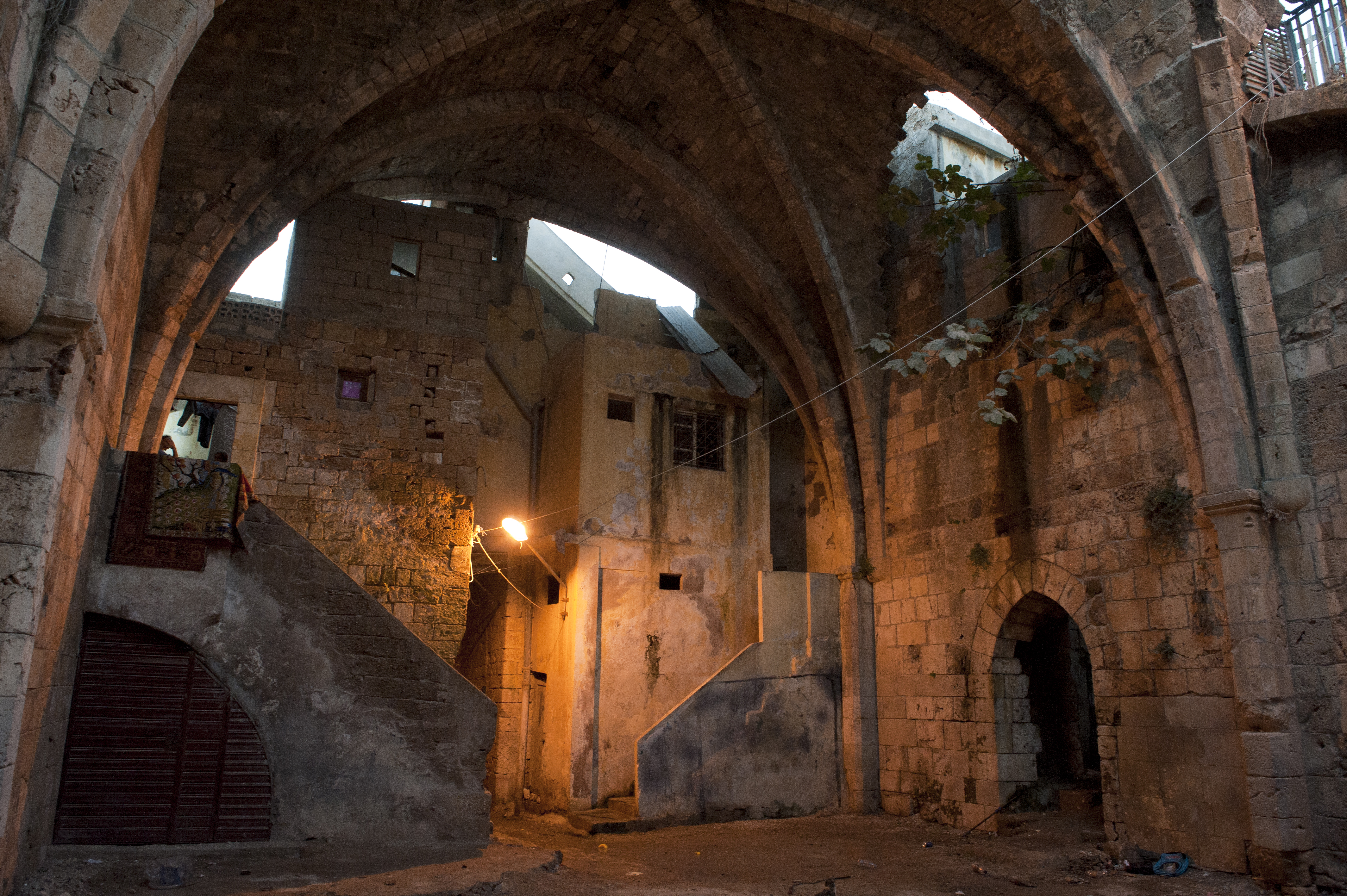
In 1152, Tortosa was handed to the Knights Templar, who used it as a military headquarters. They engaged in some major building projects, constructing a castle around 1165 with a large chapel and an elaborate keep, surrounded by thick double concentric walls. The Templars' mission was to protect the city and surrounding lands, some of which had been occupied by Christian settlers, from Muslim attack. Nur ad-Din Zangi captured Tartus from the Crusaders for a brief time before he lost it again.
The city of Tortosa was recaptured by Saladin in 1188, and the main Templar headquarters was relocated to Cyprus. However, in Tortosa, some Templars were able to retreat into the keep, which they continued to use as a base for the next 100 years. They steadily added to its fortifications until it also fell, in 1291. Tortosa was the last outpost of the Templars on the Syrian mainland, after which they retreated to a garrison on the nearby island of Arwad, which they held for another decade. After the occupation by the Mamluks, the city lost its prestige, which it regained only under the Ottoman rule.
Ottoman era
During the Ottoman rule, the city gained importance mainly due to trade with Cyprus and Europe. At the turn of the 18th and 19th centuries, it became one of the coastal defense points due to its strategic port. In 1832, at the beginning of the First Egyptian-Ottoman War, the city and its surroundings were conquered by Muhammad Ali Pasha, then ruler of Egypt.
In 1839, the Ottoman Empire reconquered its Syrian coastal territories from Egypt with the support of Great Britain. In 1840, during the Syrian War, British frigates HMS , HMS and , with the help of a landing force of marines, attacked the citadel in Tartus. Despite heavy losses, the British failed to capture the fort. Ottoman rule continued until 1918.
Modern era

On May 23, 2016, the Islamic State of Iraq and the Levant claimed responsibility for three suicide bombings at a bus station in Tartus, which had remained largely unaffected since the Syrian Civil War began in 2011 and continues to remain that way, as a stronghold of the Government of Syria. Purportedly targeting Alawite gatherings, the bombs killed 48 people. In Jableh, similarly insulated, another four bombers killed over a hundred people.
On December 15, 2024, Israeli Air Forces bombed the coastal city and its vicinity in an offensive which targeted military facilities following the fall of the Assad regime. At 11:49 pm, a 3.1 earthquake which might have been caused by the explosions was reported with its epicenter about 28 km off the coast of Baniyas, according to seismic sensors in the region. The Syrian Observatory for Human Rights has reported that the strikes were "some of the heaviest in the region since 2012".
Geography
The city lies on the eastern coast of the Mediterranean Sea bordered by the Syrian Coastal Mountain Range to the east. Arwad, the only inhabited island on the Syrian coast, is located a few kilometers off the shore of Tartus. Tartus occupies most of the coastal plain, surrounded to the east by mountains composed mainly of limestone and, in certain places around the town of Souda, basalt.
Climate
Tartus has a Mediterranean climate (Köppen (Csa) with mild, wet winters, hot and humid summers, and short transition periods in April and October. The hills to the east of the city create a cooler climate with higher rainfall. Tartus is known for its relatively mild weather and high precipitation compared to inland Syria.
Economy
Industry
There is a cement plant in the city with a production capacity of 6.5 thousand tons of cement per day. The pharmaceutical industry is also represented in the city, since the beginning of the conflict in the country, seven pharmaceutical factories have been opened and another 3 are under construction. Food, chemical and wood processing industries are also represented in the urban industrial zone.
Many residents are employed in the service sector.
Tartus port

Tartus is an important trade center in Syria and has one of the two main ports of the country on the Mediterranean. In 2005, the city port underwent major expansion as a lot of Iraqi imports come through the port of Tartus to aid reconstruction efforts in Iraq.
In July 2025, Syria concluded an $800 million deal with Dubai-based DP World to redevelop Tartus port as part of post-war reconstruction efforts. The contract was signed in Damascus between DP World and the General Authority for Land and Sea Ports, in the presence of Syrian president Ahmed al-Sharaa.
Russian naval base
Main article: Tartus naval base
Tartus hosts a Soviet-era naval supply and maintenance base, under a 1971 agreement with Syria, which is still staffed by Russian naval personnel. Tartus is the last Russian military base outside the former Soviet Union, and its only Mediterranean fueling spot, sparing Russia's warships the trip back to their Black Sea bases through straits in Turkey, a NATO member. On 22 January 2025 the new Syrian government terminated the treaty allowing Russian military presence in Syria.
Tourism

_-_panoramio.jpg)
Tartus is a popular destination for tourists with many resorts along the Syrian coast.
Culture
Art and festivals

Many cultural and literary events, art festivals and theater are held in the city, and in the summer, the activities of the Tartous Art Festival are held in the presence of distinguished Syrian and Arab artists, in addition to a tourist festival called Antaradus.
Assi Rahbani and Mansour Rahbani, frequent visitors to Tartus, immortalized their love for the city in a song, Shabab Al-Hilweh, sung by Nasri Shamseddine. Among the composers whose name is associated with Tartous and Husayn al-Baher is the musician Safwan Bahlawan Ibn Arwad who has a distinguished performance in the pub and his artistic presence on the Arab art scene. Residents of the city include the singer Farrah Yousef, finalist of the singing competition Arab Idol and Taim Hasan, an actor known for his dramatic roles in Syria and the Arab world.
Many poets and writers have lived in Tartus, including Saadallah Wannous, Muhammad Omran, Rasha Omran and Nadim Muhammad. Some writers hold their literary seminars and lectures in the local cultural center.
Museum
Main article: Cathedral of Our Lady of Tortosa

St. Mary's Cathedral was originally built in the 12th century as a Templar church. The cathedral was used as a mosque after the Muslim capture of the city, then as a barracks by the Ottomans. It was renovated under the French Mandate and since 1956, the building has housed the National Museum of Tartus, which exhibits antiquities recovered from Amrit and many other places in the region.
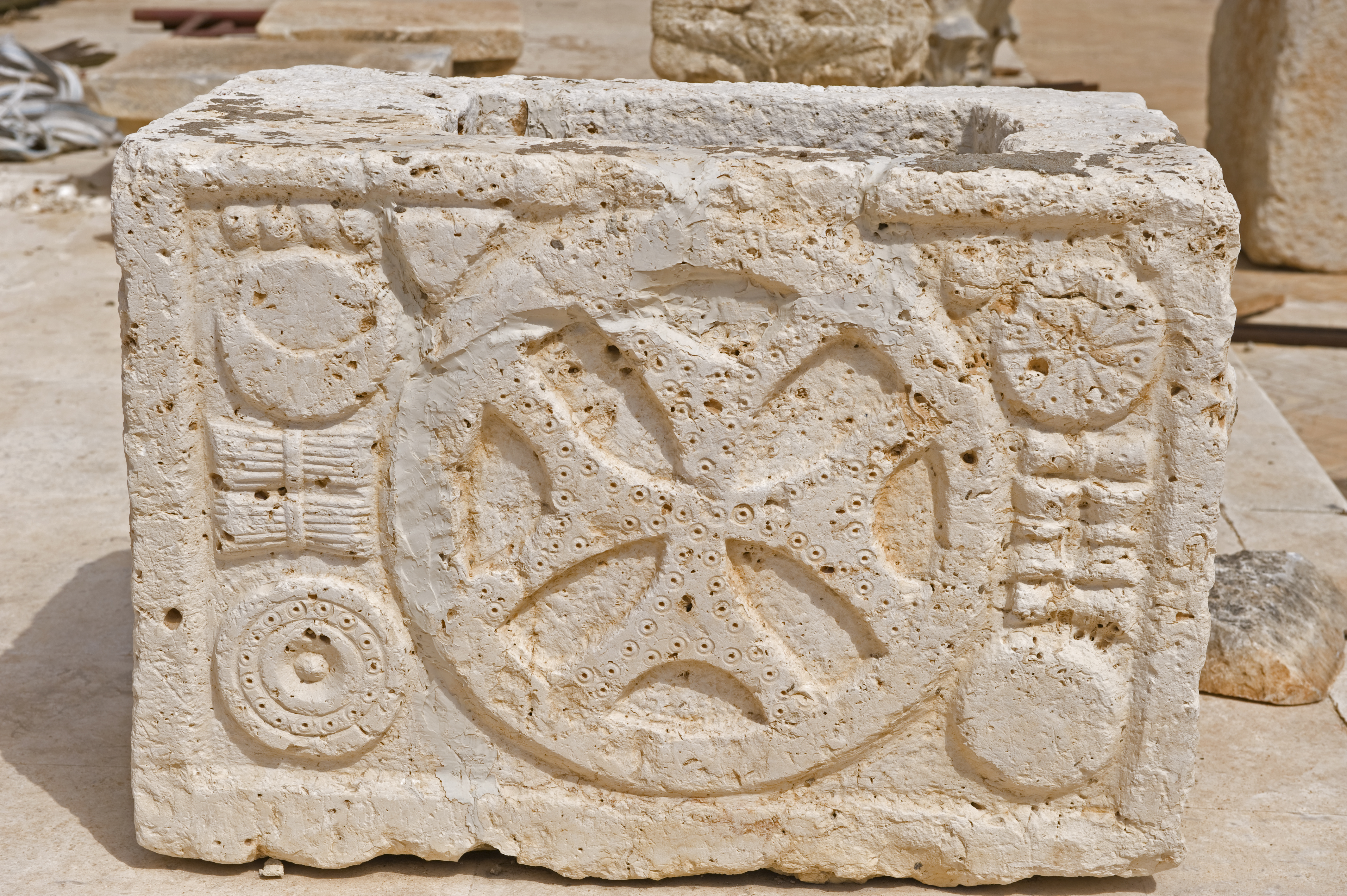
In September 2021, the Directorate-General of Antiquities began a comprehensive renovation and fixing operations of architectural elements that were subjected to fragmentation at the National Museum of Tartus.
Sports


Tartus is the home city of only one sports club: Al-Sahel SC, founded in 1971. 4 types of sports are being practiced by the club including: football, basketball, table tennis and bodybuilding. The club plays in both stadiums in the city: Municipal (capacity 1,300) and Bassel Al-Assad (capacity 8,000).
In 2018, Al-Sahel was promoted to the Syrian Premier League for the first time in their history. In the 2020-21 season, they were relegated and have been playing in the Syrian League 1st Division ever since. The women's basketball team competes at the top level of the Syrian basketball league.
Education
A number of colleges affiliated with Latakia University, such as the College of Arts and the College of Technical Engineering, were opened as part of the government's policy to expand higher education among the various Syrian cities. The city also has a number of institutes, secondary schools and primary schools affiliated with the Ministry of Education, in addition to private educational institutes and secondary schools.
Local infrastructure


Tartus has expanded over time. Gardens in the city include Tartus Park. Tartus was an attractive destination for tourists from Europe and Arab countries prior to the civil war.
Transportation

Tartus has a developed road system. Tartus and Latakia are connected by the M1 international highway, and the city is connected to Damascus by the M5 highway via Homs. The establishment of an international road linking Tartus with Iraq and other Arab states of the Persian Gulf through the Syrian Desert was recently studied, as it is the shortest road connecting the Persian Gulf to the Mediterranean and thus Europe from the Port of Tartus. The main commercial coastal road of the city is Al-Thawra Street, named after 1963 March Revolution.
The railway network operated by Syrian Railways connects Tartus with other cities in Syria, although currently only the Latakia-Tartus and Tartus-Al Akkari-Homs passenger connections are in service. The restoration of the rail link with Iraq (IRR) and the proposal to extend the railway from Al-Qaim in Iraq through Al-Bukamal in Syria to Homs for a total distance of 270 kilometers and thence to Tartus are currently (2022) under discussion.
Main sights


The historic centre of Tartus consists of more recent buildings built on and inside the walls of the Crusader-era Templar fortress, whose moat still separates this old town from the modern city on its northern and eastern sides. Outside the fortress few historic remains can be seen, with the exception of the former Romanesque-Gothic cathedral Cathedral of Notre-Dame of Tartus, from the 12th century.

Tartus and the surrounding area are rich in antiquities and archeological sites. Various important and well known sites are located within a 30-minute drive from Tartus. These attractions include:
- The old city of Tartus.
- Margat Castle, north of the city.
- The historic town of Safita.
- Arwad island and castle.
- The ancient Cathedral of Our Lady of Tortosa, now used as the city museum.
- Beit el-Baik Palace.
- Sheikh Saleh al-Ali shrine in Al-Shaykh Badr.
- Hosn Suleiman Temple.
- Drekish town-resort.
Aside from these historic sites, more modern attractions include:
- Alrimal Alzahabeya beach resort.
- Junada hotel (previously called Porto Tartous).
- Holiday beach resort.
- Mashta Al Helou resort.
The outlying town of Al Hamidiyah just south of Tartus is notable for having a Greek-speaking population of about 3,000 who are the descendants of Ottoman Greek Muslims from the island of Crete but usually confusingly referred to as Cretan Turks. Their ancestors moved there in the late 19th century as refugees from Crete after the Kingdom of Greece acquired the island from the Ottoman Empire following the Greco-Turkish War of 1897. Since the start of the Iraqi War, a few thousand Iraqi nationals now reside in Tartus.
International relations
Twin towns — sister cities
Tartus is twinned with:
- TUR Kütahya, Turkey
- GRE Piraeus, Greece (2022)
- ESP Tortosa, Spain (2007)
Notable people
- Saadallah Wannous (1941–1997), playwright and first Arab to deliver the International Theatre Day address
- Sheikh Saleh Al-Ali, pre-independence Syrian revolutionary who fought against the French mandate
- Dr. Halim Barakat, novelist, sociologist and retired research professor
- Mohammad Yousaf Abu al-Farah Tartusi, Muslim saint of the Junaidia order
- Jamal Suliman, actor
- Ghassan Massoud, actor
- Taim Hasan, actor
- Farrah Yousef, singer and Arab Idol Season 2 finalist
- Assef Shawkat, former deputy Minister of Defense of Syria and brother-in-law of Syrian President Bashar al-Assad
References
References
- "Tartus Population 2023". Macrotrends.
- (2025-11-06). "Tartous - Syrian Arab News Agency (SANA)".
- "Tartus in the Present Crisis: A Mirror of the Syrian Regime".
- (June 2014). "Syrian Arab Republic – Governorates profile". UNOCHA.
- "Syria Provinces".
- "world population review". world population review.
- [http://lexicorient.com/e.o/tartus.htm Tartus] Encyclopaedia of the Orient. Retrieved 2007, 06-26.
- (2010-10-29). "Digital Heritage: Third International Euro-Mediterranean Conference, EuroMed 2010, Lemessos, Cyprus, November 8-13, 2010. Proceedings". Springer Science & Business Media.
- [http://www.syriagate.com/Syria/about/cities/Tartous/history.htm History of Tartous] {{webarchive. link. (2007-07-04 Syria Gate. Retrieved 2007, 06-26.)
- Pius Bonifacius Gams, [http://www.wbc.poznan.pl/dlibra/doccontent?id=65154&dirids=1 ''Series episcoporum Ecclesiae Catholicae''], Leipzig 1931, p. 434
- Michel Lequien, [https://books.google.com/books?id=86weAemI-e4C ''Oriens christianus in quatuor Patriarchatus digestus''], Paris 1740, Vol. II, coll. 827-830
- Konrad Eubel, ''Hierarchia Catholica Medii Aevi'', [http://sul-derivatives.stanford.edu/derivative?CSNID=00002716&mediaType=application/pdf vol. 1], p. 92; [http://sul-derivatives.stanford.edu/derivative?CSNID=00002717&mediaType=application/pdf vol. 2], p. XII and 89
- ''Annuario Pontificio 2013'' (Libreria Editrice Vaticana 2013 {{ISBN. 978-88-209-9070-1), p. 833
- "Ṭarṭūs | Syria | Britannica".
- "The origins of the Islamic state : being a translation from the Arabic". Columbia University.
- "Al-Kāmil fī al-tārīkh". Al-Warraq website.
- Muhammad ibn Saad, ''Tabaqat'' vol. 8. Translated by Bewley, A. (1995). ''The Women of Madina'', p. 10. London: Ta-Ha Publishers.
- Boas, Adrian. (1999). "Crusader Archaeology". Routledge.
- Boas, Adrian. (1999). "Crusader Archaeology". Routledge.
- {{Cite EB1911. Ernest. Barker
- ''Lost Worlds: Knights Templar''. [[History (U.S. TV channel). History Channel]] video documentary, first aired July 10, 2006.
- Barber, M.. (2012). "The Crusader States". Yale University Press.
- Burgtorf, Jochen. (2006). "Acre, Siege of (1291)". [[ABC-CLIO]].
- Cummins 2011, p. 94.
- Trevor N. Dupuy. (1993). "The First Turko-Egyptian War." ''The Harper Encyclopedia of Military History''. HarperCollins Publishers, {{ISBN. 978-0062700568, p. 851
- [[Charles John Napier]]. (1842). "The war in Syria". John W. Parker.
- {{London Gazette. (17 November 1840)
- AFP. (24 May 2016). "IS blasts in Syria regime heartland kill more than 148". [[Channel NewsAsia]].
- (16 December 2024). "Watch: Israeli strike in Syria causes 'seismic' explosion". The Telegraph.
- (16 December 2024). "Tartus strikes said picked up by quake monitor". The Times of Israel.
- (15 December 2024). "Syria War Monitor Says Israel Struck Military Targets On Syrian Coast". Barron's.
- (16 December 2024). "The most violent round of airstrikes ever {{!}} Israeli fighter jets carry out 18 airstrikes, targeting military positions in Syrian coastlines". SOHR.
- "Central Bureau of Statistics". Cbssyr.org.
- (31 January 2022). "Cement Factory in Tartous province".
- (29 May 2022). "Pharmaceutical industry reactivated in Tartous through 7 laboratories". SANA.
- "28 new industrial facilities start production in Tartous during first half of 2019". SANA.
- (22 October 2021). "58 new facilities at Tartous industrial zone".
- "World Bank Progress Report, 31 December 2005".
- (2025-07-13). "Syria signs $800m Tartous port deal with UAE firm DP World".
- Kramer, Andrew E.. (June 18, 2012). "Russian Warships Said to Be Going to Naval Base in Syria". The New York Times.
- Times, The Moscow. (2025-01-22). "Syria Terminates Russian Naval Base Deal – Reports".
- (2025-01-22). "Syria terminates Tartus port management contract with Russian company".
- (19 August 2015). "Al-Ahlam Beach in Tartus". SANA.
- (24 November 2021). "أيام الثقافة في طرطوس تستعيد تجربة الشاعر الراحل نديم محمد". SANA.
- (27 September 2014). "Antradous… messages of homeland" Festival wraps up activities".
- (2020-09-11). "مهرجان صور الموسيقي الدولي... تحية إلى نصري شمس الدين".
- Nidhal Qushha. (12 September 2019). "With music, Syrian artist Safwan Bahlawan mimics the pulse of life". The Arab Weekly.
- (2013-06-23). "Region's woes take center stage as refugee becomes Arab Idol". [[Al Arabiya]].
- (November 14, 2010). "The 2nd Caliph, Omar Ibn al-Khattab, to appear on the Arab silver screen". DayPress.
- (7 March 2022). "Tartous Museum". SANA.
- Nisreen Othman/ Mazen Eyon. (14 September 2021). "Archaeology Department starts acts of restoration of Tartous Cathedral Museum". SANA.
- (12 May 2018). "نادي "الساحل".. دوري الأضواء بعد سبعة وأربعين عاماً". esyria.
- [http://www.esyria.sy/etartus/index.php?p=stories&category=sport&filename=201109170955063 Al-Asahel Sports Club of Tartus (in Arabic)]
- "Latakia University - About".
- "Tartus - Syrian Arab Republic | Data and Statistics".
- (23 October 2017). "Premier Khamis inspects a number of projects in Tartous". SANA.
- (8 December 2021). "Tartous Rain today 8-12-2021". SANA.
- (25 February 2022). "The beauty of nature in Kafroun town,Tartous countryside". SANA.
- Jansen, Michael. (26 February 2020). "Capture of M5 one of the most celebrated prizes in Damascus' campaign to regain territory".
- "Chemins de fer Syriens". Jaynes.
- Majda Muhsen, Anoop Menon. (9 June 2022). "Iraq and Syria discuss railway link". Zawya project.
- "Iran and Iraq again agree to connect their railway networks".
- Moaz, Abd al-Razzaq. (2015). "The Ayyubid Era: Art and Architecture in Medieval Spain". Museum with no Frontiers.
- (9 November 2021). "Ancient Tartous… Fragrance of civilization and history(photos)". SANA.
- (2010). "Syria and Bilad al-Sham under Ottoman Rule". Brill.
- [http://webs.uvigo.es/ssl/actas2002/05/08.%20Roula%20Tsokalidou.pdf Greek-Speaking Enclaves of Lebanon and Syria] by Roula Tsokalidou. Proceedings ''II Simposio Internacional Bilingüismo''. Retrieved December 4, 2006.
- [http://www.orsam.org.tr/en/enUploads/Article/Files/2010110_sayi11_eng_web.pdf The forgotten Turks: Turkmens of Lebanon] {{webarchive. link. (2016-03-03 (report). Center for Middle Eastern Strategic Studies. February 2010. Retrieved 8-5-2015. p. 14. "The locals of Hamidiye do not describe themselves as Cretan Turks, but as Cretan Muslims or Ottomans (Kiritlar = Cretans in turkish). Some locals in Tripoli define themselves as Cretan Turks.")
- (2013-08-01). "Kütahya'nın 10 "kardeş şehri" var Kaynak: Kütahya'nın 10 kardeş şehri var". Gündem Gazetesi.
- (21 September 2018). "Αδελφοποιμένες Πόλεις". Piraeus.
- "Presentació". Tortosa.
- "Halim Barakat". Halim Barakat.
- Sultan Mohammad Najib-ur-Rehman. (11 March 2015). "Sultan-Bahoo-The-Life-and-Teachings". Sultan-ul-Faqr Publications Regd.
This article was imported from Wikipedia and is available under the Creative Commons Attribution-ShareAlike 4.0 License. Content has been adapted to SurfDoc format. Original contributors can be found on the article history page.
Ask Mako anything about Tartus — get instant answers, deeper analysis, and related topics.
Research with MakoFree with your Surf account
Create a free account to save articles, ask Mako questions, and organize your research.
Sign up freeThis content may have been generated or modified by AI. CloudSurf Software LLC is not responsible for the accuracy, completeness, or reliability of AI-generated content. Always verify important information from primary sources.
Report