From Surf Wiki (app.surf) — the open knowledge base
Tanner scale
Physical development scale of children, adolescents, and adults
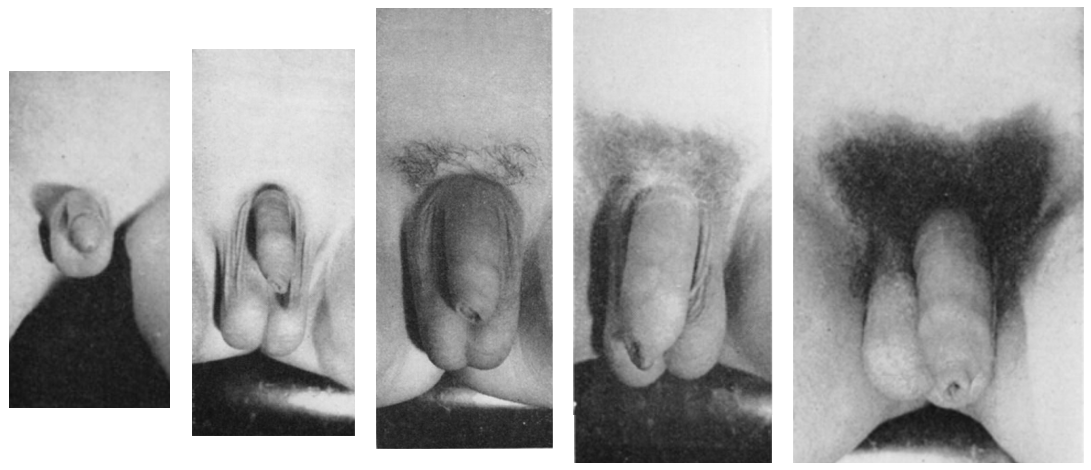
Physical development scale of children, adolescents, and adults
| Field | Value |
|---|---|
| name | Tanner scale |
| purpose | Defines physical measurements of development |
| synonyms | Tanner stages 4 |
The Tanner scale (also known as the Tanner stages or sexual maturity rating (SMR)) is a scale of physical development as pre-pubescent children transition into adolescence, and then adulthood. The scale defines physical measurements of development based on external primary and secondary sex characteristics, such as the size of the breasts, length of the penis, volume of the testes, and growth of pubic hair. This scale was first quantified in 1969 by James Tanner, a British pediatrician, after a two-decade study following the physical changes in girls undergoing puberty.
Due to natural variation, individuals pass through the Tanner stages at different rates, depending in particular on the timing of puberty. Among researchers who study puberty, the Tanner scale is commonly considered the "gold standard" for assessing pubertal status when it is conducted by a trained medical examiner. In HIV treatment, the Tanner scale is used to determine which regimen to follow for pediatric or adolescent patients on antiretroviral therapy (adult, adolescent, or pediatric guidelines). The Tanner scale has also been used in forensics to determine aging, but its usage has decreased due to lack of reliability.
Stages
Adapted from Adolescent Health Care: A Practical Guide by Lawrence Neinstein.
Genitals (male)
; Tanner I : testicular volume less than 1.5 ml; small penis (prepubertal) ; Tanner II : testicular volume between 1.6 and 6 ml; skin on scrotum thins, reddens and enlarges; penis length unchanged ; Tanner III : testicular volume between 6 and 12 ml; scrotum enlarges further; penis begins to lengthen ; Tanner IV : testicular volume between 12 and 20 ml; scrotum becomes larger and darkens; penis further increases in length and starts to increase in breadth ; Tanner V : testicular volume at least 20 ml; adult scrotum and penis
Breasts (female)

; Tanner I : no glandular tissue: areola follows the skin contours of the chest (prepubertal) ; Tanner II : breast bud forms, with small area of surrounding glandular tissue; areola begins to widen ; Tanner III : breast begins to become more elevated, and extends beyond the borders of the areola, which continues to widen but remains in contour with surrounding breast ; Tanner IV : increased breast sizing and elevation; areola and papilla form a secondary mound projecting from the contour of the surrounding breast ; Tanner V : breast reaches final adult size; areola returns to contour of the surrounding breast, with a projecting central papilla
Pubic hair (both male and female)

; Tanner I : no pubic hair at all (prepubertal) ; Tanner II : small amount of long, downy hair with slight pigmentation at the base of the penis and scrotum (males) or on the labia majora (females) ; Tanner III : hair becomes more coarse and curly, and begins to extend laterally ; Tanner IV : adult-like hair quality, extending across pubis but sparing medial thighs ; Tanner V : hair extends to medial surface of the thighs
Height
During Tanner V, females stop growing and reach their adult height. Usually, this happens in their mid teens at 14 or 15 years for females.
Males also stop growing and reach their adult height during Tanner V; usually this happens in their late teens at 16 to 17 years, but can be a lot later, even into the early 20s.
Historical data
In 1970 Britain, boys reached the last Tanner stage, the postpubertal stage, on average at the age of 14.9 years and girls around the age of 14 depending on social class and the particular study. In the nearly fifty years since those studies, the ages at which children are beginning puberty has only declined: () "The age of puberty, especially female puberty, has been decreasing in western cultures for decades now [...] for example, at the turn of the 20th century, the average age for an American girl to get her period was 16 or 17. Today, that number has decreased to 12 or 13 years."
Criticism
The scale has been criticized by the pornography industry for its potential to lead to false child pornography convictions, such as in the case of pornographic actress Lupe Fuentes where in 2009 United States federal authorities used it to assert that she was not an adult despite her age. Fuentes personally appeared at the trial and provided documentation that showed that the DVDs in question were legally produced.
Tanner, the author of the classification system, has argued that age classification using the stages of the scale misrepresents the intended use. Tanner stages do not match with chronological age, but rather maturity stages and thus are not diagnostic for age estimation.
References
References
- {{WhoNamedIt. synd. 3082. Tanner's stages
- (February 1970). "Variations in the pattern of pubertal changes in boys". Arch. Dis. Child..
- (June 1969). "Variations in pattern of pubertal changes in girls". Arch. Dis. Child..
- (2019). "Tanner Stages". StatPearls Publishing.
- (February 2011). "Puberty and Its Measurement: A Decade in Review". Journal of Research on Adolescence.
- "Adolescents and Young Adults with HIV Considerations for Antiretroviral Use in Special Patient Populations Adult and Adolescent ARV".
- (2015-09-29). "Encyclopedia of forensic and legal medicine".
- (2008). "Adolescent health care : a practical guide". Lippincott Williams & Wilkins.
- (1 February 1970). "Variations in the Pattern of Pubertal Changes in Boys". Archives of Disease in Childhood.
- (10 January 2018). "The decreasing age of puberty".
- (April 16, 2010). "Lupe Fuentes Saves Man From Bogus 'Child Porn' Charge". AVN.
- (April 21, 2010). "Adult Film Star Verifies Her Age, Saves Fan From 20 Years In Prison". Radar Online.
- Rosenbloom, AL. (December 1998). "Misuse of Tanner puberty stages to estimate chronologic age.". Pediatrics.
This article was imported from Wikipedia and is available under the Creative Commons Attribution-ShareAlike 4.0 License. Content has been adapted to SurfDoc format. Original contributors can be found on the article history page.
Ask Mako anything about Tanner scale — get instant answers, deeper analysis, and related topics.
Research with MakoFree with your Surf account
Create a free account to save articles, ask Mako questions, and organize your research.
Sign up freeThis content may have been generated or modified by AI. CloudSurf Software LLC is not responsible for the accuracy, completeness, or reliability of AI-generated content. Always verify important information from primary sources.
Report