From Surf Wiki (app.surf) — the open knowledge base
Talking Heads
American rock band
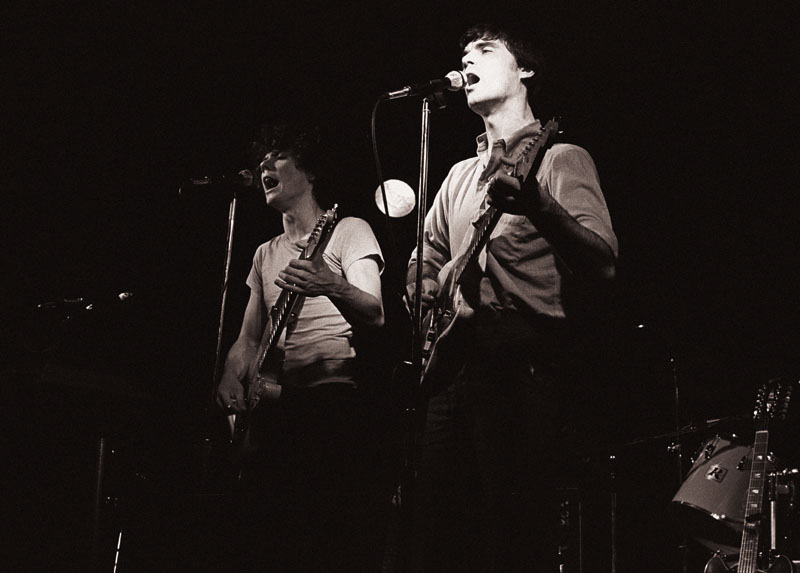
American rock band
| Field | Value | |
|---|---|---|
| name | Talking Heads | |
| background | group_or_band | |
| image | Talking Heads Remain In Light (1980 Sire publicity photo) (5-4 cropped).jpg | |
| landscape | yes | |
| caption | Talking Heads . Left to right: David Byrne, Jerry Harrison, Tina Weymouth, Chris Frantz. | |
| origin | ||
| genre | {{flatlist | |
| works | Discography | |
| years_active | * | |
| label | {{flatlist | |
| spinoffs | {{flatlist | |
| past_members | * David Byrne | |
| alias | *The Artistics | |
| website | ||
| module | {{Infobox | |
| child | yes | |
| headerstyle | background:#b0c4de | |
| data2 | [[File:Talking Heads Remain in Light band logo.svg | 240px]] |
- New wave
- post-punk
- avant-funk
- art pop
- worldbeat
- Sire
- Warner Bros.
- Tom Tom Club
- Casual Gods
- The Heads
- Chris Frantz
- Tina Weymouth
- Jerry Harrison
- Shrunken Heads Talking Heads were an American rock band formed in New York City in 1975. It consisted of vocalist-guitarist David Byrne, drummer Chris Frantz, bassist Tina Weymouth, and guitarist-keyboardist Jerry Harrison. Described as "one of the most critically acclaimed groups of the '80s," Talking Heads helped to pioneer new wave music by combining elements of punk, art rock, funk, and world music with "an anxious yet clean-cut image".
Byrne, Frantz, and Weymouth met as freshmen at the Rhode Island School of Design, where Byrne and Frantz were part of a band called the Artistics. The trio moved to New York City in 1975, adopted the name Talking Heads, joined the New York punk scene, and recruited Harrison to round out the band; this lineup remained the same for the rest of Talking Heads' career. Signing to Sire Records in 1976, the band's debut album, Talking Heads: 77, was released in the following year to positive reviews. They collaborated with the British producer Brian Eno on the acclaimed albums More Songs About Buildings and Food (1978), Fear of Music (1979), and Remain in Light (1980), which blended their art school sensibilities with influence from artists such as Parliament-Funkadelic and Fela Kuti. From the early 1980s, they included additional musicians in their recording sessions and shows, including guitarist Adrian Belew, keyboardist Bernie Worrell, singer Nona Hendryx, and bassist Busta Jones.
Talking Heads reached their commercial peak in 1983 with the U.S. Top 10 hit "Burning Down the House" from the album Speaking in Tongues. In 1984, they released the concert film Stop Making Sense, which was directed by Jonathan Demme. For these performances, they were joined by Worrell, guitarist Alex Weir, percussionist Steve Scales, and singers Lynn Mabry and Ednah Holt. In 1985, Talking Heads released their best-selling album, Little Creatures. They produced a soundtrack album for Byrne's film True Stories (1986), and released their final album, the worldbeat-influenced Naked (1988), before disbanding in 1991. Without Byrne, the other band members performed under the name Shrunken Heads, and released an album, No Talking, Just Head, as the Heads in 1996, featuring various singers in place of Byrne.
Four of their albums appeared on Rolling Stones 2003 list of the "500 Greatest Albums of All Time", and three of their songs—"Psycho Killer", "Life During Wartime", and "Once in a Lifetime"—were included among the Rock and Roll Hall of Fame's 500 Songs That Shaped Rock and Roll. The band was also ranked number 64 on VH1's list of the "100 Greatest Artists of All Time". In the 2011 update of Rolling Stones list of the "100 Greatest Artists of All Time", they were ranked number 100.
History
1973–1977: Early years
Main article: Talking Heads: 77
In 1973, Rhode Island School of Design students David Byrne (guitar and vocals) and Chris Frantz (drums) formed a band, the Artistics. Frantz has described the Artistics as a "prototype punk band" that would perform a number of covers, including "Psycho" by the Sonics, the Who's "I Can't Explain" and Al Green's "Love and Happiness", live. Fellow student Tina Weymouth, Frantz's girlfriend, often provided transportation. The Artistics dissolved the following year, and the three moved to New York City, eventually sharing a communal loft. After they were unable to find a bassist, Weymouth took up the role. Frantz encouraged Weymouth to learn to play bass by listening to Suzi Quatro albums. Byrne asked Weymouth to audition three times before she joined the band.
The band played their first gig as Talking Heads—opening for the Ramones at CBGB in the East Village—on June 5, 1975. According to Weymouth, the name Talking Heads came from an issue of TV Guide, which "explained the term used by TV studios to describe a head-and-shoulder shot of a person talking as 'all content, no action'. It fit." Later that year, the band recorded a series of demos for CBS, but did not receive a record contract. However, they drew a following and signed to Sire Records in November 1976. They released their first single in February the following year, "Love → Building on Fire". In March 1977, they added Jerry Harrison, formerly of the Modern Lovers, on keyboards, guitar, and backing vocals. Gary Kurfirst started managing Talking Heads in 1977.{{citation |title=Ramones, Jane's Addiction, Talking Heads manager passes away
The first Talking Heads album, Talking Heads: 77, received acclaim and produced their first charting single, "Psycho Killer". Many connected the song to the serial killer known as the Son of Sam, who had been terrorizing New York City months earlier; however, Byrne said he had written the song years prior. Weymouth and Frantz married in 1977.
1978–1980: Collaborations with Brian Eno
Main article: More Songs About Buildings and Food, Fear of Music, Remain in Light

More Songs About Buildings and Food (1978) was Talking Heads' first collaboration with producer Brian Eno, who had previously worked with Roxy Music, David Bowie, John Cale, and Robert Fripp; the title of Eno's 1977 song "King's Lead Hat" is an anagram of the band's name. Eno's unusual style meshed with the group's artistic sensibilities, and they began to explore an increasingly diverse range of musical directions—from psychedelic funk to Afrobeat, influenced prominently by Fela Kuti and Parliament-Funkadelic. This recording also established the band's relationship with Compass Point Studios in Nassau, The Bahamas. More Songs About Buildings and Food included a cover of Al Green's "Take Me to the River", which brought Talking Heads into the public consciousness and gave them their first Billboard Top 30 hit.
The collaboration continued with Fear of Music (1979), which mixed the darker stylings of post-punk rock with funk and subliminal references to the geopolitical instability of the late 1970s. Music journalist Simon Reynolds cited Fear of Music as representing the Eno–Talking Heads collaboration "at its most mutually fruitful and equitable". The single "Life During Wartime" produced the catchphrase "This ain't no party, this ain't no disco". The song refers to the Mudd Club and CBGB, two popular New York nightclubs of the time.
Remain in Light (1980) was heavily influenced by Fela Kuti, whose music had been introduced to the band by Eno. It explored West African polyrhythms, weaving these together with Arabic music from North Africa, disco, funk, and "found" voices. These combinations foreshadowed Byrne's later interest in world music. To perform these more complex arrangements, the band toured with an expanded group, including guitarist Adrian Belew and keyboardist Bernie Worrell among others, first at the Heatwave festival in August 1980.
During this period, Weymouth and Frantz formed a commercially successful splinter group, Tom Tom Club, influenced by the foundational elements of hip hop, and Harrison released his first solo album, The Red and the Black. Byrne and Eno released My Life in the Bush of Ghosts, which incorporated world music, found sounds and a number of other prominent international and post-punk musicians.
Remain in Lights lead single, "Once in a Lifetime", became a Top 20 hit in the UK, but initially failed to make an impression in the US. It grew into a popular standard over the next few years on the strength of its music video, which Time named one of the greatest of all time.
1981–1991: Commercial peak and breakup
Main article: Speaking in Tongues (Talking Heads album), Little Creatures, True Stories (Talking Heads album), Naked (Talking Heads album)
After releasing four albums in barely four years, the group went on a recording hiatus, and nearly three years passed before their next release, although Frantz and Weymouth continued to record with Tom Tom Club. In the meantime, Talking Heads released the live album The Name of This Band Is Talking Heads, toured the United States and Europe as an eight-piece group, and parted ways with Eno, who went on to produce albums with U2.
1983 saw the release of Speaking in Tongues, a commercial breakthrough that produced the band's only American Top 10 hit, "Burning Down the House". Once again, a striking video was inescapable, owing to it being played so much on MTV. The following tour was documented in Jonathan Demme's Stop Making Sense, which generated another live album of the same name. The tour in support of Speaking in Tongues was their last.
Three more albums followed: 1985's Little Creatures (which featured the hit singles "And She Was" and "Road to Nowhere"), 1986's True Stories (Talking Heads covering all the soundtrack songs of Byrne's musical comedy film, in which the band also appeared), and 1988's Naked. Little Creatures offered a much more American pop-rock sound as opposed to previous efforts. Similar in genre, True Stories hatched one of the group's most successful hits, "Wild Wild Life", and the accordion-driven track "Radio Head". Naked explored politics, sex, and death, with much African influence of polyrhythmic styles like those seen on Remain in Light. During that time, the group was falling increasingly under David Byrne's control, and after Naked, the band went on "hiatus". In 1987, Talking Heads released a book by David Byrne, What the Songs Look Like: Contemporary Artists Interpret Talking Heads Songs, with HarperCollins that contained artwork by some of the top New York visual artists of the decade.

In December 1991, Talking Heads announced that they had disbanded. Their final release was "Sax and Violins", an original song that had appeared earlier that year on the soundtrack to Wim Wenders' Until the end of the World. Byrne continued his solo career, releasing Rei Momo in 1989 and The Forest in 1991. and Harrison (Casual Gods and Walk on Water), who toured together in 1990.
1992–present: Post-breakup and reunions
Harrison produced records such as the Violent Femmes' The Blind Leading the Naked; the Fine Young Cannibals' The Raw and the Cooked; General Public's Rub It Better; Crash Test Dummies' God Shuffled His Feet; Live's Mental Jewelry, Throwing Copper, and The Distance to Here; and No Doubt's song "New" from Return of Saturn. Frantz and Weymouth have produced for several artists, including Happy Mondays and Ziggy Marley. Tom Tom Club continues to record and tour intermittently.[[File:Talking Heads SXSW by Ron Baker.jpg|alt=|thumb|left|Weymouth, Frantz, and Harrison at [[SXSW]] in 2010]] Talking Heads reunited to play "Life During Wartime", "Psycho Killer", and "Burning Down the House" on March 18, 2002, at the ceremony of their induction into the Rock and Roll Hall of Fame, joined onstage by former touring members Bernie Worrell and Steve Scales. Byrne said further work together was unlikely, due to "bad blood" and being musically "miles apart". Weymouth has been critical of Byrne, describing him as "a man incapable of returning friendship" and saying that he did not "love" her, Frantz, and Harrison. In 2020, Frantz published a memoir about his relationship with Weymouth, Remain in Love, which covered the band's conflicts.
Weymouth, Frantz, and Harrison toured without Byrne as Shrunken Heads in the early 1990s. In 1996, they released an album, No Talking, Just Head, under the name the Heads. The album featured a number of vocalists, including Gavin Friday of the Virgin Prunes, Debbie Harry of Blondie, Johnette Napolitano of Concrete Blonde, Andy Partridge of XTC, Gordon Gano of Violent Femmes, Michael Hutchence of INXS, Ed Kowalczyk of Live, Shaun Ryder of Happy Mondays, Richard Hell, and Maria McKee. It was accompanied by a tour with Napolitano as the vocalist. Byrne took legal action to prevent the band using the name the Heads, which he saw as "a pretty obvious attempt to cash in on the Talking Heads name". The band briefly reunited in 1999 to promote the 15th anniversary re-release of Stop Making Sense, but did not perform together. In 2002, Talking Heads reunited for a one-off performance for their induction into the Rock and Roll Hall of Fame.
In September 2023, Stop Making Sense was re-released in IMAX with remastered sound and picture to coincide with the film's 40th anniversary. The band members reunited that month for a Q&A at the Toronto International Film Festival, following limited showings of the film in theaters, and gave subsequent interviews together to promote the re-release. With regard to the possibility of a reunion tour, Harrison told the Los Angeles Times: "Right now, we're concentrating on Stop Making Sense and how much fun we're having revisiting the film. We're living in the moment, so that's all we're thinking about." In January 2024, Billboard reported that Talking Heads had turned down an $80 million offer for a reunion tour, which would have included a performance at Coachella.
_(5-3_cropped).jpg)
In 2023 and 2025, Harrison and Belew toured with a band performing Remain in Light songs. On June 5, 2025, their 50th anniversary, Talking Heads released a music video for "Psycho Killer" directed by Mike Mills and starring Saoirse Ronan.
Musical style
AllMusic wrote that Talking Heads started out as "art-school punks", but evolved into one of the most celebrated bands of the post-punk era, and "had recorded everything from art-funk to polyrhythmic worldbeat explorations and simple, melodic guitar pop," by the time of their breakup. Media theorist Dick Hebdige said the group "draw eclectically on a wide range of visual and aural sources to create a distinctive pastiche or hybrid 'house style' which they have used since their formation in the mid-1970s deliberately to stretch received (industrial) definitions of what rock/pop/video/Art/ performance/audience are", calling them "a properly postmodernist band."
While originating in the New York punk scene, Talking Heads rose to prominence for their art pop innovations, which had a long-lasting impact on music. David Byrne's "manic yelp" combined with "tight R&B grooves" helped the band define the new wave genre in the United States, alongside Devo, Ramones, and Blondie. PopMatters labeled the band a "dance-rock outfit" who most in the punk subculture will have trouble getting into, due to their "outward antisocial stance." Talking Heads also embraced funk rock and experimental pop as their career progressed, while their more cosmopolitan hits like 1980's Remain in Light helped bring African rock to the Western world in the form of Afrobeat.
Legacy and influence
Talking Heads have been cited as an influence by many artists, including Nelly Furtado, Eddie Vedder, LCD Soundsystem, Foals, the Weeknd, Primus, Bell X1, the 1975, Kesha, St. Vincent, Danny Brown, Trent Reznor, Franz Ferdinand frontman Alex Kapranos, and Radio 4. Radiohead took their name from the 1986 Talking Heads song "Radio Head", and cited Remain in Light as a critical influence on their 2000 album Kid A. Italian filmmaker and director Paolo Sorrentino, receiving the Oscar for his film La Grande Bellezza in 2014, thanked Talking Heads, among others, as a source of inspiration.
Members
- David Byrne – lead vocals, guitar, keyboards, percussion (1975–1991, 2002)
- Chris Frantz – drums, percussion, backing vocals (1975–1991, 2002)
- Tina Weymouth – bass guitar, keyboards, backing vocals (1975–1991, 2002)
- Jerry Harrison – keyboards, guitar, backing vocals (1977–1991, 2002)
Additional musicians
- Adrian Belew – guitar, vocals (1980–1981)
- Alex Weir – guitar, vocals (1982–1984)
- Bernie Worrell – keyboards, backing vocals (1980–1984, 2002; died 2016)
- Raymond Jones – keyboards (1982)
- Busta Jones – bass (1980–1981; died 1995)
- Steve Scales – percussion, backing vocals (1980–1984, 2002)
- Dolette McDonald – vocals, cowbell (1980–1982)
- Nona Hendryx – vocals (1980, 1982)
- Ednah Holt – vocals (1983)
- Lynn Mabry – vocals (1983–1984)
- Stephanie Spruill – vocals (1984)
Timeline
ImageSize = width:850 height:auto barincrement:30 PlotArea = left:90 bottom:110 top:5 right:0 Alignbars = justify DateFormat = dd/mm/yyyy Period = from:05/06/1975 till:31/03/2002 TimeAxis = orientation:horizontal format:yyyy Legend = orientation:vertical position:bottom columns:3 ScaleMajor = increment:3 start:1976 ScaleMinor = increment:1 start:1976 Legend = orientation:vertical position:bottom columns:3
Colors = id:vocals value:red legend:Lead_vocals id:backing value:pink legend:Backing_vocals id:guitar value:green legend:Guitars id:keyboard value:purple legend:Keyboards id:bass value:blue legend:Bass id:drums value:orange legend:Drums id:perc value:claret legend:Percussion id:add value:yellow legend:Additional_musician id:lines value:black legend:Studio_album id:lines2 value:gray(0.65) legend:Live_album id:bars value:gray(0.9)
BackgroundColors = bars:bars
LineData = color:black layer:back at:16/09/1977 at:14/07/1978 at:03/08/1979 at:08/10/1980 at:31/05/1983 at:10/06/1985 at:07/10/1986 at:15/03/1988 color:lines2 layer:back at:24/03/1982 at:12/09/1984
BarData = bar:Byrne text:David Byrne bar:Belew text:Adrian Belew bar:Weir text:Alex Weir bar:Harrison text:Jerry Harrison bar:Worrell text:Bernie Worrell bar:RJones text:Raymond Jones bar:Weymouth text:Tina Weymouth bar:Jones text:Busta Jones bar:Frantz text:Chris Frantz bar:Scales text:Steve Scales bar:McDonald text:Dolette McDonald bar:Hendryx text:Nona Hendryx bar:Mabry text:Lynn Mabry bar:Holt text:Ednah Holt bar:Spruill text:Stephanie Spruil
PlotData = width:13 color:Vocals bar:Byrne from:05/06/1975 till:30/12/1991 bar:Byrne from:18/03/2002 till:18/03/2002
color:guitar bar:Byrne from:05/06/1975 till:30/12/1991 width:3 bar:Harrison from:01/03/1977 till:30/12/1991 width:7 bar:Belew from:01/08/1980 till:01/08/1981 bar:Weir from:01/09/1983 till:01/08/1984 bar:Byrne from:18/03/2002 till:18/03/2002 width:7 bar:Harrison from:18/03/2002 till:18/03/2002
color:keyboard bar:Harrison from:01/03/1977 till:30/12/1991 bar:Worrell from:01/08/1980 till:01/08/1984 bar:RJones from:01/01/1982 till:31/12/1982 bar:Harrison from:18/03/2002 till:18/03/2002 width:7 bar:Worrell from:18/03/2002 till:18/03/2002
color:bass bar:Weymouth from:05/06/1975 till:30/12/1991 bar:Jones from:01/08/1980 till:01/08/1981 bar:Weymouth from:18/03/2002 till:18/03/2002
color:drums bar:Frantz from:05/06/1975 till:30/12/1991 width:13 bar:Frantz from:18/03/2002 till:18/03/2002 width:13
color:perc bar:Frantz from:05/06/1975 till:01/07/1980 width:3 bar:Frantz from:01/07/1980 till:30/12/1991 width:7 bar:Scales from:01/08/1980 till:01/08/1984 width:13 bar:McDonald from:01/08/1980 till:01/08/1981 width:7 bar:Scales from:18/03/2002 till:18/03/2002
color:add width:7 bar:Belew from:01/08/1980 till:01/08/1981 bar:Weir from:01/09/1983 till:01/08/1984 bar:McDonald from:01/08/1980 till:01/08/1981 width:3 bar:Scales from:01/08/1980 till:01/08/1984 width:7 bar:Jones from:01/08/1980 till:01/08/1981 width:3 bar:Hendryx from:01/08/1980 till:31/12/1980 width:3 bar:Holt from:01/09/1983 till:31/12/1983 width:3 bar:Spruill from:01/01/1984 till:01/08/1984 width:3 bar:Mabry from:01/09/1983 till:01/08/1984 width:3 bar:Worrell from:01/08/1980 till:01/08/1984 bar:RJones from:01/01/1982 till:31/12/1982 width:3 bar:Worrell from:18/03/2002 till:18/03/2002 bar:Scales from:18/03/2002 till:18/03/2002
color:Backing width:3 bar:Harrison from:01/03/1977 till:30/12/1991 bar:Weymouth from:01/03/1978 till:30/12/1991 bar:Frantz from:01/07/1980 till:30/12/1991 bar:Belew from:01/08/1980 till:01/08/1981 bar:Worrell from:01/08/1980 till:01/08/1984 bar:Scales from:01/08/1980 till:01/08/1984 bar:McDonald from:01/08/1980 till:01/08/1981 width:13 bar:Hendryx from:01/08/1980 till:31/12/1980 width:13 bar:Weir from:01/09/1983 till:01/08/1984 width:3 bar:Mabry from:01/09/1983 till:01/08/1984 width:13 bar:Holt from:01/09/1983 till:31/12/1983 width:13 bar:Spruill from:01/01/1984 till:01/08/1984 width:13 bar:Weymouth from:18/03/2002 till:18/03/2002 bar:Harrison from:18/03/2002 till:18/03/2002 bar:Worrell from:18/03/2002 till:18/03/2002 bar:Scales from:18/03/2002 till:18/03/2002
Discography
Main article: Talking Heads discography, List of songs recorded by Talking Heads
- Talking Heads: 77 (1977)
- More Songs About Buildings and Food (1978)
- Fear of Music (1979)
- Remain in Light (1980)
- Speaking in Tongues (1983)
- Little Creatures (1985)
- True Stories (1986)
- Naked (1988)
Awards and nominations
References
- [https://www.rockhall.com/inductees/talking-heads Talking Heads] ''[[Rock and Roll Hall of Fame]]'', retrieved November 23, 2008
- Erlewine, Stephen Thomas. "Talking Heads: Biography". [[AllMusic]].
- Demorest, Stephen. (November 3, 1977). "Talking Heads '77".
- "The Songs That Shaped Rock and Roll".
- "The Greatest – Ep. 215".
- (2011). "100 Greatest Artists of All Time".
- Gittins, Ian, ''Talking Heads: Once in a Lifetime: the Stories Behind Every Song'', Hal Leonard Corporation, 2004, p. 140. {{ISBN. 0-634-08033-4, {{ISBN. 978-0-634-08033-3.
- Wisgard, Alex. (July 17, 2020). "Nine Songs – Chris Frantz from Talking Heads".
- Simon Reynolds. ''Rip It up and Start Again: Postpunk 1978–1984''. Penguin Books (2005) p. 159.
- Isola, Gregory (March 1997). [https://web.archive.org/web/20081206031839/http://www.bassplayer.com/article/tina-weymouth/mar-97/5958 "Tina Talks Heads, Tom Toms, and How to Succeed at Bass Without Really Trying"]. ''[[Bass Player (magazine). Bass Player]]''. Retrieved December 6, 2008.
- Jacques, Adam. (March 17, 2013). "How We Met: Chris Frantz & Tina Weymouth". The Independent.
- Weymouth, Tina (1992). In ''Sand in the Vaseline''. CD liner notes, p. 12. New York: Sire Records Company
- Greene, Andy. (July 11, 2013). "Flashback: Talking Heads Perform 'Psycho Killer' at CBGB in 1975".
- Ruhlmann, William. "Talking Heads 77". [[AllMusic]].
- Ian Gittins. (2004). "Talking Heads: Once in a Lifetime: The Stories Behind Every Song". Hal Leonard.
- Clarke, John. (July 4, 2013). "Rockers Chris Frantz and Tina Weymouth Talk Marriage".
- "Brian Eno {{!}} Credits". Allmusic.
- Ricchini, William. (November 12, 1996). "Napolitano Brings Out Best Of Heads". [[The Philadelphia Inquirer]].
- Pilchak, Angela M.. (2005). "Contemporary Musicians". [[Gale (publisher).
- Simon Reynolds. ''Rip It up and Start Again: Postpunk 1978–1984''. Penguin Books (2005) p. 163.
- Simon Reynolds. ''Rip It up and Start Again: Postpunk 1978–1984''. Penguin Books (2005) pp. 163–164.
- Janovitz, Bill. "Life During Wartime – Song Review". Allmusic.
- Robbins, Ira. (December 31, 1993). "20 Years Later, CBGB Ain't No Disco: Clubs: A look back as the Bowery bar concludes a monthlong celebration of its commitment to underground rock's trends". [[Los Angeles Times]].
- "The 100 most important American musical works of the 20th century". [[NPR]].
- Simon Reynolds. ''Rip It up and Start Again: Postpunk 1978–1984''. Penguin Books (2005) p. 165.
- Ankeny, Jason. "David Byrne {{!}} Biography". Allmusic.
- Robins, Jim. (September 6, 1980). "Expanded Talking Heads Climax Canadian New Wave Festival". [[The Michigan Daily]].
- Boehm, Mike. (September 10, 1992). "x-Heads Say They Got Byrned: Split Still Miffs Frantz, Weymouth, Even Though Tom Tom Club Keeps Them Busy". Los Angeles Times.
- Palmer, Robert. (November 18, 1981). "The Pop Life". [[The New York Times]].
- Bush, John. "My Life in the Bush of Ghosts". Allmusic.
- Simon Reynolds. ''Rip It up and Start Again: Postpunk 1978–1984''. Penguin Books (2005) p. 169.
- Sanburn, Josh. (July 26, 2011). "The 30 All-TIME Best Music Videos – Talking Heads, 'Once in a Lifetime' (1980)".
- Simon Reynolds. ''Rip It up and Start Again: Postpunk 1978–1984''. Penguin Books (2005) pp. 169–170.
- DeGagne, Mike. "Burning Down the House – Talking Heads – Song Review". Allmusic.
- Johnston, Maura. "Sick Of It All (16) Battles Talking Heads (8) As SOTC's March Madness Takes A Trip To CBGB". [[Village Voice]].
- Light, Alan. (January 25, 2010). "All-TIME 100 Albums".
- Milward, John. "The Many Faces And Artistic Endeavors Of The Talking Heads David Byrne And His Mates In The Band Are Keeping Busy – Together, With 'Naked', And On Their Own.". [[Philly.com]].
- Harvey, Eric. "David Byrne: Live From Austin TX". [[Pitchfork Media]].
- "Little Creatures – Talking Heads". Allmusic.
- Maslin, Janet. "True Stories (1986) DAVID BYRNE IN 'TRUE STORIES'". The New York Times.
- Ruhlmann, William. "Little Creatures". Allmusic.
- Hastings, Michael. "Talking Heads – True Stories". Allmusic.
- Pareles, Jon. (March 20, 1988). "Talking Heads get 'Naked'". [[Observer-Reporter]].
- Frantz said he learned that Byrne had left from an article in the ''Los Angeles Times'', and said: "As far as we're concerned, the band never really broke up. David just decided to leave."Boehm, Mike (September 10, 1992). "x-Heads Say They Got Byrned: Split Still Miffs Frantz, Weymouth, Even Though Tom Tom Club Keeps Them Busy". ''Los Angeles Times''.
- Ruhlmann, William. "Tom Tom Club {{!}} Biography". Allmusic.
- Christensen, Thor. (May 22, 1990). "Harrison starts to find own voice". [[The Milwaukee Journal]].
- "Jerry Harrison {{!}} Credits". Allmusic.
- Ruhlmann, William. "Tom Tom Club – Biography". Allmusic.
- Greene, Andy. (October 23, 2012). "Flashback: Talking Heads Reunite for One Night Only".
- Blackman, Guy. (February 6, 2005). "Byrning down the house". The Age.
- Greene, Andy. (August 16, 2023). "Talking Heads to Appear Together for First Time in 21 Years".
- Wilonsky, Robert. (October 21, 1999). "Heads up".
- Erlewine, Stephen Thomas. "No Talking Just Head – The Heads". Allmusic.
- Levine, Robert. (June 26, 1997). "Byrne-ing Down the House".
- (April 27, 1999). "Talking Heads talk again".
- (August 16, 2023). "Stop Making Sense".
- (September 22, 2023). "The everyday can be just fine". NPR.
- (September 24, 2023). "Talking Heads on the return of 'Stop Making Sense'". CBS News.
- (September 20, 2023). "A once-in-a-lifetime reunion: Talking Heads on 'Stop Making Sense,' the Big Suit and their future". [[Los Angeles Times]].
- "Coachella Wanted a Talking Heads Reunion, Too".
- (June 13, 2023). "Harrison/Belew/Cool Cool Cool "Remain in Light" Tour a Gift We Never Expected".
- "Talking Heads' Jerry Harrison & Adrian Belew announce 2025 'Remain in Light' tour dates".
- Joe Taysom. (June 4, 2025). "Talking Heads to release 'Psycho Killer' video starring Saoirse Ronan to celebrate 50th anniversary".
- Mitchell, Tony. (Oct 1989). "Performance and the Postmodern in Pop Music". Theatre Journal.
- "Talking Heads | Biography, Albums, Streaming Links".
- Gendron, Bernard. "Origins of the First Wave: The CBGB Scene (1974–75)". University of Chicago Press.
- Martin, Bill. (2015). "Music of Yes: Structure and Vision in Progressive Rock". Open Court.
- Pareles, Jon. (November 8, 1988). "Review/Music; How African Rock Won the West, And on the Way Was Westernized". New York Times.
- "NELLY FURTADO – Loose – ''The Story''". [[Universal Music]].
- SPIN staff. (July 15, 2003). "My Life in Music: Eddie Vedder".
- David Marchese. (August 21, 2017). "James Murphy on LCD Soundsystem". Vulture.
- "Foals Total Life Forever Review". BBC.
- Calum Slingerland. (February 6, 2016). "The Weeknd's New Album Is Inspired by Bad Brains, Talking Heads and the Smiths". [[Exclaim!]].
- [http://www.ram.org/music/primus/articles/mackerel_bio.html Primus press release]. Retrieved August 12, 2012.
- Matthew Magee. (July 27, 2003). "Clear as a Bell X1". [[Sunday Tribune]].
- Faughey, Darragh. (December 11, 2012). "The 1975 – Interview". GoldenPlec.
- (January 8, 2017). "Kesha's MySpace Profile from 2008 is Better Than DJ Khaled's Snapchat". Vice Media.
- Graves, Shahlin. "Interview: ANNIE CLARK a.k.a. ST. VINCENT on 'Strange Mercy'".
- (June 15, 2016). "Danny Brown talks Talking Heads and Radiohead influence".
- (September 26, 2020). "Trent Reznor on Talking Heads – Remain in Light (1980)".
- "Franz Ferdinand's Alex Kapranos On The Importance Of Structure".
- Jelbert, Steve. (February 28, 2003). "Radio 4: New York calling".
- Ross, Alex. (August 20, 2001). "The Searchers". [[The New Yorker]].
- (November 1, 2000). "No more Thom for guitar rock".
- Vivarelli, Nick. (March 3, 2014). "Italy Cheers Foreign Oscar Victory For Paolo Sorrentino's 'Beauty'". [[Variety (magazine).
- "Warner Music: FA FA FA - Talking Heads 50th Anniversary - the Clios".
- "Talking Heads: Talking Heads 50th Anniversary New York Moment - the Clios".
- "Warner Music: FA FA FA - Talking Heads 50th Anniversary - the Clios".
- "Rhino Entertainment: Talking Heads 'Psycho Killer' (Official Music Video) - the Clios".
- "The first annual MTV Music Awards opened in Radio... - UPI Archives".
- (August 24, 1985). "Billboard".
- "1986".
- (October 31, 2022). "Flashback Video: 'Wild Wild Life' by Talking Heads".
- (September 30, 2025). "UK Music Video Awards 2025 nominations announced awards ceremony".
- (December 1985). "Talking Heads: The Band & Their Music". [[Avon (publisher).
This article was imported from Wikipedia and is available under the Creative Commons Attribution-ShareAlike 4.0 License. Content has been adapted to SurfDoc format. Original contributors can be found on the article history page.
Ask Mako anything about Talking Heads — get instant answers, deeper analysis, and related topics.
Research with MakoFree with your Surf account
Create a free account to save articles, ask Mako questions, and organize your research.
Sign up freeThis content may have been generated or modified by AI. CloudSurf Software LLC is not responsible for the accuracy, completeness, or reliability of AI-generated content. Always verify important information from primary sources.
Report