From Surf Wiki (app.surf) — the open knowledge base
Takizawa Bakin
Japanese novelist in the late Edo period

Japanese novelist in the late Edo period
| Field | Value |
|---|---|
| native_name | 滝沢 馬琴 |
| native_name_lang | jp |
| pseudonym | Kyokutei Bakin (曲亭馬琴) |
| image | Kyokutei Bakin.jpg |
| caption | Portrait of Bakin by Kunisada (国貞) |
| birth_name | Takizawa Okikuni (滝沢興邦) |
| birth_date | |
| birth_place | Fukagawa, Edo, Japan |
| death_date | |
| death_place | Shinano Hill, Japan |
| notableworks | |
| genre | Gesaku (Yomihon) |
| spouse | |
| children |
Takizawa Bakin, born Takizawa Okikuni, was a Japanese novelist of the Edo period, who wrote under the pen name Kyokutei Bakin. Later in life he took the pen name Toku. Modern scholarship generally refers to him as ja, or just as jan. He is regarded as one of, if not the, leading author of early 19th century Japanese literature. He was the third surviving son of a samurai family of low rank. After numerous deaths in his family, he relinquished his samurai status, married a merchant's widow, and became an Edo townsperson. He was able to support his family with his prolific writing of ja, primarily didactic historical romances, though he always wanted to restore his family to the ja social class. Some of his best known works are ja (The Chronicles of the Eight Dog Heroes of the Satomi Clan of Nansō) consisting of 106 books and ** (Strange Tales of the Crescent Moon). ja published more than 200 works in his life, including literary critiques, diaries, and historical novels.
Life and career
Family and early life
Born in Edo (present-day Tokyo) on 4 July 1767, ja was the fifth son of ja and ja. Two of his elder brothers died in infancy.
ja's father, ja, was a samurai in the service of one of the ja retainers, ja until 1751 when he left his lord and gained service with ja. While serving under ja, ja was adopted into the family and wed ja's adopted daughter, ja. ja returned to serve the ja family in 1760 after ja successor was dismissed for embezzlement. Though a heavy drinker, he was devoted to scholarship of classical Chinese works, especially those focused on military matters. He was a diligent ja, but contracted gout in 1773 and died in 1775. His death forced the ja clan to reduce the ja stipend by half, starting the steady decline of ja's family.
ja, ja's mother, is characterized as being a good mother and loyal wife and the family had the privilege of living in the ja mansion until their piecemeal departure from ja's service that reached its completion in 1780. Her eldest son, ja (1759-1798) was the only child not born on the ja estate and served the family until becoming a ja in 1776. His departure led to ja and her remaining children including ja and his two younger sisters, ja (1771-?) and ja (1774-?), being forced into a much smaller dwelling. ja's older brother, ja (1765–1786), was adopted out to lessen the financial burden and ja was declared the head of the family at age nine. When ja found service with a new family in 1778, ja pretended to be ill to move in with him. While living there, ja grew ill due to malnutrition and died 1 August 1785.
ja served the ja lord's grandson until 1780 when he declared himself ja at age 14 leaving the following ja:
:こがらしに :思い立ちけり :神の旅
:Chilled by winter winds :I have decided :To journey with the gods.
ja was able to secure a position for him in 1781, the longest ja would hold, until he departed in 1784 due to dissatisfaction. ja then moved in with ja for a short time until ja's lord died, discharging him from service in 1785. He found a position for ja, though the young ja stayed on for less than a year. ja died unattended in September 1786.
ja's death humbled ja who became ill in 1788. He left his post as a ja and moved in with ja who had spent most of his savings on medicine. This was the last time ja would serve as a ja. He would study medicine but find the profession uncomfortable before pursuing jobs as a comic poet, fortuneteller, comedian, and Confucian Scholar. ja's turning point came in 1790 when he approached the very successful author, ja, seeking help with the publication of the former ja's first work, ja (尽用而二分狂言).
In 1798 ja died of dysentery leaving ja as the sole male heir of the ja line. He swore to restore the family line. ja's two daughters had died of illness in infancy.
Life as an author
ja (尽用而二分狂言) was published in 1791 under the pen name "ja, Disciple of ja". This first book had a didactic tone that ja would carry through most of his works going forward. This choice in tone would benefit him as literature and the laws around it had changed in 1790 with the adoption of the Kansei Reforms. ja was able to avoid the punishments levied on his contemporaries like ja, ja and his friend and patron, ja. ja chose to stay silent on any controversies in his writings. ja's own humiliation deeply affected him. He requested ja ghostwrite for him as a deadline for two works approached. These two works, ja and ja were written by ja and copied by ja before being sent off for publishing. 1792 marked the first time "ja" appeared in a published work.
In 1793 ja married ja, a widow and owner of a footwear shop, mainly for financial reasons. ja gave ja four children during their marriage: three daughters; ja (1794-1854), ja (1796-?) and ja (1800-?), and one son, ja (1798-1835). ja helped with the shop until the death of his mother-in-law in 1795 when he acquired time to write more regularly. In 1796, he published his first ja ja (高尾船字文) and his works spread to ja and ja, earning him nationwide acclaim. He had eleven other works published in 1797, setting a pace of about ten books per year until 1802. If he wrote a story he didn't enjoy, he would sign it "ja, disciple of ja" causing other aspiring authors to seek out this fictional disciple.
In 1800 ja embarked on a walking tour and his experiences would play pivotal roles in both his life and writing. The first tour lasted two months and provided him with several historical locations that would appear in his works. During this trip he also fully resolved to restore his family position using his writing.
A second walking tour in 1802 lasted three months and was a tour along the Tōkaidō Post Road. On this tour, ja visited many places that would appear in his future work. He also encountered people of various social standing and professions. His travels coincided with extensive flooding across the nation. ja witnessed recent destruction and displaced peoples all along the road. These encounters and experiences made their way into ja's novels and lent them an honesty that would make his works popular through the entire social strata of Japan.
From 1803 to 1813, ja published thirty historical novels, marking the beginning of his full career as a professional writer. Several of these works were adapted to various forms of theater across Japan. By 1810 ja was making a comfortable living as a writer, exceeding the stipend that had been allotted to his family while they served under ja and he was considered the preeminent author of historical novels.
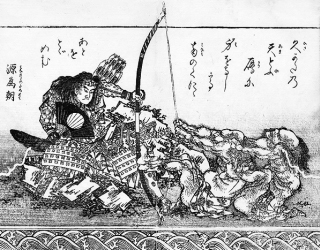
This success was partly due to his collaboration with famous artists. Between 1804 and 1815, ja and the creative illustrator ja collaborated on 13 works. In particular, ja, published between 1807 and 1811, which borrowed the concept of The Tale of Hōgen, Taiheiki and Water Margin. There are various theories as to why ja and ja dissolved their cooperation, such as discordant personalities and conflicting opinions on how to draw illustrations. By 1818, with the purchase of a second household with the profits of his book sales and wife's business, the ja family was officially restored. In 1820, ja's son, ja was appointed clan physician by Lord ja making his social class officially ja and ja felt his family's future was secured.
The Bunka-Bunsei cultural renaissance which started in 1804 lent momentum to fiction as a whole and art flourished until the renaissance concluded around 1830. Serialized long-form works became more prevalent, not just among historical novels. It was during this time that ja continued publishing profitable and popular works. These ranged among scholarly essays and journals, though his most prevalent fiction remained the historical novel. He also embarked on creating his signature piece, ja. This work consisted of 106 volumes, making it one of the world's longest novels, and took 28 years to complete (1814–1842). Like most of his works, ja focused on ja themes, including loyalty and family honor, as well as Confucianism, and Buddhist philosophy. During its production, ja would recede from public life and split from his contemporaries causing rumors to circulate that he had died. Unfortunately, while working on this voluminous work, ja would experience the loss of his eyesight and the death of his wife and only son.

Decline and death
While writing, ja also went about ensuring his children married well. ja had married in 1815 and given birth to a son. ja married ja (1787-1837) in 1823 and her new husband took on the management of the family business under the name ja. ja, after a prolonged illness that kept him from his duties as a clan physician, married a young woman named ja in 1827. She was later called ja and would play a pivotal role in her father-in-law's later life. ja bore three children; son ja (1828-?), daughter ja (1830-?) who was adopted by ja and ja, and daughter ja (1833-?). The final parts of the work were dictated to his daughter-in-law.
ja's health, which had started a slow decline in 1818 worsened into the 1830s. He continued to publish but at a much slower pace than before. His wife's frequent illnesses taxed him as did his son's continued invalidity and ja's rheumatism and vision loss progressed. He would feel bouts of energy between 1825 and 1835 that would allow him to continue working. In 1835, ja passed and the blow was so devastating to ja that he considered retiring from writing.
Fearing the collapse of his newly restored family, ja decided in 1836 to hold a party to celebrate his birthday. In reality, he did so to raise funds for ja to afford a position as a low-ranking samurai. The gala attracted leading writers and publishers, poets and entertainers, and important officials form the ja's court. ja's future was secured though he was too young to serve at the time. ja's cousin served in his place until 1840 under the name ja. In order to be closer to his grandson's post, ja sold the family house in the city and moved into a rural estate. He would spend the last twelve years of his life there.
ja lost vision in his right eye in 1834 and was completely blind by 1840. ja, who could read complex literature acted as ja's amanuensis from 1840 till his death in 1848. With her assistance he finished several works and answered many letters and critiques. She also attended to the house as ja had slipped into mental instability with the death of ja. ja died in 1841.
In the autumn of 1848, ja felt chest pains and had difficulty breathing. After a short recovery he relapsed and declined the services of a physician. On November 30, he gave his final testament and passed early in the morning of December 1. He was interred in the ja Temple beside his ancestors.
Influence on Japanese culture
Nearly four decades after his death, ja's works were still popular. Many writers, such as ja kept his works in the public eye. There was, however, push back from students who had become versed in Western literature. Foremost among them was ja who heavily criticized ja's didactic method of writing as pre-modern without directly attacking ja in his work ja. This attitude was countered by scholars like ja.
ja made also the Japanese version of Haoqiu zhuan, titled Kyōkakuden. and authors like ja used ja's methodology for adapting Chinese literature to bring Western works to Japan.
A series of ja containing 50 pictures depicting characters from ja and featuring leading kabuki actors was created by ja. These prints were published in the early 1850s by ja. Excerpts translated by Chris Drake are included in Early Modern Japanese Literature: An Anthology, 1600-1900, edited by ja (Columbia University Press, 2002). The Eight Dog Chronicles has been adapted many times in, for example, the anime OVA The Hakkenden.
His ja (Strange Tales of the Crescent Moon) was adapted for the ja stage by ja.
A character based on Kyokutei Bakin appears in the video game Fate/Grand Order.
Sample bibliography
Yomihon (Readers' Books)
- 高尾船字文 (ja) 1796
- 小説比翼文 (ja) 1804
- 曲亭伝奇花釵児 (ja) 1804
- 復讐月氷奇縁 (ja) 1804 (Volume 1 and 2)
- 復讐奇譚稚枝鳩 (ja) 1805
- 源家勲績 四天王剿盗異録 (ja) 1805
- 小夜中山復讐 石言遺響 (ja) 1804
- 新編水滸画伝 (ja) 1805
- 新累解脱物語 (ja) 1807
- 椿説弓張月 (ja) 1807-1811
- 三七全伝南柯夢 (ja) 1808
- 雲妙間雨夜月 (ja) 1808
- 頼豪阿闍梨恠鼠伝 (ja) 1808
- 松浦佐用姫石魂録 (ja) 1808
- 俊寛僧都嶋物語 (ja) 1808
- 旬伝実々記 (ja) 1808
- 松染情史秋七草 (ja) 1809
- 夢想兵衛胡蝶物語 (ja) 1810
- 南総里見八犬伝 (ja) 1814-1842
- 朝夷巡島記 (ja) 1815 (Volume 1 Unfinished)
- 近世説美少年録 (jau) 1829-1830 (Bunsei 12 and 13)
- 開巻驚奇侠客伝 (ja) 1832 (Unfinished)
Gōkan
- 青砥藤綱摸稜案 (ja) 1812
- 傾城水滸伝 (ja) 1825 (Unfinished)
- 風俗金魚伝 (ja) 1839
- 新編金瓶梅 (ja) 1831
Yellow Books
- 廿日余四十両尽用二分狂言 (ja) 1791
- 无筆節用似字尽 (ja) 1797
- 化競丑満鐘 (ja) 1800
- 曲亭一風京伝張 (ja) 1801
Saijiki (Seasonal Dictionary)
- 俳諧歳時記 (ja) 1803 The first "ja"
References
References
- [[Sanseidō]]. (10 March 2025)
- Zolbrod, Leon. (1966). "Yomihon: The Appearance of the Historical Novel in Late Eighteenth Century and Early Nineteenth Century Japan". The Journal of Asian Studies.
- Ueda, Atsuko. (2005). "The Production of Literature and the Effaced Realm of the Political". The Journal of Japanese Studies.
- Zolbrod, Leon M.. (1967). "Takizawa Bakin". Twayne Publishers, Inc..
- [https://web.archive.org/web/20190901040201/https://www.city.bunkyo.lg.jp/bunka/kanko/spot/ato/takizawa.html 滝沢馬琴墓(深光寺)] [[Bunkyō]], Tokyo
- Atherton, David C.. (2020). "The Author as Protagonist: Professionalizing the Craft of the Kusazōshi Writer". Monumenta Nipponica.
- [https://web.archive.org/web/20210226180034/https://kotobank.jp/word/%E6%BB%9D%E6%B2%A2%E9%A6%AC%E7%90%B4-18644 Kotobank. Takizawa Bakin.] [[The Asahi Shimbun]].
- [http://www.nhk.or.jp/nichibi-blog/400/314461.html 日美ブログ 第86回 深川・両国・九段へ 北斎と馬琴の面影を探す旅.] {{Webarchive. link. (2022-02-02 [[NHK]]. February 17, 2019)
- [https://web.archive.org/web/20200803091523/https://kotobank.jp/word/%E6%A4%BF%E8%AA%AC%E5%BC%93%E5%BC%B5%E6%9C%88-98702 Kotobank, Chinsetsu Yumiharizuki.] [[The Asahi Shimbun]]
- [https://hokusai-kan.com/exhibition/1683/ 北斎生誕260年記念 北斎視覚のマジック.] {{Webarchive. link. (2020-07-07 Hokusai Museum.)
- [https://hokusai-kan.com/blog/708/ 曲亭馬琴と葛飾北斎] {{Webarchive. link. (2020-10-27 Hokusai Museum.)
- Rainier Lanselle, dans [[André Lévy (sinologist). André Lévy]] (editor), ''Dictionnaire de littérature chinoise'', [[Presses universitaires de France]], « [[Quadrige]] », 1994, rééd. 2000, p. 109. "L'ouvrage a connu une certaine fortune tant en Chine qu'à l'étranger : adapté par Takizawa Bakin sous le titre de ''Kyōkakuden (Les Chevaleresques)'', [...]"
- Catalogue: Chiba Museum, Hakkenden no sekai (2008).
This article was imported from Wikipedia and is available under the Creative Commons Attribution-ShareAlike 4.0 License. Content has been adapted to SurfDoc format. Original contributors can be found on the article history page.
Ask Mako anything about Takizawa Bakin — get instant answers, deeper analysis, and related topics.
Research with MakoFree with your Surf account
Create a free account to save articles, ask Mako questions, and organize your research.
Sign up freeThis content may have been generated or modified by AI. CloudSurf Software LLC is not responsible for the accuracy, completeness, or reliability of AI-generated content. Always verify important information from primary sources.
Report