From Surf Wiki (app.surf) — the open knowledge base
Takhar Province
Province of Afghanistan

Province of Afghanistan
| Field | Value |
|---|---|
| name | Takhar |
| native_name | |
| native_name_lang | fa |
| settlement_type | Province |
| image_skyline | {{multiple image |
| border | infobox |
| perrow | 1/2/2/2/2 |
| total_width | 250 |
| image1 | Warsaj's river view.jpg |
| image2 | Hillside view in Khawajah Bahawuddin, Takhar Province, Afghanistan.jpg |
| image3 | 120627-A-LE308-127.jpg |
| footer | From the top, Warsaj District, View from atop a hill in Khawajah Bahawuddin, Darqad District}} |
| image_map | Takhar in Afghanistan.svg |
| map_caption | Map of Afghanistan with Takhar highlighted |
| coordinates | |
| coor_pinpoint | Capital |
| subdivision_type | Country |
| subdivision_name | Afghanistan |
| seat_type | Capital |
| seat | Taloqan |
| leader_title | Governor |
| leader_name | Mawlawi Zia ur Rahman Madani |
| leader_title1 | Deputy Governor |
| leader_name1 | Haji Kazim |
| leader_title2 | Police Chief |
| leader_name2 | Habibullah Shakir |
| unit_pref | Metric |
| area_total_km2 | 12333 |
| population_footnotes | |
| population_total | 1,113,173 |
| population_as_of | 2021 |
| population_density_km2 | auto |
| blank_name_sec1 | Main languages |
| blank_info_sec1 | Persian, Uzbek |
| timezone1 | Afghanistan Time |
| utc_offset1 | +4:30 |
| postal_code_type | Postal code |
| postal_code | 37xx |
| website | http://takhar.gov.af/en/ |
| footnotes | Persian language |
Takhar (Pashto, Dari: تخار) is one of the 34 provinces of Afghanistan, located in the northeast of the country next to Tajikistan. It is surrounded by Badakhshan in the east, Panjshir in the south, and Baghlan and Kunduz in the west. The city of Taloqan serves as its capital. The province contains 17 districts, over 1,000 villages, and approximately 1,113,173 people,
History
Early history
Main article: Kushan Empire
7th to 16th centuries
Main article: Muslim conquests of Afghanistan
16th to 20th centuries
Between the early 16th century and the mid-18th century, the territory was ruled by the Khanate of Bukhara.
It was given to Ahmad Shah Durrani by Murad Beg of Bukhara after a treaty of friendship was reached in or about 1750, and became part of the Durrani Empire. It was ruled by the Durranis followed by the Barakzai dynasty and was untouched by the British during the three Anglo-Afghan wars that were fought in the 19th and early 20th centuries.
1964–2001
It was established in 1964 when Qataghan Province was divided into three provinces: Baghlan, Kunduz and Takhar. During the 1980s Soviet–Afghan War, the area fell under the influence of Rabbani and Ahmad Shah Massoud. It was controlled by the Northern Alliance in the 1990s. It experienced some fighting between the Northern Alliance and the Taliban forces. Takhar holds notoriety as the location where Mujahideen Commander Ahmad Shah Massoud was assassinated on 9 September 2001 by suspected al-Qaeda agents.
2001–2021
Following the September 11 attacks, commonly known as 9/11, and amidst the United States' intervention, General Mohamad Daud and General Shajahan Noori, both widely recognized figures, played instrumental roles in leading the Afghanistan government forces to reclaim control of the northeastern province from the Taliban.
International Security Assistance Force (ISAF) took over security responsibility of the area in the early 2000s, which was led by Germany. The province also began to see some developments and the establishment of Afghan National Security Forces (ANSF). In a minor incident in July 2008, the Afghan National Police killed Mullah Usman when several armed Taliban militants under his command raided a police checkpoint in the Kalafgan district. This was the first time since the fall of Taliban regime in 2001 that the Taliban insurgents engaged police in this province. Mullah Usman was the most senior Taliban commander in the northeast region of Afghanistan, according to the Afghan Interior Ministry.
In May 2009, Taliban insurgents fighting Afghan government attacked the Baharak district in Takhar province. A bomb attack on 28 May 2011 killed General Shahjahan Noori, Mohammed Daud Daud and injured Governor Taqwa. Several German soldiers and Afghans were also killed.
In April 2012, the water supply at the Rostaq district's school for girls was poisoned by unknown insurgents, sickening at least 140 Afghan schoolgirls and teachers ranging in age from 14 to 30, causing them to be hospitalized and some to partially lose consciousness, though there were no deaths as a result of the incident.{{cite web|author=Masoud Popalzai
During the 2021 Taliban offensive, Takhar Province experienced attacks as the withdrawal of US troops took place. In response, Mohibullah Noori emerged as a prominent figure, leading the second resistance to support security forces and prevent the Taliban from taking control of Taluqan city. On 8 August 2021, the Taliban eventually gained control of the province but despite this, the Resistance Forces have remained present in the area.
2015 earthquake
On 26 October, the 7.5 Mw Hindu Kush earthquake shook northern Afghanistan with a maximum Mercalli intensity of VIII (Severe). This earthquake destroyed almost 30,000 homes, left several hundred dead, and more than 1,700 injured.
Administrative divisions
| District | Capital | Population | Area | ||
|---|---|---|---|---|---|
| in km2 | Pop. | ||||
| density | Number of villages and ethnic groups | ||||
| Baharak | _ | 34,942 | 379 | 92 | 74 villages. 83% Tajik, 10% Pashtun, 5% Uzbeks, 2% Hazara. |
| Bangi | _ | 39,725 | 434 | 92 | 59 villages. 80% Tajik, 10% Uzbek, 6% Hazara, 4% Pashtun. |
| Chah Ab | _ | 90,011 | 833 | 108 | 63 villages. 98% Tajik, 2% Uzbek. |
| Chal | _ | 31,885 | 404 | 79 | 58 villages. 55% Tajik, 38% Uzbek, 5% Hazara, 1% Pashtun, 1% Gujar. |
| Darqad | _ | 30,424 | 310 | 98 | 34 villages. Predominantely Uzbek, few Tajik. |
| Dashti Qala | _ | 36,137 | 314 | 115 | 49 villages. 70% Tajik, 25% Uzbek, 5% Pashtun |
| Farkhar | _ | 53,051 | 1,306 | 41 | 75 villages. 95% Tajik, 4% Hazara, 1% Uzbek. |
| Hazar Sumuch | _ | 15,545 | 265 | 59 | 28 villages.PredominantlyPashtun,Few Uzbek, Turkmen & Tajik. |
| Ishkamish | _ | 66,695 | 948 | 70 | 103 villages. 40% Tajik, 30% Uzbek, 20% Pashtun, 10% Gujar. |
| Kalafgan | _ | 39,858 | 526 | 76 | 42 villages 95% Uzbek, 2% Hazara, 2% Tajik, 1% Pashtun. |
| Khwaja Bahauddin | _ | 26,306 | 182 | 144 | 25 villages. Predominantely Uzbek. |
| Khwaja Ghar | _ | 76,132 | 404 | 188 | 62 villages. 70% Uzbek, 20% Pashtun, 10% Tajik. |
| Namak Ab | 13,817 | 431 | 32 | 28 villages. 100% Tajik. | |
| Rustaq | _ | 186,144 | 1,824 | 102 | 179 villages 70% Tajik,30% Uzbek |
| Taluqan | Taluqan | 258,724 | 833 | 311 | 40% Uzbek,40% Tajik, 10% Pashtun, 5% Hazara, 5% Baloch and Turkmen. |
| Warsaj | _ | 42,914 | 2,668 | 16 | 94 villages. 100% Tajik. |
| Yangi Qala | _ | 50,782 | 360 | 141 | 64 villages 65% Uzbeks, 18% Pashtun, 15% Tajik, 2% Hazara. |
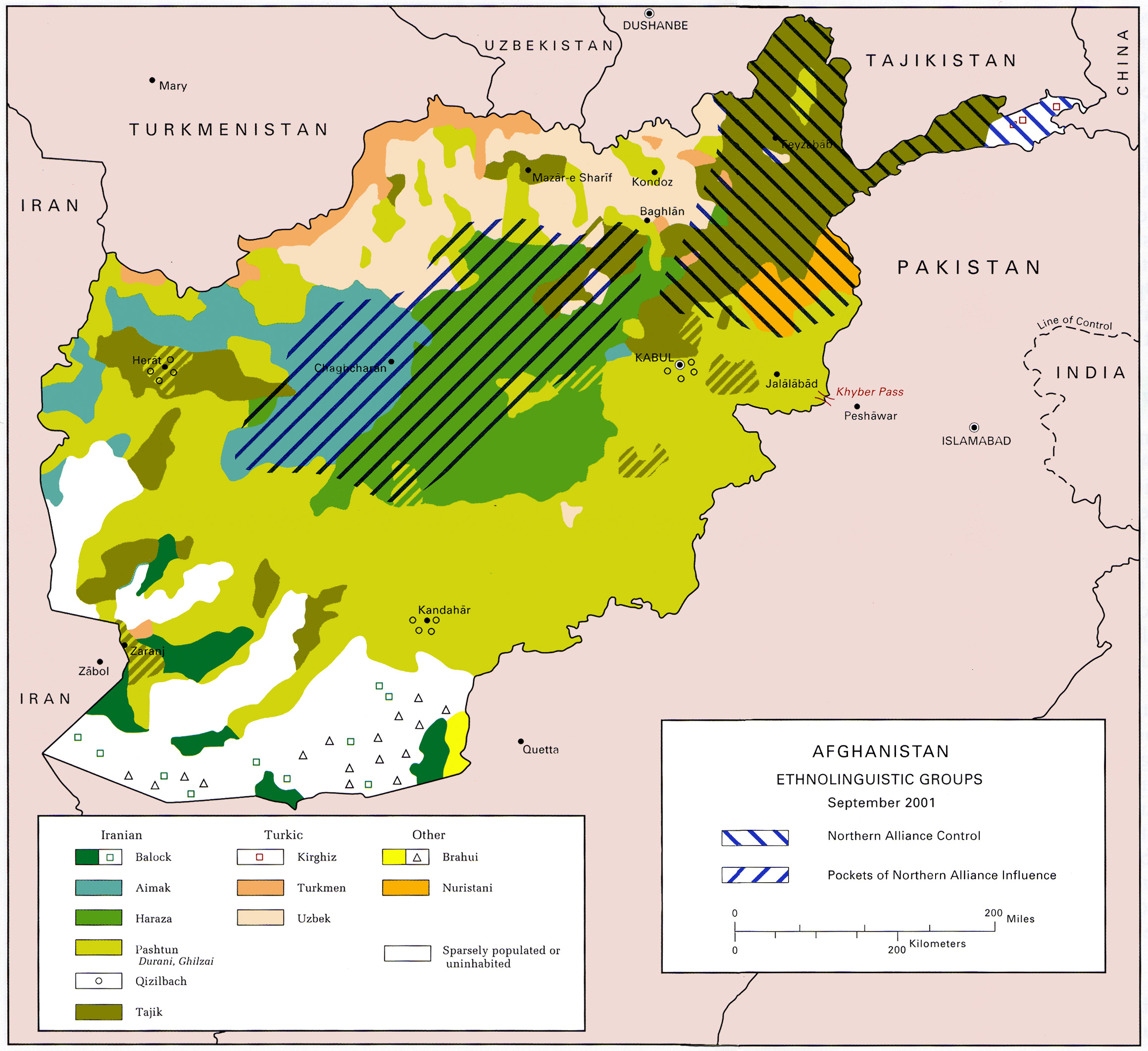
| Takhar | Taluqan | 1,093,092 | 12,458 | 88 | 51.6% Tajiks, 34% Uzbeks, 8.0% Pashtuns, 2.1% Hazaras, 0.6% Gujar, 0.5% Baloch, |
Economy
Agriculture and mining are the main industries of the province. Takhar has coal reserves which are being exploited by hand in some villages and sold in the region. The local population considers gold the most relevant resource for the Province. Gold is being washed in Takhar River, and about 2 kg are being transported to the specific weekly markets in the city of Taloqan. Also the city is a main source of construction materials like: loam, sand, and different types of stones. Takhar province is known for its salt mountains and you can find large deposits of fine salt in the region. The Takcha Khanna salt mine is one of the growing number of salt supplier, for the population of Takhar and northern Afghanistan. While the mines offer economic opportunities in the region, the availability of iodized salt considerably reduces the prevalence of health problems related to iodine deficiency.
Demographics
Population
As of 2021, the total population of the province is about 1,113,173.
Ethnicity, languages and religion
Takhar is mostly tribal and a rural society. The main inhabitants of Takhar province are majority Tajiks and Uzbeks with a very small Pashtun minority (Naqileen). Other smaller ethnic groups include Hazaras, Gujars and Balochi.
Notes
References
References
- (14 March 2022). "سرپرست حکومت په وزارتونو، ولایتونو او قول اردو ګانو کې نوې ټاکنې وکړې".
- (14 March 2022). "جمهور - تعیینات جدید از سوی رهبر طالبان انجام شد".
- (7 November 2021). "د نږدې شلو ولایاتو لپاره نوي والیان او امنیې قوماندانان وټاکل شول".
- "Takhar provincial profile".
- [http://quqnoos.com/index.php?option=com_content&task=view&id=1237 "Takhar police kill Taliban commander"]
- (24 May 2009). "Taliban attack district in NE Afghanistan". Military-world.net.
- (29 May 2011). "Three German soldiers die in Afghan attack". Thepeninsulaqatar.com.
- Gambrell, Jon. (2011-05-29). "Taliban suicide bomb hits Afghan governor's complex". Boston.com.
- USGS. "M7.5 - 45 km E of Farkhar, Afghanistan". [[United States Geological Survey]].
- "UNHCR Sub-Office MAZAR-i-SHARIF DISTRICT PROFILE".
- "UNHCR Sub-Office DISTRICT PROFILE".
- "UNHCR Sub-Office MAZAR-i-SHARIF DISTRICT PROFILE".
- "UNHCR Sub-Office MAZAR-i-SHARIF District Profile".
- "UNHCR Sub-Office DISTRICT PROFILE".
- "UNHCR Sub-Office MAZAR-i-SHARIF DISTRICT PROFILE".
- "UNHCR Sub-Office DISTRICT PROFILE".
- "UNHCR Sub-Office MAZAR-i-SHARIF DISTRICT PROFILE".
- "UNHCR Sub-Office Mazar-i-Sharif DISTRICT PROFILE".
- "UNHCR Sub-Office Mazar-i-Sharif DISTRICT PROFILE".
- "UNHCR Sub-Office MAZAR-i-SHARIF DISTRICT PROFILE".
- "UNHCR Sub-Office MAZAR-i-SHARIF DISTRICT PROFILE".
- "UNHCR Sub-Office MAZAR-i-SHARIF DISTRICT PROFILE".
- . (April 2021). ["Estimated Population of Afghanistan 2021-22"](https://www.nsia.gov.af:8080/wp-content/uploads/2021/06/Estimated-Population-of-Afghanistan1-1400.pdf). *National Statistic and Information Authority (NSIA)*.
This article was imported from Wikipedia and is available under the Creative Commons Attribution-ShareAlike 4.0 License. Content has been adapted to SurfDoc format. Original contributors can be found on the article history page.
Ask Mako anything about Takhar Province — get instant answers, deeper analysis, and related topics.
Research with MakoFree with your Surf account
Create a free account to save articles, ask Mako questions, and organize your research.
Sign up freeThis content may have been generated or modified by AI. CloudSurf Software LLC is not responsible for the accuracy, completeness, or reliability of AI-generated content. Always verify important information from primary sources.
Report