From Surf Wiki (app.surf) — the open knowledge base
Taiyuan
Capital of Shanxi, China

Capital of Shanxi, China
| Field | Value | |
|---|---|---|
| <!-- Basic info ----------------> | name | Taiyuan |
| native_name | 太原市 | |
| native_name_lang | zh | |
| settlement_type | Prefecture-level city | |
| nicknames | Bīngzhōu (并州); Jìnyáng (晋阳); Dragon City (龙城) | |
| <!-- images and maps -----------> | image_skyline | {{multiple image |
| border | infobox | |
| total_width | 300 | |
| image_style | border:1; | |
| perrow | 1/2/2 | |
| image1 | Taiyuan20190430.jpg | |
| caption1 | Taiyuan skyline | |
| image2 | Shuang Ta Si Temple (10111280046).jpg | |
| caption2 | Twin Pagoda Temple | |
| image4 | Tianlongshan Grotto - Manshan Pavillion, Taiyuan, Shanxi.JPG | |
| caption4 | Tianlongshan Grottoes | |
| image3 | Jinci Temple (54572159327).jpg | |
| caption3 | Jinci | |
| image5 | J81119_PasserelleChangfeng_20140703-154333.15.jpg | |
| caption5 | Fen River footbridge and Shanxi Theater | |
| image_map | ||
| image_map1 | Location of Taiyuan Prefecture within Shanxi (China).png | |
| map_caption1 | Location of Taiyuan City jurisdiction in Shanxi | |
| pushpin_map | Shanxi#China | |
| pushpin_relief | yes | |
| pushpin_label_position | right | |
| pushpin_mapsize | 240 | |
| pushpin_map_caption | Location of the city center in Shanxi | |
| <!-- Location ------------------> | coordinates | |
| coor_pinpoint | Taiyuan municipal government | |
| subdivision_type | Country | |
| subdivision_name | China | |
| subdivision_type1 | Province | |
| subdivision_name1 | Shanxi | |
| seat_type | Municipal seat | |
| seat | Xinghualing District | |
| parts_type | Divisions | |
| parts_style | para | |
| p1 | County-level divisions: 10 | |
| p2 | Township-level divisions: 83 | |
| government_type | Prefecture-level city | |
| governing_body | Taiyuan Municipal People's Congress | |
| leader_title | CCP Secretary | |
| leader_name | Luo Qingyu | |
| leader_title1 | Congress Chairman | |
| leader_name1 | Wei Min | |
| leader_title2 | Mayor | |
| leader_name2 | Fan Zhaosen | |
| Acting | ||
| leader_title3 | CPPCC Chairman | |
| leader_name3 | Cao Xuecheng | |
| named_for | ||
| elevation_m | 800 | |
| elevation_max_m | 2670 | |
| elevation_min_m | 760 | |
| <!-- Area ---------------------> | area_magnitude | |
| unit_pref | ||
| area_total_km2 | 6959 | |
| area_land_km2 | ||
| area_urban_km2 | 1460 | |
| area_metro_km2 | 2787 | |
| <!-- Population ------------------> | population_footnotes | |
| population_as_of | 2020 census | |
| population_total | 5305061 | |
| population_density_km2 | auto | |
| population_metro | 5433659 | |
| population_urban | 4529141 | |
| population_density_metro_km2 | auto | |
| population_density_urban_km2 | auto | |
| demographics_type2 | GDP | |
| demographics2_title1 | Prefecture-level city | |
| demographics2_info1 | CN¥ 415 billion | |
| US$ 65.3 billion | ||
| demographics2_title2 | Per capita | |
| demographics2_info2 | CN¥ 78,284 | |
| US$ 12,570 | ||
| <!-- General information ---------------> | timezone | China Standard |
| utc_offset | +08:00 | |
| <!-- Area/postal codes & others --------> | area_code | 351 |
| blank2_name | GaWC Global City level classification | |
| blank2_info | Gamma - | |
| blank3_name | Major Nationalities | |
| blank3_info | Han | |
| blank4_name | Administrative division code | |
| blank4_info | 140100 | |
| postal_code_type | Postal code | |
| registration_plate | 晋A | |
| postal_code | 030000 | |
| iso_code | CN-SX-01 | |
| website |
Acting US$ 65.3 billion US$ 12,570
Taiyuan (Taiyuan Jin: ) is the capital of Shanxi, China. Taiyuan is the political, economic, cultural and international exchange center of Shanxi Province, containing an industrial base focusing on energy and heavy chemicals. Throughout its long history, Taiyuan was the capital or provisional capital of many dynasties in China, hence the name zh ().
As of 2021, the city governs 6 districts, 3 counties, and hosts a county-level city with a total area of 6,988 square kilometers and a permanent population of 5,390,957.
Taiyuan is located roughly in the centre of Shanxi, with the Fen River flowing through the central city.
Etymology and names
The two Chinese characters of the city's name are (zh, "great") and (zh, "plain"), referring to the location where the Fen River leaves the mountains and enters a relatively flat plain. Throughout its long history, the city had various names, including zh (并州) (from which the city's abbreviated single-character name zh (并) is derived), zh (晋阳) and zh (龙城).
During the Tang dynasty and subsequent Five Dynasties, the status of the city of Taiyuan was elevated to be the Northern Capital, hence the name zh (北都), and zh (北京, different from present-day Beijing).
History
Taiyuan is an ancient city with more than 2500 years of urban history, dating back from 497 BC. It was the capital or secondary capital ({{linktext|陪|都}}, {{linktext|别|都}}) of Zhao, Former Qin, Eastern Wei, Northern Qi, Northern Jin, Later Tang, Later Jin, Later Han, Northern Han. Its strategic location and rich history make Taiyuan one of the economic, political, military, and cultural centers of Northern China.
Pre-Qin dynasty history
From about 859 BC the area around modern-day Taiyuan was occupied by the Rong people. In 662 BC the Rong were driven out by the Di people.
In 497 BC, the first ancient city of Jinyang was built around the southern Jinyuan District of present-day Taiyuan, by Dong Anyu (), who was a steward of (赵鞅), an upper-level official of the state of Jin.
During the Battle of Jinyang in 453 BC, Zhi Yao diverted the flow of the Fen River to inundate the city of Jinyang, caused significant damage to the Zhao. Later, Zhao Xiangzi alerted Wei and Han, who both decided to ally with Zhao. On the night of 8 May 453 BC, Zhao troops broke the dams of the Fen River and let the river flood the Zhi armies, and eventually annihilated the Zhi army, with the help from Wei and Han.
The Tripartition of Jin happened in 403 BC, when the state of Jin, then a strong power in Northern China, was divided into three smaller states of Han, Zhao and Wei. This event is the watershed between the Spring and Autumn and Warring States periods in Chinese history.
Qin dynasty
In 248 BC, the state of Qin attacked Zhao under General Meng'ao, and obtained the area around Jinyang from Zhao. Qin set up the Commandery of Taiyuan (), with the city of Jinyang as its administrative center. Although, the name Taiyuan had appeared in historic records before, potentially referring to different regions in nowadays southern and central Shanxi, this was the first time Taiyuan was officially used to refer to present-day Taiyuan.
Between 229 and 228 BC, Qin General Li Xin lead two armies that marched from the cities of Taiyuan and Yunzhong to attack Zhao's northern commandery of Dai. Three months after General Li Mu's death; Wang Jian, Li Xin & Qiang Lei conquered Zhao.
In 221 BC, Qin conquered the rest of China, and officially started the first imperial dynasty of China. Qin established thirty-six commanderies on its territory, and Taiyuan was one of them. Also, the capital of commandery of Taiyuan was Jinyang.
Jin dynasty and Sixteen Kingdoms
During the Jin dynasty, Taiyuan was again changed into a vassal state. Following the ending of the Jin dynasty, ethnic minority peoples settled a series of short-lived sovereign states in northern China, commonly referred to as Sixteen Kingdoms. Taiyuan was part of Former Zhao, Later Zhao, Former Qin, Former Yan, Former Qin again, Western Yan, and Later Yan chronologically.
In 304, Liu Yuan founded the Xiongnu state of Former Zhao, whose army raided the area around Taiyuan for years and eventually obtained Taiyuan in 316. In 319, Taiyuan became part of Later Zhao, founded by Shi Le. Later, Taiyuan was obtained by Former Yan in 358, and by Former Qin in 370.
Fu Jian died in 384. His son Fu Pi declared himself an emperor in 385, with Jinyang (central city of Taiyuan) as the capital. But the next year, Fu Pi was defeated by the Western Yan prince Murong Yong in 386, and Taiyuan became part of Western Yan.
Southern and Northern Dynasties
In 386, Tuoba Gui founded Northern Wei. In 396, Northern Wei expanded to Taiyuan. In 534, Eastern Wei was founded by Gao Huan, with the capital at the city of Ye, and Taiyuan as the alternative capital (别都), where the Mansion of the "Great Chancellor" Gao Huan (大丞相府) was located.
In 577, Taiyuan was conquered and became part of Northern Zhou.
Sui dynasty
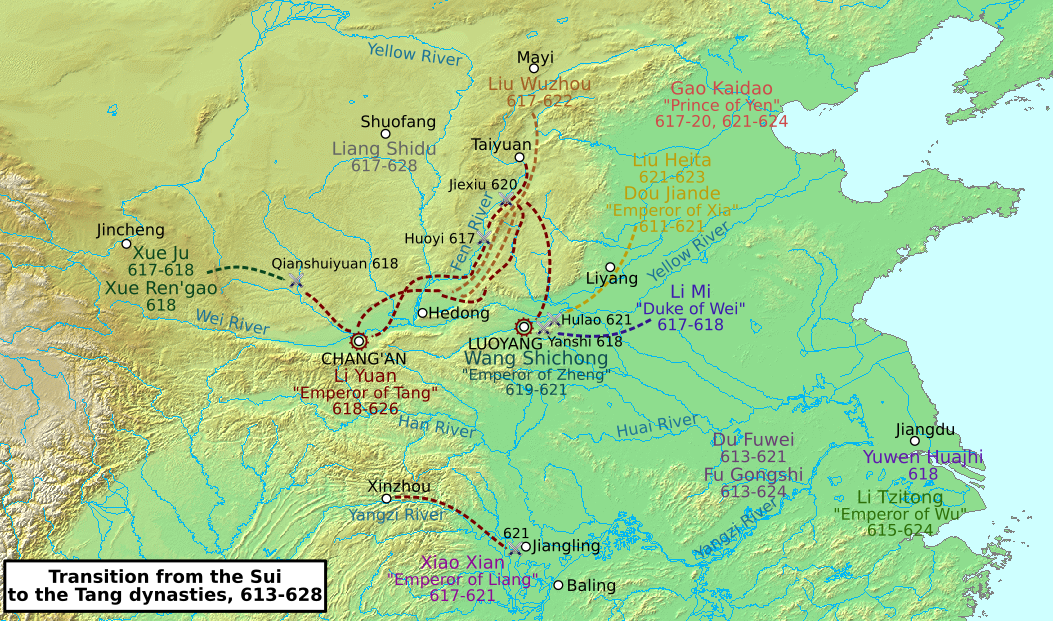
In 581, Emperor Wen of Sui founded Sui dynasty. Jinyang was first the administrative center of Bing Zhou (并州), which was changed into Taiyuan Commandery. In 617, Li Yuan rose in rebellion based in Taiyuan, and expanded quickly.
Tang dynasty
In 618, Li Yuan founded Tang dynasty, which is generally considered a golden age of Chinese civilization. Taiyuan expanded significantly during the Tang dynasty, partly because Taiyuan was the military base of the founding emperors Li Yuan and Li Shimin. As Li Shimin wrote in 619: "Taiyuan, the base of the imperial regime and the foundation of the state." ()
In 690, Wu Zetian set Taiyuan as the Northern Capital, (), one of the three capitals, along with Chang'an and Luoyang, as depicted in the poem by Li Bai: "The king of the heaven has three capitals, the Northern capital is one of them." (""). In 742 AD, Emperor Xuanzong of Tang changed its name further to Beijing (). During the Tang dynasty, the title Northern Capital to Taiyuan had been endowed or abolished multiple times.
Five Dynasties and Ten Kingdoms
In 923, Li Cunxu, son of Li Keyong, founded Later Tang with capital of Daming, and soon conquered most of North China, and ended Later Liang. Afterwards, Li Cunxu moved the capital from Daming to Luoyang, and Taiyuan was set as a provisional capital, titled "Beidu" (北都, literally 'Northern Capital').
In 936, Shi Jingtang established Later Jin in Taiyuan with the help from Khitan Liao dynasty. The next year, Shi Jingtang moved the capital from Taiyuan to Luoyang, and then to Kaifeng, and Taiyuan became a provisional northern capital ("Beijing") again.
Song dynasty

Zhao Kuangyin (Emperor Taizu of Song) established the Song dynasty and embarked on the campaign of re-unification of China. Using a power struggle at the Northern Han court Taizu moved against it in the late 968. By early 969 his armies encircled Taiyuan and defeated the reinforcements sent by the Khitan. However, an attempt to flood the city failed. The siege was lifted after three months, as heavy rains caused diseases in the besieging army, the supplies were running low, and another Khitan relief force was advancing towards the city.
Taizu launched the second invasion of Northern Han in September 969, but the armies were recalled after his death (November 14, 969).
Taizu's brother Emperor Taizong of Song subjugated the last independent kingdoms in the south of China by 978, and in 979 launched the third campaign against the Northern Han and its overlord the Khitan state of Liao. Using the north-western route instead of the southern (used in the previous campaigns) the armies of Taizong defeated a major Liao force. Isolated, the Northern Han resisted for only fifteen days before surrendering. In contrast to the mild policies of his brother, Taizong dealt harshly with the city. He ordered the flooding of Taiyuan by releasing the Fen River, and set the city on fire. The former capital was downgraded from prefecture to county town status.
It was not until 982 that a new city was founded on the banks of the Fen River. The oldest existing building in Taiyuan today is the Temple of the Goddess () inside the Jin Ci Complex. It was originally built in 1023 and reconstructed in 1102.
From 1027 one of the two private markets for Tangut goods, particularly salt, operated in Taiyuan. During the Song period many people, including the family of chancellor Wang Anshi, migrated south.
Yuan state
The Mongol empire emerged in 1206 under the leadership of Genghis Khan, and it expanded quickly. In 1218, Taiyuan was conquered by the Mongol army led by General Muqali. Kublai Khan established the Mongol empire in 1271, and the administrative area of Taiyuan Lu () was expanded.
The Taoist Longshan Grottoes was built in early Yuan dynasty, initiated by Taoist monk Song Defang ().
Ming dynasty
In 1368, Hongwu Emperor established the Ming dynasty, and Taiyuan was obtained from Yuan, by General Xu Da.
The Ming dynasty installed Nine Military Garrisons to defend the northern territory during the reign of the Hongzhi Emperor, which included the Garrison of Taiyuan ({{linktext|太|原|镇}}).
Shanxi merchants became prominent in Chinese business history since the beginning of Ming dynasty, thanks to the logistic requirements of the military around the borders of northern Shanxi to defend Ming against the remnant Mongol Northern Yuan dynasty.
Qing
Throughout the Qing regime, the international trade with Russia, especially of tea, and the creation and development of so-called draft banks, or Piaohao, boosted the central Shanxi basin to become the financial center of Qing China. Even though most of these Piaohao were based in different neighboring counties of Qi County, Taigu, and Yuci, Taiyuan became a significant trading center, due to its political and economical status in Shanxi.
In 1900, the Taiyuan Massacre occurred, during which angry Chinese killed European children and their missionary parents with axes.

Republican era
The warlord Yan Xishan retained control of Shanxi from the Xinhai Revolution in 1911 to the end of the Chinese Civil War in 1949. Taiyuan consequently flourished as the center of his comparatively progressive province and experienced extensive industrial development. It was linked by rail both to the far southwest of Shanxi and to Datong in the north. Until the end of the Chinese Civil War in 1949, Yan's arsenal in Taiyuan was the only factory in China sufficiently advanced to produce field artillery. In 1923, Yan facilitated the construction of the province's first airport, Taiyuan Chengbei Airport, which allowed him to further develop a small Air Force. Because Yan succeeded in keeping Shanxi uninvolved in most of the major battles between rival warlords that occurred in China during the 1910s and 1920s, Taiyuan was never taken from Yan by an invading army until the Japanese occupied it in 1937. Gillin, Donald G. "Portrait of a Warlord: Yen Hsi-shan in Shansi Province, 1911–1930." The Journal of Asian Studies. Vol. 19, No. 3, May, 1960. Retrieved 23 February 2011. pp.289–294
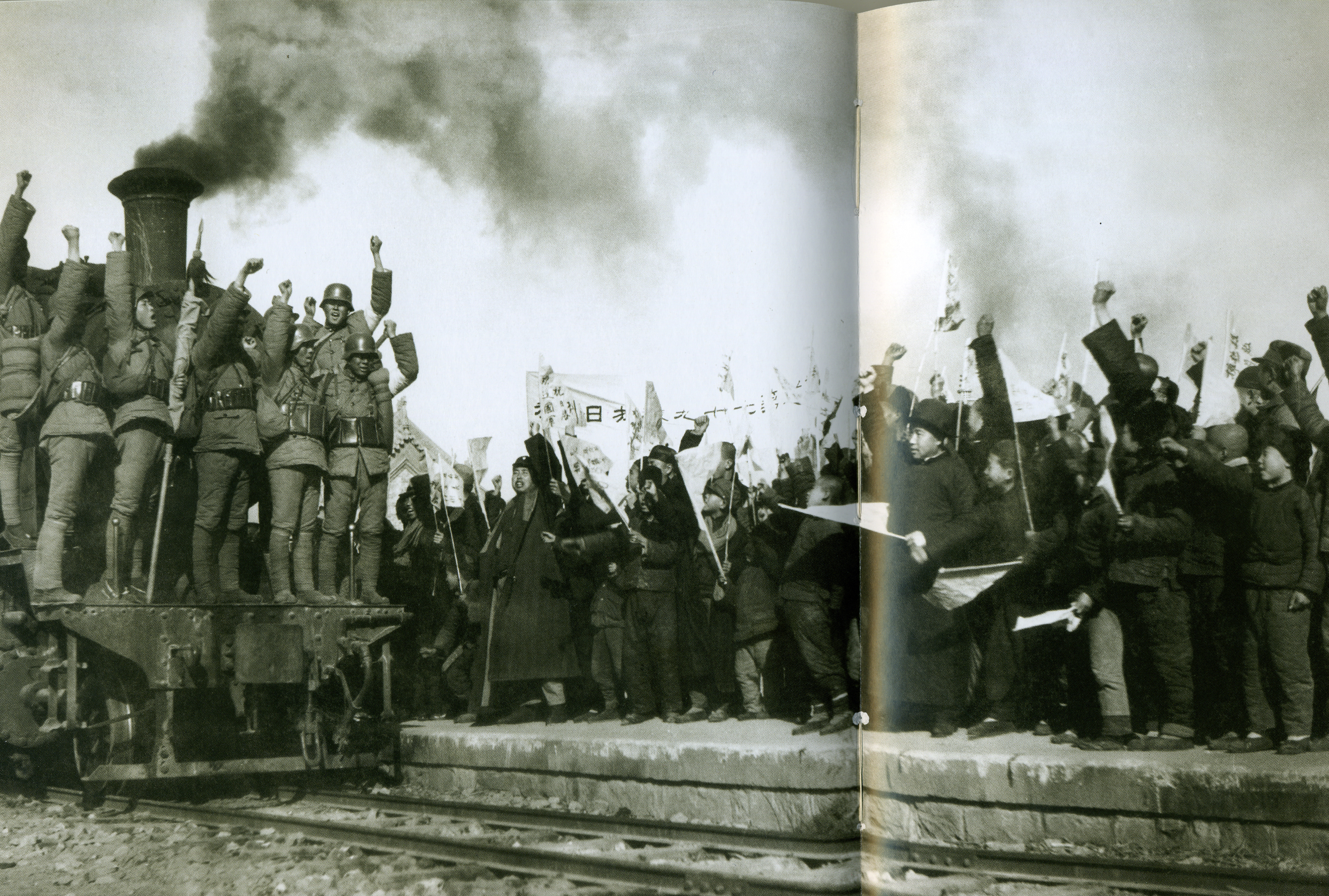
Yan was aware of the threat posed by the Japanese; and, in order to defend against the impending Japanese invasion of Shanxi, Yan entered into a secret "united front" agreement with the Communists in November 1936. After concluding his alliance with the Communists, he allowed agents under Zhou Enlai to establish a secret headquarters in Taiyuan. Yan, under the slogan "resistance against the enemy and defense of the soil", attempted to recruit young patriotic intellectuals to his government from across China. By 1936 Taiyuan became a gathering point for anti-Japanese intellectuals who had fled from Beijing, Tianjin, and Northeast China. A representative of the Japanese army, speaking of the final defense of Taiyuan, said that "nowhere in China have the Chinese fought so obstinately".
From the Japanese occupation of Taiyuan to the Japanese surrender in 1945, the Japanese continued to exploit Taiyuan's industries and resources to supply the Japanese army. After the Japanese army in Shanxi surrendered to Yan Xishan, 10,000–15,000 Japanese troops, including both enlisted men and officers, decided to fight for Yan rather than return to Japan. Yan also retained the services of experienced and foreign-educated Japanese technicians and professional staff brought into Taiyuan by the Japanese to run the complex of industries that they had developed around Taiyuan.
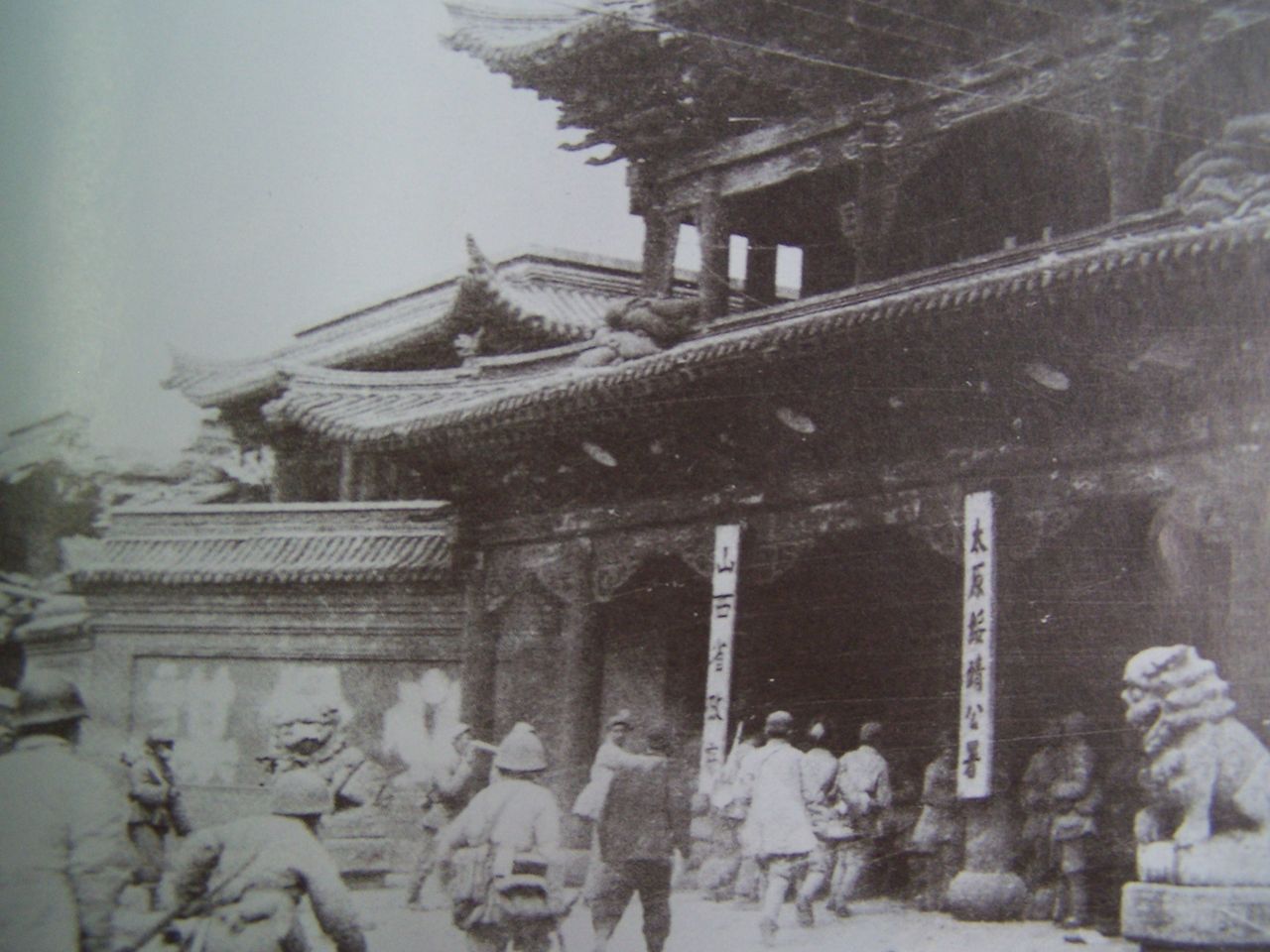
Taiyuan was the last area in Shanxi to resist Communist control during the final stages of the Chinese Civil War. The communists forces captured Taiyuan Wusu Airport. As a result, the defending forces were trapped within the city, facing food shortages and a low morale. Taiyuan Qinxian Airport and an adjacent barracks was subsequently established in October 1948 in the Dayingpan area of the city, which was able to accommodate transport aircraft, while the barracks garrisoned the Second and Third Battalions. The existing Chengbei Airport was also reinforced, and two temporary backup airfields were established at Gelaogou and Honggou. The city was taken by Communist forces on 22 April 1949, after they surrounded Taiyuan and cut it off from all means of land and air supply, and taking the city required the support of 1,300 pieces of artillery. Many Nationalist officers committed suicide when the city fell to a Communist army.
Geography

| Taiyuan | −11.6 | 1.8 | 3.2 | − 8.0 | 5.4 | 5.2 | − 2.0 | 11.5 | 13.4 | 4.8 | 19.8 | 19.9 | 10.5 | 25.5 | 33.3 | 15.1 | 28.6 | 55.9 | 18.2 | 29.3 | 102.1 | 16.9 | 28.0 | 107 | 10.8 | 23.7 | 51.6 | 4.0 | 17.8 | 25.6 | − 2.7 | 9.5 | 10.7 | − 9.2 | 3.1 | 3.2
Taiyuan lies on the Fen River in the north of its fertile upper basin. The city is located at the center of the province with an east–west span of 144 km and a north–south span of 107 km. It commands the north–south route through the province, as well as important natural lines of transportation through the Taihang Mountains to Hebei in the east and to northern Shaanxi in the west.
Natural resources
Taiyuan is abundant in natural resources such as coal, iron, marble, silica, bauxite, limestone, graphite, quartz, phosphorus, gypsum, mica, copper, and gold. It boasts high production of coal, iron, silica and marble. The western satellite city of Gujiao is the largest production site of metallurgical coal in China. The tree population in Taiyuan is dominated by coniferous forest, pine, white pine, spruce, and cypress.
Climate
Taiyuan belongs to the warm temperate continental monsoon climate, with long, dry and cold winters, hot and humid summers, short and windy spring and autumn, and distinct dry and wet seasons. Taiyuan experiences a cold semi-arid climate (Köppen climate classification BSk). Taiyuan has a temperate monsoon climate. Spring is dry, with occasional dust storms, followed by early summer heat waves. Summer tends to be warm to hot with most of the year's rainfall concentrated in July and August. Winter is long and cold, but dry and sunny. Because of the aridity, there tends to be considerable diurnal variation in temperature, except during the summer. The weather is much cooler than comparable-latitude cities, such as Shijiazhuang, due to the moderately high altitude. The monthly 24-hour average temperature range from −4.7 °C in January to 24.3 °C in July, while the annual mean is 10.9 °C. With monthly percent possible sunshine ranging from 51 percent in July to 61 percent in May, there are 2,493 hours of sunshine annually. Extremes since 1951 have ranged from -25.5 °C to 39.4 °C, though an unofficial record low of -29.5 °C was recorded on 7 January 1930.
| Jan record high C = 14.9 | Feb record high C = 19.8 | Mar record high C = 28.3 | Apr record high C = 37.5 | May record high C = 37.9 | Jun record high C = 38.7 | Jul record high C = 39.4 | Aug record high C = 36.6 | Sep record high C = 34.9 | Oct record high C = 30.4 | Nov record high C = 23.2 | Dec record high C = 19.6 | Jan record low C = −25.5 | Feb record low C = −24.6 | Mar record low C = -18.0 | Apr record low C = −9.7 | May record low C = −0.7 | Jun record low C = 4.4 | Jul record low C = 7.2 | Aug record low C = 7.4 | Sep record low C = -2.0 | Oct record low C = −13.9 | Nov record low C = −21.2 | Dec record low C = −23.3 |script-title = zh:中国地面国际交换站气候标准值月值数据集(1971-2000年) |access-date = 17 March 2009 |url-status = dead |archive-url = https://web.archive.org/web/20131016192548/http://old-cdc.cma.gov.cn/shuju/search1.jsp?dsid=SURF_CLI_CHN_MUL_MMON_19712000_CES&tpcat=SURF&type=table&pageid=3 |archive-date = 16 October 2013 |access-date=9 November 2018|archive-url=https://web.archive.org/web/20170923231541/http://data.cma.cn/data/weatherbk.html|archive-date=23 September 2017|url-status=live|title=Index}}NOAAall-time January high
Environment
The municipality of Taiyuan is 6988 km2. Taiyuan has a forest area of 146,700 hectares. and total grassland area of 422.5 km2 in 2007. The forest area coverage rate in the six urban districts has been increased to 21.69% in 2015.
Air pollution
Taiyuan had suffered from severe air pollution, especially in the 1990s, and the first decade of the 21st century, and once it was even listed among the ten most air-polluted cities in the world. Recently, the air quality has been gradually improved with increasing public awareness of air quality control and stricter and more detailed rules for pollution applied. However, according to the 2014 statistical book issued by the National Bureau of Statistics, even though no longer among the worst polluted cities in China, Taiyuan still has below-average ambient air quality, compared with other major Chinese cities. A 2019 study estimated that in 2016, there were 228,000 households in the city burning coal, burning a total of 1,096,000 tons that year alone. The authors of the study suggested that the local government should do more to transition from coal energy to gas energy, provide more electrical heating infrastructure, and transition to more renewable energy sources. In recent years, the city has taken further action to combat air pollution, creating a "coal-free zone" of 1,460 km2 in 2017. This zone prevents most people and organizations from buying, selling, storing, transporting, burning, or using coal. In 2019, the Taiyuan City Government expanded the size of this zone slightly, to a total of 1,574 km2.
Administrative divisions
| Map | Name | Simplified Chinese | Hanyu Pinyin | Population (2010) | Area (km2) | Density (/km2) |
|---|---|---|---|---|---|---|
| City Proper | ||||||
| Xiaodian District | 小店区 | zh | 804,537 | 290 | 2,774 | |
| Yingze District | 迎泽区 | zh | 592,007 | 105 | 5,638 | |
| Xinghualing District | 杏花岭区 | zh | 643,584 | 146 | 4,408 | |
| Wanbailin District | 万柏林区 | zh | 749,255 | 289 | 2,592 | |
| Suburban and satellite cities | ||||||
| Jiancaoping District | 尖草坪区 | zh | 415,705 | 296 | 1,404 | |
| Jinyuan District | 晋源区 | zh | 221,431 | 290 | 763 | |
| Gujiao City | 古交市 | zh | 205,143 | 1,512 | 135 | |
| Rural | ||||||
| Qingxu County | 清徐县 | zh | 343,861 | 608 | 565 | |
| Yangqu County | 阳曲县 | zh | 120,228 | 2,084 | 57 | |
| Loufan County | 娄烦县 | zh | 105,841 | 1,289 | 82 |
Demographics
As of the 2020 census, Taiyuan prefecture had a total population of 5,304,061 inhabitants on 6959 km2, from whom 4,529,141 lived in the 6 urban districts on 1460 km2.
Economy

Consistent with China's economic expansion throughout the 2010s, Taiyuan's economy has shown consistent growth in recent years. In 2018, Taiyuan's GDP was worth 388.450 billion Yuan, more than double what it was in 2010. Disposable income per capita was reported to be 31,031 Yuan in 2018, a 7.2% increase from 2017. In 2015, Taiyuan imported 4,085.130 million USD worth of goods, and exported 6,592.250 million USD worth. Taiyuan's primary, secondary, and tertiary industries were worth 3.9 billion yuan, 105.2 billion yuan, and 132.2 billion yuan respectively in 2007. Shanxi produces a quarter of China's coal, and Taiyuan is the location of the China Taiyuan Coal Transaction Center, which began trading in 2012.
Transportation
Taiyuan is one of the transportation hubs in North China, with highways linking neighboring provincial capitals, and airlines to most other major Chinese cities and some international cities.
Public transportation
.jpg)
The Taiyuan Metro opened in 2020. Line 1 opened 22 February 2025, while Line 2 has been operating since 26 December 2020.
In early 2016 the city began the conversion of all its 8000 taxi fleet into purely electric vehicles, initially using BYD Auto model E6.
Air
.jpg)
The primary airport of the city is Taiyuan Wusu International Airport. It has been expanded for the landing of Airbus A380. The airport has domestic airlines to major cities including Beijing, Shanghai, and coastal cities such as Dalian. International flights to Taipei and Da Nang are available.
Highway
Taiyuan has a number of major roads, Including the G5, G20 (including Shitai Expressway), G55, G2001 (Ring Highway around Taiyuan), G307, G108, G208.
- A 45-kilometer Middle Ring Highway circles the metropolis of Taiyuan.
- Two highways on the banks of Fen River run through the center of the city.
- Nine Riverside highways along the nine branches of Fen River, including the Southern Shahe river, Northern Shahe river, etc., comprise an expressway system, connecting the central Fen River bank with surrounding areas of urban Taiyuan.
- The southern part of Taiyuan has three "East-West" direction highways: South Middle Ring Street, Huazhang Street and Yingbin Road, and five "North-South" direction highways: West Middle Ring Road, Binhe West Road, Binhe East Road, Dayun Road, Jianshe Road & Taiyu Road.
- The western S56 Taiyuan-Gujiao Highway links Taiyuan with the western satellite city of Gujiao, and further connects Loufan.
- The northern Yangxing Highway connects downtown Taiyuan with the northern suburb of Yangqu County.
Railway

Taiyuan is one of the main national hubs for the high-speed railway system of Northern China. Major high-speed railways passing Taiyuan, including the Shijiazhuang–Taiyuan high-speed railway, Datong–Xi'an high-speed railway and Taiyuan–Jiaozuo high-speed railway. By high-speed trains, the travel time between Taiyuan and Beijing is less than three hours on a distance of 600 km. The main high-speed railway station is Taiyuan South railway station. The conventional-speed Taiyuan–Zhongwei–Yinchuan railway, opened in 2011, provides a direct connection with western Shanxi, northern Shaanxi, Ningxia, and points further west.
Food
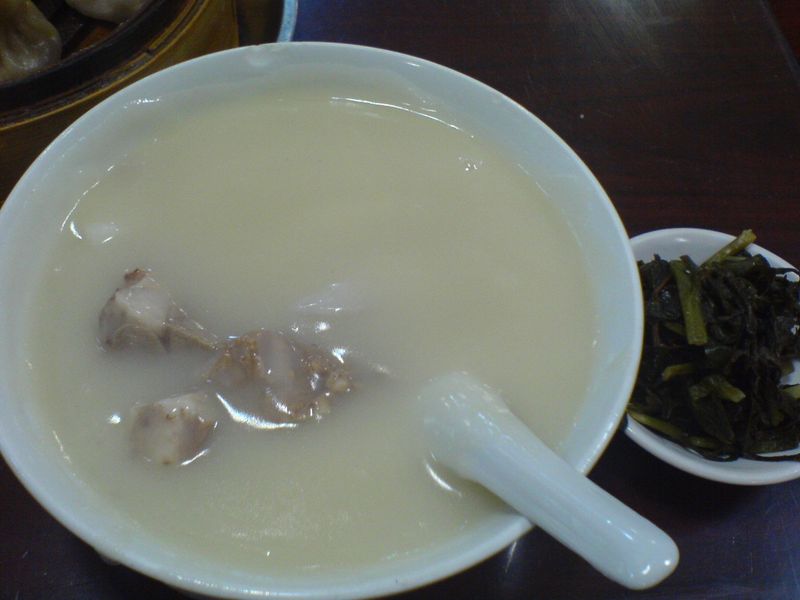
Taiyuan's local specialities include:
- Tomato egg noodles ()
- Tijian ()
- Dao Xiao noodles ()
- Tounao (): Contains mutton, rice wine and vegetables in the soup. This dish was first created by Chinese polymath Fu Shan, who was proficient in medicine, for his old and illness-ridden mother as a food substitute for the ancient medicine Bazhen Tang (literally "Soup of Eight Treasures") using only locally available food materials that have similar effects as the original medicine.
- Lao Chen Cu mature vinegar ()
- Yuci Flour Sausage ()
- Fried Pork with vegetables ()
- Mutton Soup ()
Sports
The Shanxi Loongs of the Chinese Basketball Association play at Riverside Sports Arena. The football club Shanxi Metropolis, currently playing in China League Two, plays in the Shanxi Sports Centre Stadium.
Tourism


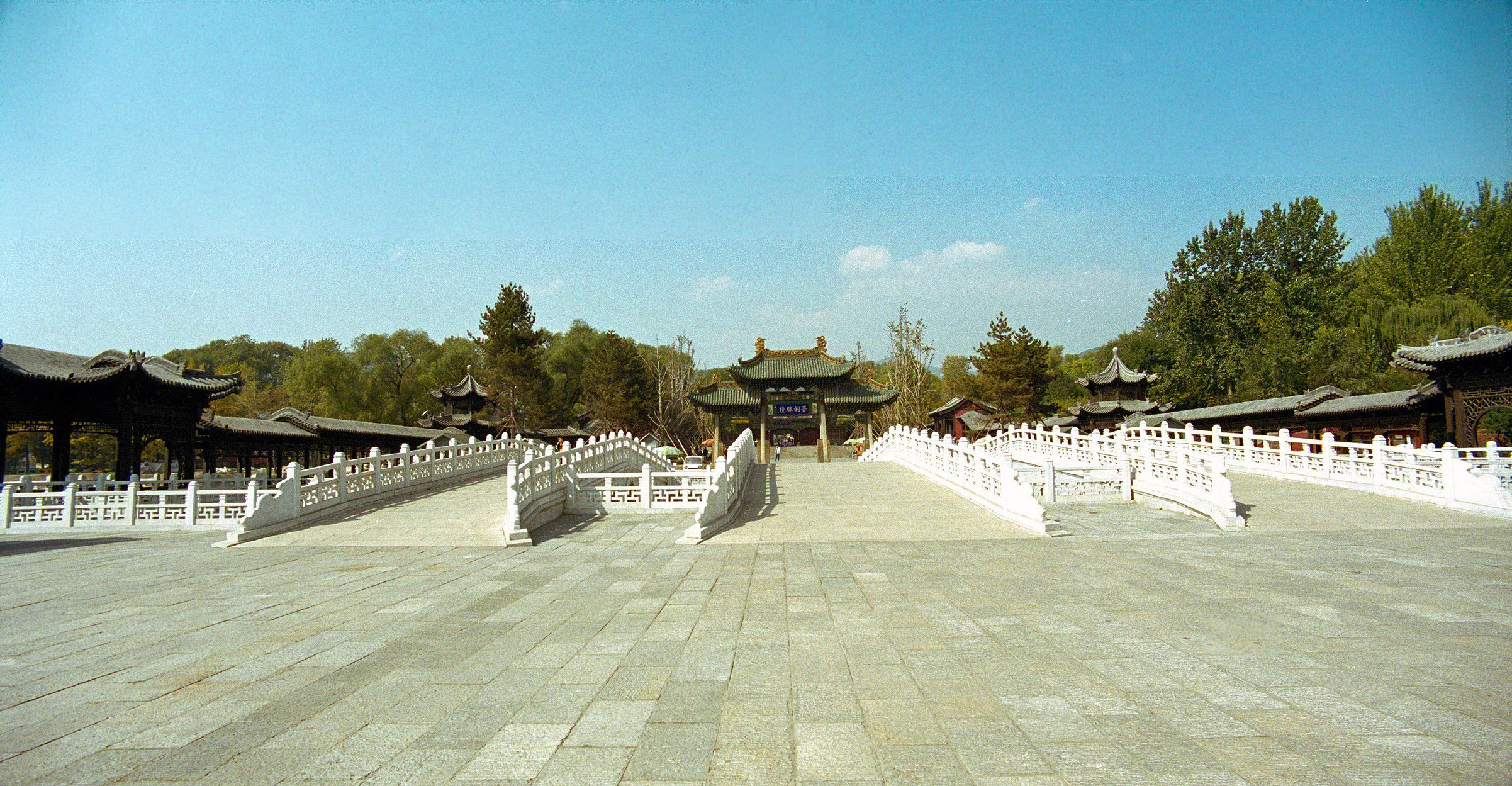
Taiyuan is a modern city with just a few historic buildings remaining in the centre. The remnants of old Taiyuan can be found west of the central station, north of Fudong Street and close to Wuyi Road.
One of the main tourist destinations is Shanxi Museum located in West Binhe Road, downtown Taiyuan, which is among the largest museums in China.
The Twin Towers in Yongzuo Temple, which are featured in the emblem of the city, have been regarded as a symbol of Taiyuan for a long time. Yongzuo Temple is at southeast of the city centre, also famous for its peony garden and martyrs cemetery.
The Chongshan Monastery, Longtan Park, and Yingze Park (just off Yingze Street), in the city centre, are popular tourist destinations.
Jinci Temple also called Tangshuyu Temple, located in Jinyuan District of southern Taiyuan, dates back to the Zhou dynasty. In Jinci, there are three treasures: the Nanlao Spring, the Beauty Status and the Queen status. The Flying Bridge Across the Fish Pond was built during the Song dynasty, which is famous for its cross-shaped structure.
Along the West Mountain range in western Taiyuan, tourists can find Tianlongshan Grottoes, which were gradually built over many centuries, from the northern Qi dynasty, and contains thousands of Buddhist statues and artwork. The grottoes exist today in a damaged state with many of the sculptures now missing, that visitors to the caves cannot imagine how they looked in the past. Many of the sculptures from the caves are now in museums around the world. However, though the sculptures may be preserved and displayed, visitors to museums cannot understand them in their original historical, spatial, and religious contexts. Researchers at the University of Chicago initiated the Tianlongshan Caves Project in 2013 to pursue research and digital imaging of the caves and their sculptures.
Not far from the Tianlongshan Grottoes are the Longshan Grottoes, which is the only Taoist grottoes site in China. The main eight grottoes were carved in 1234~1239 during the Yuan dynasty.
Education and research
Taiyuan is a major city for research appearing among the top 200 cities in the world by scientific research outputs as of 2022, as tracked by the Nature Index and home to Taiyuan University of Technology, the national key university in China and other public universities including Shanxi University, Taiyuan University of Science and Technology and North University of China.
Colleges and universities
- Taiyuan University of Technology (太原理工大学)
- Shanxi University (山西大学)
- North University of China (中北大学)
- Shanxi Medical University (山西医科大学)
- Taiyuan University of Science and Technology (太原科技大学)
- Taiyuan Normal University (太原师范学院)
- Shanxi University of Finance and Economics (山西财经大学)
- Shanxi College of Traditional Chinese Medicine
Major high schools
- The Affiliated High School of Shanxi University (山西大学附属中学)
- Taiyuan No. 5 Secondary School (太原五中)
- Shanxi Experimental Secondary School (山西省实验中学)
- Taiyuan Foreign Language School (太原市外国语学校)
- Shanxi Modern Bilingual School (山西现代双语学校)
- Taiyuan Chengcheng Secondary School (太原成成中学)
- Taiyuan No. 12 Secondary School (太原十二中)
International relations
Taiyuan has a friendship pairing with the following cities:
- AUS Launceston, Tasmania, Australia (Established relations on 28 November 1995)
- CMR Douala, Cameroon (Established relations on 12 October 1999)
- DEU Chemnitz, Saxony, Germany (Established relations on 17 May 1995)
- FRA Saint-Denis, Réunion, France (Established relations formally on 2 March 2012)
- JPN Himeji, Hyōgo, Japan (Established relations on 19 May 1987)
- RUS Saratov and Syktyvkar, Russia (Established relations on 8 December 1995 and 1 September 1994)
- TJK Khujand, Tajikistan (Established relations on 31 August 2017)
- UKR Donetsk, Ukraine (Established relations formally on 25 August 2012)
- US Nashville, Tennessee, United States (Established relations on 18 April 2007)
Notes
References
References
- 山西省统计局、国家统计局山西调查总队. (December 2021). "《山西统计年鉴-2021》". [[China Statistics Press]].
- "The World According to GaWC 2020". Globalization and World Cities.
- "Taiyuan". [[Oxford University Press]].
- {{Cite Merriam-Webster. Taiyuan
- link. Shanxi People's Government. (26 October 2012)
- link. Taiyuan People's Government{{Dead link. (July 2018). zh
- "China: Shānxī (Prefectures, Cities, Districts and Counties) - Population Statistics, Charts and Map".
- "The Economist Intelligence Unit".
- (December 16, 2021). "太原别称溯源". Shanxi Archives.
- link
- Li, Guangjie. (April 22, 2010). "先秦史籍中的"太原"".
- link. [[:zh:五洲传播出版社. China Intercontinental Press]]
- Sima Qian vol. 43 司马迁 史记 卷43
- link. Government of Taiyuan
- {{lang. zh-Hans. 资治通鉴 唐纪三 司马光{{full citation needed. (April 2020)
- ''[[Zizhi Tongjian]]'', [[:zh:s:資治通鑑/卷274. vol. 275]].
- A. D. Levine, ''The Reigns of Hui-tsung (1100–1126) and Ch’in-tsung (1126–1127) and the Fall of the Northern Sung'', in P. J. Smith (ed.), ''The Cambridge History of China'', vol. 5, Part One: ''The Sung Dynasty and Its Precursors, 907–1279'', (Cambridge University Press, Cambridge, 1994), Ch. 7. {{ISBN. 978-0-521-81248-1
- R. Dunnel, ''The Hia Hia'', in D. Twitchet and J. K. Fairbank (eds.), ''The Cambridge History of China'', vol. 6, ''Alien Regimes and Border States, 907—1368'' (Cambridge University Press, Cambridge, 1994), p. 178 {{ISBN. 978-0-521-24331-5
- P. J. Smith, ''Shen-tsung's Reign and the New Policies of Wang An-shih, 1067–1085'', in P. J. Smith (ed.), ''The Cambridge History of China'', vol. 5, Part One: ''The Sung Dynasty and Its Precursors, 907–1279'', (Cambridge University Press, Cambridge, 1994), p. 357. {{ISBN. 978-0-521-81248-1
- Shanxi Economics Publishing Press. (1992)
- [[History of banking in China]]
- Roger R. Thompson. (2007). "The Boxers, China, and the World". Rowman & Littlefield.
- 吴根东. (30 November 2018). "寻找太原碉堡(连载)". 参考网.
- Gillin, Donald G. ''Warlord: Yen Hsi-shan in Shansi Province 1911–1949''. Princeton, New Jersey: Princeton University Press. 1967. p.263.
- link. (26 April 2016 . Lanham, Maryland: Rowman and Littlefield. 2000. {{ISBN). 0-8476-9938-2. Retrieved 3 June 2012. pp.157–158
- Gillin, Donald G. ''Warlord: Yen Hsi-shan in Shansi Province 1911–1949''. Princeton, New Jersey: Princeton University Press. 1967. pp.272–273.
- Gillin, Donald G. and Etter, Charles. [https://www.jstor.org/stable/2055515 "Staying On: Japanese Soldiers and Civilians in China, 1945–1949."] {{Webarchive. link. (4 January 2017 ''The Journal of Asian Studies''. Vol. 42, No. 3, May, 1983. Retrieved 23 February 2011. p.500, 506–508.)
- (2018-11-01). "“无人机发展现状与未来趋势分析”".
- Gillin, Donald G. ''Warlord: Yen Hsi-shan in Shansi Province 1911–1949''. Princeton, New Jersey: Princeton University Press. 1967. p.288.
- [[Jonathan Spence. Spence, Jonathan D.]] ''[[The Search for Modern China]]'', [[W.W. Norton and Company]]. 1999. {{ISBN. 0-393-97351-4. p.488
- "City of Taiyuan".
- (2016). "Water Pollution and Water Quality Control of Selected Chinese Reservoir Basins". Springer.
- "山西太原天气特点介绍(山西太原天气特点)_产业观察网".
- "中国各地城市的历史最低气温".
- "Experience Template". [[China Meteorological Administration]].
- "Taiyuan Climate Normals 1991-2020". [[NOAA]].
- "Sina Visitor System". weatherman_信欣 on [[Weibo]].
- "Météo Climat stats for Taiyuan". Météo Climat.
- (2014). "Health benefits of improving air quality in Taiyuan, China". Environment International.
- link. Taiyuan People's Government {{Dead link. (July 2018)
- "Ambient Air Quality in Main Cities (2004) in China Statistics 2005".
- (January 16, 2013). "WEATHER & EXTREME EVENTS 7 of 10 Most Air-Polluted Cities Are in China". Imaginechina/Corbis.
- "Ambient Air Quality in Main Cities (2013) in China Statistics 2014".
- link. (2019)
- link. Xinhua
- link. [[National Bureau of Statistics of China]]
- link
- link
- link
- link
- link. Shanxi Bureau of Statistics. (9 April 2014)
- (23 February 2012). "China Taiyuan coal transaction center put into operation". China.org.cn.
- (2025-02-18). "太原轨道交通1号线确定2月22日正式开通". 黄河新闻网.
- "First Phase of Taiyuan Subway Line 2 Put Into Operation".
- (16 March 2016). "Electric taxis on the roads in Taiyuan". www.chinadaily.com.cn.
- link. Chengdu Airlines Co., Ltd.
- (14 May 2014). "EVA Air/UNI Air Adds New Routes to China from July 2014".
- (18 May 2014). "EVA Air/UNI Air Adds New Routes to China from July 2014".
- Dingding, Xin. (25 March 2009). "High-speed rails to slash travel time". China Daily.
- link
- "Taiyuan Attractions".
- "Visit Jinci Temple".
- "Center for the Art of East Asia in the Department of Art History at the University of Chicago".
- "Leading 200 science cities {{!}} Nature Index 2022 Science Cities {{!}} Supplements {{!}} Nature Index".
- "Foreign Exchanges". China.org.cn.
- link. Shanxi People's Government
- link. [Shanxi Evening News]. (15 September 2017)
- (2 March 2012). "Jumelage entre Taiyuan et St-Denis : La Chine se rapproche un peu plus de la Réunion". Zinfos974.
- link. (1 September 2017)
- "Sister Cities of Nashville". SCNashville.org.
This article was imported from Wikipedia and is available under the Creative Commons Attribution-ShareAlike 4.0 License. Content has been adapted to SurfDoc format. Original contributors can be found on the article history page.
Ask Mako anything about Taiyuan — get instant answers, deeper analysis, and related topics.
Research with MakoFree with your Surf account
Create a free account to save articles, ask Mako questions, and organize your research.
Sign up freeThis content may have been generated or modified by AI. CloudSurf Software LLC is not responsible for the accuracy, completeness, or reliability of AI-generated content. Always verify important information from primary sources.
Report