From Surf Wiki (app.surf) — the open knowledge base
Szeged
City in Hungary

City in Hungary
| Field | Value | |
|---|---|---|
| <!--more fields are available for this Infobox--See Template:Infobox Settlement--> | name | Szeged |
| settlement_type | City with county rights | |
| official_name | Szeged Megyei Jogú Város | |
| image_skyline | {{Photomontage | |
| color | #ffffff | |
| photo1a | Ferenc Móra Museum 2021-03-02, Szeged.jpgFerenc Móra Museum | |
| photo1b | Szeged - Szegedi Nemzeti Színház (30805880358).jpgSzeged National Theater | |
| photo2a | Szeged Town Hall in winter 2009 (1).JPGCity Hall | |
| photo2b | Szeged, Dóm tér 2021 01.jpgSzeged Csanad Cathedral in Dom Square | |
| photo3a | Szeged, Tisza river bank, with Mora Museum, and the Theatre building.jpgTisza riverside view with the Ferenc Móra Museum and Szeged National Theater | |
| spacing | 2 | |
| border | 0 | |
| size | 269 | |
| image_caption | ||
| nickname | City of Sunshine (Napfény városa) | |
| image_shield | HUN Szeged Címer.svg | |
| image_flag | Flag of Szeged.svg | |
| <!-- maps and coordinates ---- --> | pushpin_map | Hungary Csongrád#Hungary |
| pushpin_relief | 1 | |
| pushpin_label_position | bottom | |
| pushpin_mapsize | 280 | |
| coordinates | ||
| coordinates_footnotes | ||
| subdivision_type | Country | |
| subdivision_name | ||
| subdivision_type1 | Region | |
| subdivision_name1 | Southern Great Plain | |
| subdivision_type2 | County | |
| subdivision_name2 | Csongrád-Csanád | |
| subdivision_type3 | District | |
| subdivision_name3 | Szeged | |
| established_title1 | City status | |
| established_date1 | 1498 | |
| timezone | CET | |
| utc_offset | +01:00 | |
| timezone_DST | CEST | |
| utc_offset_DST | +02:00 | |
| map | [[File:CsongrádMegye.png | 275px]][[File:Red_Dot.gif]]-- |
| area_total_km2 | 280.84 | |
| area_rank | 11th in Hungary | |
| elevation_m | 76 | |
| elevation_ft | 249.34 | |
| elevation_max_m | 76.7 | |
| elevation_min_m | 75.8 | |
| population_total | 160766 | |
| population_as_of | 2019 | |
| population_density_km2 | 612.28 | |
| population_rank | 3rd in Hungary | |
| population_urban | 239,025 (7th) | |
| population_demonym | szegedi | |
| <!-- demographics (section 1) --> | demographics_type1 | Population by ethnicity |
| demographics1_footnotes | ||
| demographics1_title1 | Hungarians | |
| demographics1_info1 | 83.9% | |
| demographics1_title2 | Romani | |
| demographics1_info2 | 0.9% | |
| demographics1_title3 | Germans | |
| demographics1_info3 | 0.9% | |
| demographics1_title4 | Serbs | |
| demographics1_info4 | 0.8% | |
| demographics1_title5 | Romanians | |
| demographics1_info5 | 0.3% | |
| demographics1_title6 | Slovaks | |
| demographics1_info6 | 0.2% | |
| demographics1_title7 | Other | |
| demographics1_info7 | 2.1% | |
| <!-- demographics (section 2) --> | demographics_type2 | Population by religion |
| demographics2_footnotes | ||
| demographics2_title1 | Roman Catholic | |
| demographics2_info1 | 36.4% | |
| demographics2_title2 | Greek Catholic | |
| demographics2_info2 | 0.4% | |
| demographics2_title3 | Calvinists | |
| demographics2_info3 | 4.8% | |
| demographics2_title4 | Lutherans | |
| demographics2_info4 | 1.2% | |
| demographics2_title5 | Jews | |
| demographics2_info5 | 0.1% | |
| demographics2_title6 | Other | |
| demographics2_info6 | 2.4% | |
| demographics2_title7 | Non-religious | |
| demographics2_info7 | 23.4% | |
| demographics2_title8 | Unknown | |
| demographics2_info8 | 31.4% | |
| postal_code_type | Postal code | |
| postal_code | 6700 to 6729, 6753, 6757, 6771, 6791 | |
| area_code_type | Area code | |
| area_code | (+36) 62 | |
| website | ||
| leader_title | Mayor | |
| leader_name | László Botka (Összefogás Szegedért Egyesület) | |
| leader_title1 | Deputy mayor | |
| leader_name1 | {{Collapsible list | |
| title | List | |
| 1 | Tamás Kovács (Independent) | |
| 2 | József Binszki (Democratic Coalition (Hungary)) | |
| 3 | Nagy Sándor (Momentum Movement) | |
| leader_title2 | Town Notary | |
| leader_name2 | Éva Martonosi | |
| blank3_name_sec2 | MPs | |
| blank3_info_sec2 | {{Collapsible list | |
| title | List | |
| 1 | Sándor Szabó (Hungarian Socialist Party) Csongrád-Csanád County 1st constituency | |
| 2 | Béla Mihálffy (Fidesz–KDNP) Csongrád-Csanád County 2nd constituency | |
| blank_name | Motorways | |
| blank_info | M5 Motorway | |
| M43 Motorway | ||
| blank6_name_sec1 | Airport | |
| blank6_info_sec1 | Szeged (LHUD) | |
| blank2_name | Distance from Budapest | |
| blank2_info | 162.8 km Northwest | |
| blank1_name_sec1 | NUTS 3 code | |
| blank1_info_sec1 | HU333 |
M43 Motorway
Szeged ( , ; see also other alternative names) is the third largest city of Hungary, the largest city and regional centre of the Southern Great Plain and the county seat of Csongrád-Csanád county. The University of Szeged is one of the most distinguished universities in Hungary.
The Szeged Open Air (Theatre) Festival (first held in 1931) is one of the main attractions, held every summer and celebrated as the Day of the City on 21 May.
Etymology
It is possible that the name Szeged is a mutated and truncated form of the final syllables of Partiscum, the name of a Roman colony founded in the 2nd century, on or near the site of modern Szeged. In Latin language contexts, Partiscum has long been assumed to be synonymous with Szeged. The Latin name is also the basis of the city's Greek name Παρτίσκον Partiskon.
However, Szeged might instead have originated (or been influenced by) an old Hungarian word for "corner" (szeg), pointing to the turn of the river Tisza that flows through the city. Others say it derives from the Hungarian word sziget which means "island". Others still contend that szeg means "dark blond" (sötétszőkés) – a reference to the color of the water where the rivers Tisza and Maros merge.
Szeged has a variety of names in languages other than Hungarian. These are usually formed by the addition of a suffix -in to the Hungarian name: ; or Segedin; /Сегедин; ; ; ; ; Slovak and ; .
History
Szeged and its area have been inhabited since ancient times. Ptolemy mentions the oldest known name of the city: Partiscum (Ancient Greek: Πάρτισκον). It is possible that Attila, king of the Huns had his seat somewhere in this area. The name Szeged was first mentioned in 1183, in a document of King Béla III.
In the second century AD there was a Roman trading post established on an island in the Tisza, and the foundations of the Szeged castle suggest that the structure may have been built over an even earlier fort. Today only one corner of the castle still remains standing.
During the Mongol invasion the town was destroyed and its inhabitants fled to the nearby swamps, but they soon returned and rebuilt their town. In the 14th century, during the reign of Louis the Great, Szeged became the most important town of Southern Hungary, and – as the Ottoman military frontier got closer to Hungary – the strategic importance of Szeged grew. King Sigismund of Luxembourg had a wall built around the town. Szeged was raised to free royal town status in 1498.
Szeged was first pillaged by the Ottoman Army on 28 September 1526, but was occupied only in 1543, and became an administrative centre of the Ottoman Empire (see Ottoman Hungary) during the reign of Suleiman the Magnificent. The town was a sanjak centre first in Budin Eyaleti (1543–1596), after in Eğri Eyaleti. The town was taken from Ottoman rule on 23 October 1686, and regained the free royal town status in 1715. In 1719, Szeged received its coat of arms (still used today) from Charles III. During the next several years, Szeged grew and prospered. Piarist monks arrived in Szeged in 1719 and opened a new grammar school in 1721. Szeged also held scientific lectures and theatrical plays. These years brought not only prosperity but also enlightenment. Between 1728 and 1744 witch trials were frequent in the town, with the Szeged witch trials of 1728–29 perhaps being the largest. The witch trials were instigated by the authorities, who decided on this measure to remove the problem of the public complaints about the drought and its consequences of famine and epidemics by laying the responsibility on people among them, which had fraternized with the Devil. In 1720, the ethnic Hungarian population of the town numbered about 13000 to 16000, while the number of the Serb inhabitants was 1300.
The first printing press was established in 1801, and the old town hall and the civil hospital were built at the same time.
Szeged is known as the home of paprika, a spice made from dried, powdered capsicum fruits. Paprika arrived in Hungary in the second half of the 16th century as an ornamental plant. About 100 years later the plant was cultivated as an herb, and paprika as we know it. Szeged is also famous for their szekelygulyas, a goulash made with pork, sauerkraut and sour cream. And also famous for their halászlé, fish soup made of carp and catfish.
The citizens of Szeged played an important part in the Hungarian Revolution of 1848. Lajos Kossuth delivered his famous speech here. Szeged was the last seat of the revolutionary government in July 1849. The Habsburg rulers punished the leaders of the town, but later Szeged began to prosper again; the railway reached it in 1854, and the town got its free royal town status back in 1860. Mark Pick's shop – the predecessor of today's Pick Salami Factory – was opened in 1869.

Today the inner city of Szeged has wide avenues. This is mainly due to the great flood of 1879, which wiped away the whole town (only 265 of the 5723 houses remained and 165 people died). Emperor Franz Joseph visited the town and promised that "Szeged will be more beautiful than it used to be". He kept his promise, and during the next years a new, modern city emerged from the ruins, with palaces and wide streets.
20th century

After the First World War Hungary lost its southern territories to Serbia, as a result Szeged became a city close to the border, and its importance lessened, but as it took over roles that formerly belonged to the now lost cities, it slowly recovered. Following the Loss of Transylvania to Romania, University of Kolozsvár (now Cluj-Napoca), moved to Szeged in 1921 (see University of Szeged). In 1923 Szeged took over the role of episcopal seat from Temesvár (now Timișoara, Romania). It was briefly occupied by the Romanian army during Hungarian-Romanian War in 1919. It also became a center for right-wing forces which would install Miklós Horthy as the country's new leader after the overthrow of the Hungarian Soviet Republic. During the 1920s the Jewish population of Szeged grew and reached its zenith.

Szeged suffered heavily during World War II. 6,000 inhabitants of the city were killed, In 1941, there were 4,161 Jews living in Szeged. After, March 19, 1944 German occupation, they were confined to a ghetto together with the Jews from surrounding villages. In June, 1944, the ghetto was liquidated. The Nazis murdered the larger part of the 8,500 and some were forced into forced labor in Strasshof Labor camp, Austria. Szeged was captured by Soviet troops of the 2nd Ukrainian Front on 11 October 1944 in the course of the Battle of Debrecen. During the communist era, Szeged became a centre of light industry and food industry. In 1965, oil was found near the city.
In 1962, Szeged became the county seat of Csongrád. Whole new districts were built, and many nearby villages (e.g. Tápé, Szőreg, Kiskundorozsma, Szentmihálytelek, Gyálarét) were annexed to the city in 1973 (as was a tendency during the Communist era).
Today's Szeged is an important university town and a tourist attraction.
The Szeged Symphony Orchestra (Szegedi Szimfonikus Zenekar) gives regular concerts at the Szegedi Nemzeti Színház.
Geography
Szeged is situated near the southern border of Hungary, just to the south of the mouth of the Maros River, on both banks of the Tisza River, nearly in the centre of the Carpathian Basin. The Hungarian frontier with Serbia is just outside the town.
Climate
Szeged's climate is transitional between humid subtropical (Köppen Cfa) and humid continental (Köppen Dfa), with cold winters, hot summers, and fairly low precipitation. Due to the high hours of sunlight reported annually, Szeged is often called City of Sunshine (Napfény városa). On 23 July 2022, a maximum temperature of 40.1 °C was registered in Szeged.
|Jan record high C = 17.5 |Feb record high C = 20.5 |Mar record high C = 24.9 |Apr record high C = 31.6 |May record high C = 34.0 |Jun record high C = 38.0 |Jul record high C = 39.6 |Aug record high C = 39.4 |Sep record high C = 37.6 |Oct record high C = 29.1 |Nov record high C = 23.5 |Dec record high C = 16.5 |year record high C = 39.6 |Jan record low C = -25.1 |Feb record low C = -23.1 |Mar record low C = -19.6 |Apr record low C = -6.8 |May record low C = 0.9 |Jun record low C = 3.9 |Jul record low C = 6.2 |Aug record low C = 7.5 |Sep record low C = 1.0 |Oct record low C = -7.9 |Nov record low C = -11.9 |Dec record low C = -25.0 |year record low C = -25.1 |access-date = September 21, 2023 |archive-url = https://web.archive.org/web/20230921094554/https://www.nodc.noaa.gov/archive/arc0216/0253808/1.1/data/0-data/Region-6-WMO-Normals-9120/Hungary/CSV/SzegedKulterulet_12982.csv |archive-date = 2023-09-21}} |access-date = 3 July 2023 |archive-url = https://web.archive.org/web/20230921094306/https://worldweather.wmo.int/en/city.html?cityId=65 |archive-date = 2023-09-21}}
Education
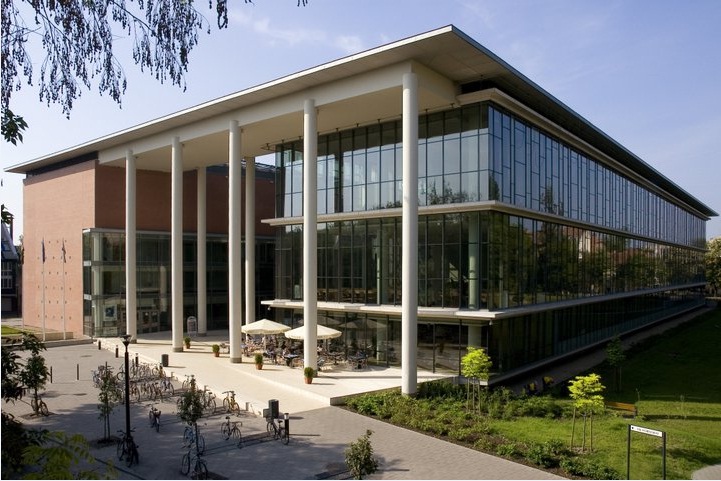
The city of Szeged has 62 kindergartens, 32 elementary schools and 18 high schools. The two most prominent high schools (Ságvári Endre Gyakorló Gimnázium and Radnóti Miklós Kísérleti Gimnázium) are in the top fifteen in the country.
Szeged is the higher education centre of the Southern Great Plain and has built quite a reputation for itself. Thousands of students study here, many of whom are foreigners. The University of Szeged is according to the number of students the second largest and the 4th oldest university of Hungary being established in 1581. Ranked as the top university of the country on Academic Ranking of World Universities – 2005, and in the top 100 in Europe, it offers several programs on different fields of study.

The Biological Research Centre of the Hungarian Academy of Sciences, which was built with the help of UNESCO funds, has also been a considerable source of advanced research. Scientists at this laboratory were first in the world to produce artificial heredity material in the year 2000. The building has served as a home to many well known conferences and continues to make contributions to the world of science.
The Szent-Györgyi Albert Agóra is a cultural scientific centre of Szeged which gives home to laboratories of the Biological Research Centre and to exhibitions of the John von Neumann Computer Society especially their IT historical exposition.
In 2018 the new scientific institution, the ELI Attosecond Light Pulse Source (ELI-ALPS) opened in Szeged establishing a unique facility which provides light sources within an extremely broad frequency range in the form of ultrashort pulses with high repetition rate which is needed for different kinds of physical experiments especially in the field of attosecond physics.
It is also one of the main options for medical students who come from all around Europe to study Medicine in their recognized international campus.
Demographics
|1870 | 56901 |1880 | 59143 |1890 | 68924 |1900 | 82803 |1910 | 96063 |1920 | 100175 |1930 | 108448 |1941 | 110740 |1949 | 104867 |1960 | 117515 |1970 | 145312 |1980 | 164437 |1990 | 169930 |2001 | 168273 |2011 | 168048 |2022 |158797|source=}}
Ethnic groups (2001 census):
- Hungarians – 93.5%
- Romani – 0.7%
- Germans – 0.5%
- Serbs – 0.2%
- Romanians – 0.2%
- Croats – 0.1%
- Slovaks – 0.1%
- No answer (unknown) – 4.7%
Religions (2001 census):
- Roman Catholic – 54.5%
- Calvinist – 6.7%
- Lutheran – 1.6%
- Greek Catholic – 0.6%
- Others (Christian) – 1.3%
- Others (non-Christian) – 0.4%
- Atheist – 21.8%
- No answer (unknown) – 13.1%
Economy
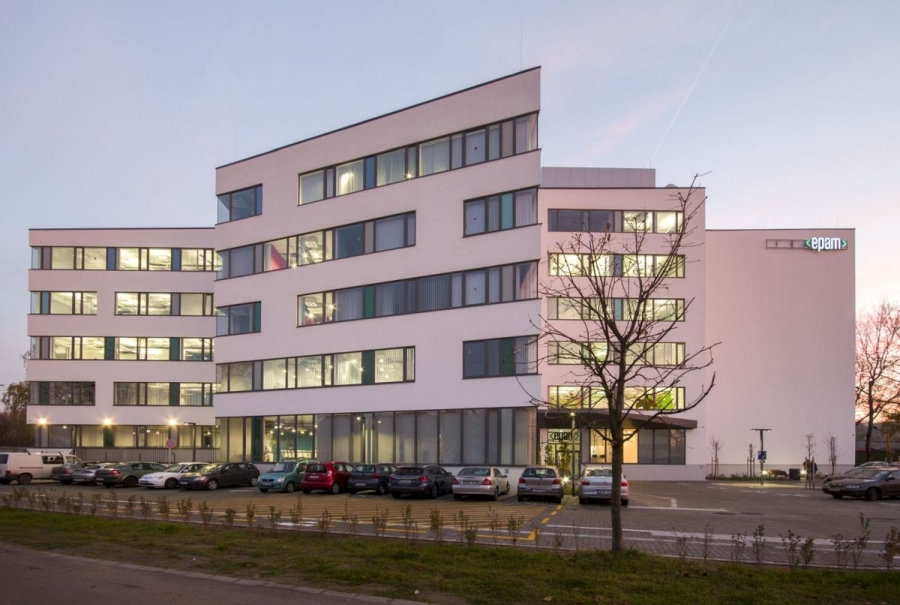
Szeged is one of the centres of food industry in Hungary, especially known for its paprika and companies like Pick Szeged, Sole-Mizo, Bonafarm etc. Moreover, BYD Auto announced plans to begin manufacturing cars in Szeged by the second quarter of 2026.
Other notable companies having their headquarters in Szeged are AMSY International, RRE – Szeged, Optiwella, Generál Printing House, RotaPack, Sanex Pro, Agroplanta, Karotin, Florin, Quadrotex and Szeplast. Others, like ContiTech, Duna-Dráva Cement, Szatmári Malom and Europe Match, are not based in the city, but have production facilities there.
The Hangár Expo and Conference Centre provides space for international exhibitions and conferences.
Largest employers
| # | Employer | # of Employees |
|---|---|---|
| 1 | University of Szeged | 5,000 |
| 2 | Pick Szeged | 2,000–4,999 |
| 3 | Sole-Mizo | 1,000–1,999 |
| 4 | Tisza-Volán | 1,000–1,999 |
| 5 | EDF-Démász | 500–999 |
| 6 | Suli-Host | 500–999 |
| 7 | Szegedi Közlekedési Társaság | 500–999 |
| 8 | Szegedi Szefo | 500–999 |
| 9 | Coop | 300–499 |
| 10 | Engie | 300–499 |
| Year | Unemployment rate (%) |
|---|---|
| 2000 | 5.17% |
| 2001 | 4.83% |
| 2002 | 4.22% |
| 2003 | 4.32% |
| 2004 | 4.67% |
| 2005 | 5.01% |
| 2006 | 4.89% |
| 2007 | 4.25% |
| 2008 | 4.60% |
| 2009 | 4.91% |
| 2010 | 6.26% |
| 2011 | 6.50% |
| 2012 | 6.42% |
| 2013 | 6.89% |
| 2014 | 4.17% |
| 2015 | 4.42% |
| 2016 | 4.14% |
Transport


Szeged is the most important transportation hub in the Southern Great Plain. Two motorways, M5 and M43, lie along the city border. Through the M5 Motorway Szeged is connected to Kecskemét, Kiskunfélegyháza and Budapest to the north and to Subotica, Novi Sad and Belgrade in Serbia to the south. The M43 Motorway – which splits from the M5 Motorway near Szeged – connects the city via Makó to Arad and Timișoara in Romania. In addition, there are other roads running from the city to Makó and Nagylak (main road 43), to Röszke (main road 5), to Kiskunfélegyháza (main road 5), to Ásotthalom and Baja (main road 55) and to Hódmezővásárhely, Orosháza and Békéscsaba (main road 47).
The Budapest-Szeged-rail line is an important rail connection, as well as the railway lines 121 (to Makó), 135 (to Hódmezővásárhely), 136 (to Röszke) and 140 (to Kiskunfélegyháza).
A tram-train system was constructed and inaugurated in November 2021, connecting Szeged with the neighbouring Hódmezővásárhely, thus creating the second most populous urban agglomeration in the country, after the capital. There was a proposal for its extension, even through the Serbian border, to Subotica.
The city is also a common stop for national and international long-distance buses.
Motorways
- M5
- M43
Railways
- 121 (to Makó)
- 135 (to Hódmezővásárhely)
- 136 (to Röszke)
- 140 (to Kiskunfélegyháza).
Airport
Szeged Airport is the international airport of Szeged.
Public transport
Public transport in Szeged is provided by Szeged Transport Ltd. ( or SZKT), owned by the municipal government, and Volánbusz, owned by the national government. Forming the backbone of SZKT's network are 5 tram lines and 6 trolleybus lines, which are supplemented by 38 bus lines. Hungarian State Railways operates regional and intercity trains, as well as international trains to Subotica.
Sport

Handball
The most popular sport in the city is handball. The city has one well-known club the 2013–14 EHF Cup-winner SC Pick Szeged playing in the Nemzeti Bajnokság I. They play at the Pick Aréna, opened in 2021.
Association football
The second most popular sport is football in the city. Szeged had several clubs playing in the top level Hungarian league, the Nemzeti Bajnokság I. These are Szegedi AK, Szegedi Honvéd SE. The only currently operating club, Szeged 2011 play in the Nemzeti Bajnokság II.
- Szeged 2011, currently competing in the 2018–19 Nemzeti Bajnokság III
- Szegedi Egységes Oktatási Labdarúgó SC, currently competing in the 2018–19 Nemzeti Bajnokság III
- Szegedi VSE, currently competing in the Csongrád county championship
- Szegedi EAC, defunct
- Szegedi AK, defunct
- Szegedi Honvéd SE, defunct
Speedway
Motorcycle speedway has had a long association with the city. The first track was at the SZEAC athletics stadium (also known as the Felső Tisza-parti Stadion or Városi stadion), which was located where the Pick Aréna is today. The venue hosted finals of the Hungarian Individual Speedway Championship.
From 1978, the Volán speedway club moved to a new track built on Napos út at Béke telepi. This venue held important events, including qualifying rounds of the Speedway World Championship in 1983 and 1984 and a qualifying round of the Speedway World Team Cup in 1988 and 1990. The track closed, partly because of noise issues in a residential area, resulting in the speedway moving out of the city, 25 kilometres west, near to Mórahalom ().
Main sights
| Gróf-palace (1913) | [[File:Raichle03KJ.jpg | 150px]] | The Main Building of the University | [[File:Szegedi TudományegyetemSF 010.jpg | 150px]] | Saint Nicholas Serbian Orthodox Church (1781) | [[File:Szent Miklós szerb ortodox templom (Szeged).JPG | 150px]] |
|---|
Politics
The current mayor of Szeged is László Botka (Association for Szeged).
The local Municipal Assembly, elected at the 2019 local government elections, is made up of 33 members (1 Mayor, 23 Individual constituencies MEPs and 9 Compensation List MEPs) divided into this political parties and alliances:
| Party | Seats | Current Municipal Assembly | |
|---|---|---|---|
| Association for Szeged | 19 | ||
| Fidesz}} | Fidesz-KDNP | 9 | |
| Independent Hungarian City Association (FVSZME) | 1 |
List of mayors
List of City Mayors from 1990:
| Member | Party | Term of office | |
|---|---|---|---|
| Pál Lippai | Fidesz}}" | Fidesz-SZDSZ | |
| István Szalay | Hungarian Socialist Party}}" | MSZP | |
| László Bartha | Fidesz}}" | Fidesz-FKgP-MDF | |
| László Botka | Hungarian Socialist Party}}" | MSZP | |
| Independent (politician)}}" | Independent |
Media
.jpg)
The city offers a wide range of media – television and radio stations, and print and online newspapers.
TV stations
- Szeged TV
- Tarjáni Kábeltévé Stúdió
- TiszapART TV
- Telin Televízió
Radio stations
- "Rádió 88" FM 95,4 MHz
- All in Party Radio
- Rádió Mi, 89,9 MHz
- Lánchíd Rádió, FM 100,2 MHz
- MR1 Kossuth Rádió, FM 90,3 MHz
- MR2 Petőfi Rádió, 104,6 MHz
- MR3 Bartók Rádió, 105,7 MHz
- Dankó Rádió, 93,1 MHz
- Rádió1, 87,9 MHz
Daily newspapers and news portals
- Délmagyarország ()
Notable people
Born in Szeged

- László Ábrahám (1943–2025), lawyer
- Adrián Annus (1975), hammer thrower
- Gábor Agárdy (1922–2006), actor
- Miloš Babić (1904–1968), artist
- Béla Balázs (1884–1949), writer, poet, film critic
- Zsolt Becsey (1964), politician
- Joseph Csaky (1888–1971), sculptor
- Krisztián Cser (1977), opera singer, physicist
- Attila Czene (1974), Olympic champion medley swimmer
- János Csonka (1852–1939), engineer, co-inventor of the carburetor
- Mihály Erdélyi (1895–1979), operetta composer
- Sophie Evans (1976), adult movie star
- Ivan Fellegi (1935), Chief Statistician of Canada
- Rajmund Fodor (1976), Olympic champion water polo player
- Jenő Huszka (1875–1960), composer
- Éva Janikovszky (1926–2003), writer
- Ferenc Joachim (1882–1964), painter
- Gyula Juhász (1883–1937), poet
- Esther Jungreis, Orthodox Jewish outreach speaker
- Judith Karasz (1912–1977), photographer and Bauhaus graduate
- Györgyi Lang (1957–2023), actress and singer, member of the Hungarian music duo Pa-Dö-Dő.
- (1857?), architect
- Géza Maróczy (1870–1951), chess grand master
- Anita Márton (1989), shot putter
- Tamás Molnár (1975), Olympic champion water polo player
- Nickolas Muray (born Miklós Mandl; 1892–1965), Hungarian-born American photographer and Olympic fencer
- Róbert Nagy (1967), speedway rider
- László Paskai (1927–2015), Archbishop of Esztergom
- Szilvia Peter Szabo (1982), singer
- Willy Pogany (1882–1955), illustrator
- György Sebők (1922–1999), pianist
- Julius Stahel (1825–1912), American Civil War general and diplomat
- Hanna Tetteh (1967), Foreign minister of the Republic of Ghana
- (1983), singer
- Olivér Várhelyi (1972), lawyer and diplomat
- Marianne Varnay (1898), architect https://architectuul.com/architect/marianne-varnay
- Attila Vajda (1983), Olympic champion canoer
- Vilmos Zsigmond (1930), cinematographer
Lived in Szeged
- Mihály Babits, poet, writer
- Lipót Fejér, mathematician
- Ferenc Fricsay, conductor
- Alfréd Haar, mathematician
- Attila József, poet
- László Kalmár, mathematician
- Katalin Karikó, Nobel prize winner biochemist
- Dezső Kosztolányi, poet, novelist
- Peter Leko, chess grandmaster
- Immanuel Löw, rabbi, Judaic scholar, politician
- Leopold Löw, rabbi, historian and Judaic scholar
- Kálmán Mikszáth, writer
- Ferenc Móra, writer, archaeologist
- Miklós Radnóti, poet
- Frigyes Riesz, mathematician
- Albert Szent-Györgyi, Nobel prize winner chemist and biologist
- Béla Szőkefalvi-Nagy, mathematician
- Philip Wodianer, communal worker
- Adele Zay (1848–1928), teacher and feminist
International relations
Twin towns – sister cities
Szeged is twinned with:
- GBR Cambridge, United Kingdom (1987)
- GER Darmstadt, Germany (1990)
- MNE Kotor, Montenegro (2001)
- CYP Larnaca, Cyprus (1994)
- BEL Liège, Belgium (2001)
- POL Łódź, Poland (2004)
- FRA Nice, France (1969)
- UKR Odesa, Ukraine (1957)
- ITA Parma, Italy (1988)
- CRO Pula, Croatia (2003)
- UKR Rakhiv, Ukraine (1939, renewed 1997)
- SRB Subotica, Serbia (1966, renewed 2004)
- ROU Târgu Mureș, Romania (1997)
- ROU Timișoara, Romania (1998)
- USA Toledo, United States (1990)
- FIN Turku, Finland (1971)
- CHN Weinan, China (1999)
Partner cities
- SRB Novi Sad, Serbia (2001)
Gallery
Klauzal ter - panoramio.jpg|Klauzál Square Szeged nagy posta.jpg|Postal Palace A szeged-alsóvárosi ferences rendház és templom légi felvételen.jpg|Franciscan monastery and church Hungary szeged dome night 5.jpg|Votive Church at night Szeged-Alsóváros, ferences templom 2021 11.jpg|Relief of King Matthias Corvinus of Hungary Szeged IV. Béla szobra Somorjai 006.jpg|Statue of King Béla IV of Hungary Szeged, Kárász utca 16., Magyar Ede 16KJ.jpg|Unger–Mayer House (1911) Klebelsberg1.JPG|Statue of Kuno von Klebelsberg Szeged - Milkó-palota (29738098347).jpg|Art Nouveau architecture Szeged, Árvízi emlékmű SF.jpg|The Great Flood (1879) Statue Szegedi Tudományegyetem.jpg|Rector's Building, University of Szeged Szeged-egyetem5.jpg|Institute of Informatics & IT Department, University of Szeged Szeged-egyetem4.jpg|Faculty of Sciences (the chemistry building), University of Szeged Hungary szeged dom2.jpg|View from the Votive Church Dome Megyeszékhely - Csongrád megye - Szeged.jpg|Aerial photography Tisza-szeged1.jpg|Belvárosi bridge on the Tisza river Szeged-paprika1.jpg|Capsicum fruits in Szeged AnnafürdőSzeged06.jpg|Anna Thermal-Bath Szeged, Hungary. Suspended bridge.jpg|Szeged bridge on Tisza Szegedi Fekete-ház.jpg|Fekete-house
Notes
References
References
- [https://www.ksh.hu/docs/hun/hnk/hnk_2019.pdf KSH, 2019]
- "OECD – FUNCTIONAL URBAN AREAS IN OECD COUNTRIES: HUNGARY".
- "Detailed Gazetteer of Hungary".
- "Önkormányzati szereplők".
- "On etymology".
- Klaudios Ptolemaios. Handbuch der Geographie. Griechisch-Deutsch. Herausgegeben von Alfred Stückelberger und Gerd Graßhoff. Schwabe Verlag Basel. 2006, p. 310-311
- Szeged by Dr. Trogmayer Ottó
- Ádám Fejér, Magyarok és szlávok. (Konferencia, Szeged, 1991. május 30-31). Szerk. Fejér Ádám, H. Tóth Imre stb. (Kiad. a JATE Szláv Filológiai Tansz.), József Attila Tudományegyetem, 1993, p. 262, {{ISBN. 9789634819929
- Farkas, József. (1985). "Szeged Története 2 1686-1849".
- (28 July 2009). "Vickery TV Paprika (Hungary)".
- "TalkTalk Webspace is closing soon!!".
- (2017-09-21). "The Cambridge History of Communism". Cambridge University Press.
- "Holocaust Survivors and Victims Database -- Szeged, Hungary Deportation List".
- [http://www.symph-szeged.hu/ Szeged Symphony Orchestra website], accessed 6 August 2012.
- (8 May 2006). "A napfény városa". New Wave Media Group.
- . (23 July 2022). ["12982: Szeged (Hungary)"](https://www.ogimet.com/cgi-bin/gsynres?ind=12982&ano=2022&mes=7&day=24&hora=0&min=0&ndays=30). *[[OGIMET]]*.
- "ELI-ALPS Research Institute | Towards the sharp end of attoscience".
- népesség.com, ''[http://nepesseg.com/]''
- "Census database - Hungarian Central Statistical Office".
- "BYD comenzará a fabricar vehículos eléctricos en Hungría en el segundo trimestre de 2026".
- "Contact Info – AMSY".
- "RRE – Szeged Nyomdaipari kft. – Elérhetőségek".
- "Optiwella | Docsis Cable Modems & CMTS".
- "Contact Us".
- "RotaPack – Contact".
- "SanexPro".
- "AgroPlantaKft Szeged".
- "Kapcsolat".
- "Kapcsolat – Florin".
- "Kapcsolat".
- "Contact".
- "Continental Industry – Innovator and Technological Pioneer for Rubber and Plastic Products".
- "Szatmári Malom".
- (2006-11-15). "Megmenekült az egyetlen hazai gyufagyár". DÉLMAGYAR.
- "Hangár-expó".
- "Céglista letöltés! Cégkereső: cégnév, cím, adószám, főtevékenység szerint.".
- "2016".
- [Rail transport map of Hungary by the Hungarian Rail Capacity Allocation Office (VPE)]
- "Vonalhálózat – Szegedi Közlekedési Társaság".
- "I. A Varos Sprotja".
- "World Championship".
- "World Championship".
- "Speedway World Cup".
- "Városi közgyűlés tagjai 2019–2024 – Szeged (Csongrád megye)".
- "Szeged város polgármesterei és tanácselnökei 1715-től napjainkig".
- "Testvérvárosok". Szeged Tourism.
This article was imported from Wikipedia and is available under the Creative Commons Attribution-ShareAlike 4.0 License. Content has been adapted to SurfDoc format. Original contributors can be found on the article history page.
Ask Mako anything about Szeged — get instant answers, deeper analysis, and related topics.
Research with MakoFree with your Surf account
Create a free account to save articles, ask Mako questions, and organize your research.
Sign up freeThis content may have been generated or modified by AI. CloudSurf Software LLC is not responsible for the accuracy, completeness, or reliability of AI-generated content. Always verify important information from primary sources.
Report