From Surf Wiki (app.surf) — the open knowledge base
Syrian Argentines
Argentine citizens of Sirian descent
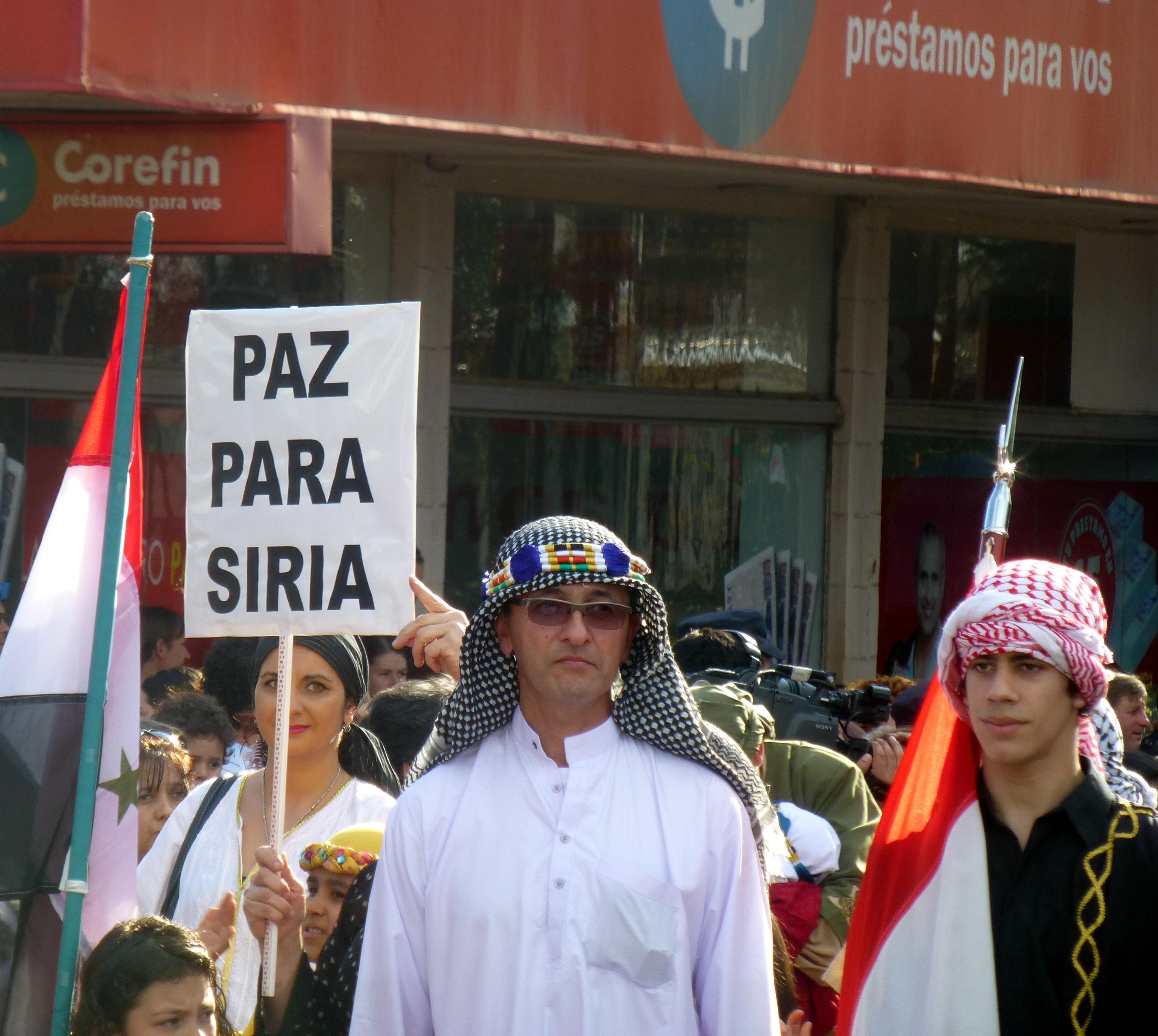
Argentine citizens of Sirian descent
| Field | Value |
|---|---|
| group | Syrian Argentines |
| native_name | es |
| ar | |
| flag | Argentina Syria |
| image | Colegio Sirio Libanés 1.jpg |
| image_caption | President Agustín P. Justo at the inauguration of the Syrian-Lebanese School in Argentina |
| population | 1,324 (by birth, 2022) |
| + 1,500,000 (by ancestry, 2014) | |
| 3% of Argentina's population | |
| popplace | Mainly in Greater Buenos Aires, Córdoba and the Argentine Northwest |
| langs | Majority: Spanish |
| Minority: Arabic (Shami) | |
| rels | Mostly Christianity (mainly Eastern Orthodoxy), significant percentage of Muslims |
| Minority Judaism | |
| related | Syrians and other Arab Argentines |
| Syrian UruguayansSyrian BraziliansSyrian AmericansSyrian Colombians |
ar + 1,500,000 (by ancestry, 2014) 3% of Argentina's population Minority: Arabic (Shami) Minority Judaism Syrian UruguayansSyrian BraziliansSyrian AmericansSyrian Colombians
Syrian Argentines are Argentine citizens of Syrian descent or Syrian-born people who reside in Argentina, mainly Christian Arabs. Argentina has the second highest number of Syrians in South America after Brazil. Syrian immigration to Argentina has been and is currently, one of the most important Arab migration flows into Argentina. Immigration waves peaked in the 20th century, although in recent years due to the constant wars in the Middle East, immigration from Syria has been increasing over time. Like other Arab Argentines, they are universally known as "turcos" ("Turks"), like in the rest of Latin American countries.
In October 2014, because of the war raging in Syria and increased violence and persecution of civilians, the Argentine government announced that it would begin to receive Syrian refugees in its country, being the second South American nation to do this after Uruguay.
History
Most Syrians emigrating to Argentina established themselves in the northwest of the country, as did the Lebanese people. The Syrians, like the Lebanese, were mostly hawkers and did not practice agriculture. Thus, they did not settle in agricultural colonies but stayed in the cities in greater numbers than other immigrants. Sarmiento and Alberdi's plan to populate regions emptied of indigenous peoples did not materialize, as most of the newcomers chose cities. In the period from 1975 to 1977, their numbers decreased again. The first destination of these groups of Syrian and Lebanese was the province of Buenos Aires and from there many migrated further into the country, attracted by landscapes that resembled much of their native land. Many of these people settled in Córdoba, Salta, Jujuy, La Rioja, San Juan, Mendoza, Santiago del Estero, Misiones, Chaco and Patagonia. In these provinces, they were devoted primarily to agricultural work.
In recent years, the number of Syrians in the country has risen as a result of the Syrian civil war. In September 2013, the Argentinian government decided to offer refuge to thousands of Syrian refugees; by the previous month, more than 300 had arrived in the country. The following year, the Argentinian government launched the "Syria Program" to help the facilitate the arrival of refugees, being the second country to adopt such programs after Uruguay.
Notable people
Politicians
- Carlos Menem (1930–2021), former President of Argentina
- Vicente Saadi (1913–1988), national senator and governor of Catamarca Province
- Carlos Fayt (1918–2016), member of the Supreme Court of Justice of Argentina
- Fernando Nadra (1916–1997), Argentine lawyer, journalist and public speaker. His son Alberto Nadra is also a politician.
- Luis Juez (born 1963), politician who served as Mayor of the City of Córdoba and later elected to the Senate.
- Claudia Ledesma Abdala (born 1974), national senator and former governor of Santiago del Estero Province
- Carlos Maslatón (born 1958), Argentine politician and financial analyst
- Rossana Chahla (born 1966), Mayor of San Miguel de Tucumán
Business
- Jorge Antonio (1917–2007), businessman and close adviser of Juan Domingo Perón.
- Lorenzo Miguel (1927–2002), labor leader.
- Alan Faena (born 1963), hotelier and real estate developer.
- Juliana Awada (born 1974), businesswoman and First Lady of Argentina, married to president Mauricio Macri.
Arts and sciences
- Jorge Sahade (1915–2012), astronomer and former president of the International Astronomical Union.
- Eduardo Falú (1923–2013), folk music guitarist and composer.
- Juan José Saer (1937–2005), writer.
- Jorge Cafrune (1937–1978), folklore singer and musician.
- Leonardo Favio (1938–2012), singer, actor, film director and screenwriter.
- Leila Guerriero (born 1967), journalist and writer.
Sports
- Carolina Duer (born 1978), boxer
- Ezequiel Ham (born 1994), professional footballer
- Jalil Elías (born 1996), professional footballer.
References
References
- "Censo Nacional de Población, Hogares y Viviendas 2022 : resultados definitivos : migraciones internacionales e internas". Instituto Nacional de Estadística y Censos (INDEC).
- [https://joshuaproject.net/people_groups/15152/AR Syrian Arabs in Argentina]. Joshua Project. Consultado el 1 de diciembre de 2020.
- (1996). "Introduction: "Turco" Immigrants in Latin America". The Americas.
- Victoria. (2018-12-16). "11 Essential Argentina Slang Expressions You Can Start Using".
- (2013-01-01). "Latin America's Los Turcos: geographic aspects of Levantine and Maghreb diasporas". Noesis. Revista de Ciencias Sociales y Humanidades..
- Civantos, Christina. (February 5, 2016). "The Surprisingly Deep Centuries-Old Ties Between the Middle East and Latin America".
- http://amerika.revues.org/2746 Amerika:La emigración Siria-Libanesa a Argentina (the Syrian and Lebanese emigration to Argentina). Retrieved in August 31, 2012, to 14:35pm.
- http://www.oni.escuelas.edu.ar/olimpi98/bajarondelosbarcos/Colectividades/Turcos,%20sirios%20y%20libaneses/inmigraci%C3%B3n.htm Sirios, turcos y libaneses. Retrieved in August 31, 2012, to 15:15pm.
- Heller, Constanza. (13 September 2013). "Tamara, the woman behind Syrian refugees in Argentina". Buenos Aires Herald.
- (21 October 2014). "Al igual que Uruguay, Argentina recibirá refugiados sirios".
This article was imported from Wikipedia and is available under the Creative Commons Attribution-ShareAlike 4.0 License. Content has been adapted to SurfDoc format. Original contributors can be found on the article history page.
Ask Mako anything about Syrian Argentines — get instant answers, deeper analysis, and related topics.
Research with MakoFree with your Surf account
Create a free account to save articles, ask Mako questions, and organize your research.
Sign up freeThis content may have been generated or modified by AI. CloudSurf Software LLC is not responsible for the accuracy, completeness, or reliability of AI-generated content. Always verify important information from primary sources.
Report