From Surf Wiki (app.surf) — the open knowledge base
Syriac literature
Literature composed in the Syriac language
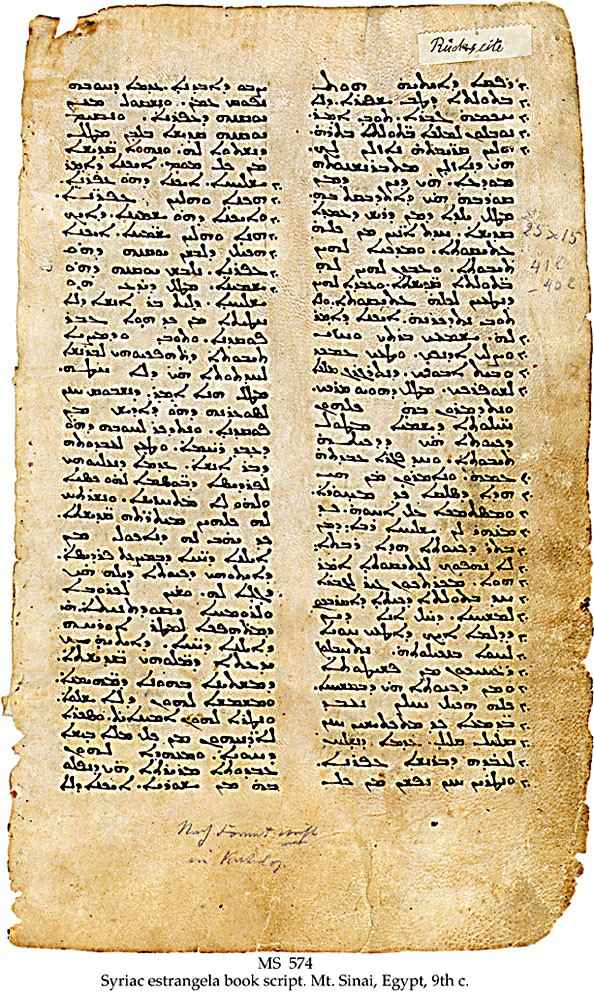
Literature composed in the Syriac language
Syriac literature is literature in the Syriac language. It is a tradition going back to the Late Antiquity. It is strongly associated with Syriac Christianity.
Terminology
In modern Syriac studies, and also within the wider field of Aramaic studies, the term Syriac literature is most commonly used as a shortened designation for Classical Syriac literature, that is written in Classical Syriac language, an old literary and liturgical language of Syriac Christianity. It is sometimes also used as a designation for Modern Syriac literature or Neo-Syriac literature, written in Modern Syriac (Eastern Neo-Aramaic) languages. In the wider sense, the term is often used as designation for both Classical Syriac and Modern Syriac literature, but its historical scope is even wider, since Syrian/Syriac labels were originally used by ancient Greeks as designations for Aramaic language in general, including literature written in all variants of that language. Such plurality of meanings, both in ancient literary texts and in modern scholarly works, is further enhanced by the conventional scholarly exclusion of Western Aramaic heritage from the Syriac corpus, a practice that stands in contradiction not only with historical scope of the term, but also with well attested self-designations of native Syriac-speaking communities. Since the term Syriac literature continues to be used differently among scholars, its meanings are remaining dependent on the context of every particular use.
Classical

Early Syriac texts date to the 2nd century, notably the old versions Syriac Bible and the Diatessaron Gospel harmony. The bulk of Syriac literary production dates to between the 4th and 8th centuries. Syriac literacy survived into the 9th century, but Syriac Christian authors in this period increasingly write in Arabic.
"Classical Syriac language" is the term for the literary language as was developed by the 3rd century. The language of the first three centuries of the Christian era is also known as "Old Syriac" (but sometimes subsumed under "Classical Syriac").
The earliest Christian literature in Syriac was biblical translation, the Peshitta and the Diatessaron. Bardaisan was an important non-Christian (Gnostic) author of the 2nd century, but most of his works are lost and only known from later references. An important testimony of early Syriac is the letter of Mara bar Serapion, possibly written in the late 1st century (but extant in a 6th- or 7th-century copy).
The 4th century is considered to be the golden age of Syriac literature. The two giants of this period are Aphrahat, writing homilies for the church in the Persian Empire, and Ephrem the Syrian, writing hymns, poetry and prose for the church just within the Roman Empire. The next two centuries, which are in many ways a continuation of the golden age, sees important Syriac poets and theologians: Jacob of Serugh, Narsai, Philoxenus of Mabbog, Babai the Great, Isaac of Nineveh and Jacob of Edessa.
There were substantial efforts to translate Greek texts into Syriac. A number of works originally written in Greek survive only in Syriac translation. Among these are several works by Severus of Antioch (d. 538), translated by Paul of Edessa (fl. 624). A Life of Severus was written by Athanasius I Gammolo (d. 635). National Library of Russia, Codex Syriac 1 is a manuscript of a Syriac version of the Eusebian Ecclesiastical History dated to AD 462.
After the Islamic conquests of the mid-7th century, the process of hellenization of Syriac, which was prominent in the sixth and seventh centuries, slowed and ceased. Syriac entered a silver age from around the ninth century. The works of this period were more encyclopedic and scholastic, and include the biblical commentators Ishodad of Merv and Dionysius bar Salibi. Crowning the silver age of Syriac literature is the thirteenth-century polymath Bar-Hebraeus.
The conversion of the Mongols to Islam began a period of retreat and hardship for Syriac Christianity and its adherents. However, there has been a continuous stream of Syriac literature in Upper Mesopotamia and the Levant from the fourteenth century through to the present day.
Modern
The emergence of vernacular Neo-Aramaic (Modern Syriac) is conventionally dated to the late medieval period, but there are a number of authors that continued to produce literary works in Classical Syriac up to the early modern period, and literary Syriac (ܟܬܒܢܝܐ syr) continues to be in use among members of the Syriac Orthodox Church.
Modern Syriac literature includes works in various colloquial Eastern Aramaic Neo-Aramaic languages still spoken by Assyrian Christians. This Neo-Syriac literature bears a dual tradition: it continues the traditions of the Syriac literature of the past, and it incorporates a converging stream of the less homogeneous spoken language. The first such flourishing of Neo-Syriac was the seventeenth century literature of the School of Alqosh, in northern Iraq. This literature led to the establishment of Assyrian Neo-Aramaic and so called Chaldean Neo-Aramaic as written literary languages. In the nineteenth century, printing presses were established in Urmia, in northern Iran. This led to the establishment of the 'General Urmian' dialect of Assyrian Neo-Aramaic as the standard in much Neo-Syriac Assyrian literature. The comparative ease of modern publishing methods has encouraged other colloquial Neo-Aramaic languages, like Turoyo and Senaya, to begin to produce literature.
List of writers
- Mara bar Serapion (1st century)
- Bardaisan (2nd century)
- Mani (3rd century)
- Aphrahat (280-345)
- Ephrem the Syrian (d. 373)
- Cyrillona (5th century)
- Balai of Qenneshrin (5th century)
- John of Apamea (5th century)
- Isaac of Antioch (5th century)
- Narsai (5th century)
- Jacob of Serugh (d. 521)
- Philoxenus of Mabbug (d. 523)
- Stephen Bar Sudhaile (6th century)
- Paul of Edessa (fl. 624)
- Sergius of Reshaina (d. 536)
- Cyrus of Edessa (6th century)
- Thomas of Edessa (6th century)
- John of Tella (d. 538)
- Ahudemmeh (d. 575)
- John of Ephesus (d. 588)
- Peter III of Raqqa (d. 591)
- Babai the Great (d. 628)
- Athanasius I Gammolo (d. 635)
- John III of the Sedre (d. 648)
- Marutha of Tikrit (d. 649)
- Sahdona (d. c. 650)
- Gabriel of Qatar (7th century)
- Gregory of Cyprus (7th century)
- Severus Sebokht (d. c. 667)
- Athanasius II Baldoyo (d. 687)
- John bar Penkaye (late 7th c.)
- Dadisho Qatraya (late 7th c.)
- Isaac of Nineveh (d. 700)
- Jacob of Edessa (d. 708)
- Joseph Hazzaya (8th century)
- John of Dalyatha (d. )
- Theodore Bar Konai (8th century)
- Theodore Abu Qurrah (d. 823)
- Isho Bar Nun (d. 828)
- Job of Edessa (9th century)
- John of Dara (9th century)
- Ishodad of Merv (9th century)
- Anthony of Tagrit (9th century)
- Thomas of Marga (9th century)
- Isho'dnah (9th century)
- Moses bar Kepha (9th century)
- Theodosius Romanus (9th century)
- Elijah of Nisibis (11th century)
- Michael the Syrian (12th century)
- Dionysius bar Salibi (12th century)
- Yoḥannan bar Zoʿbi (13th century)
- Giwargis Warda (13th century)
- Barhebraeus (13th century)
- Abdisho bar Berika (d. 1318)
References
Sources
References
- This manuscript was previously misidentified as a translation of John Chrysostom's ''Homilies on the Gospel of John''. It has subsequently been identified as missing pages from a Syriac witness to the Asceticon. See J. Edward Walters, "Schøyen MS 574: Missing Pages From a Syriac Witness of the ''Asceticon'' of Abba Isaiah of Scete," ''Le Muséon'' 124 (1-2), 2011: 1-10.
This article was imported from Wikipedia and is available under the Creative Commons Attribution-ShareAlike 4.0 License. Content has been adapted to SurfDoc format. Original contributors can be found on the article history page.
Ask Mako anything about Syriac literature — get instant answers, deeper analysis, and related topics.
Research with MakoFree with your Surf account
Create a free account to save articles, ask Mako questions, and organize your research.
Sign up freeThis content may have been generated or modified by AI. CloudSurf Software LLC is not responsible for the accuracy, completeness, or reliability of AI-generated content. Always verify important information from primary sources.
Report