From Surf Wiki (app.surf) — the open knowledge base
Swedish Film Institute
Swedish foundation

Swedish foundation
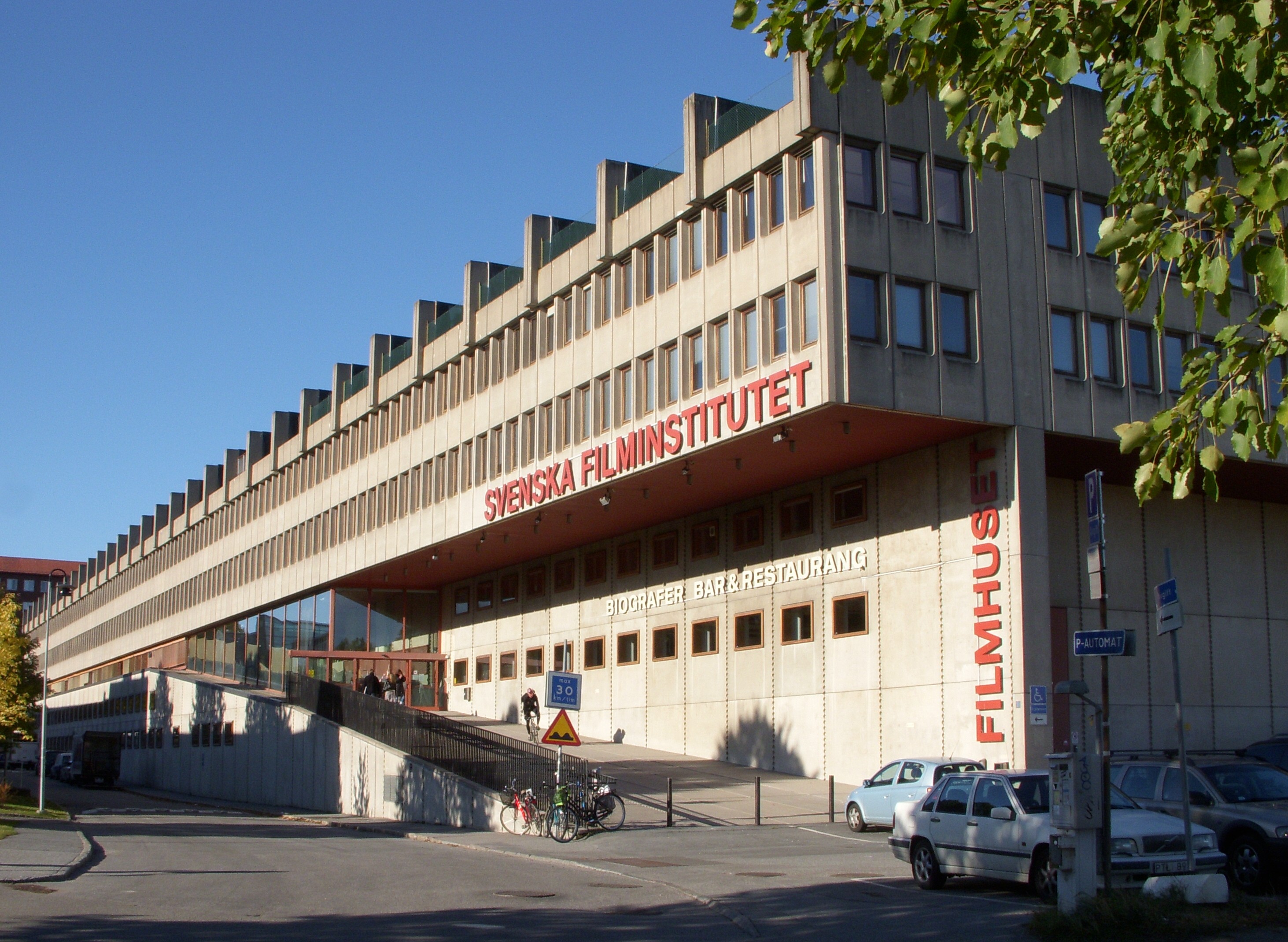
The Swedish Film Institute (, SFI) is a statutory body located in Stockholm, Sweden that supports the Swedish film industry. Founded in , the institute is responsible for administering the annual Guldbagge Awards, and for managing the Swedish Film Database. Notable CEOs of the institute include founder-director Harry Schein (1963–1970 and 1972–1978) and Anna Serner (2011–2021). Serner is known for creating an initiative which aimed for gender parity in the film industry. Since mid-April 2024 the CEO is Anna Croneman.
History
The Swedish Film Institute (Svenska Filminstitutet, or SFI
In 1940, the society's collections gained independent status, and were renamed the Film Historic Collections (Filmhistoriska samlingarna), but continued to be held at the museum, and became a member of the International Federation of Film Archives in 1946.
.jpg)
The Swedish Film Institute was founded in 1963 to support and develop the Swedish film industry, founded by film critic and businessman Harry Schein (1924-2006), who also became its first CEO. Schein and the Minister of Finance, Gunnar Sträng, were the architects of the Film Reform at this time. The government and film industry signed an agreement that exempted cinemas from entertainment tax, in return for a ten percent levy on ticket sales, which would be paid to the SFI. The SFI could then use that for further funding of new films, as well as for maintaining the archives.
On 16 March 1964, the Film Historic Collections were donated to the institute, becoming the Film Archive of the Swedish Film Institute. Also in 1964, the Film School (Filmskolan) was opened.
In 1967, the Swedish Film Academy (Svenska Filmakademin), with Gösta Werner as first president, grew out of the Film Society.
From the late 1960s until 1993, the institute produced films, and there was a film school run by the institute. In 1970, the film school became an independent body, the University College of Film, Radio, Television and Theatre (Dramatiska institutet). The institute stopped producing films in 1993, and a film commissioner system was introduced.
In 2016, the institute restarted theatrical distribution, enabling cinemas in Sweden to screen digitised films from the archive.
Funding and roles
From the beginning, the activities and funding of the institute were regulated by the Film Agreement with the Government of Sweden. This was renegotiated at approximately 5-year intervals until 2016. In 1973 the government gave direct grants to the institute. In 1982 the video industry joined the agreement, followed by Sveriges Television and Nordisk Television (now TV4) in 1992. In 1998, the video industry left the agreement; in 2006 the remaining Swedish television companies joined. From 1 January 2017 the Swedish Film Institute has been solely financed by state funding. New legislation was introduced from 1 January 2017 determining film policy and putting the government in charge of all regulation and financing of the film industry. The aims, goals and financing however remained "more or less the same".
In 2024, the government commissioned a new inquiry into the film industry.
Description
The institute is a statutory body governed by the Film Bill, and fully funded by the Swedish Government through the Ministry of Culture.
Filmhuset
The institute is housed in the Filmhuset ("House of Film")
Filmhuset houses a large archive, containing books and magazines on film.
It also contains two theatres, Bio Victor and Bio Mauritz, named after Victor Sjöström and Mauritz Stiller, which are available for hire. The movie club Cinemateket uses the theatres to screen a wide program of masterpieces, cult rarities, world cinema, and classics of cinema.
Filmhuset is also the main venue for the Stockholm Industry Days of the annual Stockholm International Film Festival. Here, works-in-progress are presented, and master classes and seminars are held.
Functions
The Swedish Film Institute supports Swedish filmmaking, and allocates grants for production, distribution, and screening of Swedish films in Sweden. It also promotes Swedish cinema internationally, and preserve's Sweden's film heritage. Its official functions since the 2017 have been described thus: to "support the development and production of valuable quality films; contribute to the international distribution of Swedish quality films; support the Swedish film heritage; the pedagogical film education of young people; and an open, democratic society with freedom of expression".
The Institute publishes the Swedish Film Database, an Internet database about Swedish films and filmmakers.
Awards
The Swedish Film Institute has organised the annual Guldbagge Awards since 1964.
The Ingmar Bergman Award, initiated by legendary Swedish film director Ingmar Bergman, was awarded by the SFI between 1978 and 2007 as a complement to the Guldbagge Awards. The jury consisted of Bergman and the CEO of the SFI, and recipients were awarded a bronze plaque depicting Bergman's face as well as a cash prize. The award was first presented at the 14th Guldbagge Awards, and continued until Bergman's death in 2007.
Archives
The Film Historic Collections (Filmhistoriska samlingarna) is one of the oldest of its type in the world, having originated in 1933 and become an independent institution in 1940. The Film Historic Collections became a member of FIAF in 1946, at which time the commercial film industry began to provide some funding to the Collections on the initiative of filmmaker Carl-Anders Dymling, head of Svensk Filmindustri.
The collection was donated to the SFI on 16 March 1964, with the collections remaining at the Tekniska museet. The collection was split into three: the clippings archive, the archival film collections, and documentation.
In 2002, the film archive in Grängesberg was established, to preserve non-theatrical films, and in 2011, this archive was moved from the SFI to the National Library of Sweden.
Also in 2011, www.filmarkivet.se was established: a collaboration between SFI and the National Library, whereby films in the collections are made available to the public as streaming files, at no cost. Filmhistoriska samlingarna continues to digitise hundreds of films, with the 2017 legislation ensuring a permanent funding stream for this.
Governance
The institute is a statutory body governed by the Film Bill. It is managed by a nine-member board appointed by the government, which appoints the CEO. The CEO is responsible for day-to-day operations and management of the institute.
There are five departments within the Swedish Film Institute: Film Funding, Film and Society, Film Heritage, Communications & PR, and Administration.
CEOs
The longest-serving CEOs of the Institute were founder Harry Schein, who served from 1963 to 1970 and then 1972 to 1978; A major legacy left by Serner was the "50/50 by 2020" initiative, which aimed for gender parity in the film industry.
the CEO is Anna Croneman.
Past and present CEOs include:
- 1963–1970 Harry Schein
- 1970–1972 Bo Jonsson
- 1972–1978 Harry Schein
- 1978–1982 Jörn Donner
- 1982–1989 Klas Olofsson
- 1989–1994 Ingrid Edström
- 1994–1998 Lars Engqvist
- 1998–1999 Hans Ottosson
- 1999–2006 Åse Kleveland
- 2006–2010 Cissi Elwin Frenkel
- 2010–2011 Bengt Toll
- 2011–2021 Anna Serner
- 2021 Mathias Rosengren (acting CEO)
- April 2022 Anette Novak
- September 2023
- April 2024 Anna Croneman
Chairs
Chairpersons have included:
- 1963–1967 Krister Wickman (1924–93)
- 1967–1970 Roland Pålsson
- 1970–1978 Harry Schein (1924–2006)
- 1978–1981 Per Ahlmark (b. 1939)
- 1981–1984 Bert Levin
- 1984–1992 Hans Löwbeer (1923–2004)
- 1992–1999 Åke Ahrsjö (b. 1929)
- 1999–2005 Lisa Söderberg
- 2005–2011 Håkan Tidlund
- 2012–2014 Göran K Johansson
- 2015–present Claes Ånstrand
Films
Films supported by SFI include:
- The Girl with the Needle (2024)
- The Promised Land (2023)
- Triangle of Sadness (2022)
- I Am Zlatan (2021)
- Margrete: Queen of the North (2021)
- When Darkness Falls (2006)
- The Color of Milk (2004)
Centres
The Swedish Film Institute has centres for film resources and production respectively:
Film resources
- Film i Dalarna (Dalarna County)
- Film på Gotland (Gotland County)
- Region Gävleborg (Gävleborg County)
- Region Halland (Halland County)
- Film i Jönköpings län (Jönköping County)
- Film i Skåne (Skåne County) (used for both resource and production)
- Film Stockholm (Stockholm County)
- Film i Sörmland (Södermanland County)
- Landstinget i Uppsala län (Uppsala County)
- Region Värmland (Värmland County)
- Film i Västerbotten (Västerbotten County)
- Landstinget Västmanland (Västmanland County)
- Film i Västernorrland (Västernorrland County)
- Film i Örebro län (Örebro County)
- Filmpool Jämtland (Jämtland County)
- Film i Öst (Östergötland County)
- Filmpool Nord (Norrbotten County) (used for both resource and production)
- Region Västra Götaland (Västra Götaland County)
- Filmregion Sydost (Blekinge County, Kronoberg County and Kalmar County)
Production
- Film i Väst (Västra Götaland County)
- Filmregion Stockholm-Mälardalen (Stockholm County)---
References
References
- (28 August 2023). "Swedish Film Institute/Svenska Filminstitutet (SFI) [SE]".
- "History of the archive".
- "History of the Film Institute".
- (20 April 2019). "Sweden 3.5.3".
- Jensen, Jorn Rossing. (27 January 2018). "Göteborg: Swedish Industry Debates New Government Movie Policy".
- (1 January 2017). "Swedish Film Institute – we promote film".
- (11 August 2015). "Cinemas".
- Standley, Mark. (8 October 2020). "Filmhuset".
- Lumholdt, Jan. (13 November 2023). "Stockholm gears up for its industry activities".
- (24 May 2020). "Swedish Film Institute".
- (10 March 2015). "The Swedish Film Institute Foundation". [[Government of Sweden]].
- "The Swedish Film Database – the best source about Swedish film".
- Furberg, Kjell. "Det ska helst röra sig om livet, sagan, glädjen, döden och kärleken". The Swedish Film Database.
- Lodderhose, Diana. (15 September 2021). "International Disruptors: Outgoing Swedish Film Institute CEO Anna Serner On Her Commitment To Gender Parity & Why "The Old Industry Needs To Change"".
- Ntim, Zac. (13 February 2024). "Swedish Film Institute Names Former SVT Exec Anna Croneman As CEO".
- Mitchell, Wendy. (19 September 2023). "Swedish Film Institute unexpectedly parts ways with CEO Anette Novak".
- "Board and management". Swedish Film Institute.
- Ntim, Zac. (18 September 2023). "Anette Novak Out As CEO At Swedish Film Institute".
This article was imported from Wikipedia and is available under the Creative Commons Attribution-ShareAlike 4.0 License. Content has been adapted to SurfDoc format. Original contributors can be found on the article history page.
Ask Mako anything about Swedish Film Institute — get instant answers, deeper analysis, and related topics.
Research with MakoFree with your Surf account
Create a free account to save articles, ask Mako questions, and organize your research.
Sign up freeThis content may have been generated or modified by AI. CloudSurf Software LLC is not responsible for the accuracy, completeness, or reliability of AI-generated content. Always verify important information from primary sources.
Report