From Surf Wiki (app.surf) — the open knowledge base
Suwon
City in Gyeonggi, South Korea

City in Gyeonggi, South Korea
| Field | Value | |
|---|---|---|
| name | Suwon | |
| native_name | 수원 | |
| settlement_type | Special case city | |
| translit_lang1 | Korean | |
| translit_lang1_type1 | Hangul | |
| translit_lang1_info1 | 수원시 | |
| translit_lang1_type2 | Hanja | |
| translit_lang1_info2 | 水原市 | |
| translit_lang1_type3 | Revised Romanization | |
| translit_lang1_info3 | Suwon-si | |
| translit_lang1_type4 | McCune–Reischauer | |
| translit_lang1_info4 | Suwŏn-si | |
| <!-- images, nickname, motto --> | image_skyline | {{multiple image |
| border | infobox | |
| total_width | 290 | |
| image_style | border:1; | |
| perrow | 1/2/2/2 | |
| image1 | Suwon cityscape.jpg | |
| image2 | 20121003 Suwon vs Seoul.jpg | |
| image3 | Bifyu 8.jpg | |
| image4 | Gg_08.png | |
| image5 | Suwon Station at Night.jpg | |
| image_caption | From top, left to right: | |
| view of Suwon from Paldalsan Mountain, | ||
| Suwon World Cup Stadium, | ||
| Hwaseong Fortress, Gwanggyo Lake Park, | ||
| Suwon Station | ||
| image_flag | Flag of Suwon (2022).svg | |
| image_blank_emblem | Suwon_City_Council_2022_logo.png | |
| blank_emblem_type | Emblem of Suwon | |
| image_map | Gyeonggi-Suwon.svg | |
| map_caption | Location in South Korea | |
| coordinates | ||
| subdivision_type | Country | |
| subdivision_name | South Korea | |
| subdivision_type1 | Area | |
| subdivision_name1 | Gyeonggi Province (Seoul Metropolitan Area) | |
| established_title | ||
| established_title1 | ||
| established_title2 | ||
| parts_type | Administrative divisions | |
| parts | 4 gu, 43 dong | |
| government_type | Mayor-Council | |
| leader_party | Democratic | |
| leader_title | Mayor | |
| leader_name | Lee Jae-jun | |
| leader_title1 | Council | |
| leader_name1 | Suwon City Council | |
| area_total_km2 | 121.04 | |
| elevation_max_m | 582 | |
| elevation_max_point | Gwanggyosan | |
| population_total | 1,191,063 | |
| population_as_of | june 2025 | |
| population_density_km2 | auto | |
| population_blank1_title | Dialect | |
| population_blank1 | Gyeonggi | |
| website | Suwon City Council | |
| leader_title2 | Members of the Gyeonggi Provincial Council | |
| leader_name2 | {{Collapsible list | |
| title | List | |
| frame_style | border:none; padding: 0; | |
| list_style | text-align:left;display:none; | |
| 1 | Kim Jae Gui | |
| (DPK) | ||
| 1st Electoral District, Suwon City | ||
| 2 | Kim Ju Seong | |
| (DPK) | ||
| 2nd Electoral District, Suwon City | ||
| 3 | Kim Sang Hoi | |
| (DPK) | ||
| 3rd Electoral District, Suwon City | ||
| 4 | Park Dong Hyeon | |
| (DPK) | ||
| 4th Electoral District, Suwon City | ||
| 5 | Lee Seung Cheol | |
| (PPP)) | ||
| 5th Electoral District, Suwon City | ||
| 6 | Kim Ho Kyum | |
| (DPK) | ||
| 6th Electoral District, Suwon City | ||
| 7 | Oh Wan Seok | |
| (DPK) | ||
| 7th Electoral District, Suwon City | ||
| 8 | An Hye Young | |
| (DPK) | ||
| 8th Electoral District, Suwon City | ||
| leader_title3 | Members of the National Assembly | |
| <!-- After elections, please update this with Romanisations found at http://www.assembly.go.kr --> | leader_name3 | {{Collapsible list |
| title | List | |
| frame_style | border:none; padding: 0; | |
| list_style | text-align:left;display:none; | |
| blank_info | ||
| postal_code | 16200–16799 | |
| area_code | +82-31-2xx |
view of Suwon from Paldalsan Mountain, Suwon World Cup Stadium, Hwaseong Fortress, Gwanggyo Lake Park, Suwon Station (DPK) 1st Electoral District, Suwon City (DPK) 2nd Electoral District, Suwon City (DPK) 3rd Electoral District, Suwon City (DPK) 4th Electoral District, Suwon City (PPP)) 5th Electoral District, Suwon City (DPK) 6th Electoral District, Suwon City (DPK) 7th Electoral District, Suwon City (DPK) 8th Electoral District, Suwon City |Lee Chan-yeol (DPK) Electoral District A Baek Hye-ryeon (DPK) Electoral District B Kim Yeong-jin (DPK) Electoral District C Park Kwang-on (DPK) Electoral District D Kim Jin-pyo (DPK) Electoral District E}} Suwon (; ) is the largest city and capital of Gyeonggi Province, South Korea's most populous province. The city lies approximately 30 km south of the national capital, Seoul. With a population of 1.2 million, Suwon has more inhabitants than Ulsan, though it enjoys a lesser degree of self-governance as a 'special case city'.
Traditionally known as the 'City of Filial Piety', modern Suwon retains a variety of historical landmarks. As a walled city, it is a popular destination for day-trippers from Seoul, with the wall itself—Hwaseong Fortress—receiving 1½ million visits in 2015.
Suwon plays an important economic role as it is home to Samsung Electronics, Korea's largest and most profitable company. The company's research and development centre is in Yeongtong District in eastern Suwon, where its headquarters have also been located since 2016. Samsung's prominence in Suwon is clear: the company is partnered with Sungkyunkwan University, which has a campus in the city; it also owns the professional football team Suwon Samsung Bluewings. This team has won the K League four times and the Asian Super Cup twice. The city is also home to the K League 1 team Suwon FC and the KBO League baseball team KT Wiz.
Suwon houses several well-known universities, most notably Sungkyunkwan University and Ajou University. It is served by three expressways, the national railway network, and three lines on the Seoul Metropolitan Subway.
Name
Suwon means literally "water source". The area has gone by different names since antiquity, but almost all of them have this meaning. The name originally comes from the name of the statelet , from around the Proto–Three Kingdoms period. Afterwards, the area and what is now Hwaseong were together called Maehol, Maetkol, or Mulgol (). In , the name was changed to Susŏng-gun (), in order to disambiguate it from another territory with a similar-sounding name. In 940, its name was changed to Su-ju (). In the 11th century, it went by either Susŏng (different Hanja: ) or Hannam (). In 1310, it received the name Suwon.
In English, the name was formerly often spelt .
History
Early history
The area now corresponding to Suwon has been inhabited since at the latest the early Bronze Age. Artifacts from that period to the early Iron Age have been found in the area, and include objects such as pottery, sculpture, and arrowheads. One location where these materials have been found is at , which is now a .
During the Three Kingdoms of Korea period, the area was described as being of the territory of the statelet Mosuguk, part of the Mahan confederacy. The area came under the influence of Goguryeo in the late 5th century CE, and then later became part of Unified Silla (668–935).
It became part of Goryeo after a military campaign led by King Taejo. In the 13th and 14th centuries, the area was promoted, demoted, merged, and made part of various administrative districts. The area then became a part of Joseon upon its founding, and in 1395 was made an administrative center of Gyeonggi Province.
Until the late 18th century, Suwon's administrative centre was in modern-day Annyeong-dong at the foot of Hwasan (a hill in Hwasan-dong, Hwaseong). In 1796, King Jeongjo relocated it to its current location at the foot of Paldalsan. To protect this new city, he commanded the building of Hwaseong Fortress—a protective wall around the town.
An 1899 administrative report had the population at 49,708 people in 12,579 households.
Japanese colonial period
During the 1910–1945 Japanese colonial period, a number of prominent Korean independence activists came from or operated in Suwon. and Yi Sŏn-gyŏng () were both arrested for their activities.
Liberation to Korean War periods
On 15 August 1949, Suwon was promoted from a county to a city, with some of its former territory made into Hwaseong County.
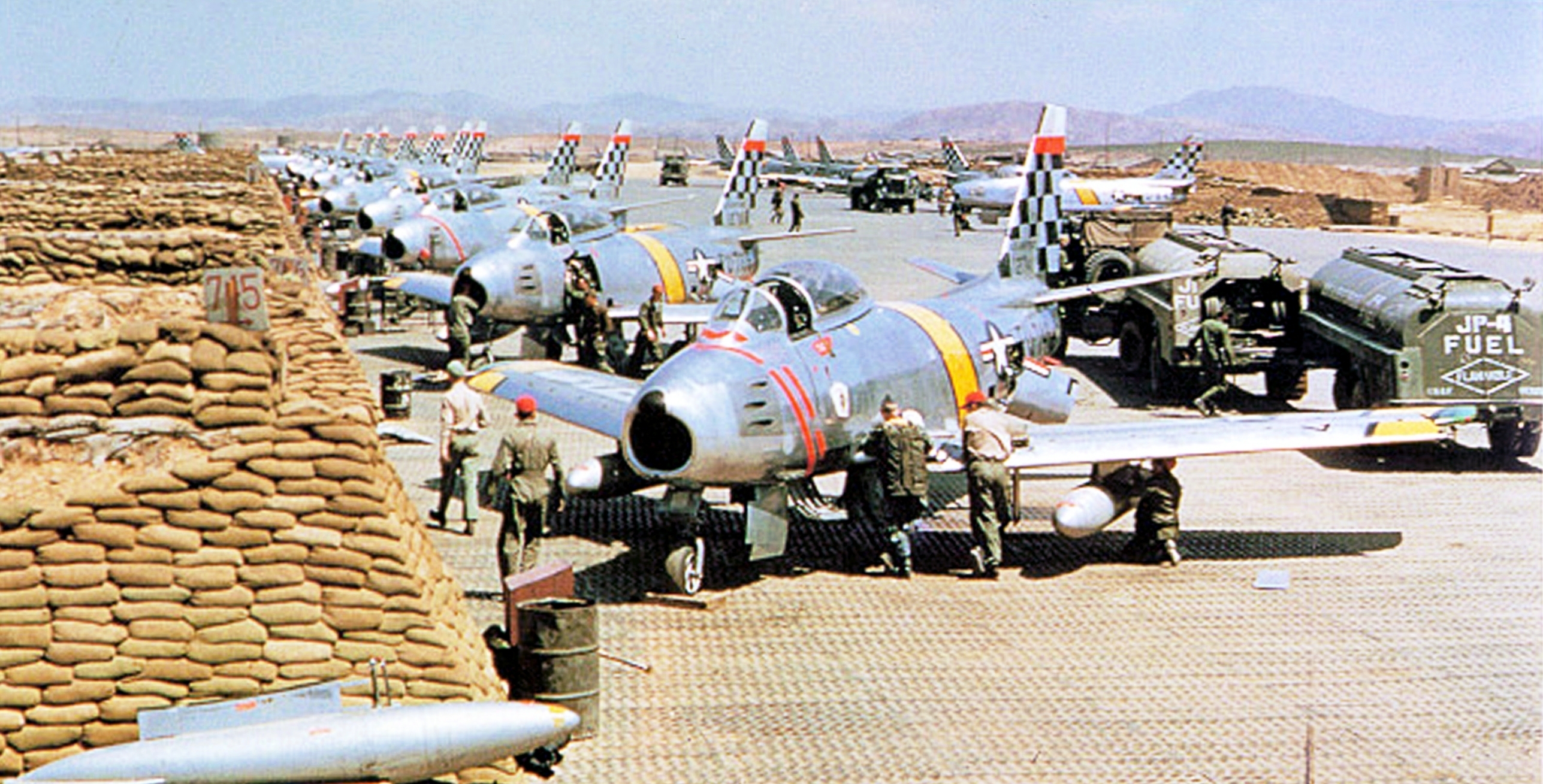
When the Korean War began, the United States Air Force 49th Fighter Wing, then stationed in Japan, was sent to Korea with an initial mission of evacuating civilians from Suwon and Gimpo. While on this mission, on 1950, US planes in Suwon were attacked by North Korean fighters. The ensuing Battle of Suwon Airfield became the first aerial combat of the war. Suwon Airfield was attacked again two days later while General Douglas MacArthur was on site. Though the US repelled both attacks, Suwon fell to the advancing North Koreans one week later, on 1950. The following day saw the first land conflict between United States and North Korean forces, the Battle of Osan.
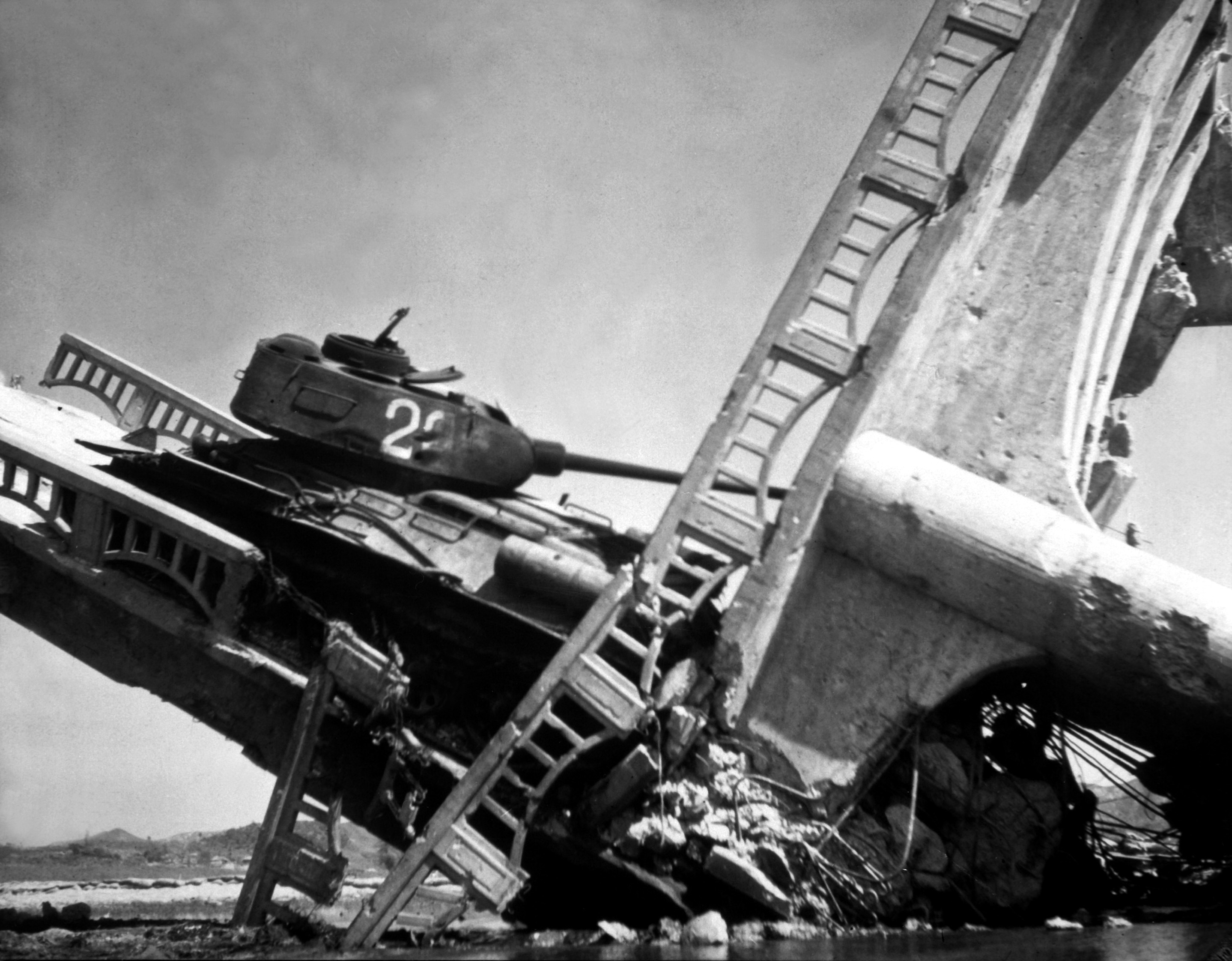
North Korean troops were not the only threat to life: in the early days of the war, southern authorities feared left-leaning civilians, and many were killed. Suwon was a site of such killings: eyewitness account from US intelligence officer Donald Nichols places Suwon as the location of a massacre of approximately 1,800 in late June 1950.
Suwon was retaken, fell again to the North, before being recaptured for the final time. In total, the city changed hands four times during the war.
While under southern authority, Suwon hosted forces from several countries. For example, on 1950, the Greek Expeditionary Force relocated from Busan to Suwon, attached to the US 1st Cavalry Division. The city also appeared strategically important, as in late 1951, the US Air Force's top fighter pilot Gabby Gabreski was placed in charge of Suwon Air Base.
A memorial to French forces was erected in 1974 near the Yeongdong Expressway's North Suwon exit. This was renovated in 2013.
Recent history
In 1964, the headquarters of Gyeonggi Province began a process of relocation from Seoul to Suwon. Seoul had left the province in 1949. When the construction of the headquarters was completed on 23 June 1967, the date was set as a new annual holiday: Suwon Citizen's Day (). The Hwahong Cultural Festival (now ) was established to celebrate the occasion.
Suwon has experienced a number of administrative territory changes since the 1960s. In 1963, Suwon expanded greatly as 20 villages were incorporated from Hwaseong-gun. In 1983, two more villages were acquired from Yongin. In 1987, Suwon expanded westwards, acquiring another two villages from Hwaseong. Gwonseon District and Paldal District were established in 1988. It received more territory from Hwaseong and Yongin in 1994, and again from Hwaseong in 1995. It established Yeongtong District in 2003.
In preparation for the construction of a new planned city Gwanggyo, there were two-way exchanges of land between Suwon and Yongin in 2007 and 2019. Suwon's most recent land exchange occurred in 2020, when it swapped some land parcels with Hwaseong.
Geography
Suwon lies in the north of the Gyeonggi plain, 30 km south of the national capital, Seoul. It is bordered by the cities of Uiwang to the north-west, Yongin to the east, Hwaseong to the south-west, and Ansan to the west. Suwon is near the Yellow Sea coast: at its closest point, on the 239 m Chilbosan ridge to the west, Suwon lies 18.2 km from Ueumdo in Sihwa Lake, a coastal inlet cordoned off to drive the world's largest tidal power station.
Geology and topography
Suwon is primarily composed of Precambrian metamorphic rock. It has amphibolites that intrude through these, and also granites from the Mesozoic Era.
Most of Suwon is composed of biotite granite (Jbgr) from the Jurassic period. This granite is centred on Paldalsan. A form of Daebo granite, this rock is distributed through Homaesil-dong, Geumgok-dong, Dangsu-dong, Seryu-dong, Seodun-dong, Gwonseon-dong, and other areas. Its main constituent minerals are quartz, plagioclase, orthotic, biotite, and amphibole.
Precambrian biotite gneiss (PCEbgn) is found in northern Suwon, specifically Pajang-dong, Gwanggyo-dong, Woncheon-dong, and Maetan-dong. Visible rocks here are composed of quartz, feldspar, biotite, amphibole, and muscovite; and are generally dark grey or dark green. Mesozoic biotite granite intrudes through these.
Precambrian quartzo-feldspathic gneiss (PCEqgn) is distributed in some mountainous areas in Hagwanggyo-dong and Sanggwanggyo-dong in northern Suwon. This gneiss has primarily undergone silicification, and is mainly composed of quartz, feldspar, biotite, and muscovite. It is grey, grey-brown, and white.
Suwon's single tectonic fault splits from the Singal Fault in Iui-dong, creating the Woncheonri Stream. The stream follows the fault through Ha-dong, Woncheon-dong, and Maetan-dong till it joins the Hwangguji Stream in Annyeong-dong, Hwaseong. This is a -long vertical fault running SSW, eventually to the Yellow Sea. In Suwon, biotite gneiss and biotite granite are brought into contact by the fault.
While the low-lying fault sits in the south of Suwon, the north is hillier: the city's highest point is Gwanggyosan (582 m) on the border with Yongin.
Streams and lakes
Most of Suwon's streams originate on Gwanggyosan or other nearby peaks. Since the city is bounded to the north by Gwanggyosan, to the west by Chilbosan, and to the east by other hills, the streams, chiefly the Hwanggujicheon, Suwoncheon, Seohocheon, and Woncheollicheon, flow southwards. After merging, they eventually empty into the Yellow Sea at Asan Bay. The entirety of Suwon is drained in this manner.
Several of Suwon's streams feature lakes. Since there are few natural lakes on the Korean mainland, Suwon's lakes are small reservoirs. These 11 reservoirs are , otherwise known as Seoho () near Hwaseo Station; Irwol Reservoir () near Sungkyunkwan University; Bambat Reservoir () near Sungkyunkwan University Station; , otherwise known as Irwang Reservoir () in Manseok Park; Pajang Reservoir () near the North Suwon exit of the Yeongdong Expressway; () and Hagwanggyo Reservoir () at the foot of Gwanggyosan; Woncheon and Sindae Reservoirs (, ) in Gwanggyo Lake Park; and Geumgok Reservoir (), a small lake at the foot of Chilbosan. Irwang Reservoir (Manseokkeo) has been designated a world heritage site for irrigation. Wangsong Reservoir (), on the border with Uiwang, used to be partly in Suwon, but after controversial boundary changes, it is now entirely in Uiwang.
Climate
Suwon has both a humid continental climate (Köppen: Dfa), and a humid subtropical climate (Köppen: Cwa).
The city is prone to occasional flooding: the 1998 flood caused the death of a US soldier, and 145 mm of rain fell in 24 hours in 2010.
|Jan record high C = 15.3 |Feb record high C = 19.3 |Mar record high C = 25.0 |Apr record high C = 30.5 |May record high C = 33.2 |Jun record high C = 34.0 |Jul record high C = 37.5 |Aug record high C = 39.3 |Sep record high C = 34.0 |Oct record high C = 29.0 |Nov record high C = 25.8 |Dec record high C = 17.8 |year record high C = 39.3
|Jan record low C = -24.8 |Feb record low C = -25.8 |Mar record low C = -11.3 |Apr record low C = -4.7 |May record low C = 2.3 |Jun record low C = 7.8 |Jul record low C = 13.2 |Aug record low C = 13.0 |Sep record low C = 3.6 |Oct record low C = -3.6 |Nov record low C = -12.6 |Dec record low C = -24.4 |year record low C = -25.8
Administrative divisions

The city is composed of four gu (districts). Jangan District () and Gwonseon District () were established on 1988. On 1993, parts of Jangan District and Gwonseon District became a new district, Paldal District (). The newest district is Yeongtong District (), which separated from Paldal District on 2003. These districts are in turn divided into 42 dong.
Suwon has several new 'towns', e.g., Homaesil and Gwanggyo. The latter is perhaps the most notable of these: the first stage of its construction was completed in 2011.
Demography
Suwon is 50.3% male (49.7% female), and 2.9% foreign. On average, there are 2.3 residents per household. Further details for each district are shown below (figures from 31 December 2023).
| Total people | Korean males | Korean females | Korean (total) | Foreign males | Foreign females | Foreign (total) |
|---|---|---|---|---|---|---|
| Suwon (total) | 1,233,424 | 602,346 | 594,911 | 1,197,257 | 17,837 | 18,330 |
| Gwonseon District | 375,574 | 184,970 | 181,197 | 366,167 | 4,558 | 4,849 |
| Jangan District | 277,645 | 136,145 | 134,704 | 270,849 | 3,312 | 3,484 |
| Paldal District | 208,791 | 99,290 | 97,923 | 197,213 | 5,917 | 5,661 |
| Yeongtong District | 371,414 | 181,941 | 181,017 | 363,028 | 4,050 | 4,336 |
Religion
The Catholic Diocese of Suwon was created in 1963 by Pope Paul VI. The cathedral—St Joseph's—is at Jeongja-dong.
Suwon is the birthplace of the former president of the Baptist World Alliance, Kim Janghwan (Billy Kim). Mr founded the Suwon Central Baptist Church, though this is located in Yongin.

Mireukdang (), a small shrine to Maitreya, is located in Pajang-dong. This has a religious basis fusing Buddhism and traditional local religions.
Crime
Illegal dumping of household waste has been a problem in Suwon, and the city council has addressed this by increasing urban greenery. This approach appears to have reduced the scale of the problem.
| Category | Crime | Number |
|---|---|---|
| Property crime | Theft | 4,202 |
| Possession of stolen property | 8 | |
| Fraud | 6,183 | |
| Embezzlement | 1,277 | |
| Breach of trust | 70 | |
| Destruction | 1,510 | |
| Violent crime (serious) | Murder | 16 |
| Robbery | 7 | |
| Arson | 28 | |
| Sexual assault | 934 | |
| Violent crime (lesser) | Violence | 2,988 |
| Injury | 429 | |
| Intimidation | 540 | |
| Extortion | 159 | |
| Kidnapping, abduction | 4 | |
| False arrest, confinement | 33 | |
| Violation of The Punishment of Violence, Etc. Act (e.g., burglary) | 29 | |
| Violation of The Punishment of Violences, Etc. Act (e g., Formation of illegal organizations, and such activities) | 0 | |
| Forgery | Currency | 7 |
| Valuable securities, revenue stamp, postage | 2 | |
| Documents | 228 | |
| Seal | 11 | |
| Public official crime | Abandonment of duties | 18 |
| Abuse of authority | 30 | |
| Receiving bribes | 2 | |
| Giving bribes | 0 | |
| Crime against morality | Gambling, lotteries | 1,342 |
| Deceased person | 1 | |
| Other obscene acts | 79 | |
| Negligence | Inflicting bodily injury or death through negligence | 52 |
| Inflicting bodily injury or death through occupational negligence | 47 | |
| Fire caused by negligence | 57 | |
| Misc. | Defamation | 759 |
| Obstruction of rights | 134 | |
| Credit business, auction | 438 | |
| Trespass | 439 | |
| Violation of secrecy | 4 | |
| Abandonment | 5 | |
| Traffic obstruction | 10 | |
| Obstruction of official duties | 186 | |
| Escape, harbouring criminals | 4 | |
| Perjury, destruction, and concealment of evidence | 83 | |
| False accusation | 108 | |
| Breach of the peace | 4 | |
| Insurrection | 0 | |
| Drinking water crimes | 0 | |
| Water use crimes | 0 |
Education

There are several universities and colleges in Suwon. These include Sungkyunkwan University's Natural Sciences Campus, Kyonggi University, Ajou University, Dongnam Health University, Gukje Cyber University, Hapdong Theological Seminary, and Suwon Women's University. Despite their names, the University of Suwon and Suwon Science College are not actually in Suwon, but in neighboring Hwaseong. Seoul National University's agriculture campus was located in Suwon until 2005; it is now in Seoul.
Suwon has 44 high schools, 57 middle schools, 100 primary schools, and 180 kindergartens. Three schools are dedicated to special education: Jahye School ( Tap-dong), Suwon Seokwang School ( Imok-dong), and Areum School ( Iui-dong). Special education is also provided in some regular schools, e.g., Suwonbuk Middle School ( Yeonghwa-dong). There is also a centre for lifelong learning at Kyemyung High School ( Imok-dong), and there are two international schools in the city: Gyeonggi Suwon International School and Suwon Chinese International School ().
| Gwonseon District | Jangan District | Paldal District | Yeongtong District | Total | Kindergarten | Public (dedicated k'gtn) | Public (in elem. sch.) | Private | Elementary school | Public | Private | Middle School | Public | Private | High School | Public | Private |
|---|---|---|---|---|---|---|---|---|---|---|---|---|---|---|---|---|---|
| 3 | 2 | 1 | 5 | 11 | |||||||||||||
| 32 | 19 | 11 | 23 | 85 | |||||||||||||
| 29 | 21 | 10 | 24 | 84 | |||||||||||||
| 33 | 22 | 15 | 28 | 98 | |||||||||||||
| 0 | 0 | 0 | 2 | 2 | |||||||||||||
| 13 | 13 | 5 | 20 | 51 | |||||||||||||
| 1 | 0 | 4 | 1 | 6 | |||||||||||||
| 7 | 9 | 3 | 12 | 31 | |||||||||||||
| 2 | 3 | 8 | 0 | 13 |
Environment
Throughout South Korea, water management is a challenge. Suwon is 11% self-sufficient in its use of water, and plans to increase this to 50% through rainwater harvesting, including building retention facilities; and by treating and reusing sewage.
Air pollution in Suwon appears to be from a range of industrial and other sources, with origins of coarse particulate matter (PM10) shown in the pie chart.
Economy
The largest employer in Suwon is Samsung Electronics, which was founded in the city in 1969. Its headquarters remain in Suwon, located today with the company's large R&D complex in Maetan-dong. Samsung's presence in the city can be seen through its sponsorship of local sports teams such as Suwon Samsung Bluewings Football Club and two of the oldest domestic basketball teams—Samsung Thunders and Samsung Life Blueminx—both of which have since left Suwon. Other major companies in Suwon include SK Chemical, Samsung SDI, and Samsung Electro-Mechanics.
- Samsung Electronics On September 1, 1973, Samsung Electronics moved its headquarters from Euljiro, Seoul to Suwon. This was to establish an electronic components facility process with Japan's SANYO Electric Co., Ltd. As a result, the status of Suwon City grew along with the growth of Samsung Electronics.
Landmarks
Hwaseong Fortress
Main article: Hwaseong Fortress
Hwaseong Fortress, built under the orders of King Jeongjo in 1796, is listed as a UNESCO World Heritage Site. The entire city used to be encircled by the fortress walls, but Suwon has long since expanded far beyond this boundary. There are four main gates in the walls, and Haenggung Palace lies in the centre of the fortress.
Hwaseong was built under the guidance of philosopher Chŏng Yagyong. Workers were paid for their labor for one of the first times in Korea's history, corvée labor having been common previously. Construction details were meticulously recorded in the text Hwaseong Seongyeok Uigwe (). This document was invaluable after the Korean War: reconstruction efforts from 1964 to the present day have relied heavily on this.
| [[File:Hwaseong Fortress (175432293).jpeg | thumb | upright | alt= | Seojangdae]] | [[File:Hwaseong fortress(Suwon).png | thumb | upright | alt= | Paldalmun (South Gate)]] |
|---|
Hyanggyo
Suwon Hyanggyo () was a government-run school and Confucian ceremonial centre during the Goryeo and Joseon periods. During the Joseon Dynasty, it was the largest and oldest state school in Gyeonggi Province. The school was originally built in 1291 beside Hwasan in Wau-ri, Hwaseong-gun. It was moved to its current location at Gyo-dong around 1795, when Hwaseong Fortress was built. The school houses memorial tablets to Confucius, Mencius, and 25 Korean figures noteworthy to Confucianism. It is open to the public on weekdays from till , but it is closed at weekends.
| [[File:Suwon Hyanggyo.jpg | thumb | upright | alt= | Myeongnyundang (front)]] | [[File:Myeongnyundang rear, Suwon Hyanggyo.jpg | thumb | upright | alt= | Myeongnyundang (rear)]] |
|---|
Bugugwon
Bugugwon (), built prior to 1923, is a cultural centre at Gyo-dong. There is no record of the 85.95 m2 building's construction, but exterior photographs were published in 1923. Under Japanese rule, the building was the headquarters of Bugugwon Co., Ltd., which sold agricultural products such as fertilizers. After liberation, from 1952 to 1956, it temporarily housed the Suwon Court and the Public Prosecutor's Office. From 1957 to 1960, it was used as the Suwon City Education Support Office, and in 1974 the Republican Party used it as their Gyeonggi Province base. In 1979, the Suwon Arts Foundation was based here, and in 1981 it became an internal medicine clinic. Since 2018, it has been a public cultural space.
Adams Memorial Hall
served as a focal point for the independence movement. The building was constructed in 1923 under Pastor William Noble with funding from various sources, including a church in the United States, Suwon Jongno Church, and residents. Here, independence activists including Park and Lee met weekly to discuss their activities.
Culture and contemporary life
Housing
As is typical of urban South Korea, Suwon has many apartment complexes. The city has been affected greatly by real estate price fluctuations.
Food
Suwon is known for Suwon galbi, a variation on beef ribs enjoyed throughout Korea.
Sport
Suwon World Cup Stadium was built for the 2002 FIFA World Cup. Today, it is home to the second-tier K League 2 team Suwon Samsung Bluewings. Their city rivals Suwon FC also play in K League 2 while Suwon FC women's team play in the WK League. Both Suwon FC teams play home matches at Suwon Sports Complex.

Since 2013, Suwon has been home to the professional baseball team KT Wiz. The team played at Sungkyunkwan University until Suwon Baseball Stadium remodeling was completed in time for their elevation to the KBO League in 2015. The stadium was previously the home of the Hyundai Unicorns, who folded after the 2007 season.
Two of the Korean Basketball League and Women's Korean Basketball League's oldest teams, Samsung Thunders and Samsung Life Blueminx respectively, used to be based in Suwon. Samsung Thunders relocated to Jamsil Arena in Seoul in 2001 while Samsung Life moved to Yongin in 2005. Top-flight men's basketball returned to Suwon in 2021, when KT Sonicboom relocated from Busan to the renamed Suwon KT Sonicboom Arena (formerly Seosuwon Chilbo Gymnasium).
The 5,145-capacity Suwon Gymnasium is home to the men's and women's V-League volleyball teams Suwon KEPCO Vixtorm and Suwon Hyundai Engineering & Construction Hillstate respectively. This gymnasium staged the handball events in the 1988 Summer Olympics. It also hosted handball and table tennis at the 2014 Asian Games and hosted the 2010 Judo World Cup.
Museums
Suwon has two national museums. The National Map Museum of Korea houses a collection of 33,598 maps. This museum is located at Woncheon-dong. Admission is free, and the museum opens daily from to Suwon's other national museum, the National Agricultural Museum of Korea, opened by Seoho Lake in December 2022. This museum is located at Seodun-dong, admission is free, and it is open daily from till
There are also a number of smaller museums in Suwon. For example, Suwon Hwaseong Museum, at Maehyang-dong, features exhibits contextualizing and explaining the construction of Hwaseong. A smaller museum, which focuses on the history of toilets, Haewoojae, has gathered some international attention. Built privately in 2007 at Imok-dong, this museum is dedicated to the history of toilets. Ownership of Haewoojae was transferred to the city council in 2009.
Libraries
Suwon Central Library opened in 1980 at Gyo-dong. Today, the city has 27 public libraries: seven in Gwonseon District, five in Jangan District, six in Paldal District, and nine in Yeongtong District. The council also plans to build another in Imok-dong.
Parks and gardens
Suwon has two municipal arboreta: Irwol Arboretum () and Yeongheung Arboretum (). These opened simultaneously on 2023 beside Irwol Reservoir and Yeongheung Park respectively. The 10.15 ha Irwol Arboretum features 429,000 plants of 52,000 species, while Yeongheung Arboretum hosts 118,000 plants of 42,000 species over 14.6 ha. There are also 338 parks scattered through the city. Some of these, e.g., Gwanggyo Lake Park, Seoho Park, Irwol Park, and Manseok Park, contain sizeable lakes.
Street art
Haenggung-dong and Ji-dong in central Suwon are known for their murals, while Haenggung-dong streets have a variety of other artistic features such as optical illusions.
Media
Newspapers based in Suwon include the Kyeonggi Ilbo () in Jangan District, and the Kyeongin Ilbo () and Suwon Daily () in Paldal District.
National broadcaster KBS has a drama studio and art hall in Ingye-dong, Yeongtong District. These are open to visits by appointment.
Cinemas
Suwon has several multiplex cinemas: three branches of CGV (in Ha-dong, Ingye-dong, and Jowon-dong, Hwaseo-dong ); four branches of Lotte Cinema (in Cheoncheon-dong, Geumgok-dong, Iui-dong, and Seodun-dong); and six branches of Megabox (in Gwonseon-dong, Haenggung-dong, Homaesil-dong, Ingye-dong, Jeongja-dong, and Maesan-dong). Other smaller cinemas, which may show fewer foreign films, include Cinema Town, Taehan Theater, Piccadilly Theater, Jungang Theater, Royal Theater, Dano Theater, and Dano Art Hall.
Retail

There are several major shopping centres across Suwon, e.g., AK Plaza and Lotte Mall at Suwon Station, and Avenue France and Alleyway in Gwanggyo. Another large centre, Starfield—incorporating its own library and a Megabox cinema—opened beside Hwaseo Station in January 2024. This mall targets a younger customer base, and incorporates pop-up stores. The first pop-up for the popular game 'Brawl Stars' was held here. The warehouse-style discount store 'Traders' is located in the basement.
| [[File:Starfield Suwon library.jpg | thumb | Library in Starfield]] |
|---|
Public toilets
In the early 2000s, Suwon City Council strove to improve the condition of its public lavatories, and afterwards ran guided tours of the municipal facilities. Suwon has hosted several international conferences on toilet management, and the World Toilet Association is based in the city.
Transport

Suwon Station is served by KTX and other trains on the Gyeongbu Line, which connects Seoul to Busan. From 1930 to 1972, the Suryeo Line also connected Suwon to Yeoju, and from 1937 to 1996, the Suin Line ran from Suwon to Incheon. The Suin Line has since been reconstructed as part of the Seoul Metro. Today, three Seoul Metro lines (14 stations) serve Suwon, and there are plans for network expansion. Construction of an extension of the Sinbundang Line to Homaesil is scheduled to begin in 2024. Another planned line—the Dongtan–Indeogwon Line—should create several new stations in Suwon, but this has been delayed, prompting affected cities to call for urgent action.
| Line | Station |
|---|---|
| Line 1 | Sungkyunkwan University () |
| Hwaseo () | |
| Suwon () | |
| Seryu () | |
| Shinbundang Line | Gwanggyo Jungang () |
| Gwanggyo () | |
| Suin-Bundang Line | Cheongmyeong () |
| Yeongtong () | |
| Mangpo () | |
| Maetan-Gwonseon () | |
| Suwon Hall () | |
| Maegyo () | |
| Suwon () | |
| Gosaek () | |
| Omokcheon () |

Suwon is also served by two inter-city bus terminals with nationwide connections: Suwon Bus Terminal near Seryu Station, and West Suwon Bus Terminal in Guun-dong. Nevertheless, bus terminal passenger numbers are decreasing. Suwon is also connected to Seoul and other nearby cities by city and express buses with departure points across the city. In 2017, a new bank of bus stops opened at Suwon Station Transfer Center. This was built to alleviate pressure on existing bus and taxi stands across the tracks. Another transfer centre is incorporated into Gwanggyo Jungang Station; this is underground, and bus stands feature screen doors. Suwon has invested heavily in electric buses—in 2019, it built the country's largest bus charging station at Pajang-dong.
Suwon is served by several expressways. The Yeongdong Expressway (50) passes through the city, with two exits within the city limits: North Suwon and East Suwon. The Gwanggyo Sanghyeon exit on the Yongin–Seoul Expressway (171) is on Suwon's border with Yongin, and the Pyeongtaek–Paju Expressway (17) also has an exit in Suwon (Geumgok). The Suwon exit of the Gyeongbu Expressway (1) was renamed Suwon Singal in 2014 to reflect its actual location in Singal in neighboring Yongin.
Suwon has invested in ecological transport. The city was the first place in Korea to introduce dockless public bicycles. Traversing Suwon by bicycle is facilitated by numerous cycle paths beside the streams that cut through the city. In 2013, Suwon hosted the EcoMobility World Festival. For one month, streets in Haenggung-dong were closed to cars as a car-free experiment. Residents used non-motorized vehicles provided by the festival organizers. The experiment was not unopposed.
Military
Suwon Air Base in Jangji-dong, Gwonseon District was used by the United States Air Force during the Korean War, when it was the scene of the conflict's first aerial combat. Today the base is under Republic of Korea Air Force jurisdiction, though it is still managed and maintained by the US military. The US military also maintains Madison Site—a small signals unit with nearby helipad on Gwanggyosan.
Fauna
While much of Suwon's wildlife can be expected to be similar to that in the surrounding province, two species are worth noting specifically in regard to the city. Firstly, an undisclosed location in Suwon appears to be Korea's first recorded breeding site of the white-breasted waterhen. Secondly, the Suwon tree frog—one of three tree frogs to inhabit the Korean peninsula— was discovered in Suwon around 1980, but due to urban sprawl it is no longer found in the city. It has, however, been found recently in Paju, Ansan, and Pyeongtaek (Gyeonggi Province); Eumseong (Chungcheongbuk-do); Gangwon-do; and North Korea. The species is considered endangered.
Notable people
Suwon was the birthplace of (?–1205), famed for his filial piety, and of his noble wife Yŏm Kyŏng-ae (, 1100–1146). Also in ancient times, it was the home of (1341–1420), a Goryeo subject opposed to Joseon. More recently, the eminent Silhak scholar and agricultural pioneer (1741–1812) was born in the city
Suwon was the birthplace of many independence activists during the Japanese colonial period. These include Im Myŏnsu (, 1874–29 November 1930), Ch'a Injae (, 1895–1971), (1889–1945) (1897–?), Pak Sŏnt'ae (, 1901–1938), Yi Sŏn'gyŏng (, 1902–1921), Ch'oe Munsun (, 1903–?), Kim Changsŏng (, 1913– 1932), and Hong Jong-cheol (, 1920– 1989).
The influential feminist, painter, writer, poet, sculptor, and journalist Na Hye-sok (1896–1948) was also born in Suwon
Artists from Suwon include Yoon Han-hŭm (, 1923– 2016). and Kim Sung-bae (, 1954–).
Sports players from Suwon include *Chung Hyeon (1996–, tennis), Dong Hyun Kim (1981–, MMA) Oh Kyo-moon (1972–, archery), and Park Ji-sung (1981–, football). Park was born in Seoul but raised in Suwon, and in 2005, a city street was renamed after him.
Classical musicians from Suwon include Han-na Chang (1982–, conductor, cellist), Stella Hanbyul Jeung (, opera singer), and Seol Yoeun (, 2012–, violinist).
Popular musicians from Suwon include Im Chang-kyun (stage name I.M, 1996–) Jeon Ji-yoon (1990–), Jo Kwon (1989–), Kim Myung-jun (stage name MJ, 1994–), Kim Yu-gwon (stage name U-Kwon, 1992–), Lee Chang-sub (1991–), Lee Dong-hun (, 1993–), Lee Ju-eun (1995–), Shin Dong-hee (stage name Shindong, 1985–), Yoo Ji-min (stage name Karina, 2000–), and Yoon Bo-mi (1993–).
Actors from Suwon include Lee Jong-suk (1989–) Park Hae-soo (1981–), Ryu Jun-yeol (1986–), Song Kang (1994–), and Yoo Hyun Young (1976–).
Pastor Kim Jang Hwan (known as Billy Kim, 1934–) is also from Suwon. He is a former president of the Baptist World Alliance, and president of the Far East Broadcasting Company
The presenter and columnist Sam Oh (1980–) was also born in the city.
Sister cities
Suwon is twinned internationally with:
- JPN Asahikawa, Japan (1989)
- CHN Jinan, China (1993)
- AUS Townsville, Australia (1997)
- IDN Bandung, Indonesia (1997)
- TUR Yalova, Turkey (1999)
- ROU Cluj-Napoca, Romania (1999)
- MEX Toluca, Mexico (1999)
- MAR Fez, Morocco (2003)
- VNM Hải Dương Province, Vietnam (2004),
- KHM Siem Reap Province, Cambodia (2004)
- RUS Nizhny Novgorod, Russia (2005)
- BRA Curitiba, Brazil (2006) and
- GER Freiburg im Breisgau, Germany (2015)
- USA Phoenix, United States (2021)
- FRA Toury, France (2023)
- CAN Mississauga, Canada (2023)
Suwon also twinned intranationally with Jeju (1997), Pohang (2009), Jeonju (2016), and Nonsan (2021).
References
References
- (2025). "Population statistics".
- link. Suwon City Council
- link. Korea Post
- link. Suwon City Council
- (28 February 2023). "Administrative District & Population". Ulsan Metropolitan City Council.
- (3 January 2022). "PM: 4 Cities to be Given New Autonomous Status Hold Greater Responsibility". [[KBS World]].
- (1 May 2016). "Suwon invites visitors to city of heritage, festivities". [[The Korea Herald]].
- Park, Hyemi. (11 March 2016). "Suwon celebrates its past while looking ahead". [[Korea JoongAng Daily]].
- (21 February 2016). "Suwon Hwaseong fortress celebrates 220th year". [[Korea JoongAng Daily]].
- (10 May 2023). "Samsung Electronics stays atop S. Korea's top 500 firms' list". [[Yonhap News Agency]].
- Song, Sung-hoon. (22 February 2016). "Samsung Electronics leaves Seoul headquarters". Maeil Business News.
- Stek, Pieter. (2017). "The Strategic Alliance Between Sungkyunkwan University and the Samsung Group: South Korean Exceptionalism or New Global Model?". Triple Helix Association.
- "Club: Suwon Samsung Bluewings". Kooora.
- Stokkermans, Karel. (16 October 2014). "Asian Club Competitions 2000/01".
- (24 July 2002). "Blue Wings flying high". BBC Sport.
- link
- (31 March 2010). "Suwon Tour: Hwaryeongjeon, Haeng-gung and Suwon Fortress".
- (2011). "A History of the Korean Language". Cambridge University Press.
- 김. 선주. link
- Webster, Hugh A.. (1877). "Corea".
- link. [[Academy of Korean Studies]]
- (2021). "A Fortress Made in Heaven (Namhansanseong of Gwangju) and the City of a King's Dreams (Hwaseong Fortress of Suwon)". The Review of Korean Studies.
- "Hwaseong Fortress". UNESCO.
- link. Hwaseong City Council
- "49th Wing history".
- Frace, Robert R.. (21 June 2013). "Suwon history goes far beyond Korean War".
- "Korean Air Battles".
- Y'Blood, William T.. "The Korean Air War".
- (5 July 1950). "Suwon captured by invaders". The West Australian.
- McDonald, Hamish. (15 November 2008). "South Korea owns up to brutal past". [[The Sydney Morning Herald]].
- Nichols, Donald. (1981). "How many Times Can I Die: The life Story of a Special Intelligence Agent". Brownsville Printing.
- Kim, Dong-Choon. (2007). "Rethinking Historical Injustice and Reconciliation in Northeast Asia: The Korean experience". Routledge.
- (5 July 2008). "AP: U.S. Allowed Korean Massacre In 1950".
- (5 May 2005). "Knocked out T-34 at Suwon". Manchester Regiment.
- (27 March 1986). "The Korean War 1950–53". Bloomsbury USA.
- Yenne, Bill. (2020). "Aces: True stories of victory and valor in the skies of World War II". Book Sales.
- "South Korea–France–Suwon". Korean War Memorials.
- "French military graves in South Korea". French Ministry of Armed Forces (Ministère des Armées).
- "South Korea–France–Suwon". Suwon City Council.
- (13 August 1949). link. Office of the President, Republic of Korea. Ministry of Government Legislation, Republic of Korea
- link. (21 November 1962). National Legal Information Centre. Ministry of Government Legislation
- link. (10 January 1983). National Legal Information Centre. Ministry of Government Legislation
- link. (3 December 1986). National Legal Information Centre. Ministry of Government Legislation
- link. (13 June 2020)
- (22 December 1994). link. National Legal Information Centre. Ministry of Government Legislation
- link. (8 February 2007). National Legal Information Centre. Ministry of Government Legislation
- link. (19 April 2007). Roh. Hogeun. [[Newsis]]
- link. (13 August 2019). National Legal Information Centre. Ministry of Government Legislation
- link. (6 August 2019). Lee. Jaesang. News1
- link. (23 June 2020). National Legal Information Centre. Ministry of Government Legislation
- (6 December 2016). "31 City/County Map".
- "Measure distance on a map".
- link
- link. Oh. Inseop. (1972). Korea Institute of Geoscience and Mineral Resources
- link. Korean Mountaineering Association. (1999)
- (2024). "The Impact of Non-Point Source (NPS) Management on Non-Point Source Reduction and Water Cycle Improvement in an Urban Area". Sustainability.
- (2021). "Water Quality Assessment and Potential Source Contribution Using Multivariate Statistical Techniques in Jinwi River Watershed, South Korea". Water.
- (2014). "Classifying plant species indicators of eutrophication in Korean lakes". Paddy and Water Environment.
- link
- link. Park. Su-cheol. (21 December 2010)
- link
- (11 October 2017). "2 Korean reservoirs registered as world heritage irrigation sites". [[Yonhap News Agency]].
- link. Incheon Ilbo. ko. 인천일보. (12 March 2012)
- "Climate: Gyeonggi-do".
- (9 August 1998). "South Korea steps up flood rescue". [[BBC News]].
- (6 August 2020). "Torrential rains kill many, cause widespread damage". Al Jazeera.
- link. Korea Meteorological Administration
- (2011). "Climatological Normals of Korea". Korea Meteorological Administration.
- link. Suwon Council
- (12 October 2022). "Gov't to Tackle Traffic Congestion in 37 New Town Areas". [[Korean Broadcasting System]].
- (4 December 2008). "MVRDV architects wins Gwanggyo power centre competition in South Korea". Design Boom.
- "Population Census". [[Statistics Korea]].
- (31 August 1964). "Acta Apostolicae Sedis".
- Cheney, David M.. "Diocese of Suwon". Catholic Hierarchy.
- (22 November 2002). "Billy Kim".
- Mallory, Tammi. (5 February 2002). "Billy Kim: from 'lowly houseboy' to Baptist World Alliance president".
- link
- link. Jeong. Heunggyo. (4 March 2015)
- (2015). "Urban street greenery as a prevention against illegal dumping of household garbage—A case in Suwon, South Korea". Urban Forestry & Urban Greening.
- (20 December 2022). "Number of Crime Occurrence by Crime Type and Crime Place (1994~)". Statistics Korea.
- (20 July 2021). "Interview of the Outgoing Dean Lee Suk-ha". Seoul National University.
- link. Gyeonggi-do Suwon Office of Education
- (2022). "A Study on the Development of Art Therapy Program for Children with Disabilities in Special Schools—Focusing on Jahye School in Gyeonggi-do". Art Culture Research.
- (14 December 2018). "Samsung Smart School Greets the World at the 2018 APEC Future Education Forum".
- link. Park. Mina. (27 June 2019)
- link
- link. Kim. Hyesuk. (24 July 2023)
- "Gyeonggi Suwon International School".
- "Suwon Chinese International School". International School Information, Korean Government.
- "Water management in Korea: From goals to action". OECD.
- (2022). "Urban Water Management Using Water Self-sufficiency". Journal of the Korean Society for Environmental Technology.
- (2008). "Identification of atmospheric PM10 sources and estimating their contributions to the Yongin–Suwon bordering area by using PMF". Journal of the Korean Society for Atmospheric Environment.
- (2012). "Is the grass really greener? Investigating the industrial eco strategies of South Korea".
- "History of Bluewings".
- link. Lee. Changho. (3 May 2001). The Chosun Daily]]
- link. Hwang. Seonhak. (2 June 2001)
- link. Kang. Hocheol. (22 June 2005)
- link. Woo. Seung-o. (22 June 2005)
- "SKC Co. Ltd". [[The Wall Street Journal]].
- Choi, Jasmine. (31 January 2014). "Samsung SDI Begins Full-scale Shipment of 'Dream Battery' Solid-state Batteries". Business Korea.
- "Samsung Electro-Mechanics".
- (23 August 2022). "Adventure in Suwon Hwaseong Fortress".
- "Hwaseong Haenggung: Introduction".
- Lovins, Christopher. (2014). "Testing the limits: King Chŏngjo and royal power in late Chosŏn". University of British Columbia.
- (2017). "The Status of the Hwaseong seongyeon uigwe in the History of Architectural Knowledge: Documentation, Innovation, Tradition". The Korean Journal for the History of Science.
- "Asian Historical Architecture: Suwon, Korea, South". Oriental Architecture.
- "Suwonhyanggyo Confucian School". [[Korea Tourism Organization]].
- "Suwonhyanggyo Confucian School". Trippose.
- "". link. [[Korea Heritage Service]]
- "". link. The Federation of Korean Cultural Centers
- "Adams Memorial Hall". [[Cultural Heritage Administration]].
- link. (26 November 2022). Korea Economy {The Korea Economic Daily
- "Suwon Wang Galbi Street".
- (25 April 2002). "Japan, Korea and the 2002 World Cup". Routledge.
- Farrell, Andrew. (14 March 2023). "Groundhopper's guide to..... Suwon Sports Complex".
- link. Kim. Gaeul. Chosun Daily. (21 December 2023)
- link. Jeong. Jingu. SBS News. (10 April 2014)
- Kim, Tong-hyung. (7 October 2007). "Unicorns play last game". [[The Korea Times]].
- link. (8 June 2021)
- "Suwon Gymnasium".
- (30 September 1989). "1988 Summer Olympics official report, Volume 1, Part 1". Seoul Olympic Organizing Committee.
- (8 September 2014). "FACTBOX-Factbox on sports at the 2014 Asian Games in Incheon". Reuters.
- "World Cup Suwon 2010".
- (3 December 2010). "Silver for Briton Gemma Howell at Korea World Cup". BBC Sport.
- link. . . (3 December 2010)
- "The National Map Museum of Korea".
- (15 December 2022). "Nat'l Agriculture Museum opens". [[Yonhap News Agency]].
- link
- (6 October 2015). "Exhibition on royal procession". [[The Korea Times]].
- (9 November 2012). "'World's first toilet theme park' opens in South Korea". [[BBC News]].
- "Haewoojae Museum (Mr. Toilet House) (해우재)".
- link
- link
- link. (4 May 2021)
- link. (19 May 2023). [[KBS News]]
- link. Bae. Taesik. (23 May 2023)
- link
- link. Koh. Seongjae. (20 August 2002)
- Holden, Trent. (28 August 2015). "A guide to South Korea's most charming mural villages".
- "Haenggungg [sic] Street".
- "Top newspapers in Korea".
- link
- link
- "Megabox Suwon Starfield · 175 Suseong-ro, Jangan-gu, Suwon-si, Gyeonggi-do, South Korea".
- link
- link
- "The 5 Best Suwon Movie Theaters (with Photos)".
- link. Park. Haesik. (27 April 2020)
- link. Park. Seonggyu. (1 May 2019)
- Seo, Ji-eun. (24 January 2024). "From a sky-high library to luxury fitness, Starfield Suwon beckons youthful explorers". [[Korea JoongAng Daily]].
- Lee, CHae Hyun. (31 March 2024). "Suwon Starfield targets Gen MZ". HoyeongLee.
- Kim, Juhwan. (January 23, 2024). "슈퍼셀, 스타필드 수원서 '브롤스타즈' 체험 공간 운영". 스타필드 수원, 전면에 게임 '브롤스타즈' 내세웠다.
- Lee, Chae Hyun. (31 March 2024). "Traders in Suwon Starfield". Yoon Uyeol.
- (6 June 2002). "Lavish Latrines, Pretty Potties". [[Los Angeles Times]].
- (26 November 1999). "Suwon's Restrooms, Once the Pits, Are Now Flush With Tourists". [[The Wall Street Journal]].
- "General Assembly/International Toilet Culture Conference".
- "History".
- "Suwon to Busan High-Speed Train".
- Choi, Ho-jin. "Suwon: The past and present of Suwon Station (1)".
- Burroughs, David. (15 September 2020). "Final phase of Korea's Suin Line complete". Simmons-Boardman Publishing.
- link
- link. Kang. Gapsaeng. (28 December 2021)
- link. Park. Seonsik. (1 March 2023)
- "Suwon Bus Terminal".
- "SeoSuwon Bus Terminal".
- link. Kim. Gyeongtae. (6 May 2023)
- "Gyeonggi Bus Information".
- Tebay, Andy. (26 June 2017). "Transfer hub opens at Suwon Station including new bus interchange".
- Nikola. (19 February 2016). "Underground Bus Station, Future of Bus Transit?".
- Hong, Yongdeok. (10 December 2019). "Suwon builds S. Korea's largest electric bus charging station". [[The Hankyoreh]].
- link. (16 October 2009)
- link
- link. (30 May 2023)
- link. Kwon. Hyeokjun. (22 April 2015)
- Bak, Se-hwan. (1 February 2018). "Suwon seeks to become Korea's 'eco-capital': Environmental activist-turned-mayor sets new examples of how green policies revitalize cities". [[The Korea Herald]].
- (30 April 2019). "Bilantravel pattern analysis for station bike sharing system in Suwon". Journal of Korean Society of Transportation.
- Strother, Jason. (30 September 2013). "Locals applaud car-free month in Korean city". Deutsche Welle.
- (2014). "An Analysis of Residential Satisfaction at The Ecomobility World Festival 2013 Suwon". Transportation Technology and Policy.
- "Suwon Air Base".
- Satkowski, Stephen. (15 October 2014). "District engineers ensure water keeps flowing at Madison Site".
- "Birds Korea's Bird News August 2008".
- (2017). "Introduced bullfrogs are associated with increased Batrachochytrium dendrobatidis prevalence and reduced occurrence of Korean treefrogs". PLOS ONE.
- link. [[Donga Science]]. (26 June 2020)
- (19 June 2019). "Protection of endangered species". [[Korean Broadcasting System]].
- (2021). "Defining conservation requirements for the Suweon Treefrog (Dryophytes suweonensis) using species distribution models". Diversity.
- link. [[National Institute of Korean History]]
- link. [[National Institute of Korean History]]
- link
- link
- link. Yang. Hundo. (7 November 2022)
- (26 February 2009). "Gisaeng took to streets against Japan". [[Korea JoongAng Daily]].
- link. Jeong. Changgyu. (27 June 2022)
- (15 September 2021). "On Translating Modern Korean Poetry". Taylor & Francis.
- "Suwon Hwaseong Museum Planned Exhibitions".
- link. Kim. Chungyeong. (5 April 2021)
- link. Kim. Uyeong. (25 August 2016)
- "Upcoming exhibitions".
- "Hyeon Chung".
- Lee, Minji. (25 January 2018). "Chung Hyeon: The Korean tennis star making history". [[BBC News]].
- "Kim Dong-hyun". Fandango.
- Gerbasi, Thomas. (26 November 2015). "Dong Hyun Kim: The long road to Seoul".
- link. Choi. Jongsik. (23 September 2000)
- link. Yu. Sinjae. (12 June 2005)
- (2021). "Han-Na Chang Official Biography".
- Lee, Hyo-won. (1 November 2009). "Chang Han-na Finds Brahms Through Looking-Glass". [[The Korea Times]].
- (2023). "Stella Hanbyul Jeung".
- (21 October 2022). "The 18th Emirates International Peace Music Festival".
- "Ji-Yoon Jeon".
- "U-Kwon profile".
- Koh, Lydia. (27 June 2020). "Super Junior's Shindong shares why his wedding engagement did not work out". The Independent Singapore.
- link. Marie Claire
- link. Jeong. Aram. (8 July 2021). Hanryu Times
- link. KBS Radio Korean. (21 March 2017)
- link. Lee. Kwanju. (21 March 2017)
- link
- Lee, Jae-lim. (18 April 2022). "Park Hae-soo continues to thrive on Netflix". [[Korea JoongAng Daily]].
- "Park Hae-soo".
- "Ryu Jun-Yeol".
- (14 April 2016). "Suwon's son Ryu, the leading actor in 'Please Respond, 1988'". Suwon Center for International Cooperation.
- Lee, Jae-lim. (14 March 2022). "Song Kang continues to flaunt his good looks on the small screen". [[Korea JoongAng Daily]].
- Santos, Marielle C.. (6 October 2006). "Oh! It's Sam". Philippine Star.
- link
- link
This article was imported from Wikipedia and is available under the Creative Commons Attribution-ShareAlike 4.0 License. Content has been adapted to SurfDoc format. Original contributors can be found on the article history page.
Ask Mako anything about Suwon — get instant answers, deeper analysis, and related topics.
Research with MakoFree with your Surf account
Create a free account to save articles, ask Mako questions, and organize your research.
Sign up freeThis content may have been generated or modified by AI. CloudSurf Software LLC is not responsible for the accuracy, completeness, or reliability of AI-generated content. Always verify important information from primary sources.
Report