From Surf Wiki (app.surf) — the open knowledge base
Superfluous man
Stock character in mid-19th century Russian literature
Stock character in mid-19th century Russian literature
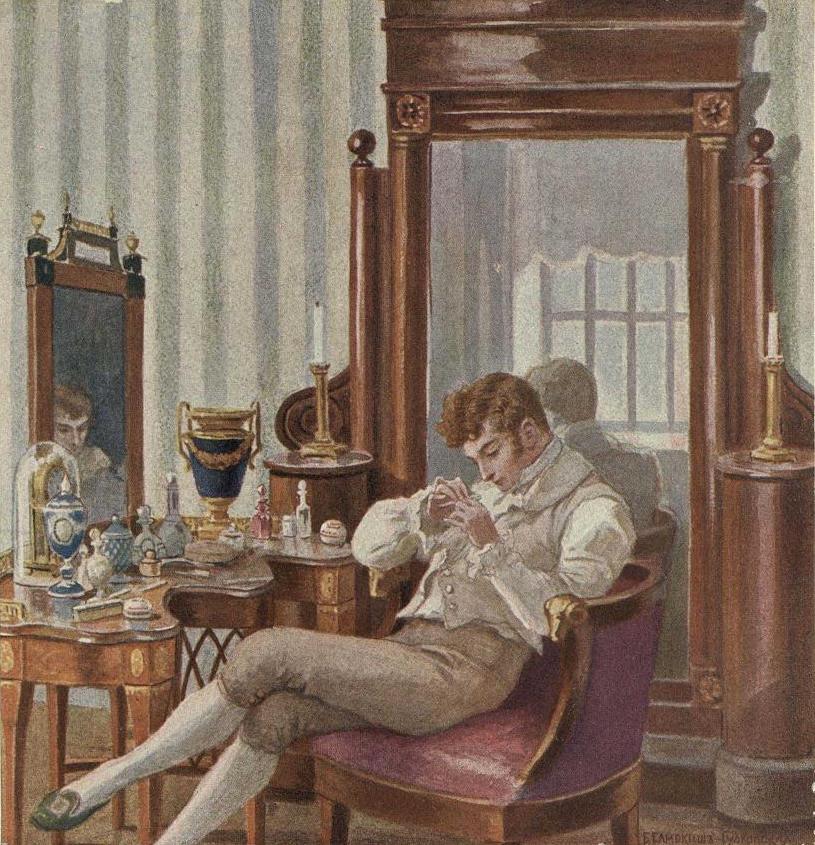
NOTOC The superfluous man (, líshniy chelovék, "extra person") is an 1840s and 1850s Russian literary concept derived from the Byronic hero. It refers to a man, perhaps talented and capable, who does not fit into social norms. In most cases, this person is born into wealth and privilege. Typical characteristics are disregard for social values, cynicism, and existential boredom; typical behaviors are gambling, drinking, romantic intrigues and duels. He is often unmindful, indifferent or unempathetic with society's issues and can carelessly distress others with his actions, despite his position of power. He will often use his power for his own comfort and security and will have very little interest in being charitable or using it for the greater good.
The character type originates in Alexander Pushkin's verse-novel Eugene Onegin (1825–1832). This term was popularized by Ivan Turgenev's novella The Diary of a Superfluous Man (1850) and was thereafter applied to characters from earlier novels. Mikhail Lermontov's A Hero of Our Time (1840) depicts another superfluous man – Pechorin – as its protagonist. He can be seen as a nihilist and fatalist. Later examples include Alexander Herzen's Beltov in Who Is to Blame? (1845–46), Turgenev's Rudin (1856), and the title character of Ivan Goncharov's Oblomov (1859).
Russian critics such as Vissarion Belinsky (1811–1848) viewed the superfluous man as a byproduct of Nicholas I's reign, when the best-educated men would not enter the discredited government service but, lacking other options for self-realization, doomed themselves to live out their life in passivity. The radical critic Nikolay Dobrolyubov (1836–1861) analyzed the superfluous man as by-product of Russian serfdom. Scholar David Patterson describes the superfluous man as "not just ... another literary type but ... a paradigm of a person who has lost a point, a place, a presence in life" before concluding that "the superfluous man is a homeless man."
References
References
- Chances, Ellen. (2001). "The Routledge Companion to Russian Literature". Routledge.
- {{Britannica. 574296. Superfluous man
- Patterson, David. (1995). "Exile: The Sense of Alienation in Modern Russian Letters". University Press of Kentucky.
This article was imported from Wikipedia and is available under the Creative Commons Attribution-ShareAlike 4.0 License. Content has been adapted to SurfDoc format. Original contributors can be found on the article history page.
Ask Mako anything about Superfluous man — get instant answers, deeper analysis, and related topics.
Research with MakoFree with your Surf account
Create a free account to save articles, ask Mako questions, and organize your research.
Sign up freeThis content may have been generated or modified by AI. CloudSurf Software LLC is not responsible for the accuracy, completeness, or reliability of AI-generated content. Always verify important information from primary sources.
Report