From Surf Wiki (app.surf) — the open knowledge base
Supercruise
Sustained supersonic flight of a supersonic aircraft
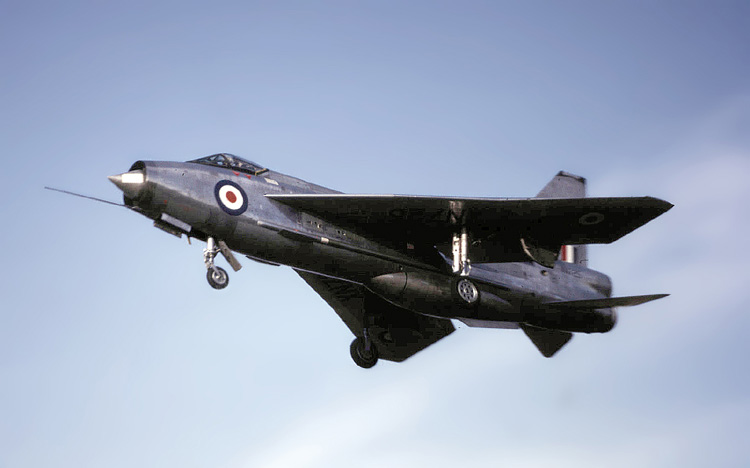
Sustained supersonic flight of a supersonic aircraft
Supercruise is sustained supersonic flight of a supersonic aircraft without using afterburner. Many supersonic military aircraft are not capable of supercruise and can maintain Mach 1+ flight only in short bursts with afterburners. Aircraft such as the SR-71 Blackbird are designed to cruise at supersonic speed with afterburners enabled.
Some fighter jets are capable of supercruise but only at high altitudes and in a clean configuration, so the term may imply "a significant increase in effective combat speed with a full weapons load over existing types". One of the pre-eminent military examples of supercruise is the F-22 Raptor, for which supercruise was defined as "the ability to cruise at speeds of one and a half times the speed of sound or greater without the use of afterburner for extended periods in combat configuration."
One of the best-known examples of an aircraft capable of supercruise, and the only notable non-military example, was Concorde. Due to its long service as a commercial airliner, Concorde holds the record for the most time spent supersonic; more than all other western aircraft combined.
History
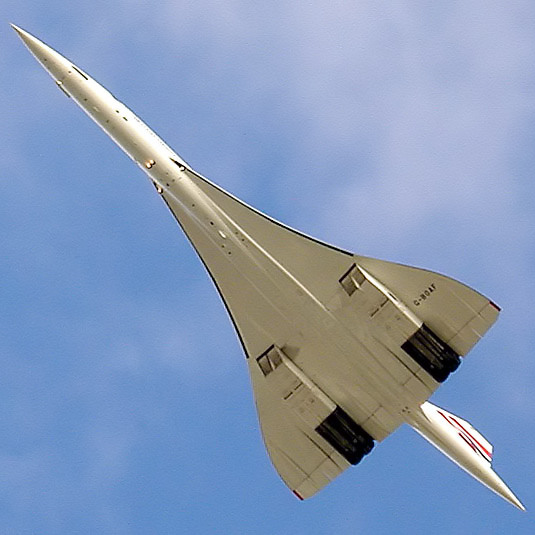
A few early supersonic aircraft attained speeds just beyond the speed of sound without using afterburning.
On 3August 1954, a Gerfaut research aircraft powered by an SNECMA Atar 101D2A engine exceeded Mach1 in level flight without using afterburning.
The first production aircraft to exceed Mach1 in level flight without afterburning was the Lockheed F-104 Starfighter after its J65 engine was replaced with a J79. The maximum speed without afterburning was Mach1.05.
The P.1 prototype of the English Electric Lightning, powered by non-afterburning Armstrong Siddeley Sapphire engines, exceeded Mach1 on 11August 1954. A week previously, on 4August, the P.1, WG760 flown by Roland Beamont on its maiden flight, had unknowingly exceeded Mach1 in a climb. During development testing at English Electric it was established that the Lightning had a stabilized speed capability in level flight, without afterburning, of about Mach1.2 and for the T.4 (2-seat trainer) 1.08. Flying just above the speed of sound without using afterburning, although done by the contractor as part of some flight trials does not appear to have been relevant to the operational capability of the aircraft. Service trials established intercept profiles for subsonic and supersonic targets at different altitudes with subsonic cruising at a maximum of Mach0.95 with all supersonic speeds beyond subsonic cruise attained with afterburning.
All the Fairey Delta 2 initial supersonic test flying to Mach1.1 was done without afterburning. Selecting the afterburner, which initially only had a maximum selection with no intermediate positions, would have caused an uncontrollable rapid acceleration to potentially hazardous speeds; i.e., too far beyond previously established flutter-free speeds.
Only the supersonic transports (SST), Concorde, and the second version of the Tu-144 (the Tu-144D) spent most of their time cruising at their design speeds without needing afterburning. Afterburning was added to Concorde for take-off to cope with weight increases that came after the initial design. It was also used to accelerate through the high-drag transonic speed range, not because the extra thrust was required, but because it was available and improved the operating economics. The redesigned Tu-144D used engines with no afterburners which, together with other improvements, increased the full payload range from 3080 to (Concorde's operational range was 6470 km).
Military use
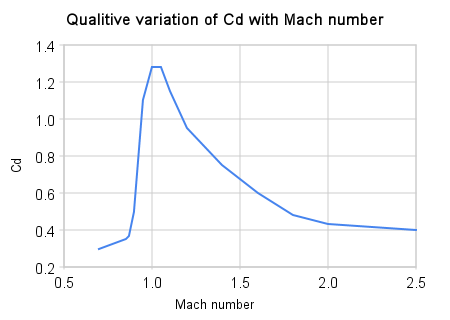
The United States Air Force set supercruise as a core requirement for the Advanced Tactical Fighter program, which resulted in the F-22 Raptor. The F-22 Raptor's supercruise capabilities are touted as a major performance advantage over other fighters, with supercruise being demonstrated exceeding Mach1.5. Supercruise capability provides advantages for stealth aircraft because an afterburner plume reflects radar signals and creates a significant infrared signature. Virtually all fighters prior to the F-22 cruise at Mach0.8–0.9 while carrying a normal weapons load.

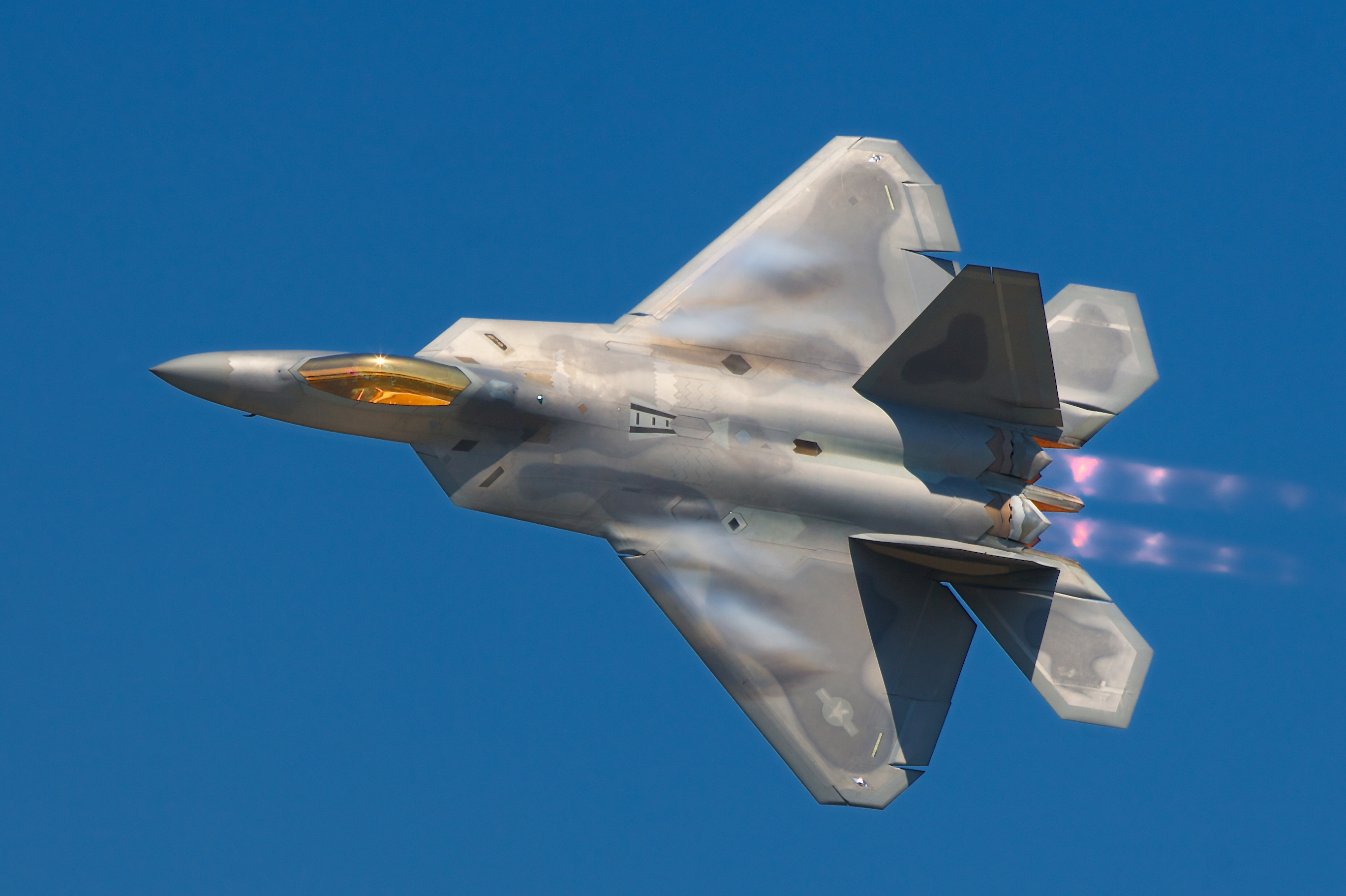
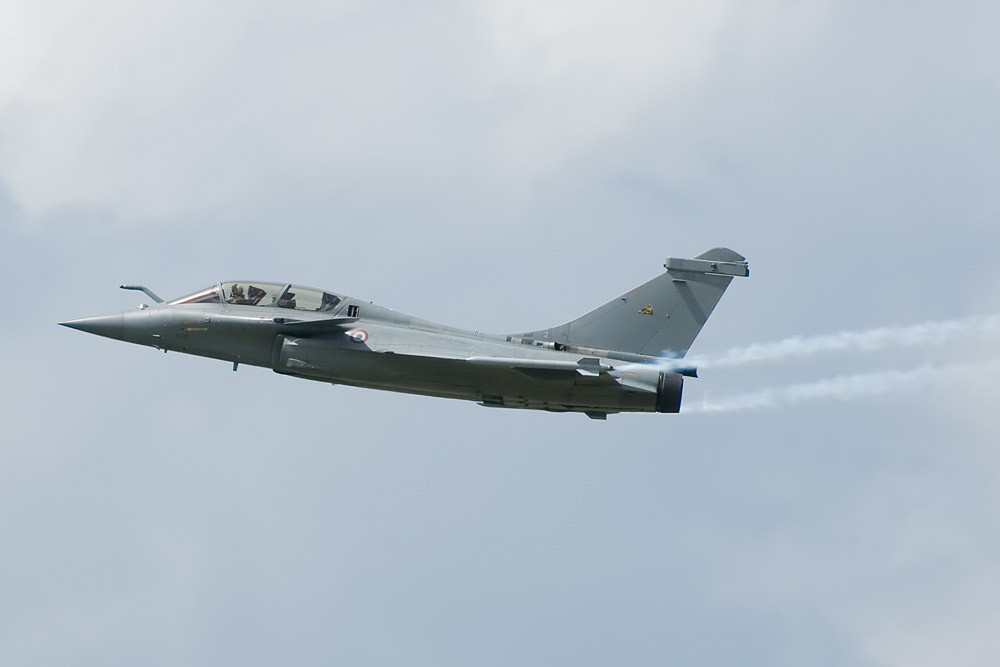
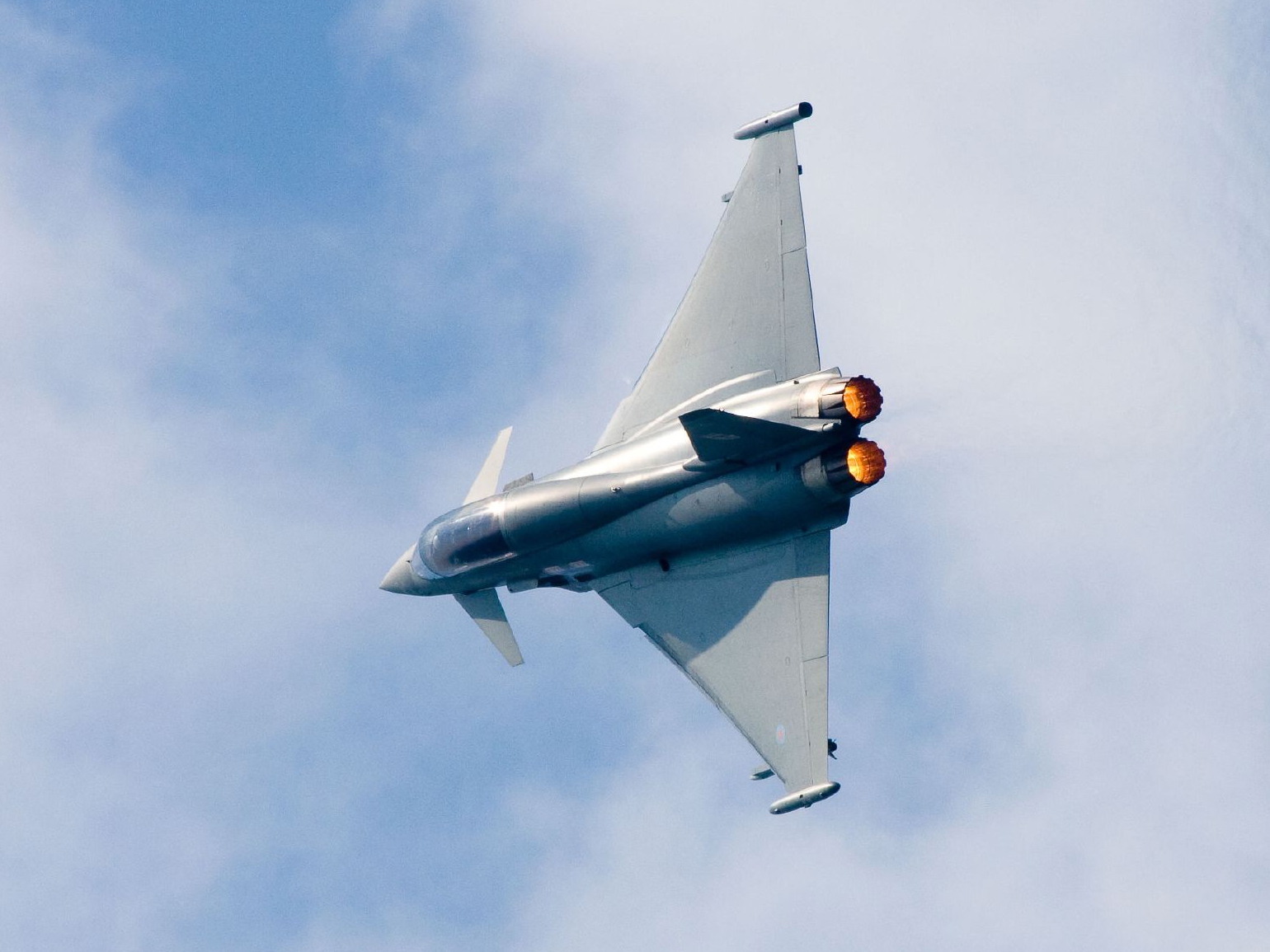
There are a few engines in production that are designed to facilitate tactically significant supercruise:
- The Pratt & Whitney PW1120 was used on the IAI Super Phantom 2000 that had supercruise capability.
- The two Pratt & Whitney F119 that power the F-22 Raptor make it the most capable supercruise-capable fighter aircraft in service. The F-22 Raptor can supercruise above Mach 1.5 without external stores.
- The EJ200 engine built by EuroJet Turbo GmbH mounted in the Eurofighter Typhoon. It is capable of supercruising at Mach 1.5 with an air superiority missile load. Typhoon pilots have stated that Mach 1.3 is attainable in combat configuration with external stores.
- The General Electric F414G in the JAS 39 Gripen NG is designed for supercruise and has achieved Mach 1.2, or Mach 1.1 with an air to air missile load.
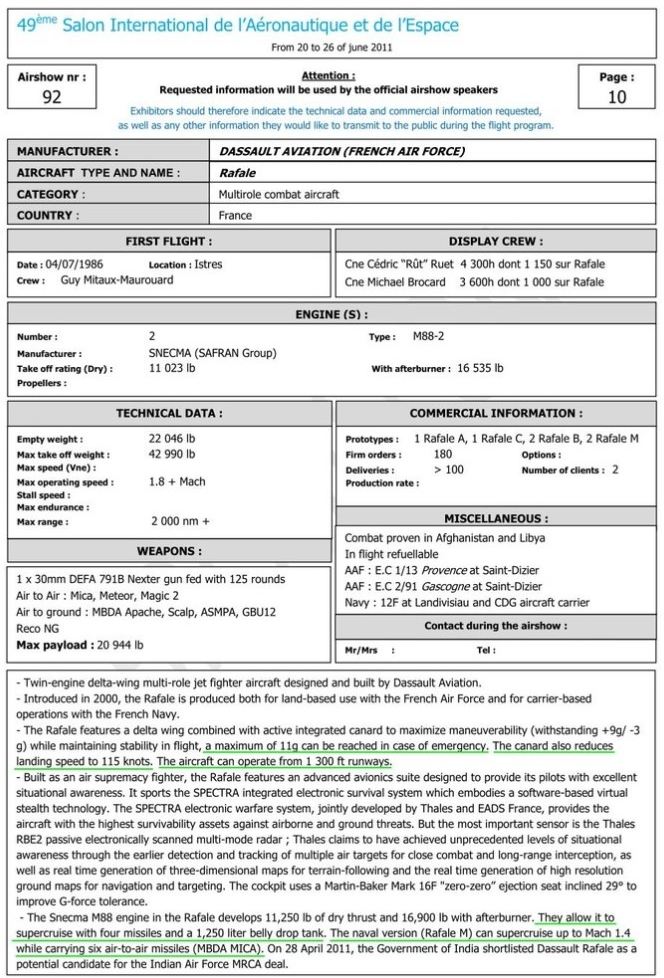
- The two Snecma M88s that power the Dassault Rafale enable the Rafale to supercruise with four missiles and a belly drop tank.
Independently, Russia is working on izdeliye 30 (after AL-31F and AL-41F derivatives modifications, like izdeliye 117S turbofan) and RD-33MKRU Morskaja Osa; an all-new AL-41 engine with a complete redesign is underway to add supercruise ability to the Sukhoi Su-57. This has yet to bear fruit, but the stop-gap 117S engine, produced by this program, may achieve the supercruise goal already. While testing a Su-35BM fighter equipped with these engines, it managed to accelerate past Mach 1 without using the afterburner, suggesting that it had supercruise capability. It has yet to be seen whether this will be possible with a combat load.
Aircraft with supercruise ability
M1 in level flight or climbing without afterburners/augment WITH weapons/cargo/passenger load) for any new additions --
| Aircraft | Supercruise speed | Production Year | Service status | ||||||
|---|---|---|---|---|---|---|---|---|---|
| Sukhoi Su-57 | Mach 1.30 | 2020 | In service | ||||||
| Dassault Rafale | Mach 1.40 | 1986 | In service | ||||||
| Eurofighter Typhoon | Mach 1.50 | 1994 | In service | ||||||
| Saab JAS-39E Gripen | Mach 1.10 | 2019 | In service | ||||||
| General Dynamics F-16XL | Mach 1.10 | 1982 | Retired (prototype) | ||||||
| Lockheed Martin F-22 Raptor | Mach 1.76 | 1996 | In service | ||||||
| url=https://www.nytimes.com/1991/04/24/business/air-force-chooses-lockheed-s-design-for-fighter-plane.html | title=Air Force Chooses Lockheed's Design for Fighter Plane | first=Richard W. | last=Stevenson | date=April 24, 1991 | via=NYTimes.com}} | Mach 1.58 | 1989 | Retired (prototype) | |
| Northrop YF-23 | people=Paul Metz, Jim Sandberg | title=YF-23 DEM/VAL Presentation by Test Pilots Paul Metz and Jim Sandberg | date=27 August 2015 | publisher=Peninsula Seniors Production | location=Western Museum of Flight | url=https://www.youtube.com/watch?v=Vpkv1ErWIf8 | access-date=}} | 1989 | Retired (prototype) |
| Concorde | Mach 2.02 | 1965 | Retired | ||||||
| EWR VJ 101 | Mach 1.04 | 1962 | Retired (prototype) | ||||||
| Mikoyan Project 1.44 | Mach 1.50 | 1999 | Retired (prototype) | ||||||
| Chengdu J-20 | N/A | 2009 | In service |
References
Citations
Bibliography
References
- (5 September 2011). "Supercruise". Defence Aviation.
- (21 July 1999). "F-22 demonstrates 'supercruise' for first time". Federation of American Scientists.
- "Defence & Security Intelligence & Analysis - IHS Jane's 360". janes.com.
- "1956 - 0414 - Flight Archive". flightglobal.com.
- "English Electric - Armstrong Siddeley - Rolls-Royce Avon - 1957 - 0541 - Flight Archive". flightglobal.com.
- "The Cutting Edge: A Half Century of US Fighter Aircraft R&D". RAND Corporation.
- "F-22 Raptor".
- "Stealth design of airplanes / stealth aircraft". fighter-planes.com.
- "FOX THREE". Dassault Aviation.
- "Eurofighter Typhoon - Luftüberlegenheitsrolle".
- Spick 1985, pp. 289-90.
- (July 25, 2008). "Boeing "Super Phantom"".
- [https://www.af.mil/News/Article-Display/Article/135233/general-jumper-qualifies-in-fa-22-raptor/ General Jumper qualifies in F/A-22 Raptor], af.mil, January 13, 2005
- "Lockheed begins test flights of final Raptor". Reed Business Information.
- "EuroFighter Typhoon". fighter-planes.com.
- "Gripen Supercruises".
- (25 April 2008). "Saab's Demo aircraft to highlight Gripen NG capabilities".
- "О ходе испытаний нового российского истребителя Су-35БМ: Наука и техника: Lenta.ru". lenta.ru.
- "Su-57 Fighter Jet with Super-cruising Engines Displayed at Army 2022". DefenseMirror.
- (20 June 2011). "Fiche Rafale le-Bourget 2011".
- "Gripen e enters serial production as Saab targets sales".
- {{harvnb. Piccirillo. 2014
- Stevenson, Richard W.. (April 24, 1991). "Air Force Chooses Lockheed's Design for Fighter Plane".
- (27 August 2015). "YF-23 DEM/VAL Presentation by Test Pilots Paul Metz and Jim Sandberg". Peninsula Seniors Production.
- "Powerplant". ConcordeSST.
- (2016-03-05). "1965 {{!}} 0043 {{!}} Flight Archive".
- Weichert, Brandon J.. (2024-09-20). "MiG-1.44: Russia's 'Lost' 5th-Generation Fighter Rival to the F-22 Raptor".
- "Chengdu J-20 Fighter Can Reach Supercruise, China Says {{!}} Aviation Week Network".
- "Chinese J-20 Aircraft Receives Upgraded Domestic Engine".
This article was imported from Wikipedia and is available under the Creative Commons Attribution-ShareAlike 4.0 License. Content has been adapted to SurfDoc format. Original contributors can be found on the article history page.
Ask Mako anything about Supercruise — get instant answers, deeper analysis, and related topics.
Research with MakoFree with your Surf account
Create a free account to save articles, ask Mako questions, and organize your research.
Sign up freeThis content may have been generated or modified by AI. CloudSurf Software LLC is not responsible for the accuracy, completeness, or reliability of AI-generated content. Always verify important information from primary sources.
Report