From Surf Wiki (app.surf) — the open knowledge base
Super Touring
Touring car racing specification
Touring car racing specification
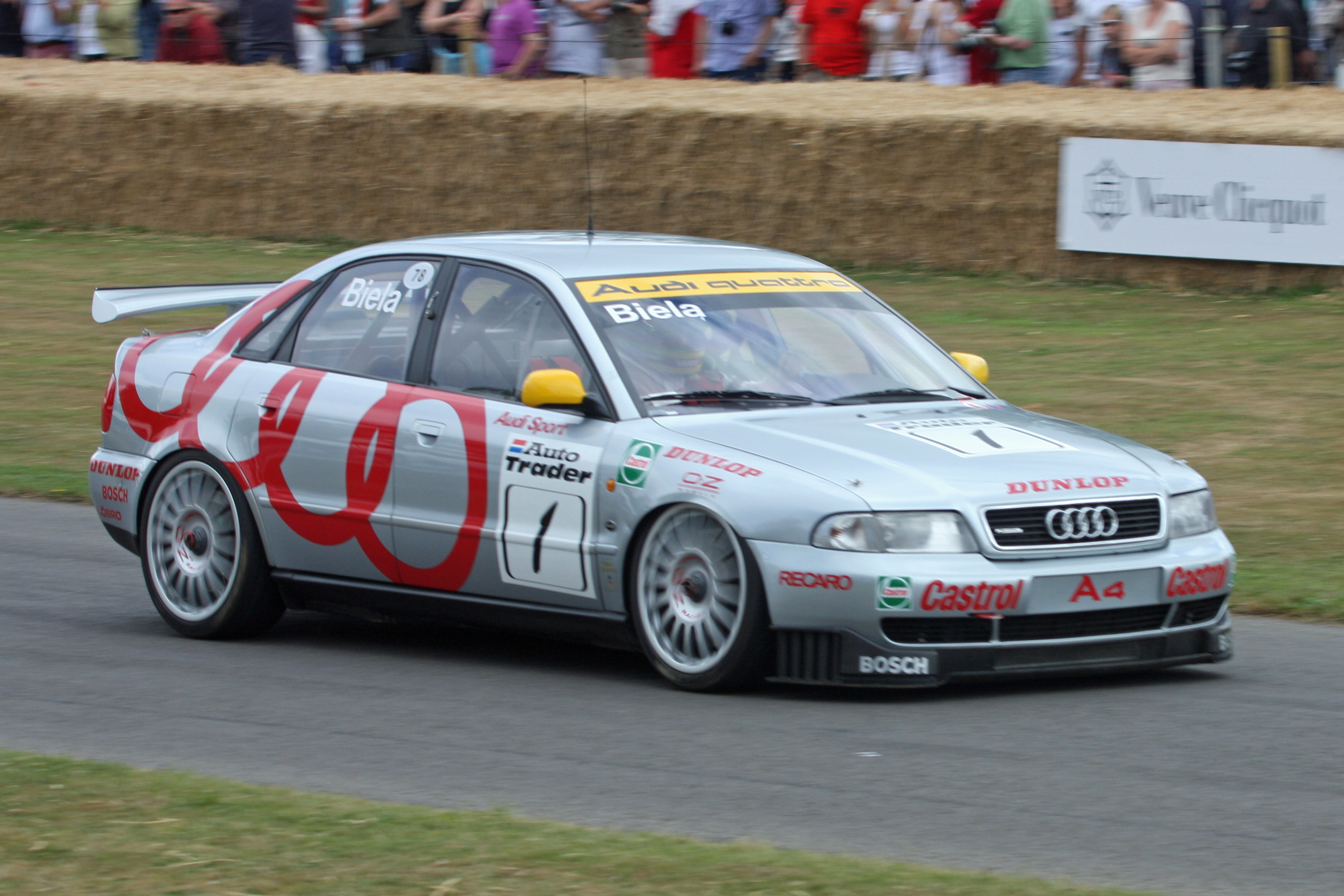
Super Touring, Class 2 or Class II was a motor racing touring car category defined by the Fédération Internationale de l'Automobile (FIA) for national touring car racing in 1993. It was based on the "2 litre Touring Car Formula" created for the British Touring Car Championship (BTCC) in 1990. The FIA organised a World Cup for the category each year from 1993 to 1995, and adopted the term super tourer from 1995.
Super Touring replaced Group A as the norm in nearly every touring car championship across the world, but escalating costs, and the withdrawal of works teams caused the category to collapse in the late 1990s because of the loosely regulated aerodynamics required the team to invest resources equivalent as a professional Formula 1 team, and the 8,500 rpm speed limit required the team to use extremely unusual construction in engine modifications to allow the engine to break through more than 300 horsepower.
An example for this was the German Super Tourenwagen Cup (STW) series, which ran from 1994 to 1999, filling a void left after the end of the 2.5-litre V6-powered Deutsche Tourenwagen Meisterschaft (DTM) in 1996. In 2000, the Deutsche Tourenwagen Masters (keeping the "DTM" acronym) resumed with 4.0-litre V8-powered cars.
Regulations

The Super Touring cars were required to be a minimum of 4.20 m in length, with four doors, effectively requiring a small family saloon car as a minimum. No more than 2 litres engine capacity, maximum of six cylinders were permitted, and the engine was required to be naturally aspirated. Only two wheels could be driven and steered. For homologation, initially at least 2,500 units of the model used must have been produced. In 1995, in a bid to counter the increasing numbers of homologation specials, this number was increased to at least 25,000 units.
There was no restriction on body size and doors until 1993, when it was changed to only allow cars with a minimum of four doors and no smaller than the Euro NCAP 'Small Family Car' class, although 'Large Family Car' tends to dominate the category. Until 1995, teams were only permitted to fit aerodynamic device that were available through dealers, but that changed when, in 1994 BTCC season, Alfa Romeo entered a 155 with Gabriele Tarquini and Giampiero Simoni as drivers. The car had a front spoiler with a bottom piece that could be unscrewed and moved forward, acting as a splitter, and a rear spoiler with a pair of extensions, giving the car more downforce. When Alfa Romeo won the first five rounds, Ford, supported by Vauxhall, made a complaint to the race stewards. TOCA soon decided the aero devices were illegal and Alfa Romeo were stripped of the points they earned at Snetterton and Silverstone (although this decision was later reversed by appeal) and in return, walked out from the Oulton Park race. After this, Alfa were forced to run their spoilers in the retracted position (the position in which the spoilers were fitted on the road going version, the Alfa 155 Silverstone – of which only 2,500 cars were homologated to allow the use of the aerodynamic devices and higher rev limits for a 1.8-litre car – though the road car was sold with two unfitted spoiler extension brackets). In the meantime, Renault and BMW responded by introducing their own limited edition road cars (Laguna Airflow and 318is, respectively) to enable them to run with oversized aerodynamic aids; Renault would win the Oulton Park race that Alfa Romeo had walked out. Soon after that, the FIA changed the regulation in all series to increase minimum number of produced road cars for homologation to 25,000, and allowing cars to only use non-production aerodynamic devices with a restricted size.
Restrictions varied depending on body type, with Volvo having to revert from the 850 Estate to their four-door saloon model the following season when they found themselves to be disadvantaged by the new rules. In the Italian Supertourismo category, teams entered extended spoilers without complaints.
Some series however, would change the rules to suit crowd demands and competition from rival series. One example was the Japanese Touring Car Championship (JTCC), which made increases to body width and exhaust noise while restricting front aerodynamic devices in 1997 (which allowed Toyota to use the larger Toyota Chaser); it ultimately backfired when Nissan and Honda left the series at the end of the season, leaving Toyota as the only manufacturer that competed. In 1999, a new formula using spaceframe cars came to nothing, and the series was abandoned altogether, as by then Japan's big three all had works entries in the then-JGTC.
In Australia, the series began in 1993 when the Group A regulations for the Australian Touring Car Championship series was replaced by Supercars Group 3A Formula (known as V8 Supercars from 1997 onwards) and Super Touring. The advent of a new management structure and telecast arrangement for V8 Supercars put them in conflict with Bathurst 1000 organisers. Super Touring were offered the chance to compete at Bathurst after race organisers could not come to terms with V8 Supercars. Bathurst City Council and V8 Supercars came to a separate arrangement to host their own breakaway "Australian 1000 Classic" race. Super Touring did not become a viable option, and the third and final race was transformed into a motorsport carnival, with several categories attending and the Super Touring event halved to 500 km, before collapsing in the aftermath of the 1999 race. In 2000, in the absence of a rival, the V8 Supercars event took up the Bathurst 1000 name.
During the Super Touring's long run, the category suffered two fatal accidents. In 1995, Gregg Hansford at Phillip Island, and Kieth O'dor at Avus, were involved in fatal accidents as a result of a broken neck caused by their cars' being hit side-on. Soon after, rollcages in competition cars with built-in side impact bars, and seats with head restraints on the side would become mandatory.
One reason for Super Touring's demise was the cost of preparing a car for competition. In 1990, a Vauxhall Cavalier cost £60,000. By the later part of the 1990s a similar car with more sophisticated aerodynamics device and telemetry cost £250,000.
The later World Touring Car Championship Super 2000 regulations were inspired by the Super Touring regulations, with production-based four-door saloons powered by 2.0-litre engines. Wider wheel arches are allowed to Install even though production vehicles that are not equipped, so the team doesn’t have to expand the wheel arches inwards and redesign the suspension layout in order to fit wider tires without widening the body width, as was the case during the super touring era, which would lead to higher costs due to over engineering.
Although it bears no resemblance to its predecessor, the "Super Touring" name was retained by the Championnat de France de Supertourisme for their 3.0-litre tube frame cars.
List of championships that used the Super Touring formula
| Major championships that used the Super Touring formula |
|---|
| 1990 |
| British Touring Car Championship |
| 1990 |
List of Supertouring homologated cars
| Country | Marque | Model | Type | No. | Start | End |
|---|---|---|---|---|---|---|
| Italy | Alfa Romeo | 155 | M.Y. 1994 | ST-7 | 1 March 1994 | 31 December 2002 |
| M.Y. 1995 | ST-9 | 1 March 1995 | 31 December 2003 | |||
| 156 | M.Y. 1997 | ST-37 | 1 January 1998 | 1 January 1998 | ||
| M.Y. 1998 | ST-43 | 1 November 1998 | 31 December 2005 | |||
| Germany | Audi | 80 | B4 | ST-6 | 1 March 1995 | 31 December 2003 |
| A4 | B5 M.Y. 1995 | ST-17 | 1 April 1995 | 31 December 2008 | ||
| B5 M.Y. 1996 | ST-28 | 1 April 1996 | 31 December 2008 | |||
| Germany | BMW | E36 | 318is | ST-8 | 1 March 1995 | 31 December 2004 |
| United States | Chrysler | Stratus | base | ST-30 | 1 April 1996 | 31 December 2004 |
| United Kingdom | Ford | Mondeo | Mk I 4Door | ST-19 | 1 April 1995 | 31 December 2002 |
| Mk I 5Door | ST-20 | 1 April 1995 | 31 December 2002 | |||
| Mk II 4Door M.Y. 1997 | ST-34 | 1 March 1997 | 31 December 2004 | |||
| Mk III Zetec | ST-45 | 1 March 1999 | 31 December 2006 | |||
| United Kingdom | Honda | Accord (fifth generation) | LS CC756 | ST-1 | 1 March 1995 | 31 December 2002 |
| Accord (sixth generation) | LS CE856 | ST-33 | 1 March 1997 | 31 December 2004 | ||
| CG | ST-46 | 1 March 1999 | 31 December 2006 | |||
| Japan | Honda | Civic (fifth generation) | Ferio 4Door | ST-11 | 1 April 1995 | 31 December 2002 |
| Japan | Mazda | Lantis | Coupe 2.0 | ST-4 | 1 March 1995 | 31 December 2002 |
| Xedos 6 | 1.0 | ST-5 | 1 March 1995 | 31 December 2002 | ||
| Japan | Nissan | Primera | HP10 | ST-21 | 1 April 1995 | 31 December 2002 |
| HP11 | ST-29 | 1 April 1996 | 31 December 2006 | |||
| Pulsar | FN14 | ST-10 | 1 April 1995 | 31 December 2006 | ||
| Sunny | FB14 | ST-23 | 1 October 1995 | 31 December 2006 | ||
| United Kingdom | Primera | P11 | ST-48 | 1 January 2000 | 31 December 2006 | |
| Germany | Opel | Astra | F | ST-16 | 1 April 1995 | |
| Vectra | ST-27 | 1 December 1995 | 31 December 2006 | |||
| A | ST-15 | 1 April 1995 | 31 December 2004 | |||
| CD | ST-39 | 1 April 1998 | 31 December 2006 | |||
| GL Plus | ST-40 | 1 April 1998 | 31 December 2006 | |||
| France | Peugeot | 405 | Signature | ST-13 | 1 April 1995 | 31 December 2003 |
| 406 | ST-31 | 1 April 1996 | 31 December 2003 | |||
| M.Y. 1998 | ST-38 | 1 April 1998 | 31 December 2005 | |||
| France | Renault | Laguna I | B56 | ST-14 | 1 April 1995 | 31 December 2002 |
| B56 M.Y. 1998 | ST-38 | 1 April 1998 | 31 December 2005 | |||
| Spain | SEAT | Toledo | GT | ST-22 | 1 August 1995 | 31 December 2002 |
| Japan | Toyota | Camry | SXV11 | ST-26 | 1 January 1996 | 31 December 2005 |
| Carina E | ST191 | ST-2 | 1 March 1995 | 31 December 2005 | ||
| Chaser | JZX100 | ST-47 | 1 May 1999 | 31 December 2006 | ||
| Corolla | AE101 | ST-3 | 1 January 1995 | 31 December 2002 | ||
| AE110 | ST-25 | 1 January 1996 | 31 December 2003 | |||
| Liftback EE111 5Door | ST-42 | 1 July 1998 | 31 December 2006 | |||
| Corona EXiV | ST202 | ST-24 | 1 October 1995 | 31 December 2005 | ||
| Germany | Vauxhall | Vectra | ST-36 | 1 November 1997 | 31 December 2004 | |
| Sweden | Volvo | 850 | T5 Estate | ST-12 | 2 April 1995 | 1 January 2006 |
| T5 Sedan | ST-18 | 2 April 1995 | 1 January 2006 | |||
| S40 | ST-32 | 2 January 1997 | 1 January 2006 | |||
| M.Y. 1999 | ST-44 | 2 January 1999 | 1 January 2007 |
Statistics
Wins by manufacturer
The table includes wins from four of the most competitive series that used Super Touring regulations: British Touring Car Championship (BTCC), Japanese Touring Car Championship (JTCC), German Super Tourenwagen Cup (STW), and European Super Touring Championship (Euro STC).
| Manufacturer | Total wins | BTCC wins | JTCC wins | STW wins | Euro STC wins | 1 | 2 | 3 | 4 | 5 | 5 | 7 | 8 | 9 | 9 | 9 |
|---|---|---|---|---|---|---|---|---|---|---|---|---|---|---|---|---|
| Germany BMW | 75 | 32 | 10 | 28 | 5 | |||||||||||
| Japan Honda | 59 | 21 | 16 | 7 | 15 | |||||||||||
| Germany Opel / | ||||||||||||||||
| United Kingdom Vauxhall | 52 | 29 | 8 | 15 | 0 | |||||||||||
| Germany Audi | 49 | 15 | 0 | 27 | 7 | |||||||||||
| France Renault | 38 | 38 | 0 | 0 | 0 | |||||||||||
| Japan Nissan | 38 | 25 | 10 | 2 | 1 | |||||||||||
| Japan Toyota | 26 | 8 | 18 | 0 | 0 | |||||||||||
| Italy Alfa Romeo | 22 | 9 | 0 | 1 | 12 | |||||||||||
| France Peugeot | 21 | 0 | 0 | 21 | 0 | |||||||||||
| Sweden Volvo | 21 | 21 | 0 | 0 | 0 | |||||||||||
| USA Ford | 21 | 20 | 0 | 1 | 0 |
References
References
- FIA Yearbook, 1993, Green section, page 277, Touring car technical regulations (Class II)
- [http://www.supertouring.co.uk/st_history1.html SuperTouring History : 1990 – Small Beginnings] {{webarchive. link. (12 September 2012 Retrieved from www.SuperTouring.co.uk on 9 December 2008)
- Automobile Year, 1994/95, page 175
- (2001). "Article 262 – Technical Regulations for Supertouring Cars (Group ST)". Fédération Internationale de l'Automobile.
- [http://www.supertouring.co.uk/techreg1.html BTCC Technical Regulations] {{webarchive. link. (2 December 2008)
- (2016-05-16). "Interview with former BTCC Star – Anthony Reid".
- (2011-11-07). "German Supertourenwagen Cup (STW) (1994-1999)".
- "国内競技結果(リザルト)検索".
- (2011-10-23). "British Touring Car Championship (1958-to date)".
- (2011-11-07). "European Touring Car Championship (1963-2004)".
This article was imported from Wikipedia and is available under the Creative Commons Attribution-ShareAlike 4.0 License. Content has been adapted to SurfDoc format. Original contributors can be found on the article history page.
Ask Mako anything about Super Touring — get instant answers, deeper analysis, and related topics.
Research with MakoFree with your Surf account
Create a free account to save articles, ask Mako questions, and organize your research.
Sign up freeThis content may have been generated or modified by AI. CloudSurf Software LLC is not responsible for the accuracy, completeness, or reliability of AI-generated content. Always verify important information from primary sources.
Report