From Surf Wiki (app.surf) — the open knowledge base
Sunshine Coast, Queensland
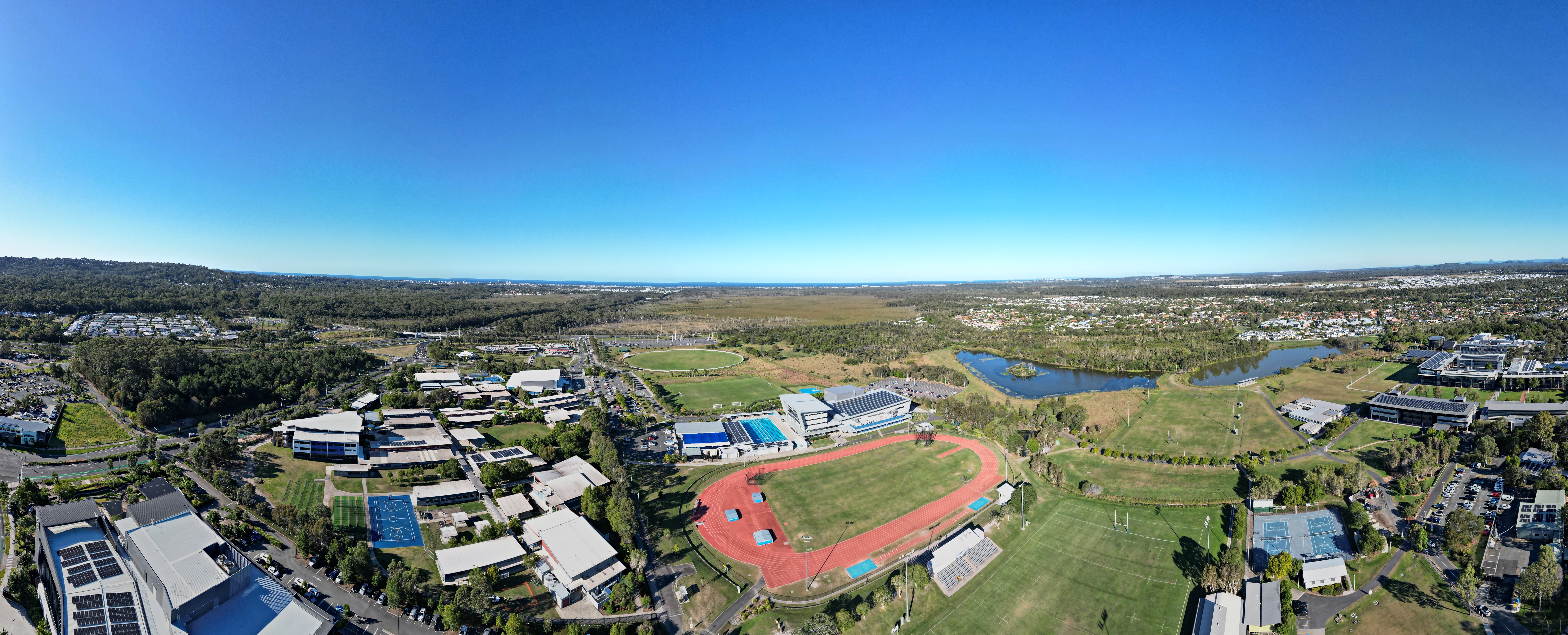
| Field | Value |
|---|---|
| type | region |
| name | Sunshine Coast |
| state | qld |
| image | {{multiple image |
| border | infobox |
| perrow | 2/2/2 |
| total_width | 300 |
| caption_align | center |
| image1 | Kings Beach, Caloundra (1) (cropped).jpg |
| caption1 | Caloundra |
| image2 | Maroochydore seen across South Maroochy River, Queensland 01 (cropped).jpg |
| caption2 | Maroochydore |
| image3 | Nambour Sunshine Coast Council Offices.JPG |
| caption3 | Nambour |
| image4 | Mooloolaba Esplanade at Mooloolaba, Queensland.jpg |
| caption4 | Mooloolaba |
| image5 | Noosa Australia.jpg |
| caption5 | Noosa Heads |
| image6 | Aerial panorama of Maleny facing Lake Baroon. 2023 (cropped).jpg |
| caption6 | Maleny |
| mapframe-marker | yes |
| local_map | yes |
| relief | 1 |
| coordinates | |
| pop | 398,840 |
| pop_year | 2021 |
| pop_footnotes | |
| poprank | 9th |
| area | 1633 |
| area_footnotes | (2016 urban) |
| dist1 | 100 |
| location1 | Brisbane |
| lga | Sunshine Coast Region |
| lga2 | Shire of Noosa |
| stategov | Buderim, Caloundra, Glass House, Kawana, Maroochydore, Nicklin, Noosa |
| fedgov | Fairfax |
| fedgov2 | Fisher |
| fedgov3 | Wide Bay |
| maxtemp | 25.4 |
| mintemp | 15.8 |
| rainfall | 1478.5 |
| mapframe-marker = yes
The Sunshine Coast is a peri-urban region in South East Queensland, Australia. In 1967, it was defined as "the area contained in the [former] Shires of Landsborough, Maroochy and Noosa, but excluding Bribie Island". Located 100 km north of the centre of Brisbane in South East Queensland, on the Coral Sea coastline, its urban area spans approximately 60 km of coastline and hinterland from Pelican Waters to Tewantin.
The area has several coastal hubs at Caloundra, Kawana Waters, Maroochydore and Noosa Heads. Nambour and Maleny have developed as primary commercial centres for the hinterland.
Since 2014, the Sunshine Coast district has been split into two local government areas, the Sunshine Coast Region and the Shire of Noosa, which administer the southern and northern parts of the Sunshine Coast respectively.
As of June 2021, with an estimated urban population of 398,840, the Sunshine Coast (without inclusion of Moreton Bay or Logan City; a part of Brisbane's population) is the third (5th) most populated area in Queensland and the 9th most populous in the country. The population of the area has grown steadily at an average annual rate of 2.4% year-on-year over the five years to 2018.
History
Pre-colonial
The earliest residents of the Sunshine Coast were the indigenous Gubbi Gubbi and Wakka Wakka people. The territory of the Kabi includes about 8,200 sqmi along the coastline from the 27th parallel northward to the mouth of the Burrum River. The country of the Wakka Wakka people was about 5,000 sqmi that was roughly triangular to the west of the Kabi, including a small part of the Dawson, and meeting the northern Kabi boundary at Walla. The two tribes were friendly and intermarried and had the same class restrictions. The groups were nomadic, gathering food en-route as they moved from one campsite to the next.
Gubbi Gubbi (Kabi Kabi, Cabbee, Carbi, Gabi Gabi) is an Australian Aboriginal language spoken on Gubbi Gubbi country. The Gubbi Gubbi language region includes the landscape within the local government boundaries of the Sunshine Coast Region and Gympie Region, particularly the towns of Caloundra, Noosa Heads, Gympie and extending north towards Maryborough and south to Caboolture*.*
18th century


In 1770, James Cook on the deck of HM Bark Endeavour became the first known European to sight the Glass House Mountains, located south-west of Caloundra.
19th century
In the 1820s, former convicts John Finnegan, Thomas Pamphlett and Richard Parsons landed on Moreton Island after becoming hopelessly lost fetching cedar. They lived with the Kabi Kabi for eight months.
Thereafter, during the 1830s to 1840s, the district became home to numerous runaway convicts from the Moreton Bay (Brisbane) penal colony slightly to the south.
In 1842, Governor George Gipps had the entire Sunshine Coast and hinterland from Mt Beerwah north to roughly Eumundi declared a "Bunya Bunya Reserve" for the protection of the bunya tree after Andrew Petrie advised him of the importance of bunya groves in Aboriginal culture. However, during the 1840s and 1850s, the Bunya Bunya Reserve and its vicinity became the scene of some of the most bitter skirmishes of Australia's "Black War". The Blackall Range, on account of the tri-annual Bunya Festival, served as both a hideout and rallying point for attacks against white settlements. By the 1850s timber cutters and cattlemen had started exploiting the area; in 1860 the Bunya Bunya Reserve was scrapped.
Many of the Sunshine Coast's towns began as simple ports or jetties for the timber industry during the 1860s and 1870s, as the area once had magnificent stands of forest. Likewise, the region's roads often began as snigging tracks for hauling timber. Timber getters used the region's creeks, rivers and lakes as seaways to float out their logs of cedar – the resultant wood being shipped as far afield as Europe.
During the Gympie Gold Rush (1867), prospectors scaled the Sunshine Coast mountains to develop easier roadways to and from the gold fields of Gympie. After the construction of the railway line to Gympie, the coastal and river towns, being mostly ports for the early river trade, were bypassed.
By the 1890s, diverse small farming (fruit and dairy) had replaced the cattle-and-timber economy of earlier decades. Sugar cane and pineapples proved especially important to produce for the district. Many small hamlets and towns now emerged. Produce was initially taken by horse to Landsborough, then to Eudlo in 1891.
20th century
The post-World War I era saw the rise of the "seaside shack". The seaside shack provided the opportunity for the coastal "getaway" with modest investment. From 1914 to 1946, they popped up all along the North Coast (because it was north of Brisbane). Seaside shacks were exceedingly cheap and were an early use of the concept of recycling. Many were built of disused or second grade timber, all kinds of materials were used for the holiday seaside shack, including fibro cement, metal containers, and left-over farm sheds; even disused trams were sold off as seaside shacks.
Especially after World War II, the Sunshine Coast grew into a holiday and surfing destination. This tendency was further expanded in the development boom of the 1960s and 1970s.
Then known as the Near North Coast, the renaming of the South Coast to become the Gold Coast triggered interest in renaming the Near North Coast to increase the tourist appeal. Names considered included the Silver Coast, the Diamond Coast, and Suncoast. Suncoast was rejected as it was copyrighted by a proprietary company. In 1967, it was officially renamed the Sunshine Coast.
Around the same time, various tourist attractions and theme parks were created, such as the Big Pineapple in Woombye.
After the 1980s, the Sunshine Coast experienced rapid population growth. it had become one of the fastest-growing regions in Australia.
21st century
The Moreton sugar mills closure in 2003 removed a market for the district's 120 cane growers who had been harvesting cane in the region.
In 2008, The Shire of Noosa, Shire of Maroochy and City of Caloundra merged to form the Sunshine Coast Region. The 2007 referendum conducted by the Australian Electoral Commission and leading to the merger remained controversial in Noosa Shire, where 95% of voters had rejected amalgamation.
In March 2013, a second referendum resulted in 81% of residents voted to leave the amalgamated Sunshine Coast Region. On 9 November 2013 an election resulted in Noel Playford being elected to take office as mayor on 1 January 2014 with the new council.
The Shire of Noosa was re-established on 1 January 2014. This resulted in two geopolitical areas occupying the area generally recognised as 'The Sunshine Coast'. The Sunshine Coast Region, governed by the Sunshine Coast Council and the Shire of Noosa, governed by Noosa Shire Council.
Geography


Major rivers of the Sunshine Coast include Noosa River, Maroochy River, Mooloolah River and the Stanley River. The region includes several lakes such as Lake Cootharaba and Lake Weyba. Ewen Maddock Dam, Wappa Dam and Baroon Pocket Dam have been built for water storage.
Beaches
Several stretches of the Sunshine Coast are lined with unbroken beaches – from Sunshine Beach near Noosa to Coolum Beach (17 km); the coast from Point Arkwright to Mudjimba (11 km); the Maroochydore–Mooloolaba stretch (5.6 km); and from Buddina past the Caloundra CBD to Pelican Waters (22 km).
Noosa Main Beach, Alexandra Headland, Mooloolaba (the spit) and Coolum Beach are nationally recognised surfing beaches. Notable beaches include:

- Sunshine Beach in Noosa
- Sunrise Beach in Noosa
- Castaways Beach in Noosa
- Marcus Beach in Noosa
- Peregian Beach in Noosa
- Marcoola, Maroochydore
- Mudjimba, Maroochydore
- Mooloolaba, Mooloolaba
- Kawana Waters, between Maroochydore and Caloundra
- Dicky Beach in Caloundra
- Moffat Beach in Caloundra
- Shelly Beach in Caloundra
- Kings Beach in Caloundra
- Golden Beach in Caloundra
National parks
The Sunshine Coast is home to more individual national parks than any other region in Queensland. The natural biodiversity of the area has been protected by five separate parks in both coastal and inland regions, including Mapleton Falls National Park, Kondalilla National Park, The Glass House Mountains National Park, Noosa National Park, and the Great Sandy National Park, which includes sections on Fraser Island and in Cooloola near Rainbow Beach.
Climate
Sunshine Coast has a humid subtropical climate (Cfa) typical of South Queensland. Summers are generally hot, but moderated compared to areas on similar latitudes elsewhere. Winters retain warm days, but have cooler nights rendering it falling into the subtropical fold. There is no dry season and precipitation is generally quite high.
The average temperature of the sea ranges from 21.2 C in August to 27.1 C in February at Mooloolaba, and from 21.2 C in August to 27.3 C in February at Noosa Heads.
| Jan record high C = 41.3 | Feb record high C = 38.7 | Mar record high C = 36.2 | Apr record high C = 33.5 | May record high C = 31.5 | Jun record high C = 29.1 | Jul record high C = 31.4 | Aug record high C = 35.0 | Sep record high C = 35.7 | Oct record high C = 37.0 | Nov record high C = 41.0 | Dec record high C = 38.4 | year record high C = | Jan avg record high C = 33.4 | Feb avg record high C = 32.7 | Mar avg record high C = 31.6 | Apr avg record high C = 29.8 | May avg record high C = 26.9 | Jun avg record high C = 25.4 | Jul avg record high C = 25.4 | Aug avg record high C = 27.7 | Sep avg record high C = 30.1 | Oct avg record high C = 32.4 | Nov avg record high C = 32.8 | Dec avg record high C = 33.8 | year avg record high C = 36.1 | Jan avg record low C = 17.3 | Feb avg record low C = 17.9 | Mar avg record low C = 15.9 | Apr avg record low C = 11.7 | May avg record low C = 6.7 | Jun avg record low C = 4.0 | Jul avg record low C = 3.2 | Aug avg record low C = 3.6 | Sep avg record low C = 6.7 | Oct avg record low C = 9.7 | Nov avg record low C = 12.4 | Dec avg record low C = 15.0 | year avg record low C = 2.3 |Jan record low C = 14.5 |Feb record low C = 14.4 |Mar record low C = 10.9 |Apr record low C = 7.3 |May record low C = 3.3 |Jun record low C = 1.5 |Jul record low C = -0.7 |Aug record low C = 1.3 |Sep record low C = 3.4 |Oct record low C = 7.1 |Nov record low C = 5.7 |Dec record low C = 10.0 |year record low C = | Jan dew point C =21.0 | Feb dew point C =21.1 | Mar dew point C =19.8 | Apr dew point C =17.6 | May dew point C =14.5 | Jun dew point C =12.3 | Jul dew point C =10.6 | Aug dew point C =11.3 | Sep dew point C =14.2 | Oct dew point C =16.3 | Nov dew point C =18.1 | Dec dew point C =19.9 |access-date = 30 Jun 2025}}}}
Economy
The Sunshine Coast economy has outpaced most of the regional economies in Australia in terms of growth over the last 15 years. The strength of the regional economy is based in its diversity and strength across a number of key sectors including healthcare, education, finance and professional business services. Australian Bureau of Statistics (ABS) data from the May 2019 Labour Force Survey indicate that around 184,200 people were employed in the Sunshine Coast region. Health care and social assistance was the largest employment sector with 26,800 people, followed by construction with 26,500 people, and education and training with 21,200 people. Other important employment sectors in the region were accommodation and food services; retail trade; and professional, scientific and technical services. The agriculture, forestry and fishing sector employed 2,600 people, representing 1 per cent of the region's workforce.
Tourism
The Sunshine Coast is a centre for tourism, attracting more than 3.2 million visitors a year. There are significant attractions, such as Steve Irwin's Australia Zoo, UnderWater World marine park, Aussie World, the Buderim Ginger Factory, the Big Pineapple, the Eumundi Markets and the Majestic Theatre, Pomona.
Sports tourism is supported by several annual sporting events such as the Mooloolaba Triathlon, Noosa Triathlon and Sunshine Coast Marathon.
The Sunshine Coast is served by the Sunshine Coast Airport 10 km north of Maroochydore, though many tourists also arrive from Brisbane Airport which is 100 km to the south.
As of November 2020 the Sunshine Coast is home of NightQuarter, an Eat Street-style precinct with live music and other immersive experiences.
The Sunshine Coast region is home to many tour operators which are supported by welcomed 3.6 million domestic overnight visitors in the year ending September 2021. These visitors spent an estimated $2.7 billion in the region and help sustain local businesses.
Agriculture
_hinterland_with_the_Glasshouse_Mountains_in_the_background,_1971.jpg)
In 2017–18, the gross value of agricultural production in the Sunshine Coast region was $217 million, which was 2 per cent of the total gross value of agricultural production in Queensland ($13 billion).
Agricultural land in the Sunshine Coast region occupies 1,100 square kilometres, or 36 per cent of the region. Areas classified as conservation and natural environments (nature conservation, protected areas and minimal use) occupy 880 square kilometres, or 29 per cent of the region. The most common land use by area is grazing native vegetation, which occupies 530 square kilometres or 17 per cent of the Sunshine Coast region.
The Sunshine Coast region has a diverse agricultural sector. The most important commodities in the region based on the gross value of agricultural production were poultry ($66 million), followed by strawberries ($35 million) and milk ($29 million). These commodities together contributed 60 per cent of the total value of agricultural production in the region.
Demographics
At the 2016 census, the population of the Sunshine Coast was 346,522. The median age was 44 years old, 6 years older than the nationwide median. The male-to-female ratio was 48.3-to-51.7. Most residents were born in Australia (73.7%), with 1.9% being Indigenous Australians. The most common countries of birth of other residents were England (6.2%), New Zealand (4.5%), South Africa (1.0%), Germany (0.7%), and Scotland (0.6%). The most commonly spoken languages other than English were German (0.6%), and Afrikaans, Dutch, French, and Italian (0.3% each). A large proportion of Sunshine Coast residents reported no religious affiliation (34.0%). Of those who had a religious affiliation, the most frequent were: Catholic (18.2%), Anglican (16.8%), and Uniting Church (5.2%).
References
References
- "Sunshine Coast". Australian Bureau of Statistics.
- "2016 Census Quickstats: Sunshine Coast". [[Australian Bureau of Statistics]].
- {{Cite QPN. 32861. Sunshine Coast. district
- (26 July 2022). "Regional population". [[Australian Bureau of Statistics]].
- [[John Mathew. Mathew, John]] (1910). [https://archive.org/details/tworepresentativ00math ''Two Representative Tribes of Queensland'']. London: T. Fisher Unwin {{page needed. (January 2023)
- "Gubbi Gubbi".
- "Glass House Mountains National Park". [[Queensland Government]].
- GHD. (March 2005). "Department of Natural Resources and Mines and Maroochy Shire Council".
- Henley, John R.. "The first settlers of the Nambour area".
- "Nambour – Sunshine Coast Regional Council".
- "Buderim – Sunshine Coast Regional Council".
- (7 October 2022). "Shacks, sheds and cottages: Queensland 'Weekenders' in the early 20th century".
- {{cite QHR. 30454. Cotton Tree Caravan Park. 602707
- (20 October 1954). "Will resist sand mines". [[The Courier-Mail]].
- (18 August 1939). "£50 from Carnival and Sports at Caloundra.". [[Nambour Chronicle and North Coast Advertiser]].
- Whittington, Dorothy. (2021-09-10). "The 1960s estate that promised paradise north of the Maroochy River".
- Whittington, Dorothy. (2020-12-10). "Flashback: How we were almost named the Silver Coast".
- {{cite QHR. 30333. The Big Pineapple (former Sunshine Plantation). 602694
- "3218.0 – Regional Population Growth, Australia, 2016: Queensland". Australian Bureau of Statistics.
- "Future Use of Sunshine Coast Cane Landscapes".
- "Australian Electoral Commission 2007 Results of plebiscites on council amalgamations".
- [http://www.ecq.qld.gov.au/elections/local/LG2013/NoosaShireCouncil/results/mayoral/district1.html ecq.qld.gov.au] {{webarchive. link. (10 November 2013 – 013 Noosa Shire Council – Mayoral Election – 10 November 2013)
- "Sunshine Coast Australia.com National Parks Section".
- "Mooloolaba Sea Temperature".
- "Noosa Heads Sea Temperature".
- (August 27, 2019). "Sunshine Coast Australia{{!}}Growing Economy".
- mmackander. "Coast leads the way when it comes to visitors".
- "USM Events – Mooloolaba Triathlon Festival".
- "USM Events – Noosa Triathlon Multi Sport Festival".
- [http://www.sunshinecoastmarathon.com.au/ Sunshine Coast Marathon] {{webarchive. link. (19 August 2012 . Retrieved 19 July 2014.)
- Annett, Tegan. "Food, music market launches with huge opening weekend".
- "Regional Summaries – Sunshine Coast". Tourism and Events Queensland.
- "Sunshine Coast Tours".
- "ABARES About my region – Sunshine Coast Queensland".
- "2016 Census QuickStats: Sunshine Coast".
This article was imported from Wikipedia and is available under the Creative Commons Attribution-ShareAlike 4.0 License. Content has been adapted to SurfDoc format. Original contributors can be found on the article history page.
Ask Mako anything about Sunshine Coast, Queensland — get instant answers, deeper analysis, and related topics.
Research with MakoFree with your Surf account
Create a free account to save articles, ask Mako questions, and organize your research.
Sign up freeThis content may have been generated or modified by AI. CloudSurf Software LLC is not responsible for the accuracy, completeness, or reliability of AI-generated content. Always verify important information from primary sources.
Report