From Surf Wiki (app.surf) — the open knowledge base
Sungkyunkwan University
Private university in South Korea

Private university in South Korea
| Field | Value | ||||
|---|---|---|---|---|---|
| name | Sungkyunkwan University | ||||
| native_name | 成均館大學校 | ||||
| 성균관대학교 | |||||
| native_name_lang | Korean | ||||
| image | Sungkyunkwan University seal.svg | ||||
| image_size | 180px | ||||
| motto | 인의예지 (仁) | ||||
| motto_lang | ko | ||||
| mottoeng | Humanity, Righteousness, Propriety, Wisdom | ||||
| established | . | ||||
| Given college status in 1946.<ref>{{cite web | url | https://www.skku.edu/skku/about/s620/sub02_03.do | title=History | publisher=University of Sungkyunkwan | access-date=2023-04-12}} |
| type | Private research university | ||||
| faculty | 4,023 (1,529 full-time) | ||||
| president | Yoo Ji-Beom | ||||
| students | 34,837 | ||||
| undergrad | 25,194 | ||||
| postgrad | 9,643 | ||||
| city | Seoul (Humanities and Social Sciences Campus), Suwon (Natural Sciences Campus) | ||||
| country | South Korea | ||||
| coordinates | |||||
| campus | Urban | ||||
| colors | Blue | ||||
| Lime Green | |||||
| Orange | |||||
| Dark Green | |||||
| mascot | Ginkgo | ||||
| logo | Sungkyunkwan University - logotype (ko+en).svg | ||||
| website | |||||
| module | {{Infobox Korean name/auto | ||||
| hangul | ^성균관_대학교 | ||||
| hanja | 成均館大學校 | ||||
| child | yes}} |
성균관대학교 Given college status in 1946. Lime Green Orange Dark Green
Sungkyunkwan University (SKKU or Seongdae, ) is a private research university with campuses in Seoul and Suwon, South Korea. The institution traces its origins to the historic Sungkyunkwan founded in 1398 in central Seoul. As the foremost educational institution during the Joseon period, it was governed by the great code of the state administration with royal assent. By a resolution of the Progressive Intellectuals and Confucian scholars, it was restructured as a comprehensive university in the mid-20th century, and has since greatly expanded its academic offerings.
History
.JPG)
Sungkyunkwan was established in 1398 and became the most prestigious educational institution in Joseon. Its name means "to make" (), "harmonious society" (), "institute" ().
The school focused on in-depth study of the Chinese classics, Confucian canon, and contemporary literature; and on how to apply knowledge to governing the nation and to understanding the nature of humanity. It also served as a shrine (see Munmyo) to Confucian sages, and rituals were held regularly to honor them and their teachings.
The school was located within the city walls of Hanseong (modern-day Seoul), Korea's capital during the Joseon Dynasty. It followed the example of the Goryeo-period Gukjagam, which in its latter years was also known by the name "Sungkyunkwan".
Numerous Korean historical figures, including Yi Hwang and Yi I, studied at and graduated from Sungkyunkwan. A considerable amount of Korean literature and works of Hanja calligraphy were created and archived by Sungkyunkwan scholars over the centuries.
The history of Sungkyunkwan University can be divided into the ancient university, modern university, and contemporary university eras.
Ancient University Era (1398–1894)
During the ancient university era, traditional Confucian education was practiced.
From the establishment of Sungkyunkwan during the reign of King Taejo to the time of King Seongjong, buildings were constructed, systems were established, operating policies were effected, and the school was cemented as the top national educational center.
A long period of recession followed, from 1495 to 1724, that is, from the time of Yeonsangun to that of Gyeongjong. The beginning of this period was marked by a brief closure due to the tyranny of Yeonsangun, when, in 1505, Sungkyunkwan was reduced to a place to hold feasts. Though it was restored to its original status the next year under King Jungjong, during the Japanese invasions of Korea (1592–1598), Sungkyunkwan was burnt down and rebuilt.
A period of revival followed, from 1725 to 1894, that is, from the reign of King Yeongjo to the time of Gabo Reform. Education at Sungkyunkwan became lively amid political and academic revival, and reformation of the education system was actively developed by Silhak scholars.
Modern University Era (1895–1945)
A period of enlightenment followed, that is, from Sungkyunkwan's founding as a modern university (1895) to the Japanese annexation of Korea (1910). In 1895, a three-year department of Chinese classics () was established, and various courses such as history, geography, and mathematics were taught. At the same time, a professor appointment system, admission examination system, and graduation examination system were implemented; a semester system was introduced; and modern institutional reforms such as setting the number of teaching days per year and the number of lecture hours per week were effected. Under Japanese occupation (1910–1945), however, Sungkyunkwan lost its position as the highest school in Joseon.
Contemporary University Era (1945–Present)
On 15 August 1945, the Japanese Empire was defeated. In November of the same year, Kim Chang-sook led a foundation that revived Sungkyunkwan as an educational center. Sungkyunkwan University was thus re-established by collecting some of the property of the hyanggyo and donations from Confucian scholars.
Partnership with Samsung
Samsung partnered with SKKU from 1965 to 1977, and renewed this partnership in 1996. The university claims that this has helped it to pursue globalization and to foster talented graduates. The partnership has boosted research infrastructure and human resource management, and it has helped the university to develop courses in software development, mobile communications engineering, energy engineering, nanotechnology, business, medicine, and law.
Through the Samsung Global Scholarship Program, 15–25 students are selected annually for Seoul National University's engineering program or to enroll at SKKU's Graduate School of Business (SKK GSB), which partners with top business schools abroad, including the MIT Sloan School of Management, Columbia University, Northwestern University's Kellogg School of Management, University of Michigan's Ross School of Business, Dartmouth College's Tuck School of Business, Indiana University's Kelley School of Business, and the Singapore Management University.
Rankings and reputation
According to the ranking of South Korean universities annually published by the national daily newspaper JoongAng Daily, Sungkyunkwan University is ranked third in South Korea after Seoul National University and Yonsei University. For several years, U.S. News & World Report ranked Sungkyunkwan University second in the country.
In the Quacquarelli Symonds (QS) world university rankings (2023), SKKU is ranked 99th globally, and 36th in Asia. In the Times Higher Education 2023 world university rankings, SKKU is ranked 170th internationally.
In the Financial Times rankings, SKK GSB's MBA ranks 82nd worldwide, 15th in Asia, and first in Korea.
Campuses and transport
Humanities and Social Sciences Campus (Seoul)
The university's Humanities and Social Sciences Campus, also housing arts departments, is in central Seoul on the same hill as Changdeokgung and Changgyeonggung (two of the royal palaces of Joseon). The 1,394,154 m2 campus lies in Myeongnyun-dong, near Daehangno. The nearest subway station is Hyehwa on Line 4, and the university operates shuttle buses between the station and the campus.


Natural Sciences Campus (Suwon)
The Natural Sciences Campus, housing natural science, engineering, medicine, and sports departments, is within walking distance of Sungkyunkwan University Station in Yuljeon-dong, northwest Suwon. The 101-hectare campus, 45 km south of Seoul, was established in 1978. At 2,199,187 m2, it is more spacious than the campus in Seoul, so sports facilities and a botanical garden are located on this campus. SKKU NSC Entrance sign.jpg|Natural Sciences Campus entrance SKKU Natural Sciences Campus from Industry Cooperation Centre.jpg|Natural Sciences Campus seen from the Industry Cooperation Centre SKKU Gardens Royal azalea.jpg|Royal azalea by the garden SKKU Gardens Avenue.jpg|Avenue of trees in the garden SKKU Gardens Lantern.jpg|Stone lantern in the garden SKKU Pond.jpg|Pond in outflow towards Ilwol Reservoir SKKU Pond fish.jpg|Fish in the pond SKKU Stream.jpg|Stream in outflow towards Ilwol Reservoir SKKU Stream - Dragon.jpg|Metal dragon in stream
Symbols
SKKU's motto is "Humanity, Righteousness, Propriety, and Wisdom" (), and reflects the basic spirit of Neo-Confucianism.
The university's symbol—the ginkgo leaf—is derived from the giant ginkgo trees (Natural Monument No. 59) at Myeongnyundang. Both trees are male, and thus do not bear fruit. They are believed to have been planted circa 1519 by Yun Tak, a former chief scholar of Sungkyunkwan.

Student housing and dormitories
The university has several on-campus dormitories. The Humanities and Social Sciences campus in Seoul has ten dormitories and housing facilities, namely C-house, E-house, G-house, I-house, K-house, M-house, Crownville A, Crownville C, LWG House, and Victory House, while the Natural Sciences Campus in Suwon has five dormitories, namely In-Kwan, Ui-Kwan, Ye-Kwan, Shin-Kwan and Ji-Kwan.
Research
The university spends heavily on research and development, mostly sponsored by Samsung, Hyundai, and government agencies. Notable researchers include Clarivate Citation Laureate Park Nam-Gyu (2017), and physics professor Lee Young-hee, director of the Center for Integrated Nanostructure Physics in the Institute for Basic Science. Both scientists frequently publish in Nature.
Sungkyunkwan Advanced Institute of Nanotechnology

Sungkyunkwan Advanced Institute of Nanotechnology (SAINT) was founded on 1 March 2005 as one of the four core programs of Sungkyunkwan University's VISION2010+ plan to be ranked in the top 100 universities in the world. With financial support from Samsung Advanced Institute of Technology, it aims to become one of the world's top five nanotechnology institutes. The current director of SAINT is Sungjoo Lee.
N-Center
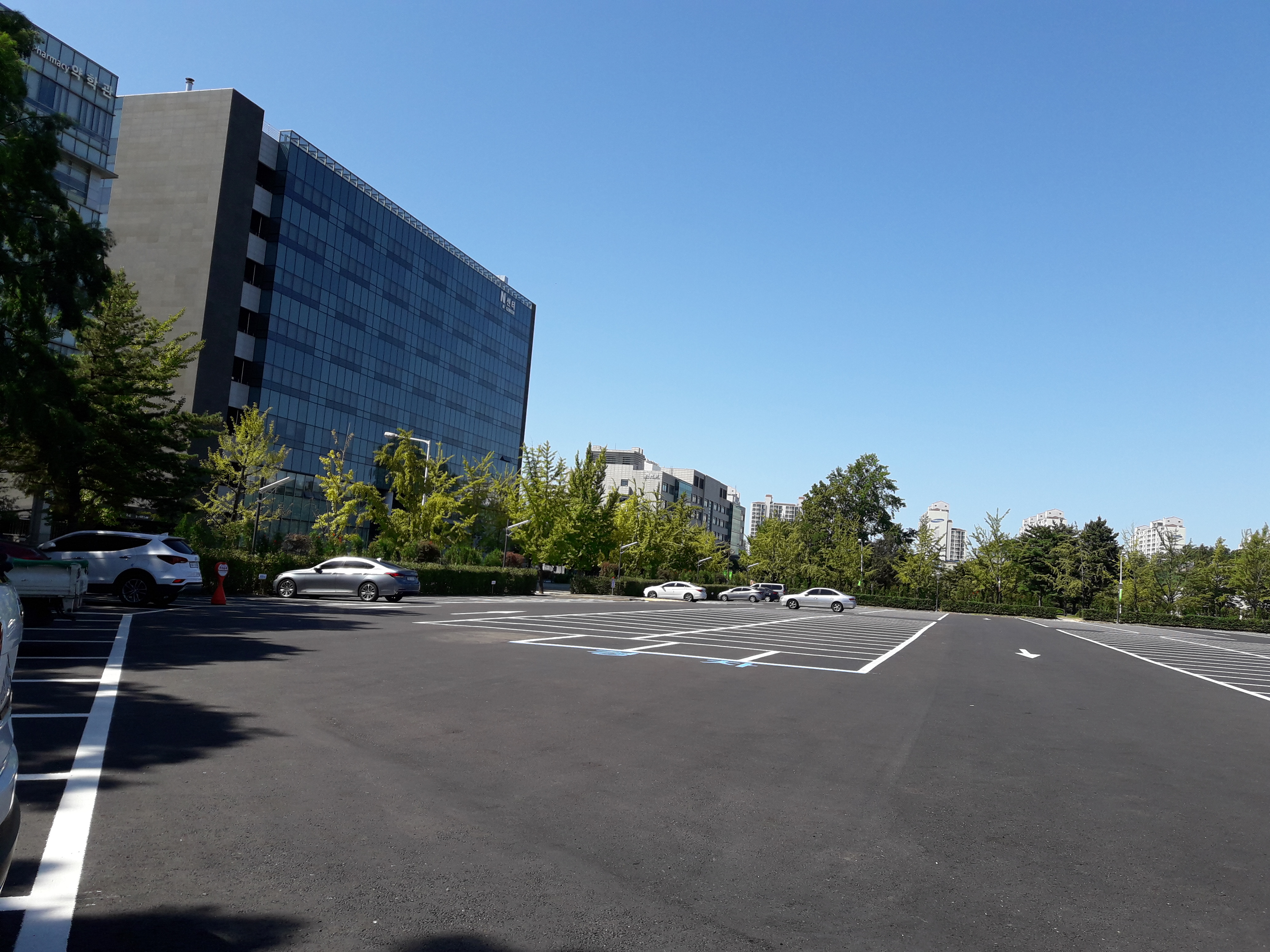
The N-Center houses the Center for Integrated Nanostructure Physics in the Institute for Basic Science, led by physics Professor Lee Young-hee, and the Center for Neuroscience Imaging Research (CNIR), led by Prof. Seong-Gi Kim.
School of Medicine
Students from the School of Medicine train at Samsung Medical Center's hospitals, and many students on campus are first-year undergraduates and postgraduate students. File:SKKU Medicine from gardens.jpg|School of Medicine File:SKKU Medicine Memorial to Body Donors.jpg|Memorial to body donors File:SKKU Medicine Memorial to Body Donors - Inscription.jpg|Memorial to body donors: inscription File:SKKU Medicine Memorial to Animals.jpg|Memorial to animals
International programs
Over 10% of the university's undergraduates are international students. There were over 2,700 international students enrolled at SKKU in 2013, and each year more than 2,000 Korean students from SKKU go abroad. SKKU maintains partnerships with over 653 universities in over 73 countries, and has agreements with 21 overseas institutions to offer dual-degree programs.
Facilities
Libraries
In 1946, with the re-establishment of the university, Jongyeonggak, Bicheondang and Myeongnyundang were used as libraries until a new library was built. Another library opened on the Natural Sciences Campus in 1979, and a Library of Medicine was established in 1998. In 1999, the Law Library opened, and in 2000, Jongyeonggak was newly established. Samsung Library was built in 2009, and the Central Library was refurbished in 2011. In total, SKKU's libraries hold more than 2.15 million books—the ninth largest collection of books in university libraries in South Korea.
Samsung Library
Built in 2009, this library, alongside typical library functions, houses a digital media room where students can watch movies, and a sleeping arena. Sungkyunkwan University Samsung Library.jpg|Samsung Library Cafe sách, đại học Sungkyunkwan.jpeg|Lounge Phòng đọc tầng 5, đại học Sungkyunkwan.jpeg|Reading room
Learning Factory
SKKU Learning Factory is a student facility at the Natural Sciences campus where creative ideas can be made physically as prototype products using 3D printers, laser cutters, CNC router, and Arduino. The center was established by the Fusion Based Creative Informatics Human Resources Development Team.
Sports facilities
Operating under the College of Sports Science, there are several student sports clubs including a baseball club, floor ball club, tennis club, basketball club, soccer club, volleyball club, and cricket club. There is a full-size soccer field, basketball court, tennis courts, athletics track, and baseball fields on the Natural Sciences Campus. File:Baseball field at Sungkyunkwan university.jpg|Baseball field File:Basket ball field.jpg|Basketball courts File:Soccer field.jpg|Soccer field File:Volleball playground.jpg|Volleyball court
Notable alumni
Politics, diplomacy and public service
- Hwang Kyo-ahn (황교안), former Prime Minister of South Korea, former Acting President of South Korea
- Lee Wan-koo (이완구), former Prime Minister of South Korea
- Chung Hong-won (정홍원), former Prime Minister of South Korea
- Lee Young-jin (이영진), Justice of the Constitutional Court of Korea
- Park Byeong-seug (박병석), Chairman of the National Assembly, National Assembly member for Seo District (Daejeon)
- Yang Seung-jo (양승조), Governor of South Chungcheong Province, former National Assembly member for Cheonan
- Ko Chang-soo (고창수), former Consul General in Seattle, Washington; former Ambassador to Ethiopia and Pakistan
- Lee Jong-seok (이종석), former Minister of Unification
- Choung Byoung-gug (정병국), former Minister of Culture, Sports and Tourism, member of the National Assembly for Yeoju and Yangpyeong County
- Ahn Gyu-back (안규백), member of the National Assembly for Dongdaemun District (Seoul)
- Park Yong-jin (박용진), member of the National Assembly for Gangbuk District (Seoul)
- Choi Gyung-hwan (최경환) member of the National Assembly for Buk District (Gwangju)
Sports
- Choi Sung-beom (최성범), South Korean football player
- Han Hong-gyu (한홍규), Midfielder for Chungju Hummel FC
- Jung Kwang-seok (정광석), Retired football player and manager for Yongin City FC
- Kim Deok-il (김덕일), Forward for Seongnam FC
- Kim In-sung (김인성), Midfielder for Jeonbuk Hyundai Motors
- Kim Mi-hyun (김미현), Professional golfer
- Lee Ho-jin (이호진), Defender
- Lee Jong-won (이종원), Midfielder for Seongnam FC
- Lee Sang-gi (이상기), Goalkeeper for Suwon FC
- Lim Joong-yong (임중용), Retired football player and coach
- Lim Sung-jin (임성진), volleyball player for Suwon KEPCO Vixtorm
- Mo Chang-min (모창민), Infielder for NC Dinos
- No Jin-hyuk (노진혁), Shortstop for NC Dinos
- Yoon Deok-yeo (윤덕여), Retired football player and coach
- Kim Byung-hyun (김병현), Former Major League Baseball Pitcher
- Jeon Kwang-in (전광인), Men's National Volleyball Player
- Seo Jae-duck (서재덕), Men's National Volleyball Player
Entertainment

- Bae Yong-joon (배용준), Actor and businessman
- Carlos Gorito (카를로스 고리토), South Korea-based Brazilian television personality
- Cha Eun-woo (차은우), Actor and member of South Korean boy band Astro
- Eunseo (은서), Member of South Korean-Chinese girl group WJSN
- Go Ah-sung (고아성), Actress
- Han Soo-yeon (한수연), Actress
- Heo Nam-jun (허남준), Actor
- Heo Young-joo (허영주), Former member of South Korean girl group The SeeYa
- Hwang In-sun (황인선), Singer
- Hyomin (효민), Actress and member of South Korean girl group T-ara
- Jeon Sung-woo (전성우), Actor
- Ji Hyun-woo (지현우), Actor
- Jo Bo-ah (조보아), Actress
- Joo Won (주원), Actor
- Jung Hye-sung (정혜성), Actress
- Kang Ji-young (강지영), Actress and former member of South Korean girl group KARA
- Kim Dae-myung (김대명), Actor
- Kim Ga-young (김가영), Actress and former member of South Korean girl group Stellar
- Kim Hye-soo (김혜수), Actress
- Kim Mu-yeol (김무열), Actor
- Kim Nam-joo (김남주), Member of South Korean girl group Apink
- Ko Sung-hee (고성희), Actress
- Krystal Jung (정수정), Korean-American actress and member of South Korean girl group f(x)
- Kwak Jung-wook (곽정욱), Actor
- Ku Hye-sun (구혜선), Actress
- Lee El (이엘), Actress
- Lee Min-jung (이민정), Actress
- Lee Si-a (이시아), Actress and former member of South Korean girl group CHI CHI
- Lee Tae-hwan (이태환), Actor and former member of South Korean boy band 5urprise
- Moon Ga-young (문가영), Actress
- Moon Geun-young (문근영), Actress
- Moon So-ri (문소리), Actress
- Park Chul-soo (박철수), Film director and screenwriter
- Park Joo-mi (박주미), Actress
- Park Kang-hyun (박강현), Musical theater actor, crossover artist, singer, and TV drama actor
- Park Se-wan (박세완), Actress
- Park Sol-mi (박솔미), Actress
- Park So-hyun (박소현), Actress
- Seo Ji-hye (서지혜), Actress
- Seo Shin-ae (서신애), Actress
- Shin Ye-eun (신예은), Actress
- Song Joong-ki (송중기), Actor
- Swings (문지훈), Rapper
- Uee (유이), Actress and former member of South Korean girl group After School
- Yang Hye-ji (양혜지), Actress
Historical figures
File:學易齋鄭麟趾尊影.jpg|Chŏng Inji (1396-1478): Entered in 1411. Yŏngŭijŏng who contributed to the development of culture and science in the early Joseon Dynasty. File:东国通鉴.jpg|Ch'oe Hang (1409-1474): Entered in 1434. Civil minister, compiled the Kyŏngguk taejŏn. File:Coat of Arms of Joseon Korea.png|Munjong (1414-1452): Entered in 1421. The first Crown Prince to enter Sungkyunkwan. File:Shin Suk-ju.jpg|Sin Sukchu (1417-1475): Entered in 1438. Politician and diplomat of the early Joseon Dynasty. File:세조 어진 초본.jpg|King Sejo (1417-1468): Entered in 1430. Seventh king of the Joseon Dynasty. File:Yerim Yukdeoksa 2.jpg|Kim Chong-jik (1431-1492): Entered in 1453. Compiled Tongguk yŏji sŭngnam. File:Cho Kwang-jo in 1750.jpg|Cho Kwangjo (1482-1519): Entered in 1510. Munmyo Baehyang (). Promoted Hyangyak throughout the country. File:Statue of Yi Hwang.jpg| Yi Hwang (1501–1570): Entered in 1523. Wrote The Ten Diagrams on Sage Learning (). File:Portrait of Seosan Daesa-Cheonghodang.jpg|Hyujeong (1520-1604): Entered in 1537. Warrior monk during the Japanese invasions of Korea (1592–1598). File:Chingbirok.jpg|Yu Sŏngnyong (1542-1607): Entered in 1565. Yŏngŭijŏng during the Japanese invasions of Korea (1592–1598). Wrote Jingbirok. File:Korea-Portrait of Kim Jangsaeng.jpg|Kim Jang-saeng (1548-1631): Entered in 1623. Sa-eob of Sungkyunkwan (), Munmyo Baehyang (). File:Heo Mok.jpg|Hŏ Mok (1565-1682): Entered in 1675. Cheju of Sungkyunkwan () File:Yunhyu.jpg|Yun Hyu (1617-1680): Entered in 1675. Saŏp of Sungkyunkwan (), Criticized the doctrine of Zhu Xi. File:Korea-Portrait of Kwon Sangha-Joseon.jpg|Gwon Sang-ha (1641-1721): Entered in 1660. Criticized the theory that human and animal nature are the same () File:Portrait of Park Munsu.jpg|Bak Mun-su (1691-1756): Jeonjeok of Sungkyunkwan (), Worked as a secret royal inspector. File:Portrait of King Yeongjo - Chae Yong Shin (蔡龍臣 1850-1941) Cho Seok-jin (趙錫晉 1853-1920) et (cropped).jpg|King Yeongjo (1694-1776): Entered in 1722. Implemented the Policy of Impartiality (), the Equalized Tax Law () File:Jeong Yak-yong.jpg|Chŏng Yagyong (1762-1836): Entered in 1783. Famous scholar of the Silhak movement (). Wrote over 500 books, including Mongmin Simseo (), Gyeongse yupyo (). File:Park Kyu-su.jpg|Pak Kyusu (1807-1877): Entered in 1827. Pioneer of the enlightenment group. File:Portraits for Choe Ik-Hyeon by Chae Yong-sin.jpg|Choe Ik-hyeon (1833-1906): Entered in 1854. Uijong Cheoksa activities, Righteous Army activities in 1895, 1905. File:Yi Dong-nyung.jpg|Yi Dong-nyeong (1869-1940): Entered in 1892. Independence activist. President of the Provisional Government of the Republic of Korea in exile in Shanghai, China. File:단재신채호.jpg|Sin Chaeho (1880-1936): Ph.D. 1905. Independence activist, historian. Wrote Ancient History of Korea () File:조소앙 얼굴.jpg|Jo So-ang (1887-1959): Entered in 1902. Wrote the Daehan Independence Declaration (). Advocated the Three Principles of the Equality.
References
References
- Abbreviations of Sungkyunkwan University in {{Korean. 성대. 成大. Seongdae. English: SKKU
- "교시/건학이념". Sungkyunkwan University.
- "History". University of Sungkyunkwan.
- (2024-04-01). "대학소개>대학현황>현황". Sungkyunkwan University.
- [https://www.skku.edu/skku/about/status/univ_info.do 대학소개>대학현황>현황]
- "Sungkyunkwan University (SKKU)".
- [http://www.waseda.jp/cie/pdf/studyabroad/2012/abroad8/Sungkyunkwan/2013_SKKU_ISS.pdf] SKKU Official Brochure 2013
- [http://english.visitkorea.or.kr/e_book/access/ecatalog.jsp?Dir=16&catimage=&callmode=&cpage=76] Gyeongguk Daejeon, the great code
- [https://books.google.com/books?id=XB4UYXNQK1wC&pg=PA205] Sungkyunkwan in the code of Gyeongguk Daejeon
- "성균관대학교 대학정보 성대역사 / 상징 성대 623년 약사 현대 대학시대".
- "Sungkyunkwan {{!}} Korea, University, History, & Facts".
- Service (KOCIS), Korean Culture and Information. "Confucian ceremony at Sungkyunkwan Munmyo : Korea.net : The official website of the Republic of Korea".
- "500년 전 성균관 유생들의 나날".
- 강, 진철{{!}}김연옥{{!}}박경룡{{!}}손인수{{!}}이재곤{{!}}소재영{{!}}이혜은{{!}}나각순. "서울특별시 (서울特別市)". Academy of Korean Studies.
- "Toegye Yi Hwang, a Prominent Confucian Scholar of the Joseon Dynasty".
- (2024-08-13). ""Lying sick next to Sungkyunkwan, I'm even in need of the frozen snow. I really want to think about .. - MK".
- "Simsan Kim Chang-suk".
- [http://www.skku.edu/new_home/205_eng/about/about1_6_4.jsp] {{Webarchive. link. (2014-03-13 Global leading programs with Samsung)
- "Sungkyunkwan University (SKKU) – Our Organizing Partner". QS-APPLE.
- "Why SKK GSB?". SKKU.
- (12 April 2023). "SNU keeps top slot in university rankings for 7th year".
- "Search U.S. News Best Global Universities".
- (12 April 2023). "QS World University Rankings 2023: Top global universities".
- (12 April 2023). "World University Rankings 2023".
- "MBA 2023". [[Financial Times]].
- "Overview". SKKU.
- "University Arbor". SKKU.
- "SKKU BONGRYONG HAKSA".
- (20 September 2017). "The 2017 Clarivate Citation Laureates - Clarivate".
- "Always ahead of its time - Nature Index Supplements - Nature Index".
- "Message from the Head of SAINT". SKKU.
- "Center for Integrated Nanostructure Physics". Institute for Basic Science.
- "Director". Institute for Basic Science.
- Oh, Kyu-wook. (9 October 2013). "SKKU on path to become top global university". [[The Korea Herald]].
- "History". SKKU.
- Kelly, Toni. (14 April 2012). "Exploring Learning Spaces and Libraries in Asia: Sungkyunkwan University - Samsung Library".
- "Open house for SKKU Creative Fusion Factory, "Learning Factory "publisher=SKKU".
- "Mireukdang". SKKU.
- Shin. In-seop. link. InterFootball. (December 29, 2022)
- (22 July 2011). "'배구 샛별' 전광인, 성균관대 우승 앞장".
- "성균관대 배구 2년만에 정상 탈환".
This article was imported from Wikipedia and is available under the Creative Commons Attribution-ShareAlike 4.0 License. Content has been adapted to SurfDoc format. Original contributors can be found on the article history page.
Ask Mako anything about Sungkyunkwan University — get instant answers, deeper analysis, and related topics.
Research with MakoFree with your Surf account
Create a free account to save articles, ask Mako questions, and organize your research.
Sign up freeThis content may have been generated or modified by AI. CloudSurf Software LLC is not responsible for the accuracy, completeness, or reliability of AI-generated content. Always verify important information from primary sources.
Report