From Surf Wiki (app.surf) — the open knowledge base
Summerhill, Dublin
District in Dublin, Ireland
District in Dublin, Ireland
| Field | Value |
|---|---|
| name | Summerhill |
| other_name | |
| settlement_type | Inner city district |
| image_skyline | Summerhill.jpg |
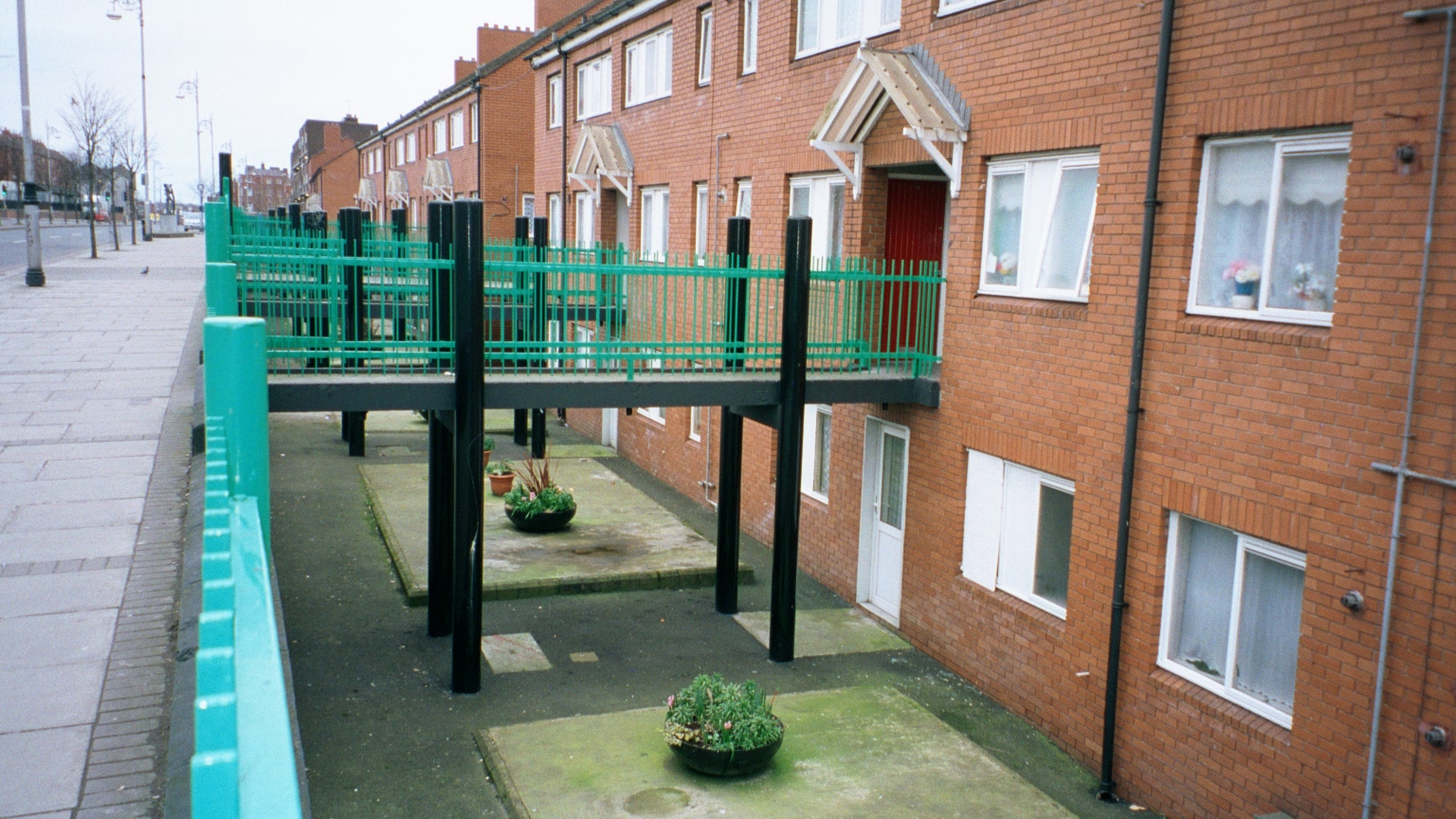
| image_caption | Georgian housing on Summerhill Parade, Dublin |
| pushpin_map | Ireland |
| pushpin_label_position | right |
| pushpin_map_caption | Location in Ireland |
| subdivision_type | Country |
| subdivision_name | Ireland |
| subdivision_type1 | Province |
| subdivision_name1 | Leinster |
| subdivision_type3 | County |
| subdivision_name3 | Dublin |
| subdivision_type4 | Local authority |
| subdivision_name4 | Dublin City Council |
| unit_pref | Metric |
| timezone1 | WET |
| utc_offset1 | +0 |
| timezone1_DST | IST (WEST) |
| utc_offset1_DST | -1 |
| coordinates |
Summerhill (){{cite web | access-date = 2025-06-16
History
Prior to wholesale redevelopment in the second half of the 18th century, Summerhill Parade formed one of the main routes through and out of the city to the north from the Bridge of Dublin to the bridge at Ballybough over the River Tolka.
18th century
The area was mostly developed in the last quarter of the 18th century around the same time as the development of Mountjoy Square with terraces of large four-storey over basement red brick Georgian houses along streets such as Summerhill Parade, Buckingham Street and Gardiner Street. The northern side of Summerhill Parade was developed first.
19th century
In the later 19th century, the area became known more for tenement housing and the Monto red-light district.
20th century
In the second half of the 20th century, the large Georgian houses were mostly replaced with large-scale social housing schemes. Streets such as Summerhill Parade were entirely demolished (about 40 five-storey Georgian houses) and replaced with social housing. In 1981, approximately 120 Georgian houses were demolished in Summerhill.
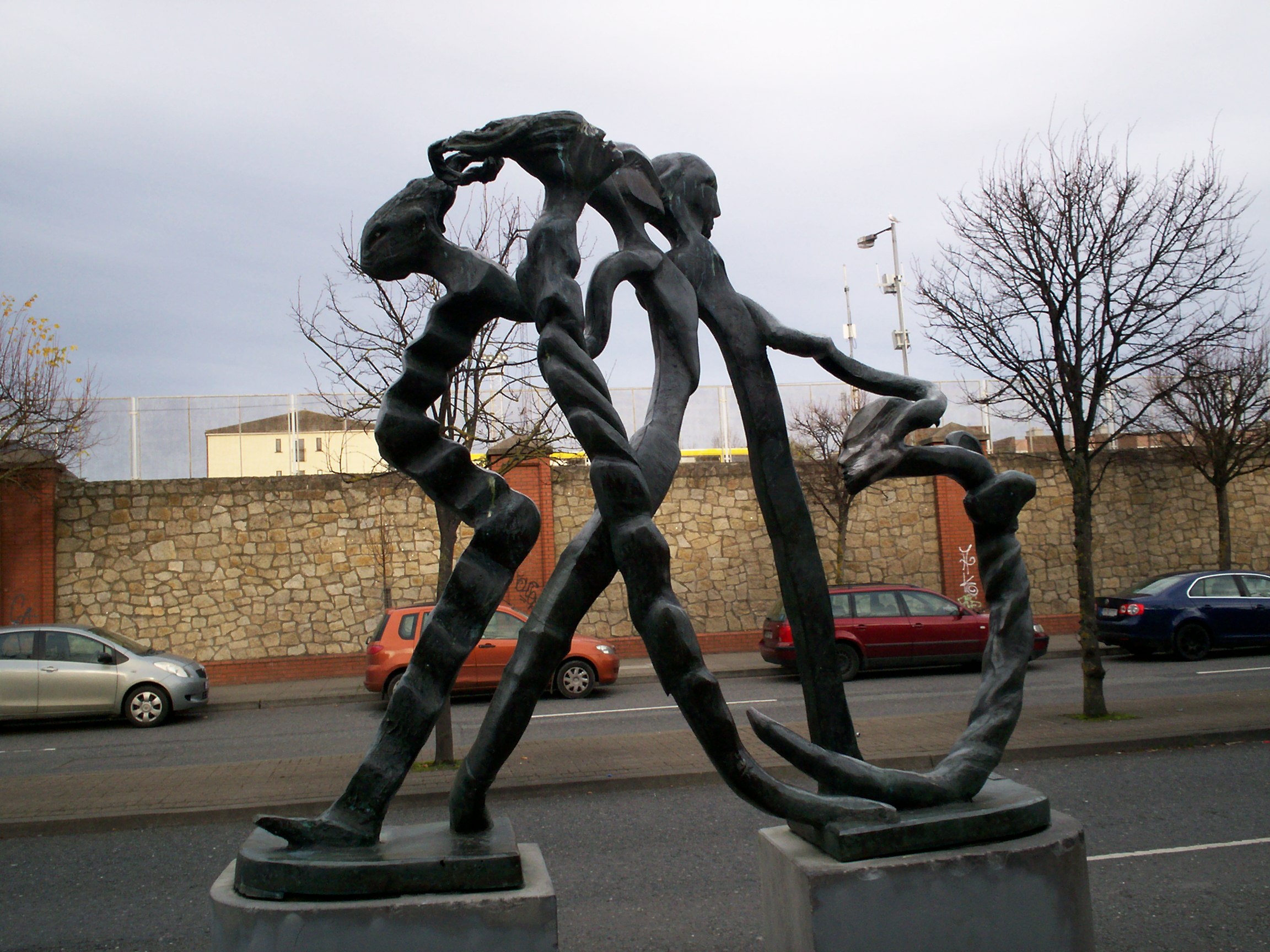
In 1992, the sculpture Summerhill Group was unveiled. It is a bronze work on Kilkenny limestone by Cathy Carman and was commissioned by Dublin Corporation as part of the Per Cent for Art Scheme. The work invokes the history of the street, before its redevelopment into a dual carriageway, when children would play on the street.

John Hutton and Sons
For almost 140 years a successful coachbuilding enterprise existed at Summerhill, originally established on nearby Great Britain Street In 1788 the Lord Lieutenant of Ireland ordered two new mail coaches to be built by Hutton as models, adhering to the design of the patent mail coaches used all over England at the time, effectively granting the company the entirety of the Irish mail coach contract. On the strength of this lucrative contract, the company was enabled to move to larger premises on Summerhill, which it did in 1789. At the time, relocating to Summerhill was considered by many to be a bold move owing to its distance from the great thoroughfares of the city and the inevitable lack of trade and business potential. In 1791 the Lord Mayor of Dublin's coach was built, which was still used on ceremonial occasions as of 2004. The business thrived nonetheless, providing coaches to the aristocracy and great families of Ireland before the Acts of Union 1800 shifted the focus of the Irish high society from Dublin to London and new carriages were not required as often. In 1821 George IV granted a royal patent to the company, followed by a royal warrant issued by William IV in 1836 and confirmed by Queen Victoria in 1837. The introduction of the railways as well as the Great Famine led to a decline in the business. Possibly one of the most famous coaches produced by the firm at this time was the Irish State Coach, ordered by Queen Victoria in 1852, which is still used today by the reigning British monarch whenever they travel from Buckingham Palace to the Palace of Westminster to formally open the new legislative session of the UK Parliament.
The company adapted to producing motor cars in the late 1800s. In the early 1920s Huttons turned down the option to take control of the Ford franchise for the whole of the United Kingdom, an error which contributed to Huttons having to file for voluntary liquidation in 1925.
People
Former or current residents of the area have included:
- Todd Andrews, political activist and public servant
- John Keegan Casey, poet, orator and republican famous for writing the song "The Rising of the Moon"
- Bill Cullen, businessman and media personality
- Thomas Farrell, sculptor
- Kellie Harrington, amateur boxer and Olympic gold medallist who grew up in nearby Portland Row
- Peadar Kearney, republican and composer
- Barry Keoghan, actor
- Richard Edmund Meredith (1855–1916), Master of the Rolls in Ireland, Privy Councillor and Judicial Commissioner of the Irish Land Commission
- Kathleen Mulhall, mother of Irish murderers Linda and Charlotte Mulhall, who lived in Richmond Cottages, Summerhill in 2005
- Cornelius O'Brien, politician and Member of Parliament
- Clementina Robertson, miniature-painter
- Terence Wheelock, 20-year-old who died on 16 September 2005, from alleged injuries received in the custody of An Garda Síochána (police)
References
References
- (November 2019). "The Trinity National Deprivation Index for Health and Health Services Research 2016". [[Trinity College Dublin]].
- "67 Summerhill, Dublin, DUBLIN". National Inventory of Architectural Heritage.
- (24 December 2016). "Embracing history is central to future vision of Dublin inner city area". [[The Irish Times]].
- Curtis. (6 April 2015). "To Hell or Monto: The Story of Dublin's Most Notorious Districts". History Press.
- O'Shannon, Cathal. (19 September 1977). "Gangs". [[RTÉ]].
- (29 April 2013). "Heart of Dublin: Gloucester Diamond".
- "GD010 Summerhill".
- Crowe, Catríona. (October 2013). "Dublin 100 Years Ago: Death, Disease And Overcrowding". [[SIPTU]].
- Freyne, Patrick. (28 May 2016). "Gang feud: Life goes on in Dublin 1, but so does the fear". [[The Irish Times]].
- "U2 in Summerhill, Dublin City, Ireland 1981".
- Doherty, Neal. (2015). "The complete guide to the statues and sculptures of Dublin City". Orpen Press.
- Cooke, Jim. (Spring 1992). "John Hutton and Sons, Summerhill, Dublin, Coachbuilders 1779-1925". Old Dublin Society.
- Cooke, Jim. (October 2009). "Hutton, John".
- Montgomery, Bob. (8 December 2004). "PastImperfect". [[The Irish Times]].
- (April 2002). "Founding Father Dr. C. S. "Todd" Andrews 1901–1985". Scéal na Móna.
- Fahey, Denis. (27 January 2020). "The Rising of the Moon – An Irishman's Diary on poet John Keegan Casey". [[The Irish Times]].
- Cole, Judith. (5 July 2005). "Interview: Bill Cullen". [[Belfast Telegraph]].
- Obituary, Irish Times, Dublin, 5 July 1900
- Ward, James. (10 August 2021). "Irish Olympic hero Kellie Harrington arrives home after Tokyo gold success". [[Irish Independent]].
- MacDonncha, Mícheál. (26 July 2007). "Centenary of Amhrán na bhFiann – The Soldier's Song". [[An Phoblacht]].
- Mumford, Gwilynn. (3 September 2018). "Barry Keoghan: 'You release your problems, playing another person'". [[The Guardian]].
- (15 Jan 2024). "Richard Edmund Meredith – Person Page 158".
- Kilfeather, Vivion. (21 December 2007). "Judgment reserved in Scissor Sister's appeal". [[Irish Examiner]].
- Comber, Henry. "Cornelius O'Brien of Birchfield (1782 – 1857)". Clare County Library.
- Strickland, Walter G.. (November 1913). "A Dictionary of Irish Artists". [[Cambridge University Press]].
- (13 July 2007). "Jury finds Wheelock took his own life". [[Irish Examiner]].
This article was imported from Wikipedia and is available under the Creative Commons Attribution-ShareAlike 4.0 License. Content has been adapted to SurfDoc format. Original contributors can be found on the article history page.
Ask Mako anything about Summerhill, Dublin — get instant answers, deeper analysis, and related topics.
Research with MakoFree with your Surf account
Create a free account to save articles, ask Mako questions, and organize your research.
Sign up freeThis content may have been generated or modified by AI. CloudSurf Software LLC is not responsible for the accuracy, completeness, or reliability of AI-generated content. Always verify important information from primary sources.
Report